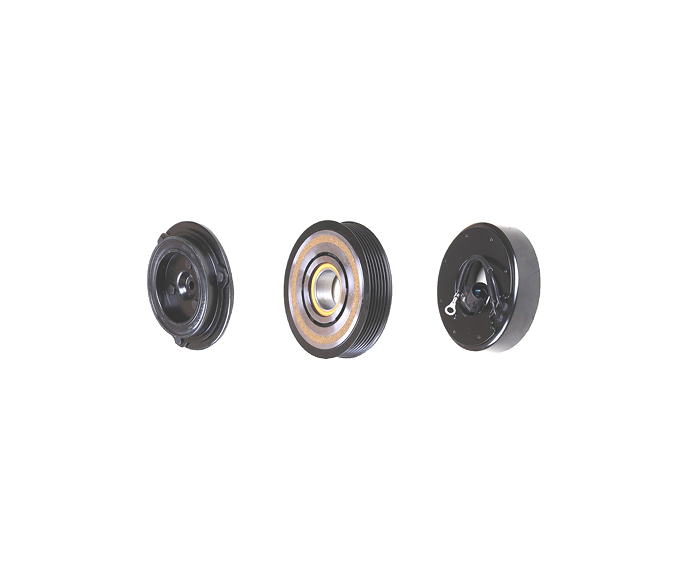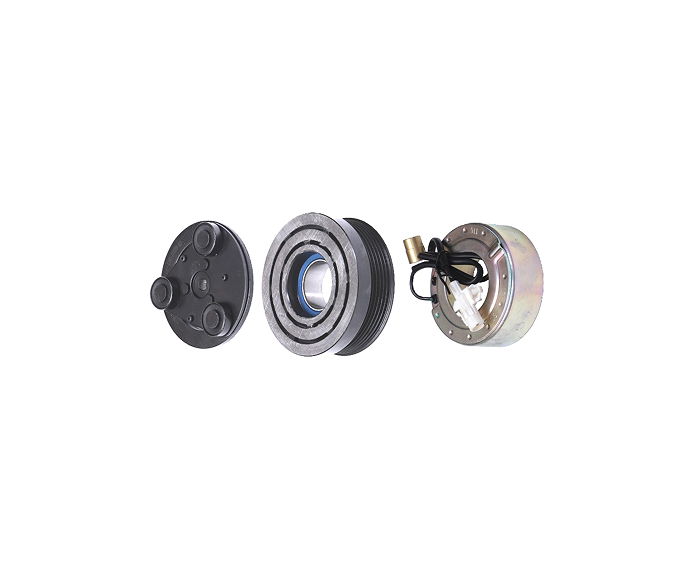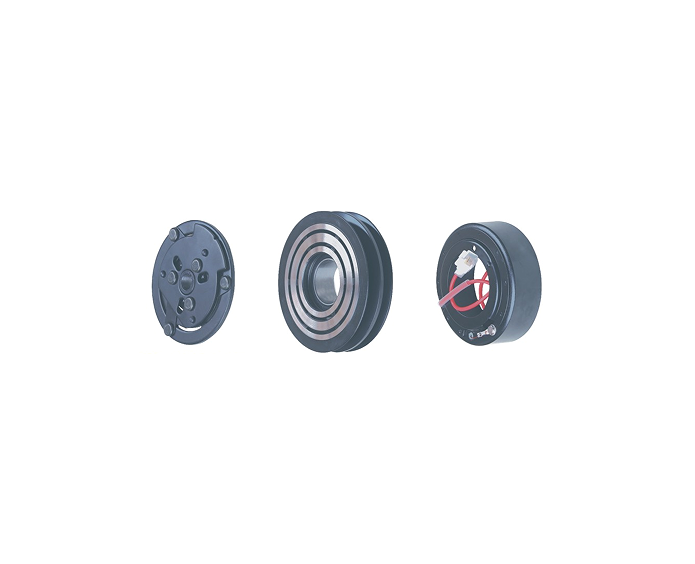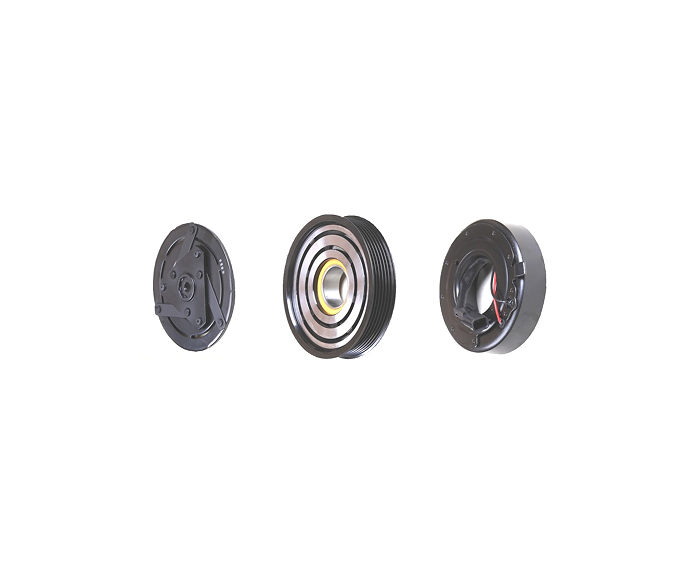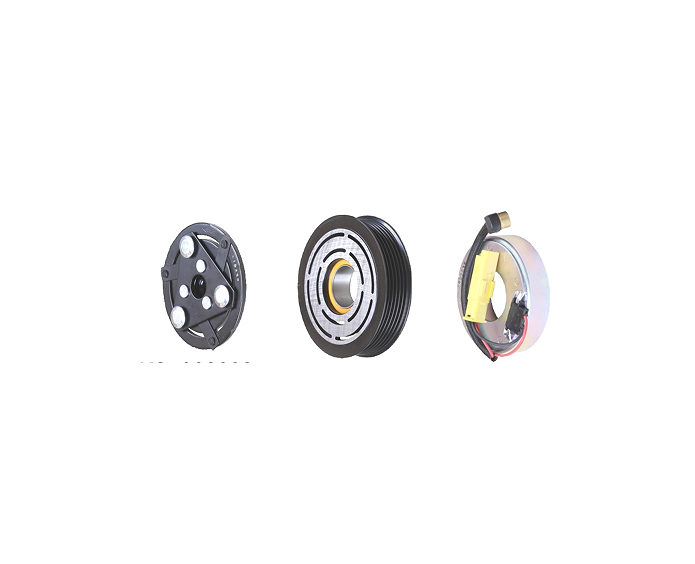

Select a Commercial Vehicle AC Compressor Clutch From the Duty Profile and Compressor Record
A commercial vehicle AC compressor clutch should be selected from two records used together: the exact compressor and clutch identification, and the vehicle's real operating duty. The identification record prevents a physical or electrical mismatch. The duty record tells the buyer what must be demonstrated during sample approval and repeat-order control. Vehicle type alone, a “heavy-duty” label, or a 24 V description does not complete either record.
This distinction matters for buses, long-haul trucks, urban delivery vehicles, fleet vans, construction vehicles, agricultural equipment, and other belt-driven commercial applications. They can differ in daily operating hours, idle time, ambient temperature, vibration, contamination, maintenance windows, compressor architecture, and the financial effect of downtime. A clutch that fits the compressor but has not been evaluated for the intended service remains an unresolved purchasing risk.
Guangzhou Kasen Auto Airconditioner CO:LTD presents itself as a Guangzhou-based manufacturer and exporter of automotive air-conditioning parts. Its public company information states that it has focused on automotive air conditioning since 2007 and supplies compressor clutches, compressors, electric compressors, valves, bearings, and related components for global aftermarket and OEM-related requirements. Buyers can review the Kasen company profile and the compressor clutch product family before preparing a reference-specific enquiry.
The unique purchasing question answered here is: how should a buyer turn a commercial vehicle's operating pattern into an approved clutch specification and a repeatable supply program? Kasen already publishes a truck clutch supplier guide for supplier qualification and a separate compressor clutch wholesale guide for distributor stock planning. This page does not repeat those topics. It connects vehicle duty, technical approval, fleet risk, and replenishment control.
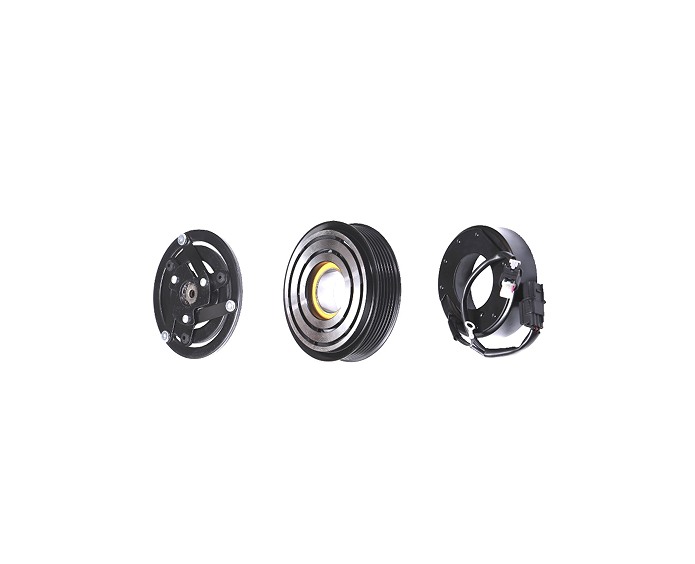
Define Commercial-Vehicle Duty Before Requesting a Quotation
“Commercial vehicle” is a market category, not one technical operating condition. A city bus can spend long periods at low road speed with frequent stops. A long-haul truck can run for extended periods in changing climates. A delivery vehicle may cycle through short routes and repeated engine starts. Construction equipment can add dust, shock, vibration, and irregular service access. The RFQ should describe the relevant pattern instead of asking the supplier to infer it from the vehicle badge.
| Application pattern | Duty questions to record | Clutch approval implication | Evidence to request |
|---|---|---|---|
| Urban bus or shuttle | Daily hours, idle time, stop frequency, cabin load, seasonal peak | Review engagement behavior, thermal condition, bearing rotation, and repeat supply | Application match, sample test plan, inspection record, fleet trial feedback |
| Long-haul truck | Continuous driving time, climate range, vibration, service interval | Check belt system, pulley alignment, bearing condition, connector protection, and serviceability | Dimensional record, electrical check, runout method, packaging protection |
| Urban delivery fleet | Short-route frequency, start-stop pattern, idling, maintenance window | Define the cycling test and the replacement-SKU identification process | Cycle conditions, sample result, label record, batch traceability |
| Construction or agricultural vehicle | Dust, moisture, shock, vibration, storage, access for repair | Review sealing, wire protection, surface condition, bearing protection, and packaging | Product photographs, finish information, inspection criteria, field-trial plan |
| Special-purpose vehicle | Body conversion, auxiliary equipment, unusual compressor installation, seasonal use | Do not assume a standard vehicle application; confirm the installed compressor and belt arrangement | Compressor label, installed photographs, drawing, old sample, measured interfaces |
The table does not assign a universal performance rating to any vehicle class. It converts the buyer's environment into questions that can be answered. If the fleet cannot provide exact operating hours, use a defined range and mark it as an estimate. If vibration, temperature, or cycling evidence is unavailable, treat that field as pending and plan a controlled vehicle trial instead of describing the part as proven.
Confirm That the Vehicle Actually Uses a Replaceable Clutch
Not every commercial-vehicle air-conditioning compressor uses the same drive or control architecture. Many conventional belt-driven systems use an electromagnetic clutch. Some mechanically driven variable-displacement compressors use different control arrangements, and electric commercial vehicles can use an electrically driven compressor without a traditional belt clutch. Before sourcing a clutch, identify the original system and confirm that clutch replacement is the correct repair scope.
| System condition | Purchasing decision | Information required |
|---|---|---|
| Serviceable belt-driven compressor with clutch fault | Evaluate complete clutch assembly or the failed service component | Compressor reference, diagnostic result, pulley, bearing, coil, hub, connector, and voltage |
| Internally damaged or contaminated compressor | Evaluate complete compressor replacement and system service requirements | Failure diagnosis, refrigerant circuit condition, compressor reference, and repair plan |
| Variable-displacement compressor | Confirm whether the issue concerns a clutch, pulley, control valve, or compressor | Compressor architecture, control arrangement, diagnostic evidence, and OE data |
| Electric compressor | Do not specify a conventional electromagnetic clutch | Vehicle platform, voltage architecture, connector, control, refrigerant, oil, ports, and mounting |
This boundary prevents a common catalogue error: treating every no-cooling complaint as a clutch requirement. A qualified workshop or fleet engineer should determine whether the fault is in the clutch, belt, electrical supply, refrigerant circuit, compressor, or control system. The purchasing file should state whether the quotation covers a complete clutch set, pulley and bearing, coil, hub, hardware, or another component. Similar names are not interchangeable supply scopes.
Build a Vehicle-to-Compressor Reference File
The compressor is the primary mechanical reference for the clutch. A vehicle model can use different compressors across model years, engines, markets, body configurations, or previous repairs. The strongest enquiry combines the compressor label, OE or OEM number, old-clutch photographs, and measured interfaces. If those sources conflict, the part should remain under technical review.
Kasen's published compressor clutch fitment workflow explains how an OE number can be developed into an approved B2B SKU. For a commercial vehicle program, extend that record with the fleet unit, route or duty class, and installation feedback so the approved SKU is linked to its actual use.
| Reference field | Why it matters | Preferred source | Approval status |
|---|---|---|---|
| Vehicle make, model, year, engine, and market | Separates platform and regional variations | Fleet asset record or registration | Context only until compressor identity is confirmed |
| OE or OEM number | Supports cross-reference research | Service record, label, or old part | Confirm revision and application |
| Compressor manufacturer and model | Establishes the clutch family and mounting interface | Clear label photograph | Required |
| Old clutch front, rear, and side views | Shows pulley, hub, connector, coil, and mounting features | Original high-resolution photographs with scale | Required when no drawing is available |
| Pulley diameter, width, groove profile, count, and offset | Controls belt fit and alignment | Drawing or measured old sample | Dimensionally approved |
| Bearing designation or dimensions | Controls rotation and assembly compatibility | Bearing mark, drawing, or measurement | Confirmed for the proposed assembly |
| Coil voltage and connector | Controls electrical compatibility | Vehicle system data, label, and connector photograph | Verified; never infer from vehicle class |
| Hub, shaft interface, mounting, and applicable air gap | Controls engagement and installation | Drawing, old sample, and model-specific instruction | Approved against the exact compressor |
| Quantity, destination, and duty class | Defines sample, packaging, replenishment, and commercial planning | Buyer forecast and fleet profile | Written in RFQ |
Do not fill a missing voltage, bearing code, or dimension from a visually similar product. Use “not confirmed” as a valid status. That phrase protects the technical review and gives the supplier a precise question to answer. An unresolved field is manageable; a guessed field can become a bulk-order error.
Translate Duty Cycle Into Measurable Approval Questions
The purpose of a duty profile is not to make the specification sound severe. It is to decide what the sample and production evidence should address. A commercial vehicle AC compressor clutch operates as a system: the coil creates magnetic attraction, the hub or armature engages, the friction interface transfers torque, the pulley follows the belt drive, and the bearing supports rotation. Belt alignment, air gap, voltage, installation, compressor load, ambient condition, and cycling strategy affect the result together.
Extended daily operation
For vehicles with long AC operating periods, ask how the proposed reference is checked for bearing rotation, abnormal noise, coil electrical condition, surface condition, and engagement after the agreed run. The supplier should identify the test equipment, voltage, duration, load assumptions, ambient condition, and acceptance criteria. “Long life” without those conditions is not a test result.
Frequent engagement cycles
For start-stop routes or systems with frequent clutch cycling, define the cycle count, energized and released time, voltage, temperature condition, and observations before and after the test. Inspect the friction face, air gap, electrical response, fasteners, and abnormal noise. A cycle test performed on another clutch reference should not automatically be applied to the quoted model.
Heat and high ambient temperature
High ambient temperature can increase the thermal burden on the belt drive, coil, bearing, and friction surfaces, but the actual condition depends on the installation. Ask for the applicable thermal or endurance method and the part number covered by the record. If no formal report exists, use a documented fleet trial in the target season and keep the product claim limited to the evidence observed.
Vibration, belt alignment, and contamination
Vibration and misalignment can affect pulley rotation, belt tracking, bearing load, fasteners, wiring, and connector retention. Dust, moisture, oil, or road contamination can also change surface and electrical condition. The sample plan should include installed alignment, belt condition, wire routing, connector protection, visible contamination, and post-run inspection. The clutch should not be blamed for a vehicle-side alignment or wiring problem without diagnosis.
Downtime and field service
A fleet-ready part must be identifiable after it enters the warehouse. Record the buyer SKU, supplier reference, approved photograph, compressor cross-reference, packaging revision, and batch code. Maintenance teams need to distinguish a confirmed fitment from a possible alternative. Clear identification reduces the chance that the correct clutch is approved but the wrong carton is issued to a vehicle.
Specify the Complete Clutch by Component
“Premium material” is not a usable commercial-vehicle specification. Ask what is controlled for each component and how substitutions are approved. A supplier may protect a proprietary grade, but it should still be able to state the material family, functional requirement, inspection method, or drawing reference that controls the approved product.
| Component | What the buyer should confirm | Evidence that supports approval |
|---|---|---|
| Pulley and belt interface | Material or construction, outside diameter, width, groove profile, groove count, offset, runout, finish | Drawing, measured sample, machining record, runout method, surface photograph |
| Bearing | Designation or dimensions, seal arrangement, grease or lubrication information where applicable, installation and rotation | Component specification, incoming check, assembly check, rotation/noise result |
| Electromagnetic coil | Rated voltage, conductor and insulation description, resistance/current limits, connector, wire protection | Electrical specification, continuity/resistance record, connector photograph, test equipment |
| Hub or armature | Shaft interface, mounting, friction face, flatness, applicable air gap, fasteners | Drawing, sample dimensions, assembly instruction, engagement record |
| Friction interface | Material family, attachment method, surface condition, contamination limits, wear observations | Controlled material note, sample photographs, applicable cycle or thermal record |
| Housing, hardware, and finish | Material class, coating or corrosion protection, threads, retaining components, visual acceptance | Bill-of-material summary, finish specification, visual inspection criteria |
| Label and packaging | Part identity, batch, component protection, connector support, carton quantity, buyer label | Approved artwork, packaging drawing, pre-shipment photographs, batch record |
Changes to a bearing, coil construction, connector, pulley geometry, friction material, coating, or hub are technical changes. A different logo, barcode, or carton is a packaging change. Keep the approvals separate. Private-label artwork approval does not authorize a component substitution, and an approved technical sample does not automatically approve the final export carton.
Use Kasen's Public Commercial-Vehicle Evidence Correctly
Kasen's website provides a visible starting point for commercial-vehicle sourcing. The bus product category and truck product category show that the product catalogue includes commercial-vehicle applications. The dedicated TM-43 bus compressor clutch page identifies a “TM 43 FOR BUS” variant and displays a complete magnetic-clutch product reference.
The TM-43 page describes an electromagnetic coil, integrated pulley, bearing, and mounting hardware. It also publishes claims concerning coil response, bearing design, installation, and temperature durability. These are supplier-published product statements, not independent proof and not a universal specification for every bus. A buyer should ask which claims apply to the quoted unit, what test method supports them, whether the page and quotation refer to the same revision, and what evidence can be tied to the sample or batch.
The page is useful because it establishes a real product entity: manufacturer, component type, named application family, visible construction, and enquiry route. It does not establish the installed compressor model, voltage, pulley dimensions, bearing designation, material grades, MOQ, current lead time, or fitment for every TM-43 installation. Those fields must be returned for the exact buyer request.
Add Original Factory Evidence Before Publication and Approval
A high-quality page should show what the factory actually supplies and controls. The final published article should use original Kasen assets, not generic stock images. Each asset must be tied to the product family shown and should answer a purchasing question.
| Factory evidence | What it should show | Recommended ALT text | Publication rule |
|---|---|---|---|
| TM-43 or confirmed commercial-vehicle clutch photograph | Front, rear, pulley, coil, connector, hub, and supplied hardware | commercial vehicle AC compressor clutch front and rear views | Identify the actual reference; do not claim universal fitment |
| Production or assembly photograph | Machining, coil, bearing installation, assembly, or controlled workstation | commercial vehicle compressor clutch assembly at Kasen factory | Caption only the visible process |
| Inspection photograph | Dimension, runout, electrical, rotation, air-gap, or functional check | commercial vehicle clutch inspection before batch approval | State the instrument and inspected field when confirmed |
| Test-record excerpt | Part number, method, condition, measured result, date, and acceptance | compressor clutch test record for commercial vehicle sample | Remove customer-confidential data; retain traceable fields |
| Packaging photograph | Connector, pulley and friction-face protection, label, inner box, outer carton | commercial vehicle AC clutch export packaging and SKU label | Use the approved packaging revision for the program |
| Fleet or distributor case | Application, initial issue, approved reference, trial scope, and observed result | commercial vehicle clutch sample approved for fleet trial | Publish only with customer permission and measured facts |
MOQ, material, test, lead-time, and case data should be inserted only after the factory identifies the exact product and document. If the evidence is not yet available, keep the article's language conditional. Do not turn a blank evidence field into a broad promise. One real inspection record is more useful for trust than several unverified “strict QC” statements.
Approve the Sample in Four Stages
A commercial vehicle AC compressor clutch sample should move through identification, bench inspection, installed evaluation, and specification freeze. Each stage should have a responsible person and a written result. The buyer can adapt the depth to the order risk, but a high-downtime fleet program should not approve a sample from photographs alone.
Stage 1: Identity and dimensional review
Record the supplier part number, buyer SKU, compressor reference, vehicle application, drawing revision, component list, and sample photographs. Measure the agreed pulley, bearing, hub, mounting, and connector features. Mark each field pass, fail, pending, or not applicable. A sample that differs from the submitted drawing should not silently become the new standard.
Stage 2: Electrical and mechanical bench checks
Confirm the rated voltage and agreed electrical limits before energizing the coil. Check continuity or resistance using the defined method, connector retention, wire protection, pulley rotation, bearing noise, visible runout, fasteners, surface condition, and engagement behavior where the bench setup permits. Record equipment, conditions, and results rather than writing only “tested OK.”
Stage 3: Vehicle or compressor-rig trial
Install the sample on the confirmed compressor using the correct procedure. Record belt alignment, applicable air gap, electrical connection, engagement and release, noise, temperature observations, cooling operation, and any diagnostic result. Run the trial for the duty window agreed by the fleet or technical team. A short workshop check can confirm installation but may not represent a full operating shift.
Stage 4: Freeze the approved master
Keep the approved sample, photographs, drawing, measured results, test note, packaging artwork, and sign-off date under one revision. State which changes require resubmission. Link the master to the first production order and to every repeat purchase. This prevents a later shipment from being approved only because the carton carries the same SKU.
Control Production Batches Against the Approved Master
Sample approval confirms one evaluated configuration. Batch inspection confirms that production follows it. Agree which checks apply to every unit, which use a sampling plan, and which are validation tests performed at another frequency. Those categories should not be presented as equivalent.
A practical production record can include product identity, drawing revision, pulley dimensions and runout, bearing installation and rotation, coil electrical result, connector orientation, hub or friction-face condition, applicable air gap, fasteners, finish, label, packaging, quantity, lot code, inspector, and date. The exact limits must come from the approved product specification.
Kasen's compressor clutch inspection guide provides a broader framework for fitment, QC, and batch consistency. For the commercial-vehicle program, add duty-related observations and fleet feedback to the normal receiving report. This creates evidence that belongs to the buyer's actual market rather than to a generic product claim.
Design Inventory Around Fleet Risk and Repair Demand
Commercial-vehicle inventory should not be divided equally across every catalogue reference. Use maintenance demand, fleet population, compressor references, lead time, downtime exposure, and past sales to decide which clutches are stocked and which remain sample-approved special orders.
| Inventory class | Typical use | Approval requirement | Replenishment rule |
|---|---|---|---|
| Core fleet SKU | Confirmed vehicles with recurring repair demand | Full fitment, sample, packaging, and receiving record | Reorder from sales and fleet consumption with minimum safety stock defined by buyer |
| Seasonal SKU | Demand rises before or during hot-weather service | Approved before the season; current lead time reconfirmed | Order from forecast and review remaining stock after peak |
| Trial SKU | New application or alternative source | Controlled sample and limited field trial | No bulk replenishment until trial result is reviewed |
| Special-order SKU | Low-frequency or unusual commercial application | Reference-specific technical review | Purchase against confirmed customer requirement |
| Emergency SKU | High downtime cost with limited local availability | Approved identity and storage controls | Set quantity from fleet criticality, not a universal formula |
Keep similar-looking products separated by buyer SKU, supplier reference, compressor family, voltage, and connector image. The receiving team should be able to verify the inner label after the outer carton is removed. For a mixed-model order, the supplier should return MOQ, readiness date, carton quantity, and label for every line, not only the combined total.
Quote MOQ, Lead Time, Packaging, and Claims by Program
There is no verified universal Kasen MOQ or lead time for every commercial-vehicle clutch. These fields can change with reference availability, sample status, component supply, mixed-SKU consolidation, private-label artwork, inspection requirements, destination, and whether the request is an existing item or new development. The quotation should make those assumptions visible.
| Commercial field | Buyer provides | Supplier returns |
|---|---|---|
| SKU and quantity | Exact references, opening order, annual forecast, fleet priority | MOQ per SKU, total-order condition, and mixed-model rule |
| Sample | Sample quantity, approval plan, responsible tester, required date | Availability, price, preparation time, dispatch date, and documents |
| Production timing | Required delivery window and destination | Material, production, inspection, packing, and handoff milestones |
| Packaging | Neutral or branded box, barcode, language, carton, pallet, moisture protection | Artwork process, minimum, carton quantity, cost, and approval sample |
| Evidence | Required drawing, material note, test, inspection, and traceability | Available document, covered reference, revision, and any limitation |
| Claims and returns | Fault record, vehicle data, installation evidence, return expectation | Warranty scope, claim evidence, authorization, analysis, and remedy process |
The Kasen custom clutch packaging guide can help buyers structure export protection, SKU labels, and carton planning. The final packaging still needs approval for the actual clutch and route. A heavy assembly must be supported so it cannot damage its connector, pulley, friction face, adjacent units, or carton during handling.
Compare Proposals by Responsibility, Not “Heavy-Duty” Language
When two suppliers quote the same commercial vehicle AC compressor clutch request, compare their responsibility for the technical answer. One supplier may have a lower unit price but leave fitment, test scope, change control, and claims unresolved. Another may quote a narrower product scope with a clear sample and batch record. The second response can reduce the buyer's total risk even before any field-return data exists.
Score each proposal against the same questions:
- Did the supplier identify the proposed part and explain the matching basis?
- Did it distinguish confirmed fields from assumptions and open questions?
- Are the pulley, bearing, coil, connector, hub, mounting, and supply configuration documented?
- Can material or construction information be tied to the quoted reference?
- Does the sample plan reflect the commercial vehicle's duty profile?
- Are inspection records and product changes connected to a part number or revision?
- Are MOQ, lead time, packaging, and mixed-model conditions itemized?
- Is there a defined route for technical questions and return claims?
A manufacturer may offer better access to production and change control, but that status alone does not prove the fitment of a particular SKU. A trading company may consolidate more references, but the buyer should know the actual manufacturer and source of technical evidence. A local distributor may reduce delivery time, but the origin, approved reference, and return process still need to be visible.
Prepare a Commercial-Vehicle Clutch RFQ That Can Be Answered
A useful RFQ gives sales and engineering teams the same reference package. Send one line for every proposed SKU and attach clear files. Avoid a message that says only “need bus clutch” or “quote heavy-duty clutch.”
- State the target vehicle class, market, route or operating duty, and reason for sourcing.
- Provide vehicle make, model, year, engine, fleet unit count, and destination.
- Provide OE or OEM number, compressor manufacturer and model, label photograph, and old-part photographs.
- List pulley, bearing, hub, mounting, voltage, connector, and known air-gap information.
- Identify whether the request covers a complete clutch, pulley, bearing, coil, hub, hardware, or another part.
- State sample quantity, opening quantity, annual forecast, mixed-model list, and target delivery window.
- Attach the duty-based sample checklist and list the material, test, inspection, and traceability documents required.
- Provide packaging, barcode, private-label, carton, pallet, and destination requirements.
- Ask the supplier to return the proposed reference, matching basis, unresolved fields, sample plan, MOQ, lead time, evidence, and quotation assumptions.
Send the complete package through the Kasen enquiry form or use the Kasen contact page. The public contact page identifies the Guangzhou address, telephone, WhatsApp, and company email routes. Providing the reference package in the first enquiry helps the supplier return a technical answer instead of a general catalogue link.
FAQ for Commercial Vehicle AC Compressor Clutch Buyers
What is a commercial vehicle AC compressor clutch?
It is the electromagnetic and mechanical assembly used to connect belt drive to the air-conditioning compressor in compatible conventional commercial-vehicle systems. A typical assembly can include a pulley, bearing, electromagnetic coil, hub or armature, friction interface, connector, and mounting hardware. Exact construction depends on the compressor.
Can one clutch fit trucks, buses, and vans if the pulley looks the same?
No such conclusion should be made from appearance. Confirm the compressor reference, pulley geometry, bearing, hub, shaft interface, mounting, voltage, connector, air gap, and supplied components. Similar appearance or diameter does not establish interchangeability.
Is a 24 V coil proof that a clutch is heavy duty?
No. Voltage is an electrical compatibility field. It does not prove torque capacity, thermal endurance, bearing life, vibration resistance, material quality, or correct fitment. Confirm voltage and connector, then request reference-specific evidence for the operating duty.
How should a bus fleet approve a replacement clutch?
Confirm the compressor and old clutch, approve dimensions and electrical data, inspect the sample, install it on the correct compressor, run a defined fleet trial, record results, and freeze the accepted sample and packaging revision. Continue receiving inspection against that master.
What should a buyer verify on the TM-43 bus clutch page?
Use the page to identify the visible TM-43 bus product reference and component arrangement. Ask Kasen to confirm the compressor match, voltage, pulley and bearing data, material information, test method, supplied hardware, MOQ, lead time, and packaging for the exact quotation. Treat performance wording as supplier-published until supporting evidence is reviewed.
Should the buyer replace the clutch or complete compressor?
Replace the clutch only when diagnosis shows that the compressor remains serviceable and the clutch or its serviceable component is the correct repair scope. Internal compressor damage, contamination, an incompatible architecture, or a non-serviceable design may require a different repair. The workshop or fleet engineer should make that decision.
Which factory evidence is most useful before a bulk order?
Request an approved drawing or measured specification, real product photographs, relevant component or material notes, sample inspection results, applicable electrical and functional records, packaging photographs, and a lot or batch identifier. Every record should identify the covered part or revision.
Does Kasen publish one MOQ and lead time for commercial-vehicle clutches?
No universal value is established in the reviewed public information. Request MOQ and lead time for the exact SKU list, quantities, sample status, mixed-model arrangement, packaging, destination, and evidence requirements.
How can a distributor prevent errors on repeat orders?
Reorder against the approved buyer SKU, supplier reference, compressor cross-reference, drawing or sample revision, component list, connector image, packaging record, and batch requirements. Require approval before a technical substitution and verify receiving labels against the same master.
What should be included in a return claim?
Keep the order, SKU, batch, vehicle and compressor data, installation record, product and label photographs, fault description, diagnostic findings, and available electrical or dimensional results. Agree on evidence and return authorization before shipment so disputed parts remain available for analysis.
What information should be sent in the first RFQ?
Send the vehicle and duty profile, OE or OEM number, compressor model and label, old-clutch photographs, pulley and bearing information, voltage and connector, supply configuration, sample and bulk quantities, market, packaging, required evidence, and target timing.
Conclusion
A commercial vehicle AC compressor clutch should be approved as part of a vehicle, compressor, duty, and supply system. Start with the compressor identity and measured clutch interfaces. Then describe how the bus, truck, van, fleet, or special-purpose vehicle actually operates. Use that duty profile to define the sample test, installed trial, production inspection, packaging, traceability, and replenishment record.
Kasen's website establishes a Guangzhou manufacturer and exporter with automotive AC clutch product families, bus and truck categories, and a visible TM-43 bus clutch reference. That is credible starting evidence for an enquiry. It does not replace confirmation of voltage, pulley, bearing, materials, test conditions, fitment, MOQ, lead time, or packaging for the exact commercial program.
Before placing a trial or bulk order, send the compressor label, OE number, old-part photographs, dimensions, connector, vehicle duty, quantity, target market, and evidence requirements. Ask for the proposed match, open questions, sample plan, inspection scope, commercial milestones, and change-control process in one written response. That record gives fleet maintenance and purchasing teams a practical basis for approving the first sample and ordering the same product again.