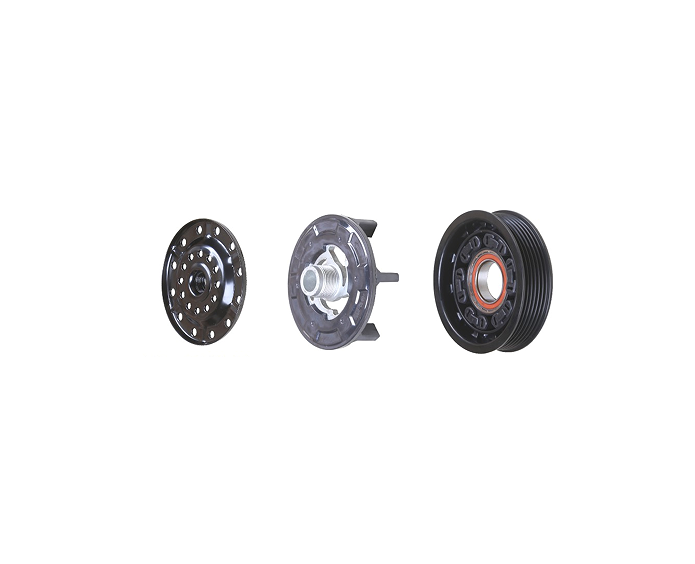

Electric vs Belt-Driven AC Compressor: Why the Decision Starts With Vehicle Architecture
The electric vs belt-driven AC compressor question is often presented as a simple technology comparison: electric compressors are modern and efficient, while belt-driven compressors are traditional and inexpensive.
For professional automotive buyers, that comparison is too simplistic.
A compressor is not an isolated cooling device. It is part of the vehicle's powertrain, HVAC control system, refrigerant circuit, electrical architecture, mounting structure, and—in many electrified vehicles—thermal-management system.
The correct technology therefore depends on the vehicle platform.
A conventional internal-combustion vehicle may obtain compressor power mechanically from the engine. A battery-electric vehicle has no engine belt available to provide continuous compressor drive. A hybrid vehicle may need cabin cooling even while the engine is stopped. A commercial vehicle may prioritize repairability and parts availability over maximum control flexibility.
These different operating conditions change the purchasing decision.
For importers, distributors, aftermarket brands, compressor specialists, repair networks, and fleet suppliers, the useful question is not:
Which compressor technology is better?
It is:
Which compressor architecture correctly matches the vehicle system, service environment, technical capabilities, and replacement market we are supporting?
Buyers comparing current product categories can review the KASEN auto AC compressor range and the separate electric compressor range for new-energy vehicles.
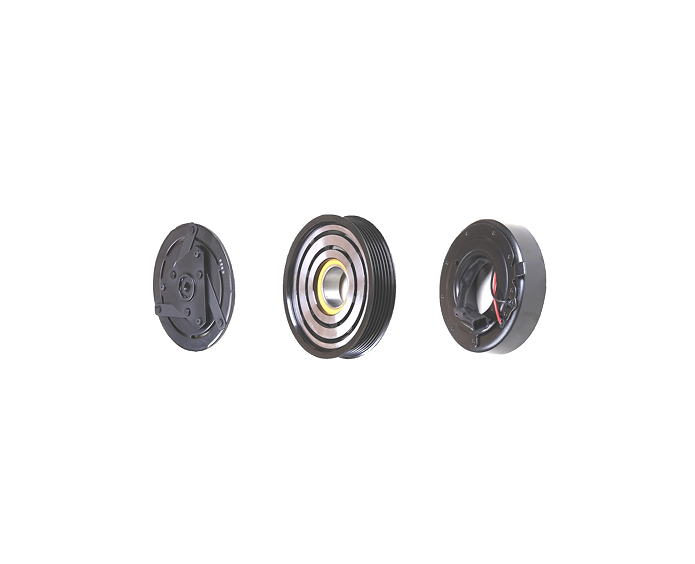
Quick Comparison: Electric vs Belt-Driven AC Compressor
| Comparison Area | Belt-Driven AC Compressor | Electric AC Compressor |
|---|---|---|
| Primary power source | Vehicle engine through belt drive | Integrated electric motor |
| Dependence on engine speed | Direct or indirect, depending on design | Independent of engine RPM |
| Compressor clutch | Common on many traditional designs, but not universal | Traditional electromagnetic drive clutch not required |
| Speed control | Fixed, clutch-cycled, or variable displacement depending on system | Usually electronically variable |
| Cooling with engine stopped | Limited unless another power source is available | Possible when vehicle electrical system permits |
| Main applications | ICE passenger cars, trucks, buses, commercial vehicles | EVs, many hybrids, electrified platforms |
| Key sourcing parameters | Pulley, grooves, clutch, control valve, mounting, OE reference | Voltage, connector, controller/communication, mounting, refrigerant, lubricant |
| Service environment | Primarily mechanical/refrigeration | Refrigeration + electrical/electronic system |
| Typical replacement skills | Conventional automotive HVAC service | Automotive HVAC plus appropriate electrified-vehicle competence |
| Main buyer risk | Mechanical fitment or control mismatch | Electrical, software/control, lubricant, or platform incompatibility |
The table highlights the central purchasing difference:
A belt-driven compressor is primarily integrated with the engine's mechanical drive system; an electric compressor is integrated with the vehicle's electrical and electronic architecture.
That change affects almost every downstream sourcing and service decision.
How a Belt-Driven AC Compressor Gets Its Power
A belt-driven compressor receives mechanical energy from the vehicle engine.
The exact arrangement varies by compressor design.
In many conventional systems, the engine rotates a belt connected to the compressor pulley. An electromagnetic compressor clutch can engage when cooling is required and disengage when compressor operation should stop.
The basic power path is:
Engine → Belt → Pulley → Clutch → Compressor Shaft
However, buyers should not assume that every belt-driven compressor uses the same clutch-cycling architecture.
Some variable-displacement compressors can remain mechanically driven while compressor output is regulated through internal displacement control and a mechanical or electronically controlled valve.
This distinction matters because two belt-driven compressors may have very different replacement requirements.
A Clutch-Driven Compressor May Require Verification of:
-
Pulley diameter
-
Belt groove number
-
Bearing
-
Coil voltage
-
Connector
-
Hub design
-
Air gap
-
Compressor shaft/interface
-
OE reference
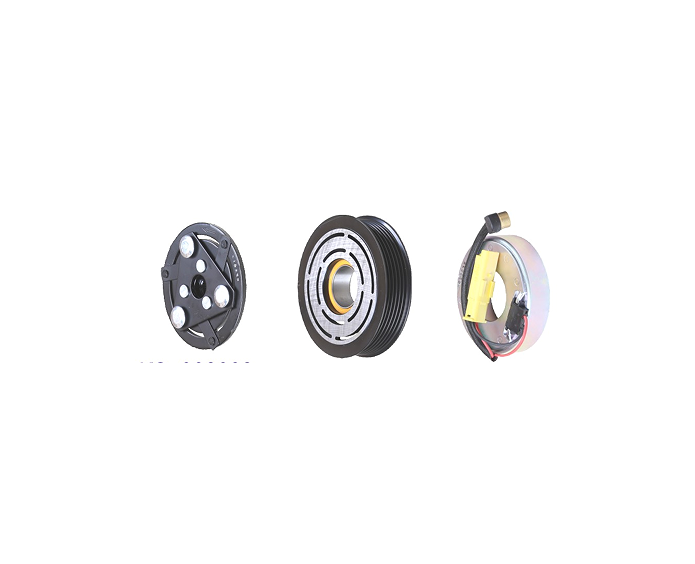
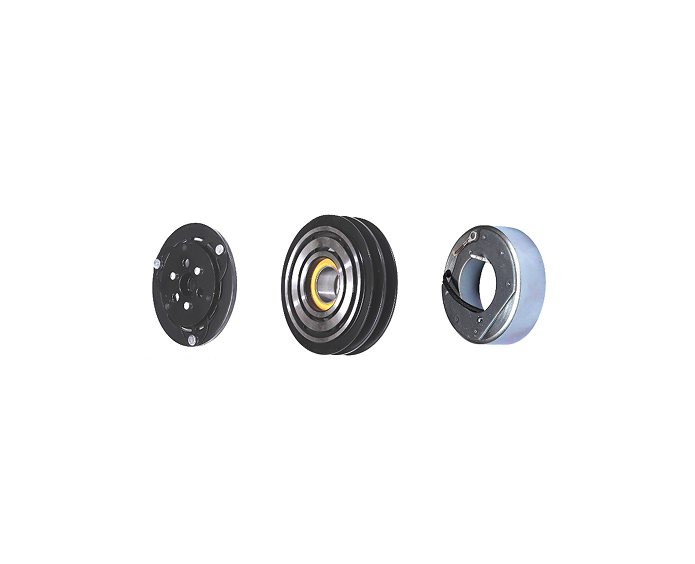
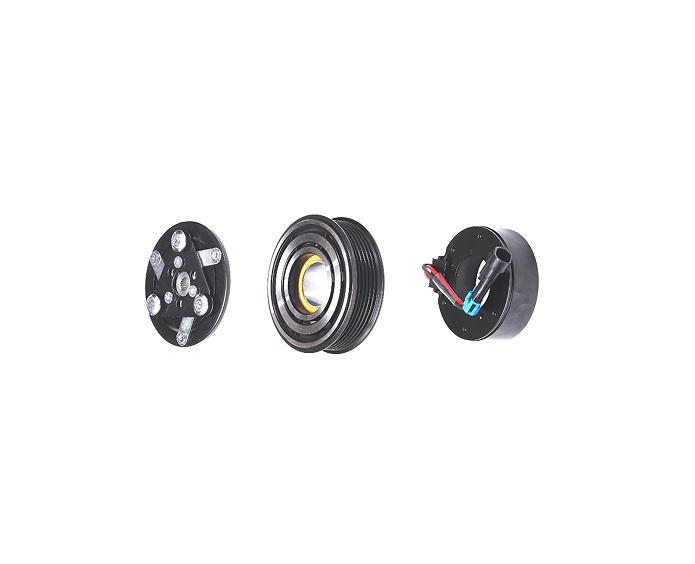
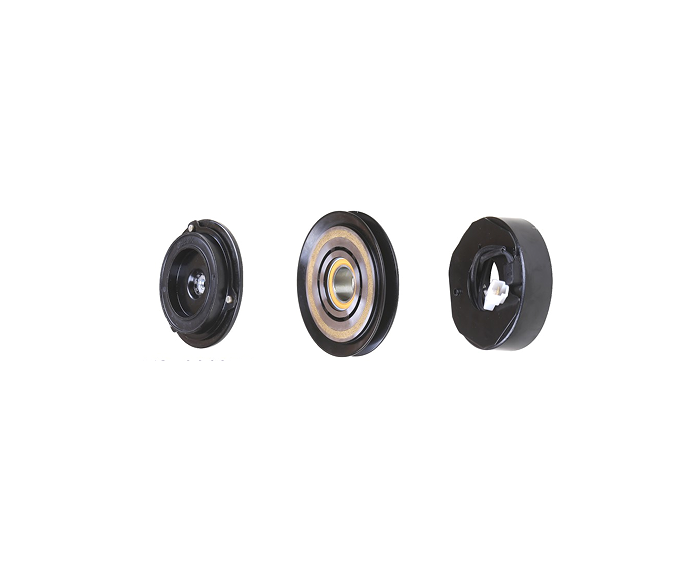
For more detail on these drive components, see the automotive AC compressor clutch selection guide.
A Variable-Displacement Belt-Driven Compressor May Add:
-
Compressor family
-
Control valve type
-
Electrical control
-
Vehicle ECU compatibility
-
Refrigerant system configuration
This is why “belt-driven” describes the power source, not necessarily the complete compressor-control strategy.
How an Electric AC Compressor Works Differently
An electric compressor contains its own electric drive system.
Instead of receiving torque from the engine through a pulley and belt, the compressor is driven by an integrated motor.
The power path becomes approximately:
Vehicle Electrical System → Compressor Electronics / Motor → Compression Mechanism
This allows compressor operation to be separated from engine RPM.
That is a fundamental advantage in vehicles where engine operation is intermittent—or where no combustion engine exists at all.
The compressor can adjust its operating speed according to thermal demand and vehicle-control commands, subject to the design of the specific vehicle system.
Important sourcing parameters can include:
-
Vehicle platform
-
OE reference
-
Operating voltage
-
Electrical connector
-
Communication/control architecture
-
Compressor controller compatibility
-
Refrigerant
-
Lubricant
-
Mounting
-
Refrigerant port orientation
-
Thermal-management configuration
KASEN maintains a dedicated category for electric and new-energy vehicle compressors, separate from conventional compressor products.
The Most Important Technical Difference: Compressor Speed Is No Longer Tied to Engine Speed
In a conventional belt-driven arrangement, available compressor rotational speed is related to engine speed and pulley ratio.
That creates a system-design challenge.
At low engine RPM, available compressor speed is lower. At high RPM, compressor speed increases. Engineers therefore use different control strategies—including clutch cycling and variable displacement—to balance cooling demand, durability, and energy consumption.
An electric compressor breaks this mechanical relationship.
The vehicle can request compressor output independently of engine speed because compressor speed is controlled electrically.
For EV and hybrid systems, this provides an important capability:
Cooling can continue even when the combustion engine is not running.
That matters during:
-
Vehicle idle
-
Hybrid engine-off operation
-
Stop-start events
-
Low-speed EV operation
-
Stationary cabin conditioning
-
Some battery thermal-management conditions
For a B2B buyer, this difference means electric compressor selection has to account for vehicle control integration, not simply physical installation.
Electric Compressor Does Not Automatically Mean “More Efficient” in Every Situation
Efficiency comparisons are often oversimplified.
An electric compressor can offer significant control advantages because its speed can be matched more closely to thermal demand.
But energy efficiency depends on the entire system, including:
-
Compressor design
-
Motor efficiency
-
Power electronics
-
Refrigerant circuit
-
Heat exchangers
-
Thermal load
-
Vehicle control strategy
-
Ambient conditions
-
Requested cabin temperature
-
Battery or powertrain thermal requirements
A modern variable-displacement belt-driven compressor can also reduce unnecessary compressor work compared with a basic fixed-output design.
Therefore, the correct B2B conclusion is not:
Electric compressors are always efficient and belt-driven compressors are inefficient.
The better conclusion is:
Electric compressors offer a wider degree of independent speed control and are particularly suitable when vehicle architecture requires cooling without continuous engine drive.
For conventional ICE platforms where belt drive is already integrated into the vehicle design, a correctly matched mechanical compressor can remain a practical and cost-effective solution.
Why Hybrids Changed the Compressor Decision
Hybrid vehicles created an important transition between traditional mechanical HVAC systems and fully electric compressor architectures.
In some hybrid operating modes, the engine may stop while the vehicle continues moving or remains stationary.
If cabin cooling depended entirely on an engine-driven compressor, cooling performance would be interrupted whenever the engine shut down.
An electric compressor solves that problem because it can operate using electrical power.
However, not every hybrid vehicle uses exactly the same compressor architecture.
Depending on the platform and generation, buyers may encounter different system designs.
This is why “hybrid compressor” should never be treated as one universal product category.
When sourcing for hybrid vehicles, confirm:
-
Exact vehicle platform
-
Model year
-
OE compressor reference
-
Electrical architecture
-
Voltage
-
Connector
-
Refrigerant
-
Lubricant
-
Control interface
-
Mounting
For a distributor expanding from conventional compressor products into hybrid applications, creating a separate technical-data structure is usually safer than simply adding “Hybrid” as another vehicle tag.
Why Battery-Electric Vehicles Depend on Electric Compressors
A battery-electric vehicle does not have a conventional combustion engine available to drive a compressor belt.
Cabin cooling therefore requires electrically driven compression.
But the compressor can also become part of a broader thermal-management strategy.
Depending on vehicle architecture, refrigerant circuits may support thermal management for:
-
Cabin cooling
-
Cabin heating in heat-pump systems
-
Battery temperature control
-
Power-electronics cooling support
-
Other thermal-management functions
Not every EV combines these functions in exactly the same way.
This is an important sourcing point.
A compressor that appears physically suitable cannot be selected solely because:
-
Voltage looks similar
-
Connector has a similar shape
-
Refrigerant ports appear compatible
-
External housing dimensions look close
The compressor has to belong to the correct vehicle system.
Thermal Management Makes EV Compressor Selection More Complex
In traditional ICE vehicles, automotive air conditioning is primarily associated with passenger comfort.
Electrified platforms can expand the role of the refrigerant system.
Battery performance and durability are temperature-sensitive, so vehicle manufacturers use increasingly integrated thermal systems.
An electric compressor may therefore operate under control logic that considers more than cabin temperature.
Possible system inputs can include:
-
Battery temperature
-
Cabin cooling demand
-
Ambient temperature
-
Charging state
-
Powertrain thermal requirements
-
Defrosting demand
-
Heat-pump operation
This means an EV compressor should be sourced as an integrated vehicle component, not as a generic refrigeration compressor.
For buyers, the practical consequence is simple:
OE reference and vehicle-platform data become even more important as thermal systems become more integrated.
Refrigerant Compatibility Must Be Verified for Both Technologies
The compressor has to be compatible with the refrigerant system it is designed to operate in.
Automotive applications may use different refrigerants depending on platform, market, production year, and system design.
Never assume refrigerant compatibility from:
-
Compressor appearance
-
Vehicle brand
-
Connector type
-
Similar OE numbering
A professional RFQ should include the refrigerant specification whenever it is known.
This applies to both electric and belt-driven compressors.
Incorrect refrigerant assumptions can affect:
-
Lubrication
-
Pressure characteristics
-
Sealing
-
Service procedures
-
System performance
For a broader overview of how the compressor interacts with other HVAC components, buyers can refer to the automotive air conditioning system parts guide.
Lubricant Compatibility Is Even More Critical in Electrically Driven Compressors
Compressor oil does more than lubricate moving mechanical components.
In an electric compressor, the motor and electrical components are integrated into the compressor assembly.
Therefore, the lubricant specified by the vehicle or compressor manufacturer may also need to satisfy electrical-insulation requirements appropriate to the system design.
This creates an important purchasing and service rule:
Do not assume the lubricant used in a conventional belt-driven compressor is automatically suitable for an electric compressor.
Likewise, do not choose oil simply by refrigerant family.
The correct approach is to verify the compressor-specific lubricant requirement.
For distributors, this information should be included in product records where available.
For repair networks, incorrect oil selection can create problems that extend beyond normal mechanical lubrication.
Electric vs Belt-Driven Compressor Control Strategy
Control architecture is one of the largest technical differences between the two technologies.
Belt-Driven Fixed or Clutch-Controlled Systems
Cooling output may be managed partly by:
-
Compressor engagement/disengagement
-
Cycling logic
-
Engine RPM
-
Refrigerant pressure controls
The electromagnetic clutch becomes an important control and wear component.
Belt-Driven Variable-Displacement Systems
The compressor remains mechanically driven, but displacement can change according to demand.
Control may involve:
-
Mechanical regulation
-
Electronic control valve
-
ECU commands
-
Refrigerant pressure inputs
Electric Compressors
Output is controlled primarily by regulating electric compressor operation.
Depending on the vehicle, control can involve:
-
Motor speed
-
Power electronics
-
Vehicle control commands
-
Thermal-management software
-
Communication networks
This is why voltage alone is not enough to confirm electric compressor compatibility.
A compressor that operates at the correct nominal voltage may still be incompatible with the target vehicle's connector, control logic, communication, or system architecture.
Noise and Vibration: The Difference Buyers Often Overlook
HVAC noise becomes increasingly noticeable as vehicles become quieter.
Belt-Driven Systems
Potential noise sources include:
-
Belt
-
Pulley bearing
-
Electromagnetic clutch engagement
-
Compressor mechanical vibration
-
Engine vibration
-
Misalignment
-
Worn clutch surfaces
The engine itself can mask some compressor noise.
Electric Compressor Systems
Electric compressors remove the mechanical belt and traditional clutch drive connection.
This can reduce some mechanical engagement noise and vibration transfer.
However, electric compressors can introduce other acoustic characteristics related to:
-
Motor operation
-
High-speed compressor rotation
-
Power electronics
-
Mounting resonance
-
Refrigerant-flow noise
Therefore, “electric = silent” is not a safe purchasing assumption.
Correct mounting and vehicle-specific application remain important.
Failure Modes Are Different, Not Eliminated
Another common misunderstanding is that removing the belt and clutch removes compressor failure risk.
It does not.
The failure profile changes.
Common Belt-Driven System Problems May Include
-
Clutch coil failure
-
Clutch slipping
-
Pulley bearing wear
-
Belt-related problems
-
Hub or armature wear
-
Control valve faults
-
Shaft seal leakage
-
Internal compressor wear
-
Refrigerant contamination
-
Incorrect lubrication
Electric Compressor Problems May Include
-
Electrical connector faults
-
Motor or internal electrical problems
-
Power-electronics faults
-
Communication/control issues
-
Thermal stress
-
Internal mechanical wear
-
Refrigerant contamination
-
Lubricant incompatibility
-
System-level control faults
The absence of a compressor clutch removes one group of mechanical wear components.
It also introduces electrical and control-system requirements that conventional HVAC workshops may not routinely manage.
Serviceability: Belt-Driven Compressors Still Have an Important Aftermarket Advantage
Belt-driven compressor systems benefit from decades of global service infrastructure.
In many markets, technicians are already familiar with:
-
Compressor replacement
-
Clutch diagnosis
-
Pulley replacement
-
Bearing replacement
-
Coil replacement
-
Control valve replacement
-
Refrigerant recovery and charging
Parts availability is also broad across mature ICE vehicle fleets.
This makes conventional compressor systems attractive in markets where:
-
ICE vehicle populations remain large
-
Repairability is important
-
Vehicles stay in service for many years
-
Component-level repair is common
-
Workshop equipment is oriented toward traditional automotive HVAC
Electric compressor service requires a different capability level.
Because electrified vehicles can involve high-voltage electrical systems, diagnosis and repair must follow vehicle-manufacturer procedures and be performed by appropriately trained personnel with suitable equipment.
For distributors, that changes not just what they sell—but also the type of customer support information they may need to provide.
Safety Changes the Aftermarket Business Model
Electric compressors should not simply be placed next to conventional compressors in a catalogue without clear identification.
A high-voltage vehicle HVAC system introduces additional service considerations.
The exact procedures depend on the vehicle manufacturer and platform, but professional service organizations may require:
-
Electrified-vehicle training
-
Appropriate electrical safety practices
-
Correct diagnostic tools
-
Vehicle-specific service information
-
Compatible refrigerant equipment
-
Correct lubricant handling
-
Proper electrical isolation procedures
For a parts supplier, the goal is not to teach technicians how to perform high-voltage work.
The goal is to ensure the product catalogue clearly identifies electric compressor applications so the component reaches a qualified repair environment.
Belt-Driven Does Not Always Mean “Old Technology”
Belt-driven compressors are sometimes described as obsolete.
That is inaccurate.
Global vehicle fleets still contain enormous numbers of combustion-engine passenger cars, vans, trucks, buses, and commercial vehicles.
For those platforms, the relevant engineering question is not whether electric compressor technology exists.
It is whether an electric compressor is part of the original vehicle architecture.
Replacing a mechanical compressor with an electric compressor is not generally a simple one-for-one substitution.
The vehicle would need appropriate:
-
Electrical power
-
Controls
-
Mounting
-
Refrigerant-system integration
-
Safety architecture
-
Calibration
Therefore, aftermarket replacement strategy should normally follow the original system architecture unless a properly engineered conversion has been developed for a specific application.
Electric Does Not Automatically Mean the Correct Upgrade
The opposite mistake also occurs.
Buyers sometimes view electric compressors as a universal “upgrade” because they offer independent speed control.
But converting a vehicle HVAC system from mechanical to electric drive changes the power source and control architecture.
It may affect:
-
Electrical load
-
Wiring
-
Control logic
-
Mounting
-
Refrigerant plumbing
-
Lubricant
-
System calibration
-
Safety requirements
For standard automotive replacement markets, the objective is usually correct restoration of the original HVAC system, not redesigning the vehicle.
This is particularly important for distributors.
Catalogue descriptions should distinguish between:
replacement for an original electric compressor
and
conversion to an electric compressor
They are not the same product proposition.
Which Technology Fits Different Vehicle Applications?
Conventional ICE Passenger Vehicles
A belt-driven compressor is often the natural replacement when that is the original system.
Buyer priorities include:
-
Correct OE match
-
Pulley
-
Mounting
-
Control system
-
Refrigerant
-
Clutch specification where applicable
Start-Stop ICE Vehicles
Vehicle architecture becomes more important because engine stop events can affect mechanically driven accessories.
The correct replacement should follow the manufacturer's original compressor and HVAC design.
Hybrid Vehicles
Many hybrid platforms benefit from electric compressors because cabin cooling can continue when the engine is off.
However, always verify the actual vehicle system.
Battery-Electric Vehicles
Electric compressors are the standard architectural direction because there is no conventional engine belt available to power HVAC continuously.
Commercial Trucks and Buses
Traditional mechanical compressors remain highly relevant across existing fleets.
Important priorities may include:
-
Long operating hours
-
Parts availability
-
Repairability
-
High ambient temperature operation
-
Fleet downtime
New-Energy Commercial Vehicles
Electrified commercial fleets increasingly require electric compressor knowledge, especially where cabin and battery thermal-management systems become integrated.
Application Decision Matrix
| Vehicle / Buyer Scenario | Typical Direction | Main Reason |
|---|---|---|
| Conventional ICE passenger car replacement | Belt-driven | Matches original mechanical architecture |
| Existing truck/bus fleet | Often belt-driven | Mature fleet and service infrastructure |
| Conventional compressor rebuild program | Belt-driven/components | Component-level service demand |
| Hybrid passenger vehicle | Often electric, platform-dependent | Cooling during engine-off operation |
| Battery-electric vehicle | Electric | No continuous engine belt drive |
| EV thermal-management replacement | Electric | Integration with electronic thermal system |
| Distributor testing EV category | Electric product line added separately | Different technical data required |
| Multi-market wholesaler | Both | Mixed global vehicle population |
This is a sourcing framework, not a substitute for vehicle-specific confirmation.
What Specifications Should Buyers Request for a Belt-Driven Compressor?
A professional RFQ should contain enough information to identify the exact compressor.
Recommended fields include:
Vehicle Data
-
Manufacturer
-
Model
-
Production year
-
Engine
-
Target market
Compressor Identity
-
OE/OEM number
-
Compressor manufacturer
-
Compressor model/family
-
Existing label photo
Mechanical Details
-
Mounting arrangement
-
Pulley diameter
-
Belt groove number
-
Refrigerant port position
-
Clutch configuration where applicable
Electrical / Control Details
-
Clutch coil voltage where applicable
-
Connector
-
Control valve
-
Electronic regulation details where relevant
System Data
-
Refrigerant
-
Required lubricant specification
-
Quantity
-
Packaging requirement
Buyers can compare available applications through the KASEN conventional auto AC compressor category.
What Specifications Should Buyers Request for an Electric Compressor?
An EV or hybrid RFQ requires a different data set.
Recommended fields include:
Vehicle Identification
-
Vehicle manufacturer
-
Model
-
Model year
-
Hybrid / BEV platform
-
Market
Compressor Identification
-
OE reference
-
Compressor label
-
Supplier/manufacturer reference
-
Clear photographs
Electrical Information
-
Operating-voltage specification
-
Connector
-
Controller/interface reference
-
Communication requirements where applicable
Refrigeration Information
-
Refrigerant
-
Compressor-specific lubricant
-
Port arrangement
-
System configuration
Installation Information
-
Mounting points
-
Housing configuration
-
Thermal-management application
-
Heat-pump/cooling system information if relevant
Commercial Information
-
Quantity
-
Destination
-
Packaging
-
Private-label requirement
-
Sample requirement
A vague enquiry such as “need EV compressor” does not provide enough information for professional matching.
Why External Appearance Is Even Less Reliable for Electric Compressors
Physical similarity has always been a poor replacement for technical identification.
With electric compressors, it becomes even less useful.
Two units can appear similar externally but differ in:
-
Voltage
-
Internal motor
-
Controller
-
Software/control logic
-
Electrical connector
-
Communication
-
Refrigerant compatibility
-
Lubricant specification
-
Mounting
-
Vehicle platform
For distributors, this creates a catalogue-design requirement:
Electric compressor listings need more technical attributes than conventional visual-fitment listings.
A high-resolution photograph may help identify the product.
It should not be the entire identification system.
Total Cost of Ownership: The Better Way to Compare the Two Technologies
Unit price is only one component of compressor economics.
For vehicle manufacturers, fleet operators, and professional aftermarket buyers, total cost can include:
-
Compressor purchase price
-
Installation labor
-
Energy use
-
Related component replacement
-
Diagnostic complexity
-
Service equipment
-
Vehicle downtime
-
Return rate
-
Warranty administration
-
Inventory
-
Technician training
-
Technical-support requirements
Belt-Driven TCO Advantages
Possible advantages include:
-
Mature supply network
-
Lower product complexity in many applications
-
Familiar workshop procedures
-
Broad component availability
-
Potential for component-level clutch repair
Electric Compressor TCO Advantages
Possible advantages can include:
-
Independent compressor operation
-
Variable-speed control
-
No traditional clutch wear
-
Better integration with electrified powertrains
-
Ability to provide cooling without continuous engine operation
Electric Compressor TCO Costs
Buyers also need to consider:
-
Higher electrical/electronic complexity
-
More demanding identification
-
Specialized service environment
-
Potentially higher unit value
-
Technical-support requirements
-
Inventory risk if application data is poor
A B2B purchasing team should therefore compare system economics, not just compressor unit price.
Inventory Management Should Separate Compressor Technologies
One of the most practical changes a distributor can make is to stop treating all AC compressors as one homogeneous inventory category.
A clearer structure is:
Group A — Belt-Driven Fixed / Clutch-Controlled Compressors
Key attributes:
-
OE reference
-
Pulley
-
Clutch
-
Bearing
-
Coil
-
Mounting
Group B — Belt-Driven Variable-Displacement Compressors
Add:
-
Control valve
-
Control type
-
Electronic specification
Group C — Hybrid / Electric Compressors
Key attributes:
-
OE reference
-
Voltage
-
Connector
-
Control/interface
-
Refrigerant
-
Lubricant
-
Platform
Group D — Related Compressor Components
Separate:
-
Compressor clutch
-
Pulley
-
Bearing
-
Coil
-
Control valve
-
Expansion valve
-
Seals
This improves warehouse identification and reduces the risk of applying conventional compressor assumptions to electrified-vehicle parts.
How the Shift to EVs Changes Distributor Inventory Strategy
The transition to electrified vehicles does not mean distributors should immediately replace their conventional compressor inventory with EV products.
Vehicle parc changes gradually.
Different markets electrify at different speeds.
A practical distributor strategy can therefore use four inventory tiers.
Tier 1 — High-Volume ICE Applications
Continue supporting proven conventional compressor references with strong local demand.
Tier 2 — Commercial and Fleet Applications
Maintain appropriate stock where buses, trucks, vans, or service vehicles create predictable replacement demand.
Tier 3 — Hybrid Applications
Build platform-specific data carefully because hybrid architectures can vary significantly.
Tier 4 — EV Electric Compressors
Add products based on actual regional vehicle population, repair demand, technical capability, and supplier support.
This avoids two opposite inventory mistakes:
-
Ignoring EV demand until customers have already moved elsewhere.
-
Buying large quantities of electric compressors before local repair demand exists.
Buyer Risk: Mixing EV and ICE Compressor Data
A common future catalogue problem will be incorrect data inheritance.
For example, a distributor may have conventional database fields such as:
-
Pulley diameter
-
Groove count
-
Coil voltage
These are useful for traditional clutch-driven systems.
But copying the same template directly to an EV compressor catalogue leaves out important electric-specific information.
Likewise, an electric-compressor data template may omit mechanical drive information needed for ICE applications.
Your database should therefore use technology-specific attributes.
This improves:
-
Website filters
-
RFQ accuracy
-
Warehouse control
-
Sales training
-
Technical support
-
AI/search indexing
-
Customer trust
How to Compare Suppliers for Both Compressor Technologies
If you want one supplier to support both product groups, evaluate whether it can keep the categories technically separate.
Ask:
Conventional Compressor Questions
-
Can you match by OE and compressor model?
-
Do you provide pulley/clutch information where relevant?
-
Can you distinguish fixed and variable displacement applications?
-
Can you supply related clutch components?
Electric Compressor Questions
-
Can you identify the vehicle platform?
-
Is operating voltage clearly recorded?
-
Can connector and control information be confirmed?
-
Is refrigerant/lubricant information available?
-
Can electric-compressor samples be controlled separately?
General B2B Questions
-
How are similar SKUs identified?
-
Can you support repeat orders?
-
How are changes communicated?
-
Can packaging and buyer SKU requirements be managed?
-
What information should be included in an RFQ?
The supplier's ability to ask precise questions is often more valuable than simply offering a large catalogue.
Common Buying Mistakes in Electric vs Belt-Driven Compressor Sourcing
Mistake 1: Assuming All Belt-Driven Compressors Use a Clutch
Some variable-displacement designs use different control strategies.
Confirm the compressor architecture.
Mistake 2: Selecting an Electric Compressor by Voltage Alone
Voltage is only one compatibility factor.
Connector, control architecture, refrigerant, lubricant, mounting, and vehicle platform also matter.
Mistake 3: Using Vehicle Model Only
One vehicle family can use different compressors across years, engines, markets, or platform revisions.
Mistake 4: Assuming Similar Housing Means Interchangeable
Internal, electrical, control, and mounting differences may exist.
Mistake 5: Using Conventional Compressor Oil Assumptions for EV Systems
Always follow the specified lubricant requirement for the electric compressor and vehicle system.
Mistake 6: Treating Every Hybrid as an EV System
Hybrid architectures differ.
Confirm the original compressor type.
Mistake 7: Assuming Electric Compressors Require No Maintenance
They remove the traditional clutch system but still contain mechanical, electrical, refrigerant, sealing, and control elements.
Mistake 8: Treating an Electric Compressor as a Universal Upgrade
Replacing a mechanical compressor architecture with an electric one requires much more than changing the compressor.
Mistake 9: Combining All Compressors Under One Warehouse SKU Logic
Electric and mechanical compressor categories need different technical attributes.
Mistake 10: Comparing Purchase Price Without Considering Service Complexity
Total sourcing and ownership cost provide a more useful decision framework.
A Practical B2B Decision Checklist
Before purchasing, ask:
Vehicle Architecture
Is the vehicle:
-
ICE
-
Hybrid
-
Battery electric
-
Commercial electric
-
Other electrified platform
Original Compressor Architecture
Is it:
-
Belt-driven fixed displacement
-
Clutch-controlled
-
Variable displacement
-
Electric
-
Another specific configuration
Application Confirmation
Do you have:
-
OE number
-
Compressor reference
-
Vehicle details
-
Photos
-
System information
System Compatibility
Have you verified:
-
Refrigerant
-
Lubricant
-
Mounting
-
Connector
-
Control strategy
Service Market
Can your customers safely and correctly service the product category?
Inventory Logic
Does your catalogue clearly distinguish electric from belt-driven applications?
Supplier Support
Can your supplier confirm the missing technical information before quotation?
If several answers are unclear, the product is not yet ready for a confident bulk purchase.
How to Build a Better RFQ for Compressor Sourcing
A useful RFQ should make the supplier's technical job easier.
Belt-Driven Compressor RFQ Example
Product: Auto AC compressor
Vehicle: Make / model / year / engine
OE number: XXX
Compressor model: XXX
Pulley: Diameter / grooves
Clutch: Applicable / not applicable / unknown
Control valve: Reference if applicable
Refrigerant: XXX
Quantity: XXX
Market: Country/region
Photos: Label + front + rear + connector
Electric Compressor RFQ Example
Product: Electric AC compressor
Vehicle platform: Make / model / year
OE number: XXX
Voltage: XXX if confirmed
Connector: Photo/reference
Control/interface: Available information
Refrigerant: XXX
Lubricant: Manufacturer specification if known
Mounting: Photo/drawing
Quantity: XXX
Market: Country/region
The objective is not to overwhelm the supplier with information.
It is to prevent ambiguity from becoming an incorrect quotation.
Where KASEN Fits Into Conventional and Electric Compressor Sourcing
KASEN's current product structure includes dedicated conventional auto AC compressor and electric/new-energy compressor categories, in addition to compressor clutches, bearings, valves, and related automotive AC components.
This is relevant for distributors managing a mixed vehicle market because conventional and electric compressors can remain within one broader automotive HVAC sourcing program while still being treated as technically separate categories.
Buyers can review:
Conventional Auto AC Compressors
Electric / New-Energy AC Compressors
Complete Automotive AC Product Range
For technical background on complete vehicle AC architecture, see the Automotive Air Conditioning Compressor Guide.
Frequently Asked Questions
What is the main difference between an electric and belt-driven AC compressor?
A belt-driven compressor receives mechanical power from the vehicle engine, while an electric compressor uses an integrated electric motor. This allows an electric compressor to operate independently of engine RPM and makes it suitable for EVs and many hybrid applications.
Does every belt-driven AC compressor use an electromagnetic clutch?
No. Many traditional designs use compressor clutches, but some variable-displacement belt-driven compressors use different control strategies and may remain mechanically driven continuously. Always confirm the actual compressor architecture.
Is an electric AC compressor more efficient than a belt-driven compressor?
Electric compressors offer independent variable-speed control and are particularly well suited to electrified powertrains. However, total efficiency depends on the full HVAC and vehicle system, so technology should not be judged from the compressor alone.
Can I replace a belt-driven compressor with an electric compressor?
Not as a simple direct replacement in most standard repair situations. Electric conversion changes the power supply, mounting, controls, electrical architecture, and potentially other HVAC-system requirements. Standard replacement should follow the original vehicle architecture unless a properly engineered conversion exists.
Why are electric compressors used in EVs?
Battery-electric vehicles do not have a conventional engine belt to drive a compressor. An electric compressor can also operate independently and integrate with vehicle thermal-management controls.
Why are electric compressors common in hybrid vehicles?
They can provide cabin cooling while the combustion engine is stopped. This supports hybrid operating strategies where the engine cycles on and off. Exact compressor architecture still varies by vehicle platform.
What information do I need to buy an electric AC compressor?
Provide the vehicle platform, model year, OE reference, compressor label, voltage where known, connector, control information, refrigerant, lubricant requirement, mounting details, photographs, and required quantity.
What information do I need for a belt-driven compressor?
Provide the vehicle, engine, OE number, compressor model, mounting details, pulley specifications, clutch information where applicable, control valve, refrigerant, lubricant requirement, photographs, and quantity.
Do electric AC compressors use the same oil as conventional compressors?
Do not assume they do. Electric compressors can have specific lubricant requirements related to their integrated electrical and mechanical design. Always verify the compressor or vehicle manufacturer's specified lubricant.
Which compressor type is better for an aftermarket distributor?
Neither technology is universally better. A distributor should stock products based on the regional vehicle population and actual repair demand. Conventional compressors remain essential for ICE fleets, while electric compressor coverage becomes increasingly important as hybrid and EV service demand grows.
Conclusion
The electric vs belt-driven AC compressor decision should follow the vehicle's original architecture, control system, refrigerant and lubricant requirements—not technology trends alone. Belt-driven compressors remain essential across ICE fleets, while electric compressors require a separate sourcing approach for hybrid and EV platforms.
Explore KASEN's auto AC compressor range and electric compressor range, or contact KASEN with your OE reference and application details for product matching.