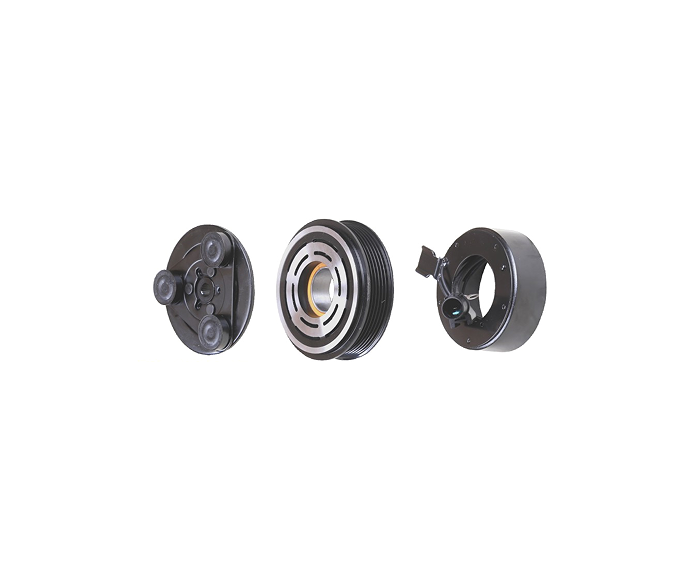

What Should an Auto AC Compressor Supplier Actually Solve for B2B Buyers?
A professional auto AC compressor supplier should solve more than one purchasing problem.
For a workshop buying one replacement compressor, the immediate question may be simple: does the part fit this vehicle?
For an importer, distributor, wholesaler, aftermarket brand, or repair network, the situation is very different.
The buyer may need to manage dozens or hundreds of compressor references while controlling:
-
Fitment accuracy
-
OE and compressor cross-references
-
Multiple vehicle applications
-
Product identification
-
Sample approval
-
Inventory depth
-
Packaging
-
Repeat orders
-
Private-label requirements
-
Technical communication
-
After-sales claims
A supplier with a large catalogue is not automatically a strong B2B partner.
The real value is the supplier's ability to help buyers turn a complicated application list into a repeatable sourcing system.
That means the purchasing process should begin with accurate compressor identification, not simply a price comparison.
Buyers can first review the current auto AC compressor range to understand how different OE references and vehicle applications create separate sourcing requirements.
Why Auto AC Compres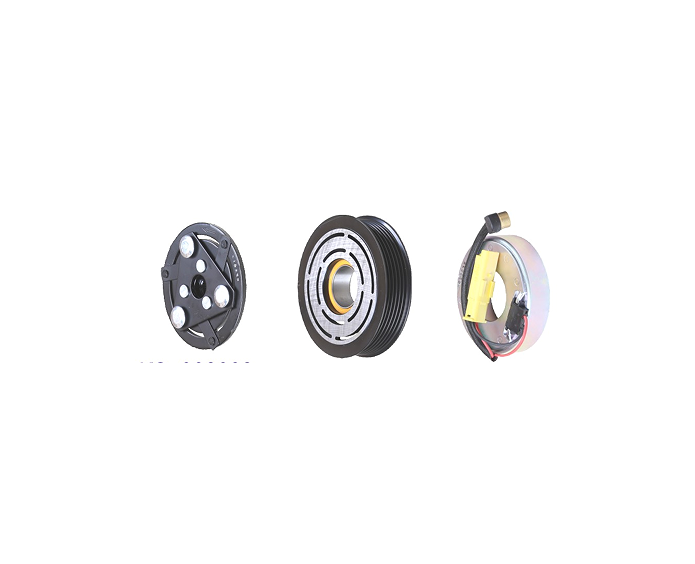 sor Sourcing Creates More Risk Than It Appears
At first glance, an automotive AC compressor seems easy to purchase.
Find the vehicle.
Find a visually similar compressor.
Compare prices.
Place the order.
In bulk aftermarket purchasing, however, this approach can create expensive mistakes.
Two compressors may have a very similar housing but differ in:
-
OE number
-
Compressor family
-
Engine application
-
Mounting position
-
Pulley diameter
-
Belt groove count
-
Electrical connector
-
Control valve
-
Refrigerant port orientation
-
Refrigerant requirement
-
Compressor oil specification
-
Internal configuration
A wrong compressor can therefore become more than an installation issue.
For distributors, the total cost may include:
dead inventory + customer returns + replacement freight + warranty administration + warehouse handling + lost sales
That is why the cheapest quotation is not always the lowest-cost sourcing option.
What Information Should Be Matched Before Requesting a Bulk Quote?
Good supplier communication begins with better application data.
Instead of sending:
“Need compressor for Hyundai.”
a professional RFQ should contain as much identifying information as possible.
1. OE or OEM Number
The OE number is one of the most valuable starting points for cross-reference work.
It can quickly narrow the compressor application, but it should not always be treated as the only identification method.
Vehicle manufacturers can use different compressor versions across:
-
Production years
-
Engine options
-
Regional markets
-
Platform revisions
-
Original component suppliers
The OE number should therefore be combined with additional application information whenever possible.
2. Compressor Model or Family
A compressor reference can help distinguish products that look similar externally.
This is especially useful when a buyer also sources related products such as:
-
Compressor clutch
-
Bearing
-
Pulley
-
Control valve
-
Coil
-
Hub components
The compressor family creates a stronger technical reference than vehicle brand alone.
3. Vehicle Information
Record:
-
Vehicle make
-
Model
-
Year
-
Engine
-
Market where applicable
“Ford compressor” or “Toyota AC compressor” is not a sufficient bulk-purchasing specification.
4. Photos
Clear photographs can help verify:
-
Housing
-
Pulley
-
Connector
-
Mounting points
-
Refrigerant ports
-
Original label
Photos are useful for cross-checking, but they should support technical identification rather than replace it.
5. Refrigerant and Oil Information
Refrigerant and lubricant specifications should be treated as part of the product record.
This is especially important when distributors sell products across older, newer, conventional, hybrid, and electric vehicle platforms.
Auto AC Compressor Matching Checklist
A practical purchasing record can contain the following fields:
| Check | Buyer Should Record | Why It Matters |
|---|---|---|
| OE/OEM number | Original reference | Cross-reference accuracy |
| Vehicle make/model | Application | Narrows compatibility |
| Production year | Vehicle revision | Avoids model-year mismatch |
| Engine | Powertrain configuration | Affects installation |
| Compressor model | Compressor family | Improves identification |
| Mounting | Hole/position configuration | Physical fit |
| Pulley | Diameter and structure | Belt-drive fitment |
| Groove count | Belt configuration | Prevents belt mismatch |
| Connector | Electrical interface | Prevents wiring mismatch |
| Control type | Valve/control configuration | System compatibility |
| Refrigerant | System type | Application compatibility |
| Oil | Lubricant requirement | Compressor protection |
| Photos | Several angles | Visual cross-check |
| Buyer SKU | Internal product code | Repeat-order control |
For distributors handling a large range, storing this information once can prevent the same identification work from being repeated every time the product is reordered.
For a deeper passenger-car matching process, buyers can also reference the car AC compressor buying guide.
A Strong Supplier Should Help Reduce Wrong-Fitment Risk
One important supplier capability is knowing when the buyer has not provided enough information.
A weak sourcing process may simply match the nearest catalogue item.
A stronger process should identify uncertainty before the order proceeds.
For example:
OE number matches, but connector differs.
or:
Vehicle model matches, but production year may use two compressor versions.
or:
Housing looks similar, but pulley dimensions need confirmation.
That kind of clarification has commercial value.
It can prevent a purchasing mistake before it becomes an inventory problem.
For professional buyers, the supplier's ability to ask the right technical questions can therefore be as important as the size of its product catalogue.
How Should Distributors Compare Auto AC Compressor Suppliers?
Supplier evaluation should be structured around risks rather than marketing claims.
A useful comparison can include the following areas.
Application Coverage
Does the supplier cover applications relevant to your market?
A European distributor, Southeast Asian wholesaler, Middle East importer, and North American aftermarket buyer may need very different product mixes.
Large catalogue numbers alone do not prove useful coverage.
What matters is whether the supplier covers the vehicle population you actually serve.
Cross-Reference Capability
Can the supplier work with:
-
OE numbers
-
Compressor models
-
Vehicle data
-
Original labels
-
Photos
-
Drawings
-
Physical samples
A professional supplier should have more than one way to identify a difficult product.
Technical Communication
Can the sales or technical team explain which information is missing?
For example:
-
Which pulley dimension is required?
-
Is the connector confirmed?
-
Which compressor family is this?
-
Is the unit clutch-driven or clutchless?
-
Is this a conventional or electric compressor?
These questions reduce uncertainty before production.
Related Product Coverage
A broader automotive AC product range may simplify purchasing for distributors that also buy:
-
Compressor clutches
-
Bearings
-
Control valves
-
Expansion valves
-
Electric compressors
-
Other automotive AC components
KASEN's current website lists compressors, clutches, electric compressors, valves, bearings, and related automotive air-conditioning components. Its company profile states that it serves aftermarket and OEM-related customers and discusses custom production based on drawings or OEM numbers.
Buyers can review the broader automotive AC product range.
Why Repeat-Order Control Matters More Than the First Shipment
Many supplier evaluations focus heavily on first-order quality.
But the real B2B challenge is often the third, fifth, or tenth order.
A buyer approves one compressor today.
Six months later, the purchasing team reorders it.
Several things may have changed:
-
Internal product code
-
Component source
-
Connector
-
Label
-
Packaging
-
Cross-reference
-
Product appearance
-
Sub-supplier
-
Application description
If the original approval is not documented, the buyer and supplier may both assume they are discussing the same product while referring to different versions.
A better repeat-order record can look like:
Buyer SKU → Supplier Model → OE Number → Compressor Family → Vehicle Application → Approved Images → Key Specs → Packaging Revision
This gives both sides a reference point.
For a distributor, that is more scalable than depending on old email threads.
Sample Approval Should Be Treated as a Technical Reference
A sample is not only a way to “see the product before ordering.”
For B2B sourcing, an approved sample can become part of the repeat-order control system.
Before volume purchasing, buyers should verify the relevant items, such as:
-
Product identity
-
OE reference
-
Vehicle application
-
Mounting
-
Pulley
-
Connector
-
Ports
-
Label
-
Packaging
-
Buyer SKU
Where possible, record approved photos and important dimensions.
Then future shipments can be compared against the approved reference.
This is especially valuable for long-tail aftermarket products where several similar compressor variants exist.
How Quality Should Be Evaluated Without Relying on Marketing Words
Terms such as:
premium quality
high durability
OEM quality
best compressor
provide little purchasing value without supporting criteria.
B2B buyers should ask more specific questions.
Product Identification
How are similar applications separated?
Could two visually similar references accidentally be mixed?
Dimensional Checks
Which dimensions influence installation?
How are critical mounting or pulley dimensions controlled?
Assembly Checks
How does the supplier control assembly consistency?
Depending on the compressor design, relevant areas may include:
-
Rotation
-
Pulley/clutch assembly
-
Electrical connection
-
Valve installation
-
Port condition
-
Housing assembly
Functional Inspection
Ask what inspection is relevant to the specific compressor design.
Avoid assuming one universal test plan applies to every compressor.
Nonconforming Product Control
Ask:
-
How is a failed unit identified?
-
How is it separated from acceptable production?
-
How is the affected product reference traced?
-
How is a complaint linked back to the correct SKU?
These questions are often more useful than simply requesting a generic “QC certificate.”
How an Auto AC Compressor Supplier Can Help With Inventory Planning
For distributors, compressor purchasing is also an inventory problem.
Too little stock creates missed sales.
Too much long-tail inventory traps working capital.
A supplier relationship can support a more structured assortment strategy.
Tier 1: Fast-Moving Applications
Maintain stronger stock for:
-
Popular vehicle platforms
-
High-registration models
-
Frequently requested repair references
-
Proven repeat sellers
Tier 2: Stable Medium-Demand Applications
Hold smaller but regular quantities.
These products sell consistently but may not justify deep stock.
Tier 3: Long-Tail Applications
Use lower stocking quantities or supplier replenishment where practical.
The goal is to maintain market coverage without overloading the warehouse.
Tier 4: EV and Hybrid Applications
Consider managing electric compressors as a separate technical and inventory category.
This helps avoid mixing conventional compressor identification rules with high-voltage electric compressor sourcing.
Why Electric Compressors Need a Different Supplier Checklist
As vehicle platforms change, distributors increasingly need to manage both traditional and electric compressor ranges.
An electric compressor should not simply be treated as another version of a belt-driven compressor.
Traditional compressor sourcing may emphasize:
-
Pulley
-
Belt grooves
-
Clutch
-
Mechanical drive
-
Engine application
Electric compressor sourcing shifts attention toward:
-
Operating voltage
-
Electrical connector
-
Vehicle platform
-
Electronic control
-
Refrigerant
-
Lubricant
-
Mounting
-
Thermal-management integration
KASEN currently maintains a separate electric compressor and new-energy compressor range, reflecting the different product category.
For an aftermarket distributor expanding into EV and hybrid parts, supplier technical support becomes increasingly important because appearance alone provides even less assurance of compatibility.
Conventional vs Electric Compressor Sourcing
| Buying Factor | Conventional Compressor | Electric Compressor |
|---|---|---|
| Vehicle reference | Required | Required |
| OE reference | Important | Important |
| Mounting | Critical | Critical |
| Pulley | Often relevant | Usually not the main identifier |
| Clutch | Relevant on many designs | Traditional clutch generally not used |
| Voltage | Clutch/control related where applicable | Core compressor specification |
| Connector | Important | Critical |
| Refrigerant | Required | Required |
| Lubricant | Required | Especially important to system compatibility |
| Control | Mechanical/electrical depending on design | Electronic control is central |
| Thermal management | Cabin cooling focus | May interact with broader EV thermal systems |
The implication for buyers is straightforward:
Do not manage electric compressor SKUs using the same data structure as conventional compressors.
When Does OEM or Private Label Support Matter?
Not every buyer needs customized products.
For distributors selling standard replacement references, accurate identification and repeat supply may be enough.
OEM or private-label support becomes more important when a buyer needs:
-
Own-brand packaging
-
Custom labels
-
Buyer SKU codes
-
Barcode information
-
Product identification rules
-
Market-specific packaging
-
Sample approval
-
Technical modifications
-
Drawings or specification-based discussion
The key issue is not simply placing a logo on a box.
Private-label programs become difficult when product identification and packaging revisions are not controlled.
A buyer should therefore ask:
Which product specification is connected to which label and packaging revision?
KASEN states on its About Us page that customers can discuss custom production using drawings or OEM numbers.
Specific MOQ, tooling, packaging, technical modification, and project requirements should still be confirmed for each enquiry rather than assumed.
What Should an Auto AC Compressor RFQ Include?
A strong RFQ saves time for both buyer and supplier.
For standard replacement products, include as many of the following as possible:
-
OE/OEM number
-
Compressor model
-
Vehicle make
-
Vehicle model
-
Production year
-
Engine
-
Refrigerant
-
Pulley details
-
Connector photos
-
Compressor photos
-
Original label
-
Quantity
-
Destination market
-
Sample requirement
-
Packaging requirement
-
Private-label requirement
For difficult references, add:
-
Dimensions
-
Multiple-angle photographs
-
Drawing
-
Physical sample where practical
A detailed RFQ allows the supplier to identify technical uncertainty before quotation.
That is usually preferable to receiving a fast quotation for an incorrectly matched product.
Auto AC Compressor Supplier Evaluation Checklist
Before approving a supplier, purchasing teams can use this condensed checklist.
| Evaluation Area | Questions for the Supplier |
|---|---|
| Application range | Do you cover the vehicle platforms we sell? |
| Cross-reference | Can you match OE numbers and compressor families? |
| Technical support | Will you flag incomplete fitment data? |
| Product records | Can approved references be clearly identified? |
| Samples | Can new SKUs be approved before volume purchasing? |
| Quality control | Which relevant characteristics are inspected? |
| Repeat orders | How do you reproduce the approved reference? |
| Product changes | How are changes communicated and controlled? |
| Mixed-SKU supply | Can multiple compressor references be managed efficiently? |
| OEM/private label | Can buyer-specific identification be supported? |
| EV coverage | Can electric compressor requirements be handled separately? |
| After-sales | How are claims linked to the correct product reference? |
A supplier does not need to give the same answer for every product.
What matters is whether there is a clear system behind the answer.
Five Warning Signs When Comparing Compressor Suppliers
1. Every Compressor Is Described as “Universal”
Automotive compressors are application-sensitive products.
Broad compatibility claims should be verified carefully.
2. The Supplier Quotes Without Asking for Missing Fitment Data
A very fast quotation is not always a positive signal if the product identification is uncertain.
3. Similar Products Have Weak Reference Information
If products cannot be separated by OE reference, compressor family, application, or technical differences, warehouse mistakes become more likely.
4. Sample and Repeat Orders Are Managed Informally
If there is no clear approved reference, later orders may drift from the original product.
5. Electric and Conventional Compressors Are Treated as the Same Category
This can create serious identification problems because their drive, electrical, and control requirements differ significantly.
Why Total Sourcing Cost Is More Useful Than Unit Price
For B2B purchasing, the lowest compressor price does not necessarily create the highest margin.
Consider two quotations.
Supplier A is slightly cheaper but produces a higher rate of:
-
Fitment questions
-
Returns
-
Wrong references
-
Customer claims
-
Inventory write-offs
Supplier B has a somewhat higher unit price but provides clearer cross-references, more consistent repeat orders, and faster technical clarification.
The true comparison should include:
purchase price + return cost + freight + warehouse handling + technical support time + warranty administration + dead inventory
This is the total sourcing cost.
For distributors, reducing one wrong-fitment batch can be worth more than negotiating a small unit-price reduction across several orders.
Which Buyers Benefit Most From a Long-Term Supplier Relationship?
Importers
Importers benefit when compressor data is consistent across multiple orders and markets.
Automotive Parts Distributors
They need broad but manageable product coverage and accurate SKU identification.
Aftermarket Brands
They need repeat product consistency, packaging control, and stable brand presentation.
Compressor Specialists and Rebuilders
They often need compressors plus related clutches, bearings, valves, and service components.
Repair Networks
Their priority is reducing incorrect parts and vehicle downtime.
Fleet and Commercial Vehicle Suppliers
They need repeat availability and application-specific sourcing for working vehicles.
Buyers working across different vehicle environments can also review the vehicle AC compressor guide, which discusses compressor selection from the perspective of passenger vehicles, fleets, buses, trucks, and other operating conditions.
How KASEN Can Fit Into a Multi-Product Automotive AC Sourcing Program
KASEN states that it has focused on automotive air-conditioning products since 2007 and supplies compressors, compressor clutches, electric compressors, valves, bearings, and related products to international aftermarket and OEM-related customers.
For buyers, the potential sourcing advantage of a broader automotive AC range is category consolidation.
A distributor may need to purchase:
-
Compressor clutches
-
Bearings
-
Control valves
-
Expansion valves
-
Related automotive AC components
This does not eliminate the need to verify each SKU individually.
Instead, it can reduce the number of unrelated suppliers required to manage connected automotive air-conditioning categories.
Professional buyers can review the KASEN product range before preparing their sourcing list.
FAQ
How do I choose an auto AC compressor supplier?
Start by evaluating application coverage, OE matching capability, compressor identification, sample approval, relevant quality controls, repeat-order management, OEM support, and technical communication. Do not compare suppliers only by unit price.
What information should I send an AC compressor supplier?
Provide the OE number, compressor model, vehicle make and model, production year, engine, photos, connector information, refrigerant information, required quantity, and packaging requirements whenever available.
Can I identify an auto AC compressor by vehicle model only?
Vehicle model is useful for initial identification but may not be sufficient for bulk purchasing. Different years, engines, markets, or compressor suppliers can create multiple compressor variants within the same vehicle model.
Is an OE number enough to confirm a compressor?
It is one of the strongest references, but professional buyers should cross-check the OE number against vehicle and compressor information where possible.
Why should distributors approve compressor samples?
Sample approval reduces the risk of ordering a large quantity of an incorrectly matched product and creates a reference for future repeat orders.
What is the difference between an auto AC compressor supplier and manufacturer?
A manufacturer focuses on producing the product, while a supplier relationship may also include application matching, SKU management, packaging, logistics, technical communication, and repeat-order support. One company can perform both roles.
Should I choose the cheapest auto AC compressor supplier?
Not automatically. Consider total sourcing cost, including product returns, wrong-fitment claims, freight, warranty processing, warehouse handling, and dead inventory.
Can auto AC compressors be private labeled?
Private-label projects may include packaging, labels, buyer SKU identification, barcodes, and other agreed requirements. Exact capabilities, quantities, and technical requirements should be confirmed with the supplier for each project.
Do electric AC compressors require different sourcing information?
Yes. In addition to vehicle and OE references, buyers may need to confirm operating voltage, electrical connectors, control requirements, refrigerant, lubricant, mounting, and the vehicle's thermal-management configuration.
How can I request compressor matching from KASEN?
Prepare the OE number, compressor reference, vehicle information, photos, expected quantity, and any packaging or private-label requirements. You can then submit the information through the KASEN contact page or online message page.
Conclusion
Choosing the right auto AC compressor supplier depends on more than price. B2B buyers should prioritize accurate fitment, clear OE and compressor references, consistent quality, and reliable repeat-order control.
For bulk sourcing, prepare complete application data before requesting a quote. Buyers can review KASEN's auto AC compressor range or contact KASEN for product matching and sourcing support.