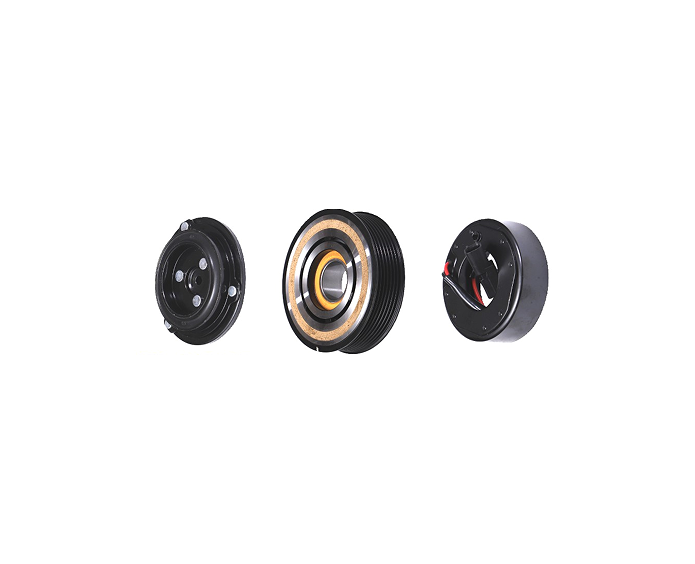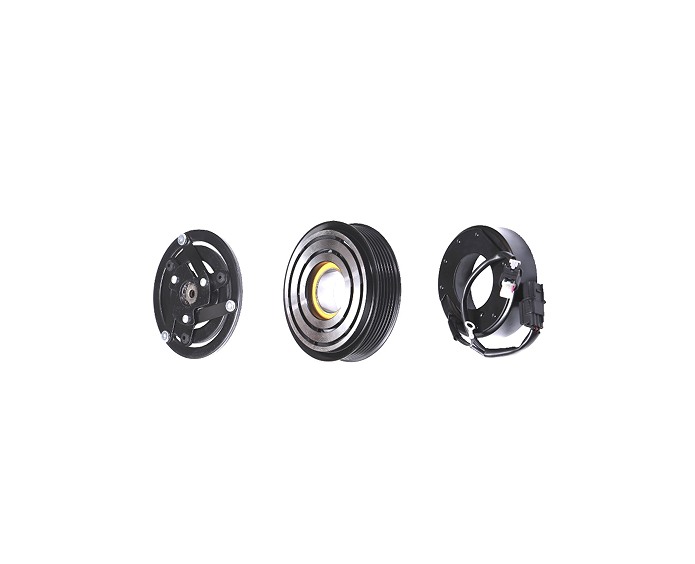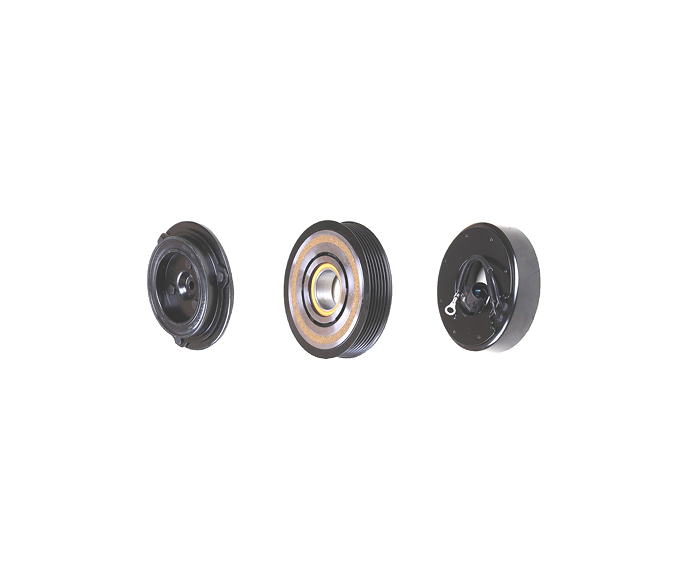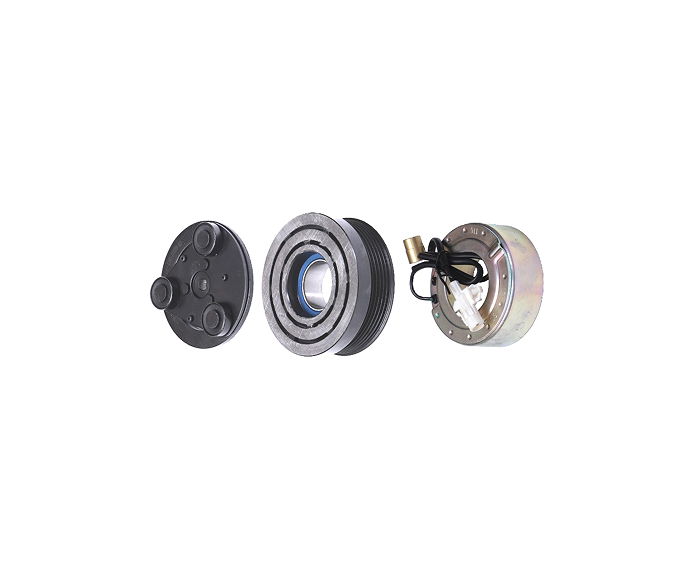

A fleet automotive AC parts supplier should help a maintenance organization keep the right parts available for the right vehicles without turning the warehouse into an uncontrolled catalogue. For bus operators, truck fleets, delivery networks, leasing companies, fleet repair groups, and regional fleet-parts distributors, the real purchasing question is not whether a supplier can list compressors, clutches, valves, bearings, and electric compressors. It is whether the supplier can connect each part to the fleet asset, compressor reference, service priority, evidence package, delivery plan, and repeat-order record.
This guide addresses a commercial investigation and RFQ intent for fleet buyers. It explains how to evaluate a multi-category automotive AC supplier around uptime, fitment, seasonal demand, stock risk, sample approval, batch consistency, packaging, and claims. The focus is broader than a commercial-vehicle clutch selection article: a fleet program may include belt-driven compressors, compressor clutch assemblies, pulleys, bearings, coils, control valves, expansion valves, sensors, and electric compressors across different vehicle platforms.
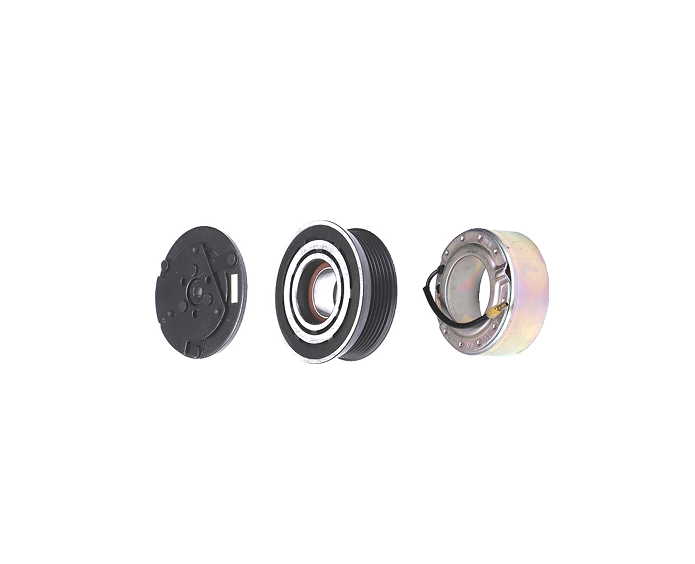
What a Fleet Automotive AC Parts Supplier Must Solve
Fleet purchasing has a different risk profile from a one-time workshop repair. A workshop may need one correctly matched clutch today. A fleet organization needs a repeatable answer across many assets, service locations, model years, compressors, and operating environments. A part that is inexpensive at the unit level can become costly when it creates a vehicle return, a second repair visit, a long diagnostic delay, or an unavailable vehicle during a peak route.
| Fleet requirement | Supplier question | Evidence or control to retain |
|---|---|---|
| Asset coverage | Can the supplier map each vehicle group to the installed compressor and required AC component? | Fleet asset list, compressor references, OE numbers, approved cross-reference, and vehicle photographs |
| Uptime | Can common failures be supported with an approved part, sample history, and replenishment plan? | Criticality class, service record, stock rule, and response path |
| Fitment | Are similar-looking parts separated by compressor, pulley, bearing, voltage, connector, valve, or port? | Master SKU file, dimensional record, connector image, and sample sign-off |
| Availability | What is available from stock, what requires production, and when does lead time start? | SKU-level quotation, readiness date, production trigger, and shipment milestone |
| Repeat supply | How is the approved configuration protected when the fleet reorders? | Master sample, revision, batch code, change-notification rule, and receiving checklist |
| Claims | Can a suspected issue be traced to a vehicle, compressor, batch, installation, and diagnostic result? | Claim form, photographs, test record, batch history, and agreed remedy process |
A supplier who answers these questions is discussing fleet support rather than simply offering a product list. The automotive AC components supplier guide is useful for general multi-category supplier review, but a fleet program needs an additional layer of vehicle criticality, consumption, service windows, and replenishment control.
Define the Fleet Before Comparing Suppliers
“Fleet” is not a technical specification. A city bus, long-haul truck, school bus, refrigerated delivery vehicle, taxi fleet, construction vehicle, and mixed commercial fleet can have very different AC loads, duty cycles, maintenance access, and cost of downtime. The first step is to turn the fleet into a controlled application brief.
Segment vehicles by platform and service pattern
Start with make, model, year, engine or powertrain, market, body type, and asset count. Then add the compressor manufacturer and model, OE or OEM references, refrigerant and lubricant information where relevant, belt-driven or electric architecture, and the service location. A model name alone is not enough because a regional version, engine change, body conversion, or previous repair may use a different compressor or clutch.
Next, record how each group operates. Daily hours, idle time, start-stop frequency, ambient temperature, dust or moisture exposure, route length, seasonal peak, and service-window restrictions influence the approval and stock plan. These fields do not automatically establish a performance rating; they tell the buyer what evidence and trial conditions should be requested.
| Fleet segment | Operating information to record | Purchasing implication | Evidence to request |
|---|---|---|---|
| Urban bus or shuttle | Daily operating hours, idle time, stop frequency, cabin load, summer peak, depot location | Prioritize approved fast-moving references, accessible packaging, and a repeatable depot receiving process | Compressor identity, clutch or compressor sample, installed trial, batch record, and seasonal plan |
| Long-haul truck | Continuous operating time, route climate, vibration, service interval, roadside repair needs | Control pulley alignment, bearing, connector protection, stock availability, and emergency replenishment | Dimensional record, electrical check, packaging protection, lead-time trigger, and claim procedure |
| Delivery fleet | Start-stop cycles, short routes, idling, daily return to depot, maintenance window | Evaluate cycling-related wear, quick identification, and mixed-model replenishment | Sample cycle method, label record, approved SKU photo, and receiving checklist |
| Construction or agricultural vehicles | Dust, moisture, shock, vibration, storage, low-frequency special applications | Separate special-order items from core stock and review sealing, finish, and protection | Application photograph, compressor label, inspection criteria, packaging, and controlled trial |
| Mixed fleet | Asset count by platform, common compressor families, service locations, annual demand | Use a family-level catalogue only for planning; approve each reference before stocking | Master fleet matrix, cross-reference file, sample plan, and forecast-based quote |
Build a Fleet AC Parts Master Matrix
A fleet master matrix is the central document for procurement, maintenance, warehouse, and supplier communication. Each row should represent one controlled buyer SKU, not one vague vehicle family. Link the buyer SKU to the supplier reference, original reference, compressor, vehicle group, component family, approved sample, packaging revision, and current commercial status.
| Master-matrix field | What to record | Why it matters to a fleet |
|---|---|---|
| Fleet asset group | Vehicle make, model, year, engine or powertrain, market, body, and depot | Separates regional and platform variations and directs the part to the right service team |
| Component family | Compressor, clutch assembly, pulley, bearing, coil, valve, sensor, electric compressor, or service part | Prevents a clutch quote from being confused with a complete compressor or a valve quote |
| Original identity | OE/OEM number, compressor model, label code, old-part number, and cross-reference | Creates a traceable technical starting point for fitment |
| Critical interfaces | Mounting, ports, pulley diameter, groove count, bearing, hub, voltage, connector, control, or air gap | Captures the fields most likely to cause a wrong-fitment return |
| Approved evidence | Product photographs, drawing, material or construction note, test or inspection record, sample result | Connects the published or quoted claim to a specific revision |
| Commercial status | Stock, sample-approved, trial, special order, MOQ, lead-time trigger, packaging, and price revision | Shows whether purchasing can release an order or must complete technical review |
| Service status | Criticality, average consumption, seasonal demand, repair location, and approved substitute rule | Links procurement to uptime and avoids equal stock across unequal risks |
Use “not confirmed,” “sample pending,” and “supplier confirmation required” when information is missing. A blank or guessed field is dangerous because a later buyer may treat it as approved. The matrix should have an owner and revision date, and every quotation revision should be saved with the technical response that supports it.
Evaluate a Supplier Across the Complete AC Product Family
A fleet automotive AC parts supplier may support several product families, but each family needs its own matching and inspection method. Consolidating suppliers can simplify communication and freight, yet it should not lead the fleet to use one generic approval checklist for every part.
| Product family | Fleet purchasing role | Key fitment fields | Approval evidence |
|---|---|---|---|
| Belt-driven compressor | Restores refrigerant compression when the compressor is the failed or approved repair scope | OE number, compressor model, mounting, ports, pulley or clutch, refrigerant, oil, and control arrangement | Label and old-unit comparison, drawing, sample, dimensional check, sealing or functional evidence |
| Compressor clutch assembly | Repairs a serviceable belt-driven compressor when the clutch-related component has failed | Pulley diameter, grooves, width, offset, bearing, coil voltage, connector, hub, mounting, air gap | Fitment record, sample inspection, electrical check, rotation, engagement, and master-sample freeze |
| Pulley, bearing, coil, or hub | Supports depot repair or remanufacturing with a defined component replacement scope | Dimensions, seals, rotation, voltage, connector, shaft interface, friction surface, and hardware | Component specification, incoming check, assembly check, and packaging identity |
| Control or expansion valve | Restores displacement control or refrigerant flow in the correct circuit | Valve type, compressor or HVAC family, ports, thread, control signal, sealing, and refrigerant circuit | Application record, dimensions, flow or control evidence, sample approval |
| Electric compressor | Supports EV, hybrid, or electrically driven fleet platforms | Vehicle platform, voltage, connector, control communication, mounting, refrigerant, oil, and insulation | Platform-specific electrical, insulation, sealing, control, and functional evidence |
| Sensor, switch, and service part | Supports diagnosis, protection, and planned maintenance | Connector, thread, pressure or electrical range, system application, and service reference | Reference record, electrical or pressure check, label and packaging control |
The Kasen automotive AC product catalogue can help a fleet buyer map product families before preparing an RFQ. It should not replace the reference-specific matrix. A compressor should not be approved because the clutch appears correct, and a control valve should not be selected because its connector resembles another application.
Match the Part to the Compressor, Not Only the Vehicle
Vehicle information gives context; the installed compressor and component define the technical match. Across a fleet, the same vehicle badge may contain multiple compressors because of year, engine, market, body, supplier change, or previous repair. Request the compressor label, original part number, old-part photographs, connector, pulley or port details, and measured interfaces whenever the reference is uncertain.
Clutch and pulley records
For a belt-driven clutch, record pulley outside diameter, groove count and profile, width, offset, bearing designation or dimensions, coil voltage, connector, hub or shaft interface, mounting, supplied hardware, and applicable air gap. A complete clutch, pulley-and-bearing unit, coil, hub, and bearing are separate supply scopes. The compressor clutch fitment guide provides a useful framework for turning OE data and photographs into an approved SKU.
Compressor records
For a conventional compressor, confirm mounting ears, bolt-hole spacing, port position, line connections, pulley or clutch, electrical connector, refrigerant, oil, displacement or control arrangement, and belt path. For an electric compressor, add high-voltage architecture, control communication, insulation or dielectric requirements, platform mounting, lubricant, and thermal-management context. Do not use the approval method for a belt-driven compressor on an electric unit.
Valve, bearing, and sensor records
Identify whether a requested valve is an expansion valve, compressor control valve, or another flow-control component. For a bearing, record inner diameter, outer diameter, width, seal arrangement, and the assembly it supports. For a coil, record voltage, connector, dimensions, lead routing, resistance requirement, and mounting. For a sensor or pressure switch, record connector, thread, operating range, and system application.
Plan Inventory Around Downtime Risk and Consumption
Fleet stock should be based on repair demand, vehicle criticality, lead time, seasonal peaks, and the cost of an unavailable asset. Do not divide the catalogue equally across every reference. A low-volume bus compressor may deserve controlled emergency stock because one failure removes a high-value vehicle, while a common passenger-vehicle bearing may be replenished through normal weekly demand.
| Inventory class | Use case | Approval status | Replenishment approach |
|---|---|---|---|
| Core fleet SKU | Confirmed platform with recurring repairs and predictable consumption | Full fitment, sample, packaging, receiving, and claim record | Set safety stock from actual consumption and supplier lead-time evidence |
| Seasonal SKU | Demand rises before hot-weather operation | Approved before the season; current availability reconfirmed | Use forecast, order milestones, and post-season stock review |
| Trial SKU | New application or second source under evaluation | Controlled sample and limited installed trial | No normal replenishment until the trial is reviewed |
| Special-order SKU | Low-frequency or unusual commercial application | Reference-specific technical review | Buy against a confirmed vehicle or customer requirement |
| Emergency SKU | High downtime exposure with limited local availability | Approved identity and storage controls | Set quantity from fleet criticality, not a universal formula |
For mixed orders, require the supplier to return SKU-level MOQ, carton quantity, readiness date, and label information. A combined order total can hide the fact that one slow-moving reference has a different minimum or production schedule. The warehouse should be able to identify the part after the outer carton is removed and before it is issued to a vehicle.
Request Original Evidence From the Factory
Original evidence supports a fleet decision only when it is tied to the product family, reference, sample, or lot under review. Ask for real product photographs, production or assembly photographs, inspection data, material or construction notes, test conditions, packaging photographs, batch traceability, and application feedback where permission exists.
| Evidence item | What it should identify | What it supports | Limit |
|---|---|---|---|
| Product photograph | Supplier reference, pulley or ports, connector, label, supplied components, and packaging | Visible identity and configuration | Does not prove internal material, life, or universal fit |
| Production or assembly photograph | Visible operation, component, workstation, and date or batch context where available | Observable manufacturing or assembly activity | Does not prove every future lot uses identical controls |
| Inspection record | Part number, dimension, electrical or functional field, method, sample or lot, date, and result | Defined check on a defined item | Does not automatically cover another SKU or later revision |
| Material or construction note | Material family, controlled feature, approved component, or drawing revision | Approved construction basis | Does not alone prove performance in the fleet |
| Test record | Method, conditions, sample, acceptance criteria, date, and measured result | Performance under the stated conditions | Does not establish results outside those conditions |
| Packaging and batch record | Protection, quantity, label, barcode, lot code, and shipment reference | Receiving and claim traceability | Does not prove technical compatibility by itself |
Kasen's public information describes automotive AC product families, OEM-number or sample-based matching, wholesale supply, mixed-model orders, and customized packaging. These are appropriate subjects for a fleet RFQ. They must still be confirmed for the exact SKU list, quantities, destination, packaging revision, evidence requirement, and target delivery window. Use the automotive AC replacement parts guide as supporting context, while keeping fleet-specific uptime and inventory controls in the new program record.
Approve Samples Before Releasing a Fleet Order
A sample should convert a proposed match into an approved fleet SKU. One clutch sample does not approve a compressor, valve, bearing, or electric compressor. Select representative samples from each component family and each high-risk platform, and use the correct test or installation method for that family.
Stage 1: identity and document review
Compare the quotation with the fleet matrix. Confirm buyer SKU, supplier reference, OE or compressor reference, vehicle group, component scope, included hardware, packaging, and open questions. Save the label and product photographs. If the supplier proposes an equivalent rather than an exact match, record that distinction before physical inspection.
Stage 2: dimensional and electrical checks
For clutches, check pulley, groove, bearing, hub, mounting, connector, coil, and air gap. For compressors, check mounting, ports, pulley or clutch, connector, dimensions, and applicable sealing or functional data. For valves and sensors, check body, ports, thread, connector, and reference. For electric compressors, check platform, mounting, voltage, connector, insulation, control, refrigerant, and oil requirements.
Stage 3: installed fleet trial
Install the sample on the confirmed compressor and vehicle using the correct procedure. Record belt alignment, electrical connection, engagement and release, noise, temperature observations, cooling operation, diagnostic results, and the duty window. A workshop check can confirm installation; it may not represent a full operating shift or seasonal peak. Keep the claim limited to what the trial actually observed.
Stage 4: freeze the master configuration
Save the approved sample images, specification, component list, test or inspection record, packaging artwork, label, batch format, and sign-off date. Require written notification before changing the pulley, bearing, coil, connector, hub, valve body, seal, material, control board, manufacturing location, subcontract process, or packaging that affects identification. A new substitute should require a new approval decision.
Control Batch Quality and Change Notifications
Sample approval confirms one evaluated configuration. Batch control confirms that production follows it. Ask the supplier to separate incoming checks, process checks, final inspection, validation tests, and customer-specific checks. The fleet can then decide which fields are checked on every unit, which use a sampling plan, and which are periodic validation activities.
| Product family | Batch or receiving checks to discuss | Change requiring review |
|---|---|---|
| Compressor | Identity, dimensions, mounting, ports, pulley or clutch, connector, sealing or functional evidence | Housing, shaft, ports, clutch, valve, seal, oil, refrigerant, or mounting change |
| Clutch and pulley | Diameter, groove, bearing, voltage, connector, hub, air gap, rotation, appearance | Bearing, coil, pulley geometry, friction surface, hub, hardware, or connector change |
| Valve | Type, reference, port geometry, connector, body, control or flow evidence | Valve body, seal, spring, or control configuration change |
| Bearing or coil | Reference, dimensions, seals, rotation, continuity or resistance, packaging | Component source, dimensions, winding, insulation, seal, or label change |
| Electric compressor | Platform identity, voltage, connector, insulation, sealing, control, mounting, and sample record | Motor, inverter, control software, connector, housing, oil, refrigerant, or test method change |
Keep the receiving record tied to the buyer SKU and supplier batch. If a fleet depot receives a similar-looking part with a different connector or pulley, it should be quarantined for technical review rather than issued based on the carton description alone.
Plan MOQ, Lead Time, Packaging, and Claims Together
Commercial terms should reflect the fleet program, not a generic catalogue promise. MOQ can differ by SKU, stock status, mixed-model arrangement, private-label packaging, component availability, and whether the item is an existing reference or a new development. Lead time can start after payment, sample approval, artwork approval, material release, or production confirmation. The quotation must state the trigger.
| Commercial field | Fleet buyer provides | Supplier returns |
|---|---|---|
| SKU and forecast | Exact references, fleet count, opening quantity, annual forecast, criticality | MOQ per SKU, mixed-order rule, available stock, and production requirement |
| Sample | Sample quantity, installation plan, approval date, and responsible engineer | Sample source, preparation time, cost, dispatch date, and documents |
| Lead time | Required arrival window, destination, split-shipment preference | Material, production, inspection, packing, and handoff milestones |
| Packaging | Neutral or branded carton, barcode, language, depot handling, pallet, protection | Artwork process, packaging minimum, carton quantity, cost, and approval sample |
| Claims | Vehicle, compressor, batch, installation, diagnostic, and return evidence available | Claim window, authorization, analysis, replacement or credit process |
| Change control | Fields that require pre-approval and contact responsible for technical release | Notification timing, sample requirement, revision record, and implementation date |
For private-label fleet distributors, the custom clutch packaging guide offers a useful structure for carton protection, SKU labels, and export planning. Packaging approval should remain separate from technical approval. An approved carton does not authorize a component substitution, and a passed sample does not automatically approve an unreviewed label or carton quantity.
Use a Fleet Supplier Scorecard
Score a supplier by evidence and responsibility rather than by catalogue size or the lowest first quotation. The scorecard should be applied to the program and then checked at high-risk SKU level. A supplier may be strong for belt-driven clutches but require another approval path for electric compressors or control valves.
| Scorecard category | Pass condition | Fleet risk if unresolved |
|---|---|---|
| Fleet mapping | Supplier can work from asset group, compressor, OE number, photo, sample, or drawing | Wrong parts are ordered by vehicle name alone |
| Component scope | Quotation distinguishes compressor, clutch, pulley, bearing, coil, valve, sensor, and electric compressor | Price and quantity are compared across unequal items |
| Evidence | Photos, records, and claims identify SKU, revision, sample, or lot | Generic evidence is treated as proof for every reference |
| Sample approval | Bench, installed, and master-sample stages are documented for relevant risk | Bulk stock is released before fitment is demonstrated |
| Supply planning | MOQ, stock, lead-time trigger, packaging, and mixed-model rules are written | Seasonal shortage or hidden minimum delays repair |
| Repeat-order control | Master revision, batch code, change notification, and receiving record are linked | Later lots drift from the approved part |
| Claims ownership | Supplier and fleet agree on evidence, return, analysis, and remedy | Downtime and responsibility remain unresolved |
Prepare an RFQ for a Fleet Automotive AC Parts Supplier
A fleet RFQ should let the supplier answer the technical and commercial questions in one controlled response. Start with the fleet profile: vehicle groups, asset count, location, operating pattern, seasonal demand, criticality, service window, and target market. Then provide the requested component family and reference data for every line.
For compressors, include compressor model, OE number, vehicle, engine, mounting, ports, refrigerant, oil, and pulley or clutch information. For clutches, include pulley diameter, groove count, bearing, coil voltage, connector photograph, hub, air gap, and old-unit images. For valves, include valve type, compressor or HVAC family, ports, thread, control, and sealing. For electric compressors, include platform, voltage, connector, control, refrigerant, oil, mounting, and insulation requirements.
Ask the supplier to return one line per buyer SKU with supplier reference, proposed match, included components, open questions, sample plan, inspection evidence, MOQ, stock status, lead-time trigger, packaging, batch code, claim process, and change-control rule. Ask for exact matches and alternatives in separate sections. This prevents a compatible alternative from being hidden inside an “equivalent” line.
To begin a multi-category review, map the needed families in the Kasen product catalogue, then submit the fleet matrix, OE numbers, compressor labels, photographs, quantities, destination, packaging requirements, and technical questions through the Kasen RFQ form. The response should be specific enough for fleet engineering, procurement, warehouse, and depot maintenance teams to use the same approval record.
Common Fleet Sourcing Mistakes to Avoid
Buying by vehicle badge only
A vehicle badge is a useful search field, not a complete fitment record. Different years, engines, markets, body conversions, and previous repairs can change the compressor or component. Require the compressor label and old-part evidence when the fleet matrix contains more than one configuration.
Mixing complete assemblies with components
A complete compressor clutch, pulley-and-bearing set, coil, hub, or bearing are different purchase scopes. A quote that does not state the supplied components can appear cheaper while leaving the depot without the hardware it expects. Record the exact scope in the buyer SKU.
Using a generic “heavy-duty” claim
“Heavy-duty” does not define voltage, pulley, bearing, torque, temperature, vibration, material, or service life. Convert the fleet duty into a sample method, installed trial, inspection field, or traceable record. If the evidence is not available, keep the claim conditional.
Letting packaging hide a technical change
The same carton or buyer SKU can contain a changed connector, bearing, coil, pulley, valve, or compressor revision. Freeze the technical master separately from artwork and require notification before any component or manufacturing change.
Setting stock without a criticality rule
Stock targets should reflect consumption, lead time, season, vehicle criticality, and local alternatives. A universal “one month of stock” rule can overstock slow references and understock a high-downtime bus or truck application. Use the fleet matrix to justify each class.
FAQ: Fleet Automotive AC Parts Supplier Selection
What does a fleet automotive AC parts supplier provide?
It supplies one or more automotive AC component families for a defined fleet program and supports reference matching, samples, evidence, commercial planning, packaging, repeat orders, and claims. The scope may include compressors, clutches, pulleys, bearings, coils, valves, sensors, electric compressors, and related service parts. The supplier should state which families and references are actually covered.
Is a commercial-vehicle clutch supplier the same as a fleet automotive AC parts supplier?
Not necessarily. A commercial-vehicle clutch supplier may focus on one component and its duty profile. A fleet automotive AC parts supplier program covers the broader vehicle AC range and coordinates asset mapping, inventory, service locations, multiple component families, replenishment, and claims. A clutch article can support the program but does not replace the multi-category fleet plan.
What information should a fleet send first?
Send vehicle make, model, year, engine or powertrain, asset count, operating pattern, depot or destination, compressor label, OE number, old-part photographs, component type, dimensions, connector, voltage, quantities, target delivery, packaging, and evidence requirements. Mark unknown fields instead of guessing them.
Can one AC part be approved for an entire vehicle fleet?
Only when the fleet has confirmed that the assets use the same compressor and component configuration. Otherwise, approve by vehicle and compressor group. A shared vehicle badge does not prove shared pulley, bearing, coil, connector, valve, port, mounting, or control requirements.
How should a fleet approve a compressor clutch?
Confirm the compressor and old clutch, check pulley, groove, bearing, hub, connector, voltage, mounting, and air gap, inspect the sample, install it on the correct compressor, run a defined trial, record the result, and freeze the approved sample and packaging revision. Repeat receiving inspection against that master.
How do fleet buyers control seasonal AC demand?
Use historical repairs, asset count, climate, route season, supplier lead time, stock status, and criticality to create a forecast. Approve high-risk references before the season, confirm production and dispatch milestones, and review remaining stock after the peak. Do not assume every SKU has the same lead time or minimum.
What quality records should accompany a bulk order?
Keep the approved quotation, buyer SKU list, sample sign-off, drawing or measured specification, relevant electrical or dimensional checks, batch code, packaging photographs, packing list, and any agreed functional or inspection record. Each document should identify the covered SKU, revision, sample, or lot.
How should a fleet handle a suspected failure?
Record vehicle, compressor, part and batch, installation date, operating symptoms, diagnostic result, photographs, electrical or dimensional checks, and repair context. Preserve the part for analysis when requested. The claim process should define authorization, return, analysis, replacement, credit, and communication responsibilities.
Can Kasen quote mixed fleet AC parts in one RFQ?
Kasen's public company and product information describes a broad automotive AC product scope and supports matching from OE numbers, samples, drawings, and vehicle data. A fleet quotation still needs the exact SKU list, quantities, compressor references, destination, packaging, and evidence requirements. Send the matrix so the proposed match and commercial conditions can be checked line by line.
Conclusion
A fleet automotive AC parts supplier should be evaluated as a maintenance and supply partner, not as a catalogue with a low unit price. Begin with the fleet asset and duty profile. Build a master matrix that links each buyer SKU to the vehicle group, compressor, OE number, component family, critical interfaces, approved evidence, packaging, batch, and commercial status. Then approve representative samples, set inventory by downtime risk, control seasonal replenishment, and require change notification before a later shipment departs from the master configuration.
Guangzhou Kasen's public information provides a starting entity for this investigation: a Guangzhou automotive AC manufacturer and exporter with compressor, clutch, electric compressor, valve, bearing, coil, hub, and related product families. Public scope does not replace SKU-level confirmation of fitment, material, testing, MOQ, lead time, packaging, or claims. Those items should be returned for the actual fleet program and documented before release.
Review the Kasen automotive AC product range, prepare the fleet asset and compressor matrix, and submit the OE numbers, photographs, quantities, target market, service priorities, packaging requirements, and technical questions through the Kasen RFQ form. This gives fleet engineering, procurement, warehouse, and maintenance teams one written basis for technical consultation, sample approval, and repeat ordering.