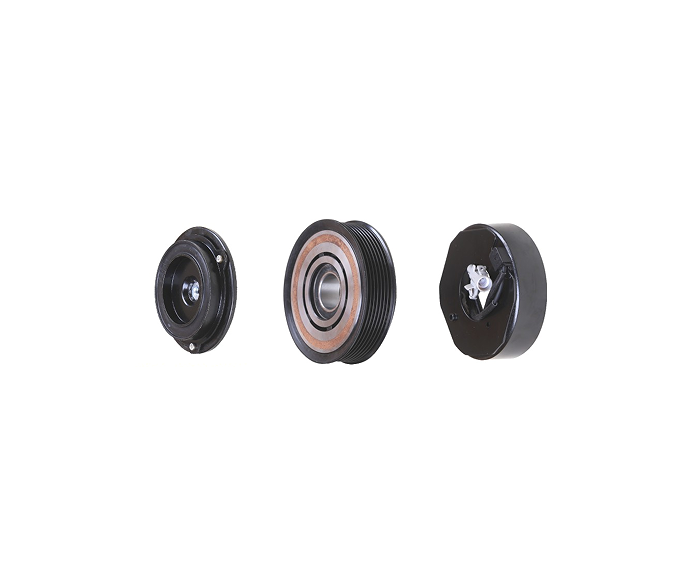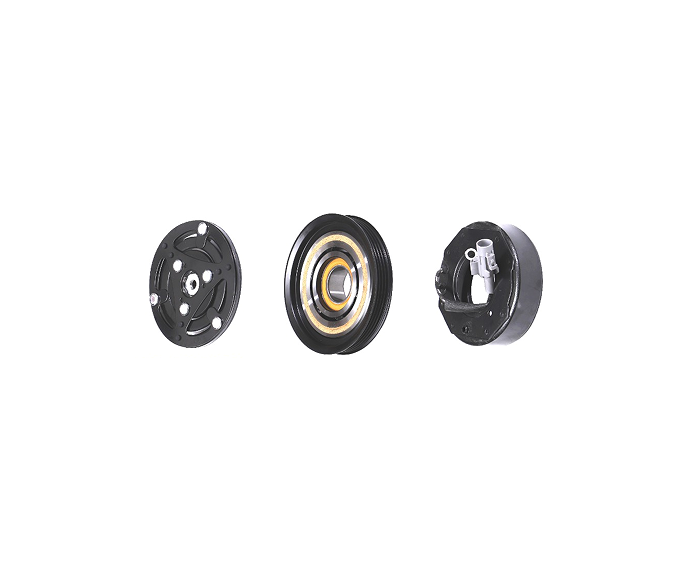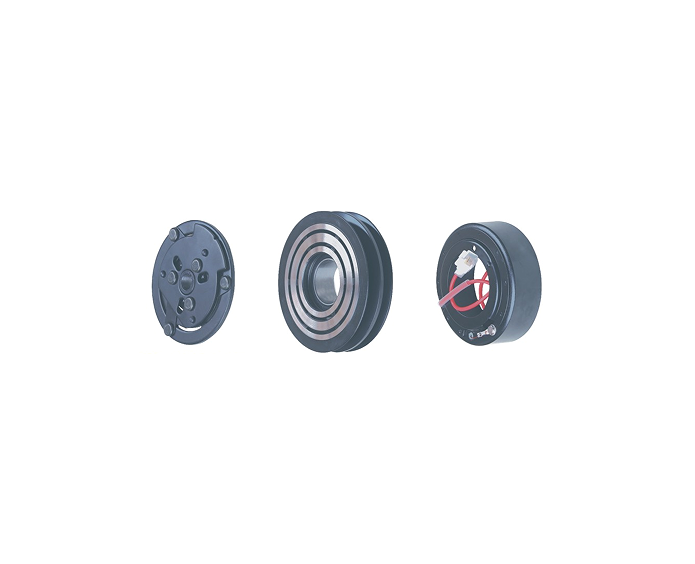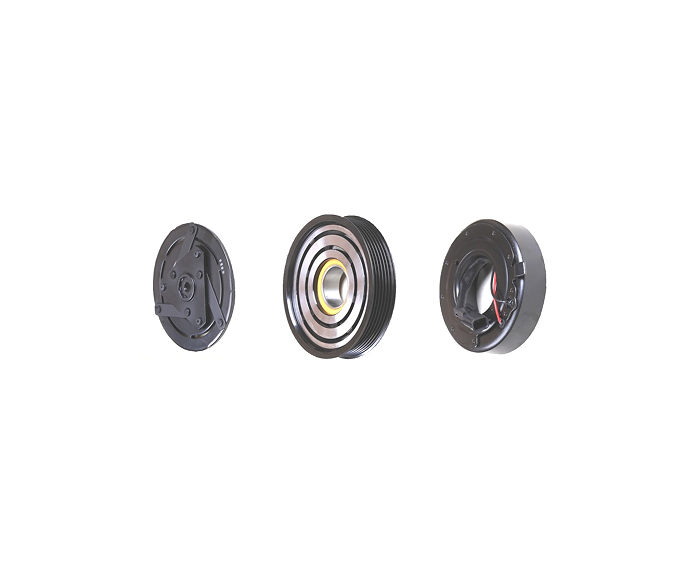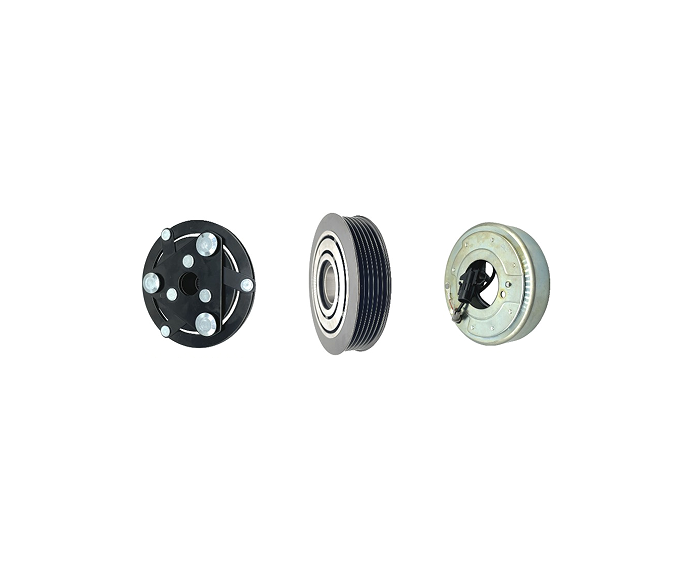

What Is a Compressor Clutch Fitment Matching Service?
A compressor clutch fitment matching service is a structured process for identifying the correct replacement clutch by comparing multiple pieces of evidence rather than relying on one vehicle name, one photograph, or one dimension.
For a B2B buyer, the goal is not merely to find a clutch that looks close to the original. The goal is to create a product match that can survive four stages: technical confirmation, sample approval, bulk purchasing, and repeat ordering.
A useful fitment process may use OE or aftermarket reference numbers, compressor manufacturer and model, compressor label photographs, vehicle make/model/year/engine, pulley diameter, belt-groove configuration, bearing reference, coil voltage, connector type, hub interface, product photographs, physical samples, drawings, and measured dimensions.
No single field is automatically enough for every application.
An OE number can narrow the search quickly. A compressor model can often be more useful than a vehicle name. A physical sample becomes valuable when markings are missing or cross-reference information conflicts.
That is the basic logic behind professional AC compressor clutch matching.
Buyers who already know their compressor reference can review the KASEN AC compressor clutch product range while preparing the technical information needed for a fitment enquiry.
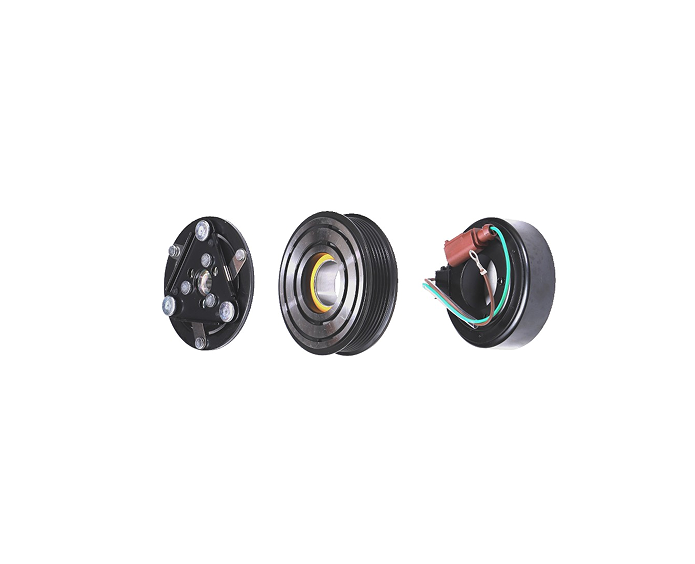
Why Fitment Matching Is Different From Choosing an AC Compressor Clutch
A normal compressor clutch selection guide answers broad questions such as what an AC compressor clutch is, which specifications matter, whether to replace the clutch or complete compressor, and how to compare suppliers.
A compressor clutch fitment matching service answers a narrower and more commercial question:
“I have this compressor, OE reference, photograph, old clutch, vehicle application, or physical sample. How do I identify the correct replacement configuration before I order?”
That search intent is closer to a technical sourcing service than a general buying guide.
A buyer may already understand that pulley diameter, bearing size, voltage, and connector matter. The practical problem is turning scattered technical information into one controlled purchasing decision.
That is where fitment matching creates value.
Why Vehicle Make and Model Alone Are Often Not Enough
A request such as “I need an AC compressor clutch for Hyundai” is too broad for a controlled B2B order.
Even a more specific request such as “I need a clutch for a Hyundai Tucson” may still leave unanswered questions.
Depending on the vehicle generation, engine, production year, destination market, and compressor supplier, different compressor or clutch configurations may exist.
The buyer may still need to identify the compressor manufacturer, compressor model, OE reference, pulley diameter, groove number, bearing, coil voltage, connector, and hub design.
Professional fitment matching should therefore move from broad vehicle information toward compressor-level and component-level confirmation.
Vehicle Data Is Supporting Evidence
Vehicle information is useful because it narrows the possible application.
Useful data includes vehicle manufacturer, model, production year, engine, fuel type where relevant, destination market, and existing OE reference.
However, vehicle information should not automatically override contradictory compressor data.
If a vehicle catalogue suggests one compressor while the actual compressor label identifies another, the physical compressor should be investigated before a bulk order is approved.
The Fitment Evidence Hierarchy: Which Information Is Most Useful?
Not all matching evidence has the same value.
| Evidence | Matching Value | Typical Limitation |
|---|---|---|
| Exact compressor model | Very high | Label may be damaged or incomplete |
| Verified OE reference | High | Cross-references can vary or supersede |
| Existing clutch reference | High | Marking may identify only one component |
| Physical sample | High | Requires measurement and comparison |
| Detailed dimensions | High | Measurement method must be consistent |
| Vehicle + year + engine | Medium to high | Multiple compressors may exist |
| Product photos | Medium | Hidden dimensions cannot be verified |
| Vehicle model only | Low to medium | Often too broad |
| Visual similarity only | Low | Similar appearance does not prove fitment |
The strongest match normally uses more than one independent data point.
For example, compressor model + OE reference + pulley specification is stronger than vehicle model only.
Likewise, physical sample + measured dimensions + connector photograph is stronger than one front-view image.
Step 1: Start the Matching Request With Compressor Identification
The compressor itself is usually one of the most valuable starting points.
Ask the buyer to provide the compressor manufacturer, compressor model, compressor label, existing compressor part number, clear photographs of the compressor, and the existing clutch if it is still available.
Photograph the Complete Compressor Label
A cropped image containing only one number may remove useful information.
A better photograph should show the complete label, manufacturer, model or reference, other visible codes, and part of the compressor body around the label.
Where possible, provide one close-up image and one wider image.
This helps the supplier determine whether the number belongs to the compressor, clutch, vehicle application, supplier catalogue, or another related component.
Do Not Guess Damaged Characters
If a label contains an unclear character, do not silently convert it into a number or letter.
Send the photograph and identify the uncertain character.
One wrong digit can direct the matching process toward a different compressor family.
Step 2: Add the OE or Cross-Reference Number
OE references can dramatically narrow a fitment enquiry.
They help connect vehicle application, compressor, and replacement part.
However, an OE reference should be treated as an identification tool rather than absolute proof when other information conflicts.
Why OE References Sometimes Need Verification
Complications can include superseded OE numbers, regional variations, aftermarket cross-references, different compressor manufacturers, catalogue errors, and compressors that were replaced during the vehicle's service history.
For that reason, a strong clutch fitment service cross-checks the OE reference with the actual compressor whenever possible.
Better B2B RFQ Practice
Instead of sending only:
OE: XXXXX
send:
OE: XXXXX
Compressor model: XXXXX
Vehicle: XXXXX
Existing clutch photos: attached
This gives the supplier more than one route to confirm the replacement.
Step 3: Confirm Whether the Buyer Needs a Complete Clutch or One Component
“Compressor clutch” can refer to different purchasing scopes.
The buyer may need a complete clutch assembly, pulley with bearing, pulley only, electromagnetic coil, hub, armature plate, bearing, or a combination of components.
Before matching begins, define the actual supply scope.
Why This Changes the Matching Method
A complete clutch requires confirmation across several mechanical and electrical interfaces.
A coil-only request places more emphasis on inner and outer dimensions, height, voltage, connector, lead position, and mounting structure.
A pulley request may require outside diameter, groove count, groove profile, width, bearing dimensions, and offset.
A bearing request requires its own dimensional and application checks.
If the buyer is uncertain whether to purchase the complete clutch or an individual component, review the KASEN complete compressor clutch range and automotive AC bearing range.
Step 4: Measure the Pulley Correctly
Pulley data is one of the most useful ways to separate similar clutch references.
Typical information includes outside diameter, belt-groove number, groove profile, pulley width, bearing position, and pulley offset where relevant.
Pulley Diameter
Record the actual measurement and how it was measured.
Avoid descriptions such as “about 120 mm.”
A difference that appears small may matter when two catalogue references are close in size.
If the measurement is approximate because the clutch is still installed, state that clearly.
Groove Count
Record whether the pulley uses 4PK, 5PK, 6PK, 7PK, or another configuration.
However, groove count should never be used alone.
Two 6PK clutches can still differ in diameter, bearing, offset, hub, coil, and compressor family.
Send a Side-View Photograph
A side photograph can reveal geometry that is difficult to judge from a front image.
Useful image angles include front, rear, side, connector, compressor label, and center hub/interface.
Step 5: Confirm the Bearing Reference or Dimensions
Bearing information provides another useful mechanical cross-check.
If the existing bearing marking is readable, provide it.
If not, the matching process may require dimensions such as inner diameter, outer diameter, and width.
Do not identify a bearing only by outside diameter.
A dimensionally similar bearing can still differ in characteristics that matter to the intended application.
Bearing Data Can Expose a Wrong Candidate
Suppose a candidate clutch has the correct-looking pulley, correct groove count, and similar overall diameter, but the bearing reference or dimensions differ from the original.
That is a reason to stop and verify the candidate rather than approving it based on appearance.
Step 6: Verify Coil Voltage and Connector Configuration
Mechanical fitment does not guarantee electrical compatibility.
The matching request should include all known coil information.
Rated Voltage
The buyer should provide the actual electrical requirement rather than guessing it from product appearance.
Connector
Provide a close photograph showing the connector housing, terminals, lead wires, wire exit direction, and connector orientation.
Even where two coils have similar mechanical dimensions, a different connector arrangement can prevent correct installation.
Voltage Alone Is Not Sufficient
Two clutches can both be 12V and still belong to completely different applications.
Therefore:
12V + pulley + bearing + connector + compressor
is a much stronger identification set than:
12V only.
Step 7: Compare Hub, Center Interface, and Installed Geometry
The hub or armature area connects the clutch engagement system to the compressor shaft.
A mismatch here can make a candidate unusable even when the pulley appears correct.
Depending on the design, confirm the center bore, shaft interface, spline or key features where applicable, hub diameter, offset, plate geometry, retaining arrangement, and installed position.
Why Front-View Photos Can Mislead
Two clutch faces may look nearly identical from the front.
The difference may exist behind the visible plate in hub depth, shaft interface, offset, or retaining structure.
This is why a compressor clutch fitment matching service should request rear and side photographs when the front image does not provide enough evidence.
Step 8: Resolve Conflicting Information Before Quotation Approval
A good fitment process does not hide contradictions.
Suppose the buyer submits one OE number, one compressor label, a pulley diameter, and a product photograph, but the OE number points toward a clutch with a different pulley size from the actual sample.
The correct response is not to select whichever data point is easiest.
The conflict should be resolved.
Conflict-Resolution Questions
Ask whether the OE number comes from the vehicle, compressor, or an old invoice; whether the compressor has been replaced previously; whether the measurement was taken from the correct surface; whether the compressor label is original and readable; whether the photo shows the product actually installed; whether the market or model year introduces another variant; and whether a physical sample can be supplied.
This is where a structured compressor clutch fitment matching service provides more value than a catalogue lookup.
The service should reduce uncertainty before the buyer commits to quantity.
When Is a Physical Sample Necessary?
A sample becomes particularly valuable when digital evidence cannot distinguish between several candidate products.
Consider sending a physical sample when OE markings are missing, compressor labels are damaged, the application is old or uncommon, cross-reference databases disagree, vehicle information is incomplete, the compressor has previously been replaced, several products look nearly identical, critical dimensions are difficult to measure, or the buyer is planning a substantial bulk order.
Document the Sample
Do not send an old clutch with no identification.
Attach information such as buyer name, buyer SKU if available, vehicle application, compressor information, required quantity, and enquiry reference.
Once the sample is matched, create a controlled record connecting:
sample → supplier reference → buyer SKU → approved product
This converts a one-time matching exercise into a reusable purchasing asset.
When Should Drawings Be Used?
Drawings are particularly useful when the buyer has an engineering specification, existing product markings are unavailable, a custom variation is being discussed, critical geometry needs precise comparison, a physical sample is unavailable, or the project requires documented dimensional approval.
A drawing should identify the characteristics that actually control fitment.
Useful interfaces may include pulley geometry, bearing interface, hub, center bore, mounting points, coil dimensions, connector orientation, and overall axial relationship.
For project-specific discussions, buyers can send drawings or application information through the KASEN contact page.
Matching by OE Number vs Compressor Model vs Vehicle: Which Is Better?
There is no universal winner.
The strongest method combines the evidence available.
| Starting Point | Strength | Main Risk | Best Next Step |
|---|---|---|---|
| Compressor model | Direct connection to compressor family | Label may be unclear | Add clutch dimensions/photos |
| OE number | Fast cross-reference | Supersession or catalogue variation | Cross-check compressor |
| Vehicle data | Easy for buyer to obtain | Multiple compressors may fit | Identify actual compressor |
| Product photo | Fast visual screening | Hidden dimensions unknown | Add measurements |
| Physical sample | Strong physical reference | Requires shipping/time | Measure and document |
| Drawing | Strong dimensional reference | May not reflect installed part | Confirm revision/application |
For B2B orders, a useful rule is:
Use the strongest identifier first, then add enough independent evidence to remove ambiguity.
What Information Should a Buyer Send for AC Compressor Clutch Matching?
A well-prepared enquiry reduces unnecessary back-and-forth.
Minimum Useful Enquiry
Try to provide a compressor model or clear label photograph, OE/reference number if available, vehicle make/model/year, existing clutch photos, and order quantity.
Better Enquiry
Add engine, market or region, pulley diameter, groove number, bearing reference, voltage, connector photograph, and hub photograph.
Best Enquiry for Difficult Applications
Add a physical sample, accurate measurements, drawing, existing buyer SKU, previous supplier reference, and repeat-order history.
The objective is not to force the buyer to collect every possible measurement.
The objective is to collect enough information to distinguish the correct product from plausible but incorrect alternatives.
Buyer-Side Compressor Clutch Fitment Matching Form
Vehicle Information
Vehicle make:
Vehicle model:
Production year:
Engine:
Market/country:
Compressor Information
Compressor manufacturer:
Compressor model:
Compressor OE number:
Compressor label photo: Attached / unavailable
Existing Clutch Information
Existing clutch number:
Pulley diameter:
Groove number:
Bearing reference:
Bearing dimensions:
Coil voltage:
Connector type:
Hub/interface:
Photos: Front / rear / side / connector
Commercial Information
Required product: Complete clutch / pulley / coil / bearing / hub
Quantity per SKU:
Number of SKUs:
Destination market:
Packaging: Standard / buyer label / private label
Sample available: Yes / No
A supplier can then identify missing information instead of restarting the matching conversation from the beginning.
How a Fitment Matching Service Should Handle Candidate Products
The first candidate is not necessarily the final match.
A disciplined fitment service can classify results into three statuses.
Confirmed Match
The available evidence is consistent enough to proceed to sample or commercial confirmation.
Candidate Match — Verification Required
The product appears likely, but one or more characteristics still need confirmation.
Examples include an unknown bearing, missing connector photo, approximate pulley measurement, or uncertain market application.
Cannot Confirm
The evidence is insufficient or contradictory.
This is a useful answer.
“Cannot confirm yet” is better than approving the wrong clutch.
For bulk purchasing, false certainty is expensive.
Why Visual Matching Alone Creates Returns
A supplier may receive a front photograph showing a circular pulley, central hub, and black coil housing.
Many clutch references can share those broad visual features.
The photograph may not reveal bearing dimensions, pulley offset, coil inner diameter, hub depth, connector orientation, or shaft interface.
Visual matching works best as one layer of evidence.
It should not become the entire matching method.
Use Photographs to Answer Specific Questions
Instead of asking only, “Does this look the same?”, ask whether the connector is positioned the same way, whether the hub structure matches, whether the groove count is identical, whether the rear mounting structure matches, whether identifying markings are visible, and whether the overall side profile is consistent.
This turns photography into technical evidence.
Common Fitment Matching Mistakes in B2B Purchasing
Searching Only by Vehicle Name
A vehicle may use multiple compressor configurations.
Better approach: add compressor identification.
Matching Only Pulley Diameter
Different assemblies can share a similar diameter.
Better approach: combine diameter with grooves, bearing, coil, hub, and compressor information.
Assuming the Installed Compressor Is Original
The vehicle may have been repaired previously.
Better approach: identify the compressor actually installed.
Treating OE Cross-References as Infallible
Databases can contain broad, superseded, or incorrect references.
Better approach: cross-check the physical compressor.
Ignoring Connector Differences
A clutch can appear to fit mechanically but still be electrically unsuitable.
Better approach: provide connector photographs and voltage information.
Mixing Component and Complete-Assembly Requests
A coil quotation and a complete-clutch quotation are not equivalent.
Better approach: define exactly what needs to be supplied.
Approving Bulk Quantity Before Sample Confirmation
A plausible catalogue match can still be wrong.
Better approach: approve uncertain new references before scaling.
Failing to Create a Repeat-Order SKU
A successful one-time match may be lost months later.
Better approach: document the final buyer/supplier reference mapping.
How Fitment Matching Becomes Repeat-Order Control
The matching process should not end when the first shipment leaves the factory.
A high-value result is a stable record that can be reused.
Create a fitment record containing:
| Field | Purpose |
|---|---|
| Buyer SKU | Customer purchasing reference |
| Supplier SKU | Supplier reference |
| Compressor model | Primary application identifier |
| OE reference | Cross-reference |
| Vehicle application | Supporting application data |
| Critical dimensions | Confirms configuration |
| Voltage/connector | Electrical identification |
| Approved photos | Visual reference |
| Sample status | Shows what was approved |
| Revision | Controls future changes |
| Packaging code | Prevents warehouse mix-ups |
For distributors, this record connects technical matching with inventory management.
When the buyer reorders six months later, the enquiry becomes:
“Please quote approved SKU ABC-123.”
instead of:
“Do you remember the clutch from the photos I sent last year?”
That difference saves time and reduces error.
How Fitment Matching Supports Multi-SKU Orders
The value of a compressor clutch fitment matching service increases as the number of SKUs grows.
A buyer sourcing one clutch can manually review several photos.
A distributor sourcing 30, 50, or 100 references needs a structured system.
Build a Matching Matrix
Create one row per SKU.
| Buyer SKU | Compressor | OE | Pulley | Groove | Bearing | Voltage | Status |
|---|---|---|---|---|---|---|---|
| SKU-001 | Confirmed | Confirmed | Confirmed | Confirmed | Pending | 12V | Verify bearing |
| SKU-002 | Confirmed | Confirmed | Confirmed | Confirmed | Confirmed | 12V | Sample approval |
| SKU-003 | Unknown | Provided | Approx. | 6PK | Unknown | Unknown | More data needed |
This immediately shows both parties where uncertainty remains.
It also prevents the purchasing team from treating every line item as equally ready for bulk production.
Approve by SKU, Not by Spreadsheet Total
If 25 references are confirmed and five still need verification, those five unresolved references should remain clearly visible.
Do not hide their status simply because the overall quotation looks commercially attractive.
Fitment Matching for Importers and Distributors
For an importer, wrong fitment becomes a logistics problem.
A mismatch can create unsellable stock, customer returns, replacement freight, warehouse sorting, catalogue corrections, sales-team confusion, and additional technical-support work.
Fitment support therefore has commercial value beyond engineering.
What Distributors Need From the Matching Result
The final record should ideally support purchasing, warehouse receiving, online and offline product catalogues, sales, technical support, and repeat ordering.
This is why a controlled SKU is so important.
Buyers managing broader clutch programs can review the KASEN AC compressor clutch product range and direct qualified product requirements toward the relevant commercial page rather than treating every enquiry as a one-off search.
Fitment Matching for Compressor Rebuilders
A compressor rebuilder often works with the actual compressor rather than vehicle data alone.
That can improve accuracy, but it also creates component-level complexity.
The rebuilder may need a coil, pulley, bearing, hub, or complete clutch.
For these enquiries, prioritize compressor model, existing component, dimensions, interface, photographs, and physical sample.
A rebuilder should also distinguish between:
“This component physically installs.”
and:
“This is the approved replacement configuration.”
Those statements are not always equivalent.
Fitment Matching for Private-Label Programs
Private-label buyers have an additional requirement.
Once fitment is approved, the product must remain connected to the buyer SKU, label, barcode, packaging, catalogue description, and future orders.
A wrong fitment record can therefore affect an entire branded product listing.
A safer sequence is:
technical match → sample approval → buyer SKU assignment → packaging approval → bulk order
rather than:
packaging design → product search → hope the part matches.
What Evidence Should Buyers Expect After Matching?
A fitment service does not need to produce a large engineering report for every routine aftermarket enquiry.
However, the final decision should be clear enough to reuse.
Useful outputs may include supplier product reference, buyer reference, application, OE cross-reference, compressor model, key specifications, product photographs, notes on unresolved limitations, sample approval status, quotation, and packaging identification.
For difficult or high-volume programs, more formal documentation may be appropriate.
The level of documentation should reflect the commercial risk.
How to Evaluate a Compressor Clutch Fitment Matching Service
| Evaluation Question | Strong Sign | Risk Sign |
|---|---|---|
| Does the supplier ask for compressor data? | Yes | Matches only from vehicle |
| Does it cross-check multiple identifiers? | Yes | Uses one number only |
| Does it request missing dimensions? | When needed | Guesses |
| Can it work from a sample? | Yes | Photo only |
| Are uncertain matches identified? | Clearly | Everything marked “fits” |
| Can final matches receive stable SKUs? | Yes | No repeat-order reference |
| Can buyer and supplier codes be linked? | Yes | Codes change each order |
| Is fitment separated from packaging data? | Yes | Product/box changes mixed together |
A matching service should make uncertainty smaller.
It should not simply make a quotation faster.
How KASEN Buyers Can Prepare a Fitment Enquiry
Before contacting KASEN, collect the strongest identification evidence available.
At minimum, try to prepare the OE/reference number, compressor model or label photograph, vehicle information, existing clutch photographs, and quantity.
If the application remains uncertain, add pulley diameter, groove count, bearing, voltage, connector, hub/interface photos, physical sample, or drawing.
Then compare the confirmed reference against the KASEN AC compressor clutch product range or send the information through the KASEN contact page for a product-matching discussion.
If inspection and bulk-order control are also part of the project, keep those requirements separate from fitment confirmation.
Fitment determines which product should be ordered.
Quality control determines whether the supplied production batch conforms to that approved product.
Compressor Clutch Fitment Matching Service FAQ
What is a compressor clutch fitment matching service?
It is a technical identification process that uses compressor references, OE numbers, vehicle data, dimensions, photographs, samples, and other evidence to determine which clutch configuration should be considered for the intended application.
Is an OE number enough to match an AC compressor clutch?
Sometimes it can identify a strong candidate, but B2B buyers should cross-check the OE number against the actual compressor, application, or physical clutch whenever possible, particularly for large or uncertain orders.
What information should I send first?
A compressor model or clear compressor-label photograph, OE reference, vehicle information, existing clutch photographs, and required quantity provide a strong starting point.
Can an AC compressor clutch be matched from a photograph?
Photos are useful but may not reveal hidden dimensional or interface differences. Difficult matches should combine photographs with measurements, compressor data, or a physical sample.
Why can two visually similar clutches have different fitment?
They may differ in pulley diameter, groove configuration, bearing, offset, coil voltage, connector, hub geometry, or compressor interface.
Should I match by vehicle or compressor model?
Use both when available, but the actual compressor is often a more direct technical reference because the same vehicle family may use different compressor configurations.
What measurements are useful for clutch matching?
Useful measurements can include pulley outside diameter, groove count, bearing dimensions, coil dimensions, hub/interface measurements, and relevant axial geometry. The exact requirements depend on the clutch design.
When should I send a physical sample?
Send a sample when markings are missing, catalogue references conflict, dimensions are difficult to measure, the application is uncommon, or the commercial risk of a wrong bulk order is high.
How do I control a confirmed match for repeat orders?
Assign a buyer SKU and link it to the supplier reference, compressor model, OE number, approved specifications, photographs, sample status, and product revision.
Can one fitment record be used for private-label packaging?
Yes. The approved product reference should become the technical basis for the buyer SKU, label, barcode, and packaging approval. Product fitment should be confirmed before packaging is finalized.
Does fitment matching replace sample approval?
Not necessarily. A matching process identifies the strongest candidate. For new, uncertain, or high-volume references, sample confirmation may still be appropriate before bulk ordering.
What if my OE number and compressor label point to different clutches?
Do not approve the order until the conflict is resolved. Verify whether the vehicle previously received a replacement compressor, check the source of the OE number, remeasure the existing part, and provide additional photographs or a physical sample.
Conclusion
A compressor clutch fitment matching service should convert uncertain application data into a controlled, repeatable product reference. The strongest matches combine compressor identification, OE data, dimensions, connector details, photos, or samples rather than relying on appearance alone.
Ready to confirm a new reference? Explore the KASEN AC compressor clutch range or contact KASEN with your OE number, compressor label, photos, measurements, and quantity for a fitment discussion.