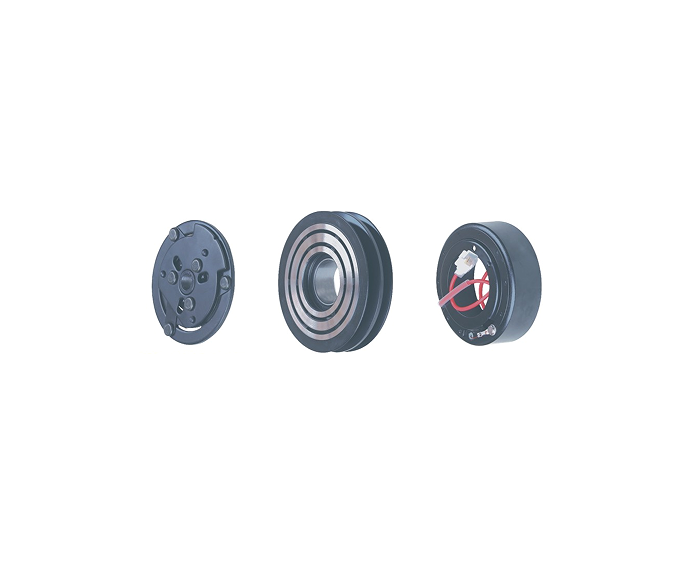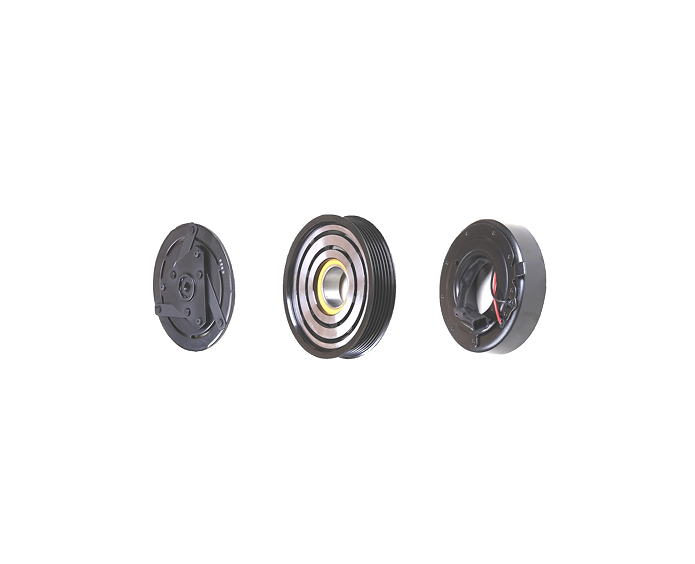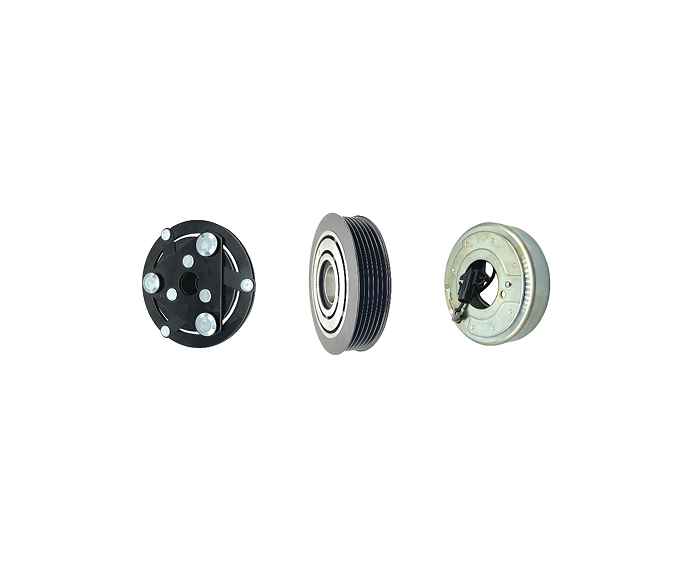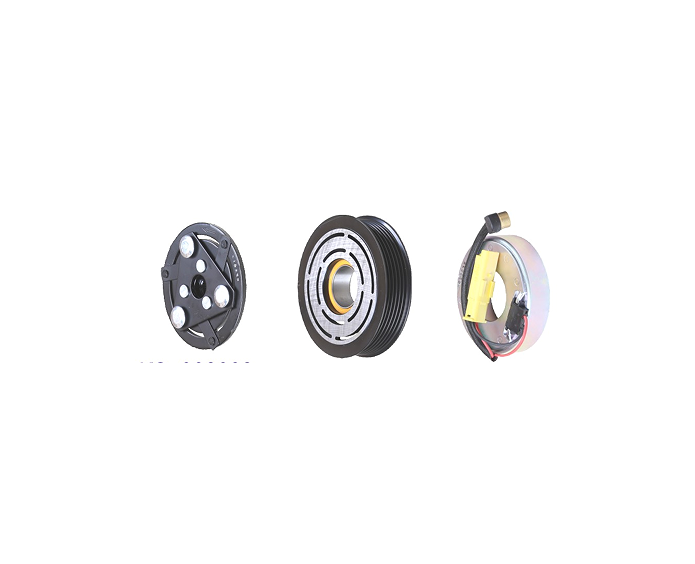

Why AC Compressor Clutch by OE Number Is the Preferred Matching Method
Selecting the correct replacement component is one of the most important challenges in automotive AC parts sourcing.
For a workshop replacing one damaged clutch, incorrect identification creates repair delays.
For an importer, distributor, or wholesale buyer managing hundreds of automotive applications, the same mistake can create much larger problems:
- Incorrect inventory
- Customer returns
- Warranty claims
- Warehouse confusion
- Additional freight costs
- Lost customer confidence
This is why professional buyers increasingly rely on AC compressor clutch by OE number matching instead of selecting products only by vehicle model or appearance.
The OE number provides a direct reference connected to the original application. It helps buyers and suppliers narrow down the correct clutch assembly before confirming technical details such as:
- Compressor model
- Pulley diameter
- Belt groove number
- Bearing specification
- Coil voltage
- Connector design
- Hub interface
- Vehicle application
However, OE number matching should not be misunderstood as a single-step solution.
A professional replacement process combines:
OE number → compressor information → vehicle application → technical verification → sample confirmation
This approach creates a more reliable sourcing process for automotive AC clutch replacement.
KASEN supports automotive AC component sourcing, including compressor clutches and related products. Buyers can review the KASEN automotive AC product range when building a replacement parts catalogue.
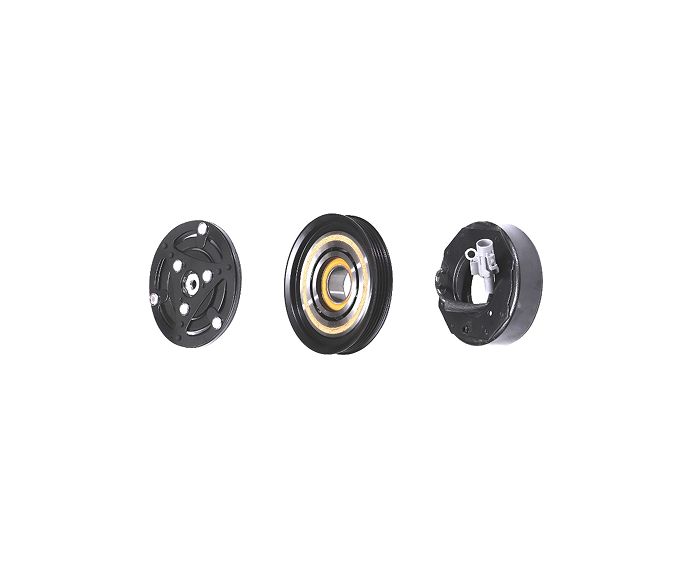
What Is an OE Number for an AC Compressor Clutch?
An OE number, also called an original equipment reference number, is a product identifier associated with an original vehicle or component application.
For automotive AC compressor clutches, the OE number helps identify the intended replacement reference.
It can be used for:
- Cross-reference searching
- Catalogue matching
- Supplier communication
- Inventory management
- Customer quotation
- Replacement confirmation
When a buyer provides an OE number, the supplier can usually begin the identification process more efficiently.
However, the OE number should be treated as the starting point rather than the only verification method.
A complete matching process should confirm whether the clutch matches the actual compressor and vehicle system.
Why Vehicle Model Alone Is Not Enough
One of the most common mistakes in automotive AC parts purchasing is selecting a clutch only by vehicle information.
For example:
“Toyota Camry AC clutch”
or:
“Ford Transit compressor clutch”
may appear specific, but they can still represent multiple possible configurations.
The same vehicle model may have differences caused by:
- Production year
- Engine option
- Market region
- Compressor manufacturer
- HVAC configuration
- Original supplier changes
A vehicle-based search is useful for narrowing the application, but it should not replace technical identification.
A more accurate process is:
Vehicle information + OE number + compressor reference + clutch specifications
This reduces the chance of ordering a visually similar but incorrect part.
OE Number vs Compressor Model: Which Is More Important?
Both are important, but they answer different questions.
OE Number
The OE number answers:
Which original reference does this product replace?
It is valuable for:
- Cross-reference
- Catalogue search
- Replacement identification
Compressor Model
The compressor model answers:
Which compressor family does this clutch belong to?
This is important because the same vehicle platform may use different compressor systems.
A clutch designed for one compressor family may not work correctly on another even if the vehicle application appears similar.
For professional buyers, the strongest identification method combines both.
Example:
A supplier receives:
- OE number
- Compressor model
- Vehicle model
- Product photo
The supplier can then verify:
- Pulley design
- Bearing
- Coil
- Hub
- Mounting
- Electrical configuration
This is much safer than matching by one reference alone.
How to Find the Correct AC Compressor Clutch by OE Number
A professional matching workflow normally follows several steps.
Step 1: Collect the Original Product Information
Before searching suppliers, collect as much information as possible.
Useful information includes:
- Original OE number
- Compressor label
- Vehicle make
- Vehicle model
- Production year
- Engine information
- Existing clutch photos
- Compressor photos
- Connector photos
The more complete the information, the higher the matching accuracy.
Step 2: Search the OE Reference
The OE number can be used to locate possible replacement options.
However, buyers should confirm:
- Whether the OE number refers to the complete compressor or clutch assembly
- Whether multiple replacement references exist
- Whether regional variations exist
Some catalogues may cross-reference several supplier numbers to one original application.
Step 3: Confirm Compressor Compatibility
After identifying a possible clutch, confirm the compressor.
Important information may include:
- Compressor manufacturer
- Compressor model
- Shaft design
- Mounting structure
- Clutch interface
The clutch is not an independent universal component.
It is designed around a specific compressor system.
Step 4: Verify Physical Specifications
Even after OE matching, technical confirmation remains important.
Check:
| Specification | Purpose |
|---|---|
| Pulley diameter | Confirms belt system compatibility |
| Groove number | Matches belt configuration |
| Bearing size | Confirms mechanical fit |
| Coil voltage | Confirms electrical operation |
| Connector | Matches vehicle wiring |
| Hub design | Confirms compressor shaft interface |
| Offset | Confirms assembly alignment |
| Air gap | Supports correct clutch engagement |
These details help prevent incorrect replacement.
Step 5: Confirm Sample Before Bulk Purchase
For new sourcing projects, sample approval is recommended.
A sample can verify:
- Actual appearance
- Dimensions
- Compressor fitment
- Connector
- Product quality
- Packaging information
For wholesale buyers, sample approval also creates a reference for future repeat orders.
Why OE Number Matching Reduces Wholesale Purchasing Risk
For automotive AC parts distributors, the value of AC compressor clutch by OE number is not only technical accuracy.
It also improves commercial efficiency.
A distributor managing hundreds of compressor clutch references faces several challenges:
- Similar-looking products
- Multiple supplier references
- Different vehicle applications
- Warehouse identification problems
- Sales quotation mistakes
- Customer return risks
Using OE number matching creates a more structured product management system.
Instead of storing information like:
Toyota clutch
or:
Ford AC part
a professional catalogue can organize products through:
OE Reference → Supplier Reference → Compressor Model → Vehicle Application → Technical Specifications
This structure improves communication between:
- Purchasing teams
- Sales teams
- Warehouse staff
- Customers
- Suppliers
How Distributors Should Build an OE Reference Database
A strong OE database is one of the most valuable assets for an automotive AC parts business.
Each clutch SKU should ideally include multiple layers of information.
Basic Product Information
Include:
- Supplier part number
- Internal buyer SKU
- Product name
- Product category
- OE references
Application Information
Include:
- Vehicle brand
- Vehicle model
- Production year
- Engine
- Market region
Compressor Information
Include:
- Compressor manufacturer
- Compressor model
- Compressor family
- Shaft/interface type
Technical Information
Include:
- Pulley diameter
- Groove number
- Bearing specification
- Coil voltage
- Connector
- Hub dimensions
- Air gap where applicable
Commercial Information
Include:
- Packaging
- Minimum order quantity
- Sales history
- Customer feedback
- Approved sample record
This creates a complete product identity.
For wholesalers, this information can become a competitive advantage because customers increasingly expect fast and accurate technical answers.
Common Problems When Matching AC Compressor Clutch by OE Number
Although OE number matching is highly useful, mistakes can still happen.
Understanding common problems helps buyers improve their sourcing process.
Problem 1: Incorrect OE Number Entry
A simple typing mistake can produce completely different results.
Examples:
- Missing characters
- Incorrect suffix
- Wrong spacing
- Similar-looking reference numbers
Solution:
Always verify the original label or source document.
Problem 2: OE Number Refers to a Different Assembly
Sometimes the reference provided may belong to:
- Complete compressor
- Vehicle assembly
- Original clutch system
- Related component
A supplier should confirm what the OE number actually represents.
Problem 3: Multiple Replacement References Exist
One original application may have several aftermarket replacement references.
This happens because:
- Different manufacturers produce replacements
- Different suppliers create catalogues
- Regional markets use different references
The buyer should verify whether the replacement specification matches.
Problem 4: Vehicle Data Does Not Match
Sometimes the OE number appears correct, but the vehicle information is different.
Possible causes:
- Engine replacement
- Imported vehicle
- Regional specification differences
- Model-year changes
This is why OE number and vehicle information should work together.
Problem 5: Similar Clutches Have Small Technical Differences
The most dangerous mistakes are often not obvious.
Two clutches may share:
- Similar appearance
- Same voltage
- Similar diameter
but differ in:
- Bearing width
- Offset
- Hub design
- Connector position
- Compressor compatibility
Professional verification is still necessary.
Why Compressor Clutch Fitment Requires More Than Catalog Searching
Modern automotive parts purchasing depends increasingly on structured fitment data.
A catalogue should answer:
Will this clutch physically and electrically work with this compressor system?
Not only:
Does this product name look similar?
A complete fitment process evaluates several relationships.
Clutch-to-Compressor Relationship
The clutch must match:
- Shaft connection
- Compressor family
- Mounting structure
- Rotational requirements
Clutch-to-Vehicle Relationship
The clutch must match:
- Vehicle application
- Electrical system
- Belt system
- Installation environment
Clutch-to-Market Relationship
The product should match:
- Customer expectations
- Repair practices
- Regional vehicle population
This is why experienced automotive AC suppliers do not rely on one search field.
AC Compressor Clutch by OE Number vs Matching by Vehicle Model
| Matching Method | Advantages | Limitations |
|---|---|---|
| Vehicle model only | Easy starting point | Too broad for accurate purchasing |
| Product photo only | Useful for visual reference | Cannot confirm internal specifications |
| Compressor model | Strong technical reference | Requires original information |
| OE number | Strong cross-reference capability | Requires correct reference |
| OE + compressor + vehicle data | Highest confidence | Requires more complete information |
For wholesale purchasing, combining multiple data sources provides the highest confidence.
How Repair Networks Benefit From OE Number Matching
Although this topic is highly relevant to distributors, repair networks also benefit from accurate OE matching.
A repair shop often faces a practical problem:
The vehicle is already waiting.
The customer expects a fast repair.
Incorrect part ordering creates:
- Additional waiting time
- Customer dissatisfaction
- Repeated labor
- Lost efficiency
A structured OE reference system helps repair suppliers quickly identify suitable replacement options.
For repair-focused businesses, accurate matching is often more valuable than having the largest possible product list.
How Importers Can Reduce Inventory Risk Through OE Matching
Inventory is one of the biggest costs in automotive parts distribution.
Incorrect inventory creates:
- Capital being locked in slow-moving stock
- Warehouse space pressure
- Discounting pressure
- Disposal risk
OE-based product management helps importers make better decisions.
Before stocking a clutch, evaluate:
Market Demand
Is this application common in the target region?
Replacement Frequency
Is clutch failure common enough to justify inventory?
Vehicle Population
Are enough vehicles still active?
Supplier Availability
Can the item be replenished quickly?
Product Similarity
Does this SKU overlap with another stocked reference?
A good OE database helps identify these factors.
Using OE Numbers for Better Online Automotive AC Parts Sales
For online distributors and e-commerce sellers, OE numbers are especially valuable.
Customers often search by:
- OE number
- Compressor reference
- Vehicle application
- Replacement part number
A product page with structured information can improve:
- Search visibility
- Customer confidence
- Conversion rate
- Return reduction
A professional product page may include:
- Product name
- OE references
- Compatible applications
- Technical specifications
- Photos
- Installation information
- Related products
This is especially important for automotive AC clutch products because many buyers are looking for an exact replacement rather than general information.
What Information Should Be Included on an AC Clutch Product Page?
A strong product page should include:
Identification
- Product model
- OE number
- Supplier reference
Application
- Vehicle models
- Compressor models
- Years
Technical Specifications
- Voltage
- Pulley diameter
- Groove number
- Bearing
- Connector
- Dimensions
Related Products
Link related:
- Compressor
- Bearing
- Coil
- Other clutch assemblies
KASEN buyers can explore related automotive AC products through the KASEN product center.
OEM, Aftermarket, and OE Number Matching
OE number matching is useful for both OEM-style projects and aftermarket replacement programs.
The difference is the purpose.
OEM / Private Label Projects
The buyer may use OE references to define:
- Target application
- Product specification
- Approved sample
- Buyer SKU
Aftermarket Replacement Programs
The buyer may use OE references to:
- Find replacement opportunities
- Expand product coverage
- Build catalogue compatibility
- Reduce wrong orders
In both cases, the OE number acts as a technical bridge between the original application and the replacement product.
How Suppliers Should Handle OE Number Requests
A professional supplier receiving an OE number enquiry should not only reply:
“Available.”
A better response process includes:
Confirm the Reference
Check whether the OE number is complete.
Confirm Application
Verify:
- Vehicle
- Compressor
- Product category
Confirm Technical Details
Review:
- Dimensions
- Electrical specification
- Interface
Confirm Availability
Provide:
- Supplier reference
- Lead time
- Packaging
- MOQ if applicable
This approach creates confidence before purchasing.
How to Prepare an RFQ for AC Compressor Clutch by OE Number
A detailed RFQ improves quotation accuracy.
Recommended information:
Product Requirement
- AC compressor clutch
- Complete clutch assembly or component
- Required quantity
Reference Information
- OE number
- Existing supplier number
- Compressor model
Vehicle Information
- Brand
- Model
- Year
- Engine
Technical Information
- Pulley diameter
- Groove number
- Bearing information
- Coil voltage
- Connector
Commercial Information
- Destination market
- Packaging requirement
- Target delivery
- Sample requirement
A complete RFQ reduces unnecessary communication and helps suppliers provide a more accurate quotation.
Quality Control Considerations When Buying AC Compressor Clutch by OE Number
Correct identification is the first step, but it is not the final step.
For wholesale buyers, the next challenge is ensuring that the approved product remains consistent from sample to mass production.
An AC compressor clutch by OE number project should include both identification control and quality control.
These two areas work together.
A correctly identified clutch with inconsistent production can still create problems.
A consistent product with incorrect identification is equally risky.
Professional buyers should evaluate both.
Check Dimensional Consistency
Mechanical dimensions directly influence installation.
Important checks may include:
- Pulley diameter
- Groove number
- Bearing dimensions
- Hub dimensions
- Mounting position
- Offset
- Overall assembly dimensions
Small differences can create major installation problems.
For example:
A pulley with an incorrect groove number may prevent correct belt installation.
A bearing with incorrect dimensions may create noise or premature failure.
A hub with an incorrect interface may not connect properly with the compressor shaft.
Dimensional verification protects both the buyer and the end customer.
Check Electrical Compatibility
Many compressor clutch problems are caused by electrical mismatch.
Important electrical factors include:
- Voltage
- Coil specification
- Connector type
- Wiring configuration
- Electrical resistance requirements where applicable
A clutch that physically fits may still fail if the electrical system is not compatible.
This is why OE number matching should always include electrical confirmation.
Control Similar Product References
Automotive AC clutch suppliers often manage thousands of similar references.
Without proper control, similar products can become mixed.
Common risks include:
- Similar pulley appearance
- Similar vehicle applications
- Similar OE references
- Different compressor families
A professional inventory system should separate similar products through:
- SKU
- OE number
- Product photos
- Technical specifications
- Approved samples
Sample Approval Process for Wholesale Buyers
Before placing a large order, buyers should establish a clear sample approval process.
A useful sample record includes:
| Information | Purpose |
|---|---|
| OE number | Original reference |
| Supplier SKU | Product identification |
| Buyer SKU | Internal management |
| Compressor model | Application confirmation |
| Vehicle application | Fitment reference |
| Product photos | Visual confirmation |
| Technical specifications | Approval record |
| Packaging details | Shipment consistency |
This creates a reference for future purchasing.
Without a sample record, buyers may face difficulties when:
- Reordering months later
- Changing purchasing staff
- Comparing suppliers
- Handling customer complaints
Why Repeat Orders Need OE Reference Control
Many automotive distributors purchase the same clutch repeatedly.
The challenge is maintaining consistency over time.
A product purchased today should still represent the same approved product six months later.
A repeat-order control system should connect:
OE number → Supplier SKU → Buyer SKU → Approved sample → Technical specifications → Packaging revision
This creates a complete product history.
It also helps answer important questions:
- Was the same product supplied?
- Did the specification change?
- Was the packaging updated?
- Was the supplier reference replaced?
Common Mistakes When Buying AC Compressor Clutch by OE Number
Even experienced buyers can make mistakes.
Understanding these mistakes helps improve purchasing decisions.
Mistake 1: Trusting OE Number Without Verification
An OE number is powerful, but incorrect data can still create incorrect results.
Always confirm:
- Source of the OE number
- Product category
- Compressor application
Mistake 2: Ignoring Compressor Model
A clutch is designed for a compressor system.
Ignoring compressor information increases risk.
Mistake 3: Matching Only by Image
Images help identify products, but they cannot confirm:
- Internal bearing specifications
- Electrical characteristics
- Shaft interface
- Manufacturing differences
Mistake 4: Ignoring Market Differences
The same vehicle name may have different specifications depending on:
- Country
- Production year
- Engine
- Climate package
Mistake 5: Not Recording Approved Products
Without documentation, repeat orders become dependent on memory.
Mistake 6: Buying Large Quantities Before Confirmation
For unfamiliar references, test orders and samples reduce inventory risk.
Mistake 7: Using Incorrect Product Categories
Some buyers confuse:
- Compressor OE number
- Clutch OE number
- Vehicle OE number
Always confirm what the reference actually identifies.
How OE Number Matching Improves Customer Service
For distributors, accurate product matching creates a better customer experience.
Customers do not only want a product.
They want confidence that the product will solve their problem.
When a sales team can quickly answer:
- Does this fit my compressor?
- Does this replace my original clutch?
- What OE numbers does it cover?
- What specifications should I confirm?
the purchasing process becomes easier.
Better data improves:
- Customer response speed
- Sales conversion
- Repeat business
- Technical reputation
How to Create an AC Compressor Clutch Cross-Reference System
A cross-reference system connects different identification methods.
A useful structure includes:
Original Reference
- OE number
- Original supplier number
Supplier Reference
- Manufacturer SKU
- Internal product code
Application Reference
- Vehicle
- Compressor
- Engine
Technical Reference
- Pulley
- Bearing
- Coil
- Connector
- Hub
Commercial Reference
- Customer SKU
- Packaging
- Sales history
This allows different departments to search using different information.
For example:
A customer may provide an OE number.
The sales team finds the supplier SKU.
The warehouse finds the package.
The purchasing team checks reorder history.
A connected system makes the entire process more efficient.
How Importers Can Use OE Numbers to Expand Their Product Range
OE number data is also useful for market expansion.
A distributor can analyze:
- Which OE references receive the most enquiries
- Which applications have high replacement demand
- Which vehicle groups are underserved
- Which related products can be added
For example, if several customers request the same compressor clutch reference, the distributor may consider adding:
- Related bearings
- Compressor models
- Coils
- Control valves
This creates a broader product ecosystem.
Using OE Number Data for Online Catalogue Optimization
For online automotive parts sellers, OE numbers are valuable search assets.
Many buyers search directly by reference.
A well-structured product page should include:
- Product name
- OE references
- Compatible applications
- Technical details
- Related products
This improves:
- Search visibility
- Buyer confidence
- Product discovery
It also helps AI search systems understand the relationship between:
- Product
- Reference number
- Vehicle
- Application
AC Compressor Clutch by OE Number for Different Buyer Types
Different buyers use OE matching differently.
Distributors
Main priorities:
- Fast identification
- Large coverage
- Reduced returns
- Repeat ordering
Importers
Main priorities:
- Supplier reliability
- Catalogue expansion
- Market coverage
- Cost control
Repair Networks
Main priorities:
- Fast replacement
- Correct fitment
- Customer satisfaction
Compressor Rebuilders
Main priorities:
- Component accuracy
- Compressor compatibility
- Individual part availability
Private Label Brands
Main priorities:
- Product control
- Brand consistency
- Long-term supply
The same OE number system supports all of these groups, but each uses the information differently.
How KASEN Supports AC Compressor Clutch Identification
KASEN focuses on automotive AC components including compressor clutches, compressors, electric compressors, bearings, valves, and related parts.
For buyers searching for an AC compressor clutch by OE number, the most useful information to prepare includes:
- OE reference
- Compressor model
- Vehicle application
- Product photos
- Required quantity
- Technical specifications
Buyers can review the KASEN automotive AC product categories or explore related compressor products through the auto AC compressor category.
For specific sourcing requirements, buyers can submit product information through the KASEN contact page.
AC Compressor Clutch by OE Number Purchasing Checklist
Before confirming an order, check:
| Category | Confirmation |
|---|---|
| OE reference | Correct and complete |
| Compressor model | Verified |
| Vehicle application | Confirmed |
| Pulley | Diameter and groove checked |
| Bearing | Correct specification |
| Coil | Voltage and connector confirmed |
| Hub | Interface confirmed |
| Sample | Approved if needed |
| Packaging | Correct SKU identification |
| Repeat order | Reference record created |
This checklist helps buyers reduce avoidable mistakes.
Frequently Asked Questions
What is the best way to identify an AC compressor clutch?
The most reliable method is combining the OE number with compressor model, vehicle application, and technical specifications. OE number matching provides a strong reference, but additional confirmation improves accuracy.
Can I buy an AC compressor clutch by OE number only?
In many cases, an OE number is an excellent starting point. However, professional buyers should confirm compressor compatibility, dimensions, electrical specifications, and application details before bulk purchasing.
Why is my OE number showing multiple clutch options?
Different suppliers may provide replacement references for the same original application. Always compare technical specifications and compressor compatibility.
Is the vehicle model enough to select a compressor clutch?
No. The same vehicle model may have different compressors depending on year, engine, market, and HVAC configuration. OE reference and compressor information provide better accuracy.
What information should I send when requesting an AC clutch quotation?
Provide the OE number, compressor model, vehicle details, photos, quantity, and any known technical specifications such as pulley size, grooves, bearing, voltage, and connector.
How can distributors reduce wrong AC clutch shipments?
Maintain a structured database connecting OE numbers, supplier SKUs, buyer SKUs, technical specifications, and approved samples.
Are aftermarket AC compressor clutches matched by OE numbers?
Yes. Many aftermarket replacement products use OE references for cross-reference and application identification. Buyers should still verify the actual replacement specification.
Why do similar AC clutches have different OE references?
Differences may come from compressor models, vehicle revisions, supplier changes, regional specifications, or technical configurations.
Can one AC clutch fit multiple vehicles?
Some replacement clutches may cover multiple applications, but compatibility should be confirmed through OE references and technical specifications rather than assumption.
How can I request an OE-number-based AC compressor clutch quotation?
Prepare the OE number, compressor details, vehicle information, quantity, and photos, then contact KASEN through the contact page.
Conclusion
Choosing an AC compressor clutch by OE number is one of the most effective ways to improve replacement accuracy and reduce sourcing risk. However, professional buyers should combine OE references with compressor data, technical specifications, and sample confirmation for reliable results.
Review KASEN’s automotive AC clutch products or contact KASEN with your OE numbers and application details for product matching support.