
Why Custom Packaging for AC Compressor Clutch Orders Needs a Clear Specification
For automotive aftermarket buyers, custom packaging is not simply a branding exercise. It determines how a compressor clutch is identified, protected, stored, picked, shipped, and presented to the next customer in the distribution chain.
An importer may receive several clutch references in one shipment. A wholesaler may supply repair shops that need to identify replacement parts quickly. A private-label brand may need every carton, product label, and catalogue entry to follow the same identification system. In each case, packaging has to work alongside the product rather than being treated as an unrelated purchasing detail.
A useful custom packaging AC compressor clutch project starts with three decisions:
-
Product definition: Which exact clutch reference and component configuration will be packed?
-
Packaging specification: What protection, identification, quantity, and presentation requirements apply?
-
Order control: How will approved artwork, packaging revisions, and repeat orders be managed?
These decisions should be made before printing or packing begins.
KASEN's website identifies Guangzhou Kasen Auto Air Conditioner Co., Ltd. as an automotive air-conditioning parts supplier with a particular focus on compressor clutches. The company also states that it welcomes custom-production discussions based on customer drawings or OEM numbers. Buyers considering a packaging project should confirm the available packaging methods, materials, quantities, and commercial terms for their selected references rather than assuming every option is standard.
For the broader product range, buyers can visit the KASEN automotive A/C compressor clutch category.
What Should Custom AC Compressor Clutch Packaging Include?
A packaging specification should define the complete packing arrangement, not just the design printed on the outer box.
For many B2B orders, the packaging system can be divided into several levels. Not every project needs all of them, and the final arrangement depends on the product, destination, sales channel, storage conditions, and shipment method.
| Packaging Level | Main Function | Details to Confirm |
|---|---|---|
| Unit packaging | Protects and identifies an individual product | Package dimensions, product restraint, label |
| Inner packaging | Separates products or components | Quantity per pack, dividers, protective materials |
| Master carton | Groups units for handling and shipping | Carton dimensions, quantity, gross weight |
| Pallet or consolidated shipment | Supports larger-volume handling where applicable | Loading arrangement, stability, handling requirements |
| Documentation | Connects the shipment to the order | Packing list, SKU references, carton quantities |
The key is to define what each layer needs to accomplish.
For example, an individual clutch package may need to prevent movement and protect exposed surfaces. An inner carton may need to separate several references. A master carton may need clear external markings so warehouse staff can identify its contents without opening it.
A custom packaging AC compressor clutch project should therefore document the packaging arrangement from the individual unit through to the shipping carton.
This is particularly important when a buyer orders several models with similar external appearances. Packaging that looks professional but does not distinguish those models clearly can create more warehouse work rather than less.
Start With the Actual Product Before Designing the Package
The most common packaging mistake is starting with artwork before the product configuration has been confirmed.
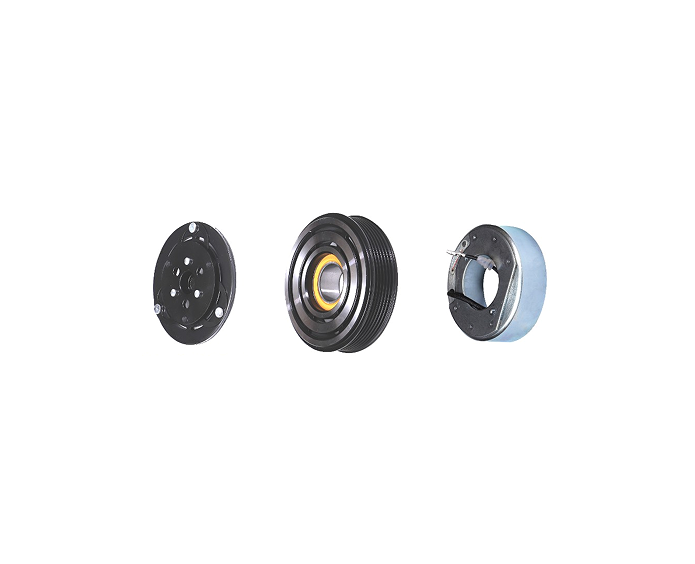
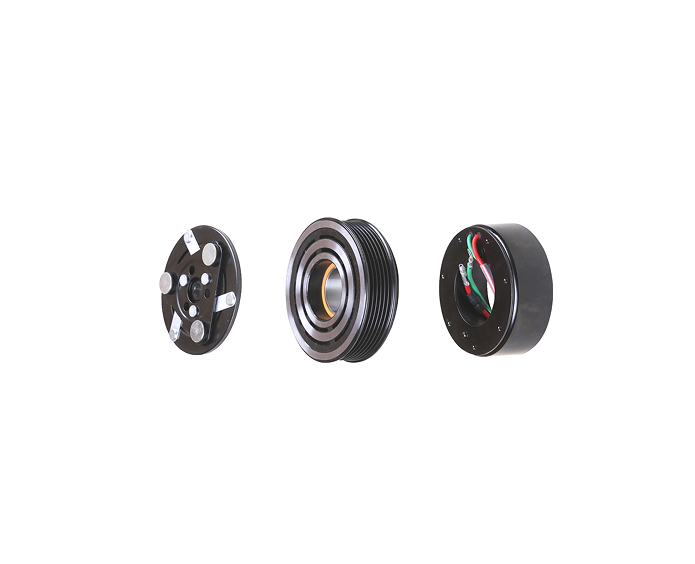
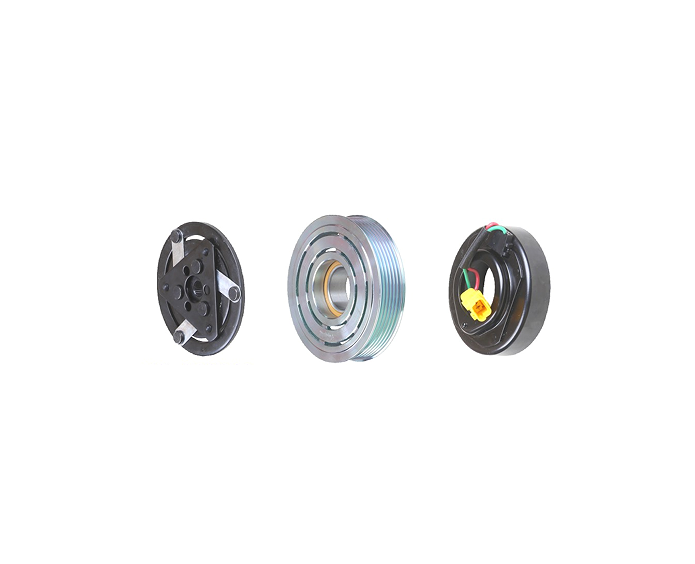
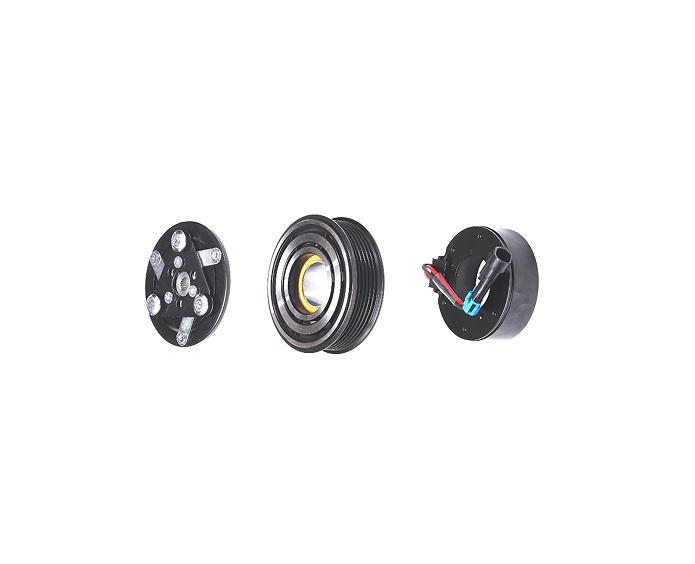
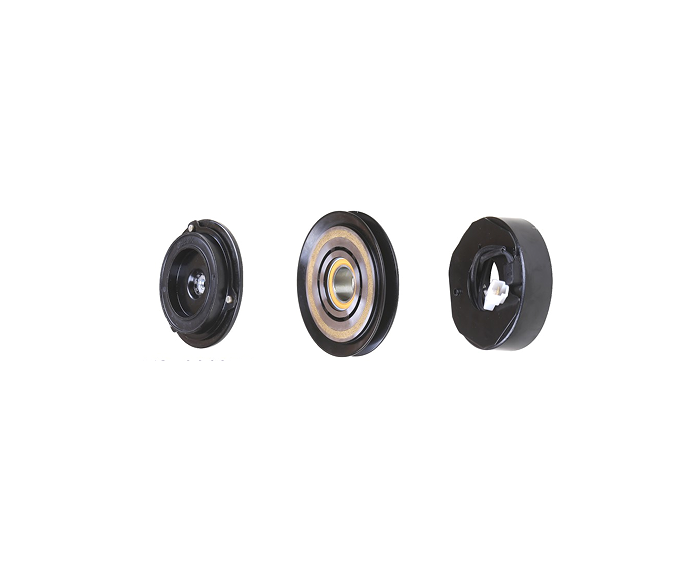
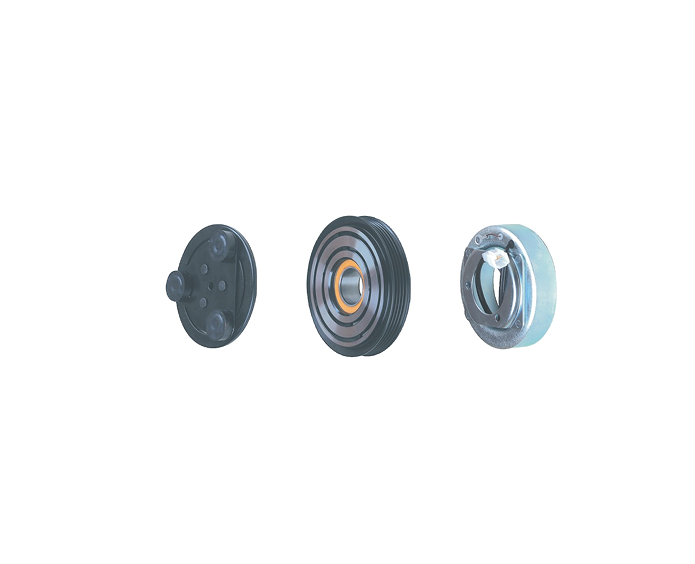
A compressor clutch is not a single uniform item. Depending on the design, it may include a pulley, bearing, electromagnetic coil, hub or armature plate, and associated hardware. Different references can have different dimensions, shapes, exposed surfaces, and electrical connectors.
A package designed around the wrong configuration may leave too much empty space, allow movement during transport, press against a connector, or fail to protect a finished surface.
Build a product packaging data sheet
Before requesting a custom package, prepare a record for every reference.
| Information | What to Record | Why It Matters |
|---|---|---|
| Supplier reference | Exact product code | Connects packaging to the correct product |
| Buyer SKU | Internal inventory code | Supports warehouse identification |
| OE number | Applicable reference, where confirmed | Helps distinguish replacement applications |
| Product configuration | Complete clutch or individual component | Defines the actual package contents |
| Product dimensions | Relevant overall dimensions | Supports package sizing |
| Product weight | Actual product weight | Helps determine handling and carton loading |
| Exposed features | Connector, hub, pulley edges, finished surfaces | Identifies areas needing protection |
| Quantity | Units per inner pack and carton | Supports picking and shipment planning |
| Target market | Destination and intended sales channel | Helps define label and documentation requirements |
| Packaging revision | Approved artwork and packaging version | Prevents outdated packaging from being reused |
Not every field needs to be available at the first enquiry. However, unresolved items should be identified rather than guessed.
For example, if the final carton quantity has not been agreed, mark it as pending. If the product dimensions are still being confirmed, do not approve the final box size based only on a photograph.
Separate the product specification from the packaging specification
This distinction is important for private-label projects.
The product specification defines the clutch itself, including its reference, fitment information, and applicable technical characteristics.
The packaging specification defines how that approved product is packed, identified, and shipped.
A change to the packaging should not automatically authorize a change to the clutch. Equally, changing the clutch configuration should trigger a review of whether the existing package still fits and protects the product correctly.
Keeping these records separate makes it easier to manage new artwork, replacement labels, and repeat orders without losing control of the underlying product reference.
How to Protect Different AC Compressor Clutch Components During Transport
Packaging should respond to the physical characteristics of the product. A generic box with loose filling is not necessarily suitable for every clutch assembly.
The aim is to prevent avoidable movement, contact damage, contamination, and confusion while keeping the packing arrangement practical for handling and storage.
Pulley and exposed metal surfaces
Pulley edges and finished surfaces may be vulnerable to scratches, impact, or contact with other metal parts.
The packaging design should consider whether the pulley can move inside the box and whether adjacent components can rub against it.
Possible approaches for evaluation include fitted dividers, shaped inserts, protective sleeves, or a package layout that keeps individual units apart. The appropriate option depends on the actual geometry and the supplier's available packaging methods.
Do not assume that a material suitable for one pulley design will provide sufficient protection for every other model.
Coil, wiring, and connector protection
Where a clutch assembly includes an exposed coil connector or wiring, the package should prevent the connector from being bent, crushed, or forced against another component.
The packing layout should also avoid placing unnecessary pressure on wires or connector locking features.
If the connector projects beyond the main body, a simple flat insert may not provide enough clearance. The package may need a recess or a different orientation.
These details should be checked against the actual product sample.
Hub and armature plate
The hub and armature plate can have specific shapes and contact surfaces that should not be damaged by loose movement inside the package.
The packing arrangement should hold the product securely without placing uncontrolled pressure on a sensitive surface.
Where several components are supplied together, the buyer should specify whether they need individual separation or can be packed as an approved assembly.
Bearings and loose components
When bearings or small hardware items are supplied separately, the packaging specification should clearly define the quantity and separation method.
Loose components should not be allowed to move freely in a way that can scratch other parts or become mixed with another SKU.
A complete clutch assembly and a separate bearing order therefore need different packing instructions, even if they are purchased by the same customer.
KASEN offers a wider range of automotive A/C components, including clutches and bearings. Buyers can review the KASEN bearing product category when planning packaging for component-level orders.
Moisture and storage conditions
Moisture protection should be evaluated according to the product finish, storage environment, transport route, and expected time in transit or storage.
Depending on the requirements, a buyer may request a suitable barrier bag, protective paper, or another agreed method. The final choice should be confirmed for the specific product and packaging arrangement.
Do not assume that a moisture-resistant package is automatically necessary for every shipment, or that a particular material guarantees corrosion prevention under all conditions.
If a buyer has a defined storage or environmental requirement, it should be stated explicitly in the packaging brief.
Which Custom Packaging Format Is Right for Your Order?
Different buyers need different packaging arrangements. The best option is the one that matches the sales channel and handling process without introducing unnecessary cost or complexity.
| Packaging Approach | Main Advantage | Best-Fit Buyer | Points to Confirm |
|---|---|---|---|
| Neutral packaging | Keeps branding simple | Importers and wholesalers | Product identification, protection, quantity |
| Individual unit packaging | Separates each product | Distributors and repair-parts suppliers | Dimensions, protective materials, labeling |
| Private-label packaging | Supports the buyer's brand identity | Aftermarket brands | Artwork, logo, SKU, barcode, approval |
| Multi-unit inner packaging | Groups products for handling | High-volume buyers | Quantity, separation, inner-box strength |
| Master carton | Consolidates products for shipping | Importers and wholesalers | Carton dimensions, gross weight, markings |
| Mixed-SKU carton | Can consolidate different references | Buyers sourcing multiple models | Separation, SKU labels, packing list |
These are packaging approaches buyers can discuss with a supplier, not a guarantee that every format is available for every KASEN reference. Confirm the practical options, pricing, minimum quantities, and implementation requirements for the intended order.
Neutral Packaging vs. Custom Packaging: Which Should Buyers Choose?
The right choice depends on how the products will be sold.
Neutral packaging may suit an importer that sells under several distribution channels or does not need a consumer-facing brand presentation. It can also be useful when a buyer is still confirming product demand and does not want to commit to printed packaging for a large range of references.
Custom packaging becomes more relevant when a buyer has an established brand, a defined catalogue, or specific warehouse identification requirements.
When neutral packaging makes sense
Consider neutral packaging when:
-
You are testing demand for a new clutch reference.
-
You supply multiple resellers under different commercial arrangements.
-
You need to confirm product fitment before investing in branded artwork.
-
You want to keep initial packaging decisions simple.
-
Your customers mainly use the parts in workshops rather than selling them in retail boxes.
The main concern is not appearance. It is whether the product remains protected and identifiable.
When private-label packaging makes sense
Custom branded packaging may be worth considering when:
-
You sell automotive replacement parts under your own brand.
-
Your distributors expect consistent branded presentation.
-
You maintain a structured SKU catalogue.
-
You want a consistent label and carton system across several clutch references.
-
You need packaging that supports your own warehouse and order-processing workflow.
For buyers evaluating a branded programme, KASEN already publishes a dedicated guide on private-label AC compressor clutch programmes. Use that article for the broader brand-launch topic; this guide focuses on defining and managing the packaging specification itself.
How to Prepare Artwork for Custom AC Compressor Clutch Packaging
Artwork approval should begin only after the product and packaging dimensions have been sufficiently confirmed.
A logo file alone is not a complete artwork brief. The supplier needs to understand where the artwork will appear, which product reference it represents, and what information must remain readable after printing and packing.
1. Prepare the brand assets
Depending on the agreed packaging design, provide:
-
Brand logo in an appropriate production-ready format
-
Brand name and spelling
-
Preferred colors, if applicable
-
Typography or brand guidelines, if available
-
Required language
-
Approved product naming
-
Buyer contact or support information, if required
Do not assume that a low-resolution logo taken from a website will be suitable for all printing processes. Provide the original or approved artwork file where possible.
2. Define the artwork placement
Specify whether the logo or other brand information should appear on:
-
The individual product package
-
An inner box
-
The master carton
-
A product label
-
A shipping label
The actual locations depend on the package structure.
If the buyer wants a logo on a particular surface, the supplier should confirm that the surface is available and suitable for the proposed packaging method.
3. Approve a complete artwork proof
Before bulk packaging begins, review the proof for:
-
Correct logo
-
Correct spelling
-
Correct SKU
-
Correct product description
-
Correct barcode, if used
-
Correct language
-
Correct label location
-
Correct dimensions
-
Correct packaging revision
A proof should represent the intended production arrangement closely enough for the buyer to understand what will be printed and where.
Where color accuracy, material finish, or physical dimensions are important, the buyer should clarify whether a digital proof is sufficient or whether a physical sample is required.
4. Keep artwork separate from product engineering approval
Approving a box design does not mean the clutch itself has been approved.
Likewise, approving a clutch sample does not automatically approve the packaging.
These decisions should have separate records:
| Approval | What It Covers |
|---|---|
| Product approval | The clutch reference and its technical configuration |
| Packaging approval | Package construction, dimensions, protection, and arrangement |
| Artwork approval | Printed content, branding, layout, and labels |
| Shipment approval | Final packing and order-specific release requirements |
This separation is particularly important when buyers reorder the same product with revised artwork.
How to Use SKU Labels and Barcodes to Prevent Wrong-Part Shipments
For automotive aftermarket distributors, packaging identification can directly affect order accuracy.
Several compressor clutches may look similar but belong to different applications. If cartons use only a generic description such as “AC Compressor Clutch,” warehouse staff may have to open packages or compare photographs before selecting the correct item.
A better label connects the package to a controlled product reference.
Recommended label information
Depending on the buyer's requirements, the label may include:
-
Buyer SKU
-
Supplier product reference
-
Product description
-
OE reference, where verified
-
Compressor reference, where applicable
-
Quantity
-
Batch or lot identification, if required
-
Barcode
-
Country-of-origin information where applicable
-
Handling information, where needed
Not every field belongs on every package. The buyer should distinguish information required on the individual unit package from information that can be shown on the master carton or shipping documents.
Buyer SKU vs. supplier reference
These two fields should not be confused.
A supplier reference identifies the product within the supplier's catalogue. A buyer SKU identifies the product within the customer's own inventory system.
For example, a distributor may use an internal code for its private-label product while the supplier maintains a separate manufacturing reference.
Both can appear on the packaging if agreed, allowing the warehouse to use its own code while preserving a reference back to the supplier.
Barcode requirements
If the buyer uses barcode scanning, specify:
-
Barcode format
-
Encoded identifier
-
Label size
-
Placement
-
Required print clarity
-
Whether each unit, inner box, or master carton needs a barcode
Do not assume that printing a barcode automatically makes the package compatible with the buyer's system. The encoded data and scanning requirements should be confirmed.
For larger product ranges, a consistent label template can be more useful than designing every SKU independently.
The template can retain the same layout while allowing approved product information to change for each reference.
How to Plan Carton Dimensions and Packing Quantities
Carton planning affects storage, handling, and freight calculations.
A carton that is unnecessarily large may increase dimensional shipping charges or create avoidable movement inside the package. A carton that is too small may compress protective materials or put pressure on exposed components.
The objective is not simply to minimize box size. It is to find a practical arrangement that protects the product and fits the buyer's logistics process.
Start with the packed product
Use the actual product and proposed inner packaging to determine the space required.
The relevant measurement is not always the bare clutch dimension. Protective materials, dividers, labels, and the orientation of the product can all affect the final package size.
Before approving the design, confirm:
-
Product orientation
-
Clearance around vulnerable features
-
Space for protective material
-
Number of units per inner package
-
Number of inner packages per carton
-
Final carton dimensions
-
Gross weight
-
Stacking and handling requirements
The supplier should confirm the actual dimensions and weights of the proposed packing arrangement rather than relying on estimates from the bare product.
Decide how many units belong in each carton
Packing quantity should reflect both logistics and warehouse operations.
A distributor may prefer a carton quantity that corresponds to a regular picking unit. A wholesaler may prioritize consolidated bulk handling. A private-label brand may need individual retail-ready packs inside a master carton.
The best arrangement depends on order size, storage capacity, customer demand, and shipping requirements.
Consider the following comparison:
| Packing Arrangement | Potential Benefit | Potential Drawback |
|---|---|---|
| One product per package | Clear individual identification | More packaging material and handling |
| Several units per inner pack | Efficient handling for repeated references | Individual units may need additional separation |
| Multiple inner packs per master carton | Organized bulk shipping | Requires clear inner and outer identification |
| Mixed references in one carton | Can consolidate a multi-SKU shipment | Greater risk of picking errors if separation is weak |
A mixed-SKU carton should never rely on appearance alone to distinguish the products. Each reference should have an agreed identification method, and the packing list should match the actual contents.
Check the relationship between carton size and freight
A packaging quotation should be considered together with the shipping arrangement.
Depending on the carrier and service, freight charges may depend on actual weight, dimensional weight, shipment volume, or other applicable rules.
Ask for the proposed packed dimensions and gross weight so your logistics team can estimate the cost using the method relevant to the shipment.
Avoid assuming that a smaller carton always produces a lower total cost. Excessive compression, insufficient separation, or difficult handling can create other costs that outweigh the saving.
How to Protect Clutch Components Without Overcomplicating Packaging
A packaging specification should identify the areas that need protection and explain the intended result.
It does not need to prescribe a particular material before the supplier has reviewed the actual product.
Protect exposed surfaces
Where the product has finished metal surfaces, pulley edges, or other areas vulnerable to contact damage, the packaging should prevent uncontrolled movement and unnecessary contact.
Possible approaches for discussion include individual sleeves, dividers, inserts, or other suitable protective materials.
The final method should be confirmed for the specific reference.
Protect connectors and wiring
If a clutch includes a connector or exposed wiring, the package should not place uncontrolled pressure on those features.
The product should be oriented so that the connector is not trapped under the weight of another component or pushed against a rigid carton wall.
If necessary, request a packaging sample to check the actual fit.
Avoid unnecessary movement
A package that allows the clutch to move freely can expose it to repeated impacts during transport.
However, excessive restraint can also be undesirable if it places pressure on a vulnerable feature.
The goal is a stable packing arrangement that holds the product in the intended position without damaging it.
Evaluate moisture protection according to the shipment
Storage and transport conditions vary.
A buyer shipping through humid environments or expecting extended storage may need to discuss additional moisture protection. The appropriate approach depends on the product finish, route, duration, and handling conditions.
If a specific environmental requirement exists, include it in the packaging brief.
Do not assume that any single bag, paper, or coating provides unlimited protection against corrosion or condensation.
How to Manage Packaging for Multiple Clutch References
A distributor sourcing many clutch models faces a different problem from a buyer purchasing a single reference.
The challenge is to maintain a consistent packaging system while keeping every SKU distinguishable.
A useful approach is to separate the packaging design into two layers.
Layer 1: Common brand system
The common system can define the elements that remain consistent across the product range, such as:
-
Logo placement
-
General layout
-
Brand colors
-
Label format
-
Typography
-
Standard handling information
Layer 2: Reference-specific information
The variable fields can include:
-
Buyer SKU
-
Supplier reference
-
Product description
-
OE reference
-
Quantity
-
Barcode
-
Batch identification, where applicable
This approach can reduce artwork duplication while preserving product-level identification.
Whether common outer packaging with reference-specific labels is feasible depends on the buyer's design, packaging requirements, and supplier confirmation. It should not be assumed to be available for every order.
Create a packaging master list
For a multi-SKU project, maintain a record linking each product to its approved packaging.
| Field | Purpose |
|---|---|
| Buyer SKU | Internal product identification |
| Supplier reference | Connects the item to the supplier |
| Product description | Defines the approved item name |
| Packaging type | Identifies the approved pack format |
| Label revision | Controls label artwork |
| Artwork revision | Controls printed design |
| Units per carton | Defines packing quantity |
| Carton dimensions | Supports logistics planning |
| Approval status | Shows whether packaging is released |
| Effective date | Identifies when the revision applies |
This master list should be updated when packaging changes.
It should also be accessible to purchasing, warehouse, quality, and logistics teams so that all departments use the same approved information.
How Packaging Revision Control Prevents Repeat-Order Problems
A packaging design may change for several reasons:
-
Logo update
-
New buyer SKU
-
Barcode correction
-
Revised language
-
Different carton dimensions
-
New inner-pack arrangement
-
Updated handling information
Without revision control, the supplier may use old artwork while the buyer expects a
newer label. The reverse can also happen: an old order is repeated correctly at product level but receives a new package that no longer matches the buyer's warehouse or sales requirements.
A practical packaging change-control process
Use the following sequence whenever artwork or packaging changes:
-
Identify the existing approved revision.
-
Describe the proposed change.
-
Check whether product identification, package fit, protection, or carton quantity is affected.
-
Prepare revised artwork or packaging details.
-
Obtain buyer approval.
-
Record the effective order or production reference.
-
Remove obsolete artwork from active use where appropriate.
For repeat orders, confirm the approved revision in the purchase order or order confirmation.
A short written record can prevent unnecessary rework and disputes later.
How to Prepare a Custom Packaging RFQ for AC Compressor Clutches
A detailed RFQ helps the supplier understand the requested packaging and identify the information that still needs confirmation.
Instead of asking only, “Can you provide custom packaging?”, send a packaging brief with the product and commercial requirements.
Packaging RFQ checklist
|
RFQ Field |
Information to Provide |
|---|---|
|
Product reference |
Supplier model and buyer SKU |
|
Order quantity |
Initial quantity and expected repeat requirements, if known |
|
Packaging objective |
Neutral, branded, warehouse-oriented, or retail-oriented |
|
Package format |
Individual pack, inner pack, master carton, or proposed combination |
|
Brand assets |
Logo and approved artwork |
|
Label information |
SKU, description, barcode, and other required fields |
|
Protection requirements |
Specific vulnerable areas and handling concerns |
|
Carton requirements |
Target quantity, dimensions, or handling constraints |
|
Destination |
Shipping destination and relevant logistics requirements |
|
Artwork approval |
Digital proof, physical sample, or other agreed approval |
|
Documentation |
Packing list, carton markings, or other order documents |
|
Commercial questions |
Packaging cost, MOQ, lead time, and sample arrangements to be confirmed |
The buyer does not need to have every answer ready before contacting a supplier. However, the RFQ should distinguish confirmed requirements from preferences that are open for discussion.
For example, if the buyer knows the required barcode format but has not decided on the inner-pack material, the brief should state both facts clearly.
This helps the supplier propose a practical arrangement without guessing at requirements that could affect the final order.
What Determines the Cost of Custom Clutch Packaging?
The cost depends on the packaging design and the specific order. A logo on an existing package is a different project from developing a new box structure with custom inserts and several SKU-specific labels.
Buyers should evaluate the main cost factors before approving a design.
|
Cost Factor |
Why It Matters |
|---|---|
|
Package structure |
New or complex structures may require additional development |
|
Material selection |
Different materials have different costs and handling properties |
|
Printing requirements |
Artwork coverage, colors, and printing method can affect pricing |
|
Label design |
Multiple SKUs may require different labels |
|
Inserts and dividers |
Additional components may increase material and assembly costs |
|
Order quantity |
Packaging economics can vary with volume |
|
SKU variety |
More references can create additional setup and inventory-management work |
|
Sampling |
Physical packaging samples may involve separate costs |
|
Carton size |
Dimensions affect material usage and shipping calculations |
|
Revision changes |
New artwork or specifications can create rework |
Compare total cost rather than packaging price alone
A low-cost package may be unsuitable if it allows products to move during transit or makes the correct SKU difficult to identify.
A more elaborate package may also be unnecessary if the products are sold in bulk and only require practical protection and clear labels.
The better comparison is:
Total packaging cost = packaging materials + printing + packing labor + setup or development costs + relevant logistics impact
The actual cost categories depend on the supplier's quotation and the agreed packaging scope.
Ask for the quotation to distinguish product cost from packaging-related charges wherever practical. This makes it easier to compare suppliers and evaluate whether the proposed packaging adds real value.
How to Confirm MOQ, Lead Time, and Packaging Availability
Custom packaging can introduce additional steps beyond ordering a standard product. These may include artwork review, package development, sample approval, printing, material procurement, and final packing.
The exact sequence depends on the packaging arrangement.
Before confirming an order, ask the supplier:
-
Is the proposed packaging available for the selected clutch reference?
-
Can existing packaging be adapted, or is a new structure required?
-
Is there a minimum order quantity for the packaging itself?
-
Is a physical sample available?
-
Does artwork approval need to be completed before production?
-
How does packaging approval affect the quoted delivery schedule?
-
What happens if the buyer revises the artwork after approval?
-
Can the approved packaging be retained as the reference for repeat orders?
Do not assume the product MOQ and packaging MOQ are identical. They may be different, depending on the materials, printing method, and supplier arrangement.
Similarly, do not assume that the standard product lead time automatically includes all custom packaging activities. Request a schedule that accounts for the agreed scope.
For KASEN-specific availability and commercial terms, buyers should confirm the requirements for the actual product and order through the KASEN contact page.
Common Mistakes in Custom AC Compressor Clutch Packaging
Designing the box before confirming the product
A package based on an estimated product size may not accommodate the final configuration. Confirm the actual product and packaging dimensions before approving the design.
Using one generic label for different references
A shared brand design can work well, but product-specific information must remain clear. Use a controlled SKU and label system to reduce picking errors.
Approving artwork without checking the physical package
A digital proof cannot always demonstrate how a clutch fits inside a package. If fit or protection is uncertain, request a physical sample or another agreed form of verification.
Changing packaging without updating the master record
A revised label or carton can create confusion if the warehouse continues to use the old packing list or SKU record. Maintain a clear revision history.
Assuming custom packaging is automatically available
The actual materials, printing, structures, minimum quantities, and production arrangements must be confirmed with the supplier. Do not treat illustrative options as a guaranteed service list.
Ignoring transport and warehouse handling
Packaging should be evaluated for the route and handling process it is expected to support. A package that works for local storage may require additional review for a longer international shipment.
Overcomplicating the package
Extra printing, inserts, and presentation features may increase cost without improving product protection or warehouse efficiency. Choose features according to the intended sales channel and buyer requirements.
FAQ: Custom Packaging AC Compressor Clutch Orders
1. What does custom packaging for an AC compressor clutch mean?
It means defining packaging for a particular clutch order according to agreed requirements for product protection, branding, labeling, package format, quantity, and shipping. The exact options depend on the supplier and project.
2. Can I use my own brand logo on clutch packaging?
Private-label buyers can discuss logo placement and branded packaging with the supplier. Confirm accepted artwork formats, printing options, costs, minimum quantities, and approval requirements before ordering.
3. What information should appear on the packaging label?
Depending on the sales channel, a label may include the buyer SKU, supplier reference, product description, OE number where verified, quantity, barcode, and batch information where required. Final content should follow the buyer's catalogue and market requirements.
4. Should each AC compressor clutch have its own package?
Not necessarily. Individual packaging can support separation and identification, while multi-unit packaging may suit bulk distribution. The decision depends on product protection, handling, warehouse procedures, and customer requirements.
5. Can different clutch models share the same packaging design?
A common design template may be suitable for several references if the package physically fits each product and the variable information is controlled. Each SKU should still have the correct product identification and approved packing specification.
6. Does custom packaging require a separate MOQ?
It may. The packaging MOQ can differ from the product MOQ depending on materials, printing, and the proposed package structure. Confirm both quantities with the supplier.
7. How can I prevent damage to the pulley, coil, and connector?
Identify the vulnerable features of the actual product and specify how the package should prevent movement, impact, and unwanted contact. Validate the arrangement using an appropriate sample or agreed review process.
8. What is the difference between inner packaging and a master carton?
Inner packaging organizes or protects individual products or smaller groups of units. A master carton consolidates products for handling and shipping. Both should have a defined role in the overall packing arrangement.
9. What should I approve before mass packaging begins?
Confirm the product reference, package structure, dimensions, protective arrangement, label content, artwork revision, carton quantity, and applicable commercial terms. Approve a physical sample when the fit or protection cannot be adequately assessed from artwork alone.
10. How do I request custom packaging from KASEN?
Provide the product reference or OE number, target quantity, intended market, packaging objective, logo or artwork, labeling requirements, and any shipping constraints. You can then ask KASEN to confirm the available options and commercial terms for your order through its official contact page.
Conclusion
Custom packaging for AC compressor clutches should combine product protection, accurate SKU identification, consistent branding, and practical carton planning. Confirm the packaging specification and artwork before bulk production, and retain the approved version for repeat orders.
Explore KASEN's AC compressor clutch products and contact KASEN with your product references, order quantity, logo, and packaging requirements to discuss a suitable arrangement.