
What Should a Private Label AC Compressor Clutch Program Include?
Approve three things before launching: the replacement part, the product information and the branded pack. The clutch must match its intended compressor, the catalogue must describe that configuration accurately, and the box must identify what the customer receives. Guangzhou Kasen Auto Air Conditioner Co., Ltd. has focused on automotive air-conditioning parts since 2007 and welcomes custom-production discussions based on drawings or OEM numbers, as outlined in the KASEN company profile. For a private label AC compressor clutch project, use that discussion to define product selection, packaging, samples and repeat-order requirements separately. The approval process below is a proposed buyer framework; specific branding methods and commercial conditions require confirmation for the selected references.
Which Buyers Benefit—and When Is Standard Supply Better?
Consider private labeling when your aftermarket brand, import business or workshop distribution network needs a repeatable range sold under its own identity. Define the sales channel first: a trade-counter range may need prominent part codes; an online catalogue needs accurate photographs and application information; a workshop network may prioritize easy reordering and clear pack contents. Keep the application brief equally specific, whether it concerns verified passenger-car references or a particular commercial fleet. Include relevant operating and storage conditions for technical review. For one-off repairs, unidentified applications or references without demonstrated demand, start with standard samples or trial supply rather than committing to printed packaging.
Separate Branding From Engineering Changes
Ask for three distinct quotations where relevant: an existing clutch in standard packaging, the same approved clutch with buyer branding, and a modified product. This separates packaging work from engineering work and makes cost comparisons meaningful. KASEN’s OEM customization overview discusses coil, pulley, bearing, connector and surface-treatment options; availability and validation must still be confirmed for each project. Changing a box is not approval to change one of those components. Similarly, do not describe a private-label replacement as a genuine vehicle-manufacturer part without supporting evidence. When requesting OEM or ODM cooperation, specify who supplies the design, who evaluates modifications and who approves production.
Create a Product-and-Brand Specification Before Artwork
Start each private label AC compressor clutch reference with a specification sheet connecting the product to its buyer stock keeping unit, or SKU. Mark every field as confirmed, proposed or unresolved. Freeze the approved information before printing labels, while keeping technical and artwork revisions separate. The following table is a purchasing template—not a universal specification or a promise that every customization is available.
| Specification Area | Information to Confirm | Private-Label Approval Record |
|---|---|---|
| Product identity | Buyer SKU, supplier reference, compressor model and cross-reference | Agreed mapping between buyer and supplier codes |
| Fitment | Vehicle details where applicable, mounting arrangement and application limits | Verified application record |
| Supply configuration | Complete set or individual component; included hardware | Pack contents and approved photographs |
| Pulley and hub | Diameter, groove specification, offset and shaft interface | Model-specific drawing or checked dimensions |
| Coil and bearing | Voltage, connector, electrical requirements and bearing specification | Approved component requirements |
| Materials and finish | Relevant metal, insulation and surface-treatment requirements | Specification and permitted alternatives |
| Identification | Label text, barcode data and any proposed product marking | Approved placement and readability |
| Packaging | Box dimensions, insert, protection and carton quantity | Finished-pack sample |
| Release status | Product revision, artwork revision and approval date | Final production authorization |
Compare Existing References Before Assigning Brand Codes
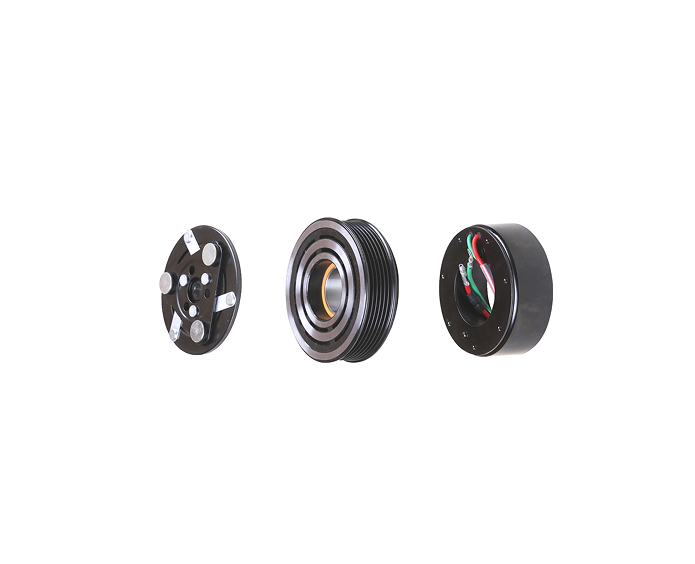
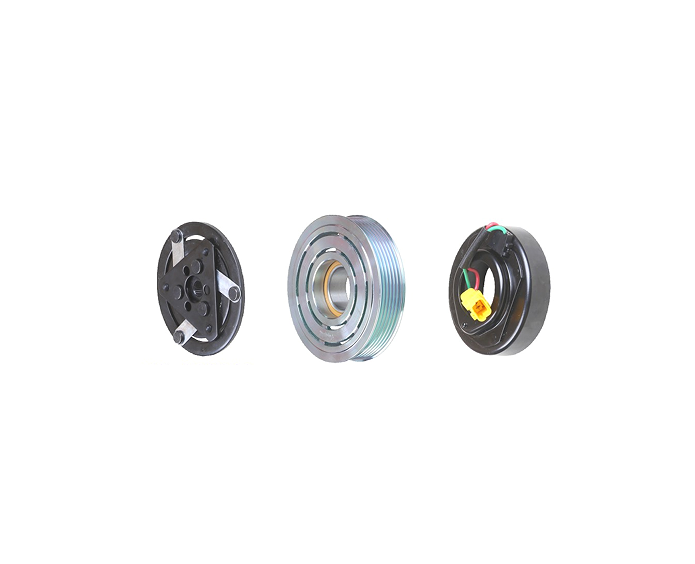
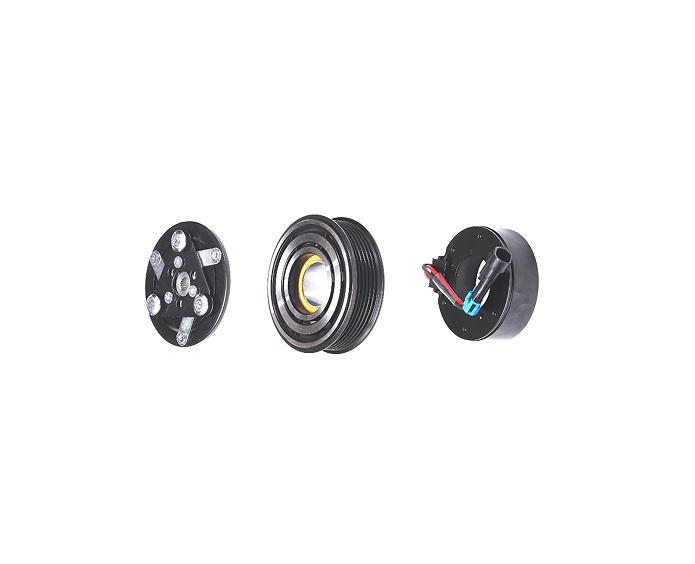
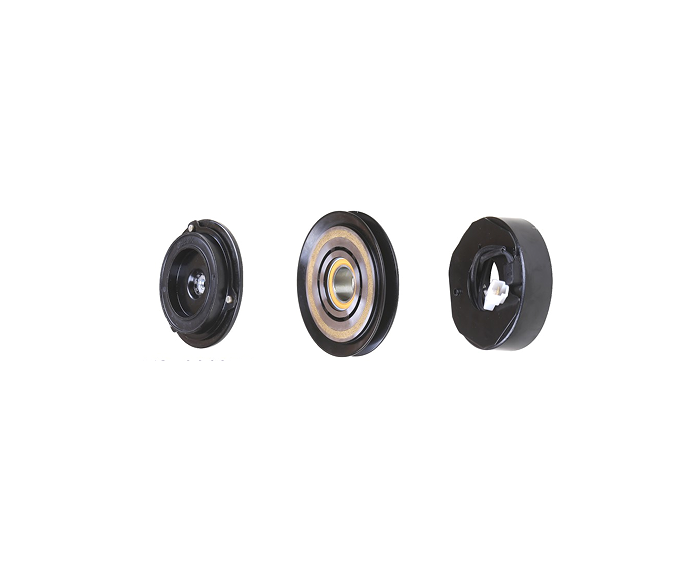
Use published product data to shortlist references, then complete the fitment review before assigning customer-facing codes. The following entries reproduce selected KASEN catalogue fields. Their application labels are not complete guarantees covering every year, engine or compressor variant, and the bearing codes are retained exactly as published.
All three publish 12 V, but their groove specifications, pulley diameters and bearing codes differ. Keep them as separate technical records rather than creating a generic “12 V compressor clutch” listing. This comparison supports product identification, not a performance ranking or a claim of interchangeability. Review the wider KASEN compressor clutch range when building the shortlist.
Control the Components and Workmanship Behind the Brand
Build quality requirements into the product record, not just the marketing brief. Request the applicable pulley and hub materials, coil conductor and insulation specifications, bearing identification and surface-treatment requirements. Agree on acceptable alternatives before ordering. KASEN’s manufacturing process overview describes machining, coil winding, assembly and inspection; ask which operations and records apply to your chosen reference. Review dimensional acceptance, electrical checks, bearing installation and relevant assembled-condition checks against that specification. For a private label AC compressor clutch range, require review before changes to controlled components or manufacturing requirements. Do not let an unchanged box conceal an unapproved product revision.
Design Packaging for Identification and Protection
Write a packaging brief before approving the visual design. Include the buyer code, product description, agreed pack contents, quantity, traceability information and support contact. Specify how the components should be separated and retained, and ask the supplier to demonstrate protection for exposed connectors and finished surfaces. Present humid storage or long-distance shipment as conditions to evaluate, not as proof that a particular packaging material is sufficient. Request the box dimensions and complete packing arrangement before comparing freight costs. For an initial range, ask whether a common outer-box design with reference-specific labels is feasible. Confirm the proposed label or marking location with the technical team rather than choosing a functional surface for appearance alone.
Connect the SKU, Barcode and Catalogue Listing
Give sales, warehouse and purchasing teams one approved product-data record. For example, a buyer could assign the illustrative internal code BR-AC-014 to an approved KS-805051 configuration and record the corresponding product and packaging revisions separately. That invented buyer code is not a KASEN reference or evidence of additional fitment. During approval, scan the proposed barcode in your actual receiving system and confirm that it retrieves the expected item and quantity. Compare the catalogue title, photographs, box label and contents against the same record. Approve each application claim individually; do not expand a confirmed compressor application into “fits all vehicles from this brand.” Your private label AC compressor clutch should be equally identifiable online, on the shelf and in a purchase order.
Approve the Product and the Finished Pack Separately
Use two linked approvals. Product approval should identify the sample, specification revision, relevant measurements, fitment assessment and unresolved technical points. Packaging approval should identify the artwork version, printed label, insert, pack contents and outer carton. Ask for a representative finished pack rather than approving bulk packaging from a screen mock-up alone. As a practical release check, have someone unfamiliar with the project receive the carton, select the intended item, scan its code and compare the contents with the listing. Record any ambiguity before printing or packing the full order. This exercise is a proposed buyer check, not a substitute for technical testing or a claim about KASEN’s existing inspection procedure.
Define Quality Evidence and First-Shipment Release
Agree which checks apply to production units, which use batch sampling and which belong to separate product validation. Request the relevant electrical, dimensional and assembly acceptance criteria instead of an undefined “premium quality” commitment. For any required endurance or environmental test, identify the product revision, method, conditions and pass criteria before requesting a report. Review certificates by named organization, scope and validity, and keep unsupported claims off the branded packaging. For the first shipment, ask for the agreed inspection results, packing list and photographs linking representative products to their labels and cartons. Do not release a reference with unresolved fitment merely because its packaging is ready. Set out how discrepancies will be isolated and resolved before distribution.
Confirm MOQ, Capacity and Lead Time for the Complete Branded Order
Separate the minimum order quantity for the clutch from any minimum for printed boxes, labels or inserts. KASEN’s low-MOQ ordering information describes SKU-dependent conditions; it does not establish one minimum for every private-label configuration. Request current terms for your exact product mix. For a private label AC compressor clutch launch, ask for milestones covering technical approval, finished-pack approval, packaging availability, production, inspection and dispatch. Confirm capacity allocated to your references rather than relying on a company-wide output figure. Establish which approval starts the quoted lead time and whether one delayed artwork file would hold the entire shipment. Keep forecast demand separate from committed purchase quantities.
Calculate Launch Cost and Agree How Unused Branding Is Handled
Compare the cost of producing saleable, correctly identified stock—not only the clutch unit price. Request separate amounts for samples, packaging setup, printing, inserts, assembly or packing work, agreed inspections and any technical development. Add logistics and your own stockholding assumptions consistently when comparing proposals. Ask who pays for unused branded boxes, how long they can be stored and what happens after an artwork change or programme cancellation. Agree who may authorize new print runs and how obsolete labels will be segregated. For an exclusive configuration or artwork arrangement, document the agreed scope rather than assuming that private labeling creates exclusivity. Avoid funding a large packaging run solely to obtain a lower box price before demand is established.
Check the Printed-Box Commitment
As an illustrative example—not a KASEN quotation—a 200-unit pilot paired with a 1,000-box print run would leave 800 boxes unused after the first shipment. Ask whether those boxes are billed immediately, stored for future orders or avoidable through a different packaging arrangement. The initial commitment is larger than the cost of packaging the first 200 clutches.
Keep Returns Traceable After the Box Is Discarded
Plan the complaint process before launching the brand. Ask how a returned part can be connected to its buyer SKU, supplier reference and shipment when the customer no longer has the outer box. Confirm feasible product or component identification without assuming individual serialization is available. Define the information needed for review: order details, photographs, installation context, reported symptoms and relevant inspection findings. Agree who investigates, how samples are handled and how remedies are decided. Keep wrong-item supply, packing damage, installation concerns and suspected product defects as separate preliminary categories rather than assigning every return the same cause. Use confirmed findings to improve product information, packaging or production controls.
Start a Private Label AC Compressor Clutch Enquiry With KASEN
Send one line per proposed reference with compressor or OE information, available photographs, quantity, destination market and approval status. Add your brand artwork, buyer-code structure, requested packaging and any proposed technical changes as separate items. State whether you need product samples, printed-pack samples or both. Use the KASEN enquiry page to request a quotation distinguishing confirmed capabilities from work still requiring evaluation. Before authorizing production, bring the product specification, artwork, quantities, inspection requirements and delivery assumptions into one agreed release record. Start with the references your team can identify and support confidently, then expand after the initial supply has been evaluated.
Private Label AC Compressor Clutch FAQ
1. What is a private label AC compressor clutch?
In this guide, it means a compressor clutch supplied for sale under the buyer’s brand and agreed product identification. The underlying configuration may be an existing reference or a separately approved modification. The scope should distinguish product supply, branding, packaging and engineering responsibilities.
2. Does private labeling require a new clutch design?
Not for a branding-only project using an existing approved configuration. Compare the requirement with available references first. Treat changes to pulley dimensions, connectors, coils, bearings or mounting features as separate technical requests requiring feasibility review and appropriate approval.
3. Which branding options should I ask KASEN to evaluate?
Submit requests for printed boxes, reference labels, buyer codes, inserts, barcode data and any proposed direct product marking. Ask which are available for the selected reference and quantity. Do not assume that every branding method is feasible on every component.
4. Can I launch several references in the same box design?
Ask whether a common box and protective insert suit the proposed products. Keep each reference’s identification unmistakable and verify that its contents fit the approved packing arrangement. Shared visual design should not result in shared or ambiguous technical descriptions.
5. What should a finished-pack sample include?
Request the approved clutch configuration, included hardware, protective arrangement, production-intent box, label and any insert. Record the product and artwork revisions. Evaluate identification, contents and handling alongside the separate technical sample approval.
6. What MOQ applies to a private-label order?
Obtain the current minimum for each clutch reference and each customized packaging item. Ask about mixed-reference orders separately. Use the written quotation for planning rather than assuming that a published standard-product minimum also covers printed packaging or engineering changes.
7. Can the label show an OE cross-reference?
Submit the proposed reference and wording for review with the fitment data. Distinguish a replacement cross-reference from the identity of the product’s brand and manufacturer. Do not use compatibility information as evidence that the product is a genuine original-brand part.
8. How should I check barcodes before shipment?
Provide the exact data and format required by your receiving or sales channel. Test a printed sample in the intended system and confirm the item and quantity returned by the scan. Keep that approved barcode data connected to the buyer SKU and artwork revision.
9. What happens when a component changes after launch?
Require notification for changes affecting the approved specification, together with the affected reference and first proposed batch. Determine whether further samples or testing are needed. Review labels, catalogue information and existing stock before deciding how to release the revised product.
10. What information is needed for a quotation?
Provide the supplier or OE reference, compressor information, photographs, quantities, target market, branding request and delivery window. Identify unknown technical details clearly. Separate product, packaging and engineering requirements so each can be evaluated and priced.
Conclusion
A private label AC compressor clutch program should deliver an identifiable replacement product, not simply a branded box. Confirm fitment and components, connect every reference to accurate product data, approve the finished pack and agree how production changes and returns will be handled. Keep packaging cost, MOQ and unused-material commitments visible before launch. For aftermarket brands and distributors, the practical standard is whether the customer can select the correct item and reorder that same approved configuration. Contact KASEN with your reference list, quantities and branding brief to discuss product selection, samples and project-specific packaging options.