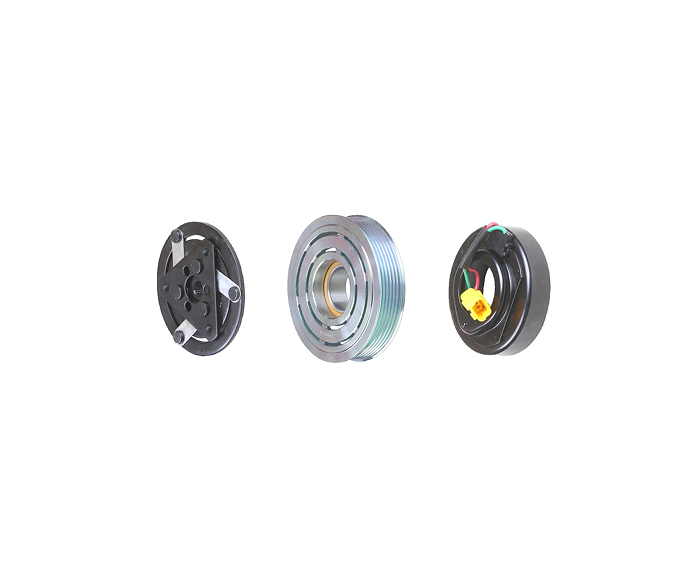

Choose a Valeo AC Compressor Clutch Supplier by Evidence, Not by the Brand Name Alone
The short answer is this: a Valeo AC compressor clutch supplier should prove the exact compressor match, clutch dimensions, electrical configuration, component scope, sample result, and repeat-order controls before a buyer approves a bulk order. The word "Valeo" identifies an important compressor and vehicle reference, but it does not by itself identify the correct pulley, bearing, coil, hub, connector, or air gap. A professional buyer needs a supplier record that connects all of those fields to one approved part number.
This distinction is important because the search phrase can describe several different purchasing situations. A vehicle owner may be looking for an original replacement. An aftermarket distributor may need a clutch compatible with a Valeo compressor family. A private-label importer may need an existing replacement configuration with custom packaging. A workshop network may need a small number of confirmed references rather than a broad catalogue. These buyers do not need the same commercial answer, even when they use the same keyword.
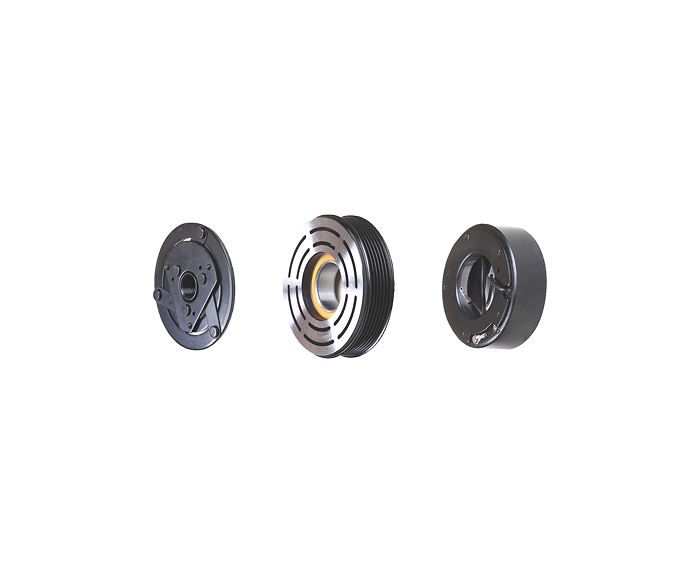
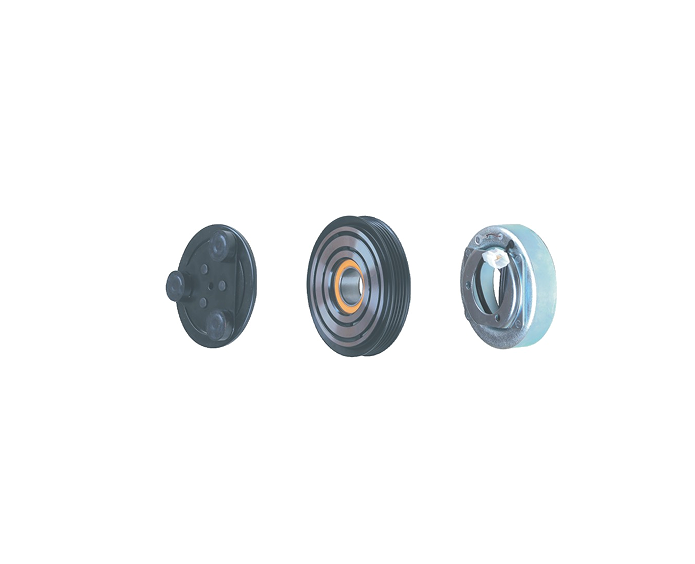
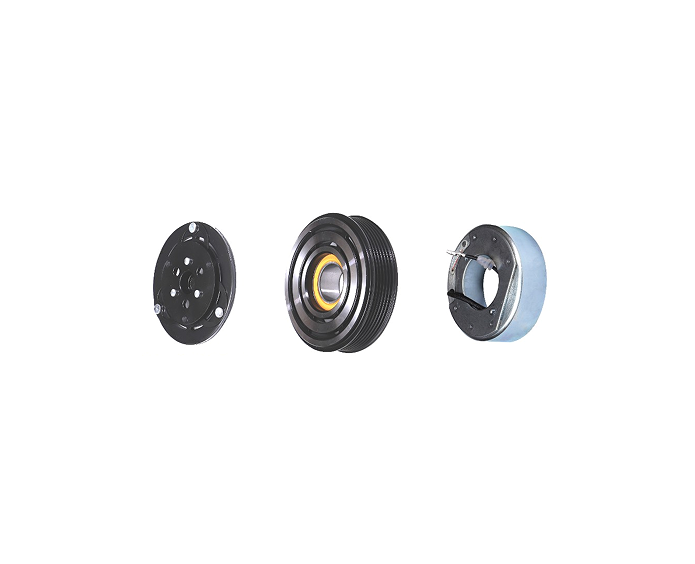
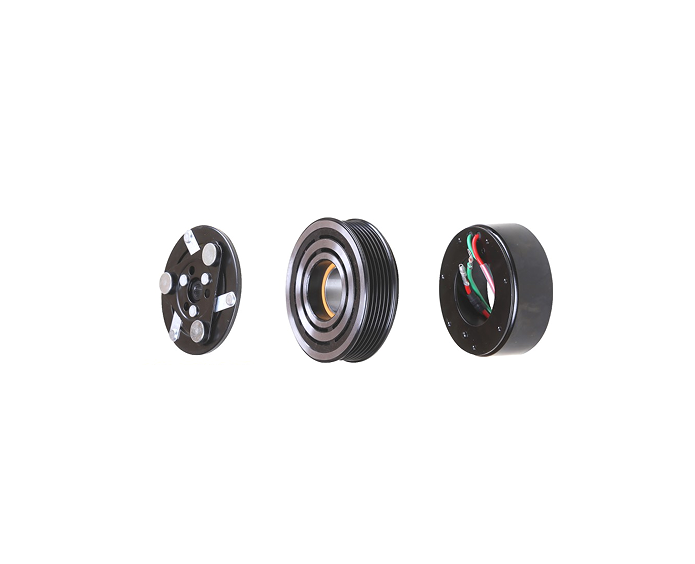
Guangzhou Kasen Auto Airconditioner CO:LTD presents itself as a Guangzhou-based manufacturer and exporter of automotive air-conditioning components. Its public company information states that the business has focused on automotive air conditioning since 2007 and supplies compressor clutches, compressors, electric compressors, valves, bearings, and related parts for global aftermarket and OEM-related requirements. Buyers can review the Kasen company profile and the AC compressor clutch product family as the starting point for a Valeo-related sourcing enquiry.
The unique purchasing question answered here is: how should an importer or distributor verify a Valeo-compatible clutch supplier before placing a first sample or bulk order? This article does not repeat a general supplier scorecard or a generic clutch wholesale guide. It focuses on the additional evidence needed when the buyer searches by a recognizable compressor brand and must avoid confusing original-brand status, cross-reference compatibility, and unverified catalogue claims.
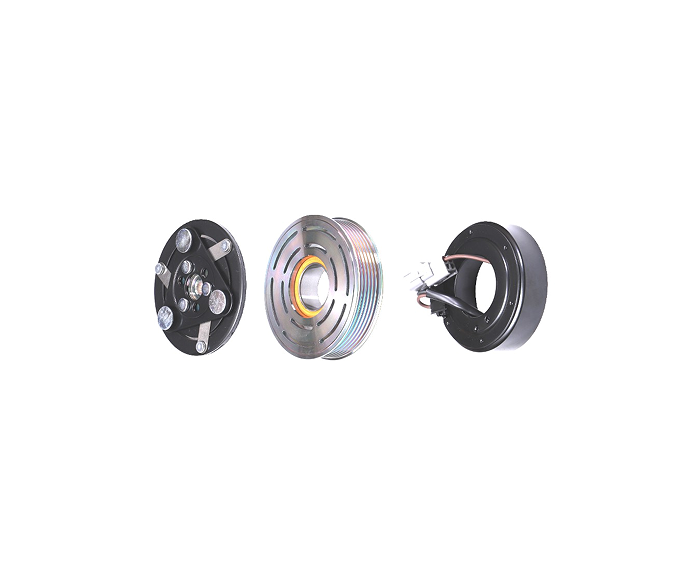
Clarify What "Valeo Supplier" Means Before You Ask for a Price
Use precise language in the first enquiry. A supplier may be an authorized source of original Valeo parts, an independent manufacturer of aftermarket replacement clutches, a distributor that resells several factories, or a manufacturer that can match a Valeo compressor reference using an OE number, sample, drawing, and photographs. Those are different supply relationships. A buyer should not assume authorization, original-brand packaging, or factory ownership unless the supplier provides evidence for that exact statement.
Original Valeo part or compatible aftermarket replacement
If the purchasing requirement is an original Valeo part, request the original part number, packaging identity, distribution channel, and any documentation required by the target market. If the requirement is a compatible replacement, write "aftermarket clutch compatible with the specified Valeo compressor" and ask the supplier to identify the matching basis. This wording protects the buyer from buying an unverified part under an ambiguous brand description.
Kasen's public aftermarket article lists Valeo and Zexel compressor families, including DKV and TM series, as examples in its product coverage. That public page is useful evidence that Kasen works with Valeo-related aftermarket references. It is not a universal compatibility certificate and it does not prove that every DKV or TM variation uses the same clutch. The exact compressor model, OE number, pulley geometry, voltage, and hub interface still need confirmation.
Manufacturer, trading company, or distributor
Ask who will manufacture the quoted clutch, where the product will be inspected, and which company will appear on the commercial documents. A manufacturer may be able to discuss production records and change control directly. A trading company may provide broader consolidation but should identify the actual source of technical evidence. A distributor may offer local stock but still needs to identify the approved product reference. The important question is responsibility: who controls the configuration that the buyer approves and who must investigate a later claim?
| Supplier description | What it can mean | Question for the RFQ |
|---|---|---|
| Original Valeo source | Original-brand supply through an authorized or documented channel | Can you document origin, part number, packaging, and distribution status? |
| Valeo-compatible aftermarket manufacturer | Independent replacement clutch matched to a Valeo compressor reference | Which compressor, OE number, dimensions, voltage, and component set does the replacement cover? |
| Multi-brand factory | A manufacturer with several compressor-brand application families | Which Valeo-specific references are currently controlled and how are they separated? |
| Trading company | A commercial source that may consolidate products from other factories | Who manufactures, inspects, labels, and handles technical claims? |
| Local distributor | A stock or service channel close to the buyer | Is the supplied item the same approved reference as the next shipment? |
Confirm the Valeo Compressor Before Selecting the Clutch
A vehicle brand or a Valeo label is a useful starting point, but it is rarely enough for a controlled B2B order. The compressor is the primary mechanical reference because different vehicles, production years, markets, engines, and service replacements can use different compressor configurations. The buyer should send the clearest available compressor label and the old clutch before asking a supplier to confirm a replacement.
| Identification field | Why the field matters | Preferred evidence | Status to record |
|---|---|---|---|
| Valeo compressor model or label | Separates compressor families that may use different clutch interfaces | High-resolution label photograph and service record | Confirmed, unclear, or missing |
| OE or cross-reference number | Connects the replacement request to a catalogue or service reference | Original invoice, label, old part, or manufacturer record | Reference verified or pending |
| Vehicle make, model, year, engine, and market | Explains platform and regional variation | Fleet or vehicle record | Supporting context |
| Pulley diameter, width, grooves, and offset | Controls belt fit and alignment | Drawing, calibrated measurement, and old-part photograph | Dimensionally approved or pending |
| Bearing reference or dimensions | Controls pulley rotation and assembly compatibility | Bearing mark, drawing, or measured sample | Confirmed or pending |
| Coil voltage and connector | Controls electrical compatibility with the vehicle harness | Vehicle data, coil label, and connector photograph | Verified, never assumed |
| Hub, spline, shaft interface, and mounting | Controls torque transfer and physical installation | Drawing, old sample, and compressor inspection | Approved against the compressor |
| Required assembly scope | Prevents a complete clutch, pulley, coil, or bearing from being confused with another | RFQ line item and product photograph | Written in the quotation |
Mark an unknown field as "not confirmed" rather than filling it with a guess. A supplier that asks for the missing compressor label or dimension is showing better technical discipline than one that promises a universal fit without checking. The Kasen compressor clutch fitment workflow can be used as a reference when converting an OE number, sample, and photograph into an approved B2B SKU.
Build a Valeo Clutch Fitment File That Can Be Reordered
The first sample is only useful when the approved information can be found again. Create one fitment file per clutch reference, not one broad file for every Valeo compressor. Include the buyer SKU, supplier reference, compressor model, OE or cross-reference numbers, vehicle applications, approved photographs, drawing revision, supplied components, and the commercial assumptions that accompanied the sample.
A good fitment file also records the boundaries of the match. For example, a clutch may be approved for one pulley groove count and one connector while a visually similar version is approved for another. The file should state whether the match is based on the original part, a measured sample, a drawing, or supplier cross-reference data. If one field has not been verified, label it as an open question and keep it out of the catalogue until the question is resolved.
| Fitment file section | Minimum content | Reason for future orders |
|---|---|---|
| Identity | Buyer SKU, supplier SKU, Valeo compressor model, OE number, revision | Prevents similar products from being mixed |
| Geometry | Pulley diameter, groove profile and count, width, offset, bearing seat, hub interface | Supports receiving checks and installation decisions |
| Electrical | Voltage, connector, coil identification, resistance requirement if controlled | Reduces wrong-coil and harness errors |
| Assembly scope | Pulley, bearing, coil, hub, armature, hardware, and included items | Ensures a repeat order matches the approved sample |
| Evidence | Photos, drawing, sample approval, test or inspection record, batch identification | Connects the product claim to a traceable reference |
| Commercial control | MOQ, sample terms, packaging, lead-time assumptions, destination, claim route | Prevents the quote from being treated as a universal promise |
Check the Critical Components in a Valeo-Compatible Clutch
Pulley and belt interface
The pulley receives belt drive from the engine accessory system. Check outside diameter, width, groove number, groove profile, offset, bearing seat, and the relationship between the pulley and the compressor mounting position. A diameter that looks correct can still be wrong if the grooves, width, or offset place the belt out of alignment. Ask the supplier which measurements are controlled and how runout or balance is checked for the quoted reference.
Electromagnetic coil and connector
The coil generates the magnetic force that pulls the armature into engagement. Confirm rated voltage, connector style, lead routing, mounting arrangement, and the electrical checks applied before shipment. A 12 V or 24 V label is not proof of a complete match, and voltage should never be inferred from a vehicle category. The buyer should also clarify whether the quotation includes the connector, wire, retaining hardware, and any protective sleeve.
Bearing, hub, and shaft interface
The bearing supports pulley rotation while the hub and armature transfer torque to the compressor shaft. Confirm bearing dimensions or reference, shaft interface, spline or key arrangement, hub depth, retaining method, and the fasteners included in the assembly. If the original clutch is available, send front, rear, and side photographs with a scale and provide measurements taken from the old part. Similar pulley diameter alone does not establish interchangeability.
Air gap and assembly condition
The working air gap is part of the installation and engagement relationship, not a marketing adjective. Ask which air-gap range applies to the exact compressor and how it is set or checked. Confirm whether the part arrives as a complete pre-assembled clutch or as separate components that require workshop adjustment. The receiving and installation instructions should identify the approved configuration and the checks needed after fitting.
Use Kasen's Public Valeo Evidence With the Correct Boundary
Kasen's published aftermarket clutch supply article identifies Valeo and Zexel as compressor-brand families in its public coverage table, with DKV and TM series examples and a stated clutch diameter range of 105 to 130 mm. The same page describes a portfolio of more than 300 clutch models and explains that the product line covers passenger cars, light trucks, buses, and construction vehicles. These statements establish a relevant public product scope for an initial enquiry.
The page also publishes quality highlights including CNC-machined pulleys, Class H insulated coils, torque and resistance checks, corrosion protection, noise and vibration testing, and batch traceability. Those are useful questions for a buyer to carry into an RFQ. They should remain attributed to the supplier's public page until Kasen provides a reference-specific drawing, inspection record, test method, or report for the Valeo clutch in the quotation. A page-level claim about a product family is not the same as a certificate for every SKU.
This evidence boundary improves trust. A responsible article can say that Kasen publicly presents Valeo-compatible aftermarket coverage and a set of stated production controls. It should not say that Kasen is Valeo, that every listed clutch is an original Valeo part, that every DKV or TM variant is interchangeable, or that the published quality figures automatically apply to a buyer's selected reference. The buyer should request the exact part number and covered conditions before using the claim in a catalogue or customer quotation.
Ask for Material and Process Evidence by Component
Buyers often ask for "premium material" without defining what must be controlled. A more useful request separates material family, functional requirement, process, and inspection. If the supplier cannot disclose a proprietary grade, it can still state the controlled characteristic and the method used to verify it. Do not insert a material grade into a purchase order unless it is supported by the approved drawing or supplier document.
| Component | Evidence to request | How the evidence supports a Valeo RFQ |
|---|---|---|
| Pulley | Construction or material family, machining process, groove dimensions, runout or balance method, surface finish | Links belt alignment and rotation requirements to the selected compressor |
| Coil | Insulation description, rated voltage, resistance or current check, connector and wire protection | Separates electrical compatibility from a generic vehicle claim |
| Bearing | Reference or dimensions, seal arrangement, incoming inspection, rotation and noise check | Controls the pulley support component in the complete assembly |
| Hub and armature | Shaft interface, friction surface description, flatness or air-gap check, fastening method | Controls torque transfer and engagement on the compressor shaft |
| Finish and hardware | Coating or corrosion-protection description, thread and retaining checks | Defines the approved assembly rather than relying on appearance |
| Packaging | Protective inserts, connector support, label, carton quantity, batch marking, inspection photographs | Protects the part and preserves SKU identity in the warehouse |
Material and process evidence should identify the covered SKU or revision. A generic factory statement such as "all products use high-quality materials" cannot verify a specific Valeo-compatible clutch. When a drawing, inspection report, or test record is unavailable, write "evidence pending" in the purchasing file and limit the public product wording accordingly.
Approve a Sample Before a Valeo Bulk Order
Sample approval should be a defined sequence, not a quick visual check. The buyer and supplier should agree in advance on what the sample must prove, who will inspect it, and what happens when a field is different from the quotation. The following four stages keep the technical and commercial decisions connected.
Stage 1: identity and dimensional review
Compare the supplier label, buyer SKU, Valeo compressor reference, OE number, and the sample photographs. Measure the pulley diameter, width, groove count and profile, offset, bearing dimensions, hub interface, mounting points, and any other dimensions listed in the approved drawing. Record the tools or method used. Do not approve a sample because it resembles the old part if a critical dimension remains unknown.
Stage 2: electrical and bench checks
Verify coil voltage, connector, continuity or resistance requirement, armature movement, pulley rotation, bearing noise, fastener condition, and applicable air-gap setting. The actual test values and acceptance limits must come from the approved specification. If the supplier publishes a test such as torque, resistance, or noise and vibration, ask which Valeo-compatible reference and test conditions the record covers.
Stage 3: compressor or vehicle trial
Install the sample on the exact compressor or vehicle application identified in the fitment file. Record belt tracking, engagement, release, cooling operation, abnormal noise, electrical response, and any installation adjustment. A vehicle trial can reveal a harness, bracket, belt, or alignment issue that a bench check cannot. The result should be tied to the sample number and installation record.
Stage 4: freeze the approved master
Save the approved sample photographs, drawing revision, product label, component list, packaging artwork, and inspection checklist. Give the approved configuration a buyer SKU and define how substitutions or component changes will be authorized. The next order should refer to that master record instead of a casual product name such as "Valeo clutch".
Control Batch Quality and Change Management
After the first sample, the supplier still has to reproduce the same configuration. The receiving plan should check the characteristics most likely to create a wrong-fitment or return problem: product identity, pulley geometry, groove count, bearing reference, coil voltage and connector, hub interface, supplied hardware, appearance, and packaging label. The inspection level can be adjusted to the buyer's risk, but the approved master should remain the reference.
Kasen's AC compressor clutch inspection guide provides a broader framework for fitment, QC, and batch consistency. For a Valeo program, add the compressor model and cross-reference number to the receiving report. Require the supplier to notify the buyer before a change to a bearing, coil, connector, pulley geometry, friction surface, packaging label, or manufacturing location affects the approved SKU.
Traceability does not need to be complicated. A batch code on the product or carton, the purchase order, inspection record, and shipment photographs can connect a returned part to the production lot. If the supplier publishes serialized or batch traceability, ask how that code is used during a claim. Do not promise a warranty process that has not been agreed in writing.
Compare Valeo Supplier Proposals by Responsibility
Price is only comparable after the technical scope is comparable. When proposals arrive, place them in the same scorecard and mark unsupported fields as open rather than assuming that a blank means "standard." A slightly higher unit price may include a sample, inspection report, stronger packaging, or a defined change-control process; a lower price may leave those responsibilities with the buyer.
| Evaluation area | Strong supplier response | Risk signal |
|---|---|---|
| Brand and application status | Clearly states original, compatible aftermarket, or other status | Uses "Valeo" without defining the relationship |
| Compressor match | Identifies compressor model, OE number, and matching basis | Matches only by vehicle name or photograph |
| Specification | Lists pulley, bearing, coil, hub, connector, and assembly scope | Provides only a diameter or a generic catalogue title |
| Evidence | Connects drawings, inspection, and tests to the quoted SKU | Quotes family-level claims as if they were a model certificate |
| Sample control | Defines sample availability, approval steps, and revision | Pushes directly to bulk quantity without a master sample |
| Repeat supply | Explains SKU, batch, packaging, and change notification controls | Cannot identify the approved configuration for the next order |
| Commercial terms | States MOQ, lead time, mixed-SKU rules, packaging, and destination assumptions | Uses one universal MOQ or delivery promise |
| Claims | Provides a written evidence and return route | Offers only informal assurances such as "no problem" |
Set MOQ, Lead Time, and Packaging by SKU Program
There is no responsible universal MOQ or lead time for every Valeo-compatible clutch. These fields can change with the exact reference, sample status, component availability, mixed-model consolidation, private-label artwork, inspection requirements, destination, and whether the buyer is ordering an existing item or requesting a new development. Ask for a quotation that separates the assumptions instead of copying a number from another clutch.
| Commercial field | Buyer should provide | Supplier should return |
|---|---|---|
| SKU list | Valeo compressor references, buyer SKU, opening quantity, forecast | Availability, MOQ per SKU, and mixed-order rule |
| Sample | Sample count, approval date, test plan, delivery destination | Sample source, preparation time, price, and documents |
| Production | Required delivery window and acceptable split shipments | Material, production, inspection, packing, and handoff milestones |
| Packaging | Neutral or branded box, barcode, language, carton, pallet, and protection | Artwork process, minimum, carton quantity, and approval sample |
| Inspection | Required dimensions, electrical checks, photographs, and traceability | Available records, test method, and covered revision |
| Claims | Evidence required for a return and target response time | Warranty scope, authorization, analysis, and remedy |
Packaging is part of fitment control because a correct clutch can still become a warehouse problem if the label, connector, pulley face, or batch code is damaged. Kasen's custom clutch packaging article can help structure export protection and SKU planning. Approve the actual carton and insert design against the Valeo-compatible references in the order, especially when several visually similar clutches are shipped together.
Use OEM and Private-Label Options Without Changing the Technical Scope
Many distributors use "OEM" to mean private-label packaging, while others mean a change to the product itself. Separate these requirements in the RFQ. A packaging project may need a logo, barcode, language, carton quantity, and buyer SKU while keeping the approved clutch unchanged. A product-development project may require a new pulley, coil, hub, bearing, or mounting feature and therefore needs an engineering review and new sample approval.
Kasen's AC compressor clutch OEM article explains why those scopes should be separated. For a Valeo-compatible program, the buyer should state whether the requested product is an existing replacement, an existing product with private-label identification, or a technical modification based on a drawing or sample. Do not let a packaging change silently become a component change.
Prepare a Valeo AC Compressor Clutch RFQ That Gets a Technical Answer
A short, complete RFQ is more valuable than a long message with no reference data. Use the following structure for each proposed SKU and attach photographs or drawings in the same email or online enquiry.
- State whether you need an original Valeo part, a Valeo-compatible aftermarket replacement, or a private-label product.
- List the Valeo compressor manufacturer and model, OE or cross-reference number, vehicle make, model, year, engine, and market.
- Attach the compressor label, old clutch front/rear/side views, connector, pulley, and mounting photographs.
- Provide pulley diameter, groove count and profile, width, offset, bearing reference or dimensions, coil voltage, connector, hub interface, and known air-gap data.
- Define the supply scope: complete clutch assembly, pulley and bearing, coil, hub, armature, hardware, or another component.
- State sample quantity, opening order, annual forecast, number of SKUs, destination, and required delivery window.
- List the material, drawing, inspection, electrical, functional, traceability, and packaging evidence needed for approval.
- Specify neutral or branded packaging, barcode, language, carton, pallet, label, and private-label requirements.
- Ask the supplier to return the proposed reference, matching basis, open questions, sample plan, MOQ, lead time, evidence, and change-control assumptions.
Send the completed file through the Kasen enquiry form or the Kasen contact page. The first message should make clear which fields are confirmed and which are still unknown. That gives the engineering and sales teams a practical basis for a model-specific answer rather than a generic catalogue response.
FAQ for Valeo AC Compressor Clutch Buyers
Is Kasen an original Valeo manufacturer?
Kasen's public information presents the company as a Guangzhou manufacturer and exporter of automotive air-conditioning components and describes Valeo-related aftermarket coverage. The reviewed public information does not establish that Kasen is Valeo or an authorized original-brand manufacturer. Buyers should state whether they require an original Valeo part or a compatible aftermarket replacement and request the corresponding evidence.
Can a Valeo compressor clutch be selected by vehicle model alone?
Vehicle information is helpful but normally insufficient for a controlled wholesale order. Confirm the compressor model, OE or cross-reference number, pulley geometry, bearing, coil voltage, connector, hub interface, and assembly scope. Different engines, years, markets, or service replacements can change the correct clutch.
Are Valeo DKV and TM clutches interchangeable?
Do not assume interchangeability from the family name. Kasen's public article lists DKV and TM as Valeo/Zexel examples, but the exact compressor model and clutch interface still need to be verified. Ask for a reference-specific matching record and approve a sample on the intended compressor.
Does a 12 V or 24 V coil prove that the clutch is correct?
No. Voltage is only one electrical field. Correct fitment also depends on the connector, coil arrangement, pulley, bearing, hub, mounting, air gap, and compressor interface. Verify the rated voltage against the vehicle and the quoted clutch record rather than inferring it from the vehicle class.
What evidence should be requested before a bulk order?
Request the approved drawing or measured specification, real product photographs, component or material description, electrical and dimensional checks, applicable functional or cycling records, packaging photographs, and a batch or revision identifier. Every document should identify the exact SKU or product revision it covers.
Does Kasen publish one MOQ for all Valeo-compatible clutches?
No universal MOQ should be assumed. Ask for MOQ by exact SKU and quantity, including mixed-model rules, sample status, private-label packaging, destination, and inspection requirements. The same commercial terms may not apply to a standard stock item and a new development.
Should a buyer replace the clutch or the complete compressor?
That decision depends on the diagnosis and compressor condition. A clutch replacement may be appropriate when the compressor internals remain serviceable and the failure is limited to the clutch assembly. Internal damage, contamination, or a different compressor architecture may require a complete compressor or another repair scope.
How can a distributor reduce wrong-fitment returns?
Use a controlled buyer SKU that combines the compressor reference, OE number, approved clutch dimensions, coil and connector, product photographs, supplier reference, sample revision, and packaging record. Require technical approval before substitutions and check the receiving label against the same master record.
What should be written on a private-label carton?
The carton should identify the buyer SKU, supplier or product reference as agreed, application or cross-reference information approved for the market, quantity, batch or lot, and handling information needed to protect the assembly. Do not print a broader Valeo compatibility claim than the approved fitment record supports.
Where should I send a Valeo clutch quotation request?
Use the Kasen message page or contact page and attach the compressor label, OE number, photographs, measurements, quantity, destination, and packaging requirements. Ask for the technical match and commercial assumptions in the same response.
Conclusion
A reliable Valeo AC compressor clutch supplier is not defined by a brand keyword, a broad compatibility table, or the lowest first quotation. The supplier should identify the exact compressor, explain whether the offer is original or aftermarket, document the pulley, bearing, coil, connector, hub, and air-gap relationship, and provide a sample path that can be repeated in production.
Kasen's public website provides a relevant starting point: Guangzhou manufacturing and export identity, an automotive AC clutch product family, public Valeo/Zexel DKV and TM coverage, and stated inspection and traceability practices. These public facts support an RFQ, but they do not replace reference-specific confirmation of fitment, material or construction evidence, test conditions, MOQ, lead time, packaging, and claims handling.
For a quotation, send your Valeo compressor model, OE number, old clutch photographs, pulley and bearing data, coil voltage and connector, target quantities, market, and packaging requirements. Review the Kasen AC compressor clutch product family, then use the Kasen Valeo-compatible clutch enquiry page to request the proposed SKU, matching basis, sample plan, inspection records, MOQ, lead time, and repeat-order controls. That written record gives purchasing, engineering, and warehouse teams one clear reference for approving the first order and reordering the same clutch later.