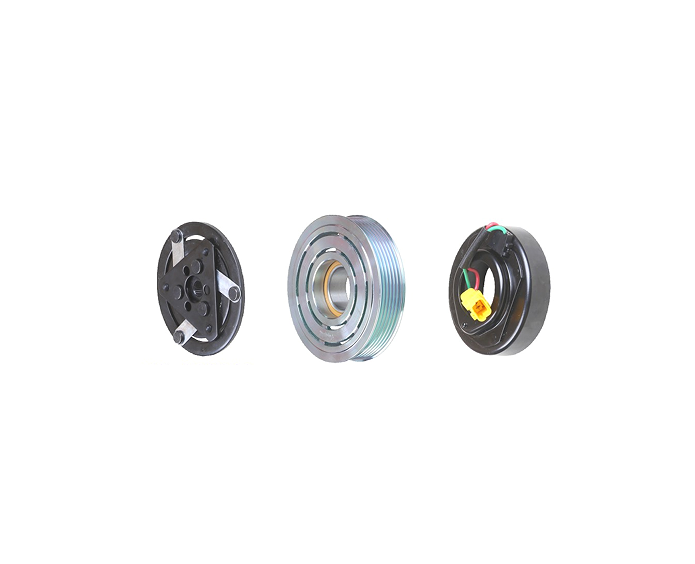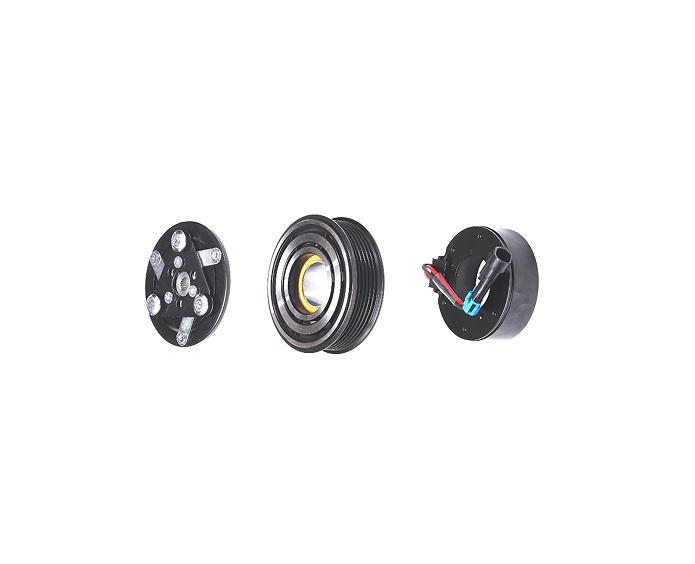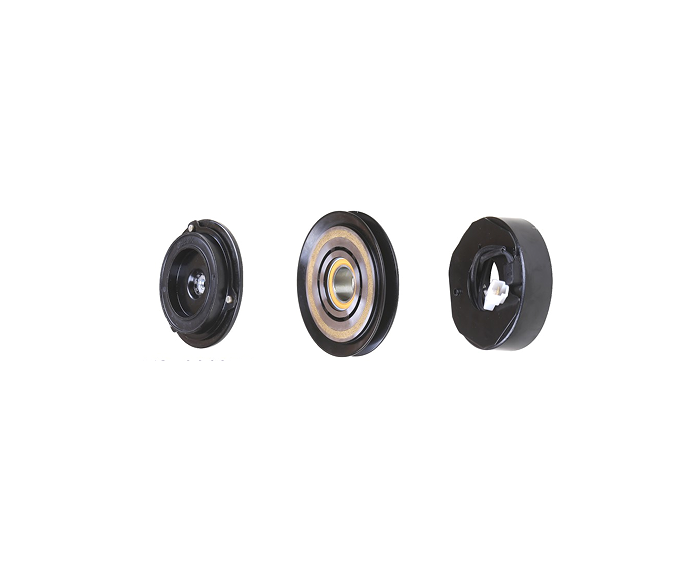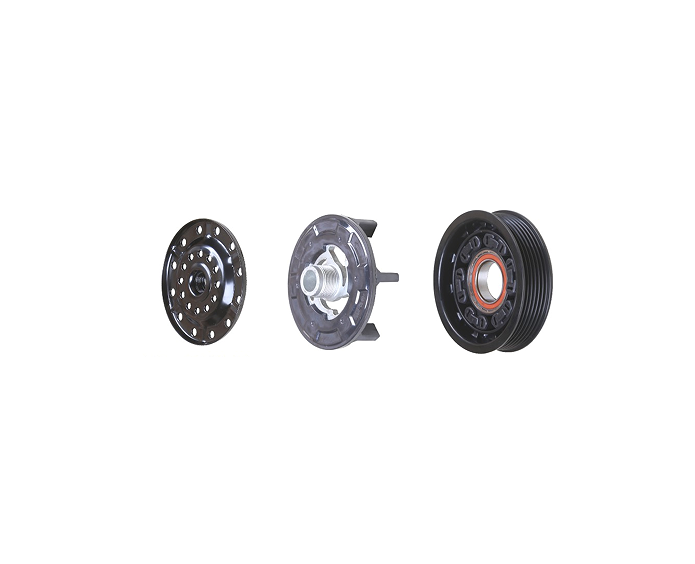

What Does AC Compressor Clutch OEM Mean for a B2B Buyer?
An AC compressor clutch OEM project should begin with a controlled product definition rather than a request to “put our logo on an existing clutch.” For an aftermarket brand or distributor, OEM cooperation may involve producing an existing replacement configuration to an agreed specification, using customer references or drawings, establishing private-label identification, or evaluating technical modifications for a particular compressor application. Those scopes are different and should be separated before price, tooling or lead time is discussed. KASEN states that it has focused on automotive air-conditioning parts since 2007 and welcomes custom-production discussions using customer drawings or OEM numbers, while its portfolio includes compressor clutches, compressors, electric compressors, valves and bearings. Buyers can review the KASEN company profile before beginning a project discussion.
For purchasing teams, the most important point is that “OEM” should describe an agreed supply relationship and product specification; it should not automatically be interpreted as proof that a replacement clutch is an original vehicle-manufacturer part or approved by a particular automotive brand. If approval by a named vehicle or compressor manufacturer is commercially important, request documentation that specifically supports that claim. This distinction protects both the buyer's catalogue accuracy and the manufacturer's technical responsibility.
Who Needs an OEM Compressor Clutch Program—and Who May Not?
AC compressor clutch OEM sourcing is particularly relevant to automotive aftermarket brands building their own product lines, importers developing repeat-order references, regional distributors requiring private-label packaging, compressor rebuilders that need controlled component configurations, and specialist AC-parts suppliers serving recurring vehicle applications. These buyers are not simply purchasing one replacement part; they need the same reference to remain identifiable and repeatable across future orders.
An OEM program may be unnecessary when a buyer only needs a small quantity of an existing KASEN reference with standard packaging and no technical change. It is also premature when the application is still unidentified. If the compressor model, OE reference, pulley configuration or electrical requirement is uncertain, solve the fitment question first. Browse the current AC compressor clutch product range and use standard samples to narrow the application before turning an uncertain replacement request into a custom project.
Start the OEM Project With Compressor Fitment, Not Branding
A common sourcing mistake is discussing box artwork, labels and target price before confirming what clutch actually fits the compressor. Two assemblies can look similar yet differ in pulley diameter, groove configuration, bearing specification, hub interface, coil voltage or connector arrangement. For an AC compressor clutch OEM project, the buyer should therefore create a fitment record before creating the packaging file.
A practical enquiry should begin with the compressor model, OE or existing reference, vehicle make and model where available, year and engine information where relevant, old-clutch photographs, pulley measurements, groove count, coil voltage, connector image and required quantity. KASEN's existing automotive AC compressor clutch selection guide similarly emphasizes compressor model, OE reference, pulley geometry, voltage, bearing dimensions, hub design and connector configuration when professional buyers evaluate fitment.
Build One OEM Requirement Specification Before Sampling
Do not manage an AC compressor clutch OEM program through scattered emails, photographs and quotation notes. Create one controlled requirement sheet for each reference and distinguish clearly between buyer requirement, supplier proposal, confirmed specification and item still requiring verification. This becomes especially important when the OEM project moves through several samples or revisions.
| OEM Requirement Area | What the Buyer Should Define or Confirm | Why It Matters |
|---|---|---|
| Product identity | Buyer SKU, KASEN reference, OE reference and compressor model | Keeps future orders tied to the approved product |
| Application | Vehicle/platform information and confirmed application range | Reduces incorrect catalogue claims |
| Supply scope | Complete clutch or individual pulley, coil, bearing, hub or related part | Prevents quotation and packaging misunderstandings |
| Pulley | Diameter, belt profile, groove count, offset and relevant dimensions | Controls mechanical fit |
| Coil | Rated voltage, required electrical specification and connector | Controls engagement compatibility |
| Bearing | Published or approved bearing reference and required construction | Prevents uncontrolled component changes |
| Hub/interface | Shaft profile, mounting geometry and locating features | Controls mechanical assembly |
| Surface requirements | Agreed finish or corrosion-protection requirement if applicable | Defines visual and environmental requirements |
| Sample status | Sample revision, approval date and unresolved items | Prevents an obsolete sample becoming the production reference |
| Packaging | Brand, buyer SKU, barcode, label and carton requirements | Supports private-label distribution |
| Change control | Changes requiring buyer notification or reapproval | Protects repeat-order consistency |
The exact specification fields will vary by clutch design. The table is a buyer-control framework, not a claim that every KASEN clutch has identical construction or that every listed customization is available for every reference.
Separate Standard Fitment From Technical Customization
KASEN's published OEM compressor clutch customization page describes customization around areas such as coil systems, pulley design, bearing selection, connectors and surface treatment. For a real project, however, buyers should confirm which requested modification is technically available for the particular compressor and order volume rather than assuming every published option can be freely combined.
This distinction matters because a packaging change and an engineering change create very different risks. Changing a carton design may primarily require artwork approval. Changing pulley dimensions, coil characteristics, bearing construction or the shaft interface can affect fitment, manufacturing, validation and possibly tooling. When requesting a custom AC compressor clutch, mark each requirement as either identification/packaging, component specification, or engineering change so the quotation reflects the actual project.
Control the Pulley, Coil, Bearing and Hub as One Assembly
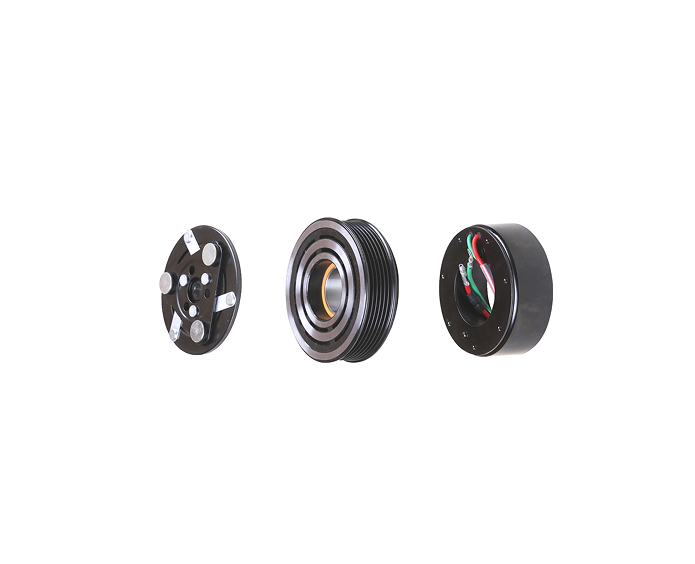
An electromagnetic compressor clutch is a system of interacting components rather than a collection of independent catalogue items. The pulley runs with the engine-driven belt, the bearing supports rotation, the electromagnetic coil creates attraction when energized, and the hub or armature arrangement transfers rotation when the clutch engages. KASEN explains this operating relationship in its guide to how an automotive AC compressor clutch works.
For OEM buyers, that means component substitutions need deliberate control. If a bearing reference changes, ask whether dimensions, sealing, load requirements or lubrication specification are affected. If the coil changes, confirm the approved electrical requirements and connector. If pulley construction or surface treatment changes, determine whether a new sample or additional checks are necessary. “Same appearance” and “same outside diameter” are not adequate engineering approval criteria.
Review Manufacturing Capability Through the Selected OEM Reference
A factory visit becomes more useful when the discussion follows one actual product rather than moving from machine to machine. KASEN's compressor clutch manufacturing process describes stages including material preparation, machining, coil winding, assembly and inspection. An OEM buyer can use those process stages as a review framework, but should ask how they apply to the specific reference being developed.
For machining, ask which dimensions from the approved drawing are controlled and how results are recorded. For coil production, identify the electrical characteristics that are checked and under what conditions. During assembly, clarify how the correct pulley, bearing, coil and hub components are identified and how applicable assembly criteria are verified. If an operation or component comes from an external supplier, the important question is not simply whether it is outsourced; it is how the specification, incoming inspection and supplier changes are controlled.
Approve the OEM Sample as a Defined Revision
An OEM sample should represent a defined product revision, not merely a physical object sitting in a purchasing office. Record the buyer SKU, supplier reference, sample number, applicable drawing or specification revision, photographs, measured results, packaging status and approval date. List unresolved items separately instead of approving them by silence.
For uncertain fitment, have an appropriate technical team or qualified workshop verify the sample against the intended compressor and application before bulk production. If the sample is modified, issue a new revision and preserve the previous record. This helps prevent the common situation where purchasing says “produce according to the sample” while engineering and the supplier are referring to different versions.
Define OEM Quality Control Before Bulk Production
Quality control should answer three different questions: Is the proposed design acceptable? Is the current production batch within the agreed specification? Has the product been validated for any specifically required performance condition? Sample approval, batch inspection and validation are related, but they are not the same process.
For an AC compressor clutch OEM project, specify which characteristics require incoming-component checks, dimensional checks, electrical checks, assembly inspection and final functional verification. Where endurance, thermal, vibration, corrosion or other validation is commercially required, define the exact product revision, method, conditions, sample quantity and acceptance criteria. KASEN publishes separate content about AC compressor clutch testing and quality verification, but buyers should request model-specific evidence for claims that materially affect their purchasing decision instead of assuming that every published test figure applies unchanged to every custom model.
Certificates should be reviewed in the same way. Confirm the organization named on the document, its scope, validity and relevance to the product or manufacturing activity being purchased. A company certificate and a product-specific test report prove different things.
Compare Existing Clutch References Before Requesting a New OEM Design
Before developing a new configuration, compare the project with existing references. A current KASEN product may already provide a practical starting point, reducing unnecessary engineering work. The following published data illustrates why model comparison should use several fields simultaneously rather than one visual characteristic.
KS-801009 and KS-801010 share a published pulley diameter and bearing code, but their groove specifications differ. KS-801010 and KS-801011 both list 6PK, while their published pulley diameters and bearing codes are different. These examples are not interchangeable alternatives and do not prove complete vehicle compatibility; they demonstrate why a custom AC compressor clutch should be approved using the complete specification rather than one matching field.
Plan OEM Quantity and Lead Time by Development Stage
There is no useful universal lead time for every AC compressor clutch OEM project because standard private labeling, an existing reference with a packaging change and a technically modified clutch require different work. Ask the supplier to divide timing into requirement confirmation, technical evaluation, sample preparation, sample approval, production preparation, manufacturing, inspection and dispatch.
The same principle applies to minimum order quantity. KASEN's published low-MOQ compressor clutch guidance indicates that order conditions depend on the SKU. Therefore, request the current MOQ for the selected standard or customized references, and separately confirm any minimum related to printed boxes, labels or other private-label requirements. Do not transfer the commercial conditions of one product to another without confirmation.
Calculate OEM Cost Beyond the Quoted Unit Price
The purchasing cost of an OEM clutch program is broader than the product price. Depending on the project, buyers may need to consider sample cost, engineering evaluation, tooling where applicable, packaging preparation, testing, inspection, freight, inventory holding and the cost of future changes. Some are one-time development costs; others recur with every order.
The larger commercial risk is often an undefined configuration. If a buyer approves one bearing, connector or pulley arrangement but later receives a technically different version under the same SKU, the consequences can include wrong fitment, workshop returns, relabeling, inventory confusion and difficult warranty investigation. A slightly higher initial price for a clearly controlled specification may therefore be commercially preferable to a lower quotation whose component scope or change rules are unclear.
Keep OEM, Private Label and Replacement Supply Clearly Separated
A professional supplier discussion should identify whether the buyer needs a standard aftermarket replacement, private-label supply, or a technically customized OEM project. Standard replacement supply uses an existing approved configuration. Private label commonly adds buyer identification, packaging, barcodes or product coding. Technical customization changes something about the product itself and therefore requires engineering review.
KASEN's website states that the company supplies automotive air-conditioning products to the global aftermarket and domestic OEMs and welcomes custom production using drawings or OEM numbers. For a buyer, that is a reason to start a technical discussion—not a substitute for confirming the exact customization scope, sample plan, testing, tooling, documentation and commercial conditions of the actual project.
Use Change Control to Protect Repeat Orders
The strongest AC compressor clutch OEM program is not the one that produces the most impressive first sample; it is the one that can reproduce the approved configuration and manage changes transparently. Define which changes require notification before production. Depending on the agreed specification, this may include component substitutions, drawing revisions, coil construction, bearing changes, surface treatment, connector changes, packaging revision or manufacturing-process changes that affect controlled characteristics.
When a change is proposed, record the reason, affected SKU, first affected production batch, technical comparison and whether new samples or verification are required. This creates a usable history for purchasing and quality teams and makes it easier to investigate future field issues. It also prevents a supplier and buyer from unknowingly working from different revisions after several repeat orders.
What Should You Send KASEN for an AC Compressor Clutch OEM Evaluation?
Prepare a complete enquiry rather than sending only “Need OEM clutch price.” Include the compressor model or OE number, vehicle information where known, current product photographs, key pulley and electrical information, required quantity, destination market, expected packaging, buyer SKU system and any requested engineering changes. If an existing sample or drawing is available, identify its revision and explain whether you want an equivalent replacement or a modified design.
You can first review the KASEN product center to determine whether an existing reference may provide a suitable starting point. Then submit the project through the KASEN enquiry page. A useful initial request should make it possible to separate confirmed data from information that still requires measurement, sample comparison or technical review.
Frequently Asked Questions About AC Compressor Clutch OEM
1. What information is required to start an AC compressor clutch OEM project?
Provide the compressor model or OE reference, intended application, old-part photographs, available measurements, pulley information, voltage, connector details, expected quantity, target market and packaging requirements. If a requirement is unknown, label it as unknown rather than guessing so it can be resolved during technical review.
2. Can KASEN produce a clutch from an OEM number or customer drawing?
KASEN states on its website that it welcomes custom-production discussions using customer drawings or OEM numbers. The actual feasibility, required samples, tooling, technical modifications, quantity and lead time should be confirmed for the individual project before an order is released.
3. Is private-label packaging the same as OEM customization?
No. Private-label work may involve branded boxes, labels, barcodes and buyer product codes without changing the clutch itself. Technical OEM customization can involve the product configuration and therefore requires a separate engineering and approval process.
4. Can one existing clutch be modified for a different compressor?
Possibly, but this should not be assumed from visual similarity. The supplier needs to compare mechanical interfaces, pulley geometry, electrical requirements, bearing, hub and other relevant specifications. In some cases an existing reference may be suitable; in others a different product or new development may be required.
5. Should an OEM buyer always request a sample?
For a new fitment, technical modification or commercially significant program, sample approval is a useful risk-control step. The buyer should define what the sample represents and how it will be evaluated. A previously approved standard reference may require a different sampling approach depending on the project.
6. What should be included in an OEM clutch sample report?
Record the product and sample reference, specification revision, photographs, measured dimensions, electrical results where applicable, fitment findings, approval status and unresolved issues. Keep the report connected to the buyer SKU used for future purchase orders.
7. How should I evaluate AC compressor clutch OEM quality?
Review the controlled specification, incoming-component requirements, machining and assembly checks, electrical inspection, applicable functional testing, batch records and change-control process. Ask for evidence relevant to the specific product instead of relying only on general factory descriptions.
8. How long does a custom compressor clutch project take?
Timing depends on whether the project uses an existing product, requires private-label changes, or involves technical development. Request separate dates for technical confirmation, sample preparation, approval, production and shipment rather than relying on one generic OEM lead-time statement.
9. How can aftermarket brands reduce repeat-order inconsistency?
Connect every repeat order to an approved supplier reference, buyer SKU, specification revision, sample status and packaging revision. Require notification and approval for changes that affect the agreed product. This is more reliable than reordering only from a photograph or vehicle description.
10. How do I request an OEM compressor clutch quotation from KASEN?
Compile your references, quantities, application information, customization requirements and packaging needs, then use the KASEN Contact Us page. For applications that remain uncertain, include detailed product photographs and clearly identify which specifications still need confirmation before quotation or sample approval.
Conclusion
A successful AC compressor clutch OEM project is built around a controlled product definition rather than a logo, a price or a visually similar sample. Aftermarket brands and distributors should first confirm compressor fitment, then define component requirements, approve a documented sample, establish production inspection and agree how future changes will be managed. Existing KASEN references can provide useful starting points, but model-specific information should remain model-specific rather than being generalized across an entire clutch range. KASEN has focused on automotive air-conditioning products since 2007 and invites buyers to discuss custom production based on drawings or OEM numbers. For a project-specific evaluation, review the KASEN AC compressor clutch range and send your compressor reference, product details, quantities and OEM requirements through Contact KASEN.