
Why Automotive AC Replacement Parts Require a Different Buying Strategy
Buying automotive AC replacement parts is different from sourcing components for a new vehicle program.
A replacement part must work with a vehicle, compressor, electrical system, pulley arrangement, refrigerant circuit, and mounting configuration that already exist. A product can look nearly identical to the original part but still create installation or operating problems if one critical specification is different.
For importers, distributors, repair networks, and aftermarket brands, this means replacement sourcing should answer three questions before price becomes the deciding factor:
- Does the part accurately match the existing application?
- Is the failed component really the root cause of the AC problem?
- Can the supplier maintain the same specification across repeat orders?
This is why professional buyers should treat automotive AC replacement parts as an application-matching and risk-control category rather than a simple commodity purchase.
KASEN's current automotive AC portfolio includes compressors, compressor clutches, electric compressors, valves, bearings, and related products for aftermarket and OEM-related applications. Buyers can review the broader KASEN automotive AC parts catalog when planning a replacement-parts range.
Which Automotive AC Replacement Parts Are Commonly Sourced?
Replacement demand can involve an entire compressor assembly or only one component within the compressor drive or refrigerant-control system.
The right sourcing decision depends on what has failed and whether adjacent components remain serviceable.
| Replacement Category | Typical Role | Key Information to Verify | Main Sourcing Risk |
|---|---|---|---|
| AC compressor | Compresses and circulates refrigerant | OE number, compressor model, mounting, connector, application | Wrong compressor configuration |
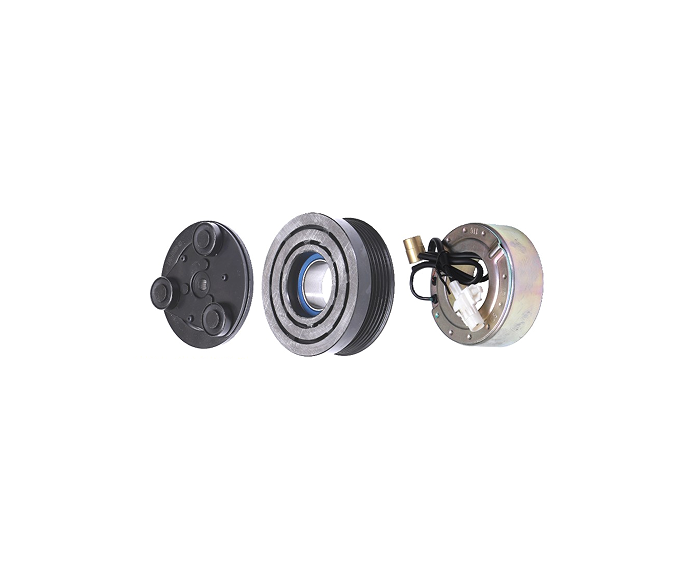
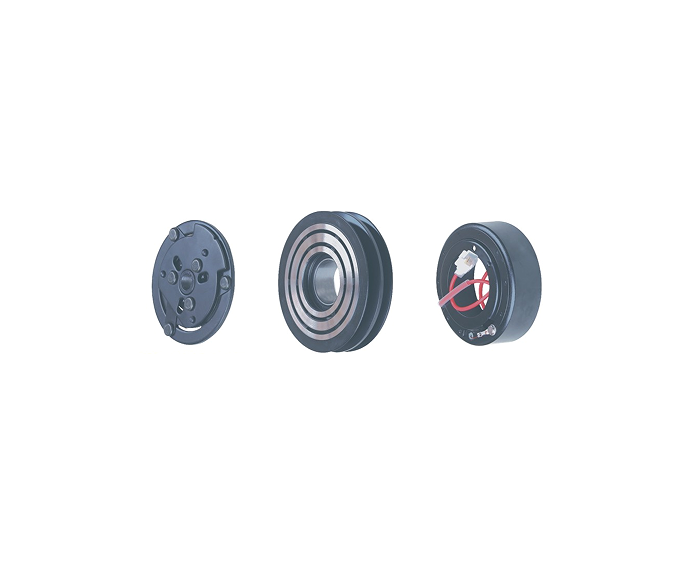
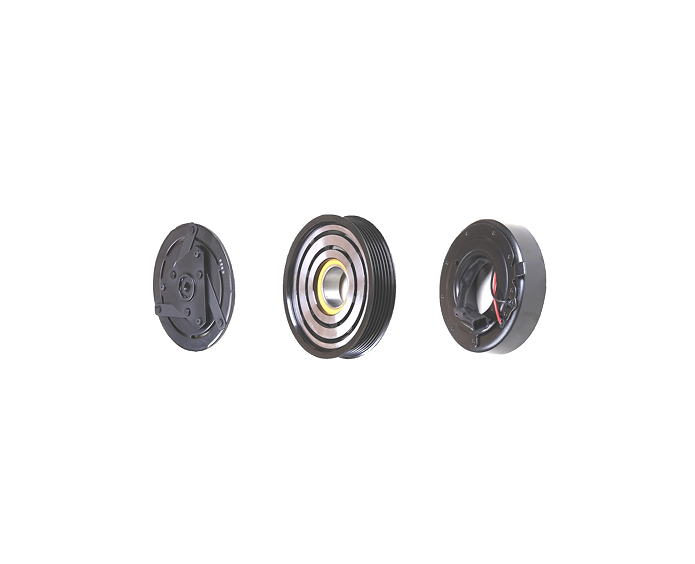
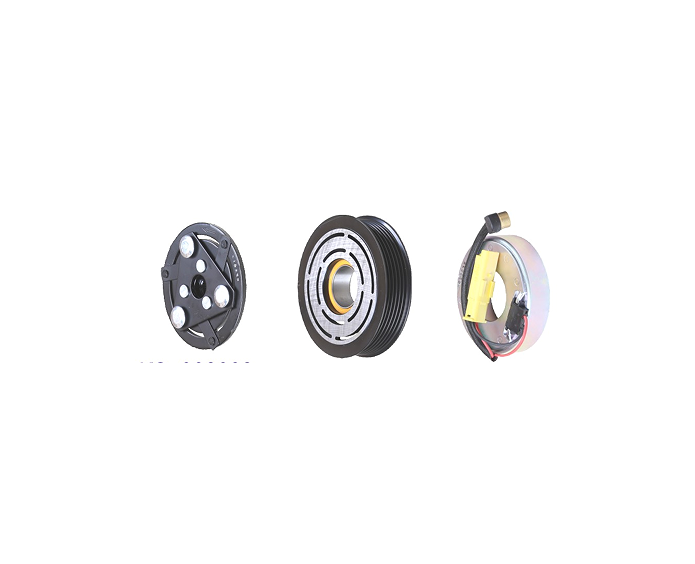
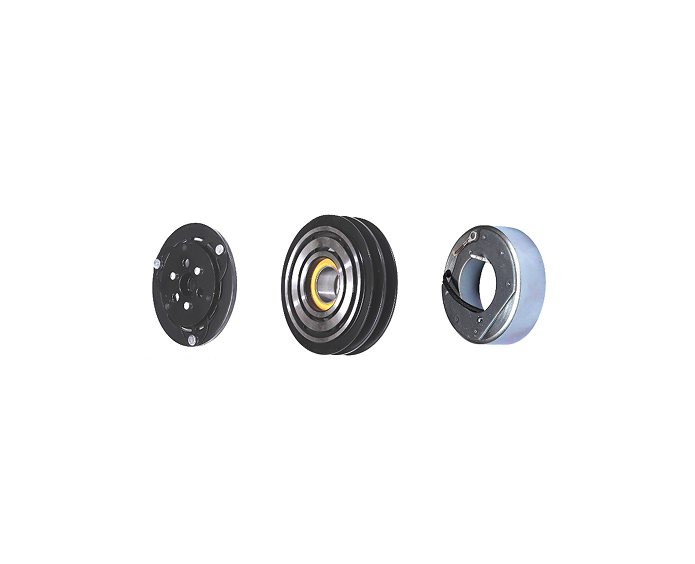
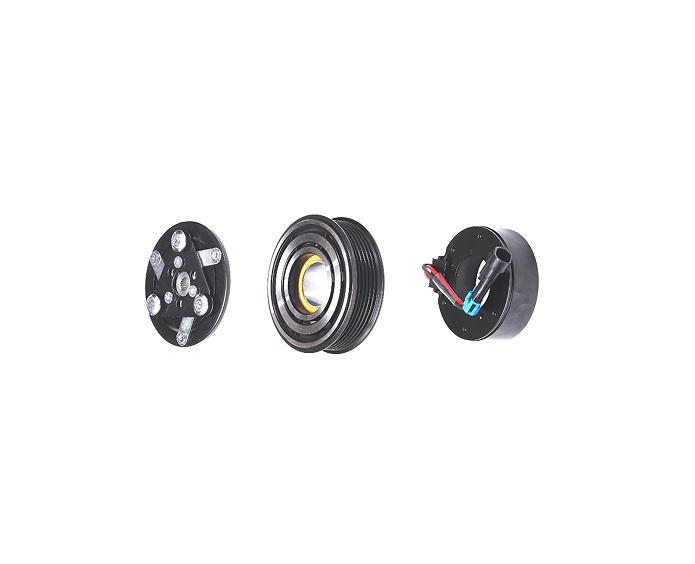
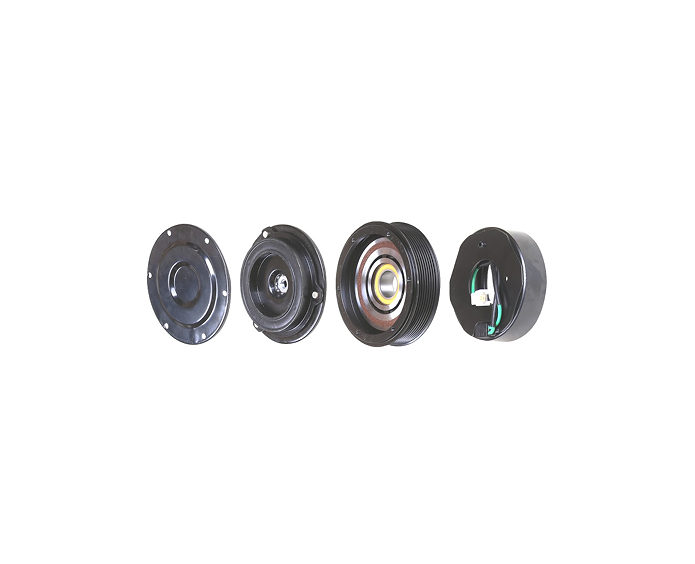
| Compressor clutch | Engages compressor drive | Pulley diameter, grooves, coil voltage, hub, bearing | Similar appearance but incorrect fitment |
| Clutch coil | Creates magnetic force | Voltage, dimensions, connector, resistance specification | Weak or failed engagement |
| Pulley / bearing | Supports belt-driven rotation | Diameter, grooves, bearing size | Noise, belt mismatch, premature wear |
| Control valve | Regulates variable compressor operation | Compressor family, valve design, electrical type | Unstable compressor control |
| Expansion valve | Regulates refrigerant flow | Vehicle and AC system application | Incorrect refrigerant flow |
| Electric compressor | Electrically drives refrigerant compression | Vehicle platform, voltage architecture, connector, refrigerant application | Electrical or system incompatibility |
KASEN lists dedicated ranges for auto AC compressors, auto AC compressor clutches, compressor bearings, and electric compressors. The company's product pages show replacement-oriented products across conventional and electrified vehicle applications.
Should You Replace the Component or the Complete Compressor?
One of the most important decisions in automotive AC replacement parts procurement is determining whether the market needs individual repair components or complete assemblies.
Replacing more parts is not automatically better. Replacing too little can also create repeat failures.
When a Clutch-Related Replacement May Make Sense
If the compressor remains mechanically functional but the problem is isolated to the drive system, repair demand may involve:
- Compressor clutch assembly
- Electromagnetic coil
- Pulley
- Bearing
- Hub or armature components
For distributors serving repair workshops, these individual components can create a useful replacement range because they allow technicians to address specific failures without automatically replacing the entire compressor.
Buyers unfamiliar with the clutch mechanism can also use KASEN's guide on how an auto AC compressor clutch works as supporting technical content.
When Complete Compressor Replacement Becomes More Appropriate
A complete compressor may be more appropriate when internal mechanical damage, seizure, leakage, severe wear, or other compressor-related failures make component-level repair impractical.
However, replacing the compressor without identifying the original system problem can lead to a second failure.
DENSO's professional A/C servicing guidance recommends checking system performance, refrigerant and oil condition, leakage, component condition, noise, airflow, and other system factors during diagnosis rather than focusing on a single component. Sanden likewise describes proper diagnosis of compressor issues and related HVAC components as part of industry service best practice.
For procurement teams, the commercial lesson is important: a replacement part cannot compensate for an incorrect diagnosis.
Seven Checks Before Approving Automotive AC Replacement Parts
1. Confirm the OE Number and Cross-Reference
The OE number is one of the most useful starting points for replacement matching.
It can help identify:
- Vehicle application
- Compressor family
- Original component reference
- Compatible aftermarket alternatives
However, an OE number should not always be treated as the only verification point.
Regional vehicle specifications, production-year changes, compressor suppliers, and superseded references can create differences within the same vehicle family.
When information is incomplete, combine the OE reference with vehicle and compressor data.
2. Verify the Compressor Model
For compressor-related components, the compressor model may be more useful than the vehicle name alone.
The same vehicle platform can sometimes use different compressor configurations depending on:
- Engine
- Production year
- Market
- AC system
- Compressor manufacturer
This is particularly important when sourcing:
- Compressor clutches
- Control valves
- Pulley assemblies
- Bearings
3. Compare Physical Dimensions
Small dimensional differences create large replacement problems.
For a compressor clutch, buyers may need to confirm:
- Pulley outside diameter
- Number of belt grooves
- Bearing dimensions
- Hub dimensions
- Mounting position
- Coil dimensions
- Air gap requirements
For valves, compressor housings, and other components, connection geometry and installation dimensions also matter.
Why visual matching alone is risky
Two products can appear almost identical in a catalog photograph while differing by only a few millimeters or using a different electrical connection.
That difference can turn a low-price purchase into an unusable inventory batch.
4. Verify Electrical Specifications
Electrical specifications matter for:
- Clutch coils
- Control valves
- Sensors
- Electric compressors
For conventional compressor clutches, coil voltage and connector configuration should match the intended application.
For electric compressors, replacement decisions require an even deeper check because the compressor integrates with the vehicle's electrical and thermal-management architecture.
KASEN currently lists electric compressor products for hybrid and electric vehicle applications in its new-energy compressor range.
5. Diagnose the Failure Before Building the Order
Replacement-parts sourcing should begin with failure information whenever possible.
Useful information from repair networks can include:
- No cooling
- Abnormal noise
- Clutch not engaging
- Bearing noise
- Compressor seizure
- Refrigerant leakage
- Intermittent cooling
- Control-valve symptoms
This information helps procurement teams identify which replacement categories generate real demand and which problems may originate elsewhere in the system.
DENSO specifically recommends evaluating system performance, refrigerant condition, leakage, damaged system parts, noise, fan operation, and airflow when assessing an automotive A/C system.
6. Confirm the Sample Before Bulk Purchasing
For high-volume automotive AC replacement parts, sample approval should verify more than appearance.
A useful sample review can include:
| Check | Buyer Question |
| Identification | Does the OE/compressor reference match? |
| Dimensions | Are all critical measurements correct? |
| Installation | Does the part fit the intended application? |
| Electrical interface | Are voltage and connectors correct? |
| Rotation | Does the pulley/bearing operate smoothly? |
| Packaging | Is product identification clear? |
| Traceability | Can future batches follow the same reference? |
The objective is not only to approve one good sample.
It is to define what the bulk order must reproduce.
7. Check Repeat-Order Consistency
For distributors, the best replacement part is not useful if the specification changes between shipments.
Before building a long-term supplier relationship, ask:
- How are part references controlled?
- How are dimensional requirements confirmed?
- How are samples linked to production orders?
- Can the same specification be supplied again?
- How are packaging and labels controlled?
- How are replacement or quality issues communicated?
These questions become increasingly important as the SKU range grows.
Replacement Parts for Different Vehicle Applications
A useful automotive AC replacement parts program should reflect the vehicles served by the buyer rather than simply maximizing SKU count.
Passenger Cars
Passenger-car replacement markets often require:
- Broad vehicle coverage
- Accurate OE matching
- Low-noise components
- Compact packaging
- Frequent replenishment
Common replacement categories include compressors, clutch assemblies, bearings, and control valves.
Commercial Vehicles and Trucks
Commercial vehicles may operate for longer periods and under heavier thermal and vibration loads.
Buyers serving fleet and truck markets may place greater emphasis on:
- Durability
- Repeat availability
- Heavy-duty applications
- Maintenance efficiency
- Reduced vehicle downtime
KASEN states that its automotive AC products are used across commercial vehicles, buses, heavy trucks, and other vehicle models.
Buses and Fleet Applications
Fleet operators care about the cost of vehicle downtime in addition to the component purchase price.
A suitable replacement range should therefore prioritize:
- Reliable fitment
- Stable supply
- Common fleet models
- Efficient replacement
- Consistent repeat orders
Hybrid and Electric Vehicles
Electrified vehicles change the replacement landscape because electric compressors operate differently from conventional belt-driven compressor-and-clutch systems.
For these applications, buyers need to distinguish clearly between:
- Traditional mechanical compressor systems
- Hybrid applications
- High-voltage electric compressors
- Vehicle-specific electric compressor systems
This prevents a generic "AC compressor" category from mixing fundamentally different product requirements.
What Specifications Should Buyers Put on an RFQ?
A vague RFQ usually produces a vague quotation.
When requesting automotive AC replacement parts, provide enough information for the supplier to identify the application before comparing prices.
Recommended RFQ Information
| Information | Why It Helps |
| Product category | Defines compressor, clutch, valve, bearing, etc. |
| OE number | Supports cross-reference |
| Compressor model | Improves component matching |
| Vehicle make/model | Confirms application |
| Model year | Identifies platform variation |
| Engine information | Helps distinguish configurations |
| Photos | Shows connectors and structure |
| Dimensions | Confirms physical compatibility |
| Required quantity | Supports commercial planning |
| Sample availability | Helps resolve uncertain applications |
| Packaging requirement | Defines private-label needs |
If your current reference is unclear, KASEN states that buyers can explore custom production using drawings or OEM numbers, which makes technical information especially important at the inquiry stage.
How to Evaluate Quality Without Relying on “Premium Quality” Claims
Words such as "premium," "high quality," and "reliable" do not tell a professional buyer how a part was evaluated.
A stronger supplier review asks measurable questions.
For Compressor Clutches
Ask how the supplier controls or verifies:
- Pulley dimensions
- Bearing fit
- Coil specification
- Hub alignment
- Component assembly
- Product identification
For Bearings
Evaluate:
- Dimensions
- Rotational smoothness
- Noise
- Application matching
- Batch consistency
KASEN currently lists dedicated compressor-bearing replacement products in its bearing category.
For Compressors
Check:
- Application reference
- Mounting configuration
- Connection layout
- Pulley configuration where applicable
- Electrical connections
- Refrigerant and lubricant requirements defined for the vehicle application
Professional service information from DENSO and Sanden also emphasizes diagnosis and correct servicing around compressor replacement, demonstrating why compressor quality should be evaluated within the complete system rather than as an isolated box of hardware.
Aftermarket vs OEM Replacement: What Matters to B2B Buyers?
The purchasing question is often framed as "OEM vs aftermarket," but that comparison can be too simplistic.
For B2B replacement sourcing, the more useful question is:
Can this supplier consistently provide a part that matches the required application and commercial program?
| Buyer Factor | OE-Branded Route | Qualified Aftermarket Route |
| Application reference | Defined by original supply | Requires accurate cross-reference |
| Supplier flexibility | Usually limited | Potentially broader |
| Private labeling | Limited | May be available |
| SKU consolidation | Brand-dependent | Can combine multiple categories |
| Pricing flexibility | Usually lower | Often greater |
| Custom development | Limited | Supplier-dependent |
| Main buyer risk | Cost and availability | Supplier and fitment verification |
A professional aftermarket strategy should therefore focus on fitment accuracy + product consistency + supplier capability, not simply on achieving the lowest unit price.
The Hidden Cost of Choosing the Wrong Replacement Part
The purchase price is only one part of replacement-parts cost.
A poorly matched or inconsistent component can create additional costs through:
- Product returns
- Repeat shipping
- Workshop labor
- Warranty claims
- Customer complaints
- Unsellable inventory
- Vehicle downtime
- Distributor reputation damage
For example, saving a small amount on an incorrectly matched compressor clutch has little commercial value if the distributor must later absorb freight, replacement labor, and customer-service costs.
This is why high-intent B2B buyers evaluating automotive AC replacement parts should compare total sourcing risk rather than only quotation price.
How Importers Can Build a Better Replacement Parts SKU Mix
More SKUs do not automatically create a stronger product range.
A better strategy is to organize replacement inventory according to actual market demand.
Tier 1: High-Frequency Replacement References
Prioritize:
- Popular local vehicle models
- High-volume compressor applications
- Frequently requested clutch references
- Common bearings and valves
Tier 2: Profitable Long-Tail Applications
Add references where customers have difficulty sourcing locally.
These products may generate lower volume but stronger margins or buyer loyalty.
Tier 3: Special and Emerging Applications
These may include:
- Commercial vehicles
- Buses
- Trucks
- Hybrid vehicles
- Electric compressors
This structure allows distributors to balance inventory turnover with product-range differentiation.
Buyers planning a wider portfolio can use KASEN's existing air conditioning system parts guide for broader system-level context while keeping this page focused specifically on replacement procurement.
What Should You Expect From an Automotive AC Replacement Parts Supplier?
A supplier serving professional replacement markets should provide more than a product list.
Application-Matching Support
The supplier should be able to work with information such as:
- OE numbers
- Compressor references
- Photos
- Samples
- Drawings
- Vehicle information
Product-Range Depth
Working with several related product categories can reduce supplier fragmentation.
KASEN's website currently presents compressors, compressor clutches, electric compressors, valves, bearings, and related automotive AC components, while its company profile states more than 1,800 product types.
OEM and Customization Capability
Private-label buyers may need:
- Product matching
- Custom references
- Packaging
- Labels
- Drawing-based development
- Sample-based development
KASEN states that it supports customization and custom production based on drawings or OEM numbers.
Commercial Communication
A good B2B supplier should also make it clear what information is required before quotation.
This reduces long email chains and lowers the chance of a technically incorrect quote.
A Practical Procurement Workflow for Replacement Parts
For importers, distributors, and aftermarket brands, the following workflow can reduce avoidable purchasing errors.
Step 1: Define the Target Application
Prepare:
- Vehicle
- OE number
- Compressor model
- Failure part
- Market demand
Step 2: Request Technical Matching
Send the supplier all available reference information.
Do not rely on a product name such as "Toyota compressor clutch" alone.
Step 3: Confirm the Sample
Check:
- Physical fit
- Dimensions
- Electrical interface
- Product identification
- Packaging
Step 4: Approve the Commercial Specification
Confirm the exact item, quantity, packaging, labeling, and other order requirements.
Step 5: Verify the First Bulk Shipment
Compare bulk products against the approved sample and purchasing specification.
Step 6: Track After-Sales Feedback
Record recurring information such as:
- Fitment complaints
- Vehicle references
- Failure type
- Return reason
This feedback improves the next purchasing cycle and helps identify which SKUs deserve larger inventory.
Why Buyers Consider KASEN for Automotive AC Replacement Parts
Guangzhou Kasen Auto Air Conditioner Co., Ltd. states that it has focused on automotive air conditioning since 2007 and supplies products including compressors, compressor clutches, electric compressors, valves, and bearings. Its company profile lists more than 1,800 product types and describes export business across Europe, the Americas, the Middle East, and Southeast Asia.
For replacement-parts buyers, this product breadth can be useful when consolidating several automotive AC categories under one sourcing program.
You can:
- Review the complete automotive AC product range
- Explore compressor replacement products
- Browse compressor clutch replacement options
- Review the KASEN company profile
- Contact KASEN with OE numbers, compressor references, drawings, photos, samples, or purchasing requirements
For technical service context, professional buyers and repair partners can also reference DENSO's A/C servicing guidance and Sanden compressor service manuals. Both emphasize correct diagnosis and system-level servicing rather than replacing components without identifying the underlying problem.
Frequently Asked Questions About Automotive AC Replacement Parts
What are automotive AC replacement parts?
Automotive AC replacement parts are components used to restore or repair an existing vehicle air conditioning system. They can include compressors, compressor clutches, coils, pulleys, bearings, control valves, expansion valves, electric compressors, and related components.
What information is needed to match a replacement AC part?
The most useful information includes OE number, compressor model, vehicle make and model, production year, product photos, dimensions, connector type, and any markings on the original component.
Is the OE number enough to select the correct part?
It is an important starting point, but not always enough. Buyers should use compressor model, vehicle information, dimensions, and other technical details when different configurations may exist.
Can I replace an AC compressor clutch without replacing the compressor?
In some applications, a clutch, coil, pulley, or bearing can be replaced separately when the compressor itself remains serviceable. The failure should be diagnosed before deciding which component to replace.
What should distributors check when buying AC compressor clutches in bulk?
Check application reference, pulley dimensions, groove count, bearing dimensions, coil voltage, connector type, hub structure, sample fitment, and repeat-order consistency.
Why can a new compressor fail after replacement?
A replacement compressor can be affected by unresolved system problems such as contamination, refrigerant or oil issues, leakage, or other faults. Professional A/C service guidance therefore emphasizes system diagnosis before and after compressor replacement.
Are aftermarket automotive AC replacement parts reliable?
They can be suitable for professional replacement markets when application matching, manufacturing consistency, component quality, and supplier controls meet the buyer's requirements. Buyers should evaluate the supplier rather than judging quality only by the term "aftermarket."
How should buyers compare replacement-parts suppliers?
Compare product coverage, fitment support, technical communication, sample process, quality-control approach, customization capability, repeat supply, and total commercial risk.
Can KASEN support OEM-number or drawing-based requirements?
KASEN's company profile states that buyers can explore custom production using drawings or OEM numbers and that the company provides customization services.
How can I request a quotation for automotive AC replacement parts?
Prepare your OE numbers, compressor models, vehicle applications, product photos or drawings, required quantities, and packaging requirements, then send them through the KASEN contact page.
Conclusion
Successful automotive AC replacement parts sourcing starts with correct application matching, not price comparison.
For importers, distributors, repair networks, and aftermarket brands, the most important procurement controls are identifying the real failure, confirming OE and compressor references, checking critical dimensions and electrical specifications, approving samples, and verifying repeat-order consistency.
A supplier with multiple automotive AC product categories can also help simplify sourcing, but product breadth only creates value when it is combined with reliable technical matching and clear commercial communication.
KASEN supplies compressors, compressor clutches, electric compressors, valves, bearings, and related automotive AC products for aftermarket and OEM-related requirements. Buyers can explore the KASEN product catalog or contact KASEN to discuss replacement-part matching, OEM-number requirements, drawings, samples, and bulk sourcing projects.