
What Should B2B Buyers Expect From an Automotive AC Compressor Manufacturer?
An automotive AC compressor manufacturer should do more than supply a compressor that looks similar to the unit being replaced.
For professional buyers, the real requirement is a repeatable process that connects the correct vehicle application with the correct compressor configuration, verifies the important technical details, controls product consistency, and keeps the approved specification stable when the same SKU is reordered.
This is especially important for importers, distributors, aftermarket brands, compressor specialists, fleet-service suppliers, and repair networks managing hundreds or thousands of applications.
An automotive compressor operates at the center of the refrigerant circuit. It compresses and circulates refrigerant so the system can transfer heat from the vehicle cabin. However, compressors that perform the same basic function may differ significantly in mounting configuration, pulley or drive system, electrical connection, control method, displacement design, refrigerant application, and vehicle interface.
That means a purchasing decision should begin with application identification and technical matching, not price alone.
Buyers comparing available replacement units can review KASEN's automotive AC compressor range to understand the variety of OE references and vehicle applications that need to be managed in a professional compressor sourcing program.
Why Compressor Fitment Should Come Before Price
A quotation has limited value if the compressor specification has not been confirmed.
Two compressors may appear similar in a catalogue photo while being different in one or more critical areas:
-
OE or OEM reference
-
Vehicle make, model, year, and engine
-
Compressor family or model
-
Mounting-point arrangement
-
Pulley diameter
-
Belt-groove configuration
-
Clutch or clutchless design
-
Refrigerant connection position
-
Electrical connector
-
Control valve configuration
-
Refrigerant compatibility
-
Lubricant requirement
A mismatch in only one of these areas can create installation problems, poor system performance, electrical faults, belt alignment issues, refrigerant leakage, or unnecessary product returns.
Professional sourcing therefore requires several identifiers to be checked together.
Start With the OE or OEM Reference
An OE number is usually one of the fastest ways to narrow the application.
However, it should not automatically be treated as the only identification method. Vehicle platforms may use different compressor versions across engines, production years, markets, or supplier changes.
For a high-confidence match, buyers should combine the OE reference with other application data.
Confirm the Compressor Model or Family
The compressor model provides another layer of verification.
It can help distinguish units that serve similar vehicle applications but use different mounting, control, pulley, or internal configurations.
For distributors handling a wide SKU range, linking the buyer's internal SKU to both the OE reference and compressor family can significantly improve catalogue management and repeat purchasing.
Verify the Vehicle Application
Vehicle information should include more than the brand name.
A useful enquiry may contain:
Vehicle make + model + production year + engine + OE reference + compressor model + product photos
The more complete the application data, the lower the risk of purchasing a visually similar but incompatible unit.
KASEN's published compressor guidance likewise emphasizes vehicle platform and system compatibility rather than treating compressors as generic interchangeable products. Read the automotive air conditioning compressor guide.
What Technical Information Should a Manufacturer Confirm?
A buyer does not need the same checklist for every compressor, but a supplier should be able to identify the variables that affect the specific application.
A practical purchasing checklist can look like this:
| Technical Check | Why It Matters | Possible Risk If Incorrect |
|---|---|---|
| OE/OEM reference | Narrows the original application | Wrong replacement unit |
| Vehicle platform | Confirms application context | Incorrect fitment |
| Compressor model | Identifies compressor family | Similar-looking mismatch |
| Mounting points | Determines physical installation | Compressor cannot be installed |
| Pulley configuration | Matches belt-drive geometry | Belt misalignment or installation failure |
| Electrical connector | Matches vehicle wiring | Electrical incompatibility |
| Control method | Matches compressor/system design | Incorrect compressor operation |
| Refrigerant ports | Matches AC system connections | Connection or leakage problems |
| Refrigerant type | Supports system compatibility | Performance or service issues |
| Lubricant requirement | Protects compressor operation | Internal wear or reliability risk |
The purpose of this table is not to create a universal specification for every compressor.
It is to establish a disciplined way of sourcing.
A strong automotive AC compressor manufacturer should be able to tell the buyer which variables matter for the requested unit and identify missing information before production or shipment.
Compressor Type Is Another Critical Sourcing Decision
Not all automotive compressors operate in the same way.
Professional buyers should separate at least three broad categories when building their sourcing strategy.
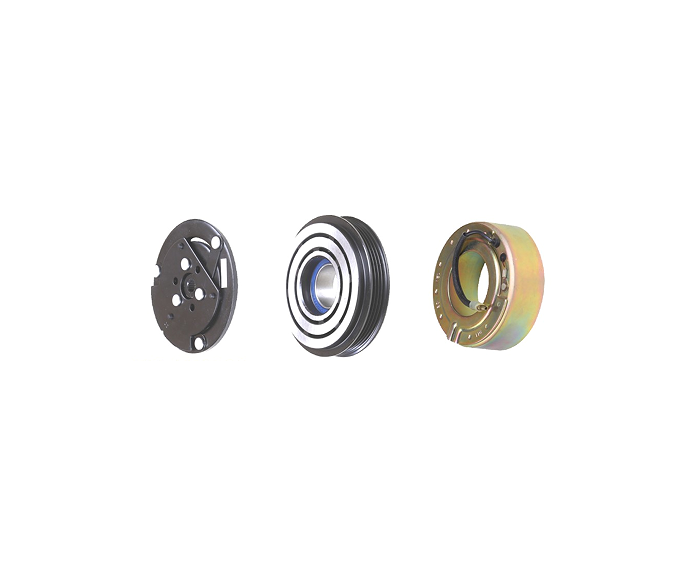
Clutch-Driven Compressors
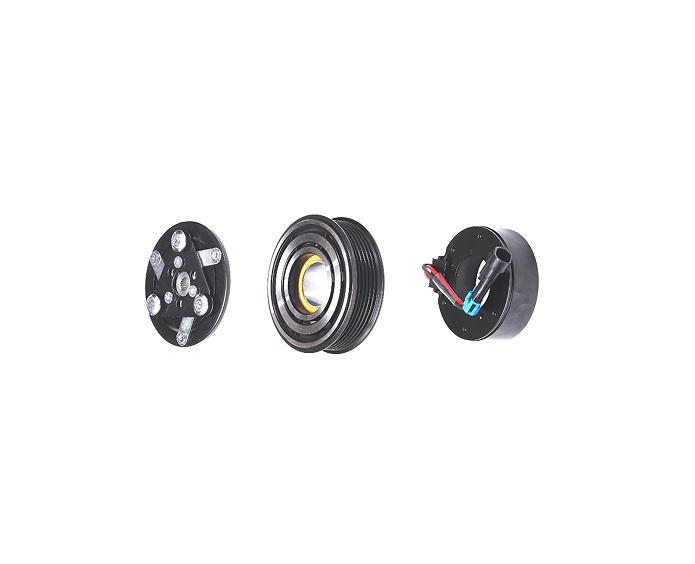
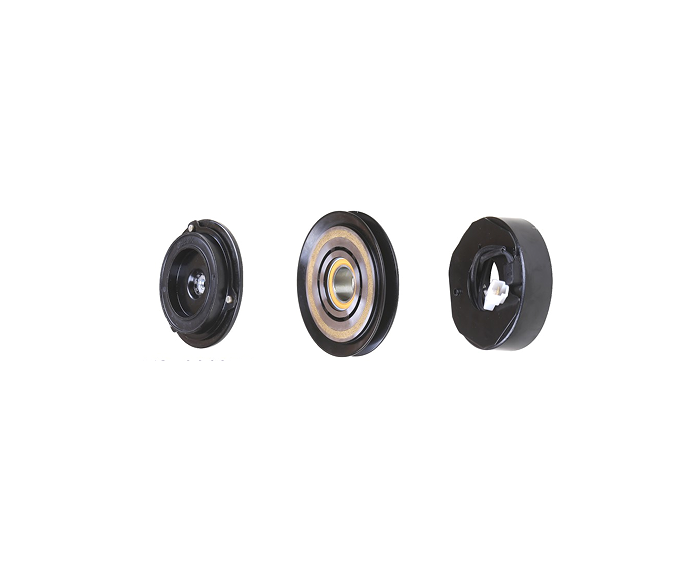
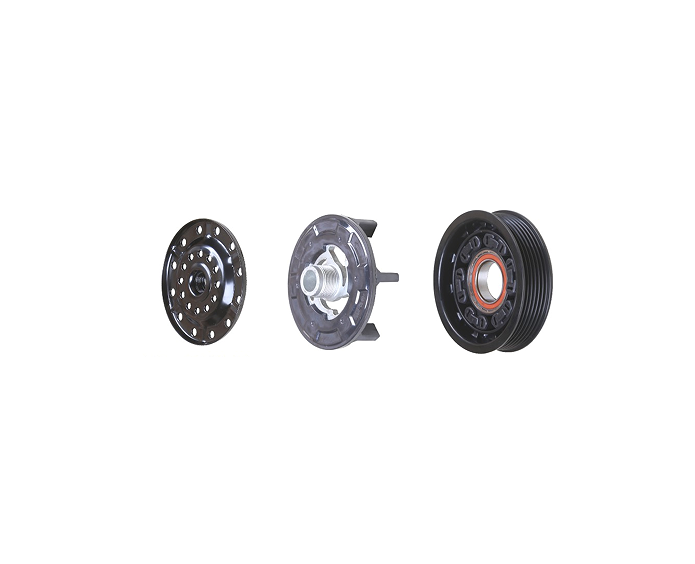
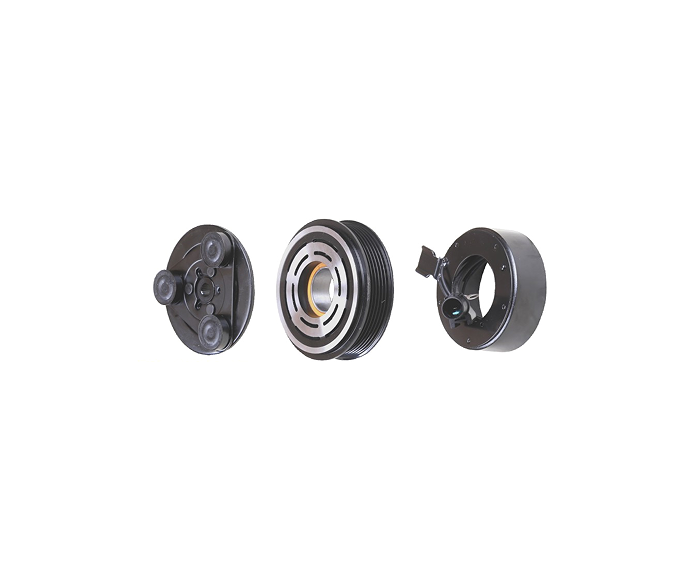
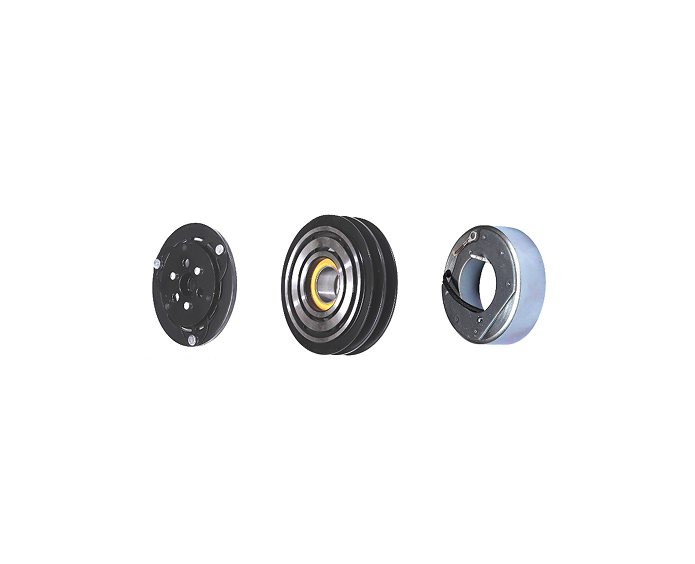
Many conventional internal-combustion vehicles use a belt-driven compressor with an electromagnetic clutch.
When cooling is required, the clutch connects the rotating pulley to the compressor shaft. When cooling demand stops, the clutch disengages.
In this type of application, buyers may need to evaluate not only the compressor body but also:
-
Pulley
-
Bearing
-
Electromagnetic coil
-
Hub or armature
-
Clutch air gap
-
Belt-groove specification
KASEN also supplies automotive AC compressor clutches and related AC components, which is useful when a repair program needs both complete compressors and clutch-related replacement parts.
Variable-Displacement Compressors
Many modern vehicles use compressors that adjust displacement according to system demand.
In these applications, the control valve and compressor family become important identification variables.
A control valve that is physically similar to another valve should not automatically be considered interchangeable.
Buyers managing these applications need accurate cross-reference information and should avoid sourcing by appearance alone.
Electric Compressors
Electric and hybrid vehicles introduce a different sourcing logic.
An electric compressor is driven directly by an electric motor rather than an engine belt and traditional compressor clutch.
This means buyers must consider factors such as:
-
Operating voltage
-
Vehicle platform
-
Electrical connector
-
Refrigerant type
-
Lubricant requirement
-
Electronic control strategy
-
Mounting configuration
-
Thermal-management system integration
KASEN's electric compressor and new-energy compressor range includes EV and hybrid applications, while its technical content also emphasizes voltage, connector, refrigerant, lubricant, and control compatibility when sourcing electric compressors.
Traditional vs Electric Automotive AC Compressors
For buyers expanding from conventional aftermarket parts into EV components, the distinction is important.
| Factor | Belt-Driven Compressor | Electric Compressor |
|---|---|---|
| Drive source | Engine/belt system | Electric motor |
| Traditional clutch | Common on many designs | Generally not required |
| Key mechanical checks | Pulley, mounting, clutch, belt alignment | Mounting and compressor configuration |
| Key electrical checks | Clutch coil/control valve where applicable | Voltage, connector, electronic control |
| Main applications | ICE vehicles | EV and hybrid platforms |
| Buyer risk | Mechanical fitment mismatch | Electrical and vehicle-system incompatibility |
The practical lesson is simple:
Do not use a conventional compressor purchasing checklist unchanged for electric compressor sourcing.
The product may still be called an automotive AC compressor, but the system interface is different.
How Should Buyers Evaluate Manufacturing and Quality Control?
A professional supplier evaluation should move beyond the question:
“Do you have this part number?”
The better question is:
“How do you make sure the same approved configuration is supplied again six months from now?”
That is where manufacturing control becomes important.
Dimensional Consistency
Critical dimensions should remain stable from sample to production and from one production batch to another.
Depending on the compressor, these may include:
-
Mounting-hole position
-
Pulley dimensions
-
Shaft or interface geometry
-
Port position
-
Connector position
-
Housing dimensions
The buyer does not necessarily need every dimension on an inspection report.
However, the manufacturer should know which dimensions affect fitment and should have a process for controlling them.
Assembly Consistency
A compressor is an assembly rather than a simple single-piece component.
Repeatable assembly matters because variation can influence:
-
Noise
-
Leakage
-
Rotation
-
Clutch engagement
-
Valve operation
-
Connection accuracy
-
Installation
For B2B buyers, the real quality target is therefore not a perfect-looking sample.
It is repeatable conformity to the approved sample or specification.
Functional Inspection
The specific inspection method depends on compressor design and customer requirements.
Professional buyers should ask how the supplier verifies the relevant product characteristics before shipment rather than assuming every manufacturer follows the same test plan.
Questions can include:
-
Which characteristics are checked during production?
-
Which characteristics are checked before packing?
-
How is an approved sample identified?
-
How are nonconforming parts separated?
-
How are repeat-order changes controlled?
-
What information is required if a quality claim occurs?
These questions provide more insight than asking only whether a factory has “good quality.”
Sample Approval Is More Important Than Many Buyers Realize
For a new compressor SKU, a sample is not merely a free product to test.
It can become the physical reference for future supply.
A useful sample-approval process should verify:
-
Product identification
-
OE reference
-
Compressor model
-
Vehicle application
-
Physical installation
-
Connections
-
Functional suitability
-
Packaging identification
-
Buyer SKU
-
Any approved differences from the previous unit
Once the sample is approved, the buyer and supplier should have a clear record of what was actually approved.
This reduces a common sourcing problem:
The first shipment is acceptable, but a later shipment changes because the supplier, sub-supplier, material, connector, or specification changed without enough communication.
For distributors and private-label brands, controlling that repeat-order risk can be more important than obtaining a slightly lower initial quotation.
Repeat-Order Consistency Is a Core Manufacturer Capability
The real test of a manufacturer often begins after the first order.
A distributor may reorder the same compressor several times over multiple years.
During that period, problems can arise if:
-
OE cross-references are changed
-
Connectors are substituted
-
Packaging labels change
-
Product appearance changes
-
Components come from different sources
-
Internal buyer SKUs are confused
-
Similar compressor models are mixed
A professional sourcing system therefore needs controlled product identification.
A practical product record might include:
Buyer SKU → Supplier Model → OE Reference → Compressor Family → Vehicle Application → Approved Photos → Key Specifications → Packaging Revision
This creates a repeatable purchasing reference instead of relying on email history or product appearance.
Which Buyers Benefit Most From Working With a Manufacturer?
Direct manufacturer sourcing is not necessary for every buyer.
It is most valuable when product continuity, technical matching, volume, customization, or SKU management matters.
Automotive AC Parts Importers
Importers often manage a broad regional application range.
Their biggest risks include incorrect cross-references, slow-moving inventory, inconsistent repeat orders, and warranty returns.
They benefit from suppliers that can help organize application data rather than simply sending a large catalogue.
Distributors and Wholesalers
A distributor may need dozens or hundreds of compressor references.
The important buying criteria become:
-
Application breadth
-
Product identification
-
Mixed-SKU ordering
-
Stable repeat availability
-
Commercial consistency
-
Technical response
Aftermarket and Private-Label Brands
Private-label customers need more than a logo on a box.
They may need:
-
Customer SKU identification
-
Packaging requirements
-
Barcode or label coordination
-
Approved product specifications
-
Stable visual identity
-
Repeat-order consistency
-
Controlled product changes
KASEN states that it supplies automotive air-conditioning products to global aftermarket and OEM customers and discusses custom production based on customer drawings or OEM numbers. More information is available on the KASEN About Us page.
Repair Networks and Compressor Specialists
These buyers care particularly about fitment accuracy and access to related components.
They may need complete compressors for some repairs while using clutches, bearings, valves, coils, or sealing components for other jobs.
Commercial Vehicle and Fleet-Service Suppliers
Fleet applications introduce another purchasing consideration: downtime.
Vehicles such as buses, trucks, delivery vans, and service vehicles may operate for long hours and depend on reliable cabin cooling.
The correct compressor therefore needs to be evaluated not only by vehicle application but also by operating environment and service requirements. KASEN's vehicle-compressor guidance discusses passenger vehicles, trucks, buses, fleets, and other operating scenarios in this context. See the vehicle AC compressor guide.
Seven Common Mistakes When Sourcing Automotive AC Compressors
1. Buying by Vehicle Brand Alone
“Toyota compressor” or “Ford compressor” is usually too broad for technical confirmation.
Always narrow the application.
2. Matching Only by Product Photo
A photo is useful for initial identification but cannot reliably confirm every technical variable.
3. Treating the OE Number as the Only Check
OE references are important, but professional buyers should cross-check the application and compressor configuration.
4. Comparing Suppliers Only by Unit Price
A small price saving can disappear quickly if the wrong part creates returns, rework, freight costs, or customer complaints.
5. Approving a Sample Without Recording the Specification
An approved sample has limited value if future purchasing teams cannot identify exactly what was approved.
6. Ignoring Repeat-Order Change Control
Ask how the supplier manages specification changes before placing long-term orders.
7. Using the Same Checklist for Electric Compressors
EV and hybrid compressors require electrical and vehicle-system checks that do not apply in the same way to many conventional compressors.
Automotive AC Compressor Manufacturer Evaluation Checklist
Before selecting a supplier, purchasing teams can use the following checklist.
| Supplier Evaluation Item | What the Buyer Should Verify |
|---|---|
| Product range | Does the supplier cover the applications you actually sell? |
| OE matching | Can OE references be cross-checked with compressor/application data? |
| Technical support | Can the supplier identify missing fitment information? |
| Product documentation | Are models, references and applications clearly recorded? |
| Sample process | Can the approved configuration be documented? |
| Quality control | Are relevant dimensions, assembly and functions controlled? |
| Repeat supply | Can the same SKU be reproduced consistently? |
| OEM/private label | Can packaging and identification requirements be managed? |
| Electric compressor capability | Can voltage, connector and platform requirements be verified? |
| Communication | Can technical questions be resolved before production? |
| Complaint handling | Is there a clear process for identifying the affected SKU/batch? |
| Long-term cooperation | Can specifications and product changes be managed over time? |
A supplier does not need the same answer for every product.
What matters is whether the manufacturer has a structured way to move from buyer requirement → technical identification → approval → production → repeat supply.
What Information Should You Send With an RFQ?
A detailed RFQ helps the manufacturer respond faster and reduces back-and-forth communication.
Whenever possible, provide:
-
OE/OEM number
-
Vehicle make and model
-
Production year
-
Engine information
-
Compressor model
-
Photos of the existing compressor
-
Connector photos
-
Pulley information where applicable
-
Required quantity
-
Target market
-
Packaging requirement
-
Private-label requirement
-
Sample requirement
If the existing unit does not have a readable part number, clear photographs from several angles can help with initial identification, but physical dimensions or a sample may still be required.
For new enquiries, buyers can send technical and sourcing requirements through the KASEN contact page or online message page.
How KASEN Fits Into an Automotive AC Compressor Sourcing Program
Guangzhou Kasen Auto Air Conditioner Co., Ltd. states that it has focused on automotive air-conditioning products since 2007.
Its published product range includes automotive compressors, compressor clutches, electric compressors, valves, bearings, and other automotive AC parts, serving aftermarket and OEM-related customers. The company also invites buyers to discuss custom production based on drawings or OEM numbers.
This broader product coverage can be relevant to buyers that do not want to manage the compressor as an isolated component.
For example, a distributor may need:
-
Complete automotive AC compressors
-
Compressor clutches
-
Bearings
-
Electromagnetic coils
-
Control valves
-
Expansion valves
-
Electric compressors
-
Related service parts
You can explore the current KASEN product categories or review the dedicated automotive AC compressor products before sending an RFQ.
The important sourcing principle remains the same:
The correct compressor should be confirmed from the application and technical configuration rather than selected from appearance or price alone.
FAQ
How do I identify the correct automotive AC compressor?
Start with the OE/OEM reference, vehicle make and model, production year, engine, and compressor model. Photos and connector information can provide additional confirmation. Do not rely only on external appearance.
Is the OE number enough to order an AC compressor?
It is an important reference, but professional buyers should cross-check the vehicle application and compressor configuration because different versions can exist across platforms, years, engines, or markets.
What should I ask an automotive AC compressor manufacturer before ordering?
Ask about application matching, key specifications, sample approval, relevant quality-control points, packaging identification, repeat-order consistency, OEM/private-label support, and how product changes are managed.
Should I buy directly from a manufacturer or a distributor?
Direct manufacturer sourcing is most useful for buyers requiring volume, multiple SKUs, repeated orders, customization, private labeling, or detailed technical coordination. Small one-time replacement purchases may be better suited to local distribution channels.
What is the difference between a conventional and electric AC compressor?
A conventional automotive compressor is commonly driven mechanically by the engine or belt system. An electric compressor uses an integrated electric motor and therefore requires additional verification of voltage, electronic control, connector, refrigerant, lubricant, and vehicle platform.
Why do two similar AC compressors have different part numbers?
They may differ in mounting geometry, pulley configuration, connector, control system, refrigerant ports, internal displacement, or vehicle application even when their external appearance is similar.
Why is sample approval important for B2B compressor sourcing?
It establishes a physical and technical reference before volume purchasing. When properly documented, it also provides a reference for evaluating future production and repeat orders.
Can automotive AC compressors be private labeled?
Private-label programs are possible when the manufacturer and buyer agree on product identification, packaging, buyer SKU, label requirements, approved specifications, quantities, and commercial terms. Requirements should be confirmed for the specific project rather than assumed.
What information should a distributor keep for each compressor SKU?
At minimum, keep the buyer SKU, supplier model, OE reference, compressor model or family, vehicle application, approved photos, important specifications, and packaging revision. This makes future reordering easier and reduces product-identification errors.
Where can I request compressor matching or a quotation?
Buyers can review KASEN's automotive AC compressor range and then submit the OE number, compressor model, vehicle details, photos, required quantity, and packaging requirements through the contact page.
Conclusion
Choosing an automotive AC compressor manufacturer is ultimately a risk-control decision as much as a purchasing decision.
Price matters, but professional buyers also need to verify application matching, compressor configuration, mounting, electrical and refrigerant compatibility, sample approval, product identification, quality control, and repeat-order consistency.
For importers and distributors, better technical information reduces wrong-fitment returns. For aftermarket and private-label brands, controlled specifications protect brand consistency. For repair networks and fleet suppliers, reliable matching helps reduce installation delays and vehicle downtime. For EV and hybrid applications, electrical and thermal-management compatibility add another layer of sourcing responsibility.
The strongest supplier relationship therefore begins before the purchase order. It begins with accurate application data, a clearly defined product specification, and an agreed method for reproducing the same approved product in future orders.
Buyers sourcing conventional or electric vehicle air-conditioning components can review KASEN's automotive AC compressor range, explore its wider automotive AC product portfolio, or contact KASEN with an OE reference, compressor model, vehicle application, photos, and purchasing requirements for technical matching.