
What Is a Compressor Clutch Bearing?
A compressor clutch bearing is usually the bearing installed inside the pulley or rotor of a belt-driven automotive air-conditioning compressor clutch.
That location explains why this part matters even when the cabin AC is switched off.
On many conventional systems, the engine belt keeps the compressor pulley rotating whenever the engine is running. The electromagnetic clutch only connects that rotating pulley to the compressor shaft when cooling is requested.
The bearing therefore supports the pulley during both engaged and disengaged operation.
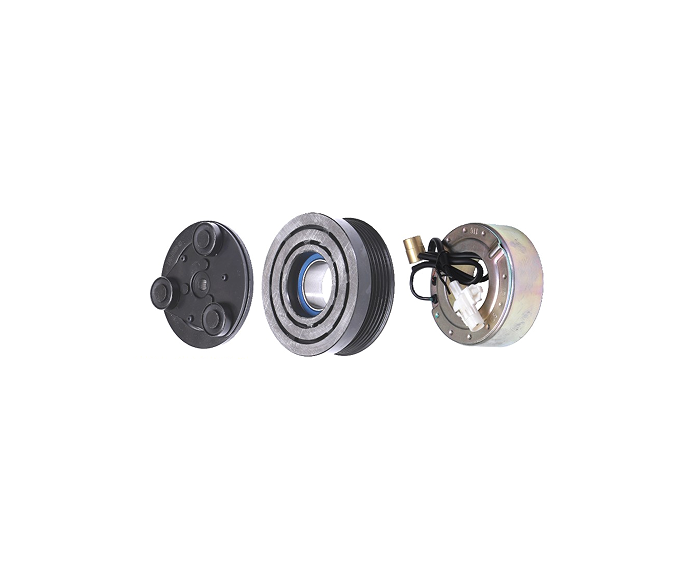
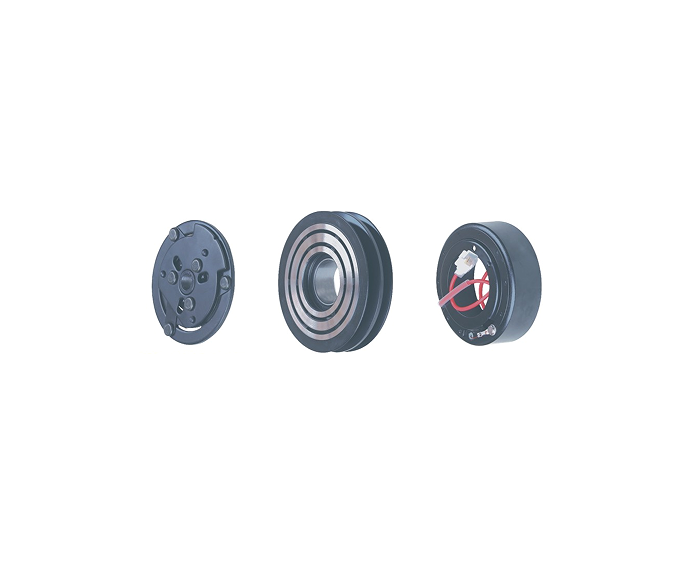
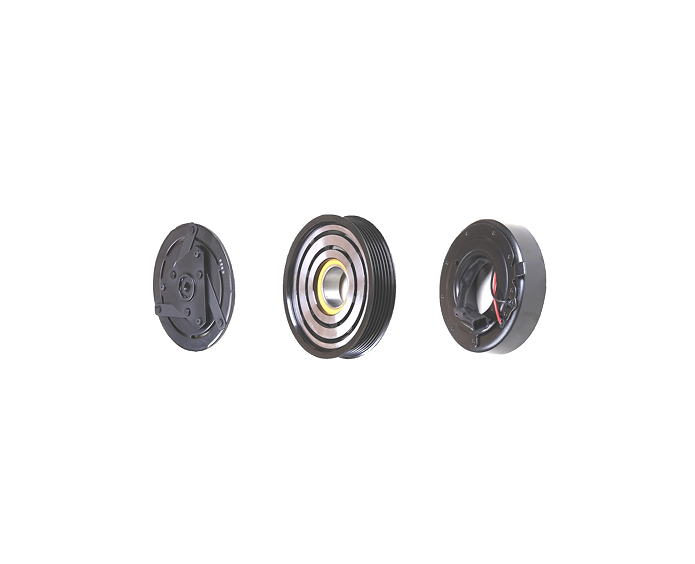
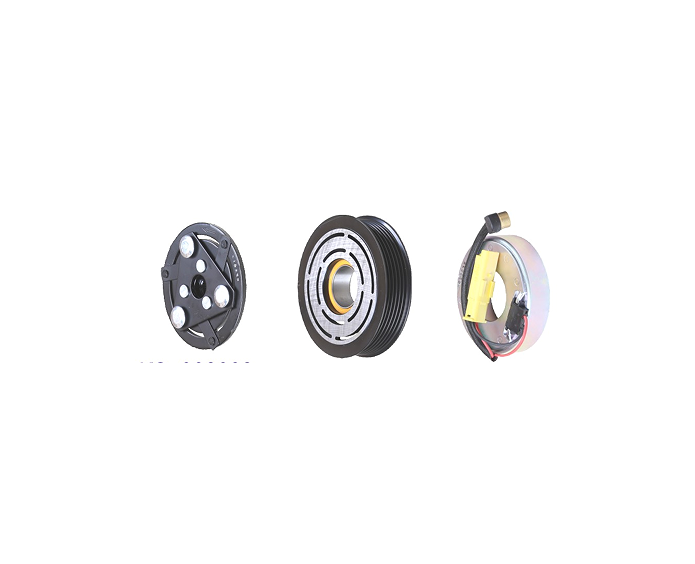
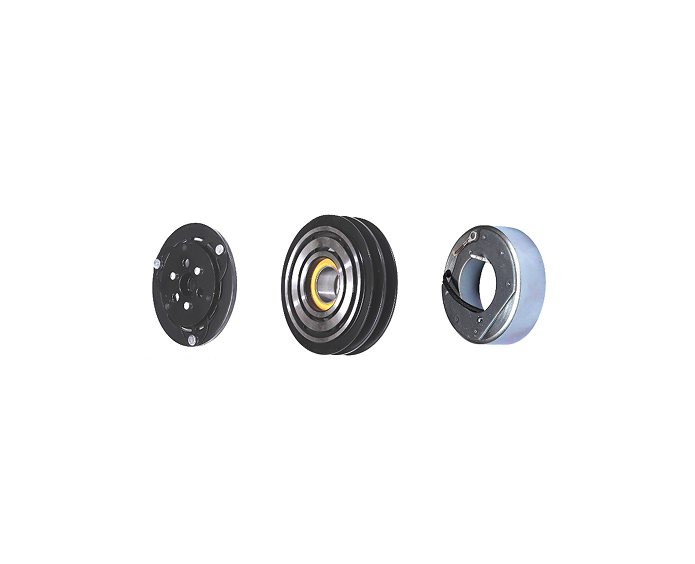
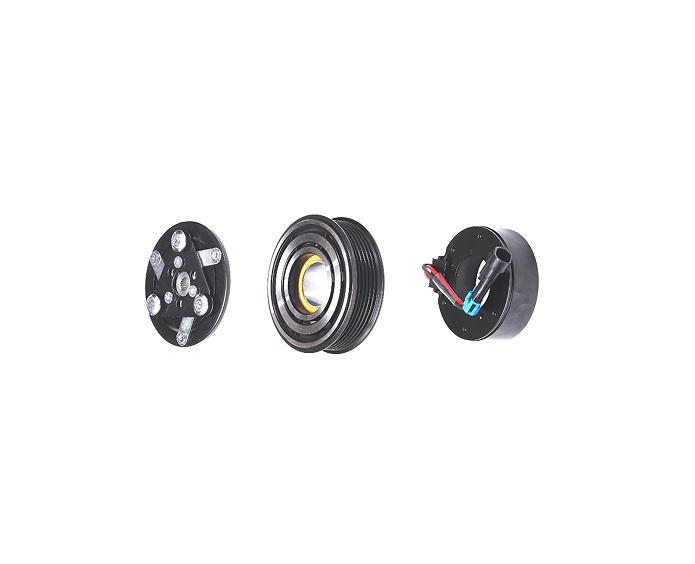
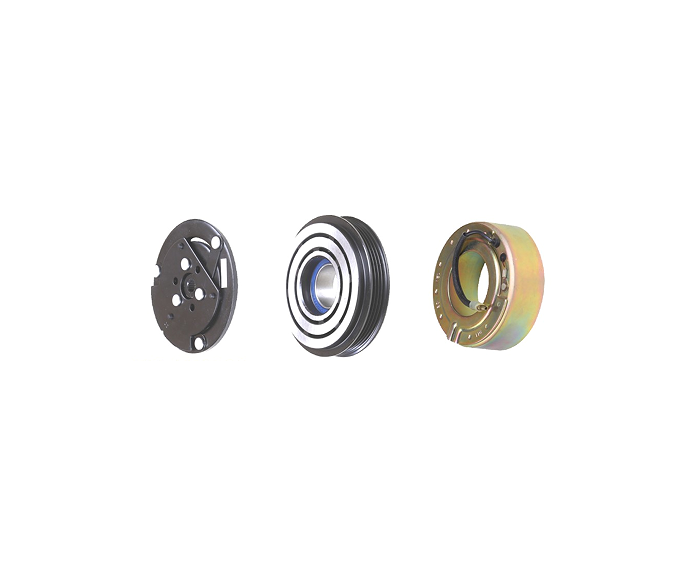
A typical front clutch assembly contains:
- Pulley or rotor
- Pulley bearing
- Electromagnetic coil
- Hub or armature plate
- Compressor shaft
- Retaining hardware
For aftermarket buyers, “compressor clutch bearing,” “AC clutch bearing,” and “compressor pulley bearing” may sometimes describe the same service location.
They should not, however, be treated as a universal bearing reference.
The exact bearing still has to match the compressor and pulley.
Sanden's compressor service documentation gives a useful practical check: with the clutch disengaged, the pulley should rotate freely without wobble, roughness, or vibration.
Why This Bearing Creates More B2B Risk Than Its Price Suggests
A bearing is inexpensive compared with a complete compressor.
That can make purchasing teams focus heavily on unit price.
But suppose a distributor purchases 1,000 bearings and only discovers after delivery that the reference fits a similar pulley, not the intended one.
The bearing cost is no longer the main problem.
The buyer may now face:
- Customer returns
- Workshop labor claims
- Repacking
- Replacement freight
- Incorrect catalog data
- Dead stock
- Distributor complaints
- Emergency sourcing from another supplier
For that reason, experienced buyers should measure bearing sourcing by fitment certainty and repeatability, not only by quotation price.
A better purchasing question is:
Can we identify this bearing accurately today and order exactly the same reference again six months from now?
If the answer is unclear, the buying process is not finished.
Who Usually Buys Compressor Clutch Bearings?
The buying priorities change depending on the customer.
Automotive AC Parts Distributors
Distributors typically need a broader reference range and care about:
- Reliable cross-references
- Easy SKU identification
- Low return rates
- Stable repeat supply
- Clear packing labels
For them, similar-looking bearings are a warehouse-management problem as much as a technical problem.
Importers and Wholesalers
An importer is more likely to evaluate:
- Unit and landed cost
- Order quantity
- Packing method
- Sample availability
- Repeat-order stability
- Supplier response to fitment questions
One wrong bulk reference can erase the savings from several successful orders.
Repair Network Suppliers
Repair networks usually value:
- Correct installation fit
- Smooth pulley rotation
- Low noise
- Consistent dimensions
- Availability of related clutch parts
Private-Label Aftermarket Brands
A branded aftermarket program may also require:
- Buyer part number
- Barcode
- Customized box
- Product label
- Cross-reference data
- Repeat-order control
The product is only one part of the program. Catalog accuracy and packaging accuracy matter as well.
Which Bearing Are You Actually Trying to Buy?
This question should come before price.
A vague request such as:
“Need compressor bearing.”
can refer to more than one location.
A better distinction is:
| Buyer Request | Likely Meaning | What Must Be Confirmed |
|---|---|---|
| Compressor clutch bearing | Bearing inside clutch pulley/rotor | Compressor + pulley |
| Compressor pulley bearing | Usually same clutch pulley area | Size + application |
| AC clutch bearing | Common aftermarket wording | Compressor model |
| Internal compressor bearing | Internal compressor component | Compressor design |
| Complete pulley bearing unit | Pulley supplied with bearing | Pulley and clutch dimensions |
This article focuses specifically on the clutch pulley bearing used in conventional belt-driven automotive AC compressors.
Electric compressors use a different drive architecture and normally require a different diagnostic and sourcing approach.
Start With the Compressor Before You Start With the Bearing
One of the most useful sourcing habits is surprisingly simple:
Identify the compressor first.
If a buyer sends only:
“Bearing for Nissan AC compressor”
the supplier may still have several possible references.
A stronger inquiry includes the compressor label.
Useful identification data includes:
- Compressor model
- Compressor manufacturer or family
- OE reference
- Bearing marking
- Original bearing dimensions
- Pulley photo
- Compressor label photo
- Vehicle model, year, and engine
- Physical sample if available
Vehicle information remains useful.
It should act as a cross-check rather than the only matching method.
What Bearing Dimensions Should Buyers Measure?
The three basic dimensions are:
Inner Diameter × Outer Diameter × Width
For example, the buyer may record a reference as:
ID × OD × Width
rather than relying only on a handwritten vehicle description.
Compressor Clutch Bearing Matching Checklist
| Data | Importance | Buyer Action |
|---|---|---|
| Inner Diameter | Essential | Measure accurately |
| Outer Diameter | Essential | Measure accurately |
| Width | Essential | Measure accurately |
| Bearing Marking | High | Photograph before removal |
| Compressor Model | Essential | Photograph label |
| Pulley Application | Essential | Confirm exact pulley |
| OE Reference | High | Add if available |
| Vehicle Application | Supporting | Use as cross-check |
| Original Photos | High | Keep in SKU file |
| Physical Sample | High for unclear items | Approve before bulk order |
Why Three Matching Dimensions Are Still Not the Whole Story
A common purchasing assumption is:
Same ID, same OD, same width = same bearing.
That is too simple for a professional supply program.
Bearings with similar outside dimensions can differ in areas such as:
- Internal construction
- Internal clearance
- Seal configuration
- Load behavior
- Speed suitability
- Manufacturing tolerance
NSK notes that bearing internal clearance affects operating behavior and that suitable clearance depends on operating conditions and fit.
This is why KASEN buyers should ideally connect the physical bearing dimensions to the actual compressor application rather than treating the part as an anonymous size.
How the Bearing Works Inside the Compressor Clutch
Understanding the mechanical relationship helps buyers diagnose the correct replacement level.
When the Clutch Is Disengaged
The pulley rotates with the engine belt.
The bearing allows the pulley to rotate around the compressor front structure without driving the compressor shaft.
When Cooling Is Requested
The electromagnetic coil is energized.
Magnetic force pulls the armature or hub toward the pulley.
Torque is then transmitted to the compressor shaft.
What the Bearing Does
The bearing supports stable pulley rotation and alignment.
It does not itself engage the compressor.
That distinction matters when diagnosing complaints.
A clutch that does not engage may involve:
- Coil
- Voltage
- Air gap
- Control circuit
- Hub
- Compressor condition
rather than the bearing.
Likewise, a noisy pulley does not automatically mean the electromagnetic clutch has failed.
KASEN's clutch products and technical content show the pulley, bearing, coil and hub as separate but interacting parts of the clutch system.
What Symptoms Point Toward a Compressor Clutch Bearing Problem?
Workshop feedback usually begins with sound or pulley behavior.
Noise With the Clutch Disengaged
A bearing-related problem may be suspected when noise remains present while the pulley is rotating but the compressor clutch is disengaged.
That is not a final diagnosis, but it is useful evidence.
Rough Pulley Rotation
During inspection, roughness or resistance can point toward:
- Bearing damage
- Contamination
- Pulley damage
- Incorrect fit
Pulley Wobble
Visible pulley instability needs attention because it may affect:
- Belt tracking
- Clutch alignment
- Noise
- Adjacent parts
Abnormal Temperature
Unusual bearing temperature can be associated with factors such as insufficient clearance, lubrication problems, excessive load, or mechanical conditions around the bearing.
NSK's bearing troubleshooting guidance specifically recommends investigating changes in sound, vibration and temperature and notes that premature damage can be associated with mounting, assembly, lubrication and environmental conditions.
Do Not Treat Every Noise Complaint as a Defective Bearing
This matters particularly to distributors handling warranty claims.
A customer may report:
“The new bearing makes noise.”
The product should be investigated, but the claim does not establish the cause by itself.
Potential contributors include:
- Incorrect installation
- Contamination
- Damaged bearing seat
- Worn pulley
- Improper fit
- Belt load
- Misalignment
- Existing compressor damage
NSK documents improper mounting, contaminants, unsuitable clearance, poor lubrication and excessive load among common causes associated with premature bearing damage.
For a distributor, the lesson is practical:
Warranty analysis should collect installation and application information instead of categorizing every noise complaint as the same failure.
Bearing Only or Complete Pulley?
Now the buying decision becomes commercial.
If only the bearing is damaged, bearing-only replacement has obvious cost advantages.
But not every pulley should be reused.
Choose Bearing-Only Replacement When
The repair may make sense when:
- Bearing failure is isolated
- Pulley remains dimensionally sound
- Bearing seat is not damaged
- Coil remains functional
- Hub remains usable
- Compressor itself operates correctly
This route generally requires a workshop capable of properly removing and installing the bearing.
Choose Pulley + Bearing When
Replacing a wider assembly may be safer if:
- Pulley is worn
- Bearing seat is damaged
- Pulley is distorted
- Previous bearing failure damaged the assembly
Choose a Complete Compressor Clutch When
A clutch assembly may be more practical when several components are affected, such as:
- Pulley
- Bearing
- Coil
- Hub or armature
KASEN offers compressor clutch products alongside standalone bearings, allowing buyers to compare both replacement scopes.
Bearing vs Pulley vs Clutch vs Compressor
| Failure Scope | Typical Purchase | Main Advantage | Main Buyer Risk |
|---|---|---|---|
| Bearing only | Clutch bearing | Lowest component cost | Installation/fitment |
| Bearing + pulley | Pulley assembly | Avoids damaged pulley reuse | Higher unit price |
| Multiple clutch components | Complete clutch | Simpler repair decision | Must match full clutch |
| Internal compressor failure | Compressor | Complete mechanical replacement | Higher total cost |
The lowest-price solution is not always the lowest-cost repair.
What Is the Real Cost of a Compressor Clutch Bearing?
A distributor should think beyond purchase price.
A more realistic commercial calculation is:
Product Cost + Freight + Installation + Return Handling + Warranty + Replacement Freight + Inventory Risk
Suppose Supplier A is slightly cheaper but offers weak matching support.
Supplier B asks for:
- Compressor label
- Bearing size
- Original photos
- Sample
- Quantity
Supplier B may appear slower during quotation.
That extra work may prevent a much more expensive mistake after shipment.
This is one reason high-quality B2B sourcing often feels more detailed before the purchase order is signed.
What Should Be Checked During Sample Approval?
For a new clutch bearing reference, a sample should become the benchmark for later orders.
Confirm the Dimensions
Check:
- ID
- OD
- Width
Do not rely exclusively on package labels.
Confirm the Compressor Application
Connect the sample with:
- Compressor model
- Pulley
- OE reference
- Vehicle application if available
Check Rotation Condition
The pulley/bearing should be evaluated for:
- Smooth rotation
- Obvious roughness
- Unusual resistance
- Abnormal noise
Sanden's service documentation similarly calls for checking that the disengaged pulley rotates freely without wobble or roughness.
Confirm Product Identification
Make sure the future shipment can be tied back to the approved sample.
A useful record is:
Customer SKU → KASEN Reference → Bearing Size → Compressor → Approved Sample
How Should Distributors Manage Similar Bearing SKUs?
The bearing may be correct when it leaves the supplier and still reach the wrong customer later.
Why?
Because many bearing references look similar.
For warehouses carrying multiple clutch bearings, clear SKU separation matters.
Useful Label Information
A distributor can include:
- Internal SKU
- Supplier reference
- Bearing code
- Dimensions
- Compressor reference
- Barcode
Avoid putting so much information on the label that staff cannot find the part number quickly.
The goal is simple identification.
What Quality Questions Should You Ask a Supplier?
Instead of:
“Is the quality good?”
ask questions that can actually be answered.
How Are Critical Dimensions Controlled?
The supplier should be able to explain how the specified reference is kept consistent.
How Are Similar References Separated?
This matters during:
- Storage
- Picking
- Inspection
- Packing
How Is the Approved Sample Connected to Bulk Supply?
A good sample means little if the next order has no reference back to it.
What Packaging Options Are Available?
For wholesale and private-label orders, confirm:
- Individual packing
- Master packing
- Buyer label
- Barcode
- Branded box requirements
KASEN's current bearing category states that it supports bulk supply and custom branding/packaging for B2B customers.
Which Documents Apply to the Exact Product?
Do not assume every document shown elsewhere on a website automatically applies to the bearing being quoted.
Ask for confirmation against the exact reference and destination market.
What Makes a Strong Compressor Clutch Bearing Supplier?
For a B2B buyer, supplier quality has several layers.
Product Matching Ability
The supplier should be comfortable working from:
- Bearing code
- Dimensions
- Compressor model
- OE reference
- Photos
- Samples
Automotive AC Product Knowledge
This matters because a bearing request can become a pulley request after inspection.
A pulley request can become a complete clutch request.
And a clutch request can become a compressor replacement if internal damage is discovered.
Related Product Availability
KASEN currently lists automotive AC bearings, compressor clutches, compressors, electric compressors and valves within its product range.
That broader coverage can help distributors manage several repair levels from the same automotive AC sourcing partner.
Repeat-Order Control
Ask:
“If I order this bearing again next season, which code should I use?”
If the answer is unclear, create that reference before scaling the order.
How to Compare Two Compressor Clutch Bearing Suppliers
| Supplier Check | Supplier A | Supplier B |
|---|---|---|
| Compressor matching support | Verify | Verify |
| Bearing dimensions confirmed | Verify | Verify |
| Sample available | Verify | Verify |
| Stable product reference | Verify | Verify |
| Packaging options | Verify | Verify |
| Private label support | Verify | Verify |
| Related clutch availability | Verify | Verify |
| Repeat-order process | Verify | Verify |
| Complaint traceability | Verify | Verify |
This table is intentionally simple.
The buyer should fill it with actual supplier responses instead of assuming that one company is automatically superior.
What Should You Include in a Compressor Clutch Bearing RFQ?
This is where many inquiries lose time.
“Please send your best price” is not enough if the supplier still does not know which bearing to quote.
A better RFQ includes:
- Bearing marking
- Inner diameter
- Outer diameter
- Width
- Compressor model
- Compressor label photo
- Pulley photo
- Original bearing photos
- OE reference
- Vehicle make/model/year
- Required quantity
- Destination market
- Packaging requirement
- Private-label requirement
- Sample requirement
If You Do Not Know the Bearing Number
Do not invent one.
Send the dimensions and photos first.
If you have the old part, mention that a physical sample is available.
That gives the supplier something concrete to work from.
A Better Inquiry Usually Gets a Better Quotation
Compare these two messages.
Weak Inquiry
“Hello, I need compressor clutch bearing. Give best price.”
The supplier still has to ask:
- Which compressor?
- Which bearing?
- What size?
- What quantity?
Strong Inquiry
“Please quote the clutch pulley bearing for compressor model XXX. Original bearing marking XXX, size XX × XX × XX. Photos attached. Quantity: XXX pcs. Please advise sample availability and private-label packing options.”
Now the supplier can discuss the actual order.
The difference is not writing style.
It is purchasing efficiency.
OEM and Private-Label Programs
For aftermarket brands, the first successful order should establish the rules for later orders.
Useful items to lock include:
- Product reference
- Approved sample
- Buyer SKU
- Supplier SKU
- Label format
- Barcode
- Packing quantity
- Cross-reference information
Specific MOQ, lead time, samples and customization details should be confirmed against the exact product and order instead of being treated as universal promises.
That is especially important when buyers source multiple bearing references with different demand levels.
Why KASEN Is Relevant to Compressor Clutch Bearing Buyers
KASEN's website positions the company around automotive air-conditioning components and currently lists bearing, compressor clutch, conventional compressor, electric compressor and valve categories. The company site states that its automotive AC specialization dates from 2007.
Its bearing category currently shows FEIBI references including 324718, 305222 and 355020 and presents bulk and custom-branding options for B2B buyers.
That makes KASEN relevant to buyers who do not always know at the beginning of an inquiry whether they need:
bearing only → pulley → complete clutch → compressor
For a distributor, that distinction can matter more than simply finding another bearing seller.
Explore KASEN Automotive AC Products
Before Requesting a Quote, Check These 12 Items
A buyer should ideally be able to answer most of the following before confirming a bulk order:
- Do we know the bearing marking?
- Is ID confirmed?
- Is OD confirmed?
- Is width confirmed?
- Do we know the compressor model?
- Do we have a compressor label photo?
- Is the pulley application confirmed?
- Do we have the original bearing photos?
- Has an uncertain reference been sampled?
- Has a buyer SKU been assigned?
- Are packing requirements clear?
- Is the order quantity defined?
If four or five answers are still “no,” scaling the order may be premature.
Frequently Asked Questions About Compressor Clutch Bearings
What is a compressor clutch bearing?
A compressor clutch bearing usually refers to the bearing installed in the pulley or rotor of a conventional belt-driven automotive AC compressor clutch. It allows the pulley to rotate around the compressor front structure.
Is a compressor clutch bearing the same as a compressor pulley bearing?
In many automotive aftermarket applications, yes. Both terms commonly refer to the bearing inside the clutch pulley. The compressor model and exact bearing location should still be confirmed before ordering.
Does the compressor clutch bearing rotate when the AC is off?
On many belt-driven systems, yes. The engine belt continues rotating the pulley while the clutch is disengaged, so the pulley bearing remains in operation.
What dimensions are needed to identify an AC clutch bearing?
The main measurements are inner diameter, outer diameter and width. Buyers should also provide the bearing marking, compressor model, pulley information and photos whenever possible.
Can I choose a clutch bearing only by dimensions?
Dimensions are the starting point, but professional buyers should also verify the compressor and pulley application. Similar external sizes do not always guarantee the same internal or application requirements.
What causes compressor clutch bearing noise?
Possible causes include wear, contamination, unsuitable clearance, poor mounting, excessive load or surrounding pulley problems. NSK recommends considering sound, vibration, temperature, mounting and operating conditions when investigating bearing damage.
Can the clutch bearing be replaced without replacing the whole clutch?
In some compressor designs, yes. Bearing-only replacement is most appropriate when the bearing is the isolated failure and the pulley, coil, hub and compressor remain serviceable.
When should I purchase a complete compressor clutch instead?
A complete clutch can be a lower-risk repair when the pulley, bearing, coil, hub or several clutch components are already worn or damaged.
Can KASEN support bulk or private-label bearing orders?
KASEN's current bearing category presents bulk supply and custom-branding/packaging options for B2B customers. Exact product availability, MOQ, packaging and order conditions should be confirmed for the specific reference.
What should I send KASEN for a compressor clutch bearing quotation?
Provide the bearing marking, ID, OD, width, compressor model, OE reference if available, clear photos, required quantity, destination market and packaging requirements. A physical sample is useful when identification remains uncertain.
Send Your Bearing Requirements to KASEN
Conclusion
A compressor clutch bearing is a small part in a very specific mechanical location. That makes identification more important than appearance.
For a one-time repair, a wrong bearing means wasted workshop time.
For a distributor, the same mistake multiplied across hundreds of pieces becomes a purchasing and inventory problem.
The safer process is straightforward:
identify the compressor → record the bearing → confirm dimensions → verify the pulley application → approve uncertain references → create a stable SKU → scale the order
Buyers should also resist the temptation to choose bearing-only replacement automatically. If the pulley, coil or hub is already damaged, a complete clutch may produce a better repair outcome. If the compressor itself has internal damage, neither solution addresses the root problem.
KASEN supplies automotive AC bearings together with compressor clutches and complete compressors, giving aftermarket buyers several replacement options within the same product category structure.
For a faster and more useful quotation, send the technical information with the inquiry rather than asking only for a price.