
Choose an Automotive Air Conditioning Components Supplier by Program Control, Not Catalogue Size
The best automotive air conditioning components supplier for an importer or distributor is not simply the company with the longest product list or the lowest first quotation. The supplier should be able to identify each compressor, clutch, valve, bearing, electric compressor, coil, sensor, or related part against the correct vehicle and compressor reference; provide evidence that can be reviewed before a bulk order; keep the approved configuration stable; and return a commercial plan for samples, mixed SKUs, packaging, delivery, and claims. That is the real purchasing question behind this keyword.
This article addresses a commercial investigation and RFQ intent for importers, regional distributors, repair networks, fleet suppliers, and private-label automotive brands. It explains how to organize a multi-category automotive AC sourcing program without treating different components as interchangeable, and how to ask a supplier for an answer that engineering, purchasing, warehouse, and sales teams can all use.
Define the Supplier Requirement Before Comparing Quotations
“Automotive air conditioning components supplier” can describe several different projects. A distributor may need a full catalogue covering fast-moving passenger-car applications. A fleet buyer may need a small group of commercial-vehicle compressors and clutches with controlled replenishment. A repair network may need components that can be matched quickly from an old unit, photograph, or OE number. A private-label brand may need product identification, carton artwork, barcode control, and a repeat production plan. If these requirements are mixed into one vague request, suppliers will quote different scopes and the prices will not be comparable.
| Buyer type | Primary purchasing problem | Supplier response that is useful | Evidence to keep |
|---|---|---|---|
| Importer | Build a reliable product range for a target market | Application coverage, reference matching, landed-cost assumptions, documents, and supply plan | SKU list, quotation revision, samples, inspection records |
| Regional distributor | Stock multiple vehicle applications without wrong-fitment returns | Cross-reference discipline, packaging identity, mixed-SKU terms, and reorder controls | Approved catalogue record, carton artwork, receiving checklist |
| Repair network | Get the correct service part quickly for a known vehicle or compressor | Fast identification from OE number, model, photograph, sample, or drawing | Fitment response, sample image, installation feedback |
| Fleet supplier | Reduce downtime across buses, trucks, vans, or special vehicles | Duty-aware product selection, batch consistency, service support, and replenishment milestones | Fleet application file, trial record, batch and claim history |
| Private-label brand | Launch a controlled range under its own SKU and packaging | Product approval, label and carton control, change notification, and repeat production | Master sample, artwork approval, packaging inspection, revision history |
State the project type in the first line of the RFQ. For example: “We are a regional distributor preparing a mixed order of belt-driven compressors, clutch assemblies, bearings, and control valves for the European aftermarket.” That sentence tells the supplier to discuss a program rather than send unrelated catalogue links.
Know What an Automotive AC Components Supplier Actually Supplies
Automotive air-conditioning components are connected through the vehicle's cooling system, but they are not one product family with one approval method. A compressor moves refrigerant. A clutch transfers belt drive to a compatible compressor. An electric compressor uses an electrical drive architecture that differs from a conventional belt-driven unit. A valve controls refrigerant flow or compressor displacement depending on its design. A bearing supports rotating components. A coil creates magnetic engagement in a clutch assembly. Sensors and switches monitor or protect the system.
Kasen's public product navigation includes auto AC compressors, compressor clutches, electric compressors, bearings, control or expansion valves, coils, hubs, and related service equipment. The automotive AC product catalogue is useful for mapping a sourcing project to product families. It should not be treated as a substitute for a part-specific technical record.
| Component family | Primary function | Key fitment fields | Typical approval evidence |
|---|---|---|---|
| Belt-driven AC compressor | Compresses and circulates refrigerant using engine-driven power | OE number, model, mounting, ports, pulley or clutch, refrigerant and oil requirements | Drawing, old-unit comparison, sample, dimensional and functional checks |
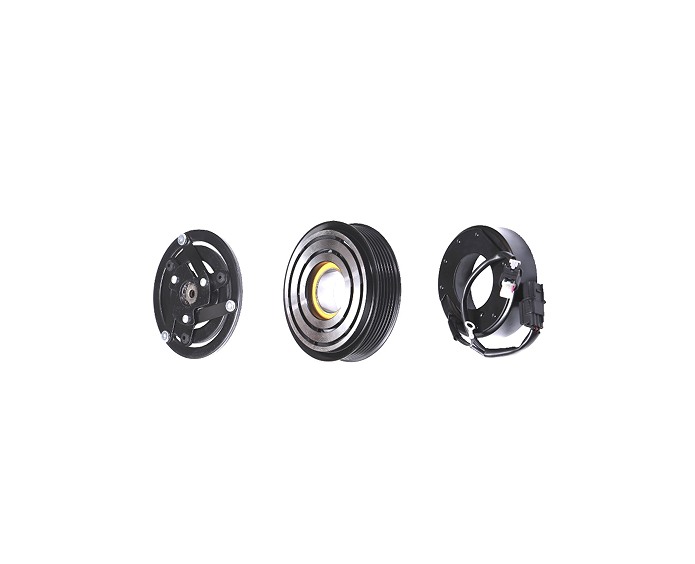
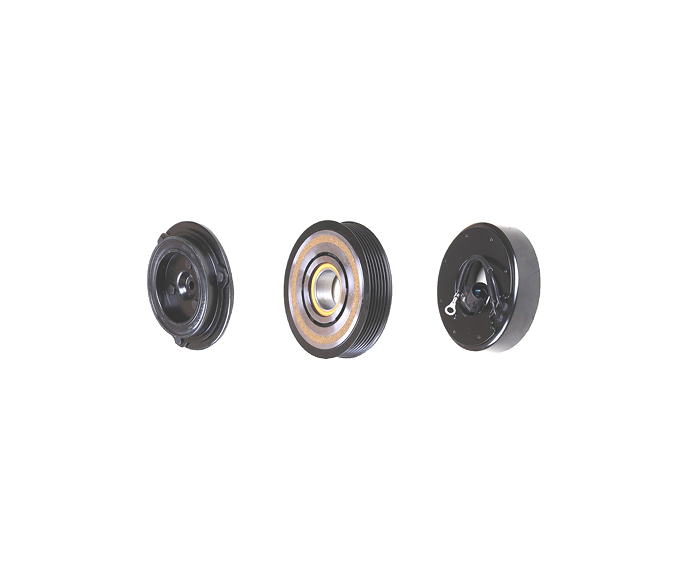
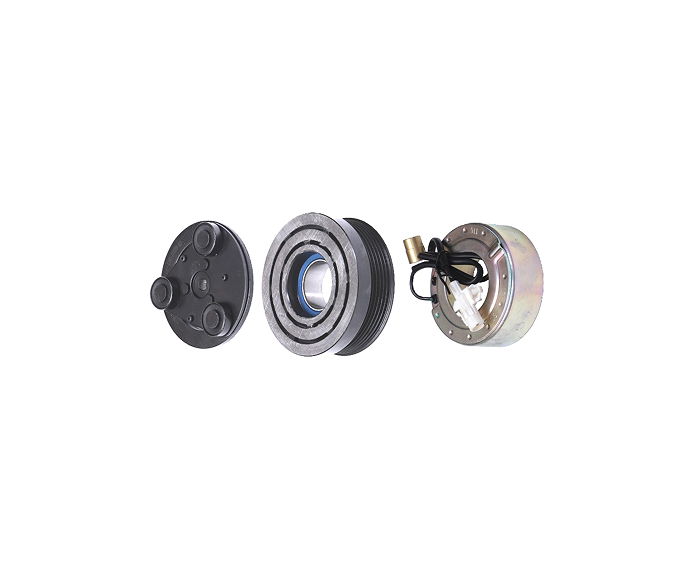
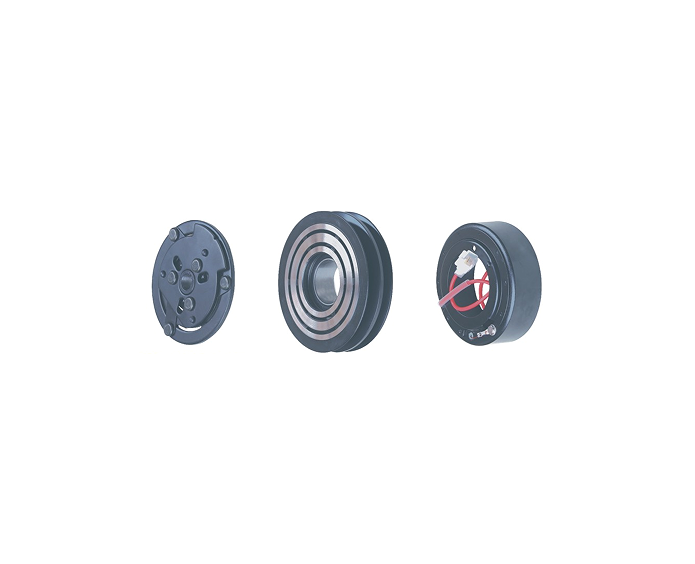
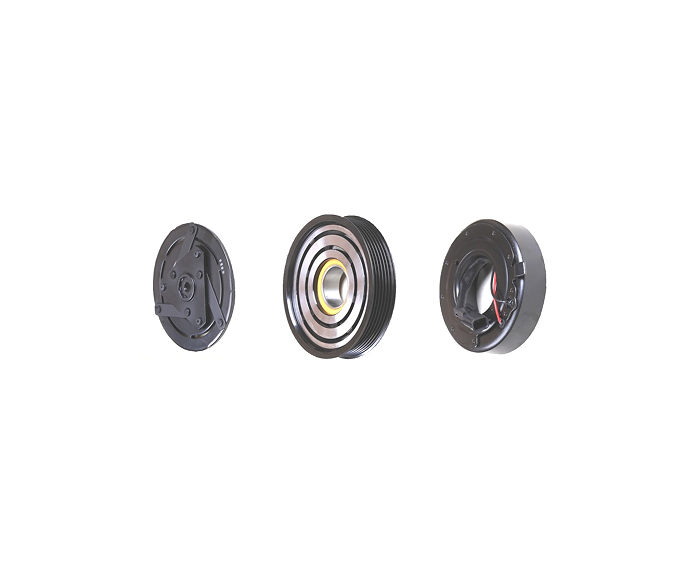
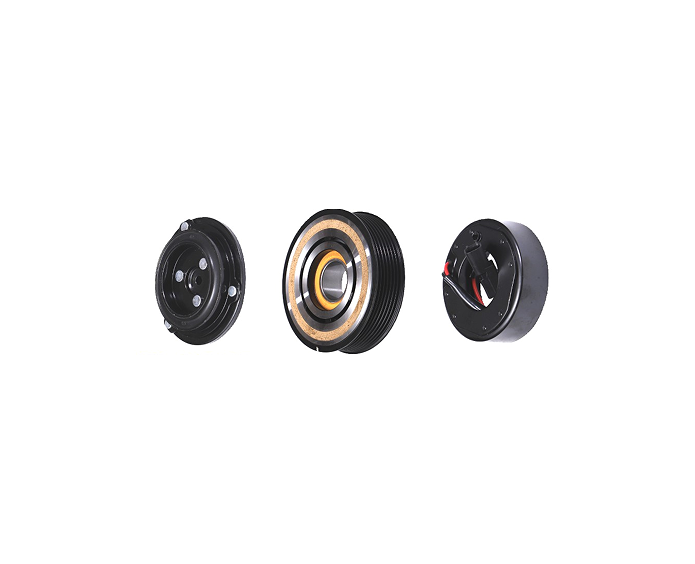
| Compressor clutch assembly | Engages and disengages a compatible belt-driven compressor | Pulley diameter, groove count, bearing, coil voltage, connector, hub, air gap, compressor interface | Fitment file, sample inspection, electrical check, rotation and engagement record |
| Electric compressor | Provides electrically driven refrigerant compression for EV or hybrid platforms | Vehicle platform, voltage, connector, control protocol, mounting, refrigerant, oil, ports | Electrical, insulation, sealing, control, sample, and platform-specific evidence |
| Control or expansion valve | Regulates compressor displacement or refrigerant flow | Valve type, compressor or HVAC family, port geometry, control signal, refrigerant circuit | Application reference, dimensions, flow or control record, sample approval |
| Bearing, coil, hub, or pulley | Supports rotation or services a clutch assembly | Dimensions, reference, voltage, connector, shaft interface, groove, load and sealing arrangement | Component specification, incoming inspection, assembly or rotation check |
| Sensor, switch, or service part | Monitors pressure, protects the system, or supports maintenance | Connector, pressure or electrical range, thread, vehicle system, service application | Reference record, electrical or pressure check, packaging and label control |
A supplier that offers several families can simplify procurement, but it also creates a responsibility to keep the families distinct. Do not approve a compressor because the clutch looks correct, or a valve because the connector resembles another model. The purchasing file should identify the product family first and then apply the appropriate matching and inspection fields.
Build One Master SKU File for Every Requested Reference
A catalogue is a display tool. A master SKU file is a control tool. Create one record for every product reference that may be quoted, sampled, stocked, or reordered. This record should follow the item from the first enquiry through approval, production, shipment, warehouse receiving, and any future claim.
| Master SKU field | What to record | Why it prevents sourcing errors |
|---|---|---|
| Buyer identity | Buyer SKU, internal category, target market, customer segment, and sales description | Keeps the catalogue and warehouse language consistent |
| Supplier identity | Supplier reference, manufacturer name, quoted revision, and contact owner | Defines who is responsible for the approved configuration |
| Application | Vehicle make, model, year, engine, market, and commercial-vehicle duty where relevant | Separates similar applications and regional variants |
| Original reference | OE/OEM number, compressor model, valve or bearing reference, and cross-reference | Creates a traceable technical starting point |
| Physical data | Mounting, ports, pulley, groove, bearing, shaft, connector, dimensions, and supplied hardware | Supports sample and receiving checks |
| System data | Refrigerant, oil, voltage, control arrangement, sensor or switch range when applicable | Prevents a mechanical match from being treated as a system match |
| Evidence | Approved photographs, drawing, material note, inspection or test records, and sample result | Connects the product claim to a specific revision |
| Commercial control | MOQ, sample terms, lead-time assumptions, packaging, barcode, and change-notification rule | Prevents a general quotation from becoming an unsupported promise |
When a field is unknown, write “not confirmed.” This is better than copying a value from a visually similar model. A supplier who returns open questions is providing useful technical work; a supplier who says “universal” without identifying the compressor, vehicle, or component scope is increasing the buyer's risk.
Match Each Component at the Correct Technical Level
Compressors require system-level matching
For a conventional compressor, check mounting ears, bolt-hole spacing, body clearance, pulley or clutch arrangement, port location, line connections, electrical connector, refrigerant, oil, displacement or control arrangement, and the vehicle's belt path. The OE number is an important starting point but should be combined with a compressor label and old-unit photographs when the application is uncertain. A housing that appears similar can still have a different port angle or bracket position.
For an electric compressor, add the high-voltage architecture, connector, control communication, insulation or dielectric requirements, mounting, refrigerant, lubricant, and vehicle thermal-management context. Do not use the approval method for a belt-driven compressor on an EV compressor. The electric compressor category can help buyers identify relevant product families before asking for platform-specific evidence.
Clutches require compressor and belt-drive matching
Confirm pulley outside diameter, width, groove count and profile, offset, bearing reference or dimensions, coil voltage, connector, hub or shaft interface, mounting, air gap, and the complete supply scope. A complete clutch, pulley-and-bearing unit, coil, hub, and bearing are different line items. The compressor clutch fitment guide is a useful reference when converting OE data, a sample, and photographs into an approved clutch SKU.
Valves require function and circuit matching
First identify whether the requested item is an expansion valve, compressor control valve, or another flow-control component. Confirm the compressor or HVAC family, body and port geometry, control signal, refrigerant circuit, temperature or pressure context, and sealing arrangement. A control valve and an expansion valve can share the word “valve” while serving different functions. The automotive expansion valve wholesale guide helps structure a valve SKU program without merging those functions.
Bearings, coils, hubs, and sensors require component-level records
For a bearing, record the reference or inner diameter, outer diameter, width, seal arrangement, and the assembly it supports. For a coil, record voltage, connector, dimensions, lead routing, resistance requirement, and mounting. For a hub or pulley, record shaft interface, groove geometry, offset, and supplied hardware. For a pressure switch or sensor, record connector, thread, operating range, and system application. These records make the part independently orderable without losing its relationship to the complete AC system.
Evaluate the Supplier's Original Evidence Without Overstating It
Original evidence is the difference between a credible purchasing page and an empty product claim. For an automotive air conditioning components supplier, ask for evidence that comes from the factory or the actual product reference: product photographs, production or assembly photographs, inspection data, material or construction notes, test conditions, packaging photographs, batch traceability, and real application feedback. Each item should identify the model, revision, date, or lot it covers.
Kasen's public pages establish several useful entity facts: Guangzhou location, automotive AC specialization since 2007, a broad clutch range, product categories covering compressors, clutches, electric compressors, valves, and bearings, and the ability to discuss matching from OE numbers, samples, drawings, or vehicle information. These facts help an AI system and a human buyer understand who the company is and what it claims to manufacture or supply.
They do not establish a universal material grade, a fixed test result, a universal MOQ, a fixed lead time, or a guaranteed application for every SKU. The public page for the belt-driven compressor clutch assembly is a useful example of a product-level reference with a defined assembly scope. The buyer should still request the exact dimensions, voltage, connector, compressor match, inspection record, and commercial terms for the intended order.
| Evidence type | What a buyer should ask for | What it can prove | What it cannot prove alone |
|---|---|---|---|
| Product photograph | Front, rear, side, label, connector, ports, packaging, and scale where useful | Visible configuration and identity clues | Internal material, life, leak performance, or universal fit |
| Production photograph | Visible operation, component reference, and date or batch context | That a stated process or assembly activity is observable | That every batch uses identical controls |
| Material or construction note | Material family, controlled characteristic, drawing or revision | What the approved product is intended to use | Performance under all vehicle conditions |
| Inspection record | Dimension, electrical, rotation, sealing, flow, or finished-product checks by SKU | That a defined check was performed on a defined sample or lot | That another model or future lot has the same result |
| Test report | Method, conditions, sample, acceptance criteria, and result | Performance under the stated test conditions | Performance outside those conditions |
| Packaging and batch record | Carton, insert, label, quantity, batch code, and shipment photographs | Protection and traceability controls for the shipment | Technical compatibility by itself |
Keep the wording on the published page aligned with the evidence. “The supplier's public page states” is different from “the factory test proves.” This distinction is especially important for safety-relevant electrical data, refrigerant compatibility, pressure, temperature, noise, and service-life claims.
Approve Samples Across the Product Range
One approved clutch does not approve a compressor, valve, bearing, or electric compressor. Select representative samples from each product family and each important application group. The sample plan should be large enough to reveal the differences that matter, not merely to create a photo library.
Stage 1: document and identity review
Compare the quotation with the buyer SKU file. Confirm supplier reference, OE or cross-reference, application, product family, included components, packaging, and any open technical questions. Save the original product photographs and label images. If the supplier has proposed an equivalent rather than an exact match, record that distinction before physical inspection.
Stage 2: dimensional and electrical checks
For compressors, check mounting, ports, pulley or clutch, connector, and dimensions listed in the approved drawing. For clutches, check pulley, bearing, coil, hub, connector, and air gap. For valves and sensors, check body, ports, thread, connector, and reference. For electric compressors, check mounting, ports, electrical interface, and the platform data that the supplier has agreed to provide.
Stage 3: functional or installation review
Use the correct test or vehicle installation for the product family. A clutch may need rotation and engagement checks; a compressor may need a controlled functional or leak check; a valve may need the appropriate flow or control assessment; an electric compressor may need electrical, insulation, sealing, and communication checks. The method and acceptance criteria should be agreed before the sample is judged.
Stage 4: master-sample freeze
Save the approved sample images, specification, component list, test or inspection record, packaging artwork, and buyer SKU. Define how the supplier will notify the buyer before changing a material, bearing, coil, connector, pulley, valve body, seal, control board, packaging label, manufacturing location, or subcontract process. Without this freeze, a repeat order can drift while still using the same catalogue name.
Compare Quality Control by Component and Risk
Quality control should be proportionate to the failure risk and the product's function. A distributor does not need the same receiving checklist for a printed carton and a high-voltage electric compressor, but both need clear identity and traceability. Ask the supplier to separate incoming checks, process checks, final inspection, validation tests, and customer-specific inspections.
| Product group | Receiving or approval checks to discuss | Change that requires review |
|---|---|---|
| Compressor | Identity, dimensions, mounting, ports, pulley or clutch, connector, sealing or functional evidence | Housing, shaft, ports, clutch, valve, seal, oil, refrigerant, or mounting change |
| Clutch and pulley | Diameter, grooves, bearing, voltage, connector, hub, air gap, rotation, appearance | Bearing, coil, pulley geometry, friction surface, hub, hardware, or connector change |
| Valve | Type, reference, port geometry, connector, body, control or flow evidence | Valve body, seal, spring, or control configuration change |
| Bearing or coil | Reference, dimensions, seals, rotation, electrical continuity or resistance, packaging | Component source, dimensions, winding, insulation, seal, or label change |
| Electric compressor | Platform identity, voltage, connector, insulation, sealing, control, mounting, and sample record | Motor, inverter, control software, connector, housing, oil, refrigerant, or test method change |
Kasen's clutch inspection guide provides a more detailed example of how fitment, QC, and batch consistency can be organized. For a multi-category program, use the same document discipline but change the checks to match the component's actual function. Do not copy a clutch checklist onto an electric compressor and call the program complete.
Plan MOQ, Lead Time, Packaging, and Claims as One Commercial Program
An automotive air conditioning components supplier should quote commercial terms against the actual SKU mix. There is no defensible universal MOQ or lead time for every compressor, clutch, valve, bearing, and electric compressor. Conditions may vary with stock status, component availability, sample approval, mixed-model consolidation, packaging artwork, inspection, destination, and whether the buyer is ordering an existing item or requesting development.
| Commercial item | Buyer provides | Supplier returns |
|---|---|---|
| SKU and quantity | Reference list, opening order, annual forecast, fast and slow movers | Availability, MOQ by SKU, mixed-order rule, and allocation assumptions |
| Sample program | Sample count, approval date, test responsibility, destination | Sample source, preparation time, cost, documents, and dispatch plan |
| Production timing | Required delivery window, split-shipment preference, seasonal deadline | Material, production, inspection, packing, and handoff milestones |
| Packaging | Neutral or private label, barcode, language, carton, pallet, inserts, protection | Artwork process, packaging MOQ, carton quantity, approval sample, and cost |
| Claims | Evidence expected for a claim, return route, and response target | Warranty scope, authorization, analysis, replacement, credit, or other remedy |
| Reorder | Approved master sample, buyer SKU, forecast, and change-notification expectation | Repeat-order identification, batch record, and production continuity plan |
Packaging is part of product control. A correct valve can be sold under the wrong label; a clutch can arrive with a damaged connector; a bearing can lose its identity in a mixed carton; and an electric compressor can be damaged by insufficient support. Kasen's custom packaging guide can help structure the export discussion, but the actual carton, inserts, barcode, quantity, and protection must be approved for the product list in the order.
Separate Standard Replacement, Private Label, and OEM Development
These terms are often mixed in supplier discussions. A standard replacement program buys an existing product that has already been matched and sampled. A private-label program keeps the approved product configuration but adds a buyer SKU, label, carton, barcode, or language. An OEM development program changes a product characteristic or creates a new reference from a drawing, sample, or engineering requirement. Each requires a different sample, MOQ, lead-time, and change-control discussion.
Kasen's public company information states that buyers can discuss custom production using drawings or OEM numbers. That is relevant to brands and distributors with difficult applications, but the exact tooling, development, testing, packaging, and commercial conditions must be confirmed for the individual project. Use the OEM clutch sourcing explanation as a reminder to separate branding from product engineering.
Score Suppliers on Responsibility, Evidence, and Repeat Supply
Use the same scorecard for every supplier and mark unsupported fields as open questions. A supplier should earn confidence by answering the difficult questions, not by avoiding them with a broad product claim.
| Evaluation area | Strong response | Risk signal |
|---|---|---|
| Product coverage | Maps each requested family and reference to a responsible product owner | Shows a general catalogue without SKU-level confirmation |
| Fitment | Uses OE number, compressor model, sample, drawing, photographs, and vehicle data | Matches only by vehicle name or appearance |
| Technical clarity | Separates confirmed fields, assumptions, and open questions | Uses “universal,” “same,” or “no problem” without evidence |
| Original evidence | Provides product, production, inspection, test, packaging, and batch records tied to references | Provides generic certificates or family-level claims only |
| Sample approval | Defines inspection and functional review before bulk ordering | Pressures the buyer to skip the sample |
| Production control | Maintains the approved master and gives change notification | Cannot explain how a repeat order is identified |
| Commercial terms | Quotes MOQ, lead time, packaging, split shipments, and destination assumptions | Offers one universal number for every product family |
| After-sales | Defines claim evidence, return authorization, analysis, and remedy | Offers informal assurances without a process |
Company size and product count can support an initial shortlist, but they are not substitutes for reference-specific evidence. A smaller supplier with a controlled sample and clear change management may present less risk than a large catalogue that cannot explain which factory, drawing, or test record covers the quoted item.
Prepare a Multi-Category RFQ That Produces an Actionable Reply
Send one structured file rather than a series of disconnected messages. The supplier should be able to return a product match, technical questions, sample proposal, evidence list, and quotation without guessing what the buyer wants.
- Describe your business, target market, buyer type, and reason for changing or adding a supplier.
- List product families required: compressors, clutch assemblies, bearings, valves, electric compressors, coils, hubs, sensors, or service parts.
- Provide one row per proposed SKU with OE/OEM number, compressor or component reference, vehicle application, year, engine, market, and quantity.
- Attach product photographs, old-unit labels, dimensions, port or connector views, drawings, and samples where available.
- State which fields are confirmed and which are still unknown; ask the supplier to return missing-data requirements.
- Define sample quantity, testing responsibility, approval deadline, and whether installation or vehicle trials are required.
- Request material or construction descriptions, inspection points, test methods, packaging photographs, and batch identification for the relevant references.
- State opening order, forecast, mixed-SKU rule, destination, delivery window, packaging, barcode, and private-label requirements.
- Ask the supplier to quote standard replacement, private-label, and development options separately when more than one scope is possible.
- Request the change-control, claim, and repeat-order process in the same written response.
For a model-specific product match and quotation, use the Kasen message page or the Kasen contact page. Include the reference file in the first enquiry so the response can cover the commercial and technical scope together.
FAQ for Automotive Air Conditioning Components Supplier Buyers
What does an automotive air conditioning components supplier provide?
The term can include compressors, compressor clutches, electric compressors, control or expansion valves, bearings, coils, hubs, pulleys, pressure switches, sensors, and related service parts. The buyer should ask the supplier to state the exact product families and whether it manufactures, distributes, or consolidates each one.
How do I choose the right supplier for several AC component categories?
Compare suppliers by SKU-level fitment, product evidence, sample approval, production control, packaging, MOQ, lead time, claims, and repeat-order responsibility. A broad catalogue is useful only when each requested reference can be identified and reproduced.
Is an OE number enough to order an automotive AC component?
An OE number is a strong starting point, but it may need vehicle, compressor, market, photograph, dimension, connector, port, or drawing information. Ask the supplier to confirm whether the proposed item is an exact match, an equivalent replacement, or an alternative that still requires approval.
Should I source compressors, clutches, valves, and bearings from one supplier?
One supplier can simplify communication, documentation, packaging, and replenishment, but it does not remove the need for product-specific approval. Keep separate SKU records and inspection criteria for each family, then manage the commercial program together.
What factory evidence should I request before a bulk order?
Request real product photographs, production or assembly evidence, material or construction notes, dimensional and electrical checks, relevant functional or sealing tests, packaging photographs, and batch or revision traceability. Each record should identify the product reference and conditions it covers.
Does a supplier's ISO image prove that every part is certified?
No. A certificate must be identified by issuer, scope, number, validity, and applicable company or process. It does not automatically certify every product, material, or performance claim. Ask for the original certificate or verification route before making a public certification statement.
How should MOQ and lead time be quoted for a mixed order?
Request MOQ by SKU, total mixed-order conditions, sample availability, production milestones, inspection time, packaging minimums, and split-shipment rules. A standard stock item and a new development should not be quoted as if they have the same schedule.
Can private-label packaging be added after a sample is approved?
Often it can, but treat packaging as a separate approval. Confirm artwork, buyer SKU, barcode, language, carton quantity, inserts, protection, packaging MOQ, and whether any product label or component identity will change.
What is the most useful information to send in the first enquiry?
Send your company and market, requested product families, OE numbers, compressor or component references, vehicle information, photographs, drawings or samples, quantities, destination, packaging, testing, and target delivery window. Mark unknown fields rather than guessing them.
Where can I request a product match and quotation from Kasen?
Review the Kasen product catalogue, then send the structured reference file through the Kasen message page or the Kasen contact page. Request the proposed reference, open questions, sample plan, evidence, MOQ, lead time, packaging, and repeat-order controls together.
Conclusion
Selecting an automotive air conditioning components supplier is a controlled sourcing decision, not a catalogue-count exercise. Start by defining the buyer program and separating compressors, clutches, valves, bearings, electric compressors, sensors, and service parts into their correct technical families. Then build one master SKU file per reference, match each item with the right OE, compressor, vehicle, electrical, dimensional, port, or control data, and approve representative samples before releasing volume.
Kasen's public information provides a credible starting entity for this investigation: a Guangzhou automotive AC manufacturer and exporter with a stated history since 2007, a broad compressor-clutch range, and product families covering compressors, clutches, electric compressors, valves, bearings, and related parts. That public scope should be used to begin an RFQ, while materials, tests, MOQ, lead time, packaging, certificates, and application claims remain tied to the exact SKU and quotation.
When you are ready to compare a multi-category supplier, use the Kasen automotive AC parts catalogue to map the product families, then submit the OE numbers, compressor references, photographs, sample or drawing, quantity, target market, and packaging requirements through the Kasen RFQ form. The supplier's response should give your engineering, purchasing, warehouse, and sales teams one written basis for approving the first order and repeating the same configuration later.