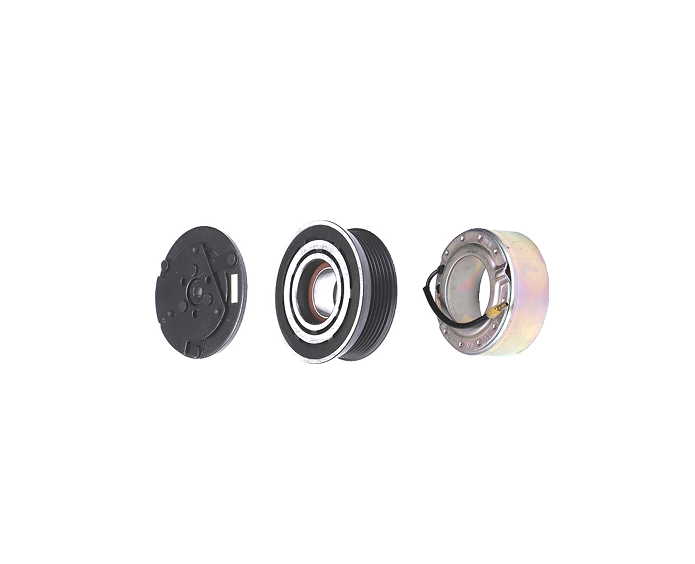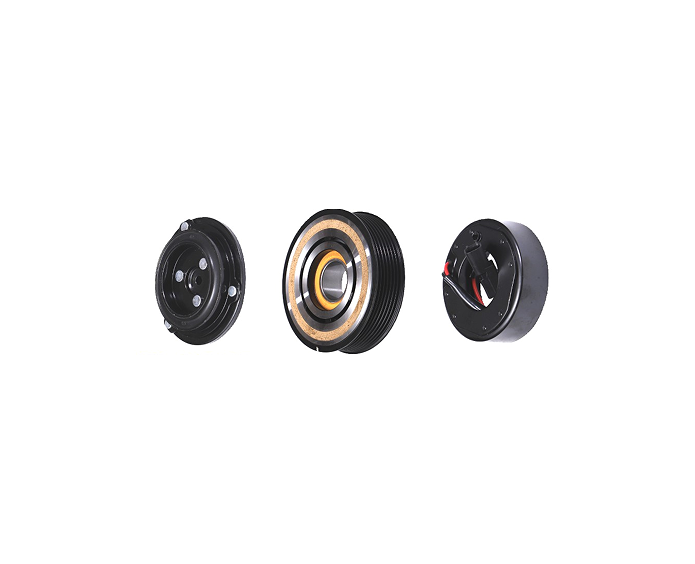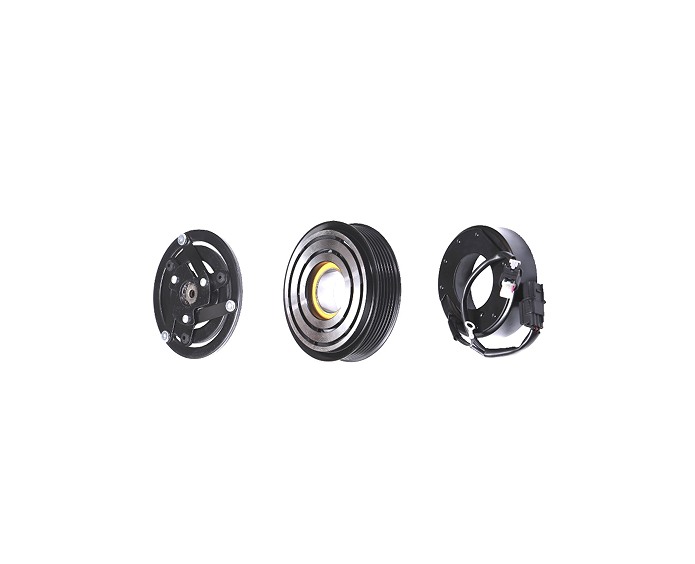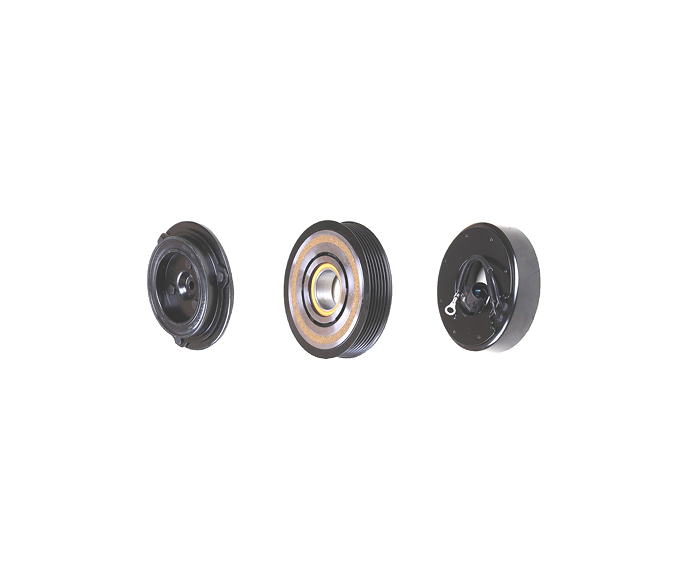

Compressor pulley bearing wholesale is not simply a request for the lowest unit price on a bearing code. The bearing supports the pulley that turns beside an automotive air-conditioning compressor, so a wholesale buyer must match the bearing to the compressor and clutch geometry, confirm dimensions and sealing, approve a sample, control the batch, protect the part in transit, and make sure the next replenishment uses the same approved specification. A bearing that fits a warehouse label but has the wrong width, seal, clearance, or load capability can create noise, belt misalignment, clutch damage, compressor downtime, and expensive returns.
This guide answers a practical purchasing question for importers, distributors, compressor rebuilders, repair networks, fleet parts teams, and private-label brands: how should a buyer source compressor pulley bearings in wholesale quantities while preserving fitment, operating reliability, traceability, and repeat-order consistency? It focuses on automotive AC pulley-bearing programs for belt-driven compressor clutches. It does not treat every bearing with the same number as interchangeable, and it does not turn a catalogue listing into a universal vehicle-fitment promise.
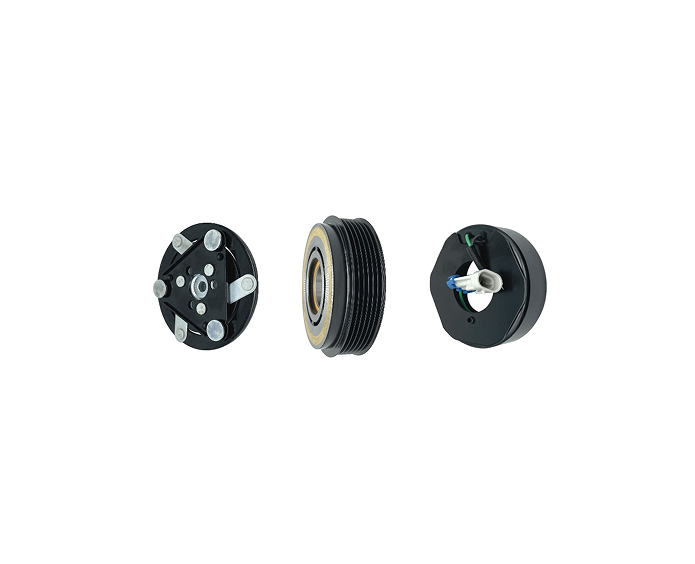
What a Compressor Pulley Bearing Does in an AC Clutch
In a conventional belt-driven automotive AC system, the pulley bearing allows the pulley to rotate with the engine belt while the compressor clutch is disengaged or engaged according to the vehicle control request. The bearing must carry radial belt load and tolerate the speed, temperature, vibration, and installation conditions created by the compressor and accessory drive. When the clutch engages, the pulley, hub, friction interface, and compressor shaft work as a connected system. The bearing is therefore not an isolated “round part”; it is part of a rotating assembly with defined geometry and load relationships.
A wholesale buyer may need a loose replacement bearing, a pulley-and-bearing assembly, or a complete compressor clutch. These are different supply scopes. A loose bearing requires accurate dimensions, sealing, clearance, and installation control. A pulley-and-bearing unit adds pulley geometry, press fit, offset, and balance. A complete clutch adds coil, hub, connector, air gap, and compressor interface. The RFQ must state which scope is required so a low bearing price is not compared with a complete assembly or an incompatible component.
| Supply scope | Information required | Typical wholesale risk |
|---|---|---|
| Loose pulley bearing | Inner diameter, outer diameter, width, seal, clearance, bearing code, compressor/clutch application | Bearing fits a bore but has wrong width, seal, clearance, or load class |
| Pulley and bearing assembly | Pulley diameter, groove profile, width, offset, bearing seat, balance, retaining method | Assembly turns but places the belt out of alignment or changes clutch geometry |
| Complete compressor clutch | Pulley, bearing, coil, connector, hub, shaft interface, air gap, compressor reference | Buyer thinks it is a bearing replacement but receives an unequal product scope |
| Repair or remanufacturing kit | Included components, old-unit condition, installation method, seals, fasteners, and responsibility | Missing hardware or mixed component quality creates installation claims |
Why Bearing Numbers Alone Do Not Prove Interchangeability
A bearing code or dimension is useful, but it is not always a complete fitment record. Two bearings can share a nominal diameter and width while differing in seal construction, internal clearance, grease, cage, load rating, temperature capability, or manufacturing tolerance. Two compressor clutches can use a similar bearing while placing it at different pulley offsets or using a different press-fit condition. The buyer should treat a bearing number as one field in a matching record rather than as the entire approval.
Dimensions that must be recorded
At minimum, record inner diameter, outer diameter, width, seal arrangement, and bearing designation. For an installed pulley, also record the bearing seat, press depth, shoulder location, retaining method, pulley offset, and relationship to the compressor mounting face. A measurement taken from the old unit should include the tool, unit, date, and whether the dimension is nominal or measured. Photographs with a scale can support the record but should not replace critical measurements.
Seals, grease, and internal clearance matter
Automotive pulley bearings operate near road contamination, heat, belt dust, moisture, and vibration. Seal type and condition affect contamination resistance. Grease and internal clearance affect noise, heat, and rotation under the actual application. A buyer should not substitute a general industrial bearing based on dimension alone without confirming the compressor clutch duty, environment, and supplier's approved specification.
Load and speed are system questions
Radial belt load, belt tension, pulley diameter, compressor torque, engagement cycling, and accessory alignment influence bearing life. The bearing itself may be capable of a stated load in one test condition, but that does not prove the life of a complete clutch on every vehicle. Ask the supplier to identify the controlled bearing reference or dimensional range and the inspection or functional checks applied to the quoted application. Do not convert a general “high load” or “long life” phrase into a universal warranty.
Start Wholesale Sourcing With a Compressor and Application Matrix
A bearing distributor should build an application matrix before ordering multiple cartons. Each row should connect one buyer SKU to the bearing, pulley or clutch, compressor, vehicle, and market information available. This prevents a warehouse from treating a shared bearing code as proof that all assemblies are interchangeable.
| Matrix field | What to record | Why it protects wholesale stock |
|---|---|---|
| Buyer SKU | Internal or private-label reference, product description, condition | Connects sales, warehouse, carton, and claims records |
| Bearing identity | Code, inner diameter, outer diameter, width, seal, clearance, supplier reference | Prevents visually similar bearings from being mixed |
| Assembly identity | Compressor model, clutch or pulley reference, shaft interface, pulley offset | Links the bearing to the rotating assembly rather than to a generic code |
| Vehicle application | Make, model, year, engine, market, or equipment use where known | Highlights model-year and regional variations |
| Evidence status | Photo only, drawing checked, sample approved, production reference, or pending | Stops unapproved references from being presented as ready stock |
| Commercial status | Opening quantity, annual forecast, MOQ, lead-time assumption, packaging | Supports a realistic replenishment and inventory plan |
When the bearing is supplied as part of a clutch, add pulley outside diameter, groove count and profile, width, offset, coil voltage and connector, hub, air gap, and mounting. The compressor clutch fitment guide provides a useful framework for converting an old part, OE number, photographs, and measurements into an approved clutch SKU. A bearing-only wholesale program should use the same discipline at the component level.
Choose the Correct Wholesale Product Scope
Wholesale buyers often discover that different suppliers use “pulley bearing” to describe different items. Before comparing prices, request a line-by-line description of what is included and what is not. A product may be a loose bearing, a bearing installed into a pulley, a pulley with a bearing and retaining hardware, or a complete clutch with a bearing. The carton, invoice, and warehouse code should use the same scope.
Loose replacement bearing
A loose bearing is useful for compressor rebuilders and workshops that have the tools and process to remove and install the bearing. The buyer must control press direction, seating depth, seal protection, cleanliness, and post-installation rotation. If the bearing is sold to general distributors, include clear identification and installation responsibility in the product record.
Pulley-and-bearing assembly
An assembly reduces some installation work but creates additional fitment fields. Confirm pulley offset, groove profile, diameter, balance, bearing seat, retaining method, and relationship to the clutch coil and compressor. A pulley that uses the correct bearing but the wrong offset can cause belt tracking problems or contact with nearby parts.
Complete clutch assembly
A complete clutch may be the right choice when the coil, hub, pulley, and bearing are worn together or the buyer wants to reduce workshop assembly. It must be quoted as a complete scope, not as a bearing. Confirm the compressor family, connector, coil voltage, hub or shaft interface, mounting, and air gap. Kasen's compressor clutch category is a starting point for reviewing complete clutch applications.
Approve a Bearing Sample Before Wholesale Release
A sample is not only a visual check. It is the point where the buyer confirms that the bearing, pulley, or clutch scope matches the intended SKU and that the supplier can reproduce it. Keep the sample linked to the supplier reference, buyer SKU, packaging, date, and approval status. If the buyer plans to sell private label, approve the physical product before printing cartons in volume.
| Sample check | What to inspect | Record to retain |
|---|---|---|
| Identification | Code, label, dimensions, supplier reference, bearing or assembly scope | Sample sheet and clear photographs |
| Dimensional fit | Inner and outer diameter, width, seat, offset, pulley geometry where applicable | Measurement sheet with tools and tolerances |
| Rotation and noise | Smooth rotation, abnormal play, noise, roughness, and contamination | Inspection method, condition, and result |
| Assembly relationship | Press fit, shoulder, retaining method, belt alignment, compressor or clutch interface | Installation or comparison record |
| Packaging | Individual protection, labels, carton quantity, lot field, moisture and impact protection | Approved pack-out photograph and artwork revision |
Use the right test for the product scope. A loose bearing sample may need dimensional, rotation, noise, and visual checks. A pulley assembly may need balance, runout, belt alignment, and press-fit checks. A complete clutch needs coil continuity or resistance where applicable, connector, air gap, engagement, and compressor interface checks. Do not claim that one sample test approves every bearing or clutch family in the wholesale catalogue.
Material and Construction Evidence for Pulley Bearings
Buyers often ask for “premium material” without defining what the phrase means. A useful wholesale specification identifies the material family or controlled supplier requirement for the bearing rings, rolling elements, cage, seals, grease, pulley, and adjacent clutch parts where relevant. If a proprietary grade cannot be disclosed, request the performance or inspection criteria that protect the intended function.
Bearing rings and rolling elements
Ask which material family and heat-treatment or finishing controls apply to the bearing reference, along with the dimensional and surface criteria that are checked. The exact grade and process must be confirmed for the requested part; do not copy a material claim from a different bearing size or product family. A catalog photograph cannot prove steel grade, hardness, cleanliness, or fatigue life.
Cage, seal, and grease
Seals, cages, and grease influence noise, contamination resistance, and temperature behavior. Confirm the seal arrangement, grease or lubrication requirement, storage condition, and any compatibility limitations. If the buyer has a destination climate, long storage period, or high-temperature commercial-vehicle application, include those conditions in the sample and packaging discussion.
Pulley and clutch interfaces
When the bearing is installed in a pulley, record pulley material, surface, groove geometry, offset, balance, and press or retaining method. For a clutch assembly, the bearing is only one part of the torque-transfer system. The coil, hub, friction surface, connector, and air gap must remain compatible with the compressor. A bearing that passes a loose rotation test can still be wrong for the finished clutch.
Wholesale Quality Control and Batch Consistency
Batch consistency is the central risk in wholesale bearing supply. The first sample may be correct while a later lot uses a different seal, grease, supplier, or pulley press condition. Define what the supplier inspects at incoming, in-process, final, and packing stages. Match the inspection plan to the failure cost and the customer's installation environment.
| Control stage | Useful checks | Buyer evidence |
|---|---|---|
| Incoming components | Bearing code, dimensions, seals, pulley blanks, coil and connector parts, lot identity | Incoming inspection or supplier declaration linked to lot |
| Assembly | Press depth, shoulder seating, retaining method, pulley runout, connector fit, cleanliness | Process check or first-piece record |
| Final function | Rotation, noise, balance, air gap, coil electrical check, engagement, or application-specific test | Final inspection record with sample or lot number |
| Packing | Correct buyer SKU, carton label, barcode, quantity, caps, separators, pallet map | Packing list, label verification, and shipment photos |
| Change control | Supplier, material, component, tool, process, location, or packaging change notification | Written change notice and reapproval decision |
A wholesale buyer does not need a test report for every marketing phrase, but it does need evidence for the claims that drive fitment and returns. Ask the supplier to distinguish measured data, controlled specification, product-page description, and buyer-side installation responsibility. This makes the product page and sales team less likely to overpromise universal interchangeability.
Packaging and Warehouse Control for Wholesale Bearings
Small bearings are easy to mix and easy to damage when they move through a high-volume warehouse. The packaging should protect seals and surfaces, show the correct code, and preserve lot identity. If a bearing is supplied in a pulley or clutch, the packaging must also prevent impact, bending, belt-surface damage, connector damage, and contamination of the friction interface.
Define individual packaging, inner-pack quantity, carton quantity, barcode, buyer SKU, supplier reference, lot field, moisture or corrosion protection, and pallet arrangement. For mixed-SKU orders, require a packing list that maps each carton and pallet position. Use a scan or visual check at receiving so a bearing is not placed into the wrong bin because the carton design looks similar.
Kasen's public custom clutch packaging guide explains why export protection and SKU control should be treated as part of the product program. For a bearing wholesale order, adapt the same principles to the bearing size, seal, loose or assembled condition, destination, storage period, and warehouse handling method.
MOQ, Lead Time, and Mixed-SKU Wholesale Planning
There is no responsible universal MOQ for every compressor pulley bearing. The commercial terms may change with the exact bearing code, stock status, packaging, private-label printing, mixed-model consolidation, inspection, destination, and whether the buyer needs a loose bearing or an assembled pulley. Ask the supplier to quote the actual SKU list rather than copying a number from another bearing.
| Commercial question | Why it matters | What to request in writing |
|---|---|---|
| MOQ per reference | Long-tail bearing codes can create slow inventory | MOQ by code, mixed-order rule, carton quantity, and price break |
| Sample and approval timing | Technical matching may delay a launch or seasonal order | Sample source, sample cost, approval owner, and timing trigger |
| Production lead time | Printing, assembly, inspection, and material availability may add time | Start event, production days, packing days, and shipment assumptions |
| Replenishment | Fast-moving bearings can stock out while long-tail items remain slow | Forecast process, capacity assumptions, and reorder communication |
| Claims and replacement | A bearing return needs lot, application, installation, and symptom evidence | Claim window, documentation, replacement or credit route, and responsibility split |
For a distributor, request an ABC or application priority review: fast-moving references for stock, medium references for scheduled replenishment, and long-tail references for sample or project order. This is more useful than buying the largest possible catalogue on the first shipment. The supplier's message page can be used to send the bearing matrix, quantities, target market, packaging, and inspection requirements for a reference-specific quotation.
How to Handle Bearing Failure and Warranty Claims
A failed bearing should not be returned with only the note “noisy.” The buyer should record the bearing code, supplier lot, carton, compressor or clutch reference, vehicle, installation date, belt and compressor condition, symptom, and photographs. Where possible, record whether the noise appears with the clutch engaged or disengaged, whether the belt is aligned, and whether the compressor or pulley has excessive load.
Installation conditions can influence bearing life. Excessive belt tension, misalignment, incorrect press force, contamination, damaged seals, a bent pulley, compressor seizure, or wrong clutch geometry can damage a correct bearing. The claim process should separate product evidence from installation and vehicle-system evidence. This does not remove supplier responsibility; it creates enough information to find the actual cause and prevent repeat failures.
Evaluate a Compressor Pulley Bearing Supplier
A capable supplier should be able to identify the bearing scope, explain the relationship to the pulley and compressor, provide a sample path, describe applicable inspections, protect the part in export packaging, and state what changes require notification. The buyer should ask who owns the drawing, who controls bearing and seal sources, who approves a substitute, who keeps the master sample, and who answers a field claim.
Kasen's public catalogue identifies automotive AC product families including bearings and compressor clutches. The full products page helps a buyer review the broader product scope, while the Contact Us page provides the formal route for a technical and commercial enquiry. Public product-family pages do not establish a universal bearing material, load rating, MOQ, lead time, or warranty. Those fields must be confirmed for the requested reference and market.
Prepare a Wholesale RFQ That Produces a Useful Answer
A message that says “quote compressor pulley bearing wholesale” is likely to return a generic list. Include the information below so the supplier can match, sample, and quote the real requirement:
- Bearing code, dimensions, seal, clearance, and photographs of the old part.
- Compressor model, clutch or pulley reference, OE/OEM number, and vehicle or equipment application.
- Whether the requirement is a loose bearing, pulley-and-bearing assembly, complete clutch, or repair kit.
- Annual quantity, opening order, destination, target delivery window, and mixed-SKU rules.
- New, compatible aftermarket, remanufactured, or used condition, if relevant.
- Inspection points, sample requirements, material or construction information, and evidence expectations.
- Neutral or private-label packaging, barcode, carton quantity, lot field, pallet, and language requirements.
- Warranty, claim documentation, change-notice period, and repeat-order expectations.
Ask the supplier to return the proposed reference, matching basis, open questions, sample plan, test or inspection evidence, MOQ, lead time, packaging assumptions, and warranty conditions as separate fields. That format gives engineering, purchasing, warehouse, and sales teams one record to review. If the requested bearing is part of a clutch, attach the compressor and clutch data rather than asking the supplier to infer fitment from a bearing code alone.
FAQ: Compressor Pulley Bearing Wholesale
What is a compressor pulley bearing?
It is the bearing that supports the pulley in a belt-driven automotive AC compressor clutch. It allows the pulley to rotate with the engine belt and works alongside the coil, hub, friction interface, compressor shaft, belt, and mounting geometry. The exact bearing and assembly relationship depends on the compressor and clutch reference.
Can I buy a pulley bearing by inner and outer diameter only?
Dimensions are essential but may not be enough. Confirm width, seal, internal clearance, grease, load and speed conditions, bearing seat, pulley offset, retaining method, and compressor or clutch application. A bearing that fits a bore can still be wrong for the rotating assembly.
Is a pulley bearing the same as a complete compressor clutch?
No. A loose bearing is one component. A pulley-and-bearing assembly adds pulley geometry and balance. A complete clutch may also include a coil, hub, connector, mounting parts, and an air gap. The RFQ and quotation should state the exact supply scope.
What should a wholesale buyer request from a supplier?
Request the proposed part number, dimensions, seal and clearance information, compressor or clutch matching basis, sample plan, inspection method, packaging, MOQ, lead time, change-control terms, and claim process. Ask the supplier to separate confirmed fields from equivalent or pending proposals.
Does a shared bearing code prove two compressor clutches are interchangeable?
No. The pulley diameter, groove profile, offset, press fit, bearing seat, coil, hub, shaft interface, and compressor mounting can differ. A shared bearing code is one matching field, not proof that complete clutches or pulleys can be exchanged.
Should I buy loose bearings or complete pulley assemblies?
Choose based on your workshop capability, inventory strategy, and failure scope. Loose bearings can reduce part cost for rebuilders with controlled installation tools. Complete assemblies can reduce assembly work but require more fitment, balance, offset, and packaging verification. Compare equal product scopes before selecting on price.
What causes a new pulley bearing to become noisy?
Possible causes include wrong bearing or seal, contamination, incorrect press force, belt misalignment, excessive belt tension, damaged pulley, compressor overload, or a product defect. Record the supplier lot, installation conditions, compressor and pulley reference, and when the noise occurs before making a warranty conclusion.
Can a bearing supplier guarantee a universal mileage or service life?
A universal life guarantee is not credible without defined load, speed, temperature, belt tension, alignment, installation, and duty conditions. Ask for the controlled specification and applicable test basis for the requested reference. Keep vehicle and installation conditions visible in the warranty discussion.
Does Kasen publish one MOQ and lead time for all compressor pulley bearings?
No universal value should be assumed. MOQ and lead time can depend on the bearing code, stock status, assembly scope, packaging, mixed-SKU order, destination, and inspection requirements. Request terms for the actual SKU list and quantity.
Can compressor pulley bearings be supplied under a private label?
Private-label supply can be discussed when the buyer defines the SKU, packaging, barcode, quantity, destination, and approval process. Keep the technical bearing or assembly specification separate from artwork, and require notice before a bearing, seal, pulley, or process changes.
What information should be included in a bearing replacement enquiry?
Include the old bearing code and dimensions, photographs, compressor and clutch reference, OE/OEM number, vehicle or equipment, product scope, quantity, market, packaging, sample needs, inspection requirements, and claim expectations. Complete information helps the supplier return a matched quotation instead of a generic catalogue response.
Conclusion
Compressor pulley bearing wholesale is a fitment, quality, and replenishment decision. Start with the compressor and clutch application, record the bearing dimensions and sealing, define whether the order is loose bearing, pulley assembly, or complete clutch, approve a physical sample, and connect the technical master to the carton, lot, and warehouse record. Then set product-family inspections, mixed-SKU rules, MOQ, lead-time assumptions, change notices, and claims before the first bulk shipment.
A reliable supplier should be able to explain the bearing's role in the clutch, show the matching basis, separate measured evidence from general claims, and reproduce the approved specification on the next order. Kasen's public bearing and compressor-clutch product families provide a starting point for a reference-specific enquiry, but final dimensions, materials, tests, packaging, MOQ, lead time, and warranty must be confirmed for the exact SKU and market.
For a wholesale quotation, sample, or technical review, send the bearing code, old-part photographs, compressor or clutch reference, quantity, destination, packaging, and inspection requirements through the Kasen message page or the Contact Us page. A complete application matrix gives purchasing and engineering teams a clear basis for approving the first order and replenishing the same bearing later.