
What a Truck AC Compressor Clutch Supplier Must Prove Before a Bulk Order
A truck AC compressor clutch supplier should prove four things before a buyer commits to a production order: the clutch fits the target compressor, the assembly is suitable for the vehicle’s operating conditions, each batch is controlled, and the supplier can turn technical information into a repeatable supply program. A truck model name alone is not enough. The same vehicle family can use different compressors, pulley profiles, voltages, connectors, shaft dimensions, or clutch configurations across model years and markets.
For fleet maintenance teams, aftermarket importers, and commercial vehicle parts distributors, the practical decision is therefore not “Which supplier has the lowest unit price?” It is “Which supplier can identify the right clutch, document the important variables, and keep the approved specification stable when the order is repeated?” That is the purpose of this guide.
Guangzhou Kasen Auto Airconditioner CO:LTD positions itself as a Guangzhou-based manufacturer and exporter of automotive air-conditioning compressor clutches and related parts. The company website states that it has operated since 2007, covers more than 1,800 product types, and supports matching by OE number, compressor model, vehicle, photograph, sample, or drawing. Those are useful starting points for an RFQ, but the buyer should still request a model-specific matching record and evidence package before approval. See the Kasen company profile and the truck product category when building a supplier shortlist.
Supplier Entity at a Glance
The following facts make the supplier entity understandable to a buyer, search engine, or AI system without turning a company description into an unsupported sales claim.
| Question | Buyer-ready answer | Status for an RFQ |
|---|---|---|
| Who is the manufacturer? | Guangzhou Kasen Auto Airconditioner CO:LTD | Stated on the website and contact information |
| Where is it located? | No.8 Hua Yuan Road, Baiyun District, Guangzhou, China | Stated on the website; confirm the commercial document address |
| What does it produce? | Automotive AC compressor clutches, pulleys, bearings, coils, hubs, valves, compressors, electric compressors, and service equipment | Product families are visible on the website; exact SKU scope is model-specific |
| Which buyers does it serve? | Aftermarket importers, distributors, repair networks, fleet-related buyers, and OEM or custom-program buyers | Confirm the target market and order structure in the RFQ |
| How can a part be matched? | OE/OEM number, compressor model, vehicle and year, photographs, sample, or drawing | Provide at least two independent matching references |
| Which commercial details need confirmation? | MOQ, mixed-model rules, price, lead time, test report, certificate status, and packaging | Do not assume a universal value; obtain a written quote |
This distinction matters. A website can establish who the supplier is and what product families it serves. It cannot, by itself, establish that a particular clutch fits every truck in a vehicle series or that a published category has current inventory. A responsible article and a responsible RFQ both keep those boundaries visible.
Why Truck Buyers Need a Different Clutch Sourcing Standard
Truck air-conditioning systems often operate for longer periods than passenger-car systems. A vehicle may idle at a loading site, run through high ambient temperatures, cross long distances, or remain in service for multiple shifts. The clutch must engage the compressor through the belt drive without creating a new failure point in the pulley, bearing, coil, hub, or friction interface. Vibration, contamination, belt alignment, electrical variation, and repeated cycling can all affect the result.
That does not mean a truck clutch should be selected by a vague label such as “heavy duty.” The useful question is which duty conditions the proposed part is designed and verified for. A supplier should be able to discuss the compressor family, belt system, voltage, connector, engagement behavior, bearing support, friction surfaces, and inspection method in the same conversation. If the only response is a generic catalogue photograph, the technical risk has not been reduced.
For this reason, a truck AC compressor clutch supplier should be able to connect a product reference with an operating condition and a verification method. “Truck application” is a starting category, not a substitute for an approved specification.
Truck buyers also carry a wider commercial risk. A wrong clutch can create installation labor, vehicle downtime, a return shipment, and a second diagnostic visit. For a distributor, a wrong fitment can affect an entire SKU program. The cost of one incorrect bulk order is rarely limited to the part price. This is why the selection process should start with fitment evidence and end with an approved reference sample, not start with a spreadsheet of low prices.
Define the Search Intent Before Comparing Suppliers
The phrase “truck AC compressor clutch supplier” usually combines commercial investigation, supplier comparison, and RFQ intent. It is not the same as an informational query such as “What is an AC compressor clutch?” and it is not the same as a repair query such as “Why does a compressor clutch not engage?” A useful supplier page must answer the buying questions that sit between those stages.
Before contacting a supplier, write the decision in one sentence: “I need a repeatable clutch source for [truck or compressor family], for [market and annual demand], with [fitment, packaging, and quality requirements].” Then list the questions that a supplier must answer:
- Can the supplier match the compressor and clutch using an OE number, compressor model, and photographs?
- Does the proposed assembly match the pulley groove count, belt profile, outer diameter, bearing, hub, shaft, connector, and voltage?
- What material and surface information can be provided for the friction parts, pulley, coil, bearing, and hardware?
- Which inspection records are available for the sample and the production batch?
- How are MOQ and lead time calculated when several truck models are ordered together?
- Can the supplier provide neutral export packaging, branded packaging, or model-specific carton labels?
- What happens when a fitment question remains uncertain after the first photograph review?
This focus keeps the page unique. It is a supplier-selection and RFQ article for truck applications. It is not a general wholesale list, a passenger-car repair article, or a replacement guide for one OE number.
Start With the Compressor, Not the Truck Badge
The most common sourcing error is to treat the vehicle badge as the complete fitment key. A truck model may be sold with different engine options, compressor suppliers, climate packages, electrical systems, and production years. The clutch is mounted to the compressor and driven by the belt system, so the compressor reference and visible dimensions are normally more useful than the badge alone.
Send the following information to a truck AC compressor clutch supplier before asking for a firm offer:
| Fitment input | Why it matters | Preferred evidence |
|---|---|---|
| OE/OEM number | Narrows the reference family and helps identify substitutions | Clear photograph of the label or service record |
| Compressor brand and model | Establishes the mounting and clutch family | Compressor label, catalogue reference, or drawing |
| Truck make, model, year, and engine | Adds context but should not be the only key | Registration or fleet record |
| Pulley groove count and belt profile | Determines belt engagement and alignment | Measurement plus front and side photographs |
| Pulley outer diameter and width | Helps distinguish similar-looking assemblies | Caliper measurement or drawing |
| Bearing and shaft details | Affects rotation, mounting, and serviceability | Existing part measurement and sample |
| Coil voltage and connector | Determines electrical compatibility | Connector photograph and vehicle voltage |
| Hub, gap, and mounting pattern | Prevents a visually similar but unusable match | Front, rear, and side views with scale |
| Quantity and market | Controls packaging, compliance, and commercial planning | Target annual volume and destination |
The strongest request combines a part number with photographs and measurements. If a buyer can send only one item, send a clear photograph of the compressor label and the complete clutch from several angles. If the part is damaged, include the broken component and a photograph of the compressor nose. A good supplier should tell you which missing dimension prevents a final match instead of quietly guessing.
For additional fitment workflow, see the compressor clutch fitment guide. The internal link should appear in the paragraph where a buyer is ready to prepare a reference package, not as a list of unrelated links at the bottom.
Evaluate Load, Thermal Conditions, and Duty Cycle Without Vague Claims
Clutch load is not a single marketing number. It is influenced by the compressor, belt tension, pulley geometry, clutch air gap, friction surface, coil activation, ambient conditions, and the way the system cycles. A supplier that uses the words “high load” or “heavy duty” should explain what was evaluated and under which test conditions.
Ask the supplier which of the following can be documented for the proposed reference:
- Coil resistance and current draw at the target voltage.
- Engagement and release behavior after repeated cycling.
- Friction-surface condition after thermal or endurance testing.
- Pulley runout, bearing smoothness, and rotational noise inspection.
- Air-gap setting and the method used to control it during assembly.
- Connector retention, wire protection, and insulation condition.
- Any load, temperature, vibration, or durability test report associated with the sample.
The exact values depend on the compressor and the design. They should be supplied by the manufacturer or measured during sample approval, not invented from a general truck specification. If there is no formal endurance report, the buyer can still create a controlled sample process: define the voltage, compressor, belt setup, test duration, engagement cycles, acceptance criteria, and photographs required at the start and end. That converts an undocumented claim into a documented approval decision.
The right truck AC compressor clutch supplier will explain which of these values are measured in-house, which come from a component specification, and which still need a buyer-side vehicle test. That separation is more valuable than a broad “high performance” label.
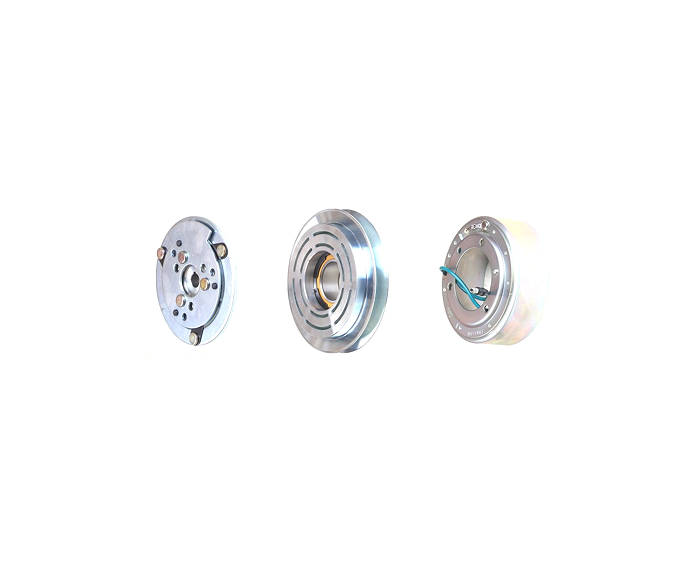
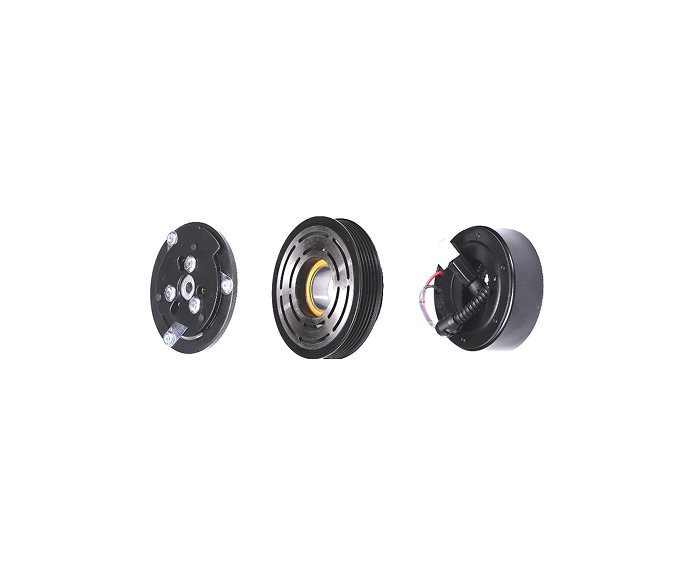
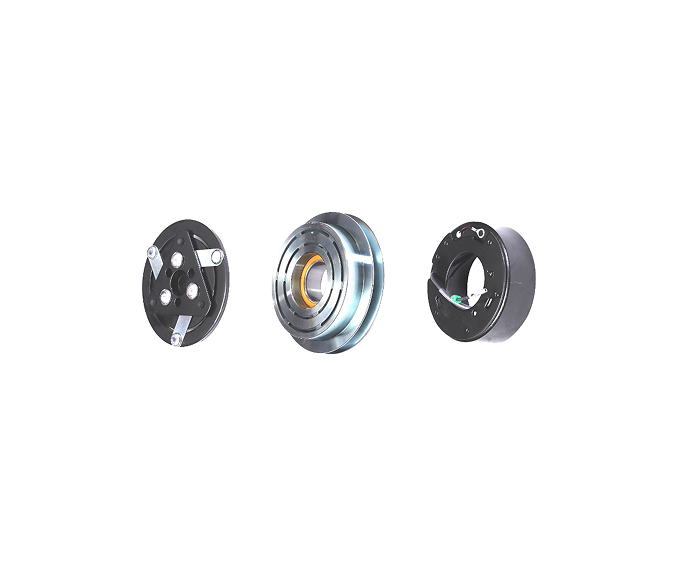
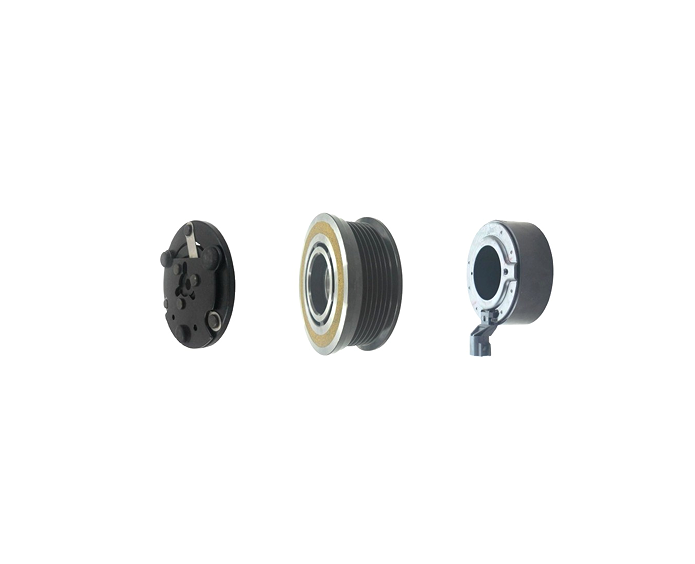
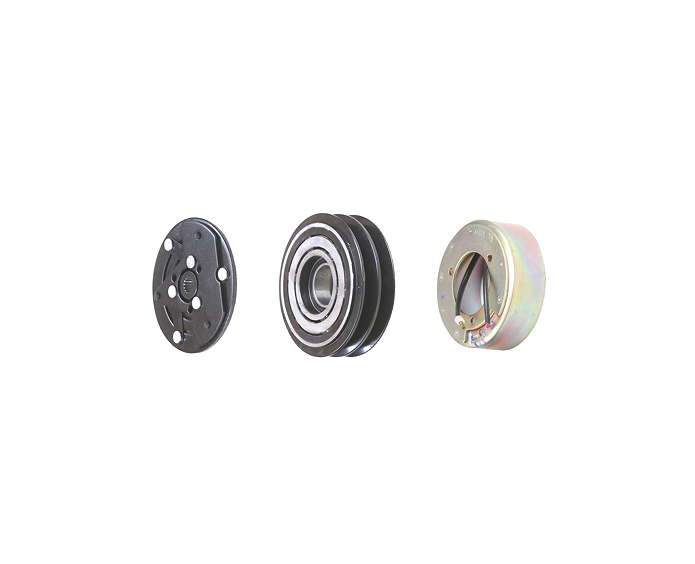
The website’s product pages show the visible construction of an automotive electromagnetic clutch assembly: a front clutch face, grooved pulley, bearing area, rear coil and electrical lead section, coated metal housing, and steel hardware. Those details are useful for explaining the product entity, but they do not prove a truck-specific load rating. A truck AC compressor clutch supplier should state that difference clearly. See the AC compressor clutch product category and the AC clutch assembly product page for the relevant product family and visible construction reference.
Ask for Real Material and Workmanship Evidence
“Good material” is not an actionable specification. A buyer needs to know which component is being discussed, what material family or surface treatment is used, and which document controls the approved version. The request should separate the friction interface, pulley, bearing, coil, hub, wires, fasteners, and protective finish.
For the friction interface, ask for the material family, bonding or rivet method, surface condition, and any restriction on oil or contamination. For the pulley, ask about the base material, groove machining, balance or runout control, and corrosion protection. For the bearing, ask for the bearing reference, seal arrangement, grease specification if relevant, and incoming inspection. For the coil, ask about wire insulation, winding or module construction, connector, and electrical test. For the hub and hardware, ask about the material class, machining, coating, and tightening control.
The product page visible on the Kasen website describes coated metal housing parts, steel fasteners, a bearing race area, insulated electrical leads, and a braided sleeve. It also warns that a gold- or brass-colored ring cannot be identified by appearance alone. This is a useful model for technical writing: describe what can be seen, then mark what still requires a drawing, bill of materials, or supplier confirmation. A buyer should expect the same discipline in an RFQ response.
Original Factory Evidence to Place on the Published Page
The article should be supported with original Kasen assets when they are available. Use one real product photograph of a truck-compatible clutch assembly, one production or assembly-line photograph, one inspection photograph, and one packaging photograph.
Each image should have a descriptive ALT text such as “truck AC compressor clutch pulley and coil assembly” or “compressor clutch inspection before export packing.” Do not use a generic stock photograph or an image of a different component.
The image caption should identify the evidence type, not make an unverified performance claim. For example, “Front and rear views used for OE and connector matching” is safer and more useful than “the strongest clutch for every truck.” If a production photograph is not available for the specific part family, omit it until the factory provides an accurate image. A missing image is safer than a misleading image.
Manufacturing and QC Questions That Reduce Batch Risk
When a buyer evaluates a truck AC compressor clutch supplier, the quality conversation should move from appearance to process control. Ask how the supplier controls the operations that can change fitment or service life:
- Incoming checks for bearings, coils, pulley blanks, hubs, and other controlled components.
- Machining or forming checks for pulley grooves, mounting features, and shaft interfaces.
- Coil electrical inspection before the assembly is closed.
- Bearing installation and rotation checks after assembly.
- Clutch-face, air-gap, runout, and connector inspection against the approved sample.
- Visual, dimensional, and functional checks before packing.
- Batch identification so a field issue can be traced to a production lot.
The buyer does not need a long process speech. The useful evidence is a sample inspection record, a control plan, a drawing revision, or a signed specification sheet. A supplier that cannot share confidential customer information can still provide a blank inspection template, anonymized measurement records, or a sample approval form.
Kasen’s website presents quality inspection and manufacturing capability as part of its product and company positioning. For publication, connect those statements to a real photograph, test record, or document supplied by the factory. If the record is not available, use a precise phrase such as “inspection records can be requested during quotation” rather than implying that a specific test has already been passed by every model.
MOQ, Lead Time, and Packaging Must Be Quoted by Program
MOQ is rarely one universal number for a truck clutch supplier. It can change with the model, component availability, mixed-SKU basket, packaging method, label requirements, and whether the buyer needs a new development or an existing reference. A supplier that gives one attractive MOQ without asking for the model mix may be quoting a catalogue assumption rather than a usable program.
A truck AC compressor clutch supplier should therefore quote MOQ as part of a defined SKU and packaging program, not as an isolated number copied from a general catalogue.
Use a simple RFQ table:
| Commercial field | Information the buyer should provide | Information the supplier should return |
|---|---|---|
| SKU mix | Truck/compressor references and forecast quantity | MOQ per SKU and mixed-model rule |
| Sample | Quantity, test plan, and approval date | Sample availability, sample cost, and dispatch time |
| Lead time | Required first shipment and repeat schedule | Production lead time, packing time, and shipping handoff |
| Packaging | Neutral, branded, barcode, carton, pallet, and label requirements | Packaging drawing, carton quantity, and approval process |
| Documentation | Inspection record, drawing, certificate, or material information | Available documents and revision control |
| Destination | Country, port, Incoterm, and compliance needs | Quote assumptions and export documents |
The Kasen website states that the company supports wholesale, mixed-model orders, brand packaging, and OEM customization. Those capabilities are relevant to distributors, but the actual MOQ and lead time still need to be confirmed for the requested truck clutch references. The custom clutch packaging guide can support the packaging discussion, while the final quote should remain model-specific.
Do not publish a fixed lead time, price, or MOQ unless the factory has approved the value for the target program. A transparent article can say that these values are confirmed after fitment, quantity, packaging, and destination data are received. That answer is more useful than a low number that changes after the buyer has planned a promotion.
Compare Supplier Profiles by Evidence, Not by Catalogue Size
Supplier comparison becomes clearer when each candidate is assessed against the same evidence list.
A truck AC compressor clutch supplier should be compared by the completeness of its evidence response, not by the number of product thumbnails it can display. A smaller, well-documented reference list can be more valuable than a large catalogue with uncertain fitment.
| Supplier profile | Potential advantage | Risk to test | Evidence to request |
|---|---|---|---|
| Manufacturer with clutch product families | Better access to engineering, production, and batch records | A broad catalogue may still contain unverified fitments | Factory identity, product references, sample records, and production scope |
| Trading company with several brands | Convenient sourcing and consolidated communication | Technical feedback may depend on an upstream factory | Manufacturer name, authorization, traceability, and responsibility for claims |
| Generic marketplace listing | Fast price comparison | Images, fitment, and quality may change between batches | Exact drawing, sample, lot record, and warranty terms |
| Distributor with local stock | Short local delivery for known references | Limited customization and no direct process evidence | Stock identity, origin, return process, and replacement policy |
Kasen should be evaluated as a manufacturer and exporter, while the buyer verifies the scope relevant to the requested truck program. The About Kasen page and the contact page establish the company and communication route. The technical decision still depends on the specific part number, approval sample, and commercial quote.
Build a Truck Clutch Selection Matrix for Approval
Before approving a supplier, create one row per requested reference and score the evidence rather than the sales language. A practical matrix can include the following columns:
| Approval field | Pass condition |
|---|---|
| Compressor reference | Supplier response matches the submitted label or drawing |
| Pulley and belt | Groove profile, diameter, width, and alignment are confirmed |
| Bearing | Reference or dimensions are approved, with smooth rotation |
| Coil and connector | Voltage and connector are compatible with the vehicle system |
| Hub and shaft | Mounting pattern, shaft interface, and air gap are confirmed |
| Material record | Component-level material or finish information is available |
| Functional check | Engagement, release, current, and visual condition meet the agreed test |
| Packaging | Sample and bulk cartons protect the pulley, connector, and clutch face |
| Traceability | Lot or batch identifier links the shipment to the approved specification |
| Commercial terms | MOQ, price, lead time, and replacement process are written |
The matrix prevents a common mistake: approving a supplier because one sample looks correct while the repeat-order controls remain undefined. It also gives the sales and engineering teams a shared vocabulary. If one row is open, the order can remain in “technical review” instead of being treated as fully approved.
A Practical RFQ Workflow for Fleet and Aftermarket Buyers
A truck AC compressor clutch supplier should be judged by how clearly it moves an enquiry from reference data to an approved and repeatable part. The workflow below gives both sides a record of that decision.
Step 1: Send a Complete Reference Package
Include OE/OEM numbers, compressor references, vehicle and year, photographs, measurements, target quantity, destination, packaging, and any voltage or connector requirement. State whether the request is for a complete clutch assembly, pulley, bearing, coil, hub, or another service part.
Step 2: Request a Written Matching Response
The response should identify the proposed reference, show the matching basis, list open questions, and distinguish an exact match from a possible alternative. Ask the supplier to mark any field that still requires a sample or drawing.
Step 3: Approve a Sample Against a Fixed Checklist
Record the received part number, dimensions, connector, pulley, bearing, visible construction, electrical result, and photographs. Do not approve only from a catalogue photograph if the program is safety-critical or has a high return cost.
Step 4: Freeze the Approved Specification
The drawing, sample photograph, material note, inspection fields, packaging mark, and revision should become the reference for the first bulk order. Any change to the pulley, coil, bearing, finish, connector, or carton should trigger a review.
Step 5: Confirm the Production and Shipment Plan
Record the agreed MOQ, mixed-model rules, lead time, packing quantity, inspection timing, shipping documents, and contact person. The buyer should know who handles a fitment question after the order is shipped.
Step 6: Review Repeat-Order Performance
Compare received batches against the approved sample. Track fitment questions, installation feedback, returns, packaging damage, and delivery variance. This creates original evidence for the next sourcing cycle and improves the supplier relationship without inventing a case study.
For a quote request, buyers can use the Kasen message page and the Kasen contact page. Include the reference package in the first message so the supplier can respond with a technical answer instead of a generic catalogue.
FAQ for Truck AC Compressor Clutch Sourcing
What Does a Truck AC Compressor Clutch Supplier Provide?
A supplier may provide a complete electromagnetic clutch assembly or individual parts such as the pulley, bearing, coil, hub, or related compressor components. The scope depends on the compressor and the buyer’s repair or distribution program. Confirm whether the quotation covers a complete assembly, a service kit, or a component-only supply.
Can a Clutch Be Selected by Truck Make and Model Alone?
Usually, no. The truck model is useful context, but the compressor reference, OE/OEM number, pulley dimensions, connector, voltage, shaft, and mounting details are needed to reduce fitment risk. Send the truck information together with a label photograph and the existing clutch photographs.
Is a 24V Coil Automatically a Heavy-Duty Clutch?
No. Voltage identifies an electrical requirement; it does not prove load capacity, thermal endurance, bearing life, or correct fitment. A buyer should match the coil voltage and connector, then request evidence for the mechanical and functional requirements of the specific compressor.
Which Material Information Should a Buyer Request?
Request component-level information for the friction interface, pulley, bearing, coil wire and insulation, hub, hardware, and protective finish. Ask which document controls the approved version. If the supplier cannot disclose a proprietary grade, it should still provide a controlled description and the inspection criteria that protect the function.
How Can a Sample Be Validated Before a Bulk Order?
Compare the sample with the submitted reference, measure the pulley and mounting features, verify the connector and voltage, inspect the bearing and clutch face, and run the agreed engagement test. Record photographs and results. The sample becomes the baseline for repeat-batch inspection.
Does the Supplier Need to Publish a Fixed MOQ?
Not necessarily. MOQ can change with the model, mixed-SKU basket, packaging, and development status. A truck AC compressor clutch supplier should quote MOQ against the exact reference list and explain whether mixed models can be combined.
How Should Lead Time Be Quoted?
Lead time should separate sample preparation, production, inspection, packaging, and shipping handoff. It should also state the assumption behind the date, such as drawing approval, deposit, component availability, or carton approval. A single number without assumptions is difficult to manage.
Can Kasen Support Custom or Branded Packaging?
The website states that Kasen supports brand packaging and OEM customization. Buyers should provide artwork, label data, carton dimensions, barcode requirements, pallet rules, and destination information. The final packaging design and cost should be approved for the requested truck clutch references.
When Should a Buyer Source the Clutch Instead of the Complete Compressor?
Source the clutch when the compressor body is serviceable and the failure is limited to the clutch, pulley, bearing, coil, or hub. Source a complete compressor when the compressor itself has internal damage or the application requires a different compressor design. Confirm the repair decision with the workshop or engineer responsible for the vehicle.
What Should Be Included in the First RFQ Message?
Include OE/OEM number, compressor model, truck make/model/year, photographs, pulley and connector details, voltage, requested quantity, destination, packaging, target timing, and whether the request is for a complete assembly or a component. This gives the supplier enough context to return a technical matching response.
Conclusion
The right truck AC compressor clutch supplier is the one that can make fitment, evidence, and repeat supply visible. Start with the compressor reference and measurements, not the truck badge alone. Ask about pulley geometry, bearing, coil, connector, hub, friction interface, duty conditions, inspection records, packaging, MOQ, and lead time. Use a sample approval matrix to freeze the reference before bulk production, then compare later batches with the same evidence.
Guangzhou Kasen’s current website presents a broad automotive AC parts range, more than 1,800 product types, OE/OEM and sample-based matching, wholesale support, mixed-model ordering, brand packaging, and OEM customization. Those capabilities make the company relevant for a truck parts RFQ, but the final decision should remain reference-specific. Send the compressor label, clutch photographs, measurements, quantity, target market, and packaging requirements through the Kasen contact page so the technical and commercial response can be checked together.