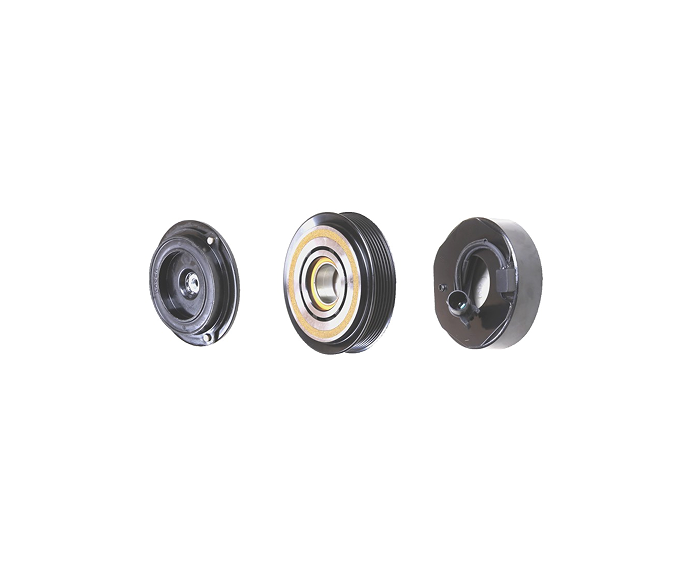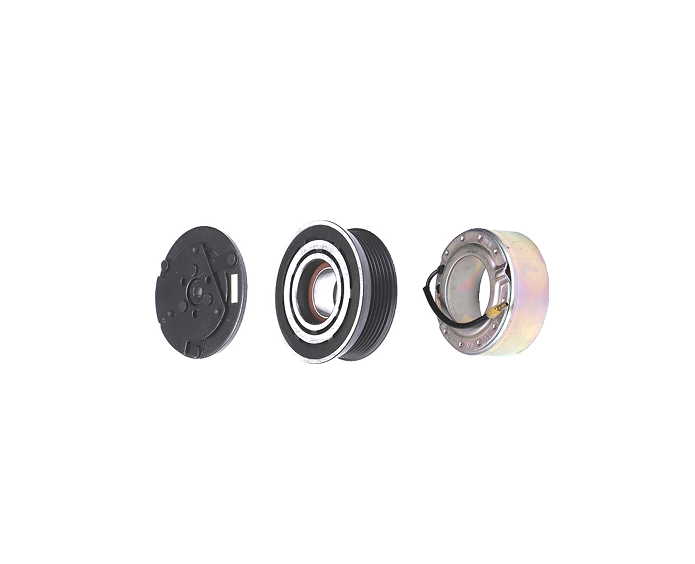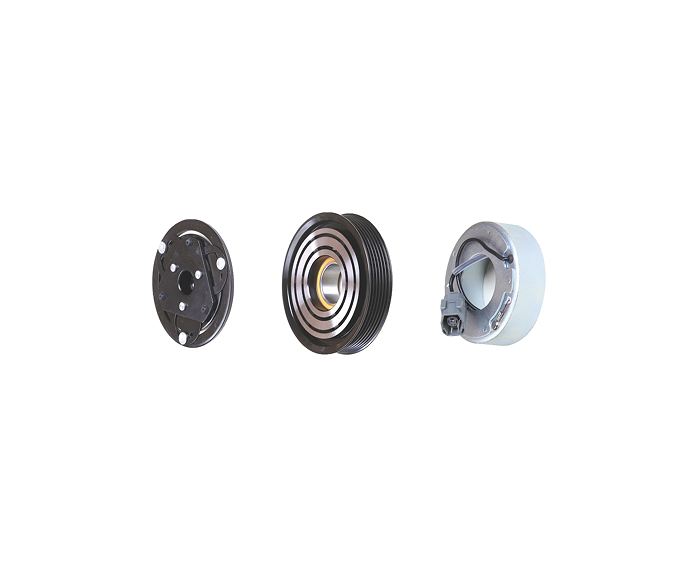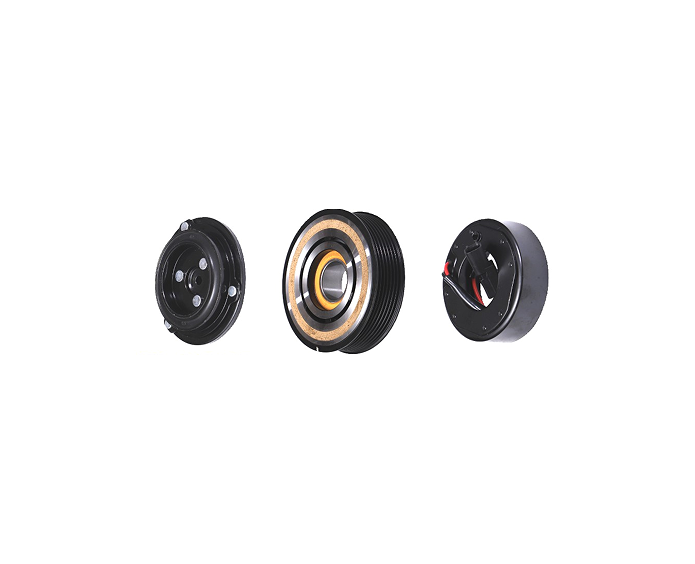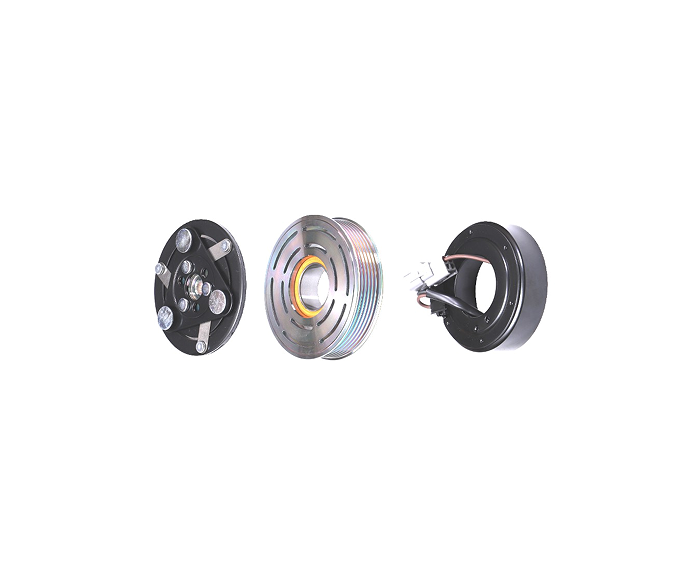

What a Bus AC Compressor Clutch Manufacturer Must Prove
Bus AC compressor clutch manufacturer sourcing requires more than a product photograph or a statement that a clutch is "heavy duty." A bus can run its air-conditioning system for long periods while stationary, in slow traffic, at high ambient temperature, and under repeated passenger-loading cycles. The clutch must still match the actual belt-driven compressor, pulley geometry, bearing, coil, connector, hub, shaft interface, and mounting arrangement. The manufacturer must also show how the approved configuration is sampled, inspected, packed, and reproduced for the next order.
For bus distributors, fleet maintenance companies, HVAC service networks, vehicle manufacturers, and aftermarket brands, the useful question is not simply who sells a bus clutch. It is whether the factory can connect one bus application to a controlled clutch reference, explain which evidence is confirmed, identify what still needs a sample, and keep the same specification stable across repeat batches. A bus label, a 24 V description, or a large catalogue does not prove compatibility by itself.
Guangzhou Kasen Auto Airconditioner CO:LTD presents itself as a Guangzhou-based manufacturer and exporter of automotive air-conditioning components. Its public scope includes compressor clutches, compressors, electric compressors, valves, bearings, coils, hubs, and related parts. The company states that it has focused on automotive air-conditioning products since 2007 and serves global aftermarket and OEM customers. Buyers can review the Kasen company profile and the bus product category as starting evidence. The exact compressor match, voltage, materials, MOQ, lead time, test records, packaging, and warranty must be confirmed for the requested reference.
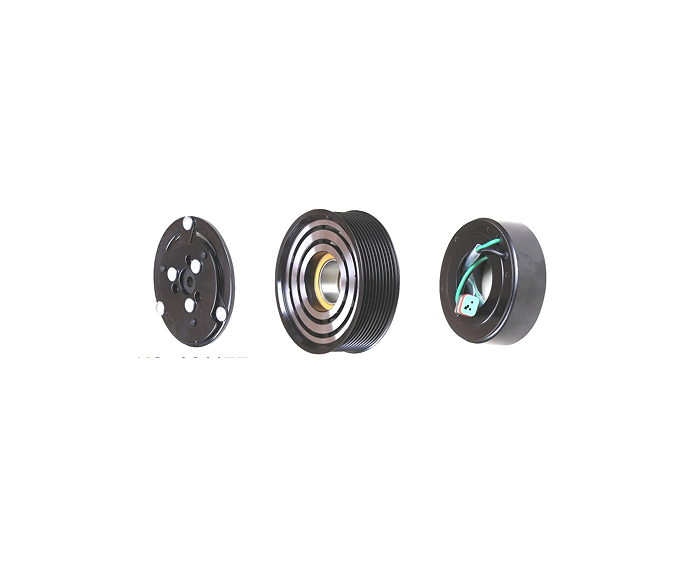
Why Bus Duty Changes the Purchasing Question
A passenger car may cycle its compressor intermittently during a short journey. A city bus, coach, airport shuttle, or school bus can operate climate control through long routes, frequent stops, hot loading zones, and extended idling. Those conditions affect how a buyer defines the sample and what evidence should be requested from a bus AC compressor clutch manufacturer.
| Bus operating condition | Purchasing concern | Evidence to request |
|---|---|---|
| Long daily operating hours | Repeated engagement and continuous pulley rotation | Approved clutch configuration, bearing and coil checks, defined functional test |
| Frequent stops and idle operation | Heat accumulation and repeated cycling | Duty description, sample plan, test conditions and installation feedback |
| High ambient temperature | Thermal load on coil, bearing, friction face and belt system | Reference-specific thermal or validation evidence where required |
| Road vibration and body movement | Mounting, alignment, fastener and connector stability | Compressor interface, mounting checks, assembly inspection and traceability |
| Fleet maintenance windows | Wrong parts create vehicle downtime and repeat labour | Clear SKU identity, packaging labels, fitment record and replenishment process |
| Multiple bus variants | Similar vehicles may use different compressors | Vehicle-to-compressor matrix, OE data, photos and model-specific approval |
These conditions do not justify inventing a universal service-life figure. They define the questions that a professional supplier should answer. A manufacturer can discuss the intended application, but a buyer should request evidence tied to the exact clutch, compressor, sample revision, and test method.
Confirm the Bus Compressor Before Comparing Manufacturers
The compressor is the primary mechanical reference for a conventional belt-driven clutch. A bus make or body model can contain multiple compressor suppliers, engine options, production years, climate packages, or regional configurations. Start the RFQ with the compressor label and existing clutch rather than relying on the bus badge alone.
Record the compressor identity
Capture the compressor manufacturer, model, suffix, nameplate, mounting pattern, shaft arrangement, pulley side, and any visible casting or service marks. State whether the compressor is original, aftermarket, or remanufactured if that information is known. A replacement compressor can make an original bus OE number less useful for selecting the clutch currently installed.
Record the old clutch identity
Photograph the pulley face, rear mounting side, coil, connector, hub, bearing marking, and any label. Note whether the clutch is complete or whether the quotation concerns a pulley, bearing, coil, hub, plate, or hardware set. A complete clutch assembly and a pulley-and-bearing set are different commercial scopes and should not share one vague product description.
Use the OE number as supporting evidence
An OE or service number can connect the bus application to catalogue history and superseded references. It does not automatically define the installed compressor or every clutch dimension. Keep the number in the record, then compare it with the compressor model and measured interfaces. The AC compressor clutch OE-number guide provides broader reference-matching context.
Build a Bus Clutch Fitment Specification
A manufacturer should be able to review a bus clutch request against a structured specification. The specification does not need to expose proprietary manufacturing details, but it must identify the characteristics that control fitment and repeat supply.
| Specification area | Buyer should provide or confirm | Why it matters on a bus |
|---|---|---|
| Application | Bus type, make, model, year, engine, market and duty profile | Separates variants and defines the operating context |
| Compressor | Manufacturer, model, suffix, label photo and mounting context | Controls mechanical family and shaft interface |
| OE reference | Number, source, supersession and confidence status | Supports catalogue cross-reference without hiding uncertainty |
| Pulley | Outside diameter, width, groove count/profile, offset and alignment | Controls belt engagement and pulley position |
| Bearing | Code where legible, bore, outside diameter, width and sealing | Supports stable pulley rotation during long operation |
| Coil and connector | Voltage, connector keying, lead exit and electrical check | Prevents electrical mismatch and installation changes |
| Hub and shaft | Bore, spline or key, thickness, locating and retaining features | Transfers torque to the compressor shaft |
| Air gap and alignment | Model-specific measurement points and approved setting | Supports reliable engagement without unwanted drag |
| Supply control | Buyer SKU, supplier reference, sample revision, packaging and change rules | Protects repeat orders and fleet inventory accuracy |
If a field is unknown, mark it as pending rather than inserting a generic number. A controlled unknown tells the manufacturer what must be measured or sampled. A guessed tolerance can create a false fitment promise and an expensive bus return.
Evaluate the Manufacturer's Production Capability
A genuine manufacturer should connect the approved bus clutch reference to defined production activities. The buyer does not need a tour of every machine to make a decision; it needs to understand how the requested product moves from material and components through machining, coil work, assembly, inspection, and packing.
Material and component control
Ask which component specifications are controlled for the pulley, bearing, coil, hub, friction interface, fasteners, connector, and protective finish. If a proprietary material grade cannot be disclosed, request a controlled description and the inspection or acceptance basis. Do not infer a material from colour, weight, or a marketing phrase such as "premium steel."
Machining and pulley control
The factory should identify which pulley dimensions are critical for the requested bus compressor. Ask how groove profile, diameter, bearing seat, offset, and runout or alignment are checked where applicable. A dynamic-balance statement is useful only when it is tied to the exact product, method, acceptance value, and record.
Coil and electrical control
Confirm the rated voltage, connector, wire exit, insulation system, and electrical inspection method for the selected reference. Voltage alone does not prove thermal endurance or engagement performance. Ask whether the coil check is performed at a defined temperature and how nonconforming coils are identified and isolated.
Assembly and traceability
Ask how the correct pulley, bearing, coil, hub, and hardware are kept together during assembly. A bus program benefits from lot identity, sample revision, inspection status, and packaging labels that can be traced back to the same product definition. This is more useful than a generic factory photograph without a link to the quoted SKU.
View AC Compressor Clutch Product Range
Separate Sample Approval, Batch Inspection, and Validation
These three activities answer different questions. Sample approval asks whether the proposed configuration fits the defined bus compressor and buyer requirement. Batch inspection asks whether production continues to match the approved configuration. Validation asks whether the defined configuration meets a performance or environmental requirement under an agreed test method.
| Control gate | Question answered | Typical record |
|---|---|---|
| Sample approval | Is this the correct clutch configuration for the intended compressor? | Sample revision, measurements, photographs, installation result and open issues |
| Batch inspection | Does this shipment match the approved product definition? | Lot identity, dimensions, electrical checks, assembly, appearance and packaging |
| Validation | Does the defined product meet a specified duty or environmental condition? | Method, conditions, sample quantity, product revision and acceptance criteria |
Do not use an earlier test report as proof that a later bus clutch has the same bearing, connector, pulley, coil, or revision. Likewise, a dimensional inspection does not establish endurance life. The AC compressor clutch inspection guide explains how identity, dimensional, electrical, mechanical, assembly, appearance, packaging, and traceability checks should be separated.
Review Bus-Specific Operating Evidence Without Overclaiming
Bus buyers often ask for durability, heat resistance, noise, engagement stability, or long service life. Those are reasonable questions, but the answer should be model-specific. A supplier-published statement is not automatically an independent test result, and a test on one clutch cannot be transferred to every bus reference.
Ask the manufacturer to identify the exact product reference, sample revision, test method, test conditions, sample quantity, and acceptance criteria. If the buyer needs a route trial, define the bus, climate, daily hours, idle time, compressor, installation condition, observation period, and failure criteria. Record the result as an application evaluation, not a universal guarantee.
For a fleet program, useful original evidence may include an approved sample photograph, measured pulley and bearing data, coil electrical records, assembly inspection, packaging record, installation feedback, and any agreed functional or endurance test. If those records are not yet available, state that they are required before approval rather than filling the page with unsupported numbers.
Compare Bus Clutch Manufacturers by Evidence
Supplier comparison is clearer when each factory receives the same technical request. Catalogue size and low price do not show whether the manufacturer can protect the bus application across repeated orders.
| Manufacturer capability | Buyer question | Evidence to request |
|---|---|---|
| Bus application coverage | Which bus references are actually controlled? | Product references, compressor data, application boundaries and sample records |
| Engineering matching | Can the factory work from OE number, compressor model, drawing or sample? | Written matching response with confirmed and open fields |
| Production control | How are pulley, bearing, coil and hub components identified? | Process flow, work instruction summary, inspection plan and lot identity |
| Quality evidence | What was actually checked on the quoted reference? | Dimensional, electrical, functional, packaging or validation records |
| Commercial readiness | Can the supplier support samples, MOQ, mixed models and repeat orders? | Reference-specific quotation, staged lead time, packaging and change rules |
| After-sales responsibility | Who handles fitment questions or nonconformance? | Named contact, claim process, traceability and corrective-action route |
KASEN's public website provides a visible company identity, an automotive AC clutch product family, and a bus category. That is a useful starting point for an RFQ, not a substitute for confirming the exact bus compressor and commercial terms. Use the About Kasen page to understand the company context, then request product-level evidence.
Plan MOQ, Lead Time, Packaging, and Replenishment
Bus programs often contain several vehicle or compressor references. A manufacturer should quote MOQ and lead time against the actual list rather than transferring conditions from one model to another. A standard product, a mixed-model order, a private-label carton, and a modified clutch can require different preparation.
MOQ
Ask whether MOQ applies per SKU, per packaging design, or to a mixed order. If a new label or printed carton is required, confirm whether the packaging has its own minimum. Do not publish a universal MOQ without a current quotation for the requested bus references.
Lead time
Request staged timing for technical review, sample preparation, approval, production, inspection, packaging, and dispatch handoff. The quotation should state assumptions such as drawing approval, deposit, component availability, or carton artwork. A single date without assumptions is difficult to manage when a fleet has planned maintenance windows.
Packaging and labels
Bus clutches can be damaged by pulley impact, connector bending, moisture, or movement inside a carton. Confirm individual protection, quantity per carton, buyer SKU, barcode, lot mark, and pallet or export requirements. Packaging is part of the product-control system because it helps the warehouse identify the correct reference.
Replenishment
Freeze the approved sample, buyer SKU, packaging revision, inspection fields, and change-notification rule. Each repeat purchase order should carry the same identity. If the supplier changes a bearing, pulley, coil, connector, hub, finish, or packaging component, request a technical comparison and decide whether a new sample is required.
Prepare a Bus AC Clutch RFQ
A complete enquiry allows a bus AC compressor clutch manufacturer to answer with a technical proposal rather than a generic catalogue link. Send one line per requested reference and attach the evidence available.
- Bus make, model, year, engine, market, body type, route or duty profile.
- Compressor manufacturer, model, suffix, nameplate photograph and repair history.
- OE or service number, source, supersession information and confidence status.
- Old clutch photographs from front, rear, pulley, connector, bearing and hub views.
- Pulley outside diameter, width, groove count/profile, offset and alignment information.
- Bearing code or measured bore, outside diameter, width and sealing information.
- Coil voltage, connector, lead exit, electrical requirement and control arrangement.
- Hub or shaft interface, mounting, air-gap method, sample or drawing.
- Required scope: complete clutch, pulley, bearing, coil, hub, or complete compressor.
- Quantity, expected repeat demand, destination, packaging, buyer SKU and target timing.
- Requested sample, inspection, validation, traceability and change-control evidence.
State whether you need a standard replacement, an approved equivalent, private-label packaging, or technical customization. Ask the supplier to mark each field as confirmed, proposed, or requiring sample approval. This status language reduces the risk of an unverified candidate becoming a bus fleet catalogue claim.
For a project-specific request, use the KASEN message page or Contact Us page and include the compressor label, old clutch photographs, measurements, quantity, target market, and packaging requirements.
Common Mistakes When Selecting a Bus Clutch Factory
Choosing by bus badge only
A bus model can contain multiple compressor families and belt configurations. Confirm the actual compressor and clutch.
Treating 24 V as proof of heavy-duty performance
Voltage is an electrical compatibility field. It does not prove torque, thermal endurance, bearing life, vibration resistance, or correct fitment.
Copying a worn clutch without checking the compressor
The old clutch may be aftermarket, modified, or incorrectly installed. Use it as evidence, then verify the compressor interface and application.
Approving a product photograph instead of a sample
Photos cannot establish hidden dimensions, resistance, runout, air gap, or shaft engagement. Use a sample or controlled measurement sheet for critical fields.
Transferring a test result between models
A result for one bus clutch revision does not automatically apply to another pulley, bearing, coil, or connector configuration.
Leaving commercial terms undefined
MOQ, lead time, mixed-model rules, packaging and change control should be quoted for the actual reference list. Avoid planning a fleet order around a generic website statement.
Frequently Asked Questions
What does a bus AC compressor clutch manufacturer provide?
A manufacturer may provide complete electromagnetic clutch assemblies or individual pulleys, bearings, coils, hubs, plates, and related compressor components. The supply scope depends on the compressor and the buyer's repair or distribution program.
Can one bus clutch fit every bus with the same voltage?
No. The same voltage can appear with different pulley dimensions, grooves, bearings, connectors, hubs, shafts, mounting and compressor families. Voltage is only one field in the fitment record.
How should a bus fleet approve a replacement clutch?
Confirm the compressor and old clutch, approve the dimensions and electrical data, inspect the sample, install it on the correct compressor, run the defined trial if required, record results, and freeze the accepted sample and packaging revision before bulk replenishment.
What information should I send to a bus clutch manufacturer?
Send the bus make, model, year, engine, compressor model, OE number, old-part photos, pulley and bearing data, voltage, connector, hub or shaft details, quantity, destination, packaging, and any requested testing or inspection evidence.
Does a bus application require a special clutch design?
Not automatically. Some buses use standard belt-driven compressor clutch configurations, while others use different compressor or control architectures. Confirm the system type and duty profile before requesting a special design.
Should I buy a complete clutch or only a pulley, bearing, coil, or hub?
That depends on the diagnosis and the condition of the compressor. A complete clutch can simplify matching when several components are damaged; a component-only repair may be suitable when the remaining assembly is serviceable.
How can I compare bus clutch manufacturers fairly?
Send the same reference package to each candidate and compare fitment response, sample process, inspection evidence, traceability, packaging, MOQ, lead time, change control and after-sales responsibility. Do not compare unit prices before the product scope is equivalent.
Can KASEN support bus clutch sourcing?
KASEN's public website shows a bus product category and a broader automotive AC clutch range. Buyers should send the compressor model, OE number, photos, sample or drawing, quantity and packaging requirement so the exact feasibility and commercial conditions can be confirmed.
What should I ask about a bus clutch test report?
Ask for the exact product reference and revision, test method, conditions, sample quantity, acceptance criteria, date and issuing organization. A general statement or report for another clutch should not be used as model-specific proof.
How do I request a quotation from a bus AC compressor clutch manufacturer?
Submit the complete RFQ through the KASEN Contact Us page, including compressor identity, bus application, old clutch photos, measurements, quantity, target market and packaging. Request a response that separates confirmed fitment from open technical questions.
Conclusion
A reliable bus AC compressor clutch manufacturer should make four things visible: the exact compressor and clutch fitment, the factory process that controls the approved configuration, the evidence used for sample and batch approval, and the commercial rules that protect repeat supply. Bus duty makes these controls more important because long operating hours, idle cycles, heat, vibration and maintenance downtime can magnify a small identification error.
Start with the compressor label and existing clutch, then add the bus OE number, vehicle context, pulley, bearing, coil, connector, hub, shaft and air-gap information. Approve a defined sample, separate inspection from validation, confirm MOQ and staged lead time for the actual references, and freeze packaging and change-control records. Review the KASEN bus product category and send your technical package through the channel below for a fitment review, sample discussion or quotation.