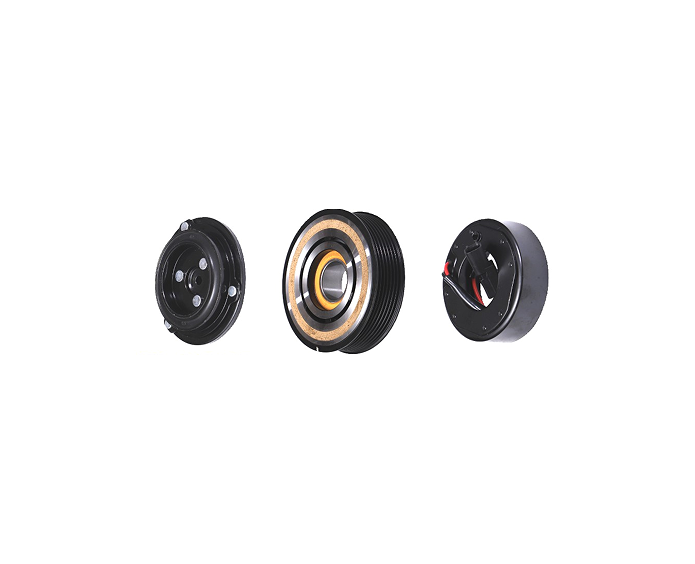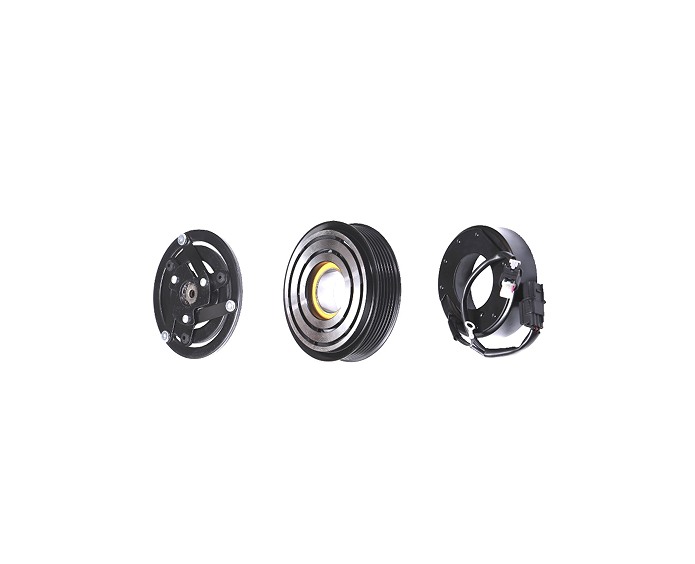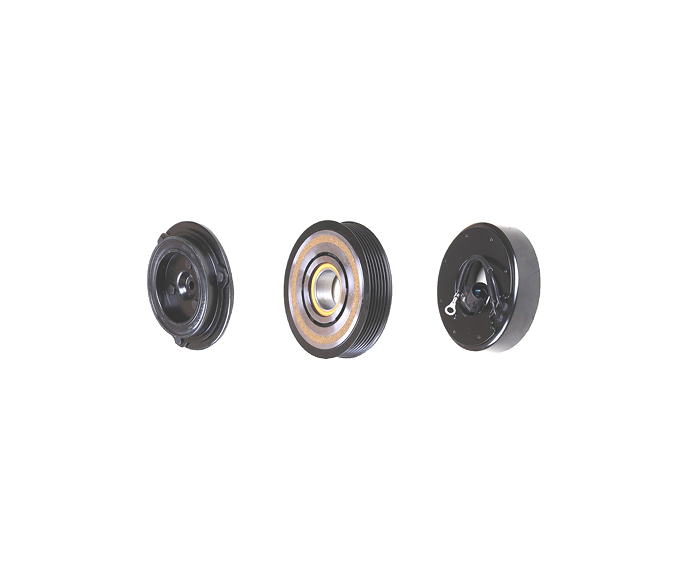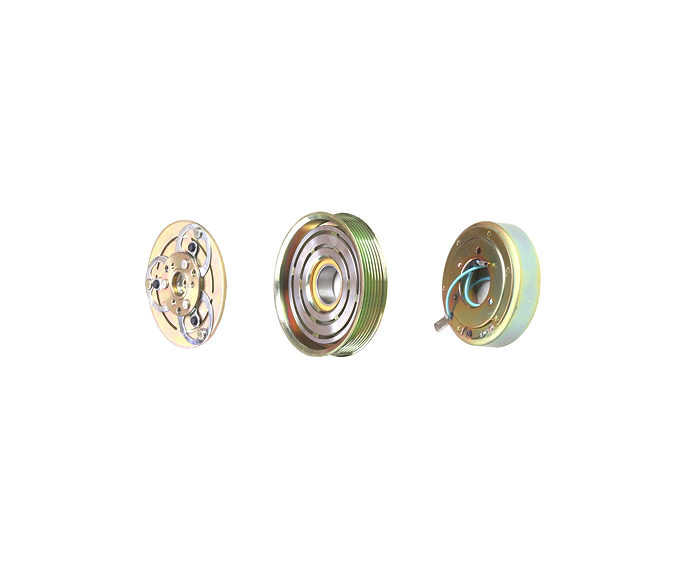

What an EV Air Conditioning Compressor Manufacturer Must Prove
An EV air conditioning compressor manufacturer must prove more than the ability to list electric compressors for popular vehicle names. For an importer or distributor, the manufacturer has to connect four decisions: whether the product belongs to the correct vehicle and electrical architecture, whether the factory controls the parts and processes that affect fitment and safety, whether the buyer can approve a sample with traceable evidence, and whether the same configuration can be repeated after the first shipment. If the supplier cannot identify those responsibilities, a product catalogue is not enough to support a bulk order.
This is a Commercial Investigation and Supplier Comparison query with an RFQ stage. The buyer is deciding whether an EV air conditioning compressor manufacturer can support an EV or hybrid compressor range, not simply asking what an electric compressor does. A useful manufacturer review therefore examines the entity, production scope, engineering records, high-voltage inspection, refrigerant interfaces, OEM or drawing support, sample control, MOQ assumptions, delivery stages, export packaging, and after-sales ownership.
Who Should Use This Manufacturer Evaluation
This process is intended for EV and hybrid aftermarket importers, regional distributors, compressor wholesalers, repair networks, fleet maintenance programs, private-label brands, and OEM project teams that need an identifiable manufacturing partner. It is especially useful when the buyer is replacing a trading source, launching several vehicle references, planning a branded carton, or supplying a market where high-voltage service capability is limited.
The process is not a substitute for vehicle-specific high-voltage training or service instructions. A workshop must isolate the vehicle, follow the manufacturer's discharge and verification procedure, use appropriate protective equipment, and complete the required commissioning and refrigerant work. The manufacturer's role is to provide accurate product information and controlled production evidence; the workshop or vehicle engineer remains responsible for safe installation and vehicle-side validation.
Use this evaluation when the word manufacturer is important to the buying decision. A trading company may offer a broad range, a local distributor may hold stock, and a marketplace listing may show a low price. None of those facts alone identifies who owns the design, who controls component changes, who performs inspection, or who will answer if the approved compressor changes between shipments.
Separate a Manufacturer From a Catalogue Intermediary
The first audit question is not "How many electric compressor models do you list?" It is "Which activities does your company own for this reference?" A manufacturer may own casting or housing preparation, machining, motor or electrical assembly, final inspection, packaging, and change control. A trading company may coordinate those activities across several factories. An intermediary may only resell a product photograph and a part number.
| Responsibility | Evidence to request | Why it affects approval |
|---|---|---|
| Company identity | Legal name, address, responsible contact, business scope, and commercial documents | Creates a clear party for quotation, claims, and technical follow-up |
| Product ownership | Part number list, drawing owner, revision control, and source of application data | Shows who controls the proposed compressor configuration |
| Production responsibility | Process description, factory or approved production partner, and inspection owner | Separates manufacturing capability from catalogue access |
| Electrical responsibility | Connector, voltage, insulation, dielectric, and control evidence for the reference | Prevents an unsafe substitution based on vehicle name alone |
| Change control | Change-notification method, sample re-approval rule, and lot identification | Protects repeat orders from unannounced component changes |
| After-sales ownership | Complaint route, evidence request, replacement decision, and response contact | Turns a field problem into a traceable process instead of a dispute |
A supplier does not need to disclose every proprietary process to demonstrate responsibility. It should be able to explain which documents exist, who approves a change, which tests apply to the requested reference, and how a buyer can trace the shipped unit. If the answer is always "the factory says so" without a named document owner or part-number record, keep the supplier in review.
Define the EV Compressor Program Before the Factory Audit
An EV air conditioning compressor manufacturer cannot quote a meaningful program from the word EV alone. Before comparing suppliers, create a program brief that distinguishes the vehicle application, compressor condition, electrical architecture, refrigerant circuit, sales market, and order plan. This prevents a factory from presenting a generic electric compressor as a universal replacement.
| Program field | Buyer should define | Open item if missing |
|---|---|---|
| Vehicle application | Make, model, year, powertrain, market, and known OE number | Do not approve by vehicle badge alone |
| Compressor reference | Existing model, label, photos, drawing, or approved cross-reference | Request old-unit evidence or a sample |
| Electrical architecture | Nominal voltage, connector, control method, and relevant vehicle data | Supplier engineering confirmation required |
| Refrigerant circuit | Refrigerant, oil instruction, port arrangement, and service requirements | Workshop or vehicle-engineer confirmation required |
| Commercial status | New replacement, remanufactured, used, or component-level supply | Quote must state condition and included parts |
| Order profile | Sample quantity, opening order, annual forecast, destination, and priority SKUs | MOQ and lead time remain provisional |
| Brand and packaging | Neutral carton, private label, barcode, language, pallet, and document rules | Packaging approval remains open |
Ask the factory to return a separate answer for each reference: proposed part number, matching basis, configuration, evidence available, unresolved questions, sample plan, and commercial assumptions. "Exact match," "equivalent replacement," and "possible alternative" should be used as different status values. They should never be collapsed into one phrase such as OEM replacement without supporting records.
Review the Manufacturer's EV Product Family
A credible EV air conditioning compressor manufacturer should be able to describe its product family by application and configuration, not only by a collection of photographs. Review how the factory separates passenger EV, hybrid, commercial EV, and special-vehicle references. Ask whether the product is a new unit, remanufactured unit, or used part, and whether the same brand or part number can be supplied in different conditions.
Reference coverage and application boundaries
Check whether the product range is organized by OE number, compressor model, vehicle application, or a combination of those fields. An application list can help a buyer build a shortlist, but it is not proof that every model year or regional variant is interchangeable. The manufacturer should identify what evidence supports each application and what information is still required from the buyer.
Mechanical platform differences
Compare housing, mounting, port position, shaft or rotor arrangement, connector orientation, and available service parts. Two electric compressors can look similar while using different bracket locations, line angles, or control interfaces. Ask the manufacturer to provide an approved drawing or marked photograph for high-volume references, rather than relying on a general product image.
Electrical and control differences
High voltage is an electrical class, not a universal specification. Request the nominal voltage, operating range, connector and pin definition, motor or inverter arrangement where applicable, protection assumptions, insulation requirements, and control or communication notes for the exact part. The manufacturer should mark unknown fields as pending confirmation instead of filling them with a typical market value.
Condition and replacement status
A new replacement, remanufactured compressor, and used compressor require different evidence and commercial conditions. For a remanufactured unit, request the replaced-component list, inspection steps, final test, and traceability. For a used unit, ask for known history, storage condition, leak status, and return terms. A manufacturer with several options should keep those conditions separate in its quote and product record.
Audit the Factory Process That Protects EV Compressor Quality
Factory capability is demonstrated through controlled steps that protect fitment, insulation, sealing, rotation, and repeatability. A capable EV air conditioning compressor manufacturer should map the actual process for the requested reference instead of offering a generic list of manufacturing words.
Housing preparation and machining
Ask how the housing is sourced or produced, which mounting and sealing surfaces are machined, and how the factory controls casting defects, burrs, surface damage, corrosion protection, and dimensional variation. A product photograph may show a metal housing, but it cannot establish the alloy grade, porosity control, or dimensional capability. Request a controlled material description and the inspection points used for the exact reference.
Motor, winding, and insulation assembly
Ask which winding materials and insulation systems are specified, how terminals and wire exits are protected, and which checks are performed before the unit is released. The objective is not to force disclosure of proprietary recipes. The objective is to verify that the manufacturer can connect the component description to a drawing, a test method, and a lot or sample record.
Rotating parts, bearings, and seals
Confirm bearing references or controlled dimensional ranges, seal arrangement, lubrication information, shaft or rotor balance criteria where applicable, and abnormal-noise or rotation checks. An electric compressor should not automatically use the same approval checklist as a belt-driven clutch assembly. The checklist must reflect the motor, rotor, housing, sealing, and control design of the requested part.
Ports, connectors, and contamination control
Ask how refrigerant ports, sealing surfaces, and high-voltage connectors are protected during assembly, storage, and transport. Request the packaging or protection standard used before the unit leaves the factory. A clean cap is visible evidence of handling, but it is not proof of a leak test, oil cleanliness, insulation resistance, or dielectric withstand.
Final assembly and identification
The final assembly record should identify the part number, revision, lot or batch, and the inspection status. Labels should be consistent with the carton and quotation. If the buyer uses private-label packaging, the original reference and traceability route should remain available even when the external branding changes. A private-label carton must not erase the technical identity of the compressor.
The most useful audit request is a process-to-evidence table. For each operation, ask what can change the fitment or safety result, how it is inspected, which document records the result, and what happens if the result is outside the approved range. This makes factory experience visible without asking the supplier to reveal confidential customer information.
Verify High-Voltage and Functional Evidence Correctly
High-voltage claims require a document and a test method, not only a marketing adjective. Ask the manufacturer to identify which checks apply to the exact reference and whether the record is created for every unit, a sample, or a production lot. The buyer should record the test method, acceptance range, sample or lot identity, date, and responsible operator or department when those fields are available.
| Evidence area | Buyer question | Do not infer |
|---|---|---|
| Electrical rating | What nominal voltage and permitted range belong to this part number? | Do not infer voltage from the vehicle badge or battery size |
| Connector and control | What connector, pin definition, and control assumptions are documented? | Do not call a connector universal from a photograph |
| Insulation and dielectric | Which high-voltage test method and acceptance range were used? | Do not treat a high-voltage label as a safety test |
| Sealing and leak control | Which sealing or leak check applies to the refrigerant circuit? | Do not equate a protective cap with leak performance |
| Functional operation | What rotation, current, noise, temperature, or control check is applicable? | Do not publish a performance percentage without a report |
| Traceability | Can the result be tied to the part, sample, or production lot? | Do not reuse an unrelated test record for another SKU |
When a supplier cannot share a confidential customer report, request an anonymized report, blank inspection form, or sample record with customer details removed. This still shows whether the factory has defined acceptance fields. If the manufacturer advertises faster cooling, extreme-temperature performance, global warranty, or OEM-grade status, the commercial page should identify that language as a supplier claim until the relevant method, baseline, sample, and report are available.
Use Kasen's Public EV Compressor Evidence With the Correct Boundary
Kasen's public new-energy compressor category shows references associated with Mercedes-Benz, Hyundai Hybrid, Volkswagen ID.4, Tesla, Model 3, Porsche, Audi, and other applications. This establishes a visible EV and hybrid product family and gives buyers a route to organize an enquiry. It does not establish one universal voltage, control protocol, MOQ, lead time, certification, or test result for every listed product.
The A0008301901 new-energy compressor page identifies Mercedes-Benz C-Class W205 and S-Class W222 applications and describes compatibility with factory piping, mounting brackets, and electronic controls. The product page also discusses new, remanufactured, and used options. For an audit, ask which condition is being quoted, which tests apply, and what warranty or return terms are attached to the specific part number.
The HANON HES33 electric compressor page identifies Hyundai Hybrid references including 97701CY000, 97701-CY000, CA600HCEAA02, and F502LFFAA02. It describes a sand-cast aluminum alloy housing, copper and steel coil windings, precision-machined internals, and direct-fit positioning for the listed references. The page also contains claims about faster cooling and high-temperature performance. Those statements should remain attributed to the page until the factory provides the test method and report for the buyer's requested SKU.
The new-energy vehicle air-conditioning components category can be used to connect compressor sourcing with the wider EV HVAC component program. This is useful for a distributor building a range, but each compressor still needs its own reference, electrical, mechanical, refrigerant, inspection, and commercial review.
Control OEM and ODM Development Without Losing the Reference
OEM or ODM support is valuable only when it produces a controlled product record. Before sending a drawing or sample, ask the manufacturer who owns the revision, how deviations are approved, which components can be substituted, and how the buyer will be notified of a change. A private-label logo or carton does not by itself create an OEM specification.
Start with an engineering input pack
Provide the OE or OEM number, old-unit photographs, vehicle and year, mounting and port measurements, connector information, refrigerant and oil requirements, target quantities, destination market, package brief, and any required inspection fields. If the buyer has a drawing, mark critical dimensions and identify which values are reference-only versus mandatory.
Approve the sample against a written record
Record the supplier part number, drawing revision, package contents, dimensions, ports, connector, label, materials stated, test evidence, and open questions. A sample is not approved merely because it looks like the old compressor. It is approved when the buyer and manufacturer agree which configuration, evidence, and commercial assumptions will be repeated.
Freeze the change process
Ask how the manufacturer handles changes to the housing, winding, bearing, seal, connector, controller, port, protective cap, carton, or label. A change may be acceptable, but it should be identified, documented, and re-approved when it can affect fitment, electrical integration, service instructions, warehouse identity, or claims.
Move From Sample to Pilot and Repeat Production
A manufacturer audit should continue after the sample. The buyer needs to know how the factory moves from an approved sample to a pilot batch and then to repeat production. This is where capacity, component availability, inspection timing, packaging, and change control become commercial risks.
| Stage | Buyer approval | Manufacturer response |
|---|---|---|
| Technical review | Confirm reference, application, electrical fields, ports, mounting, and service inputs | Return matching basis, drawings, open questions, and evidence status |
| Sample | Inspect configuration, dimensions, labels, package contents, and applicable tests | Provide sample identity, documents, and correction response |
| Pilot batch | Check batch consistency and packaging against the approved sample | Provide lot identification, inspection record, and shipment assumptions |
| First bulk order | Approve MOQ, lead time, carton, label, documents, and claim route | Confirm production, inspection, packing, and shipping handoff stages |
| Repeat order | Compare new shipment with the approved master reference | Notify changes and retain traceability to the approved configuration |
Do not ask for one universal MOQ or lead time for an EV compressor family. Quote those fields by reference, condition, sample status, quantity, destination, and packaging. A new-development reference may require a different timeline from an existing production item. A private-label carton may add artwork and approval time. The buyer should keep those assumptions visible in the purchase record.
Packaging and Traceability Are Manufacturing Responsibilities
EV compressors include machined surfaces, ports, connectors, electrical interfaces, and rotating or internal components that can be damaged by impact, moisture, contamination, or incorrect warehouse handling. Packaging is therefore part of product control, not only a branding decision.
Request the packaging method, internal support, port and connector protection, carton quantity, label position, barcode format, lot or batch identification, pallet rules, and destination requirements. For a private-label program, approve the artwork and carton structure against the technical reference. Keep the original part number or traceability code available even when the outer carton carries the buyer's brand.
Ask the manufacturer how a warehouse worker can identify the correct compressor without opening every carton. The label should connect SKU, application, condition, quantity, batch, and customer reference in a consistent way. A clear label reduces picking errors, but it does not replace fitment approval or high-voltage inspection.
Score an EV Compressor Manufacturer Before Approval
Use a scorecard that separates technical approval from commercial attractiveness. A low price, short stated lead time, or broad catalogue should not compensate for an open high-voltage or fitment question.
| Scorecard field | Pass condition | Status to record |
|---|---|---|
| Manufacturer identity | Company, address, product responsibility, and contact route are clear | Verified, pending, or not established |
| EV product scope | Product family and application boundaries are documented | Category evidence and reference list |
| Reference fitment | OE number, vehicle data, drawing, ports, mounting, and connector agree | Complete, open, or rejected |
| Electrical evidence | Voltage, connector, control, insulation, and applicable tests are identified | Documented or pending confirmation |
| Manufacturing control | Critical processes, inspection points, and change owner are defined | Factory record or supplier explanation |
| Sample approval | Sample, package, documents, and open questions are signed off | Approved, conditional, or not approved |
| MOQ and lead time | Values are quoted for the actual reference and program assumptions | Sales confirmation required |
| Packaging and traceability | Carton, protection, labels, batch, and claim route are controlled | Complete, open, or rejected |
If a high-risk field is open, keep the supplier in technical review. The most important unresolved fields are usually electrical architecture, connector and control, refrigerant and oil, mounting and ports, insulation or dielectric evidence, and the identity of the party responsible for a change. These issues should be closed before a purchase order turns a preliminary listing into a field obligation.
Prepare an RFQ That Tests Manufacturer Capability
An RFQ should test whether an EV air conditioning compressor manufacturer can answer a technical and manufacturing question, not merely return a price. Send one row per compressor reference and ask the manufacturer to respond in the same structure.
- List OE or OEM numbers, compressor labels, vehicle make, model, year, powertrain, and market.
- Attach old-unit photographs from the label, mounting, ports, connector, and overall orientation.
- State whether the request is for a new, remanufactured, used, or component-level product.
- Ask for electrical rating, connector, control, refrigerant, oil, mounting, and port information for each reference.
- Ask who owns the drawing, production, inspection, test records, change control, and after-sales response.
- Request sample availability, inspection evidence, MOQ, mixed-model rule, lead time stages, packaging, labels, and export documents.
- Ask the supplier to separate confirmed facts, supplier claims, pending items, and quotation assumptions.
Kasen's message page provides a form for name, company, email, and phone or WhatsApp details and states that buyers can request a quote. Send the reference sheet and evidence request with the first message. The contact page lists the Guangzhou address, telephone number, WhatsApp route, and company email addresses for maintaining a responsible communication channel.
Frequently Asked Questions About EV Air Conditioning Compressor Manufacturers
What does an EV air conditioning compressor manufacturer actually need to prove?
The EV air conditioning compressor manufacturer should prove who owns the product reference, which production and inspection activities it controls, how the compressor matches the vehicle and electrical architecture, what evidence supports the sample, and how the approved configuration will be repeated. A catalogue or application list is a starting point, not proof of all five areas.
Can a supplier be called a manufacturer if it uses an approved production partner?
It can be a commercial manufacturing partner if it clearly identifies the production responsibility, drawing owner, inspection owner, and change-control route. The buyer should record the actual factory or approved partner when the information affects traceability, audits, claims, or market compliance.
Is a vehicle model enough to select an EV compressor?
No. The buyer should also verify the OE or OEM number, compressor label, electrical rating, connector and control interface, mounting pattern, refrigerant ports, oil instruction, and model-year or powertrain variation. A model name can narrow the search but should not close the approval.
What factory evidence is most useful before a sample order?
The most useful first package contains a controlled drawing or marked photograph, part-number and application basis, electrical specification, applicable insulation or dielectric method, refrigerant and oil note, sample availability, and a clear statement of what remains pending. A blank inspection form or anonymized report can also show whether the factory has defined acceptance fields.
What should an OEM or private-label buyer freeze after sample approval?
Freeze the part number, configuration, drawing revision, package contents, label, carton, inspection fields, lot identification, and change-notification rule. A change to the housing, winding, bearing, seal, connector, controller, port, protective cap, or carton should be communicated when it can affect installation, electrical integration, warehouse identity, or customer claims.
Should MOQ and lead time be the same for every EV compressor?
No. MOQ and lead time can change with reference, condition, component availability, sample status, mixed-model ordering, private-label packaging, development work, destination, and quantity. Request values for the actual SKU list and write down the assumptions behind each date.
How should supplier claims about cooling speed or temperature be used?
Keep them clearly attributed to the supplier product page until the manufacturer provides the test method, baseline, sample or lot, conditions, and report. Do not convert a percentage, temperature statement, or "OEM-grade" phrase into a universal performance promise for the entire product family.
What packaging details matter for EV compressors?
Confirm support against impact, port and connector protection, moisture or contamination control, carton quantity, label and barcode position, batch identification, pallet rules, and destination requirements. Packaging should protect the technical reference and make warehouse identification possible without opening every carton.
When should a buyer reject a manufacturer before sampling?
Keep the supplier out of sampling when it cannot identify the responsible company, refuses to distinguish new from remanufactured or used supply, cannot provide a reference or matching basis, treats high voltage as a generic label, or will not explain who owns inspection and changes. A short catalogue is not a problem; an untraceable responsibility chain is.
Conclusion
Choosing an EV air conditioning compressor manufacturer is a factory-capability decision, not a catalogue-count or first-quote decision. The right partner can identify the exact compressor reference, explain the mechanical and electrical boundaries, connect materials and processes to inspection evidence, support OEM or private-label development, approve a sample, control pilot and repeat batches, quote MOQ and lead time by program, protect the unit in export packaging, and own the response when a technical question remains open.
Start with a program brief and one row per compressor reference. Provide OE or OEM data, vehicle and powertrain information, old-unit photographs, connector and port details, refrigerant and oil requirements, quantity, destination, packaging, and evidence expectations. Ask the supplier to separate confirmed facts from claims and pending items, then freeze the approved configuration before the first bulk order.
Review the available EV compressor range in the Kasen electric compressor category and the broader new-energy vehicle air-conditioning components category. For a manufacturer-specific evaluation, send the reference file and evidence checklist through the Kasen message form so product fitment, production responsibility, testing, packaging, MOQ, and repeat supply can be reviewed together.