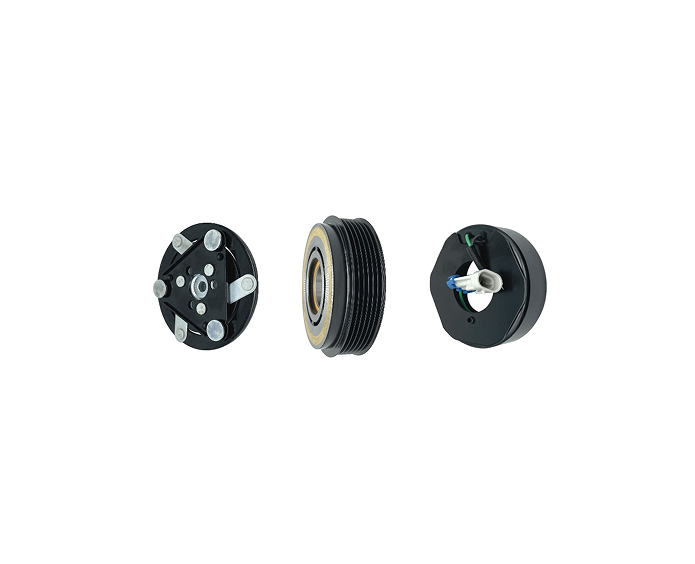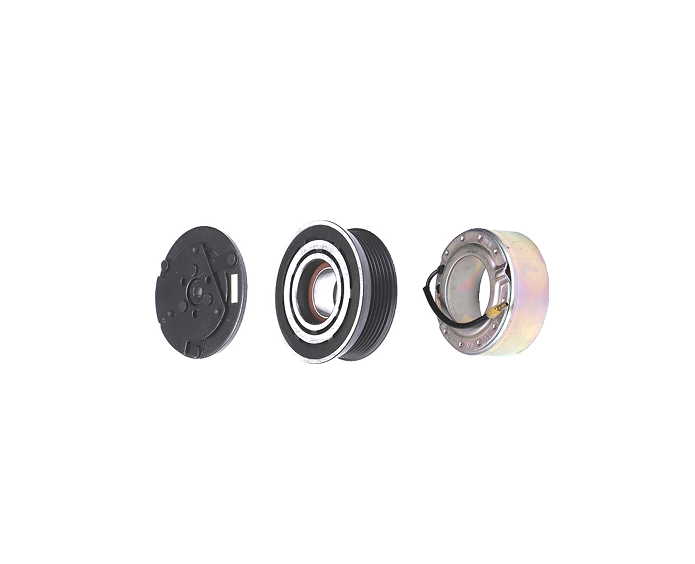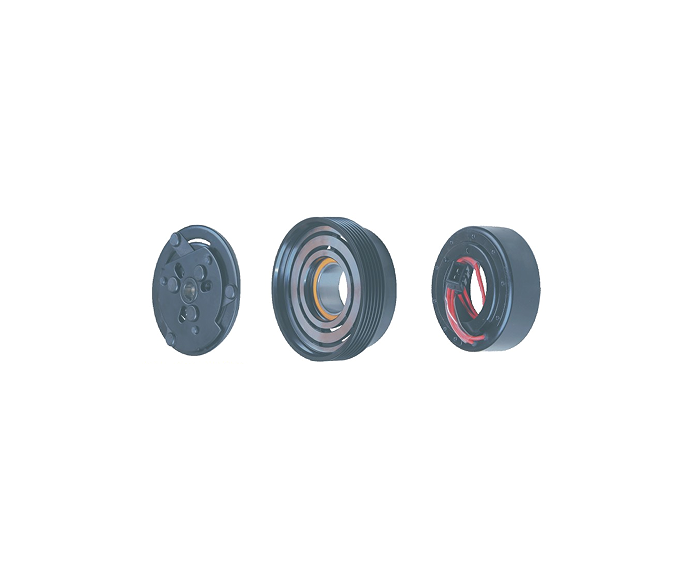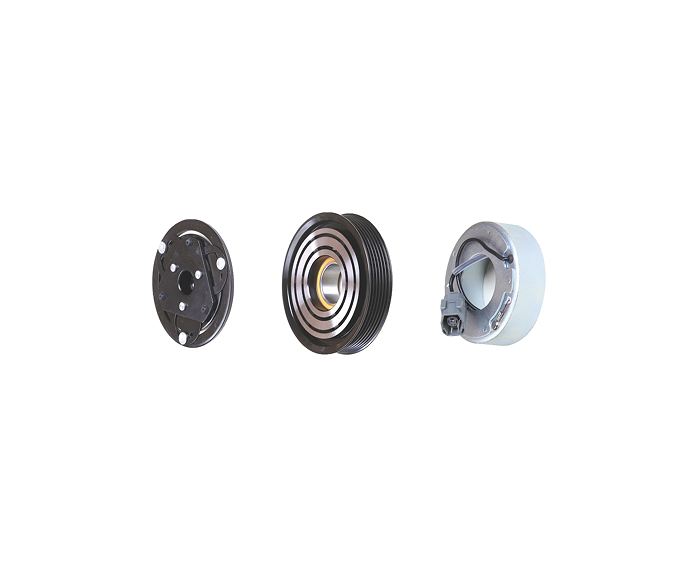

Electric Compressor Assembly: Confirm the Complete Supply Scope Before Ordering
An electric compressor assembly is not defined by the compressor housing alone. For an EV or hybrid replacement program, the buyer must confirm which mechanical, electrical, control, refrigerant, mounting, identification, and protective parts are included in the quoted unit. A product may be a sealed compressor with an integrated motor and controller, a compressor body that relies on external electronics, a remanufactured assembly with reused components, or a used unit supplied with connectors or brackets missing. Before a sample or bulk order, freeze the exact supply scope and match it to the vehicle's voltage, communication, ports, refrigerant, oil, mounting, and commissioning requirements.
This guide answers a focused question for importers, EV parts distributors, repair networks, fleet teams, remanufacturers, and private-label buyers: what should an electric compressor assembly include, and how can a buyer verify that the quoted assembly is complete and suitable for the intended vehicle program? The topic is different from a general manufacturer audit or failure-diagnosis article. It concentrates on the assembly boundary, interface record, sample contents, inspection evidence, packaging, and repeat-order configuration that purchasing and engineering teams need before approval.
Guangzhou Kasen Auto Airconditioner CO:LTD presents a Guangzhou-based manufacturing and export business for automotive air-conditioning parts, including electric compressors for EV and hybrid applications. The Kasen About Us page establishes the company identity and product scope, while the electric compressor category shows a visible family of new-energy compressor references. These pages are useful starting points, but they do not prove that every listing has the same internal design, voltage, controller, supplied accessories, test record, MOQ, or lead time.
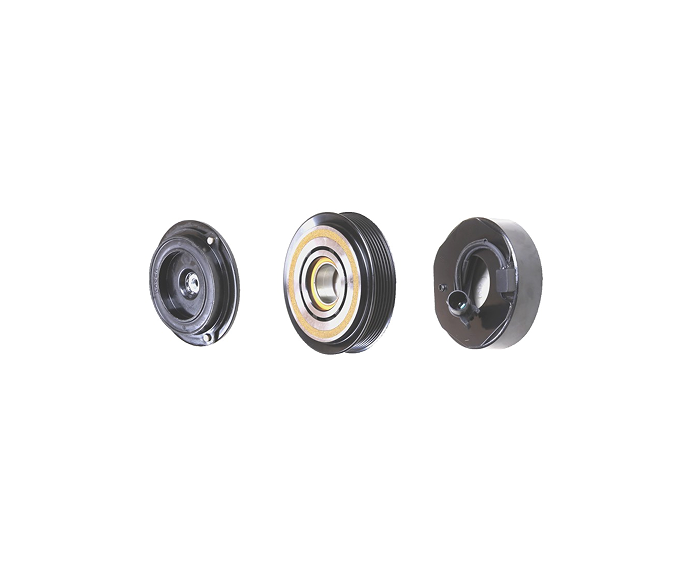
What Is an Electric Compressor Assembly?
An electric compressor assembly is an electrically driven refrigerant-compression unit used in an EV, hybrid, or another vehicle platform where compressor operation is not dependent on a conventional engine belt and electromagnetic clutch. Depending on the design, the assembly can combine a compression mechanism, electric motor, housing, bearings, seals, lubricant, refrigerant ports, high-voltage connection, low-voltage or communication connection, and integrated power or control electronics. Some designs integrate most of these functions into one sealed unit; others divide responsibility between the compressor and vehicle-side modules.
The word assembly describes a product boundary, not a universal bill of materials. A buyer should never assume that a controller, wiring harness, mounting bracket, seals, fasteners, oil charge, or service caps are included merely because a photograph shows a complete-looking compressor. The quotation, sample record, carton label, and inspection sheet should use the same included-parts list.
| Possible supply level | What may be included | What the buyer must clarify | Main purchasing risk |
|---|---|---|---|
| Compressor core or body | Mechanical compression section and housing, with limited electrical or control content | Motor, controller, connectors, oil, ports, seals, brackets, and test status | Buyer expects a ready-to-install unit but receives an incomplete component |
| Sealed electric compressor assembly | Compression mechanism, motor, housing, ports, connectors, seals, and integrated electronics where designed | Exact controller arrangement, voltage, communication, oil, supplied hardware, and commissioning | External appearance hides an electrical or control mismatch |
| Assembly with external controller | Compressor plus a separate inverter or control module, sometimes with harness or mounting parts | Controller part number, software or protocol, cable, connector, cooling, mounting, and pairing | Compressor and controller are quoted separately or are not mutually compatible |
| Replacement kit | Compressor assembly plus seals, caps, fasteners, oil instruction, bracket, or service parts | Exact kit contents, quantities, replacement-only parts, and installation responsibility | Workshop discovers missing seals or hardware after vehicle disassembly |
| Remanufactured or used assembly | Previously operated housing or components with varying repair, inspection, and accessory scope | Condition, replaced parts, cleaning, testing, history, included electronics, and warranty | Condition and assembly completeness are unclear under one product description |
Electric Compressor Assembly Components and Their Buyer-Relevant Function
Housing and mounting structure
The housing contains and aligns the mechanical and electrical sections while providing mounting points, refrigerant interfaces, and protection. Buyers should confirm mounting ears, bolt-hole positions, body clearance, bracket relationship, connector orientation, and port angles. Similar housings can use different mounts or line directions. A photograph can support identification, but a drawing or measured comparison is more reliable for a high-volume reference.
Compression mechanism
The internal mechanism compresses refrigerant. Its exact design varies by compressor family, so the buyer should avoid assuming a scroll, displacement, capacity, or efficiency value without reference-specific documentation. The commercial requirement is to identify the compressor family, operating application, refrigerant and oil requirements, and applicable functional evidence. An assembly should be selected by the vehicle and compressor record, not by a generic statement that it is an electric type.
Electric motor, rotor, and bearings
The motor provides the drive that a belt and clutch would provide in a conventional system. Motor windings, insulation, rotor, bearings, and internal supports affect electrical integration, rotation, noise, and reliability. A buyer does not need proprietary design details, but it should request a controlled description and the electrical or functional checks that apply to the exact reference. Do not transfer clutch-coil voltage or pulley-bearing criteria to an electric compressor.
Power electronics and controller
Some assemblies have integrated power or control electronics; others interact with an external controller. The quotation should state whether the inverter or controller is integrated, external and included, external and excluded, or part of the vehicle. Confirm the controller reference, high-voltage range, low-voltage supply where applicable, communication or command method, connector and pin information, protection assumptions, and any vehicle-side programming or commissioning requirement.
Refrigerant ports, seals, oil, and internal cleanliness
Port geometry, sealing method, refrigerant, and lubricant requirements must match the vehicle system. Confirm whether the assembly contains a specified oil charge, only residual assembly lubricant, or no service-ready charge. The supplier should identify the source of the oil instruction and whether additional workshop action is required. Protective caps show that ports are covered; they do not prove leak performance, oil compatibility, or internal cleanliness.
High-voltage and communication connectors
Connector shape is only one part of compatibility. Confirm connector part or reference, terminal arrangement, high-voltage rating, interlock features where applicable, communication connector, cable or harness inclusion, and orientation. A connector that fits physically may still use a different pin definition or control protocol. Unknown fields should remain pending rather than being filled with typical market values.
Separate the Assembly From the Vehicle HVAC Module
An electric compressor assembly should not be confused with a complete HVAC or thermal-management module. The vehicle system can also contain a condenser, evaporator, chiller, heat exchanger, expansion device, pressure and temperature sensors, coolant pumps, valves, lines, accumulator or receiver-drier, and vehicle controllers. These components may determine whether the compressor can start or deliver cooling, but they are not automatically part of the compressor quotation.
Create an interface table that assigns responsibility to the compressor assembly, included kit, vehicle, or workshop. This is especially important for EV heat-pump and battery thermal-management applications, where the same compressor may participate in more than cabin cooling. The supplier should identify what belongs to its product record; the vehicle engineer or trained workshop should confirm the system-level integration.
| Interface | Assembly-side confirmation | Vehicle/workshop confirmation | Status if unresolved |
|---|---|---|---|
| High-voltage power | Permitted rating or range, connector, protection and test basis | Vehicle architecture, isolation procedure, supply and interlock condition | Do not energize or approve |
| Control and communication | Integrated/external controller, connector, protocol or command assumptions | Vehicle controller compatibility, software and commissioning | Engineering review required |
| Refrigerant circuit | Ports, seals, refrigerant and oil information tied to the reference | System charge, service procedure, cleanliness and leak verification | Workshop confirmation required |
| Mechanical installation | Housing, mounting pattern, dimensions, orientation and supplied bracket | Vehicle clearance, line routing, fasteners and service access | Drawing or sample review required |
| Thermal-management function | Documented compressor application boundary | Cabin, battery, heat-pump and valve strategy for the vehicle | Do not claim universal application |
Define the Supply Scope Before Comparing Prices
Two quotations are not comparable if one includes a controller, seals, bracket, and test record while another includes only the compressor body. Ask every supplier to return an assembly content schedule. The schedule should identify each item as included, installed, packed separately, optional, excluded, or vehicle-supplied. It should also state the product condition: new, remanufactured, or used.
Use the same schedule on the sample approval and purchase order. A statement such as “complete unit” is too vague because it may mean complete according to the supplier's normal sale, not complete for the buyer's vehicle and workshop process. The assembly content schedule should control both physical contents and documents.
| Scope item | Status options | Evidence to request |
|---|---|---|
| Compressor and integrated motor | Included as one sealed unit / component supply / unclear | Part number, label, photographs, drawing or product record |
| Integrated or external controller | Integrated / external included / external excluded / vehicle-supplied | Controller reference, connector, compatibility and test status |
| High-voltage and signal connectors | Installed / connector only / harness included / harness excluded | Connector-face photos, part reference and pin information |
| Mounting bracket and fasteners | Installed / loose kit / reused from vehicle / not supplied | Kit list, quantities, drawing and sample photograph |
| Port seals and protective caps | Service seals included / shipping caps only / excluded | Seal reference, quantities, packing and service instruction |
| Oil and refrigerant instruction | Specified charge / assembly lubricant / workshop fill / pending | Reference-specific technical instruction and label |
| Documents and traceability | Inspection record / test summary / lot label / warranty / none | Sample or lot-linked record and revision |
Match the Electric Compressor Assembly at Six Levels
1. Reference and vehicle identity
Start with the OE or OEM number, old compressor label, supplier reference, vehicle make and model, year, EV/HEV/PHEV powertrain, market, and any supersession information. A vehicle badge alone cannot resolve model-year, regional, or powertrain variations. Ask the supplier to state whether the proposal is an exact reference, a documented equivalent, or a possibility requiring sample validation.
2. Electrical architecture
Confirm nominal voltage and permitted range, high-voltage connector, communication connector, interlock and protection assumptions, motor/controller arrangement, and any low-voltage input. High voltage is a class rather than one universal value. Do not infer the compressor voltage from battery capacity, vehicle name, or another assembly with a similar housing.
3. Control integration
Record the control or communication method documented for the reference, whether the controller is integrated, and whether the vehicle requires programming, adaptation, coding, or fault clearing. The supplier should state the compressor-side assumptions; the qualified workshop or vehicle engineer should confirm the vehicle-side process. A direct mechanical fit does not prove that the vehicle can command the assembly.
4. Mechanical interfaces
Confirm the housing, mounting ears, bolt pattern, bracket, port positions, connector orientation, body clearance, and installed hardware. Use front, rear, top, and side photographs of the old unit with a scale. For new or uncertain references, request a drawing or sample comparison rather than approving from a single product image.
5. Refrigerant and lubricant
Confirm refrigerant, oil specification, oil quantity or service instruction, seals, port type, and contamination-control requirements. Electric compressor lubricants can have electrical as well as mechanical design implications, so do not reuse a conventional compressor oil assumption. Keep supplier information and vehicle service requirements aligned before installation.
6. Condition and service history
Identify whether the assembly is new, remanufactured, or used. For remanufactured supply, request the replaced-component scope, cleaning, controller status, final inspection, and traceability. For used supply, request known history, storage condition, label identity, leak or functional evidence, and return terms. Separate each condition in the quotation, SKU, carton, warranty, and product page.
How to Approve an Electric Compressor Assembly Sample
A sample should convert a catalogue proposal into an approved assembly record. Before inspection, photograph the unopened carton and label, then compare the physical contents with the scope schedule. Record the part number, condition, connector faces, ports, mounting points, accessories, caps, seals, documents, and packaging. Do not energize or open a high-voltage compressor outside the vehicle-specific procedure and qualified workshop environment.
Mechanical and visual approval can identify wrong mounts, ports, connectors, missing brackets, damaged terminals, poor protection, and inconsistent labels. Electrical, insulation, dielectric, leak, functional, noise, current, or control checks require an applicable method and acceptance range. Ask whether each record applies to every unit, a sample, or a production lot, and preserve the sample or lot identity.
| Sample gate | Pass evidence | Reject or hold condition |
|---|---|---|
| Identity and condition | Label, OE cross-reference, supplier SKU, new/remanufactured/used status agree | Missing label, mixed condition, or unsupported reference |
| Assembly completeness | Contents match the approved scope schedule and kit list | Controller, bracket, seals, harness, caps, or documents differ |
| Mechanical interfaces | Mounting, ports, body, orientation and dimensions agree with record | Fit depends on forced lines, modified brackets, or unapproved adapter |
| Electrical interfaces | Voltage, connectors, control arrangement and reference evidence agree | Physical connector match without verified electrical/control basis |
| Refrigerant and oil | Reference-specific instruction and vehicle requirement are compatible | Oil, refrigerant, charge or seal status remains assumed |
| Inspection and traceability | Applicable record ties the result to sample or lot and revision | Generic report from another SKU or no change-control identity |
Inspection Evidence Buyers Should Request
Inspection should reflect the risk of the assembly rather than repeat generic quality language. The buyer should ask which dimensional, sealing, electrical, insulation, dielectric, rotation, noise, current, temperature, and control checks are applicable to the exact reference. A supplier may protect proprietary methods, but it should still identify the test category, acceptance record, frequency, and traceability level.
Do not convert a product-page phrase such as direct fit, OEM grade, faster cooling, extreme-temperature performance, or global warranty into a universal fact. Request the method, baseline, sample, conditions, result, and warranty terms before using a numerical or safety claim in a buyer-facing page. If evidence is unavailable, attribute the statement to the supplier page or omit it.
What Kasen's Public Product Pages Establish
Kasen's electric compressor category displays references associated with Mercedes-Benz, Hyundai Hybrid, Volkswagen ID.4, Tesla, Model 3, Porsche, Audi, and other applications. That visible range establishes a product-family starting point. It does not prove that all assemblies share one controller arrangement, voltage, refrigerant, oil, port design, test method, condition, MOQ, or delivery time.
The EV and hybrid cooling compressor page identifies the A0008301901 reference and Mercedes-Benz C-Class W205 and S-Class W222 applications. It discusses compatibility with piping, mounting brackets, and electronic controls and mentions new, remanufactured, and used options. A buyer should request which condition and assembly contents are included in the actual quotation.
The HANON HES33 electric compressor page identifies Hyundai Hybrid references including 97701CY000, 97701-CY000, CA600HCEAA02, and F502LFFAA02. It describes an aluminum alloy housing, copper and steel coil windings, and precision-machined internals. These are reference-page statements, not a universal bill of materials for every electric compressor assembly.
For a deeper review of factory responsibility, use the EV compressor manufacturer guide. For architecture differences, see the electric versus belt-driven compressor guide. Those pages support manufacturer and system decisions; this page remains focused on assembly scope and contents.
Packaging and Traceability for a Complete Assembly
An electric compressor assembly contains ports, machined mounting surfaces, connectors, electronics, labels, and internal components that can be damaged by impact, contamination, moisture, or incorrect orientation. Packaging should support the housing, protect connectors and ports, separate loose accessories, and preserve the part number and condition. A loose bracket or fastener should not be able to strike the connector or housing in transit.
The carton and product label should connect supplier SKU, buyer SKU, OE reference, product condition, revision, lot or batch, quantity, and assembly-content version. If a buyer uses private-label packaging, the technical reference and traceability route should remain available. On repeat orders, receiving staff should compare the label, package contents, connectors, caps, and accessories with the approved master before the unit enters stock.
Control MOQ, Lead Time, and Assembly Changes
MOQ and lead time depend on the exact reference, condition, controller or accessory scope, sample status, packaging, inspection, component availability, destination, and order quantity. Do not use one number for an entire electric compressor family. Ask when lead time starts: after purchase order, deposit, technical approval, sample approval, packaging artwork, or material release.
Require written notice before changes to the housing, motor, winding, insulation, bearing, seal, compression mechanism, controller, connector, port, oil, bracket, fastener, cap, label, test method, production source, or packaging. The notice should identify affected SKUs, effective lot, reason, evidence, and whether a new sample is required. A repeat-order carton should not conceal an unapproved assembly change.
Build an RFQ Around the Assembly Boundary
A useful RFQ should allow the supplier to answer what the assembly is, what it includes, what it matches, and what remains open. Provide:
- OE/OEM number, old-unit label, supplier reference, vehicle, year, powertrain, and market.
- Photographs of the housing, mounting, ports, high-voltage connector, control connector, label, and any separate controller or bracket.
- Known voltage range, control information, refrigerant, oil, service requirements, and vehicle thermal-management context.
- Required scope: compressor only, sealed assembly, external controller, harness, bracket, seals, fasteners, caps, instructions, and documents.
- Required condition: new, remanufactured, or used, with separate test and warranty expectations.
- Sample quantity, opening order, annual forecast, destination, packaging, private-label, inspection, and change-notification requirements.
Ask the supplier to return an included-parts schedule, matching basis, unresolved fields, sample plan, inspection evidence, MOQ, lead-time trigger, packaging, and warranty. Send the package through the Kasen message page for a reference-specific quotation or use the Contact Us page for technical consultation.
FAQ: Electric Compressor Assembly Selection and Supply
What is included in an electric compressor assembly?
It can include the compression mechanism, motor, housing, bearings, seals, oil, refrigerant ports, high-voltage connection, communication connection, and integrated electronics. The exact scope varies. Controllers, harnesses, brackets, fasteners, seals, caps, and documents may be integrated, supplied separately, optional, or excluded, so the quotation needs an included-parts schedule.
Is the inverter always integrated into an electric compressor assembly?
No. Some designs integrate power and control electronics; others use an external controller or vehicle-side module. Confirm the exact compressor reference, controller arrangement, connector, communication, voltage, cooling, and pairing or commissioning requirements.
Is an electric compressor assembly the same as an HVAC module?
No. The vehicle HVAC or thermal-management system can also contain heat exchangers, valves, sensors, pumps, lines, expansion devices, and controllers. These parts affect operation but are not automatically included with the compressor assembly.
Can two assemblies with the same housing be interchangeable?
Not necessarily. They may differ in voltage, motor, controller, communication, connector pinout, ports, oil, mounting details, or application software. Match the OE reference, vehicle architecture, interfaces, and sample evidence rather than housing appearance alone.
What is the difference between a compressor core and a complete assembly?
A core may refer to the mechanical or basic compressor portion, while a complete assembly may include the motor, electronics, connectors, seals, brackets, or accessories required by a specific product design. Because these terms are not universal, list every included and excluded item.
Can a remanufactured electric compressor be treated as a new assembly?
No. Keep new, remanufactured, and used conditions separate. A remanufactured assembly needs a rebuild scope, component-replacement record, controller status, cleaning and test basis, traceability, and warranty terms. Its carton and SKU should clearly identify the condition.
Which data are required to match an electric compressor assembly?
Provide the OE number, old-unit label, vehicle and powertrain, model year and market, voltage, connectors, control information, mounting, ports, refrigerant, oil, condition, photographs, and any separate controller, harness, or bracket. Mark unknown fields as pending.
Does a matching connector prove compatibility?
No. A connector can fit while the pin definition, voltage, communication, interlock, control logic, or controller differs. Confirm the electrical and control record for the exact assembly and vehicle.
What should be checked on an electric compressor sample?
Check identity, condition, assembly contents, mounting, ports, connectors, included accessories, oil and refrigerant information, labels, protective caps, packaging, and applicable inspection records. High-voltage and functional work must follow vehicle-specific procedures and qualified workshop practice.
Does Kasen publish one standard assembly scope, MOQ, and lead time?
No universal scope or commercial term should be assumed. These fields depend on the reference, condition, controller and accessory contents, sample status, packaging, quantity, destination, and inspection requirements. Request them for the actual SKU.
Conclusion
An electric compressor assembly should be purchased as a controlled set of functions and interfaces, not as a housing photograph. Define whether the unit includes the motor, integrated or external controller, connectors, harness, bracket, seals, fasteners, caps, oil instruction, inspection records, and warranty. Then match the complete scope to the vehicle reference, voltage, communication, mounting, ports, refrigerant, lubricant, condition, and commissioning requirements.
The strongest approval record combines an assembly-content schedule, interface table, old-unit evidence, physical master sample, reference-specific inspection, packaging revision, and change-notification rule. This prevents a sample that appears complete from becoming a bulk order with missing accessories or changed electronics.
For an assembly review, sample request, or quotation, send the old-unit label, OE number, vehicle and powertrain, connector and port photographs, known electrical data, required contents, condition, quantity, destination, and evidence expectations through the Kasen message page. A complete scope gives supplier, engineering, purchasing, warehouse, and workshop teams one clear definition of what is being ordered.