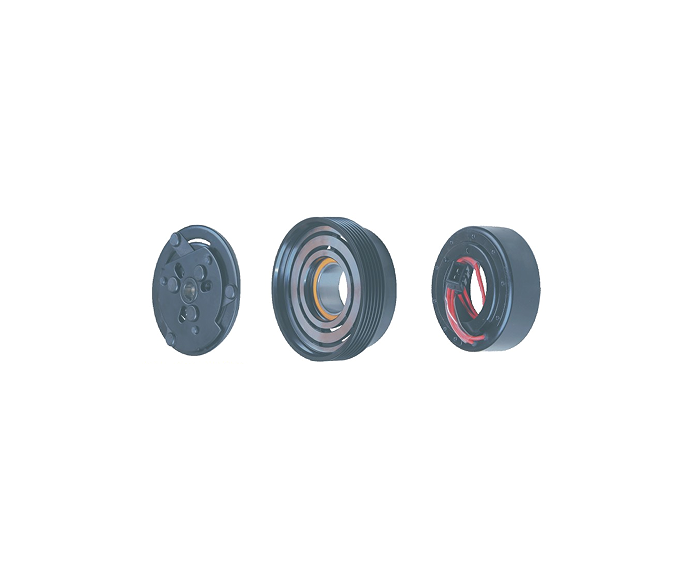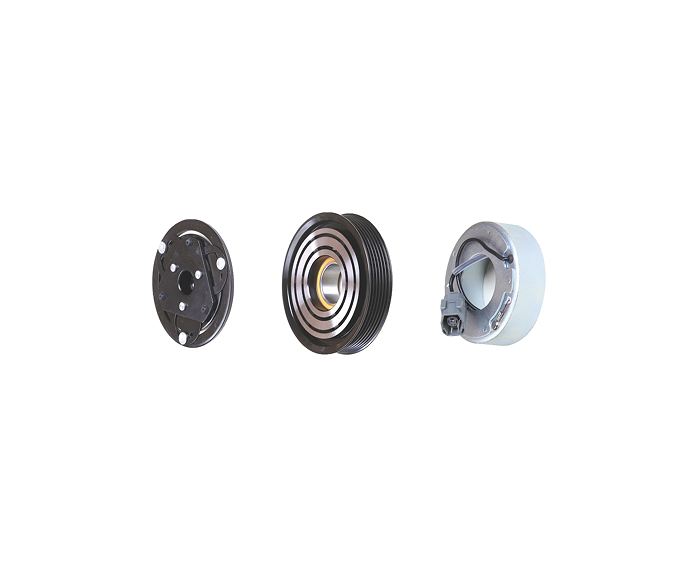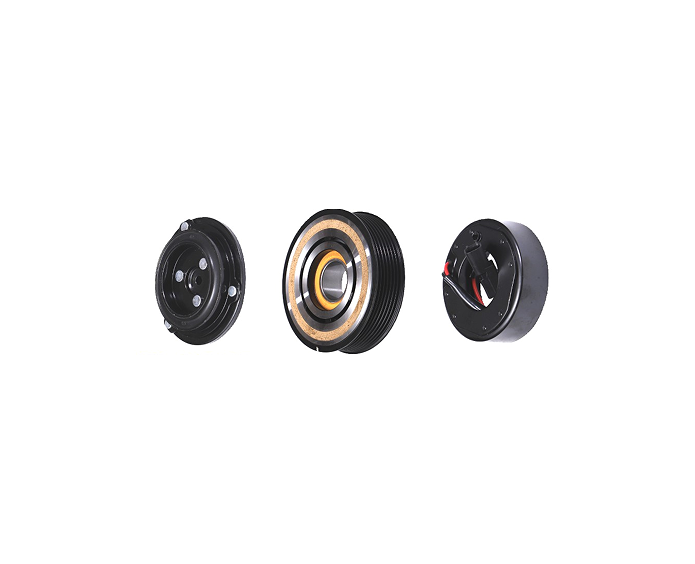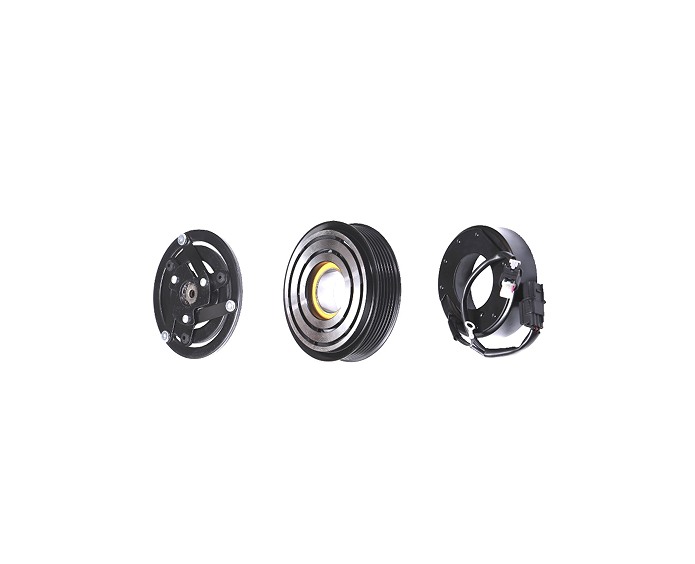

A private label automotive AC parts program succeeds when the buyer controls more than a logo and a carton. The brand owner must define the exact component scope, match every part to a compressor or vehicle application, approve a physical master sample, freeze the label and packaging revision, verify batch evidence, and make sure the next shipment is built to the same approved specification. Without those controls, a private-label range can look consistent in a catalogue while producing returns because a pulley, clutch coil, bearing, valve, sensor, or compressor was changed underneath the label.
This guide answers a practical commercial question for importers, regional distributors, repair-network brands, e-commerce sellers, and aftermarket wholesalers: how should a brand owner launch and manage private label automotive AC parts so that the product, packaging, documentation, and replenishment order remain identifiable and repeatable? The focus is a multi-SKU automotive air-conditioning program, not a generic packaging exercise. It covers standard replacement products, compatible aftermarket parts, electric compressors, clutch components, valves, bearings, sensors, seals, and related service items where the buyer needs its own SKU, barcode, carton, language, or market presentation.
What Private Label Means in Automotive AC Parts
Private label means that an existing or approved product is sold under the buyer's brand identity and commercial SKU. It can include a branded carton, label, barcode, instruction sheet, product sticker, pallet mark, or language set while the underlying component remains unchanged. It can also include a controlled product variation, such as a different connector, mounting detail, seal, pulley, or electrical specification. These two scopes must be separated because a packaging change and an engineering change carry different approval, cost, lead-time, and liability implications.
| Program type | What changes | Evidence needed before launch | Typical commercial risk |
|---|---|---|---|
| Standard replacement under buyer brand | Brand name, SKU, label, carton, barcode, language | Existing reference match, physical sample, approved artwork, packing sample | Wrong application or an unapproved component change hidden by a new label |
| Compatible aftermarket replacement | Approved product designed to replace an OE reference without claiming original-brand status | OE number, fitment basis, dimensions, interface evidence, compatibility wording | Brand or legal language implies original supply when the product is compatible aftermarket |
| Modified private-label product | One or more technical features change for a market or vehicle application | Drawing or sample, engineering review, new sample, test plan, revision control | Packaging is approved before the technical design is frozen |
| New development or OEM/ODM project | New reference, tooling, materials, performance, or mounting requirements | Requirement specification, design release, validation evidence, production approval | Unclear ownership of tooling, data, changes, and warranty responsibility |
Write the intended program type in the first RFQ. A supplier should not have to guess whether the buyer wants a stock clutch in a branded carton, an equivalent compressor, or a newly engineered component. If two scopes are possible, request separate quotations and separate sample plans.
Start With a Brand Range Map, Not a Supplier Catalogue
A supplier catalogue is organized around what the factory has listed. A private-label brand needs a range organized around what its customers search for, install, and reorder. Build a range map before requesting artwork or pricing. Each row should represent one commercial SKU or one clearly defined application family, with an owner responsible for technical approval.
| Range-map field | Buyer decision | Why it matters to private label |
|---|---|---|
| Product family | Compressor, clutch, pulley, bearing, coil, valve, sensor, seal, electric compressor, or service equipment | Determines test method, packaging protection, technical language, and return diagnosis |
| Target market | Passenger car, light commercial, truck, bus, construction, EV, hybrid, or mixed aftermarket | Controls application data, duty-cycle expectations, labels, and local documentation |
| Application identifier | OE/OEM number, compressor model, vehicle, engine or powertrain, year, and market | Prevents a brand SKU from combining similar-looking but non-interchangeable parts |
| Commercial priority | Fast mover, launch reference, long-tail coverage, or test-market item | Supports stock, MOQ, sample, and forecast decisions |
| Brand presentation | Neutral, buyer label, full carton, barcode, language, insert, or pallet mark | Turns packaging into a controlled deliverable instead of an informal request |
| Evidence status | Existing production, sample pending, equivalent under review, or new development | Stops sales teams from listing unapproved references as ready stock |
Keep the first launch narrow enough to approve properly. A small group of high-demand references with complete fitment and packaging records is more valuable than a large private-label catalogue assembled from unverified images. Add long-tail applications only after the supplier can return the same evidence fields and the warehouse can preserve the SKU identity.
Define the Technical Identity of Each Private-Label SKU
Use the compressor or OE number as the anchor
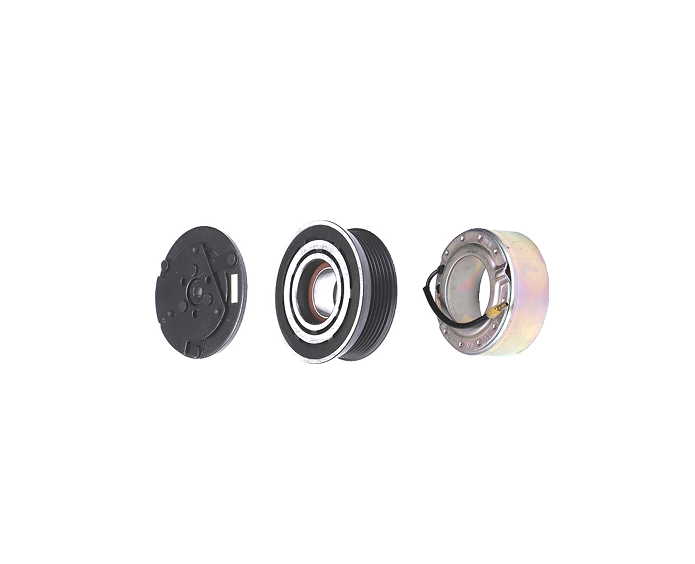
A brand name and vehicle model are not sufficient technical identity. Record the compressor label, OE/OEM number, compressor family, vehicle and powertrain, model year, market, and known replacement numbers. For a clutch, the compressor is the primary reference: pulley diameter and groove count, offset, bearing, coil, connector, hub, shaft interface, and air gap must relate to that compressor. For a valve or sensor, record the port, connector, pressure or control range, thread, sealing method, and application data.
Where the buyer is selling a compatible aftermarket part, use wording that states the relationship accurately. “Aftermarket clutch compatible with the specified compressor reference” is different from “original brand supply.” The brand owner should approve the wording before product pages, cartons, invoices, and installation documents are released. This protects the private-label program from an avoidable identity dispute.
Capture fitment evidence in a controlled record
For each SKU, save photographs of the old part, the proposed sample, mounting points, ports, connector face, pulley, label, and protective packaging. Add dimensions or a drawing where the part is not uniquely identified by an OE number. Store the source, date, revision, and approval status. A photograph in a sales chat is not a controlled record because it can be replaced without notice and may not show the interface that determines fitment.
Separate new, remanufactured, used, and compatible conditions
Do not put new, remanufactured, used, and compatible aftermarket products under one vague private-label description. Each condition has different evidence, warranty, inspection, and customer expectations. If the brand sells more than one condition, assign separate SKUs or clearly separated suffixes, cartons, and product pages. A customer should be able to identify what was approved without opening the box.
Approve the Master Sample Before Artwork Is Final
The master sample is the physical reference for the private-label program. It should be linked to the exact product number, revision, condition, and intended packaging. Approve the master sample before printing a large quantity of cartons or labels. If artwork is finalized first, a later technical change can leave the brand with packaging that describes the wrong component.
| Master-sample checkpoint | What to verify | Record to retain |
|---|---|---|
| Identification | Part number, OE/OEM cross-reference, product condition, supplier revision | Signed or digitally approved sample sheet with photographs |
| Mechanical fit | Mounting, ports, pulley or shaft, connector, clearance, seals, and dimensions | Measurement sheet, drawing, installation or comparison evidence |
| Materials and construction | Housing, steel or aluminum interfaces, coil, resin, bearing, seal, coating, and protective finish where specified | Controlled description and any available supplier inspection record |
| Functional checks | Applicable pressure, electrical, noise, balance, leakage, or operating checks for the product family | Test method, acceptance criteria, result, date, and sample/lot identity |
| Packaging | Port caps, connector protection, internal support, carton quantity, label position, barcode, and inserts | Approved packaging sample and artwork revision |
A private-label master sample is not necessarily a universal test certificate. It proves what was approved for that SKU at that revision. If a buyer needs a material grade, insulation result, leak result, or performance value, request the specific evidence and do not infer it from appearance. The supplier should identify which information is measured, which is declared, and which still requires vehicle-side or buyer-side confirmation.
Turn Artwork Into a SKU-Control System
Brand artwork should help warehouse, sales, service, and claims teams identify the part without opening every carton. At minimum, define the buyer SKU, supplier part number, OE/OEM references, application wording, product condition, quantity, barcode, country-of-origin information where required, lot or batch field, and contact or warranty route. The exact fields depend on the destination market and legal review.
Use revision-controlled artwork
Name artwork files with a revision and approval date. A file called “final carton new.ai” is not a change-control system. The approved record should show who released the artwork, which SKU it covers, the carton dimensions, print colors or standards, barcode data, language, warning text, and the packaging supplier or printer. When the brand changes a logo or translation, keep the previous revision linked to the shipments that used it.
Do not let a label hide a technical change
A new barcode or carton does not authorize a change to the pulley, bearing, coil, connector, housing, seal, refrigerant compatibility, or compressor control. Technical changes require their own review and sample approval. Conversely, an approved technical sample does not automatically approve a different carton, insert, or pallet arrangement. Keep packaging approval and product approval as related but separate records.
Protect product identity in mixed shipments
Mixed-SKU orders create a private-label risk because similar parts can be placed in the wrong carton or pallet location. Use inner labels, carton labels, pallet maps, barcode scans, and packing-list cross-checks. For clutch components, separate pulley diameters, coil connectors, and compressor families even when the parts look similar. For electric compressors, protect the high-voltage connector and keep the model or reference visible on the outer label.
Choose Packaging for Protection and Traceability
Automotive AC parts are not all packaged the same way. A clutch has machined and friction surfaces, a compressor has ports and a housing, a valve has precise interfaces, and an electric compressor may have a high-voltage connector that needs impact and moisture protection. Private-label packaging should be designed around the product's risk points, not only around the brand's visual style.
| Product risk | Packaging control | Evidence to request |
|---|---|---|
| Machined surface or pulley impact | Internal support, separators, protective film or caps, no contact with carton wall | Approved pack-out photo, drop or handling requirement if applicable |
| Connector or terminal damage | Connector cap, fixed orientation, anti-crush support, moisture protection | Sample carton inspection and connector condition at packing |
| Refrigerant port contamination | Caps, plugs, sealed bags, clean handling and storage instruction | Port-protection photo and packing checklist |
| SKU mix-up | Barcode, readable part number, lot field, carton quantity, pallet map | Scan or label verification record tied to the packing list |
| Long export transit | Moisture and corrosion protection, carton strength, pallet and stacking rule | Destination-specific packing brief and approved shipping sample |
Kasen's public blog includes a custom clutch packaging guide that can help a buyer structure carton, protection, and SKU-control questions. The actual packaging specification still belongs to the private-label product list, destination, quantity, and approved sample. Do not copy a carton rule from a clutch to a compressor or electric compressor without reviewing the physical risk.
Build Quality Control Around the Product Family
Private-label quality control should be specific enough to catch a wrong or changed part, but practical enough to apply at the agreed production stage. A single visual inspection cannot prove every requirement. Define incoming, in-process, final, and packing checks according to the product family and the cost of a field return.
Clutches, pulleys, coils, and bearings
For clutch programs, define pulley diameter, groove profile, offset, bearing fit, coil resistance or electrical requirement where applicable, connector, hub and shaft interface, air gap, balance, friction surface, and visual finish. The precise acceptance range must come from the approved drawing or supplier record, not from a generic industry number. If a resin, coating, steel, or bearing source is commercially important, state the controlled requirement and change-notification rule.
Compressors and electric compressors
For compressors, record the housing, mounting, ports, displacement or reference information, connector, refrigerant and oil requirement, protective caps, and relevant operating or leakage checks. For electric compressors, include the voltage and control fields that are known for the exact reference and keep vehicle-side commissioning responsibilities clear. Kasen's electric compressor category is a useful starting point for identifying candidate references, but a private-label SKU still needs a specific sample and evidence package.
Valves, sensors, seals, and service items
For valves and sensors, match port geometry, connector, pressure or temperature range, thread, sealing material, and application. For seals and O-rings, specify size, material family, compatibility, cleanliness, and packing count. For tools or service equipment, define voltage, fittings, capacity, accessories, language, and safety documentation. A single “automotive AC parts” inspection form is too broad to protect every category.
Control MOQ, Lead Time, and Forecast Assumptions
Private-label buyers often ask for one MOQ and one lead time for an entire range. That answer can be misleading because standard production, mixed-SKU consolidation, new artwork, printed cartons, special inserts, new development, and inspection requirements create different constraints. Request MOQ and lead time by SKU or by clearly defined product family.
| Commercial field | Questions for the supplier | Why a private-label buyer needs the answer |
|---|---|---|
| Opening MOQ | Is it per SKU, per carton, per product family, or a mixed basket? Does private-label printing change it? | Determines launch cash, inventory, and whether long-tail references are viable |
| Sample cost and timing | Is the sample from existing production? Does artwork or modification require a new sample? | Separates technical approval from production release |
| Production lead time | When does the clock start: PO, artwork approval, deposit, material release, or sample approval? | Prevents an apparent short lead time from excluding packaging or inspection |
| Forecast and replenishment | Can the supplier reserve capacity or materials? What happens when demand is below forecast? | Protects brand availability without creating an unsupported stock promise |
| Change notification | How much notice is given for a material, tooling, component, process, or packaging change? | Allows the brand to update listings, samples, and service information |
Do not publish a universal MOQ or delivery promise on the brand site unless the factory has approved it for the actual SKU list and destination. A defensible product page can state that private-label supply is available for discussion and direct the buyer to request reference-specific terms. Send the range map, forecast, packaging brief, and destination through the Kasen message page to obtain a quotation based on the real project.
Plan the Sample-to-Production Release
The most common private-label failure is treating a sample approval as the end of the project. The sample should instead trigger a release process. The brand owner, supplier, quality contact, and warehouse should know which product revision, packaging revision, documents, and inspection fields are approved.
- Submit the range map, OE references, product condition, target market, quantity, and packaging scope.
- Receive the proposed SKU list, matching basis, open technical questions, MOQ, lead-time assumptions, and evidence availability.
- Approve or reject the technical sample against a written checklist and preserve photographs and measurements.
- Approve the carton, label, barcode, insert, pallet, and language artwork as a separate packaging revision.
- Release production only after the product and packaging revisions are linked to the purchase order.
- Inspect the production lot and packing identity, then retain the packing list, batch record, and claim route.
- Review the first replenishment against the master sample and record any approved change before shipment.
This release sequence creates a bridge between engineering, purchasing, sales, and after-sales service. It also makes a claim easier to investigate because the brand can identify what was approved, shipped, and installed.
Change Control and Claims for a Private-Label Brand
Every repeat order should be treated as a controlled reproduction of the approved SKU, not as a fresh catalogue purchase. Require the supplier to notify the buyer before changing a component, material, drawing, mould, tooling, connector, bearing, coil, seal, coating, test method, packaging supplier, or label field. The notice should state the reason, affected references, effective batch, validation evidence, and whether a new sample is required.
Claims should capture the same information used for approval: buyer SKU, supplier reference, OE number, batch or lot, carton label, installation vehicle, symptom, photographs, diagnostic evidence, and whether the part was installed according to the applicable service procedure. A private-label warranty cannot work if the brand cannot identify which revision was supplied. Separate fitment claims, transit damage, installation error, and product performance claims rather than sending all returns into one category.
How to Evaluate the Supplier Behind the Brand
A private-label supplier is not evaluated only by whether it can print a logo. Ask who owns the technical drawing, who approves a substitute component, who maintains the sample, who performs the inspection, who controls the carton, and who responds when a field claim appears six months after launch. The brand should have a named contact for commercial coordination and a technical route for fitment or failure questions.
Kasen's public company information identifies a Guangzhou-based automotive air-conditioning manufacturer and exporter with multiple product families. Its compressor clutch category can help a buyer review the clutch range, while the Contact Us page provides the formal contact route. Public pages establish company and product scope; they do not automatically establish a universal MOQ, lead time, material grade, test result, or warranty for every private-label SKU. Those details should be returned in writing for the actual project.
Write a Private-Label Automotive AC Parts RFQ
A useful RFQ gives the supplier enough information to return a controlled answer. Include:
- Brand name, target market, sales channel, and required language or regulatory information.
- Product families and the proposed SKU list, including fast movers and long-tail references.
- OE/OEM numbers, compressor models, vehicle or powertrain data, photos, drawings, and old-unit evidence.
- Product condition: new, compatible aftermarket, remanufactured, used, or new development.
- Master-sample requirements, test evidence, inspection points, material declarations, and change-control expectations.
- Carton, label, barcode, insert, pallet, inner-pack, and product-marking requirements.
- Opening order, annual forecast, mixed-SKU rule, target delivery window, destination, and shipping terms.
- Warranty, claim documentation, replacement policy, and communication route.
Ask the supplier to return five separate sections: technical match, evidence available, sample plan, commercial assumptions, and open questions. That structure prevents a low price from hiding missing fitment or packaging work. For a first discussion, send the completed range map and packaging brief through the Kasen RFQ form.
FAQ: Private Label Automotive AC Parts Programs
What does private label automotive AC parts mean?
It means an automotive air-conditioning component is sold under the buyer's brand and SKU, usually with buyer-controlled labels, cartons, barcodes, language, or inserts. The underlying product may be an existing replacement, a compatible aftermarket part, a modified reference, or a new development. The buyer must state which scope applies.
Is private label the same as OEM manufacturing?
No. Private label can keep an existing product configuration and change the brand presentation. OEM or ODM work may change the design, tooling, materials, or performance requirement. Request separate quotations and approval processes when both branding and engineering changes are involved.
Can a supplier put my logo on any automotive AC part?
Not responsibly without identifying the part and its application. The supplier needs an OE or compressor reference, fitment basis, product condition, packaging scope, and destination requirements. A logo does not make a mechanically incorrect or electrically incompatible part suitable for sale.
Should the carton be approved before the product sample?
Usually the technical sample should be approved first, or at least the product revision must be frozen before final artwork. Otherwise, the carton may describe a part that changes during engineering review. Packaging approval should remain a separate revision linked to the approved product sample.
What information should appear on a private-label carton?
The exact fields depend on the market, but commonly include buyer SKU, supplier or reference number, OE cross-reference, application wording, product condition, quantity, barcode, lot or batch field, origin information where required, and a customer or warranty route. Legal and language requirements should be reviewed for the destination.
How many SKUs should a new private-label brand launch?
There is no universal number. Start with references supported by complete fitment evidence, demand, sample approval, packaging capacity, and a realistic replenishment plan. A smaller controlled range is safer than a large catalogue assembled from unverified application claims.
Does private-label packaging change MOQ or lead time?
It can. Printed cartons, labels, inserts, barcodes, special pallet rules, inspection, and artwork approval may create different minimums or timing from neutral packaging. Ask for MOQ and lead time by SKU or project scope and identify when the production clock starts.
How should a brand handle new, remanufactured, and used parts?
Keep them separate in the SKU, carton, product page, quotation, warranty, and claim records. Each condition has different inspection evidence and customer expectations. Do not allow a used or remanufactured unit to enter a carton approved for a new product.
What quality documents should a private-label buyer request?
Request the documents relevant to the product family: approved drawing or specification, fitment basis, sample record, material or construction description, applicable functional or leakage checks, batch or packing record, and change notification. Ask the supplier to distinguish measured results from general product claims.
Can a private-label program include electric compressors?
Yes, but electric compressors require additional electrical and control information. Confirm the exact voltage range, connector, control interface, refrigerant, oil, mounting, commissioning, and high-voltage evidence for the requested reference. Do not transfer a conventional clutch checklist to an electric compressor.
What should happen when a supplier changes a bearing or coil?
The change should be notified, documented, and evaluated against the approved specification. Depending on the effect, a new sample or validation may be required. Packaging or barcode approval does not authorize a technical substitution.
How can a brand reduce private-label return risk?
Use a controlled range map, exact reference matching, physical master samples, revision-controlled artwork, product-family inspection, batch and carton traceability, and a written claim process. Ask for a supplier response that separates confirmed facts, equivalent proposals, and open questions.
Conclusion
A private label automotive AC parts program is a product-control project with a brand layer, not a logo-printing service. The brand owner must define the range, identify each application, distinguish original-brand status from compatible aftermarket supply, approve the technical sample, freeze the packaging revision, and keep product, carton, barcode, batch, and claim records connected.
The most reliable launch process separates standard replacement, private-label packaging, technical modification, and new development. It also separates new, remanufactured, and used conditions, and it asks for MOQ, lead time, testing, materials, packaging, and change-control terms for the actual SKU list. Kasen's public product and company pages provide a starting point for reviewing automotive AC product families and opening a supplier discussion; the final technical and commercial terms must be confirmed for the buyer's market and references.
To discuss a private-label range, send the brand brief, SKU map, OE or compressor references, sample requirements, packaging artwork rules, forecast, destination, and evidence expectations through the Kasen message page or the Contact Us page. A complete brief gives the supplier a practical basis for sample matching, quotation, packaging approval, and repeat production.