
Why Automotive AC Compressor Selection Requires More Than an OE Number
An automotive AC compressor is one of the most important components in a vehicle air conditioning system, but it is also one of the easiest parts to source incorrectly when buyers rely only on photos, vehicle names, or approximate cross-references.
For importers, distributors, repair networks, and aftermarket brands, compressor sourcing involves several layers of compatibility:
- Vehicle application
- Compressor model
- OE reference
- Mounting arrangement
- Pulley and clutch configuration
- Electrical connector
- Refrigerant
- Compressor oil
- Control system
- Operating environment
A compressor can look almost identical to another unit while using a different connector, pulley, mounting point, control valve, displacement, refrigerant specification, or lubrication requirement.
That is why professional sourcing should begin with system compatibility, not unit price.
KASEN supplies compressors alongside compressor clutches, electric compressors, valves, bearings, and other automotive AC components. Buyers can review the broader KASEN automotive AC product range when building a multi-category sourcing program. KASEN states that it has focused on automotive air conditioning products since 2007 and supplies global aftermarket and OEM-related customers.
What Does an Automotive AC Compressor Actually Do?
The compressor circulates refrigerant through the vehicle's air conditioning system and raises refrigerant pressure so the cooling cycle can operate.
In simplified terms, the system works through four main stages:
- The compressor draws in lower-pressure refrigerant.
- It compresses the refrigerant to a higher pressure.
- Heat is released through the condenser.
- Refrigerant pressure is reduced before it enters the evaporator and absorbs cabin heat.
The compressor therefore acts as the driving component of the refrigerant circuit.
However, compressor operation depends on the entire AC system.
A new compressor cannot correct:
- Incorrect refrigerant charge
- Wrong compressor oil
- System contamination
- Restricted refrigerant flow
- Faulty control components
- Poor condenser performance
- Incorrect installation
DENSO's technical guidance notes that insufficient refrigerant can increase compressor thermal load and contribute to compressor failure, while correct compressor oil is essential to lubrication and reliable operation.
For buyers, this creates an important commercial principle:
Compressor quality and system condition must be evaluated together.
Main Types of Automotive AC Compressors
Not every compressor operates in the same way.
Understanding compressor architecture helps buyers separate similar products and build a more accurate catalog.
Fixed-Displacement Compressors
A fixed-displacement compressor moves a relatively fixed amount of refrigerant per revolution.
Cooling output is commonly managed through compressor cycling or other system controls.
These compressors are widely associated with traditional belt-driven automotive AC systems.
Typical buyer concerns include:
- Clutch specification
- Pulley configuration
- Compressor displacement
- Mounting
- Vehicle application
- Refrigerant and oil requirements
Variable-Displacement Compressors
Variable-displacement compressors can adjust output according to cooling demand.
Depending on the system, control may involve:
- Mechanical pressure regulation
- Electronic control valve
- Variable swash plate operation
These compressors require careful matching because the physical compressor and its control method must both be compatible with the vehicle.
DENSO notes that modern electronic variable-displacement systems may require diagnosis using not only pressure but also temperature and live vehicle data.
For distributors, this means a compressor that physically bolts into place is not automatically electrically or functionally compatible.
Scroll Compressors
Scroll technology uses interacting spiral elements to compress refrigerant.
These designs can provide compact packaging and smooth operation and are used in various automotive applications.
When sourcing, the buyer should still prioritize application-specific specifications rather than assuming that all compressors using the same compression technology are interchangeable.
Electric Compressors
Hybrid and battery-electric vehicles increasingly use electrically driven compressors.
Unlike traditional belt-driven systems, an electric compressor does not depend on engine rotation and typically does not use a conventional electromagnetic compressor clutch.
KASEN compares traditional belt-driven and electric systems on its electric vs traditional compressor guide. Its current product portfolio also includes electric compressors.
Electric compressor selection may require verification of:
- Vehicle platform
- System voltage
- Electrical connector
- Control architecture
- Refrigerant
- Lubricant
- Mounting
- Thermal-management system
These requirements make electric compressors a separate sourcing category rather than simply another mechanical compressor model.
Traditional vs Electric Automotive AC Compressor
| Factor | Belt-Driven Compressor | Electric Compressor |
|---|---|---|
| Drive source | Vehicle engine / belt | Electric motor |
| Compressor clutch | Common on many designs | Usually not required |
| Dependence on engine RPM | Yes | No |
| Typical applications | ICE vehicles, trucks, buses | EVs, hybrids |
| Electrical complexity | Lower | Higher |
| Matching focus | Pulley, clutch, mounting, compressor model | Voltage, control, vehicle platform |
| Main sourcing risk | Mechanical fitment mismatch | Electrical/system incompatibility |
Neither design is universally better.
The correct solution depends on vehicle architecture and application.
For importers, these products should therefore be maintained as separate catalog groups with different technical data.
Which Specifications Should Buyers Check Before Ordering?
A professional automotive AC compressor RFQ should contain enough information for the supplier to identify the exact application.
Core Compressor Matching Data
| Specification | Why It Matters |
| OE Number | Helps identify intended vehicle application |
| Compressor Model | Distinguishes compressor family |
| Vehicle Make | Initial application reference |
| Vehicle Model | Narrows fitment |
| Production Year | Identifies platform changes |
| Engine | Helps distinguish configurations |
| Refrigerant | Determines system compatibility |
| Compressor Oil | Essential for lubrication compatibility |
| Pulley Type | Determines belt-system compatibility |
| Groove Number | Matches belt configuration |
| Connector | Electrical compatibility |
| Mounting Points | Installation compatibility |
| Control Valve | Important for variable compressors |
| Photos | Supports visual verification |
The more complete this information is, the lower the risk that the supplier must guess.
Why OE Number Matching Alone Can Still Fail
OE numbers are extremely useful in aftermarket sourcing, but they should be treated as one reference point rather than the entire selection process.
Differences may occur because of:
- Different compressor suppliers used by the vehicle manufacturer
- Market-specific configurations
- Production-year changes
- Engine variants
- Superseded part numbers
- Compressor family changes
- Different electrical control strategies
For high-volume purchasing, buyers should combine the OE number with compressor and vehicle information.
A Better Matching Sequence
Step 1: OE Reference
Identify the original reference.
Step 2: Compressor Model
Confirm the actual compressor family.
Step 3: Vehicle Application
Verify model, engine, year, and market.
Step 4: Physical Configuration
Compare mounting, pulley, connector, ports, and overall dimensions.
Step 5: System Specifications
Confirm refrigerant, oil, and control requirements.
This five-point verification method is safer than selecting a compressor from a product photograph.
Why Refrigerant Compatibility Matters
The compressor operates as part of a refrigerant-specific system.
Common vehicle refrigerants include R134a and, in many newer applications, R1234yf.
DENSO notes that vehicles can use different refrigerants depending on vehicle generation and market requirements, and compressor servicing must consider the correct refrigerant and lubricant combination.
For purchasing teams, refrigerant information should therefore be included in product records.
A distributor should avoid catalog entries that identify only:
Toyota compressor
A stronger record would identify:
vehicle + OE reference + compressor model + refrigerant + relevant configuration
This reduces ambiguity when the same model family contains multiple AC systems.
Compressor Oil Is a Critical Specification, Not an Optional Detail
Oil lubricates the moving parts of an automotive AC compressor and contributes to reliable operation.
The wrong oil can create significant problems.
DENSO states that compressor oils differ in lubrication characteristics and warns that incorrect or universal oils may cause insufficient lubrication and compressor damage.
Sanden likewise explains that mobile air conditioning systems rely on oil and refrigerant, with oil required to lubricate compressor moving components and reduce friction.
Buyers Should Confirm
- Required oil type
- Required oil quantity
- Refrigerant compatibility
- Whether the compressor is pre-filled
- Installation/service requirements
Why this matters commercially
A compressor can be correctly manufactured but fail after installation if the system is filled or lubricated incorrectly.
If the distributor does not distinguish installation failure from product failure, the result may become an unnecessary warranty claim.
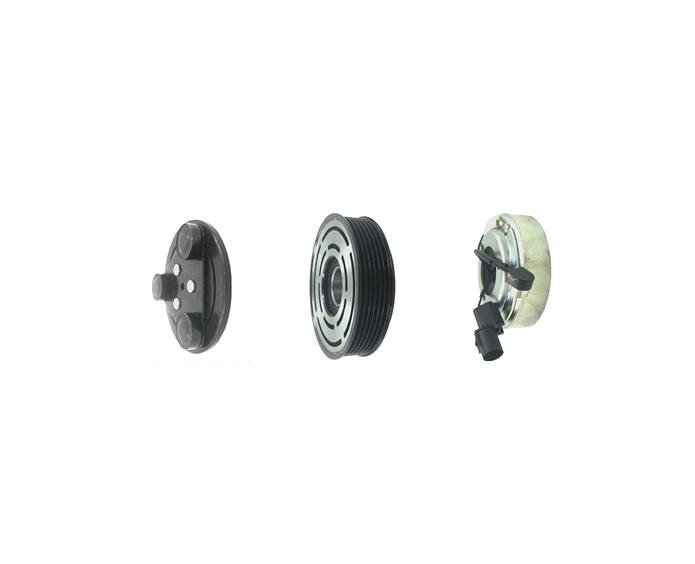
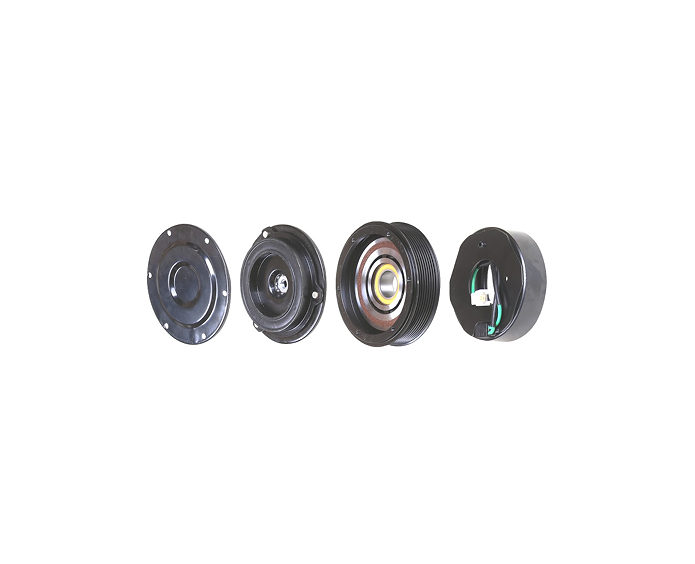
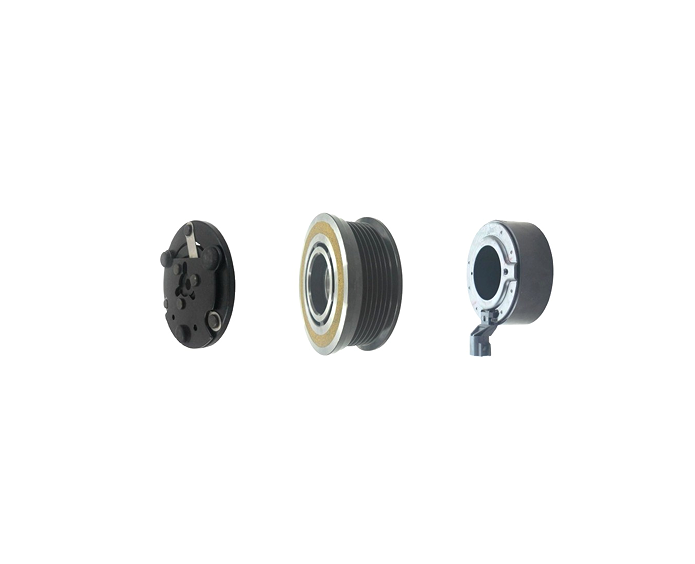
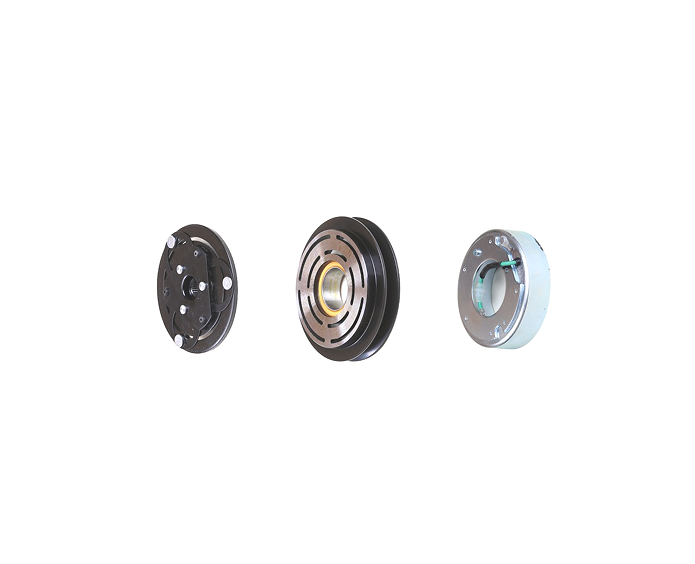
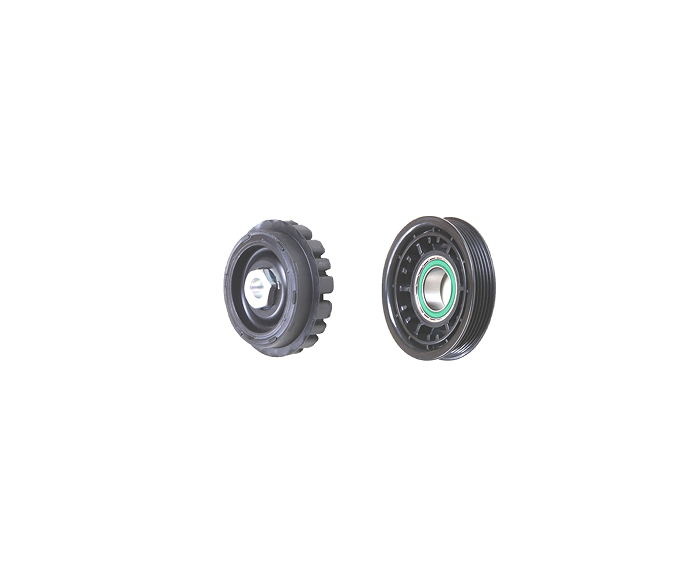
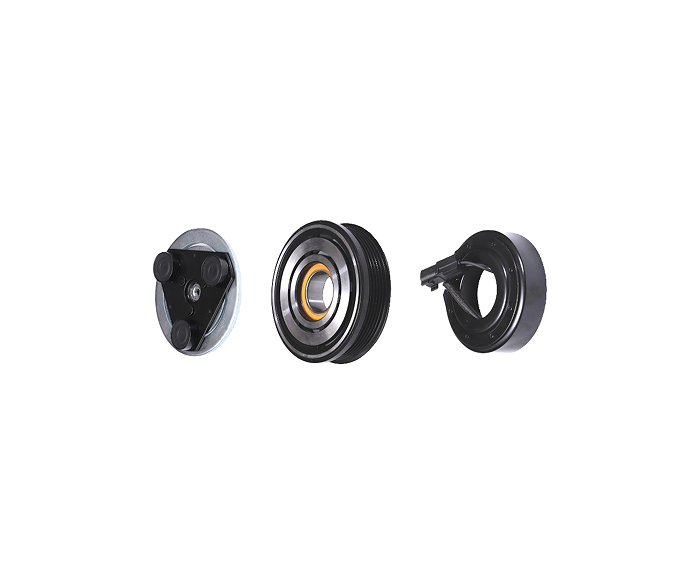
Clutch Type and Pulley Configuration
Traditional compressors commonly rely on a pulley-driven system.
Where an electromagnetic clutch is used, buyers need to verify:
- Pulley diameter
- Number of grooves
- Coil voltage
- Clutch structure
- Bearing
- Hub configuration
- Compressor shaft connection
KASEN has a dedicated auto AC compressor clutch range and technical content explaining compressor clutch engagement.
For distributors selling compressors and clutches together, keeping cross-reference information between both categories can reduce order errors.
How Application Environment Changes Compressor Requirements
Not every buyer operates in the same conditions.
Passenger Cars
Typical priorities include:
- Broad vehicle coverage
- Low noise
- Accurate OE matching
- Competitive replacement cost
- Frequent replenishment
Commercial Vehicles
Commercial vehicles may operate for longer periods than private passenger cars.
Buyers may place more emphasis on:
- Durability
- Stable replacement availability
- Fleet compatibility
- Reduced downtime
Heavy Trucks
Truck applications can involve:
- Long operating hours
- High thermal loads
- Harsh road conditions
- Extended AC use
KASEN states that its automotive AC products are used across commercial vehicles, buses, heavy trucks, and other vehicle applications.
Buses
Bus operators often prioritize consistent cooling because the system serves a larger cabin and may operate for extended periods.
Fleet buyers should build replacement plans around the exact compressor models installed across their vehicles.
Hot-Climate Markets
In high-temperature markets, AC systems can operate frequently and under greater thermal load.
The most important procurement response is not simply to buy a “heavy-duty compressor.”
Instead, buyers should ensure:
- Correct vehicle application
- Correct refrigerant
- Proper condenser condition
- Appropriate oil
- Correct system charge
- Reliable service procedures
Common Automotive AC Compressor Failure Symptoms
Distributors benefit from understanding basic failure symptoms because workshop complaints eventually influence warranty and return rates.
Common symptoms can include:
- No cooling
- Weak cooling
- Abnormal compressor noise
- Compressor not engaging
- Belt or pulley noise
- Refrigerant leakage
- Compressor seizure
- Irregular cooling performance
However, these symptoms do not automatically prove that the compressor itself is defective.
No Cooling Does Not Always Mean Compressor Failure
Potential causes can include:
- Refrigerant leakage
- Clutch failure
- Electrical faults
- Control valve problems
- Expansion device problems
- Condenser airflow problems
- Sensor or control problems
Noise Does Not Always Mean Internal Compressor Damage
Noise can also originate from:
- Pulley bearing
- Belt
- Tensioner
- Clutch assembly
- Incorrect mounting
Sanden's service documentation specifically emphasizes proper diagnosis of compressor issues and related HVAC components as industry best practice.
This is why replacement should follow diagnosis rather than precede it.
Why Some New Compressors Fail Shortly After Installation
When a newly installed compressor fails, buyers may initially suspect product quality.
But system-related causes should also be investigated.
Possible factors include:
- Contamination remaining in the AC circuit
- Wrong compressor oil
- Incorrect refrigerant charge
- Excessive oil
- Insufficient lubrication
- Blocked system components
- Refrigerant flow problems
- Failure to diagnose the previous compressor failure
DENSO warns that incorrect refrigerant or oil conditions can contribute to compressor damage, while its service guidance recommends system-level inspection rather than simply changing a failed part.
Procurement Lesson
A supplier evaluation system should separate:
manufacturing defect
from
application, installation, or system failure
Without this distinction, warranty data can become misleading.
New Compressor vs Compressor Repair: Which Makes More Sense?
Different markets use different repair strategies.
| Situation | Component Repair May Be Suitable | Complete Compressor Replacement May Be Suitable |
| Clutch failure | Yes | Sometimes |
| Pulley bearing issue | Often | Not always |
| Coil failure | Often | Not always |
| Control valve problem | Application-dependent | Sometimes |
| Internal seizure | Usually no | Often |
| Severe internal wear | Usually no | Often |
| Housing damage | Usually no | Often |
| Internal contamination damage | Limited | Often |
This distinction is important for distributors because a strong automotive AC program may need both:
- Complete compressors
- Compressor repair components
Buyers who want to plan both categories can read KASEN's guide to automotive AC replacement parts.
How Distributors Should Build an Automotive AC Compressor Range
The strongest catalog is not necessarily the largest catalog.
The better objective is to cover the applications customers actually purchase.
Tier 1: High-Demand Compressor Models
Keep stronger inventory for:
- Popular local vehicle models
- High-frequency workshop demand
- Fleet applications
- Proven repeat sellers
Tier 2: Medium-Volume Applications
Maintain limited inventory for:
- Older but active vehicle platforms
- Regional applications
- Commercial vehicles
Tier 3: Long-Tail Compressors
Use supplier-based replenishment or special ordering for:
- Rare vehicle models
- Unusual configurations
- Low-volume applications
Tier 4: EV and Hybrid Compressors
Manage electric compressors separately because product identification and technical requirements differ significantly from conventional systems.
This protects working capital while maintaining product coverage.
What Should Buyers Inspect in a Compressor Sample?
A sample should create the reference for future bulk orders.
Identification
Check:
- Supplier part number
- OE cross-reference
- Compressor model
- Vehicle application
Physical Configuration
Check:
- Mounting points
- Refrigerant ports
- Connector
- Pulley
- Groove count
- Overall dimensions
Product Condition
Check:
- Rotation
- Surface condition
- Packaging
- Label accuracy
- Port protection
System Compatibility
Verify:
- Refrigerant
- Oil
- Electrical control
- Application
The sample should not simply be marked “approved.”
Its critical attributes should become part of the purchasing specification.
Quality Control Questions Buyers Should Ask an Automotive AC Compressor Supplier
Generic claims such as “100% high quality” provide very little information.
A more useful supplier audit asks specific questions.
Product Matching
- How are OE references verified?
- How are compressor models distinguished?
- How are application changes controlled?
Incoming Components
- Which purchased components are inspected?
- How are dimensional requirements controlled?
Assembly
- Which assembly steps are checked?
- How are connection and mounting details verified?
Functional Verification
Depending on product design, ask what checks are performed for:
- Mechanical operation
- Leakage
- Electrical components
- Noise
- Rotation
- Product identification
Traceability
Ask:
- How are production batches identified?
- Can the approved model be reordered consistently?
- How are quality complaints traced?
Your uploaded content-quality checklist specifically emphasizes technical depth, QC, transparent evidence, and credible information rather than unsupported marketing language.
OEM vs Aftermarket Automotive AC Compressors
The label “aftermarket” alone does not determine compressor quality.
For a professional B2B buyer, the more useful comparison is whether the compressor matches the intended application and whether the supplier can maintain consistent quality.
| Buying Factor | OE Route | Qualified Aftermarket Route |
| Original application reference | Strong | Requires correct cross-reference |
| Supplier flexibility | Lower | Higher |
| Private label | Usually limited | Often available |
| Product-range expansion | Brand-limited | Potentially broader |
| Custom packaging | Limited | Supplier-dependent |
| Price flexibility | Lower | Often higher |
| Main risk | Price / availability | Supplier qualification / fitment |
An aftermarket buyer should therefore evaluate:
- Application accuracy
- Product consistency
- Supplier specialization
- Technical support
- Sample process
- Repeat supply
- Warranty handling
What Information Should Be Included in an Automotive AC Compressor RFQ?
A detailed RFQ helps reduce quotation errors.
Recommended RFQ Checklist
- OE number
- Compressor model
- Vehicle brand
- Vehicle model
- Model year
- Engine
- Refrigerant
- Compressor oil requirement
- Pulley information
- Connector
- Product photos
- Required quantity
- Target packaging
- Private-label requirement
- Destination market
- Sample requirement
If the original part is difficult to identify, buyers can also provide drawings or samples.
KASEN states that it welcomes custom production discussions using drawings or OEM numbers.
Cost: Why the Cheapest Compressor Can Become the Most Expensive
Professional procurement should evaluate total sourcing cost rather than unit price alone.
Potential hidden costs include:
- Wrong fitment
- Returns
- Emergency replacement shipments
- Workshop labor claims
- Warranty administration
- Dead inventory
- Customer complaints
- Brand reputation damage
- Vehicle downtime
Consider two compressor quotations.
| Factor | Supplier A | Supplier B |
| Unit Price | Lower | Slightly higher |
| OE Matching | Limited | Structured |
| Refrigerant/Oil Data | Unclear | Defined |
| Sample Approval | Basic | Documented |
| Application Support | Limited | Available |
| Repeat Supply | Unclear | Controlled |
| Commercial Risk | Higher | Lower |
The lowest first-order price may not provide the lowest long-term cost.
Why KASEN Can Support Automotive AC Compressor Buyers
Guangzhou Kasen Auto Air Conditioner Co., Ltd. states that it has focused on automotive air conditioning since 2007 and supplies compressors, compressor clutches, electric compressors, valves, and bearings to global aftermarket and OEM-related customers. Its company profile lists more than 1,800 product types and exports to markets including Europe, the Americas, the Middle East, and Southeast Asia.
For importers, distributors, repair networks, and aftermarket brands, this broader product structure can help connect compressor purchasing with related clutch, bearing, valve, and electric-compressor requirements.
Buyers can:
- Browse the KASEN automotive AC product catalog
- Review the automotive AC compressor range
- Explore compressor clutch products
- Review electric compressor solutions
- Learn more about KASEN
- Contact KASEN with OE numbers, compressor models, vehicle data, drawings, samples, or bulk sourcing requirements
Frequently Asked Questions About Automotive AC Compressors
What is an automotive AC compressor?
An automotive AC compressor circulates and compresses refrigerant within the vehicle air conditioning system, allowing the refrigeration cycle to remove heat from the cabin.
How do I identify the correct AC compressor for a vehicle?
Start with the OE number and then verify compressor model, vehicle make and model, production year, engine, mounting, pulley, connector, refrigerant, and other system specifications.
Can two compressors that look the same be different?
Yes. Similar-looking compressors can differ in mounting points, pulley configuration, electrical control, displacement, ports, refrigerant application, or internal design.
What is the difference between fixed and variable-displacement compressors?
A fixed-displacement compressor moves a relatively fixed amount of refrigerant per revolution, while a variable-displacement design adjusts compressor output according to system demand.
What is the difference between a mechanical and electric compressor?
A traditional mechanical compressor is commonly driven by the engine through a belt. An electric compressor uses an integrated electric motor and is commonly used in hybrid and electric vehicles.
Why is compressor oil important?
Compressor oil lubricates internal moving parts. Incorrect oil type, quantity, or compatibility can reduce lubrication and contribute to compressor damage.
Does a failed AC system always mean the compressor is bad?
No. Refrigerant leakage, control valves, clutch problems, electrical faults, condenser airflow, expansion devices, and other system issues can produce similar symptoms.
Should the AC system be checked before installing a new compressor?
Yes. Professional service guidance recommends diagnosing the overall system, including refrigerant, oil, leakage, contamination, noise, airflow, and related components before assuming the compressor alone is responsible.
What should importers check before buying compressors in bulk?
Verify application data, refrigerant and oil requirements, physical configuration, sample consistency, packaging, supplier traceability, repeat supply, and after-sales procedures.
How can I request an automotive AC compressor quotation from KASEN?
Send the OE number, compressor model, vehicle information, photos, quantity, and any packaging or customization requirements through the KASEN contact page. More complete technical information helps reduce matching errors.
Conclusion
Buying the right automotive AC compressor requires more than finding a visually similar replacement or comparing supplier prices.
Professional buyers should verify the complete application: OE reference, compressor model, vehicle, engine, mounting, pulley, refrigerant, compressor oil, connector, and control method.
They should also distinguish actual compressor defects from installation or system-related failures, because incorrect refrigerant, lubrication, contamination, control problems, or poor diagnosis can damage even a correctly matched compressor.
For importers, distributors, repair networks, fleets, and aftermarket brands, the strongest sourcing strategy combines accurate fitment, documented sample approval, system compatibility, quality verification, and reliable repeat supply.
KASEN supplies conventional automotive compressors, compressor clutches, electric compressors, bearings, valves, and related automotive AC components. Explore the KASEN product range or contact KASEN with your OE references, compressor models, drawings, samples, or bulk purchasing requirements.