
Automotive air conditioning systems depend on multiple mechanical, electrical, and refrigerant-control components working together. For importers, distributors, repair networks, and aftermarket brands, sourcing reliable air conditioning system parts is therefore not simply a matter of finding a compressor or replacement valve at the lowest price.
Buyers must consider vehicle compatibility, product consistency, operating conditions, supplier capability, testing methods, replacement accuracy, and long-term availability.
The challenge becomes greater when a purchasing program covers multiple vehicle applications. A compressor may match one vehicle platform but use a different clutch, control valve, pulley configuration, voltage, or mounting structure on another.
For this reason, professional automotive buyers increasingly prefer suppliers that can support product matching and supply multiple categories of automotive AC parts through one sourcing channel.
This guide explains the major automotive air conditioning system parts, how they work together, what buyers should evaluate before purchasing, and how to reduce sourcing risks when selecting an automotive AC parts supplier.
What Are Automotive Air Conditioning System Parts?
Automotive air conditioning system parts are the components responsible for compressing, circulating, controlling, expanding, and managing refrigerant throughout a vehicle's air conditioning system.
The system must maintain reliable performance under conditions that are very different from stationary air conditioning equipment.
Automotive AC components may be exposed to:
- Engine and road vibration
- High under-hood temperatures
- Repeated start-stop operation
- Dust, moisture, and environmental exposure
- Limited installation space
- Different vehicle electrical systems
- Long operating cycles in commercial vehicles
Because these components interact with each other, failure or incorrect specification of one component may affect the performance of the entire AC system.
Main Automotive Air Conditioning Components
| Component | Main Function | Common Buyer Concern |
|---|---|---|
| AC Compressor | Compresses and circulates refrigerant | Vehicle compatibility and performance |
| Compressor Clutch | Engages or disengages compressor operation | Coil, pulley and fitment |
| Electric Compressor | Provides electrically driven compression | Voltage and EV application |
| Expansion Valve | Regulates refrigerant entering the evaporator | Flow accuracy |
| Control Valve | Controls compressor displacement or pressure | Response and compatibility |
| Bearing | Supports rotating AC components | Noise and service life |
| Coil | Creates electromagnetic force in clutch systems | Resistance and thermal stability |
| Pulley | Transfers engine-driven rotation | Diameter and groove configuration |
How Do Automotive Air Conditioning System Parts Work Together?
An automotive AC system works as a closed refrigerant circuit.
Although system architecture varies by vehicle, the basic process usually involves refrigerant compression, heat rejection, pressure reduction, evaporation, and recirculation.
Refrigerant Compression
The AC compressor increases refrigerant pressure and moves refrigerant through the system.
In conventional internal-combustion vehicles, the compressor may be driven by the engine through a belt and compressor clutch.
In electric and hybrid vehicles, an electrically driven compressor may operate independently from engine speed.
Compressor Engagement
For systems using an electromagnetic clutch, the compressor does not necessarily run continuously.
When cooling is required:
- Current is supplied to the clutch coil.
- The coil generates magnetic force.
- The clutch plate engages with the rotating pulley.
- Engine torque is transferred to the compressor shaft.
- The compressor begins circulating refrigerant.
This makes the AC compressor clutch a critical interface between the vehicle drive system and the compressor.
Refrigerant Regulation
Control valves and expansion valves regulate the pressure, flow, or displacement of refrigerant.
Correct regulation helps maintain stable cooling while avoiding unnecessary compressor load.
Main Types of Air Conditioning System Parts for Vehicles
AC Compressor
The compressor is one of the most important components in a vehicle air conditioning system.
Its purpose is to compress low-pressure refrigerant and keep the refrigerant circulating through the system.
For professional buyers, compressor selection should not rely only on physical appearance.
Important matching information can include:
- OE number
- Vehicle make and model
- Engine configuration
- Compressor model
- Pulley type
- Connector configuration
- Mounting structure
- Refrigerant application
Different vehicle platforms may use compressors that appear similar but are not interchangeable.
Buyers sourcing multiple models can review KASEN's broader automotive air conditioning product range when building a multi-SKU procurement program.
Common Compressor Applications
Automotive compressors are used in:
- Passenger cars
- SUVs
- MPVs
- Vans
- Trucks
- Buses
- Commercial vehicles
- Hybrid vehicles
- Electric vehicles
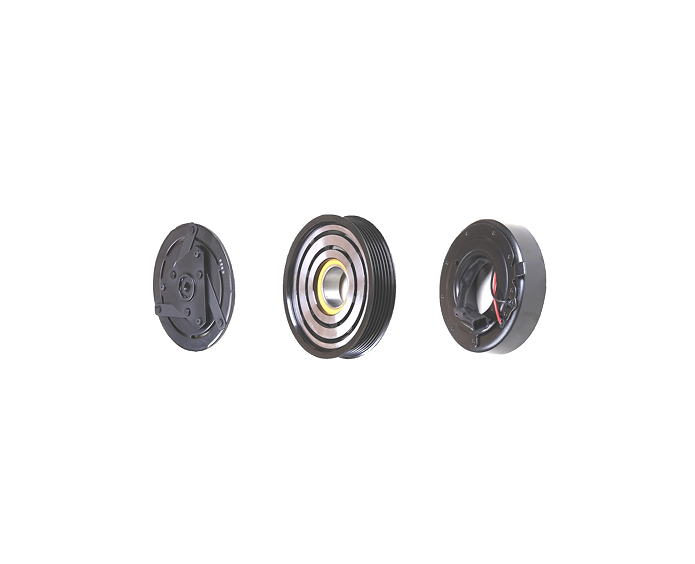
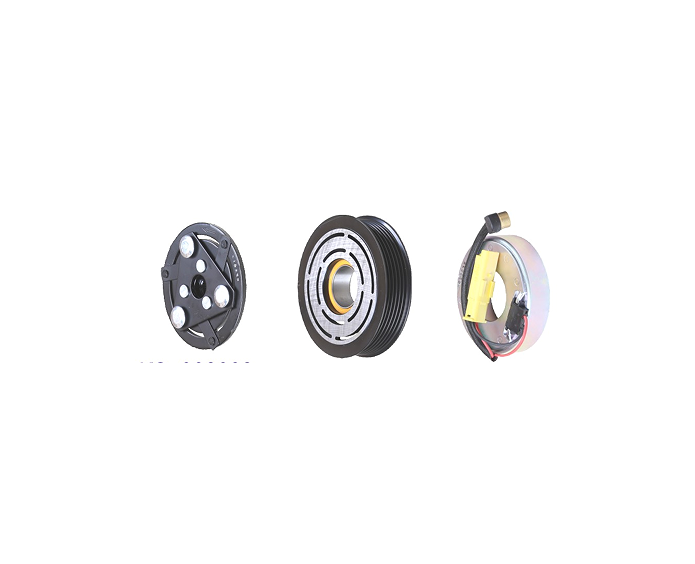
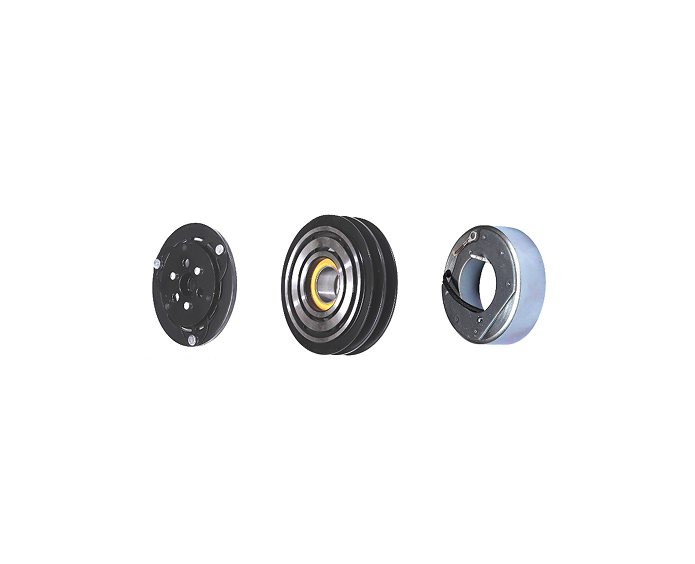
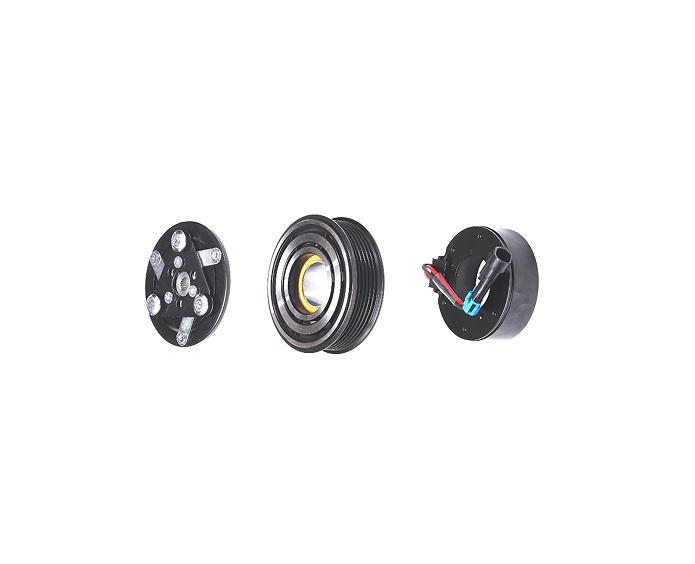
AC Compressor Clutch
The compressor clutch allows a belt-driven compressor to engage or disengage from engine power.
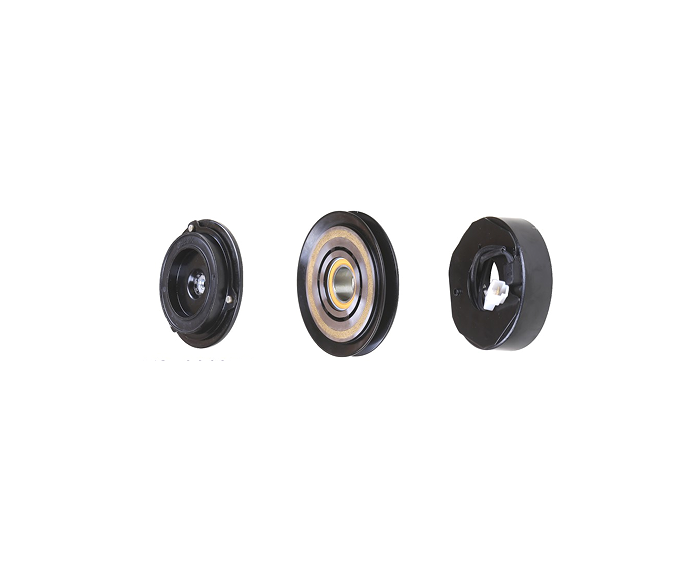
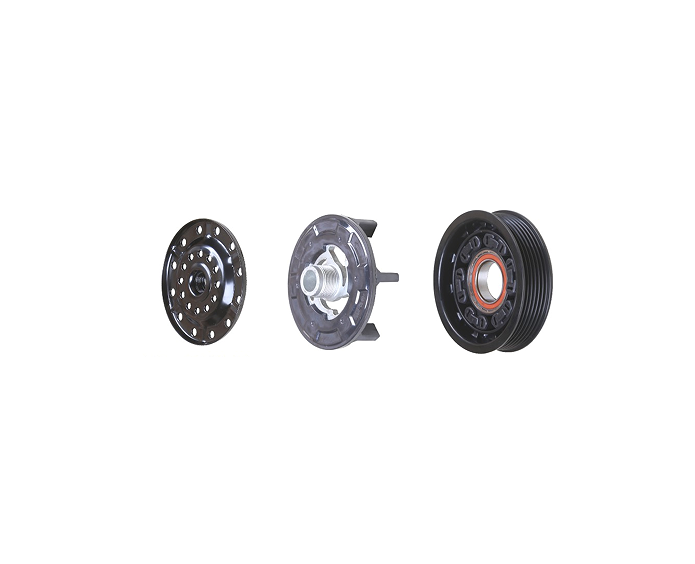
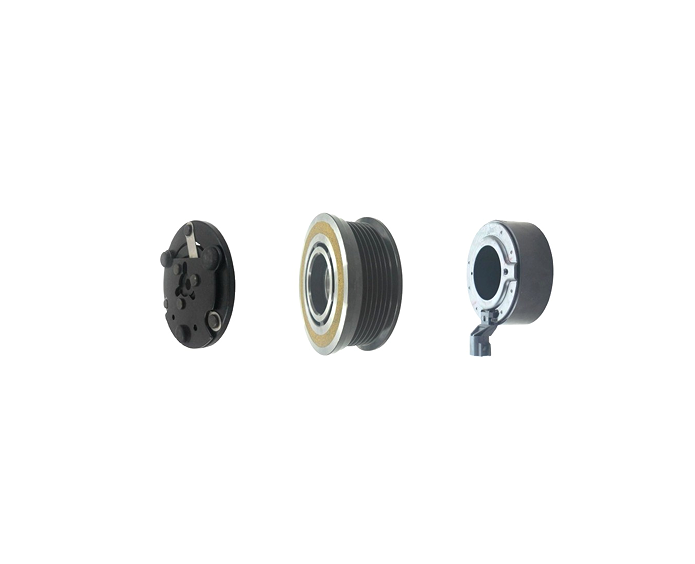
A typical clutch assembly can include:
- Electromagnetic coil
- Pulley
- Bearing
- Hub or armature plate
- Friction surfaces
For replacement markets, compressor clutch products can offer a practical repair option when the compressor itself remains serviceable but the clutch-related component has failed.
Important Compressor Clutch Parameters
Buyers may need to confirm:
- Pulley outer diameter
- Number of pulley grooves
- Coil voltage
- Bearing dimensions
- Hub structure
- Compressor application
- Mounting dimensions
- Air gap
Small dimensional differences can cause installation or engagement problems.
Why Air Gap Matters
The air gap between the clutch plate and pulley affects engagement behavior.
If the gap is outside the intended range, the clutch may experience:
- Delayed engagement
- Incomplete engagement
- Excessive heat
- Noise
- Accelerated wear
For this reason, dimensional control during production and assembly is important.
Electric Compressor
Electric compressors are increasingly used in electric and hybrid vehicle thermal-management systems.
Unlike belt-driven compressors, they use an electric motor to drive the compressor directly.
This allows air conditioning operation without relying on engine speed.
Key Buyer Considerations
When sourcing electric compressors, buyers should pay attention to:
- Operating voltage
- Vehicle platform
- Electrical connector
- Refrigerant compatibility
- Lubricant requirements
- Control strategy
- Mounting configuration
Electric compressors should not be selected only according to external size.
Electrical and vehicle-system compatibility are equally important.
Expansion Valve
The expansion valve controls refrigerant flow before refrigerant enters the evaporator.
Its role is to support correct pressure reduction and refrigerant distribution.
A poorly matched or malfunctioning valve can contribute to:
- Weak cooling
- Unstable evaporator performance
- Incorrect pressure conditions
- Increased system load
For aftermarket sourcing, dimensions and application matching are therefore important.
Compressor Control Valve
Control valves are used in certain variable-displacement compressors to regulate compressor output.
They help adjust cooling capacity according to system demand.
When sourcing control valves, buyers should verify the exact compressor application because valves that look similar can have different characteristics.
Bearings
Bearings are used in rotating automotive AC components, particularly compressor clutch pulley assemblies.
Important performance considerations include:
- Rotational smoothness
- Noise
- Load resistance
- Heat resistance
- Dimensional accuracy
- Service life
Bearing failure can cause abnormal noise and may eventually affect pulley or clutch operation.
Coils and Pulley Components
The electromagnetic coil creates the magnetic force needed to engage the compressor clutch.
The pulley rotates with the engine belt and transfers motion when engagement occurs.
For replacement parts buyers, these components may be sourced individually or as part of a clutch assembly depending on the repair strategy.
How Should Buyers Match Automotive AC Parts?
Incorrect matching is one of the most common risks in automotive replacement-parts procurement.
A product can have a similar appearance while differing in critical dimensions or electrical characteristics.
Information Buyers Should Provide
For accurate product matching, it is helpful to provide as much of the following information as possible:
- OE number
- Compressor model
- Vehicle brand
- Vehicle model
- Production year
- Engine information
- Product photographs
- Existing part markings
- Dimensions
- Physical sample
The more complete the information, the lower the risk of ordering an incompatible component.
OE Number Matching
OE numbers are often one of the fastest ways to narrow product selection.
However, professional buyers should avoid assuming that an OE reference alone always resolves every application difference.
Vehicle market, model year, compressor version, or supplier cross-reference may still need verification.
Sample Matching
For products with unclear markings or older applications, a physical sample can help confirm:
- Dimensions
- Hole positions
- Pulley configuration
- Connector type
- Mounting details
- Structural differences
Technical Specifications Buyers Should Compare
The correct technical criteria depend on the product category.
A compressor, clutch, bearing, control valve, and electric compressor should not be evaluated using exactly the same specification list.
Typical Procurement Specifications
| Specification | Relevant Products | Why It Matters |
| OE Number | Most replacement parts | Application matching |
| Voltage | Coil / electric compressor | Electrical compatibility |
| Pulley Diameter | Compressor clutch | Belt system fitment |
| Groove Number | Pulley / clutch | Belt compatibility |
| Bearing Size | Clutch / pulley | Mechanical fit |
| Connector Type | Electrical components | Installation compatibility |
| Mounting Structure | Compressors | Vehicle installation |
| Dimensions | Most components | Replacement accuracy |
| Refrigerant Application | Compressor / valve | System compatibility |
Materials and Component Quality
Material selection has a direct effect on durability, thermal behavior, dimensional stability, and operating life.
Copper Windings
Electromagnetic clutch coils rely on conductive windings to create magnetic force.
Important considerations include:
- Conductivity
- Insulation
- Winding consistency
- Thermal resistance
Metal Components
Pulley, hub, and structural components need sufficient mechanical strength and dimensional stability.
Material and machining quality influence:
- Balance
- Wear
- Fitment
- Noise
- Torque transmission
Bearing Materials
Bearings need to operate reliably under rotation, heat, and load.
Poor bearing quality can produce:
- Increased friction
- Noise
- Heat
- Premature failure
How Automotive AC Parts Are Manufactured
Manufacturing methods vary by product, but automotive AC components typically require several controlled processes.
Precision Machining
Machined parts may include:
- Pulley structures
- Hub components
- Compressor components
- Mounting surfaces
Dimensional accuracy is important because even small deviations may affect assembly or vehicle fitment.
Coil Production
Coil production can involve:
- Wire winding
- Insulation
- Forming
- Electrical verification
For electromagnetic clutches, coil consistency influences engagement performance.
Assembly
Assembly accuracy is important for products such as compressor clutches.
Key control points may include:
- Component alignment
- Air gap
- Bearing installation
- Rotational condition
- Structural fit
Final Inspection
Finished products should be inspected before packaging and shipment.
For buyers evaluating a long-term supplier, it is useful to ask not only whether inspection exists, but also what is inspected, at which stage, and how non-conforming products are handled.
Quality Control for Air Conditioning System Parts
Quality control is especially important in automotive aftermarket parts because installation failures create costs beyond the product itself.
A defective or incorrectly matched part can result in:
- Replacement labor
- Customer complaints
- Warranty claims
- Repeated shipping costs
- Distributor reputation damage
A structured QC process can reduce these risks.
Incoming Inspection
Incoming inspection may cover:
- Raw materials
- Bearings
- Electrical components
- Machined components
In-Process Inspection
Production-stage checks may include:
- Dimensions
- Assembly conditions
- Electrical properties
- Surface quality
- Component fit
Finished Product Inspection
Depending on the product type, final inspection may evaluate:
- Rotation
- Noise
- Electrical performance
- Engagement
- Dimensions
- Appearance
- Packaging condition
When comparing suppliers, professional buyers should ask for evidence of actual quality-control practices rather than relying only on broad claims such as "high quality."
You can learn more about the supplier background and manufacturing positioning on the KASEN About Us page.
OEM and Customized Automotive AC Parts
Distributors and aftermarket brands often need more than standard replacement components.
OEM or customized programs can support companies that want to expand their product range, develop branded packaging, or source parts according to a specific sample or drawing.
Common OEM Requirements
Potential customization may include:
- Product matching
- Sample-based development
- Drawing-based development
- Packaging
- Branding
- Labeling
- Product identification
The exact scope depends on the product and project requirements and should be confirmed before order placement.
When OEM Development Makes Sense
OEM development is particularly relevant for:
- Aftermarket brands
- Regional distributors
- Importers building private-label ranges
- Buyers with difficult-to-source applications
- Customers requiring custom packaging
OEM vs Aftermarket Air Conditioning System Parts
The term "aftermarket" does not automatically mean low quality.
The actual difference depends on product source, manufacturing process, application accuracy, testing, and supplier quality management.
| Factor | OE / Original Supply | Aftermarket Supply |
| Vehicle specification | Original application | Must be correctly matched |
| Brand options | Limited | Wider choice |
| Pricing flexibility | Usually lower flexibility | Often more flexible |
| Private label | Usually limited | Often possible |
| Product range strategy | Vehicle-specific | Can support multiple market segments |
| Supplier choice | Restricted | Wider sourcing options |
For distributors, the objective is usually not to find the cheapest aftermarket part.
The objective is to find a supplier that provides the right balance of:
- Compatibility
- Product reliability
- Cost
- SKU coverage
- Supply stability
- Technical support
Common Sourcing Risks for Air Conditioning System Parts
Wrong Vehicle Application
One of the biggest risks is buying a visually similar but technically incompatible product.
Solution:
Confirm OE numbers, compressor models, dimensions, and vehicle information before ordering.
Inconsistent Batch Quality
A sample may perform well while bulk production varies.
Solution:
Ask about production controls, inspection standards, and batch consistency.
Supplier With Limited Product Coverage
Managing separate suppliers for compressors, clutches, valves, bearings, and other components can increase sourcing complexity.
Solution:
Where practical, evaluate a supplier with broader automotive AC product coverage.
Choosing Only by Unit Price
The lowest quoted price may not represent the lowest total sourcing cost.
Potential hidden costs include:
- Warranty claims
- Rework
- Incorrect applications
- Return freight
- Customer complaints
- Supply interruptions
Professional procurement should therefore evaluate total commercial risk instead of price alone.
How to Choose an Automotive Air Conditioning System Parts Supplier
Evaluate Product Specialization
A supplier specializing in automotive AC parts is more likely to understand:
- Compressor applications
- Clutch structures
- OE cross-reference
- Vehicle compatibility
- Refrigerant-system requirements
Check Product Range
A broader product portfolio can help distributors consolidate purchasing.
Relevant categories may include:
- Compressor clutches
- AC compressors
- Electric compressors
- Control valves
- Expansion valves
- Bearings
- Related AC components
Evaluate Technical Communication
Good technical communication is particularly important when OE information is incomplete.
A supplier should be able to discuss:
- Vehicle applications
- Product dimensions
- Compressor models
- Samples
- Drawings
- Replacement requirements
Review Quality-Control Capability
Ask specific questions:
- What incoming inspections are performed?
- Which dimensions are checked?
- Are electrical components tested?
- How are finished parts inspected?
- How is batch consistency managed?
Specific answers provide more useful information than generic quality claims.
Evaluate Long-Term Supply Capability
For distributors, continuity matters.
A suitable partner should be able to support repeated orders and product-range development rather than only one-time transactions.
Who Typically Buys Automotive Air Conditioning System Parts?
Different buyer groups have different priorities.
Automotive Parts Importers
Typical priorities:
- Product range
- Competitive landed cost
- Documentation
- Reliable shipment
- Repeat supply
Distributors and Wholesalers
Typical priorities:
- Vehicle coverage
- SKU availability
- Product consistency
- Fast replenishment
Repair Networks
Typical priorities:
- Fitment accuracy
- Reliable performance
- Reduced repeat repairs
Aftermarket Brands
Typical priorities:
- OEM support
- Private labeling
- Packaging customization
- Product differentiation
Commercial Vehicle Operators
Typical priorities:
- Durability
- Availability
- Maintenance cost
- Stable replacement supply
Why Source Automotive AC Parts From KASEN?
KASEN focuses on automotive air conditioning components for replacement and aftermarket applications.
Its product portfolio includes several categories relevant to automotive AC system sourcing, allowing buyers to explore multiple product families through one supplier.
For buyers who want to understand the company's background, manufacturing positioning, and business scope, visit the KASEN company profile.
For available product categories and models, browse the KASEN automotive AC parts catalog.
For a quotation or product-matching request, buyers can send OE numbers, compressor information, vehicle details, photographs, or purchasing requirements through the KASEN contact page.
Frequently Asked Questions About Air Conditioning System Parts
What are the main parts of a car air conditioning system?
Important automotive AC components include the compressor, compressor clutch, condenser, evaporator, expansion device, valves, bearings, refrigerant lines, sensors, and related control components.
For replacement-parts procurement, common sourced products include compressors, compressor clutches, valves, electric compressors, bearings, and associated components.
What information should I provide when ordering automotive AC parts?
Provide as much identifying information as possible, including OE number, vehicle model, production year, compressor model, product photographs, dimensions, and quantity.
For difficult applications, a sample can also be useful.
What is the difference between an AC compressor and a compressor clutch?
The compressor circulates and compresses refrigerant.
The compressor clutch is the mechanism used on many belt-driven systems to engage or disengage the compressor from engine power.
They are related but separate components.
Can a compressor clutch be replaced without replacing the entire compressor?
In some applications, yes.
If the compressor itself remains functional and the fault is isolated to the clutch, pulley, bearing, coil, or related clutch component, replacement may be possible.
The correct repair decision depends on the actual failure condition.
How do I know which compressor clutch fits my vehicle?
Check the compressor model, OE number, pulley diameter, groove configuration, bearing dimensions, voltage, and vehicle application.
Avoid selecting a clutch based only on appearance.
Are aftermarket air conditioning system parts reliable?
They can be, but reliability depends on the manufacturer, material selection, dimensional control, component quality, testing process, and application accuracy.
Supplier evaluation is therefore more important than the "aftermarket" label itself.
What should importers check before placing a bulk order?
Key points include:
- Product matching
- Sample confirmation
- Technical specifications
- Quality-control process
- Packaging
- MOQ
- Lead time
- Payment terms
- Repeat supply capability
Can automotive AC parts be private labeled?
Private-label or customized packaging may be available depending on the supplier, product category, and order requirements.
Buyers should confirm branding scope, MOQ, packaging, and labeling before ordering.
Why is OE number matching important?
OE numbers help identify the intended application and reduce the risk of ordering a similar-looking but incompatible product.
They should still be combined with vehicle or compressor information where necessary.
Where can I source automotive air conditioning system parts from China?
Importers can source directly from specialized automotive AC parts manufacturers and suppliers.
Before selecting a supplier, evaluate product specialization, vehicle coverage, technical support, quality-control processes, OEM capability, and long-term supply stability.
Buyers interested in KASEN products can contact the KASEN team with OE numbers, product photos, compressor models, or sourcing requirements.
Conclusion
Sourcing reliable air conditioning system parts requires more than comparing product prices.
Automotive buyers need to evaluate how each component fits the vehicle application, how the product is manufactured and inspected, whether the supplier understands OE and compressor matching, and whether consistent supply can be maintained across repeated orders.
For importers, distributors, repair networks, and aftermarket brands, a supplier offering compressors, compressor clutches, electric compressors, valves, bearings, and related components can simplify procurement and reduce supplier-management complexity.
KASEN provides automotive AC parts for global aftermarket buyers and supports product matching based on different sourcing requirements.
Explore the KASEN product range or contact KASEN to discuss automotive air conditioning system parts, product matching, or OEM sourcing requirements.