
Why Spare-Parts Procurement Is More Than Buying Replacement Components
For an individual repair, the main question is usually simple: Which part will repair this vehicle?
For an importer, distributor, repair network, or aftermarket brand, sourcing auto air conditioning spare parts involves a much broader decision.
The buyer has to determine:
- Which parts should be kept in stock?
- Which applications generate repeat demand?
- Which references should remain special-order items?
- How should similar-looking parts be differentiated?
- What information should appear on packaging and labels?
- Can the supplier reproduce the same specification in future batches?
- How much inventory risk is acceptable?
- How should seasonal demand fluctuations be handled?
- Which products are suitable for bundling or kit sales?
- How to balance OEM accuracy with aftermarket flexibility?
This makes spare-parts purchasing fundamentally different from one-off replacement buying.
A successful spare-parts program must balance fitment accuracy, stock turnover, product breadth, technical support, pricing stability, and repeat supply capability. In many cases, the purchasing decision is not about a single order, but about whether a product can remain in the catalog for years without causing operational issues.
KASEN currently supplies automotive air conditioning products including compressors, compressor clutches, electric compressors, valves, and bearings for global aftermarket and OEM-related applications. Buyers planning a wider product range can start from the KASEN automotive AC products.
Auto Air Conditioning Spare Parts vs Replacement Parts: What Is the Difference?
The terms are closely related, but the buying intent is different.
A replacement part is normally selected because an existing component has already failed or needs to be replaced.
A spare part is often purchased in advance so that distributors, workshops, fleets, or repair networks have the component available when demand occurs. In practice, spare parts are part of a planned inventory system rather than a reactive purchase.
| Buying Situation | Replacement Parts | Spare Parts |
|---|---|---|
| Main purpose | Repair a known failure | Prepare for future repair demand |
| Typical quantity | One or small quantity | Repeated or bulk purchasing |
| Main concern | Correct fitment | Fitment + inventory turnover |
| SKU strategy | Specific application | Planned product portfolio |
| Packaging importance | Moderate | High for warehouse identification |
| Repeat supply | Useful | Critical |
| Buyer type | Workshop / vehicle owner | Distributor / importer / repair chain |
| Main commercial risk | Wrong repair part | Wrong part + dead stock |
If your immediate concern is deciding what to replace after a component failure, see KASEN's detailed guide to automotive AC replacement parts.
For spare-parts buyers, however, the next question is not just what fits. It is what should we stock, in what quantity, and how can we reorder it accurately over multiple purchasing cycles?
Which Auto Air Conditioning Spare Parts Should Buyers Consider?
An automotive AC spare-parts range can include complete assemblies and smaller service components. A mature catalog usually combines high-value assemblies with frequently replaced wear parts.
The appropriate mix depends on the vehicles, workshops, geographic market, and repair habits served by the buyer. In many markets, the same vehicle model may generate different spare-parts demand depending on climate, driving conditions, and maintenance behavior.
AC Compressors
The compressor is a central component in the refrigerant circuit and one of the higher-value products in an automotive AC spare-parts portfolio.
When selecting compressor references, buyers should confirm information such as:
- OE number
- Compressor model
- Vehicle make and model
- Production year
- Engine application
- Mounting configuration
- Connector layout
- Pulley configuration where applicable
- Refrigerant type compatibility
KASEN's auto AC compressor range can be used when reviewing available compressor applications.
Because compressors represent a higher inventory value than many smaller components, distributors should be selective about which references they keep continuously in stock. A common strategy is to stock only high-turnover compressor models while sourcing low-volume applications on demand.
Compressor Clutches
Compressor clutches are particularly relevant to vehicles using belt-driven compressors.
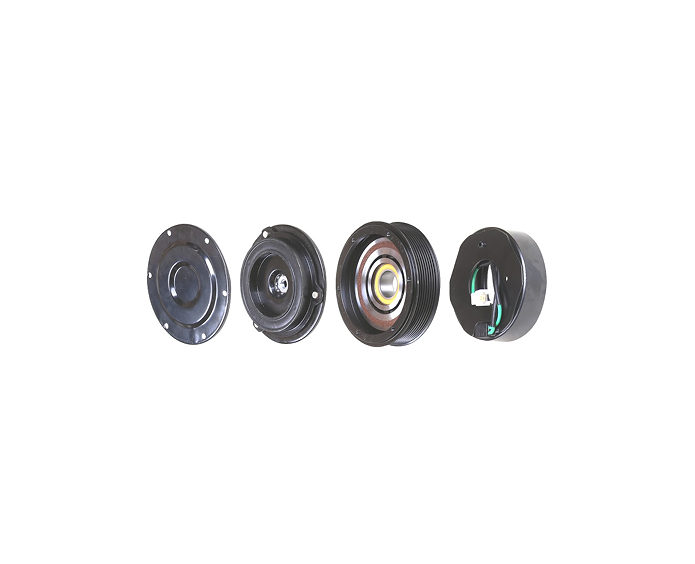
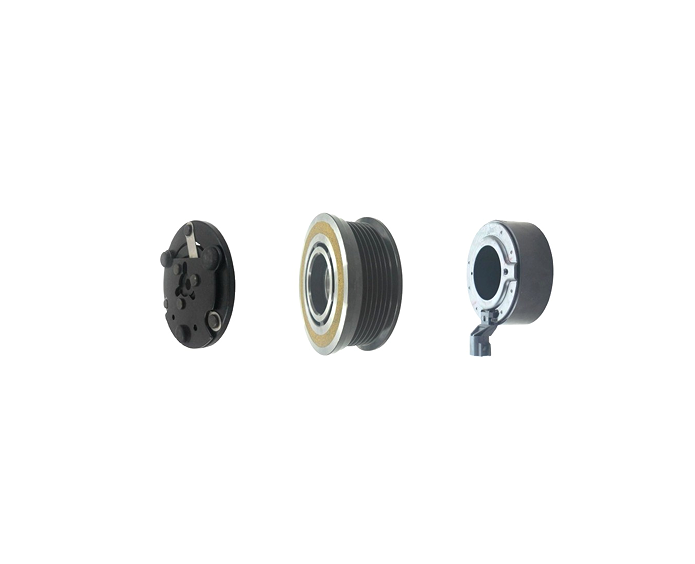
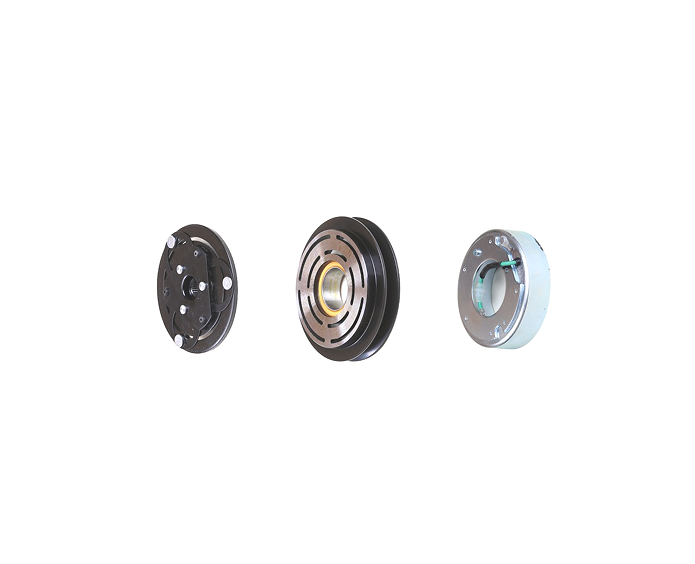
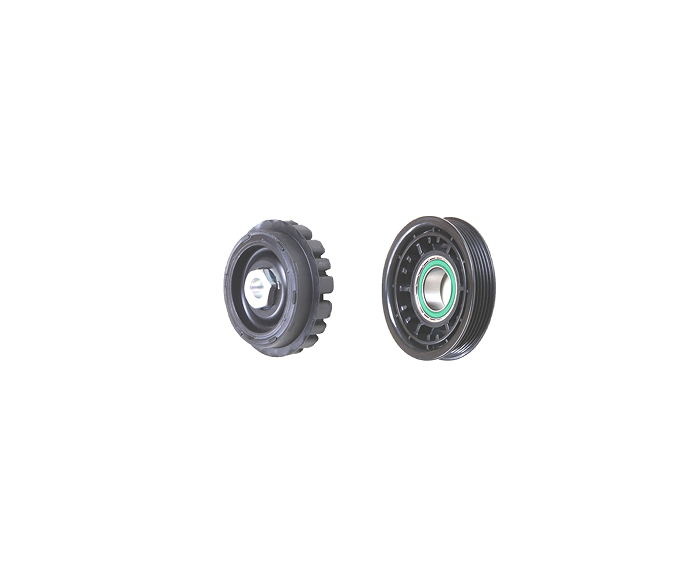
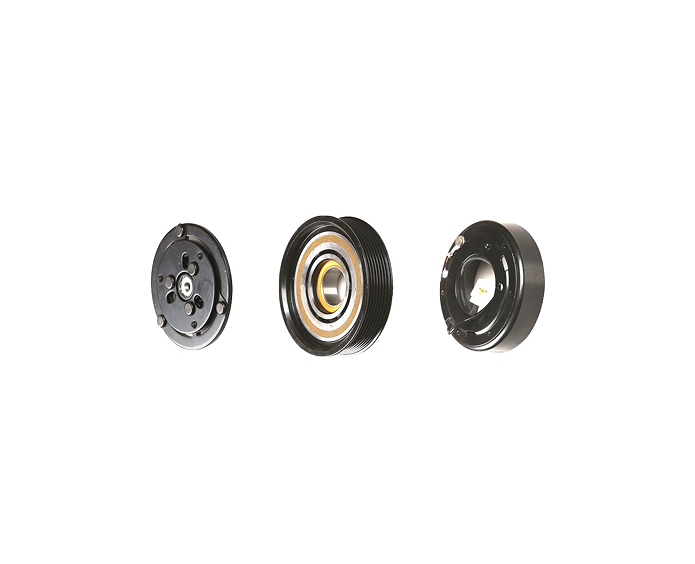
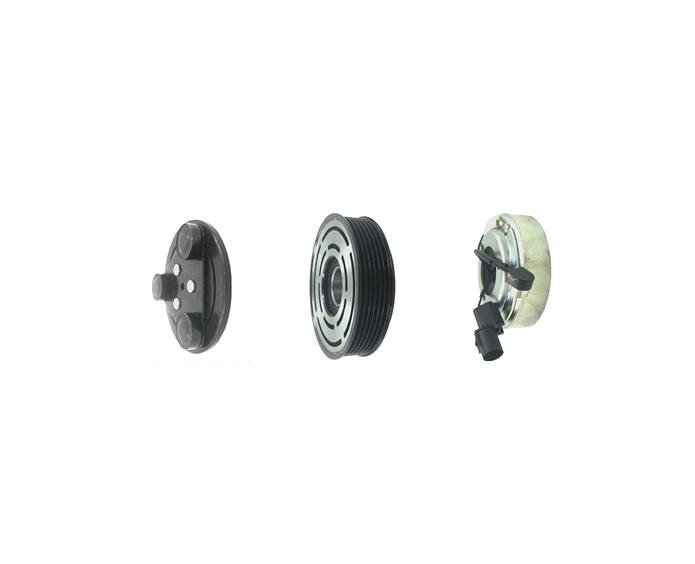
A typical clutch assembly can include:
- Pulley
- Electromagnetic coil
- Bearing
- Hub or armature plate
- Friction surfaces
A workshop may not always need a complete compressor if the failure is isolated to the clutch system. In many cases, replacing the clutch restores full functionality at a lower cost.
This creates stable demand for compressor clutch spare parts within aftermarket programs, especially in markets where repair cost sensitivity is high.
Buyers can review KASEN's auto AC compressor clutch products, which include components designed for clutch and drive system repair applications.
Clutch Coils
The clutch coil generates the electromagnetic force required for engagement.
Important matching factors include:
- Voltage (commonly 12V or 24V)
- Coil dimensions
- Connector design
- Mounting structure
- Compressor application compatibility
- Resistance value and electrical stability
Even small differences in coil geometry or connector type can lead to installation failure. For distributors, coil misidentification is a common cause of returns, making accurate cataloging essential.
Pulley and Bearings
Pulley and bearing components are important inventory items because they support partial repairs instead of full compressor replacement.
In many cases, noise or bearing wear does not require replacing the entire compressor assembly. This creates a cost-effective repair path for workshops and fleet operators.
Important information includes:
- Pulley diameter
- Number of grooves (belt compatibility)
- Bearing inner/outer dimensions
- Compressor model
- Vehicle application
- Material and heat resistance characteristics
For bearing-related products, buyers can browse the KASEN bearing range.
Compressor Control Valves
Variable-displacement compressors may use control valves to regulate output and system pressure.
Control valves must be selected based on compressor family and internal design rather than external appearance. Two valves that look similar may operate under completely different pressure control logic.
For spare-parts distributors, incorrect valve cross-referencing is a high-risk issue because it can lead to system performance complaints even when the part is physically installed correctly.
Expansion Valves
Expansion valves regulate refrigerant flow into the evaporator and directly affect cooling performance.
They are typically lower-value components but play a critical role in system efficiency. In hot-climate markets, expansion valve demand is often higher due to continuous AC usage and higher system stress.
Electric Compressors
Electric and hybrid vehicles require a different sourcing strategy compared to traditional belt-driven systems.
Electric compressors are integrated into the vehicle’s thermal management and electrical architecture. They are not interchangeable with conventional compressors.
Key selection factors include:
- Operating voltage (high-voltage systems)
- Vehicle platform compatibility
- Refrigerant type
- Lubrication requirements
- Control system communication protocol
- Mounting and cooling design
- Safety certification requirements
KASEN lists products for hybrid and electric applications in its electric compressor range.
As EV adoption increases, electric compressor spare parts are becoming a growing category in long-term inventory planning.
How Should Distributors Decide Which Spare Parts to Stock?
Trying to stock every possible reference can quickly lock working capital into slow-moving inventory. A structured classification system is more effective than expanding SKU count blindly.
Tier A: Fast-Moving Core Spare Parts
These are applications that generate frequent inquiries or repeat orders.
Typical candidates include:
- High-demand compressor models
- Common compressor clutches
- Frequently replaced bearings
- Popular control valves
- Regionally dominant vehicle applications
These items justify higher stock levels because turnover is predictable and replenishment cycles are stable.
Tier B: Application-Specific Spare Parts
These products have meaningful demand but lower frequency.
They may include:
- Older vehicle platforms still in circulation
- Specific truck or commercial vehicle applications
- Mid-volume compressor families
- Regional or market-specific models
- Less common pulley or coil configurations
A distributor may keep limited stock while relying on supplier replenishment for continuity.
Tier C: Special-Order or Long-Tail Parts
These include:
- Rare vehicle applications
- Discontinued or aging models
- Unusual compressor configurations
- Low-volume electric compressor variants
- Highly specialized commercial systems
Keeping large quantities of these items increases dead-stock risk. However, maintaining technical references is still important so that sourcing can be completed quickly when needed.
A Practical Spare-Parts Inventory Matrix
| Stock Level | Suitable Products | Inventory Goal | Main Risk |
| Core Stock | High-demand compressors, clutches, bearings | Fast fulfillment | Overstock if demand shifts |
| Limited Stock | Application-specific valves and assemblies | Balance availability and cash flow | Temporary shortage |
| Replenishment Stock | Medium-volume references | Regular supplier reorder | Lead-time dependence |
| Special Order | Rare and long-tail applications | Avoid dead inventory | Longer customer waiting time |
A strong spare-parts system is not defined by catalog size, but by how accurately it matches real market demand.
What Buyer Data Should Drive Your Spare-Parts Range?
Distributors should rely on real market data rather than catalog assumptions.
Useful data sources include:
- Most common vehicle brands in the region
- Frequently requested compressor models
- Workshop inquiry frequency
- Seasonal demand patterns
- Return and complaint records
- Fleet customer vehicle composition
- Repeat purchase behavior
- Price sensitivity by product category
Use Workshop Feedback
Repair workshops provide practical insights such as:
- Repeated clutch failures
- Bearing wear frequency
- Compressor replacement patterns
- Valve-related system issues
- Hard-to-source applications
This feedback helps translate real repair behavior into inventory decisions.
Use Return Data
Returns should be treated as diagnostic information, not just cost.
Track reasons such as:
- Incorrect OE cross-reference
- Dimensional mismatch
- Connector incompatibility
- Mislabeling or packaging confusion
- Customer misdiagnosis
- Duplicate SKU management issues
Over time, this data improves catalog accuracy and reduces repeat errors.
Why Fitment Accuracy Is Critical for Spare-Parts Inventory
A wrong part in a single repair is a small issue. A wrong part in bulk inventory becomes a structural problem.
Therefore, auto air conditioning spare parts should always be verified using multiple reference points.
OE Number
A key starting point for cross-reference, but not sufficient alone in complex applications.
Compressor Model
Helps distinguish similar-looking components used in different system designs.
Vehicle Information
Includes:
- Make
- Model
- Year
- Engine
- Market region
Product Photos
Useful for confirming:
- Connector shape
- Pulley structure
- Mounting points
- Overall configuration
Dimensions
Critical for clutch and bearing components:
- Pulley diameter
- Groove count
- Bearing size
- Coil dimensions
- Hub geometry
Technical Specifications to Include in a Spare-Parts Database
| Data Field | Why It Matters |
| Internal SKU | Warehouse identification |
| Supplier SKU | Repeat purchasing |
| OE reference | Cross-reference |
| Compressor model | Technical matching |
| Vehicle application | Sales identification |
| Production year | Fitment differentiation |
| Engine | Application differentiation |
| Voltage | Electrical compatibility |
| Pulley diameter | Clutch fitment |
| Groove count | Belt compatibility |
| Bearing size | Mechanical fit |
| Connector | Electrical fit |
| Product photo | Visual confirmation |
| Supplier | Reordering |
| Batch / purchase date | Traceability |
A well-structured database reduces dependency on individual staff memory and improves long-term purchasing stability.
Why System Diagnosis Still Matters to Spare-Parts Buyers
Even though distributors do not directly diagnose vehicles, poor diagnosis at workshop level still affects inventory performance.
Incorrect diagnosis can lead to:
- Unnecessary returns
- Warranty claims
- Customer dissatisfaction
- Repeat shipments
- Misleading quality perception
Industry guidance from major compressor manufacturers such as DENSO and Sanden emphasizes the importance of system-level diagnosis, including refrigerant condition, contamination, leakage, and component interaction.
For distributors, the key takeaway is:
Not every returned part is a defective part.
Many issues originate from system conditions or incorrect diagnosis rather than manufacturing defects.
Quality Control: What Should B2B Buyers Verify?
Professional buyers should define measurable quality standards rather than relying on general claims.
Incoming Components
Checks may include:
- Material consistency
- Bearing quality
- Electrical component stability
- Machining accuracy
- Surface treatment condition
Dimensional Inspection
Especially important for fitment-sensitive parts:
- Pulley dimensions
- Bearing tolerances
- Coil geometry
- Hub alignment
Electrical Checks
For relevant components:
- Voltage compatibility
- Connector integrity
- Resistance stability
Functional Inspection
Depending on product type:
- Rotation smoothness
- Engagement response
- Noise level
- Assembly fit
Batch Consistency
Repeatability is critical for distributors. A stable supplier must reproduce approved specifications across multiple production batches.
Sample Approval Should Become a Repeat-Order Standard
A sample should not be treated as a one-time reference. It should become the baseline for all future orders.
Sample Checklist
Product Identity
- Supplier code
- OE reference
- Compressor model
- Vehicle application
Physical Specification
- Dimensions
- Connector type
- Pulley configuration
- Mounting structure
Functional Requirements
- Engagement performance
- Electrical compatibility
- Installation fit
Packaging
- Label accuracy
- SKU consistency
- Barcode/QR code
- Carton quantity
Packaging and Labeling Are Part of Spare-Parts Quality
Packaging is often underestimated, but it directly affects warehouse efficiency and shipping accuracy.
A proper label should include:
- Product code
- OE reference
- Application
- Supplier SKU
- Quantity
- Barcode or QR code
Poor labeling can cause wrong shipments even when the product itself is correct.
Spare Parts for Different Vehicle and Operating Environments
Passenger Vehicles
- High SKU diversity
- Fast turnover
- Price sensitivity
- Compact inventory needs
Commercial Vehicles
- Higher durability requirements
- Longer service cycles
- Stable replenishment demand
Fleet Maintenance
- Predictable vehicle models
- Planned maintenance cycles
- Controlled SKU range
Hot-Climate Markets
- Higher AC usage
- Faster wear rates
- Strong demand for compressors and clutches
Hybrid and EV Applications
- High-voltage safety requirements
- System integration complexity
- Separate catalog structure required
How to Evaluate an Auto AC Spare Parts Supplier
A supplier should be evaluated as part of your inventory system.
Product Coverage
KASEN provides:
- AC compressors
- Compressor clutches
- Electric compressors
- Valves
- Bearings
Matching Capability
Ability to work with:
- OE numbers
- Samples
- Drawings
- Photos
- Vehicle data
Repeat Supply Stability
Consistent reordering capability is essential for long-term programs.
Documentation Quality
Clear technical data reduces purchasing errors.
OEM / Private Label Support
Including packaging, branding, and drawing-based development.
How Unit Price Can Hide Spare-Parts Costs
Low unit price does not always mean low total cost.
Hidden costs may include:
- Returns
- Repacking
- Relabeling
- Warranty handling
- Emergency shipping
- Dead stock
- Customer complaints
OEM and Private-Label Spare-Parts Programs
Private-label buyers require stricter control over:
- SKU consistency
- Packaging design
- Label accuracy
- Product traceability
- Brand protection
A Six-Step Procurement Process for Auto Air Conditioning Spare Parts
- Define market demand
- Build SKU structure
- Provide complete technical data
- Approve samples
- Verify first bulk order
- Optimize based on sales data
Why KASEN Can Support a Multi-Category Automotive AC Spare-Parts Program
Since 2007, KASEN has focused on automotive air conditioning systems, supplying compressors, clutches, electric compressors, valves, and bearings to global aftermarket customers.
Buyers can:
- Explore KASEN products
- View compressors
- View clutches
- View bearings
- View electric compressors
- Learn more about KASEN
- Contact KASEN
Frequently Asked Questions About Auto Air Conditioning Spare Parts
What are the most common auto air conditioning spare parts?
Compressors, clutches, bearings, control valves, expansion valves, and electric compressors.
What is the difference between spare parts and replacement parts?
Replacement parts are reactive; spare parts are pre-stocked for future demand.
How should distributors choose stock?
Based on real demand, workshop feedback, and return data.
Is OE number enough?
No, additional vehicle and dimensional data is often required.
Should both compressors and repair parts be stocked?
Yes, depending on market demand structure.
How to reduce dead stock?
Use tiered inventory classification.
Why is sample approval important?
It ensures repeat-order consistency.
Can private labeling be supported?
Yes, depending on requirements.
How to request quotation?
Provide OE numbers, samples, drawings, and vehicle data via KASEN contact page.
Conclusion
A successful auto air conditioning spare parts strategy is built on structured inventory planning, accurate fitment control, and long-term supplier consistency—not on catalog size alone.
By combining demand analysis, technical verification, and disciplined stock classification, distributors can reduce risk while improving service speed and profitability.
KASEN supports global buyers with a full range of automotive AC components and can assist with both standard and customized spare-parts programs.