
What Should an AC Compressor Clutch Plate Manufacturer Help Buyers Confirm?
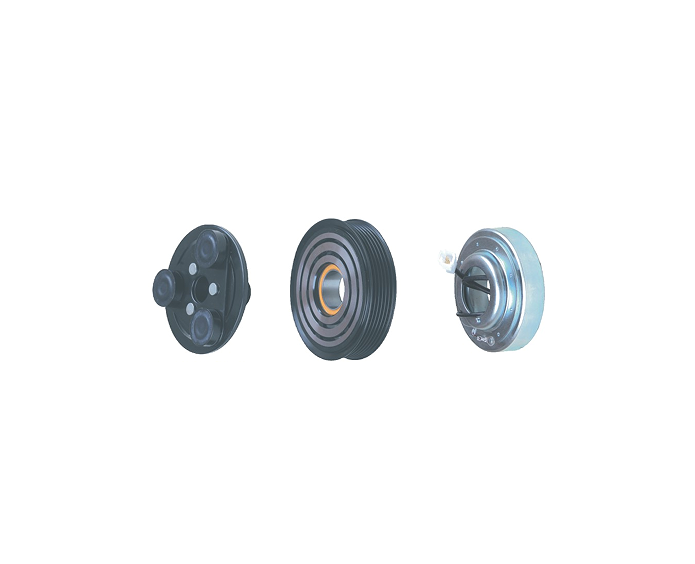
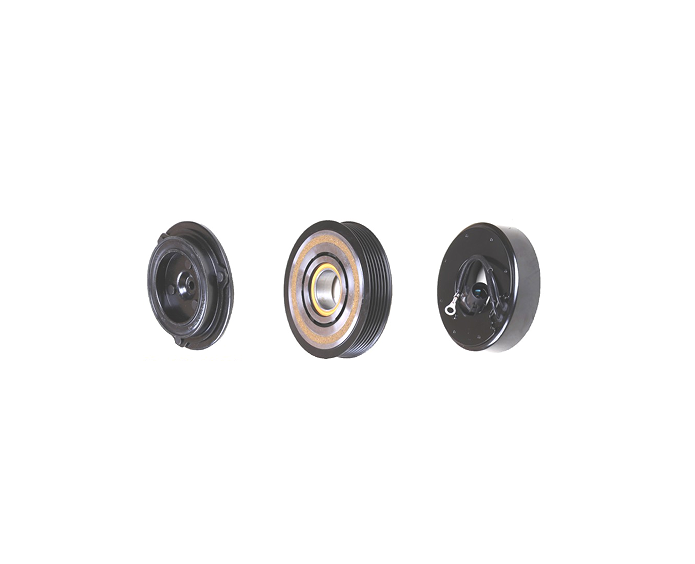
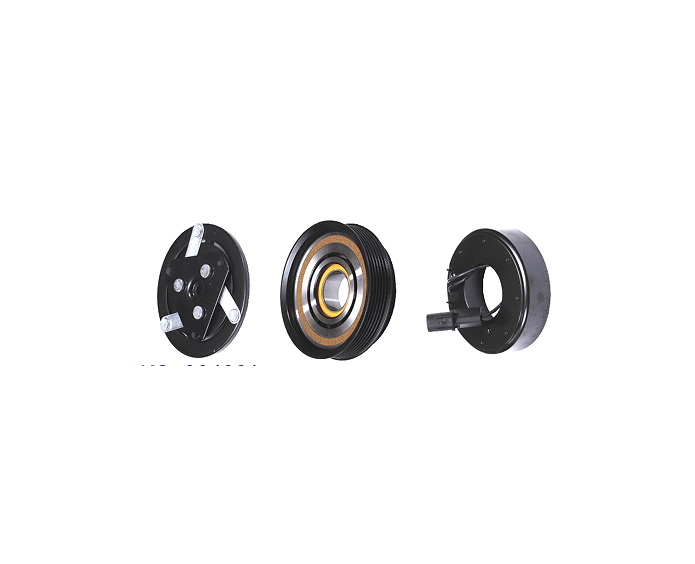
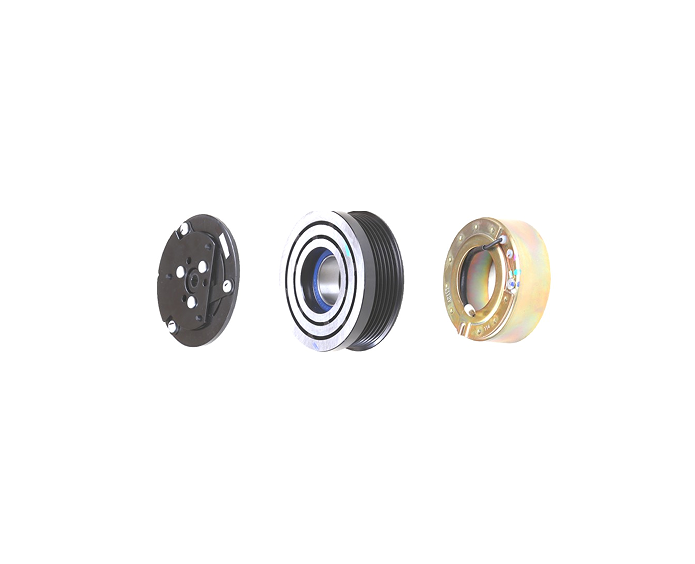
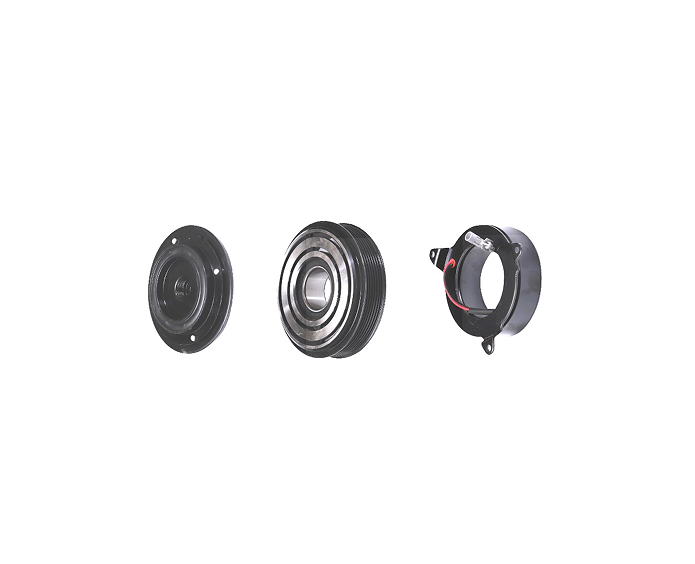
An AC compressor clutch plate manufacturer should help buyers confirm whether the plate can work correctly with the intended compressor clutch assembly, not simply whether it has the same round shape as the original part. Depending on industry terminology and clutch design, buyers may also encounter names such as armature plate, drive plate, or a hub-and-armature assembly. For purchasing purposes, the important issue is not the name alone but the component's relationship with the hub, compressor shaft, pulley and electromagnetic coil.
In a conventional electromagnetic compressor clutch, the pulley rotates with the accessory belt while the compressor is disengaged. When the coil is energized, magnetic force attracts the armature or clutch plate toward the pulley. The engaged plate then transfers torque through the hub arrangement to the compressor shaft. This makes plate geometry, shaft or hub interface, engagement surface and installed clearance important to the complete clutch system.
Buyers that need to understand the entire assembly can review the KASEN AC compressor clutch product range. The purchasing objective for an individual plate should be clear: identify the exact clutch configuration, approve a controlled replacement component and ensure the same configuration can be supplied again.
Who Normally Buys AC Compressor Clutch Plates Separately?
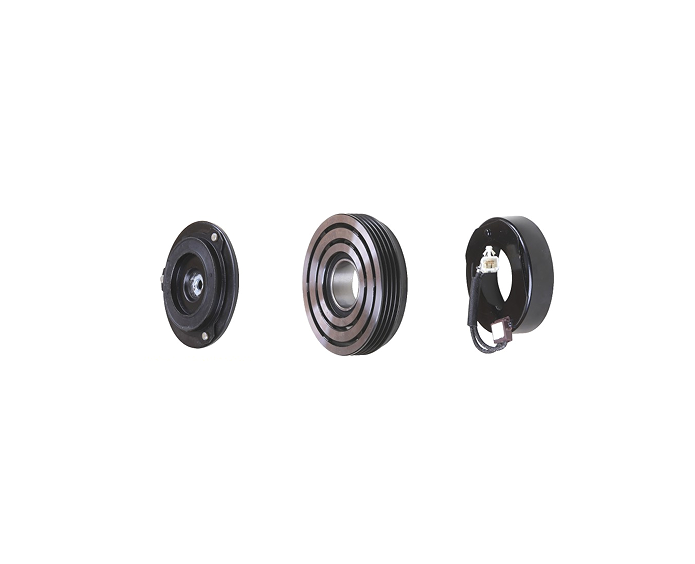
Separate clutch plate sourcing is most relevant to compressor rebuilders, automotive AC repair specialists, replacement-parts distributors, component wholesalers and aftermarket brands that support component-level repairs. These buyers may already have a usable pulley, bearing and coil, making replacement of an individual plate or hub-and-plate assembly commercially practical.
A plate-only repair is less suitable when the condition of the complete clutch is uncertain. Excessive wear, bearing damage, coil failure, distorted pulley surfaces or compressor-shaft problems can make replacement of one component insufficient. Where several front-clutch components require replacement, buyers should compare the component-level repair with sourcing a complete AC compressor clutch assembly.
The supplier should therefore help clarify the supply scope. “Clutch plate” may refer to different supplied configurations in different catalogues, so every RFQ should state whether the buyer needs the armature plate alone, a hub-and-plate assembly, associated hardware or a complete clutch.
Start Identification With the Compressor and Existing Assembly
Visual identification alone creates significant risk. Two clutch plates can have similar diameters and surface appearance but use different center interfaces, offsets, hub structures or attachment methods.
Before requesting a quotation, provide the compressor manufacturer or model where available, OE or existing clutch reference, vehicle information where confirmed, photographs of the complete clutch and removed plate, and dimensional information from the original component. A clear compressor label photograph is often more useful than a broad vehicle description.
Useful identification information can include the center interface, total diameter, relevant plate thickness, hub height, locating features and relationship with the pulley. The actual fields depend on clutch design, so the buyer should not assume that one measurement is universally sufficient.
If a value is unknown, mark it to be confirmed. An incomplete but honest specification is safer than copying a dimension from another visually similar product.
Build a Controlled Clutch Plate Specification Before Comparing Prices
Price comparison becomes meaningful only after suppliers are discussing the same product. The following table is a B2B purchasing framework rather than a published universal KASEN clutch-plate specification.
| Specification Item | What the Buyer Should Confirm | Why It Matters |
|---|---|---|
| Supplier reference | Exact supplier or KASEN clutch reference | Supports future reordering |
| Buyer SKU | Distributor's internal code | Connects sales, purchasing and warehouse |
| Compressor identity | Compressor model/reference | Establishes technical application |
| Supply configuration | Plate only, hub-and-plate or complete related set | Prevents quotation misunderstandings |
| Plate diameter | Confirmed relevant outside dimension | Supports assembly matching |
| Center interface | Hub, spline, bore or attachment configuration | Controls shaft-side compatibility |
| Hub/plate relationship | Fixed, flexible or other applicable construction | Defines supplied configuration |
| Plate thickness/height | Relevant axial dimensions | Controls installed geometry |
| Engagement surface | Approved surface condition and geometry | Affects clutch engagement |
| Mounting features | Holes, rivets, tabs or locating features | Controls assembly |
| Sample revision | Approved physical version | Prevents version confusion |
| Packaging identification | Supplier code and buyer SKU | Reduces warehouse errors |
The same record should remain connected to the sample, quotation, production release and repeat-order history.
Understand the Difference Between the Plate and the Hub
The terms “clutch plate” and “hub” are sometimes used loosely in aftermarket discussions, but buyers should establish exactly which component the supplier is quoting.
The armature or clutch plate is the surface pulled toward the rotating pulley when electromagnetic force is applied. The hub connects the driven portion of the clutch with the compressor shaft. Depending on design, these can form one supplied assembly or include additional flexible or connecting elements.
This distinction is particularly important when a distributor is building product descriptions. A product should not be listed as “hub,” “plate,” and “complete clutch” interchangeably unless the actual supplied contents support those terms.
KASEN's broader automotive AC compressor clutch information can be used to understand how the pulley, coil, bearing and driven components interact. For component purchasing, the buyer should then request the exact configuration for the selected compressor.
Shaft and Hub Fitment Should Be Verified Before Plate Diameter
A clutch plate with the correct outside diameter can still be unusable if its center interface does not suit the compressor shaft or related hub.
Depending on compressor design, buyers may need to verify shaft profile, center bore, spline arrangement, keying, locating features or other connection geometry. The exact interface should come from the actual compressor or approved sample rather than a generic assumption.
For compressor rebuilders, this is especially important because an otherwise usable compressor may already have fixed shaft geometry. A replacement plate or hub-and-plate assembly must match that existing interface correctly.
When comparing samples, measure from consistent reference surfaces. Photographs can support identification, but image perspective cannot reliably establish spline geometry, offset or axial dimensions.
The Engagement Surface Is a Functional Feature, Not a Cosmetic One
The clutch plate engages against the rotating pulley surface. Its contact face should therefore be evaluated as a functional surface rather than only as an appearance item.
A professional buyer should ask what surface condition is expected on the approved reference and how damage, contamination or deformation is handled during production and packing. If specific flatness, runout or other dimensional criteria are important to the project, they should be included in the technical agreement rather than assumed from a phrase such as “precision manufactured.”
Buyers should also avoid turning a general manufacturing claim into an unsupported universal tolerance. KASEN's compressor clutch manufacturing process describes machining, assembly and inspection within clutch production, but product-specific requirements should still be confirmed for the selected clutch or plate reference.
The useful supplier question is:
Which engagement-surface characteristics are controlled on this specific part, and how are they checked?
Clutch Plate Fitment Depends on the Pulley and Coil System
The clutch plate does not operate alone. Its installed position must allow the electromagnetic clutch to disengage and engage as intended.
The plate works in relation to:
- the pulley or rotor,
- electromagnetic coil,
- bearing-supported rotating assembly,
- hub,
- compressor shaft, and
- model-specific retaining hardware or spacers.
That is why combining a plate from one reference with a pulley or hub from another should not be treated as acceptable simply because the main diameters look similar.
Buyers sourcing related components can review KASEN's clutch coil range and bearing product range. These links help establish the wider component context, but compatibility still needs to be confirmed at the specific product level.
Air Gap and Installed Position Must Be Treated as Assembly Requirements
In an electromagnetic compressor clutch, the installed relationship between the armature plate and pulley affects engagement and disengagement. The relevant clearance is often discussed as the clutch air gap, but a professional article should not assign one universal numerical range to every compressor.
The appropriate requirement depends on the clutch design and manufacturer specification. When sourcing a plate, buyers should therefore ask whether the component affects installed clearance, which retaining or adjustment parts are involved, and what assembly requirement applies to the intended compressor.
A clutch plate should not be rejected or approved solely by comparing its loose-part thickness with another model. The installed assembly condition is what matters.
For distributors, this also means installation instructions should remain model-specific when required rather than being generalized across the full product range.
Evaluate Manufacturing Capability Through One Actual Plate Reference
Factory evaluation becomes more useful when the buyer follows one real product through its manufacturing and inspection steps.
Ask which operations apply to the selected plate or hub-and-plate assembly. These may involve blank preparation, forming or machining, center-interface production, surface processing, assembly and inspection depending on the design.
The objective is not to create an impressive list of machines. The objective is to understand:
What defines the product? Which operations affect that definition? How are they controlled?
If parts or processes come from external suppliers, ask how incoming components are specified and inspected. An outsourced operation does not automatically create a quality problem; uncontrolled changes create the greater purchasing risk.
KASEN's automotive compressor clutch factory guide provides a broader framework for connecting specifications, sample approval and repeatable production.
Approve a Representative Sample Before Bulk Purchasing
For a new clutch plate reference, sample approval should create a technical baseline.
Record the supplier reference, buyer SKU, compressor or clutch application, photographs, center interface, relevant dimensions, supply configuration and approval date. If the component is installed on a compressor or clutch assembly during evaluation, record exactly which assembly was used.
If the sample changes, issue a new revision rather than keeping two different parts under the description “approved sample.”
Also record limitations. If the buyer checked dimensions but did not conduct an installed engagement evaluation, the approval record should not imply that full functional fitment has been verified.
This transparency makes later receiving inspection and complaint investigation significantly easier.
Separate Production QC From Durability Validation
Routine production inspection asks whether the supplied plate matches the approved specification. Validation testing asks whether a defined configuration performs under particular conditions.
They should not be confused.
Depending on the agreed product requirements, production QC may cover:
- part identification,
- dimensional checks,
- center-interface verification,
- engagement-surface condition,
- assembly features,
- visual condition, and
- packaging identification.
If a buyer requires endurance, thermal, vibration or another performance evaluation, the product configuration, method, conditions and acceptance criteria should be defined separately.
A supplier statement such as “100% tested” is incomplete unless the buyer knows what was tested. A visual inspection and a complete clutch functional test are different activities.
Use Complete Clutch References as Application Starting Points
KASEN publishes multiple complete compressor-clutch references that can help buyers begin application discussions. These are assembly-level references rather than plate-specific specifications, so they should not be used to invent plate dimensions.
| KASEN Reference | Published Application | Groove | Pulley Diameter | Bearing Code | Plate-Level Action |
|---|---|---|---|---|---|
| KS-801009 | Yaris | 4PK | 125 mm | 355212 | Request matching plate/hub configuration |
| KS-801011 | Camry | 6PK | 130 mm | 305222 | Confirm plate and shaft interface |
| KS-802003 | 2008 CR-V 2.4 | 7PK | 110 mm | 355020 | Request model-specific driven plate data |
The table illustrates an important purchasing principle. Information about the complete clutch helps identify the assembly family, but pulley diameter, groove count or bearing code does not define the clutch plate.
A buyer requesting only the plate should therefore refer to the complete clutch or compressor first and then ask the supplier to identify the corresponding driven component.
Do Not Create Plate Specifications From Related Product Data
One of the most common content and catalogue errors is filling missing clutch-plate information using complete-clutch specifications.
For example:
- pulley outside diameter is not automatically plate diameter,
- bearing code does not define the hub interface,
- coil voltage does not define the plate geometry,
- a vehicle application does not prove compatibility with every compressor used in that vehicle.
For KASEN's content strategy, this distinction is important because it supports both technical credibility and useful B2B purchasing guidance.
A supplier catalogue should identify what is known and what still needs confirmation. Buyers are more likely to trust an accurate incomplete record than a detailed specification assembled from unrelated fields.
Plan Wholesale Plate Inventory From Repair Demand
Separate clutch components can become slow-moving inventory if distributors copy a manufacturer's full catalogue without considering actual workshop demand.
A practical range can be divided into:
Core stock: plate references supported by recurring repair demand or established compressor rebuilding programmes.
Trial stock: technically confirmed references with limited sales history.
Special-order stock: infrequent applications sourced when customer demand exists.
The same principle applies to quantities. MOQ is a supplier condition; it is not evidence that a distributor should stock that many units.
For broader inventory planning, buyers can use KASEN's bulk AC compressor clutch sourcing guide, which discusses core stock, trial references, SKU control and mixed-product orders.
Require Clear Identification for Similar-Looking Plates
Clutch plates can look extremely similar once removed from their original packaging. Wholesale suppliers and distributors should therefore use stable part numbers and packaging labels.
A useful package can identify:
- supplier reference,
- buyer SKU,
- relevant compressor or clutch reference,
- quantity, and
- batch or order identification where agreed.
Private-label buyers should ensure the catalogue listing, barcode and box all point to the same approved product.
Do not rely on warehouse employees remembering differences in center shape or surface appearance. A robust inventory system should make the product identifiable without expert visual recognition.
Use Change Control to Protect Repeat Orders
A successful first order establishes a baseline. Repeat-order reliability depends on whether that baseline remains controlled.
Agree which changes require buyer review. For a clutch plate or hub-and-plate assembly, these may include:
- center-interface revision,
- plate geometry change,
- material change,
- surface-process change,
- hub or connecting-element change,
- manufacturing-process change affecting controlled characteristics, or
- packaging identification revision.
When a change is proposed, record the affected product, reason and first production batch. Determine whether documentation review or a new sample is required.
This is especially important for aftermarket brands because their customers continue ordering under the same SKU.
Separate Standard Replacement, Private Label and OEM Plate Projects
Three sourcing routes should remain distinct.
A standard replacement project uses an existing approved configuration.
A private-label project normally keeps that technical product while adding buyer codes, labels, barcodes or packaging.
An OEM/custom project changes a technical requirement and therefore needs additional engineering evaluation.
If the project changes the center interface, hub construction, plate geometry or another functional characteristic, describe the requested change explicitly rather than asking simply for “OEM clutch plate.”
KASEN states that it welcomes custom-production discussions based on drawings or OEM numbers. Buyers can review the KASEN company information before submitting drawings, existing samples or development requirements. Actual feasibility, tooling, samples, MOQ and production conditions should be confirmed for each project.
Compare Total Sourcing Risk, Not Only Unit Price
A low clutch-plate price has limited value if the component cannot be installed or repeatedly identified.
The buyer's true sourcing cost can also include:
- sample evaluation,
- inspection,
- international freight,
- warehouse handling,
- returns,
- technician time,
- repacking, and
- slow-moving inventory.
Compare suppliers using the same technical scope and supply configuration. A plate-only quotation should not be compared directly with a hub-and-plate assembly without adjusting for the difference in contents.
Do not invent a theoretical return percentage simply to justify one supplier. Build future sourcing decisions from real sales, fitment and complaint data once the programme develops history.
Prepare an RFQ an AC Compressor Clutch Plate Manufacturer Can Answer
A useful enquiry should identify the product before discussing mass quantity. Provide the compressor or complete clutch reference, vehicle information where verified, photographs of the existing plate, center-interface details, available dimensions, required quantity and target market.
State clearly whether you need:
- clutch plate only,
- hub-and-plate assembly,
- related hardware,
- private-label packaging, or
- technical customization.
If an old sample is available, tell the supplier whether the objective is an equivalent replacement or a modified design.
Review the KASEN automotive AC product center and submit your requirements through the KASEN inquiry page. A structured enquiry makes it easier to separate confirmed fitment from specifications that still require technical review.
Frequently Asked Questions About AC Compressor Clutch Plate Manufacturers
1. What is an AC compressor clutch plate?
The term generally refers to the driven or armature component that is attracted toward the pulley when the electromagnetic clutch engages. Depending on clutch design and supplier terminology, it may be supplied alone or together with a hub or related connecting components.
2. Is a clutch plate the same as a clutch hub?
Not necessarily. The plate provides the engagement surface, while the hub connects the driven clutch structure with the compressor shaft. Some products combine these functions into one supplied assembly, so the quotation should state exactly what is included.
3. Can I choose a clutch plate by outside diameter?
No. Diameter is only one possible identification field. The center interface, hub structure, axial geometry, clutch assembly and compressor application also need confirmation.
4. Why is the shaft interface important?
The driven clutch component ultimately needs to transfer torque to the compressor shaft. A plate or hub assembly with an incorrect center interface may be impossible to install even if its outside dimensions look correct.
5. Should I replace the plate or the complete clutch?
That depends on the condition of the remaining components and the repair diagnosis. When the pulley, bearing, coil and related components remain suitable, component-level replacement may be practical. Multiple damaged components can make a complete clutch assembly more appropriate.
6. Should distributors approve a sample before bulk ordering?
For a new or uncertain reference, sample approval is strongly useful as a purchasing control. Record the sample reference, dimensions, interface, application and approval limitations before adding the product to regular inventory.
7. What quality checks should I request?
Start from the approved specification. Depending on the product, relevant checks can include identification, dimensions, center-interface geometry, surface condition and assembly features. Specialized durability testing should be defined separately.
8. Can several clutch plates that look similar be interchangeable?
Visual similarity does not establish interchangeability. Different compressors can use different center interfaces, offsets or attachment structures even when their driven plates appear similar.
9. Can KASEN discuss custom clutch plate projects?
KASEN states that it welcomes custom-production discussions based on customer drawings or OEM numbers. Buyers should provide the existing compressor/clutch information, sample or drawing and proposed changes so feasibility and project conditions can be evaluated.
10. How do I request a clutch plate quotation from KASEN?
Provide the compressor or clutch reference, photographs, center-interface information, available dimensions, quantity and required supply configuration. Submit the project through Contact KASEN for a model-specific discussion.
Conclusion
Choosing an AC compressor clutch plate manufacturer requires accurate understanding of the driven clutch component, its hub or shaft interface and its relationship with the pulley and electromagnetic system. Automotive AC distributors and compressor rebuilders should identify the complete clutch application first, define plate-level specifications, approve representative samples, separate routine production QC from validation and require change control for repeat orders. KASEN offers multiple automotive AC compressor clutch references that can provide starting points for component identification, while plate-specific dimensions and compatibility should be confirmed for the selected model rather than inferred from pulley or bearing information. Review the KASEN AC compressor clutch range and send your clutch references, old-part photographs, quantities and technical requirements through KASEN Contact Us to discuss a model-specific sourcing project.