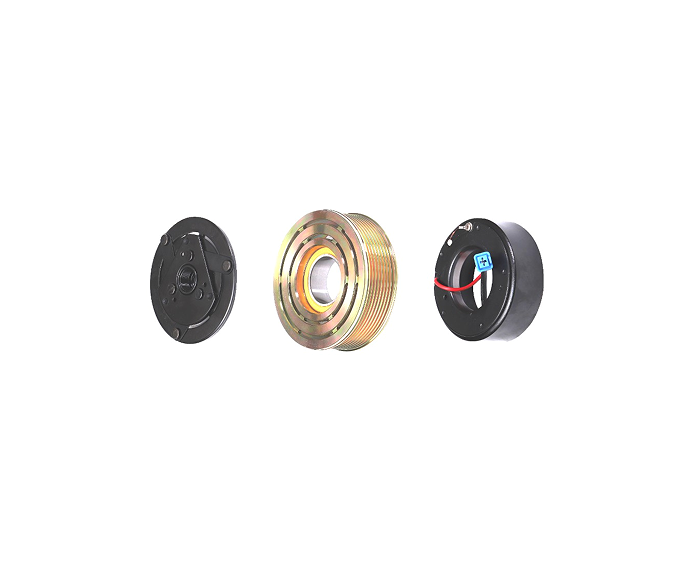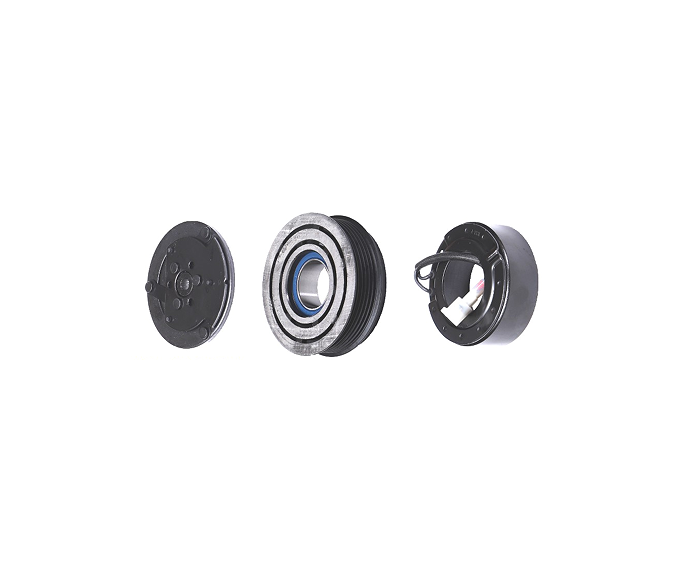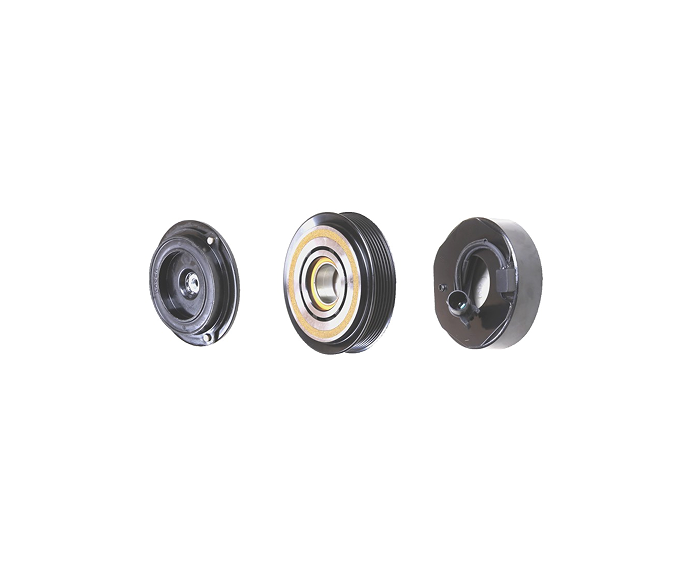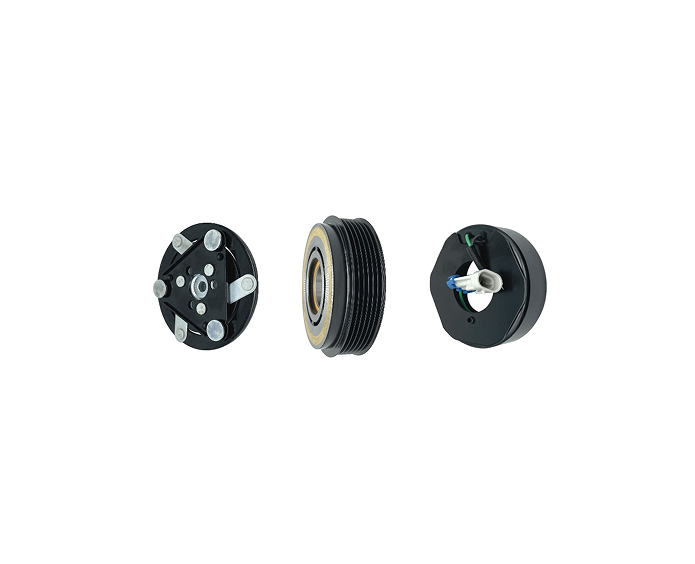

A 24V electric AC compressor supplier should be evaluated by the complete vehicle application, not by a voltage number or a catalogue photograph. In a bus, truck, van, sleeper HVAC system, parking cooler, or auxiliary battery installation, 24V identifies the low-voltage electrical architecture; it does not prove the compressor's cooling capacity, continuous-duty suitability, control method, mounting fit, refrigerant compatibility, or repeat-production quality. A buyer needs a reference-specific record that links the compressor to the vehicle, battery and alternator conditions, duty cycle, electrical protection, refrigerant circuit, sample evidence, and commercial supply plan.
How to Compare a 24V Electric AC Compressor Supplier
Compare suppliers in four connected stages: define the vehicle duty, verify the electrical and refrigerant interfaces, approve a traceable sample, and lock the commercial controls for repeat supply. A supplier that answers only one stage may still create risk at installation or replenishment. Keep engineering, purchasing, warehouse, and workshop questions in one approval file so that the quoted part, tested sample, carton label, and repeat order all refer to the same configuration.
What a 24V Electric AC Compressor Actually Means
A 24V electric AC compressor uses an electric motor rather than a belt-driven engine pulley to compress refrigerant. The motor may be integrated with an inverter or controlled by a separate module, depending on the design. The compressor can support cabin cooling, parking HVAC, sleeper cooling, auxiliary air conditioning, battery-powered refrigeration, or a commercial-vehicle retrofit. These applications share a nominal low-voltage architecture but can have very different current demand, operating hours, control signals, thermal limits, and mechanical interfaces.
The phrase “24V compressor” is therefore incomplete. It may describe a nominal supply voltage, a permitted voltage window, or an application where the compressor is connected to a 24V battery bank. A vehicle may see voltage above or below nominal during alternator charging, engine start, battery recovery, or low-state-of-charge operation. The RFQ must state the vehicle-side voltage range and the supplier must state the compressor-side assumptions. A 24V clutch coil used on a belt-driven compressor is also not the same product as a 24V electric compressor; the former switches a mechanical compressor while the latter contains an electric drive and a refrigerant-compression mechanism.
| Term in a quotation | What it may describe | What the buyer must still confirm |
|---|---|---|
| 24V electric compressor | Electrically driven compressor for a low-voltage vehicle or auxiliary system. | Voltage range, current, control, capacity conditions, ports, refrigerant, oil, mounting, and duty cycle. |
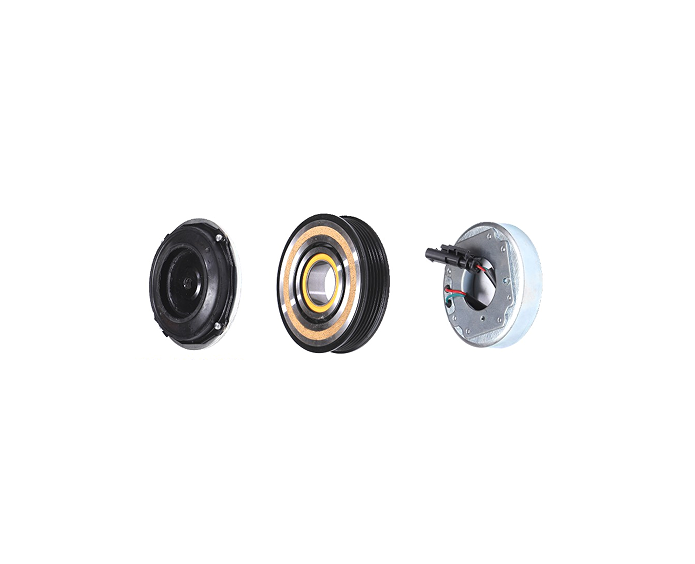
| 24V compressor clutch | Electromagnetic clutch coil and pulley for a belt-driven compressor. | Compressor model, pulley, bearing, coil connector, air gap, and complete clutch scope. |
| High-voltage EV compressor | Electric compressor for a high-voltage traction-battery architecture. | High-voltage range, inverter, interlock, insulation, communication, refrigerant, and trained commissioning. |
| Auxiliary or parking compressor | Electric compressor used when the engine is off or when a separate HVAC circuit is added. | Continuous runtime, battery budget, noise, service access, mounting support, and controller responsibility. |
This distinction prevents a common sourcing error: asking for a “24V compressor” and receiving a mechanically similar but electrically or functionally different part. Write the system purpose in the first line of the RFQ, then attach the old-unit label, vehicle information, connector photographs, port photographs, and target quantity.
Start With the Vehicle and Duty Profile
A supplier can only propose a responsible reference after the buyer defines where and how the compressor will operate. Record the vehicle type, model or body, model year, market, powertrain, HVAC layout, available battery capacity, alternator output, expected ambient range, and installation location. For a fleet, add the number of vehicles, daily operating hours, seasonal peak, route conditions, idling policy, and planned annual consumption. The same compressor may be acceptable for intermittent van cooling and unsuitable for a bus that runs an auxiliary unit for ten hours each day.
Bus and coach HVAC
Buses may have long cabin volumes, frequent door openings, high solar loads, and long operating periods. A 24V electric compressor used in an auxiliary circuit must be reviewed for mounting stiffness, vibration, hose routing, service access, electrical protection, and noise. Ask which test or application evidence applies to the requested operating profile. Do not convert a passenger-car claim into a bus capacity guarantee without an application test.
Truck sleeper and parking air conditioning
Sleeper and parking systems often run with the engine stopped. Their battery budget, low-voltage cut-off, start-up current, and continuous-duty expectation are central purchasing fields. The buyer should state the desired operating time, battery-bank configuration, ambient temperature, and whether the compressor is part of a complete parking HVAC kit or only a replacement component. A supplier should identify which controller, wiring, fuse, relay, bracket, and refrigerant components are included.
Commercial vans and service vehicles
Vans may use an auxiliary rear evaporator, a mobile workshop cooling system, or a retrofit air-conditioning package. Confirm the available installation space, mounting orientation, line length, height difference, connector position, and service-tool clearance. A compact housing is not automatically a direct fit. The physical sample should be compared with the old unit and the vehicle-side bracket before bulk approval.
Refrigerated or special-purpose vehicles
Refrigerated transport, emergency vehicles, and special-purpose platforms can combine cabin and cargo cooling. Define which circuit the 24V compressor serves and whether it is allowed to run simultaneously with other loads. A compressor for a cargo circuit may be exposed to different start-stop patterns, vibration, and control signals than a cabin unit. The buyer should keep the compressor reference, system drawing, and application limits together in the approval record.
Build a 24V Compressor Sourcing Matrix
Before comparing suppliers, create one row for each vehicle or system reference. The matrix should follow the quotation, sample, purchase order, incoming inspection, and warranty record. It makes missing information visible and stops a catalogue title from becoming an uncontrolled product claim.
| RFQ field | Buyer input | Supplier response to request |
|---|---|---|
| Vehicle identity | Make, model, year, market, powertrain, fleet or body type. | Proposed reference and fitment basis, including any exclusions. |
| System purpose | Cabin, parking, sleeper, auxiliary, cargo, battery cooling, or retrofit. | Application boundary and known duty limitations. |
| Electrical supply | Nominal voltage, minimum and maximum voltage, battery and alternator conditions. | Compressor voltage range, current information, fuse or protection assumptions. |
| Control | On/off, variable command, PWM, communication, external controller, or vehicle module. | Connector, pin definition, command boundary, controller scope, and commissioning notes. |
| Mechanical fit | Mounting holes, orientation, dimensions, bracket, port position, clearance. | Drawing, photographs, included hardware, and sample comparison plan. |
| Refrigerant circuit | Refrigerant, oil, charge method, port type, hose and seal details. | Reference-specific compatibility and service instructions. |
| Operating profile | Runtime, start-stop frequency, ambient range, vibration, noise target. | Applicable test conditions or requirement for buyer application validation. |
| Commercial scope | New or remanufactured, quantity, destination, packaging, label, launch date. | MOQ, price basis, lead-time trigger, packing, warranty, and claims route. |
Use “confirmed,” “supplier evidence,” “buyer validation,” and “pending” as separate status fields. This is more useful than a single “compatible” column because compatibility can be exact, equivalent, conditional, or unresolved. The matrix also gives purchasing and engineering teams one shared language when they compare two 24V electric AC compressor suppliers.
Verify Voltage, Current, and Electrical Protection
Voltage is the first filter, not the final approval. Ask the supplier to state the nominal voltage, permitted operating range, start-up behavior, steady-state current or power conditions, and control state used for any published value. If current varies with speed, pressure, ambient temperature, or command, request the test conditions. A value without speed, refrigerant, pressure, and temperature cannot be used to size a fleet's wiring or battery budget.
Confirm whether the compressor expects direct 24V power, a dedicated inverter, an external controller, or a complete auxiliary-HVAC control box. Record the positive and negative terminals, connector keying, cable length, interlock or enable signal, ground strategy, fuse recommendation, and protective cap. Never assume that a connector with the same shape has the same pinout. Photograph the vehicle harness and the compressor connector face in the RFQ.
Start-up and low-voltage behavior
A parking unit may start when the battery is partially discharged. Ask whether the compressor has a defined low-voltage cut-off, a soft-start strategy, or a controller-side protection requirement. The buyer should evaluate start-up current alongside other loads such as fans, pumps, lights, lifts, and telematics. If the compressor is connected to an alternator-fed circuit, confirm the transient conditions that the vehicle manufacturer permits.
Control responsibility
Clarify who supplies the controller and who owns commissioning. A compressor supplier may provide an electric compressor only, a compressor plus inverter, or a complete control package. The quotation should name each included part and identify what remains vehicle-side. If a communication network or programming step is required, request the interface description and state whether the supplier supports a stand-alone test or only the original vehicle module.
Electrical safety
Although 24V is a low-voltage architecture compared with traction-battery systems, it can still produce high current, hot conductors, arcing, and battery damage if wired incorrectly. Installation and commissioning should follow the vehicle or equipment manufacturer's isolation and protection procedure. Do not bypass fuses, polarity protection, or a controller interlock to accelerate a bench test.
Review Electric Compressor References
Match Refrigerant, Oil, Ports, and Mounting
The refrigerant circuit must be approved together with the electrical interface. Confirm the refrigerant family, oil type, oil charge or service quantity, port diameter, port orientation, sealing surface, O-ring specification, protective caps, and contamination-control procedure. Do not transfer an oil assumption from a belt-driven compressor or another 24V model. The compressor, hose, evaporator, condenser, receiver, expansion device, and service procedure must be treated as one system.
Port position is a frequent cause of “almost fits” failures. Compare the old compressor and sample from front, rear, top, and side views with a scale. Record mounting-ear location, bolt pattern, bracket, shaft or body clearance, connector orientation, line bend radius, and service-tool access. If an adapter or bracket is required, it belongs in the quotation and the approved drawing; it should not appear as an unplanned workshop modification after shipment.
| Interface | Evidence to collect | Release question |
|---|---|---|
| Refrigerant | Vehicle service data, compressor label, product instruction, and approved circuit. | Is the candidate reference intended for the same refrigerant and operating range? |
| Oil | Oil family, quantity, insulation requirement, fill state, and service note. | Does the quotation state whether oil is supplied, adjusted, or excluded? |
| Ports and seals | Diameter, angle, thread or flange, seal type, cap, and hose photograph. | Can the hose route be installed without stress or an unapproved adapter? |
| Mounting | Drawing, bolt pattern, bracket, orientation, fasteners, and clearance. | Does the sample match the vehicle support and allow service access? |
Separate Product Scope From a Complete HVAC Kit
Two quotations with the same unit price may describe different supply scopes. One supplier may quote a compressor-only unit with protective caps; another may include a controller, bracket, seals, wiring, or a complete parking-air-conditioner package. The purchase order should state the exact contents, not just “24V electric compressor.” Include the compressor reference, controller or inverter reference, connector, bracket, seals, caps, label, carton quantity, documents, and any required accessories.
Ask whether the compressor is new, remanufactured, or used. If multiple conditions are available, they must have separate part numbers, photos, test evidence, warranty terms, and pricing. Do not allow a “new/used optional” line to remain ambiguous until the shipment. For a private-label program, freeze the master sample, label artwork, carton, barcode, and condition statement before the first production lot.
For buyers building a mixed product range, the public Kasen product catalogue can help map electric compressors against commercial-vehicle and conventional AC families. A category page should be treated as a discovery tool; every approved SKU still needs its own technical and commercial record.
Demand Reference-Specific Quality Evidence
A credible 24V electric AC compressor supplier should explain which checks are performed on every unit, which are sampled, and which belong to development or application validation. The evidence must identify the part number, drawing or test revision, lot, date, and acceptance basis. A generic certificate with no link to the shipped reference is weak evidence for a fleet order.
| Evidence area | Buyer question | Why it matters in a 24V program |
|---|---|---|
| Incoming components | How are motor, housing, connector, seals, controller, and fasteners identified? | Prevents an unapproved component mix from entering a repeat lot. |
| Dimensional inspection | Which drawing revision and critical dimensions are checked? | Protects mounting, port alignment, clearance, and hose routing. |
| Electrical function | What voltage, command, rotation, current, or communication checks are recorded? | Finds polarity, connector, control, and abnormal-current problems before shipment. |
| Insulation and dielectric | Which tests apply to this design and what is the acceptance basis? | Confirms the documented electrical boundary without inventing high-voltage claims. |
| Leakage and sealing | How are ports, housing joints, seals, and protective caps checked? | Reduces refrigerant loss and contamination during installation and storage. |
| Noise and vibration | Are limits defined for the requested duty and mounting? | Important for sleeper, bus, and passenger-facing auxiliary HVAC. |
| Traceability | Can a lot, label, test record, and carton be linked to the shipped units? | Allows a fleet buyer to isolate a complaint and protect unaffected stock. |
Ask for the sample test plan before approving the sample. If the supplier cannot release a report because of proprietary limits, it should still provide the test name, reference, acceptance statement, and responsible party. Keep “tested,” “inspected,” and “declared by supplier” as different evidence types. This discipline supports a lower-AI, higher-trust product page because every claim can be traced to a specific reference.
Approve the Sample Before Comparing Bulk Price
Sample approval is the point where a catalogue proposal becomes a procurement decision. Freeze the vehicle or system identity, old-unit label, supplier part number, application, condition, voltage, control, refrigerant, oil, ports, mounting, included items, and test expectations. Photograph the carton and label before opening the sample. Compare the sample from all sides and record dimensions, connector keying, port protection, bracket, caps, seals, and documents.
- Confirm that the sample is the quoted new, remanufactured, or used condition.
- Match the compressor label and part number to the quotation and packing list.
- Check body dimensions, mounting, port orientation, connector, bracket, and clearance.
- Confirm voltage range, current or power conditions, control method, and controller scope.
- Confirm refrigerant, oil, seals, protective caps, and service instructions.
- Review applicable electrical, sealing, function, noise, and traceability evidence.
- Classify the sample as approved, conditionally approved, or rejected with owners for open actions.
Conditional approval is valuable when the physical match is acceptable but a drawing revision, controller confirmation, vehicle trial, label, or test document remains open. The approval record should state exactly what is not yet released. Do not let a sample that bolts in become a universal approval for every 24V vehicle in a catalogue.
Evaluate Supplier Manufacturing and Engineering Responsibility
The word supplier can describe a manufacturer, an approved production partner, a trading company, or a marketplace intermediary. The buyer does not need every proprietary process, but should identify who owns the part-number record, assembly, final inspection, packaging, change control, and after-sales response. Ask for a process overview, drawing owner, revision method, approved component list, test responsibility, and lot-label format.
| Supplier capability | Evidence to request | Decision implication |
|---|---|---|
| Application engineering | Reference matching process, drawings, sample comparison, and open-question log. | Shows whether the supplier can solve a fitment issue rather than only forward a catalogue. |
| Production control | Assembly scope, approved components, inspection ownership, and lot identification. | Indicates who can keep the second shipment consistent with the first. |
| Electrical responsibility | Connector records, control boundary, functional checks, and safety notes. | Reduces the risk of a 24V unit that cannot be commissioned in the intended system. |
| Change control | Notification method, sample re-approval rule, and revision history. | Protects the buyer from silent changes to motor, controller, seals, ports, or label. |
| Claims handling | Required photos, lot information, response contact, and replacement decision process. | Turns a field failure into a controlled investigation instead of an argument over responsibility. |
Kasen's public company information and product navigation establish a relevant automotive AC entity and a visible electric-compressor product family. For a real order, the buyer should ask for the exact reference record and the responsibilities attached to that quotation. A supplier that answers technical and commercial questions in one written file is easier to audit than one that provides only a generic “factory price.”
MOQ, Lead Time, Packaging, and Repeat Supply
Commercial terms should be linked to the approved reference and scope. Ask whether MOQ applies per compressor reference, per mixed shipment, per carton, or per custom label. Confirm the lead-time trigger: purchase-order receipt, deposit, artwork approval, component release, or sample approval. State whether the quoted lead time includes testing, packaging, export documents, and consolidation.
Packaging protects both product and identity. A compressor should be supported against impact and movement, while connectors, ports, seals, caps, and machined surfaces should be protected from damage and contamination. The carton label should show the buyer SKU, supplier reference, quantity, lot or date, and any orientation or handling mark agreed in the purchase order. Approve the carton and label with the sample; do not treat a generic carton photograph as final packaging evidence.
For repeat supply, agree how the supplier will notify the buyer of a change to motor, controller, connector, housing, seals, port, test method, label, or packaging. Decide which changes require a new sample and whether stock made before the change is identified separately. A fleet program benefits from a simple first-in-first-out lot record and a receiving report that captures voltage, connector, dimensions, packaging condition, and any field feedback.
Prepare an RFQ That Produces a Comparable Answer
An RFQ should make two suppliers answer the same questions. Attach the old-unit label, clear photographs, measurements, vehicle and system information, expected annual quantity, launch date, destination, and packaging needs. State whether you need a compressor-only unit, compressor plus controller, or complete auxiliary HVAC scope. Request a proposed part number, fitment basis, open questions, sample cost and timing, evidence list, MOQ, lead time, payment terms, warranty, and claims process.
Use the following sequence in the first enquiry:
- Identify the vehicle, market, system purpose, and 24V supply conditions.
- Attach the compressor label, connector, port, mounting, and installation photographs.
- State refrigerant, oil, control, controller, duty cycle, ambient range, and runtime information known to the buyer.
- Define the required supply scope, condition, quantity, packaging, label, destination, and launch timing.
- Ask for fitment evidence, drawings, test basis, sample plan, MOQ, lead time, warranty, and change-control terms.
- Record every unresolved field and set an owner and date for closure.
For a technical quotation or sample discussion, submit the reference package through the Kasen message page. For company contact details and a direct channel, use the Kasen Contact Us page. Include the complete matrix in the first message so the response can address fitment, evidence, and commercial supply together.
Common Buying Mistakes to Avoid
Choosing by nominal voltage alone
24V does not define the allowed voltage window, current, controller, capacity, or duty cycle. Require the electrical record and application conditions.
Confusing a clutch with an electric compressor
A 24V clutch coil switches a belt-driven compressor; a 24V electric compressor contains an electric drive. Their fitment, controls, and test methods are not interchangeable.
Assuming an EV compressor is a 24V replacement
Many EV compressors use high-voltage architectures with different insulation, interlock, inverter, control, and commissioning requirements. Do not use an EV catalogue label to approve a low-voltage commercial application.
Approving a photograph instead of a sample
Photos cannot prove port depth, connector pinout, mounting tolerance, internal condition, or included hardware. Use a sample and an approval record.
Comparing price before scope
A compressor-only quote, a compressor-plus-controller quote, and a complete kit quote are different commercial products. Freeze scope before comparing unit price.
Ignoring repeat-order control
A successful first sample does not guarantee the second lot. Agree lot traceability, change notification, re-approval, packaging revision, and claim evidence before the first purchase order.
FAQ: 24V Electric AC Compressor Supplier Sourcing
Is a 24V electric AC compressor suitable for every truck or bus?
No. The nominal voltage is only one matching field. The vehicle's voltage range, controller, current budget, mounting, ports, refrigerant, oil, duty cycle, vibration, and service conditions must be checked for the exact reference.
How is a 24V electric compressor different from a 24V compressor clutch?
A 24V clutch is an electromagnetic switching component for a belt-driven compressor. A 24V electric compressor is a complete electrically driven refrigerant-compression unit, often with an inverter or dedicated control interface. The parts require different RFQ data and approval tests.
What should I send to a 24V electric AC compressor supplier?
Send the vehicle and system identity, old-unit label, compressor reference, connector and port photographs, mounting measurements, voltage and control information, refrigerant and oil data, duty cycle, quantity, destination, packaging needs, and required evidence. Mark unknown fields instead of guessing.
Should a supplier provide a controller with the compressor?
It depends on the system. Some compressors use an integrated inverter, some require an external controller, and some are commanded by a vehicle module. The quotation should identify the controller boundary, connector, pin or communication assumption, and commissioning responsibility.
What tests should be requested for a 24V electric compressor?
Request reference-specific dimensional, connector, electrical-function, sealing or leakage, rotation, noise or vibration, packaging, and traceability evidence as applicable. Ask for the test conditions and acceptance basis rather than accepting a generic “tested” statement.
How should a fleet buyer handle MOQ and repeat orders?
Define MOQ per reference or mixed shipment, lead-time trigger, carton quantity, label, lot identity, change-notification rule, sample re-approval requirement, warranty, and claims process. Keep the approved sample and drawing revision with every replenishment order.
Can a 24V electric compressor be used for parking HVAC?
It may be suitable when the compressor, controller, battery, refrigerant circuit, and system are designed for that duty. Parking HVAC requires specific review of runtime, low-voltage cut-off, start-up current, noise, vibration, thermal exposure, and service access; it should not be approved from voltage alone.
Does a product-category page prove universal fitment?
No. A category page helps identify a product family. Exact fitment and supply conditions remain reference-specific and should be confirmed with the old-unit label, vehicle information, sample, drawings, test evidence, and commercial quotation.
Conclusion
Choosing a 24V electric AC compressor supplier is a commercial and engineering decision. The buyer should define the vehicle duty, distinguish a low-voltage electric compressor from a clutch or high-voltage EV unit, match voltage and control interfaces, confirm refrigerant and oil, review mounting and ports, approve a traceable sample, and agree quality evidence before comparing price. MOQ, lead time, packaging, labels, change control, and claims handling then determine whether the approved reference can be supplied repeatedly.
For a quotation, sample request, or technical consultation, review the electric compressor references and send the vehicle data, old-unit photographs, voltage and control information, duty profile, quantity, and packaging requirements through Kasen's message channel. A complete RFQ gives the supplier a clear basis for proposing the right reference and gives your engineering, purchasing, warehouse, and workshop teams one approval record to use again.