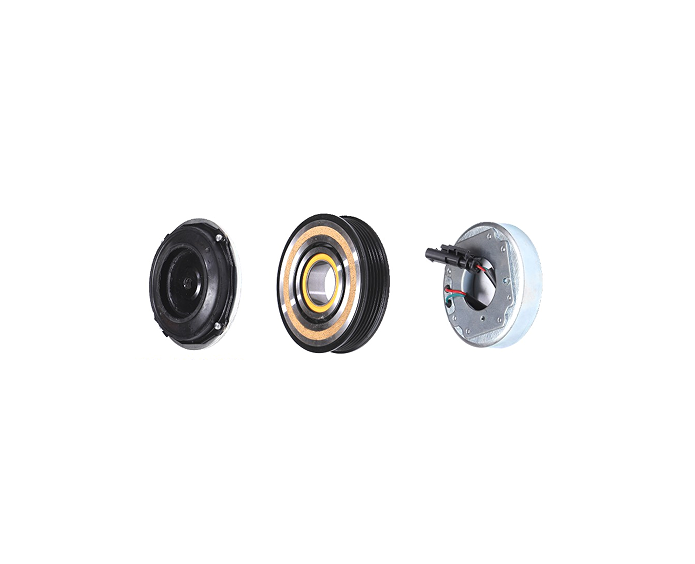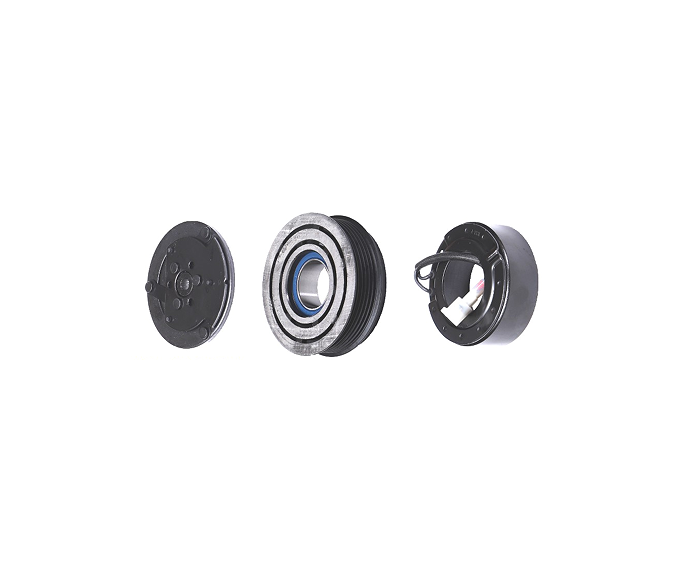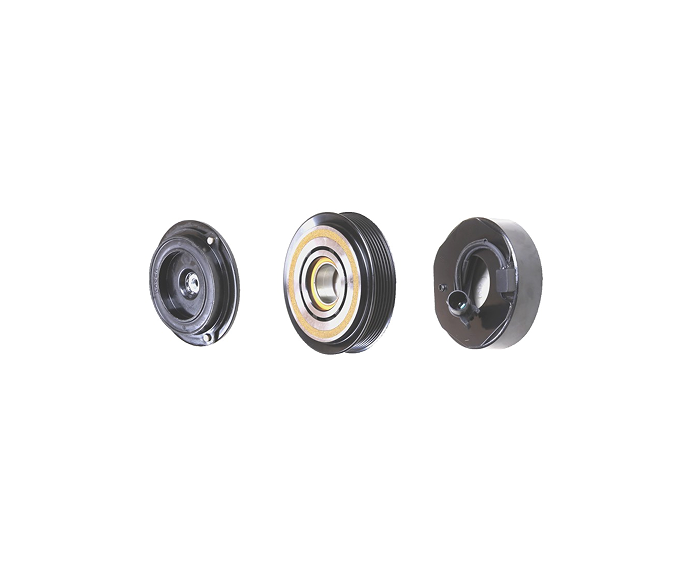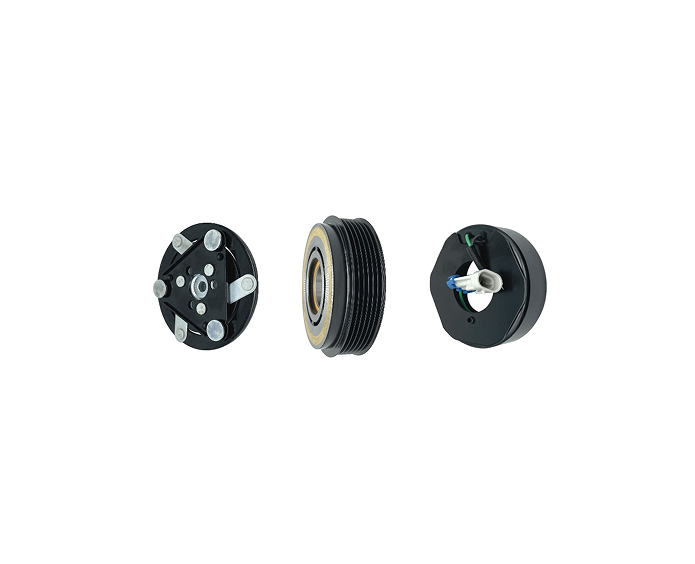

An electric air conditioning compressor should be selected from the vehicle's cooling duty and electrical architecture, not from a generic EV label or a similar-looking housing. The same compressor family may be used for cabin cooling, battery thermal management, heat-pump operation, hybrid auxiliary cooling, or a parked vehicle HVAC system, but each application can impose different requirements for voltage, control communication, refrigerant, oil, mounting, ports, duty cycle and commissioning. A reliable buyer first defines the application, then matches the compressor reference and interfaces, approves a sample, and only after that compares price, MOQ, lead time and packaging.
This guide is for EV and hybrid parts importers, distributors, fleet teams, repair networks, vehicle integrators and private-label buyers. It explains how to turn a broad request for an electric air conditioning compressor into a reference-specific sourcing brief. The focus is application selection and purchasing control: which vehicle or thermal-management duty the compressor serves, which technical fields must be confirmed, how sample evidence should be reviewed, and how to build a repeatable aftermarket SKU rather than a one-off catalogue listing.
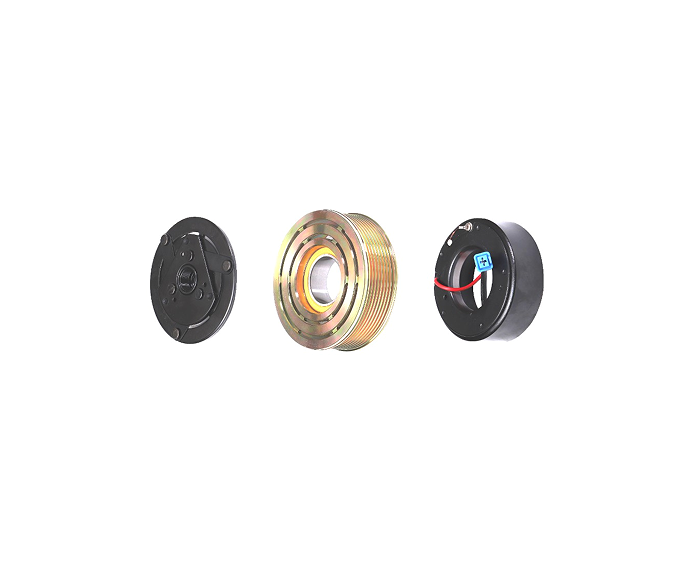
What Is an Electric Air Conditioning Compressor?
An electric air conditioning compressor is an electrically driven refrigerant-compression unit that can operate independently of a conventional engine belt and electromagnetic clutch. Depending on the design, it can contain a compression mechanism, electric motor, bearings, seals, refrigerant ports, high-voltage connector, low-voltage or communication connector, inverter and control electronics. Some units are tightly integrated; others rely on an external controller or vehicle-side control system.
The term identifies a drive architecture, not one universal specification. A compressor for a full-electric passenger car may not be suitable for a hybrid, bus, truck sleeper HVAC unit or battery chiller. A compressor that fits a mounting bracket can still be wrong for the vehicle's voltage range, communication method, refrigerant, oil, speed range or thermal-management duty. The first purchasing question should therefore be: what cooling job must this compressor perform, and what exact vehicle or system reference owns that job?
| Application label | Typical cooling duty | Matching fields that cannot be skipped |
|---|---|---|
| EV cabin air conditioning | Passenger-cabin cooling while driving, charging or parked. | Vehicle platform, voltage, control, refrigerant, oil, ports and mounting. |
| Battery thermal management | Cooling or conditioning a battery circuit through a chiller or heat exchanger. | Duty cycle, flow demand, thermal circuit, control communication and vehicle integration. |
| Hybrid vehicle AC | Cabin cooling when the engine is off or when electrical operation supplements belt drive. | Hybrid powertrain, compressor reference, voltage, control strategy and service procedure. |
| Parking or auxiliary HVAC | Cooling during rest, charging, idling restrictions or engine-off operation. | Auxiliary power source, continuous-duty expectation, mounting, noise and control. |
| Commercial EV or retrofit | Longer operating hours in buses, trucks, vans or converted platforms. | Vehicle voltage, duty profile, vibration, service access, line routing and fleet quantity. |
Choose the Application Before Choosing the Compressor
A vehicle name is not an application specification. Start with the duty profile and identify what the compressor must cool, when it must run, and which controller is allowed to command it. A passenger EV may need rapid cabin pull-down and intermittent operation. A battery thermal-management circuit may require a different operating pattern and control relationship. A parking HVAC unit may run for long periods while the engine or traction motor is stationary, making noise, power draw and service access important.
Cabin cooling
For cabin cooling, document the vehicle platform, cabin size, target market climate, evaporator or chiller connection, compressor mounting and the control request supplied by the vehicle. Do not turn a product-page statement such as “fast cooling” into a universal capacity claim. Ask for the test conditions behind any capacity, speed, current or temperature statement, and keep the claim tied to the tested reference.
Battery and power-electronics cooling
Battery thermal management may connect the compressor to a chiller, coolant loop or heat-pump strategy rather than only to a cabin evaporator. The compressor selection must consider the vehicle's thermal valves, sensors, control logic and operating schedule. The compressor supplier can confirm the compressor-side interfaces; the vehicle integrator must confirm the entire thermal circuit. A compressor that cools a cabin correctly is not automatically approved for a battery circuit.
Hybrid and engine-off operation
Hybrid platforms can use different compressor architectures across model years and markets. Some require an electrically driven compressor for cabin cooling when the engine is stopped; others combine electric and belt-driven systems in different ways. Record the exact hybrid configuration, compressor label, OE/OEM number, control connector and service data before selecting a replacement.
Parking, bus and truck HVAC
Parking HVAC and commercial vehicles often create longer or more severe duty cycles. Buyers should add operating hours, ambient conditions, vibration, mounting support, noise expectations, available service space and fleet quantity to the RFQ. A passenger-car reference may fit electrically but still be unsuitable for a commercial duty cycle that has not been evaluated.
Application Matrix for an Electric Air Conditioning Compressor
Build one row per vehicle or system reference. The matrix should remain separate from the catalogue title and should travel with the quotation, sample, purchase order and after-sales record. It allows a buyer to see which fields are confirmed and which remain open.
| Matrix field | Buyer input | Supplier response | Release status |
|---|---|---|---|
| System purpose | Cabin, battery, chiller, heat pump, parking HVAC or commercial retrofit. | Proposed application and limits of use. | Confirmed or pending. |
| Vehicle identity | Make, model, year, powertrain, market and OE/OEM number. | Match basis and supersession information. | Exact, equivalent or unresolved. |
| Electrical architecture | Nominal voltage, permitted range, connector, interlock and communication. | Compressor-side rating, connector and control assumptions. | Documented or TBC. |
| Refrigerant and oil | Vehicle service data, refrigerant, oil and charge instruction. | Reference-specific compatibility and service notes. | Confirmed or workshop check. |
| Mechanical fit | Mounting, ports, dimensions, orientation, clearance and brackets. | Drawing, sample comparison and included hardware. | Measured or pending. |
| Duty profile | Operating hours, ambient range, start-stop pattern and expected load. | Applicable test basis or limitation. | Reviewed by engineering. |
| Commercial scope | New, remanufactured or used; quantity, packaging, destination and warranty. | MOQ, lead time, price basis, packing and claims route. | Quoted or open. |
Match Electrical and Control Interfaces
Electrical compatibility is the most important difference between an electric air conditioning compressor and a conventional belt-driven compressor. Confirm the nominal voltage and operating range from the vehicle and compressor records. “High voltage” is not a complete specification. Different platforms can use different voltage ranges, connectors, interlock arrangements, inverter layouts, communication methods and commissioning requirements.
Ask whether the inverter or controller is integrated into the compressor, supplied separately, or provided by the vehicle. If an external controller is included, record its part number, connector, cooling, mounting and pairing requirements. If the controller is vehicle-supplied, ask the compressor supplier to state the expected command or communication boundary without promising that any vehicle controller will operate the unit.
Connector inspection
Photograph the high-voltage connector face, low-voltage or communication connector, keying, terminals, seals, lock and cable exit. A connector that plugs in does not prove that pin definitions or control signals are the same. Include the mating vehicle harness photograph when requesting a sample, and record any interlock or shield requirement that affects installation.
Control and commissioning
Record whether the compressor uses a variable command, a communication network, a dedicated controller or a vehicle-side module. Ask who is responsible for programming, adaptation, fault-code clearing and commissioning. A mechanically correct compressor can remain inactive if the vehicle requires a software or pairing step that was not included in the supply scope.
Electrical safety boundary
High-voltage inspection and commissioning must be performed by trained personnel using the vehicle-specific isolation, lockout and verification procedure. This article is a purchasing and application guide, not a universal high-voltage repair procedure. Do not energize an unknown compressor on a bench or bypass an interlock to accelerate sampling.
Refrigerant, Oil, and Port Compatibility
An electric compressor operates inside a refrigerant circuit, so electrical matching alone is not enough. Confirm the refrigerant, oil specification, oil quantity or service instruction, port type, seal arrangement and contamination-control requirement for the exact reference. Electric compressor oil can have electrical insulation implications in addition to lubrication requirements; do not transfer an oil assumption from a belt-driven unit or a different EV model.
Record port diameter, position, orientation, sealing surface, line connection, protective cap and any adapter or bracket included. A compressor housing that bolts into place can still require incorrect line routing or force a hose against a hot or vibrating surface. Ask for a dimensioned drawing or use a sample comparison for uncertain references.
If the compressor is supplied with oil, clarify whether it is a specified charge, assembly lubricant, residual oil, or a service quantity that must be adjusted before installation. The label, quotation, technical instruction and workshop procedure should not contradict one another. If oil or refrigerant information is missing, mark it as pending and do not release the unit for installation.
Mechanical Fit and Installation Review
Mechanical fit includes more than bolt-hole alignment. Compare body dimensions, mounting ears, bracket stiffness, port height, connector orientation, clearance, line routing, service access and fasteners. Use front, rear, top and side photographs of the old compressor with a scale, and record the vehicle-side mounting surface when a replacement is being evaluated for a retrofit or fleet conversion.
| Mechanical area | What to compare | Common purchasing mistake |
|---|---|---|
| Mounting | Ear position, bolt pattern, bracket, fastener and support. | Approving a housing that requires an unplanned bracket modification. |
| Ports | Port size, height, angle, seal, line connection and cap. | Assuming a familiar port shape guarantees correct hose routing. |
| Connector orientation | High-voltage, low-voltage and communication connector position. | Ignoring harness bend radius, access and contact with surrounding parts. |
| Clearance | Body, lines, battery, motor, exhaust, shield and service-tool space. | Checking only static fit without considering vibration or service access. |
| Included hardware | Brackets, bolts, seals, caps, adapters and labels. | Comparing a complete kit with a compressor-only quotation. |
Capacity and Duty: Ask for Conditions, Not Slogans
Buyers often ask which electric air conditioning compressor is “strongest” or “most efficient.” Those questions are incomplete without a duty profile and test condition. Capacity, power draw, speed, pressure, ambient temperature, refrigerant, oil, evaporator or chiller load and control command all affect the result. A number without its test condition cannot be used to compare two compressors responsibly.
For each candidate, ask which operating range was evaluated and whether the evidence applies to cabin cooling, battery cooling, heat-pump operation or another duty. Request the test medium, inlet and discharge conditions, speed or command, ambient temperature, sample identity and acceptance basis where available. Keep supplier claims separate from measured records and do not turn a product-page percentage into a universal field guarantee.
Continuous-duty questions
Parking HVAC, bus and truck programs may run the compressor for longer periods than a passenger-car cycle. Add expected hours, start-stop frequency, ambient exposure, vibration, noise and available cooling airflow to the engineering review. Ask the supplier whether the requested reference has evidence for that duty or whether the buyer must perform an application test.
Thermal-management questions
Battery and power-electronics cooling may use a chiller or heat-pump circuit with different control logic from cabin cooling. Confirm the thermal valves, sensors and controller responsibility at vehicle level. A supplier can verify the compressor interface, but the vehicle integrator must approve the complete thermal-management strategy.
Sample Approval for an Electric Air Conditioning Compressor
A sample should answer the application question before the buyer commits to a bulk order. Photograph the carton and label first, then compare the compressor, ports, connectors, brackets, seals, caps, documents and included hardware with the approved scope. Record whether the sample is new, remanufactured or used. Do not open or energize a high-voltage unit outside the trained workshop procedure.
- Freeze the vehicle, compressor and application identity.
- Compare the physical housing, mounting, ports and connector orientation.
- Confirm voltage, control, communication and controller arrangement.
- Confirm refrigerant, oil, seal and service instruction.
- Review applicable electrical, insulation, dielectric, sealing, rotation, noise or functional evidence.
- Check packaging, label, lot identity and included parts.
- Classify the sample as approved, conditionally approved or rejected and record open actions.
Conditional approval is useful when the physical match is acceptable but a document, label, control confirmation or vehicle application test remains open. Do not treat a sample that bolts in as a full approval for every vehicle listed under a broad catalogue title.
Quality Evidence to Request From the Supplier
Quality evidence should be tied to the reference and lot. Ask which tests are performed on every unit, which are sampled, and which are completed only during development or application validation. The exact list depends on the design, but a buyer may need dimensional inspection, connector and electrical checks, insulation or dielectric testing, leakage, rotation, noise, current, control communication and packaging verification.
| Evidence | Buyer question | How to use it |
|---|---|---|
| Dimensional record | Which drawing revision and critical features were checked? | Confirm mechanical fit and repeat production against the approved reference. |
| Electrical record | What voltage, connector, insulation or dielectric method applies? | Separate a high-voltage safety check from a simple continuity check. |
| Leak or pressure record | Was the compressor tested as a sealed unit or in a fixture? | Understand the boundary and avoid overstating field performance. |
| Functional record | What speed, command, temperature and load were used? | Compare evidence only when the test conditions are comparable. |
| Traceability record | Can the result be linked to the sample, lot, label and carton? | Support claims investigation and repeat-order control. |
A generic certificate without a part number, lot, method or date may be background information but cannot replace a release record. If the supplier cannot share a proprietary report, ask for the test category, acceptance basis and an anonymized or summary record tied to the requested reference.
What Kasen's Public Electric Compressor Pages Establish
Kasen's public electric compressor category shows new-energy compressor references for EV and hybrid applications. It is useful for mapping a project to candidate product families, but it does not establish one universal voltage, controller, refrigerant, oil, mounting, performance, MOQ or lead time for the entire category.
The EV and hybrid cooling compressor page presents the A0008301901 reference for Mercedes-Benz C-Class W205 and S-Class W222 applications and discusses vehicle piping, mounting brackets and electronic controls. Treat those statements as reference-specific product information and ask which condition, test evidence, warranty and availability apply to the quotation.
The HANON HES33 product page lists Hyundai Hybrid references including 97701CY000, 97701-CY000, CA600HCEAA02 and F502LFFAA02. It describes a sand-cast aluminum alloy housing, copper and steel windings, precision-machined internal parts and direct-fit positioning for the listed references. Those claims help a buyer formulate questions, but they should not be applied to another compressor without its own documentation.
The new-energy vehicle air-conditioning components category helps buyers connect compressor sourcing with broader EV HVAC parts. For a specific application, the product category should be followed by a vehicle and compressor matrix, sample approval and a reference-specific commercial quotation.
Supplier and Manufacturing Checks
An electric air conditioning compressor supplier should explain who owns the design, who controls production and inspection, which components can be substituted, and how changes are communicated. This does not require a buyer to demand proprietary process details. It does require a clear responsibility chain for the compressor reference and the evidence supporting it.
| Supplier capability | Evidence to request | Risk if missing |
|---|---|---|
| Application matching | OE/OEM basis, vehicle data, drawing or sample comparison. | Broad vehicle claims hide a wrong compressor variant. |
| Electrical control | Voltage, connector, communication, insulation and applicable test scope. | Mechanical fit is mistaken for safe electrical compatibility. |
| Production control | Component BOM, critical process ownership, inspection points and lot identity. | Repeat orders drift from the approved sample. |
| Change management | Notification process for housing, motor, controller, connector, seal, port or packaging changes. | Technical changes arrive under the same buyer SKU. |
| Commercial execution | MOQ, lead time, mixed models, packaging, warranty and claim route by reference. | Price comparison excludes the real supply scope and risk. |
Kasen's company profile identifies Guangzhou Kasen as an automotive air-conditioning manufacturer and exporter since 2007, with compressors, clutches, electric compressors, valves and bearings in its public scope. That establishes a relevant supplier entity and product family. It does not replace target-SKU evidence, so the buyer should request the exact matching, test, packaging and commercial records for the intended compressor.
MOQ, Lead Time, Packaging, and Repeat Orders
There is no defensible universal MOQ or lead time for every electric air conditioning compressor. The terms can vary with the reference, new or remanufactured condition, component availability, sample status, mixed-model quantity, controller or harness scope, private-label packaging, destination and inspection requirements. Ask for a quotation against the actual SKU list and write down when the lead-time clock starts.
Packaging should protect ports, connectors, machined surfaces and the housing from impact, moisture and contamination. Specify the inner support, caps, bagging, carton quantity, label, barcode, lot, pallet and destination requirements. If the product is private label, keep the technical drawing and BOM separate from artwork. Approve the package sample before a bulk order and require notice before a packaging or label change affects traceability.
For repeat supply, freeze the approved part number, application, condition, drawing revision, included parts, inspection points, package and change-notice rule. A forecast is not an availability guarantee unless the supplier confirms a capacity or stock arrangement. Replenishment should compare the new lot with the approved master sample rather than relying only on the printed SKU.
Prepare an RFQ for an Electric Air Conditioning Compressor
A strong RFQ lets a supplier return a technical answer instead of a generic electric-compressor catalogue. Send one row per proposed reference and request the response in the same order.
| RFQ field | Buyer should provide | Supplier should return |
|---|---|---|
| Application | Cabin, battery, chiller, heat pump, parking HVAC or commercial retrofit. | Application match and limitations. |
| Vehicle identity | Make, model, year, powertrain, market and OE/OEM number. | Exact, equivalent or sample-dependent proposal. |
| Electrical | Known voltage, connector, control, communication and interlock information. | Compressor rating, connector, controller scope and test basis. |
| Mechanical | Mounting, dimensions, ports, bracket, orientation and clearance. | Drawing, sample matching and included hardware. |
| Refrigerant and oil | Vehicle service data, refrigerant, oil and seal requirements. | Reference-specific compatibility and service instruction. |
| Commercial | New/remanufactured/used condition, quantity, destination, packaging and warranty. | MOQ, lead time trigger, price assumptions, packing and claim route. |
| Evidence | Required sample, electrical, sealing, functional and traceability records. | Available reports, inspection plan and open fields. |
For a quotation or sample, send the application matrix through the Kasen message page. Include the old-unit label, connector and port photographs, quantity, destination, packaging and evidence requirements. The Kasen Contact Us page provides the formal company route for technical and commercial follow-up.
FAQ: Electric Air Conditioning Compressor
What is an electric air conditioning compressor used for?
It provides electrically driven refrigerant compression for applications such as EV cabin cooling, hybrid engine-off cooling, battery thermal management, heat-pump systems, parked HVAC and commercial-vehicle auxiliary air conditioning. The exact application must be matched to the vehicle and thermal circuit.
Is an electric air conditioning compressor the same as an EV compressor?
“EV compressor” is a common application label, while “electric air conditioning compressor” describes the electrically driven compressor architecture. Electric compressors can also be used in hybrids, buses, trucks, parking HVAC and other systems. Confirm the actual vehicle and duty instead of relying on the label.
Can one electric compressor serve cabin and battery cooling?
Some vehicle architectures use one compressor within a combined thermal-management system, but the compressor alone does not determine whether the complete system is compatible. Confirm the chiller, valves, sensors, control strategy, refrigerant, oil, duty profile and vehicle controller before applying the compressor to a second function.
What voltage should an electric air conditioning compressor use?
The voltage must come from the vehicle and compressor reference. “High voltage” does not identify one universal range, and hybrid or commercial platforms can use different electrical architectures. Request the nominal voltage, permitted range, connector, controller and applicable safety evidence for the exact SKU.
Do electric compressors need a clutch?
Many electrically driven compressors do not use the conventional engine belt and electromagnetic clutch. They use an electric motor and control electronics instead. Hybrid vehicles can use different architectures, so verify the compressor reference before assuming that a clutch is absent or required.
What should be checked before installing an electric compressor?
Check the OE/OEM number, application, voltage, connector, control and communication, mounting, ports, refrigerant, oil, seals, included hardware, commissioning process, contamination control and applicable inspection evidence. High-voltage work must follow the vehicle-specific qualified procedure.
Can I select an electric compressor by mounting dimensions?
No. Mounting is one matching field. Voltage, controller, connector, communication, ports, refrigerant, oil, duty, vehicle software and thermal-management role must also agree. A compressor that bolts in can still be electrically or functionally incompatible.
What tests should a buyer request from an electric compressor supplier?
Request reference-specific dimensional, electrical, insulation or dielectric, sealing, rotation, noise, current, communication or functional records as applicable. Ask for the method, conditions, acceptance range, sample size and lot traceability. A generic “tested” statement is not enough.
What is the difference between new, remanufactured and used electric compressors?
They have different condition, inspection, traceability, risk and warranty expectations. The quotation should state the condition, replaced components if remanufactured, test basis, storage or history if used, included accessories and return terms. Do not mix the conditions under one SKU description.
Does Kasen publish one MOQ or lead time for every electric compressor?
No universal value should be assumed. MOQ and lead time depend on the reference, condition, sample status, quantity, packaging, destination, inspection and component availability. Request terms for the actual application list and order structure.
How should I request a sample or technical consultation?
Send the application, OE/OEM number, vehicle and powertrain, old-unit label, photographs, voltage and connector information, ports, refrigerant and oil, quantity, destination, packaging and required evidence through the Kasen message or contact page. Ask the supplier to separate confirmed fields from pending items.
Conclusion
Choosing an electric air conditioning compressor starts with the cooling job, not the product label. Define whether the compressor serves cabin cooling, battery thermal management, hybrid engine-off operation, parking HVAC, heat-pump operation or a commercial retrofit. Then match the exact vehicle and compressor reference across voltage, controller and communication, mounting, ports, refrigerant, oil, duty profile, commissioning and condition.
A reliable sourcing process uses an application matrix, a written supply scope, reference-specific sample approval, applicable electrical and functional evidence, controlled packaging, lot traceability and a change-notice rule. Kasen's public electric compressor categories and product references provide a starting point for candidate applications, while the final fitment, test evidence, MOQ, lead time and warranty must be confirmed for the requested SKU.
For a quotation, sample or technical review, send the application matrix, old-unit label, vehicle and powertrain data, connector and port photographs, quantity, destination, packaging requirements and evidence expectations through the Kasen message page or Contact Us page. A complete brief gives engineering, purchasing and after-sales teams one traceable basis for approving the first compressor and repeating the same configuration later.