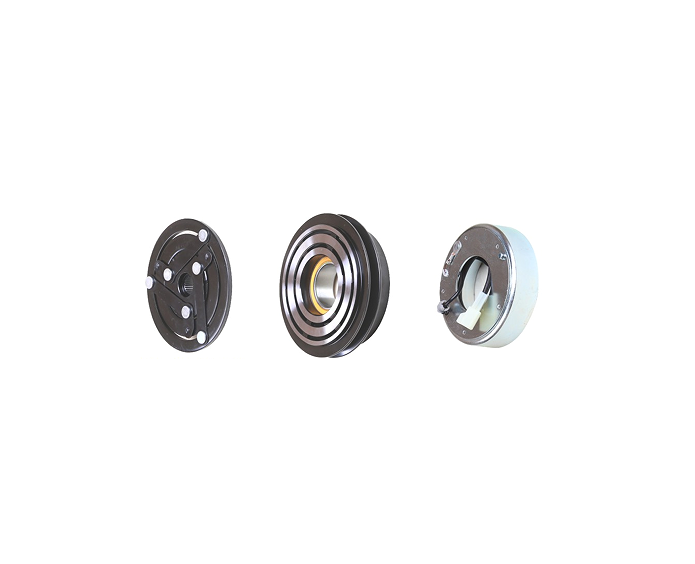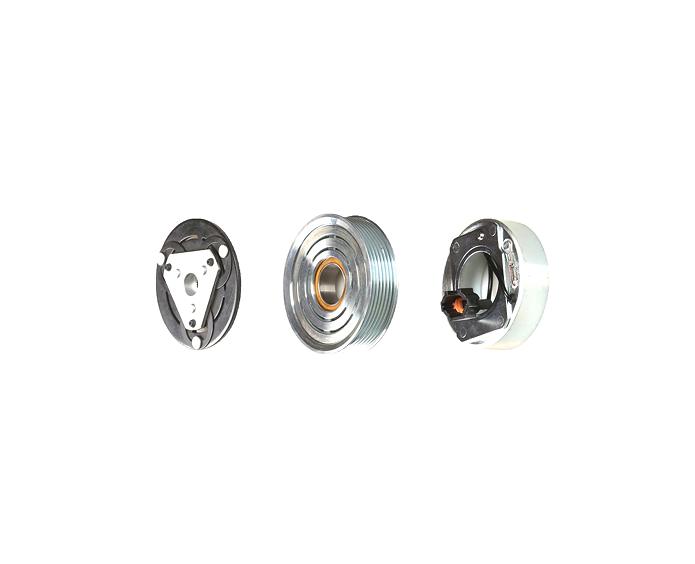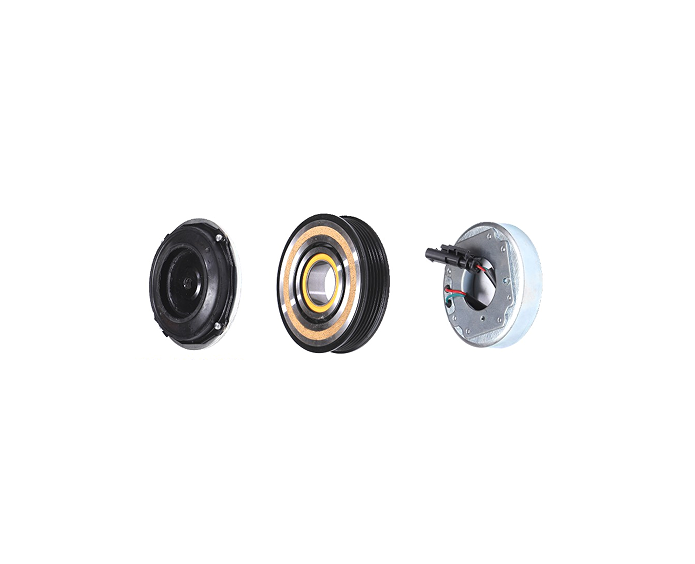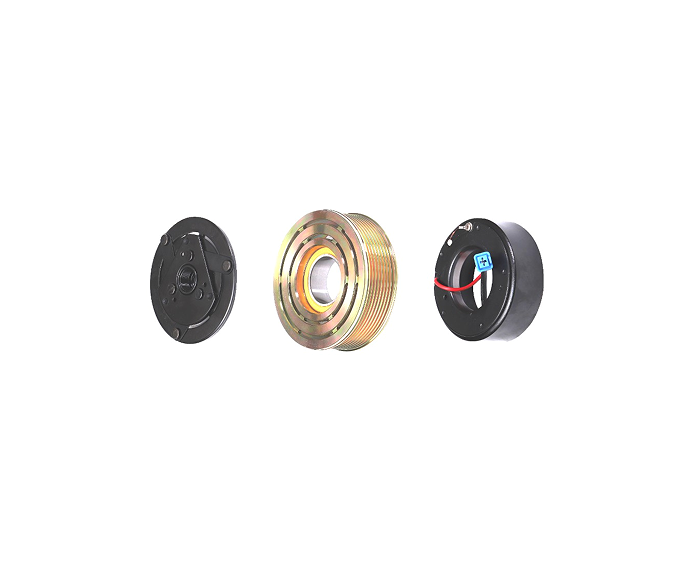

An automotive electric AC compressor wholesale order is a supply program, not a single purchase. The same model description can cover different nominal voltages, controllers, connectors and refrigerant assumptions, and the unit price you negotiate only becomes margin after packaging, freight, duty, warranty reserve and slow-moving stock are counted. This guide shows distributors, importers, repair networks and private-label brands how to structure an electric compressor wholesale program: what a quotation line must state, how MOQ and price breaks usually work, and which cost lines decide whether a bulk order earns its shelf space.
What makes electric compressor wholesale different
An electric compressor is an electrical assembly, not only a mechanical one. The motor, the compression mechanism and, on most designs, the drive electronics or controller have to be treated as one part number. That changes three things for a wholesale buyer.
- The catalogue data is heavier. A clutch has a pulley diameter, a groove count and a coil resistance. An electric compressor also carries a nominal voltage, an operating window, a control signal type, a connector family and a refrigerant and oil assumption. If those fields are missing from your product data, your counter staff cannot answer fitment questions and your returns rate rises.
- Failures have two families. A warranty claim may be mechanical (bearing noise, seized mechanism, leaking seals) or electrical (controller fault, open winding, communication error). The two need different diagnostic evidence, so your claim process has to collect both.
- Coverage moves fast. Electric compressor demand is concentrated in hybrid and battery-electric platforms, and platform generations change quickly. A wholesale range built on today's coverage needs a review rhythm, not a one-time purchase.
This article covers the commercial structure of a wholesale program. If your open question is technical matching, start with the electric air conditioning compressor application and sourcing guide. If it is whether a specific low-voltage supplier can support continuous duty, read the 24V electric AC compressor supplier checks. If you are quoting a battery-electric platform, the high-voltage electric compressor RFQ guide covers the electrical evidence. And if the question is factory capability rather than order structure, the electric AC compressor manufacturer audit is the right starting point.
The three supply classes you cannot price in one line
A wholesale price list that treats "electric compressor" as one category will produce quotes you cannot defend. Buyers normally work with three electrical classes, and each one has a different cost driver.
| Supply class | Typical use | What the line item must state | Main cost driver |
|---|---|---|---|
| 12V electric compressor | Auxiliary cooling, parking and sleeper units, small retrofits, specialty vehicles | Nominal 12 V supply with permitted window, current draw at rated condition, controller arrangement, connector and pinout | Low unit value, so freight and packing dominate the landed cost |
| 24V electric compressor | Buses, trucks, commercial vehicle auxiliary HVAC, battery-driven transport cooling | Nominal 24 V supply with voltage range, duty cycle, protection class, control interface, mounting pattern | Duty cycle and service life; a cheaper unit that fails early costs more than the price difference |
| High voltage electric compressor | Hybrid and battery-electric cabin cooling, battery thermal management circuits | System voltage class, insulation and protection requirements, communication protocol, refrigerant and oil, port and mounting geometry | Electrical safety evidence and diagnostic support, not the hardware alone |
12V: the volume class with the thinnest margins
Because a 12 V unit is comparatively inexpensive, a wholesale program lives or dies on packing density and freight efficiency. Two suppliers quoting the same unit price can differ by several percent landed once carton size and chargeable weight are counted. Price this class per cubic metre as well as per unit.
24V: the duty-cycle class
Commercial vehicle buyers are rarely buying a compressor for occasional cabin cooling. They are buying it for long operating hours, so the useful comparison is expected running hours against claim rate, not unit price. Ask for the operating condition behind any life statement; a figure without a test condition cannot be compared.
High voltage: the documentation class
For hybrid and battery-electric applications, the compressor sits inside a high-voltage system. Buyers in regulated markets need evidence that the electrical design was developed against the applicable safety requirements, and they need a diagnostic path when a unit is replaced. This is the class where a low quotation most often hides missing documentation rather than lower cost, which is why an automotive electric AC compressor wholesale range cannot rest on one safety statement covering every class.
What a wholesale quotation line must state
In an automotive electric AC compressor wholesale quotation, insist that each line answers the same questions, whether you are comparing three suppliers or building a catalogue entry. A quotation that omits them transfers risk to you at the moment of sale, not at the moment of purchase.
- Part identity: supplier reference, the OE or OEM numbers it is offered against, and any superseded references.
- Electrical data: nominal voltage, permitted operating window, current or power at a stated condition, connector family and pinout, control signal type.
- Refrigerant and oil: which refrigerant the unit is charged or shipped for, and which lubricant it is built around.
- Mechanical data: mounting points, port orientation and size, drive or coupling interface, net weight.
- Logistics data: units per carton, carton dimensions and weight, units per pallet, HS code, country of origin.
- Traceability: how a batch or serial is marked and whether that marking survives on the installed unit.
If a supplier cannot state the control signal type or the connector family, that is not a paperwork gap. It is a fitment risk that you will pay for in returns.
How MOQ and price breaks are usually structured
Most automotive electric AC compressor wholesale programs are quoted in three steps, and it helps to know what each step is really buying.
Sample and trial quantities
The first step exists to verify identity, not to save money. Order enough units to install one, keep one as a reference and test one destructively if your process allows. A trial of two units across five models tells you almost nothing about consistency; two units of one model tells you more.
Model MOQ versus shipment MOQ
These are different numbers and conflating them is the most common wholesale mistake. A supplier may accept a low minimum per shipment but require a higher minimum per model. The electric compressor MOQ that actually governs your cash commitment is the per-model figure, not the container figure. If you plan a mixed-model container, ask for both numbers in writing, then map them against your expected sell-through per reference. Slow-moving references frozen at a high per-model minimum are the main source of dead stock in an electric compressor range.
Price breaks and validity
Ask what quantity triggers the next break, what the price validity period is, and what happens if a component inside the unit changes. A break that only exists at a volume you cannot absorb is not a discount; it is an invitation to overstock. A quotation with no stated validity period is not a price you can plan against.
Landed cost: the numbers that decide your margin
Unit price is one line in a landed cost model. Distributors who plan an automotive electric AC compressor wholesale program on unit price alone usually discover the gap two quarters later, when the slow movers are still on the shelf and the warranty claims have arrived. Landed cost is a program figure: it has to be calculated per class and per reference, because two references with the same invoice price rarely produce the same margin.
| Cost line | What to calculate | Why it moves |
|---|---|---|
| Unit price at your break | Price at the quantity you will actually order per model | Breaks are often per model, not per shipment |
| Export packing | Carton, inner protection, pallet cost per unit | Compressors are heavy and shock-sensitive; cheap packing raises damage claims |
| Freight | Chargeable weight and volume, mode, port and inland leg | Low-value 12V units are freight-dominated; high-voltage units are volume-dominated |
| Duty and taxes | Rate against the declared customs value and HS code | Classification errors cause both overpayment and clearance delays |
| Inspection | Sampling, functional test, labelling check | Skipping it shifts cost to returns and lost accounts |
| Warranty reserve | Expected claim rate multiplied by replacement and freight cost | Electrical claims usually cost more per event than mechanical ones |
| Slow-mover carry | Capital tied up in references that sell below plan | The single most under-estimated line in a mixed-model program |
A practical way to use this table is to build it once per class rather than once per model, then adjust for the specific reference. If the landed cost model changes the ranking of your quotations, the unit price was never the decision.
Building the SKU ladder: breadth or depth first
Every automotive electric AC compressor wholesale program faces the same trade-off. Breadth wins catalogue enquiries; depth wins reorder rate. For electric compressors, breadth without depth produces a range that looks impressive and turns over slowly.
A workable sequence for a first program:
- Start from vehicles you already service. Take the platforms your existing customers actually repair, then add the electric compressor references for those platforms. Coverage you cannot support with data is coverage you cannot sell.
- Classify by turnover, not by price. Rank references by expected units per quarter and treat the top group as the depth you must hold, the middle group as order-on-demand, and the tail as special order.
- Keep one reference as a bench standard. A unit you have installed, measured and photographed becomes the reference for every future batch comparison. This is far more useful than a sample that stays in a box.
- Plan the review rhythm. Electric platforms move quickly, so set a calendar review of coverage instead of waiting for a customer complaint to reveal a gap.
Warranty, returns and failure analysis terms
On an automotive electric AC compressor wholesale order, warranty language decides more of your margin than most buyers expect. Before a bulk order is placed, the commercial terms should answer these questions in writing:
- What is the claim window, and does it start at shipment, at delivery, or at first sale?
- Who pays freight on a returned unit, and who pays it on the replacement?
- Is a dead-on-arrival unit treated differently from a field failure?
- What evidence is required — invoice, batch or serial number, installation record, diagnostic readings, photographs?
- Will the supplier provide a failure analysis report, and within what period?
- Is the remedy a credit, a replacement, or a repair, and can you choose?
Two details are worth insisting on. First, batch or serial marking must remain readable after installation, otherwise traceability ends the moment the part is fitted. Second, the claim process should distinguish installation error from a part defect, because a program that pays for every misdiagnosis will be repriced by the supplier. Where the range includes hybrid and electric platforms, the EV compressor warranty terms also need a defined diagnostic path, since an electrical claim without recorded fault data is hard to settle either way. Buyers running a private-label range need packaging and label control written into the same agreement, so a claim cannot be deflected onto "your branding".
Market access evidence: refrigerant and high-voltage rules
Two regulatory threads affect electric compressor programs more than any other, and both are documentation questions rather than price questions.
Refrigerant rules
Refrigerant policy changes what a compressor can be sold for in a given market, and the rules are regional. In the European Union, the F-gas Regulation does not impose specific bans on mobile air conditioning, but the HFC phase-down continues to push the market away from high global-warming-potential refrigerants, as summarised by the European Commission's page on climate-friendly alternatives to F-gases. For a wholesale buyer this means confirming, per model, which refrigerant the unit is built for and whether service gas for that refrigerant will remain available in the destination market over the life of your stock.
High-voltage safety evidence
For hybrid and battery-electric applications, the electrical design sits inside a system governed by vehicle safety regulation. UN Regulation No. 100 sets requirements for electric power train safety, including protection against electric shock on high-voltage buses and their connected components, as published in UNECE Regulation No. 100. For mobile air conditioning specifically, SAE J639 addresses safety and design requirements for mobile air conditioning systems. Buyers selling into regulated markets should ask which requirements the compressor's electrical design was developed against, and what test documentation exists — not simply whether the unit "meets the standard".
Common wholesale buying mistakes
Most automotive electric AC compressor wholesale losses trace back to a handful of repeatable decisions:
- Comparing unit price across different classes. A 12V auxiliary unit and a high-voltage unit are not substitutes, and their prices are not comparable.
- Ignoring per-model MOQ. A mixed container looks efficient until half the references miss their sell-through plan.
- Buying a model without its data. If connector, control signal and refrigerant are not recorded, the unit cannot be sold confidently at the counter.
- Testing one unit and assuming batch consistency. One good sample proves the design can be built, not that every carton will match it.
- Leaving warranty terms verbal. Undefined claim windows and freight responsibility turn a small defect rate into a large cost.
- Treating refrigerant policy as someone else's problem. A model built for a refrigerant that is being phased out in your market is aged stock on arrival.
Kasen's electric compressor references for wholesale buyers
Guangzhou Kasen has manufactured and exported automotive air conditioning parts since 2007, covering compressors, compressor clutches, electric compressors, valves and bearings across roughly 1,800 product types, with OEM customization based on customer drawings or OEM numbers. The electric compressor range includes direct-fit references for hybrid and battery-electric vehicles, for example:
- HANON HES33 electric compressor for Hyundai hybrid — offered against OE references 97701CY000, 97701-CY000, CA600HCEAA02 and F502LFFAA02, with a sand-cast aluminium alloy housing, copper and steel coil windings and precision-machined internals. See the HANON HES33 electric compressor.
- New energy compressor for Mercedes-Benz C-Class (W205) and S-Class (W222) — the A0008301901 reference, described as an OEM-specification compressor that circulates refrigerant and maintains system pressure across the driving range. See the A0008301901 new energy compressor.
- Direct-fit replacement for Tesla Model 3 — built with a sand-cast aluminium alloy housing, copper and steel coil windings and precision-machined internals, and described as a direct replacement for Model 3 applications. See the Model 3 new energy compressor.
The full electric compressor category is listed on the Kasen product range. Where a reference is not yet in your catalogue, the practical next step is to send the OE number, a photograph of the installed unit and the connector detail, so the reference can be matched before any quantity is discussed.
Frequently asked questions
What MOQ should I expect for automotive electric AC compressor wholesale?
There is no universal automotive electric AC compressor wholesale MOQ figure, and any supplier quoting one number for a whole range is simplifying. Ask separately for the minimum per model, the minimum per shipment, and the quantity at which the next price break starts. Those three numbers, not a single "MOQ", determine how much capital you commit.
Is a 12V electric compressor the same as a 24V unit?
No. They share a principle but differ in supply voltage, current draw, protection requirements and often control arrangement. A 12V unit cannot be substituted into a 24 V system by adjusting the wiring; the electrical and thermal design assumptions change.
Can one wholesale program mix 12V, 24V and high-voltage models?
It can, but plan them as separate classes with separate cost models, separate warranty exposure and separate catalogue fields. Mixing them in one price list is what makes landed cost analysis unreliable.
How do I calculate landed cost for an electric compressor bulk order?
Start from the unit price at the quantity you will actually order per model, then add packing, freight by chargeable weight, duty and taxes at the correct classification, inspection, a warranty reserve based on expected claim rate, and the carrying cost of references that sell below plan. Compare quotations on the total landed cost, not the unit price.
What warranty terms are normal for EV compressor wholesale?
Terms vary by supplier and market, so the useful question is not what is normal but what is written. Confirm the claim window and its start point, who pays return and replacement freight, the evidence required, the remedy type, and whether a failure analysis report is provided.
Do high-voltage compressors need different documents for European markets?
They need evidence that the electrical design was developed against the applicable high-voltage safety requirements, and buyers should ask for the specific test documentation rather than a general compliance statement. UN Regulation No. 100 is the reference most often named for electric power train safety in ECE markets.
How do I confirm a compressor matches the vehicle before a bulk order?
Match on more than a model name: OE reference, connector family, control signal, refrigerant, port orientation and mounting geometry. A single installed sample compared against the original unit resolves most ambiguity before quantity is committed.
What should a first trial order contain?
One model, enough units to install one, keep one as a bench reference and test one, plus the full data sheet and carton specification. A small, well-documented trial is more informative than a broad order with no records.
Conclusion
An automotive electric AC compressor wholesale program succeeds when the order is structured before the price is negotiated: the class is priced correctly, every quotation line carries its electrical and mechanical data, per-model MOQ is mapped against real sell-through, and the landed cost includes the lines that only appear later — warranty, inspection and slow movers. Buyers who work in that order end up with a range they can defend at the counter and a reorder cycle they can forecast.
If you are building or extending an electric compressor range, send your OE references, connector detail and target quantities through our contact page, and we will match them against the current Kasen electric compressor references before you commit to a quantity.