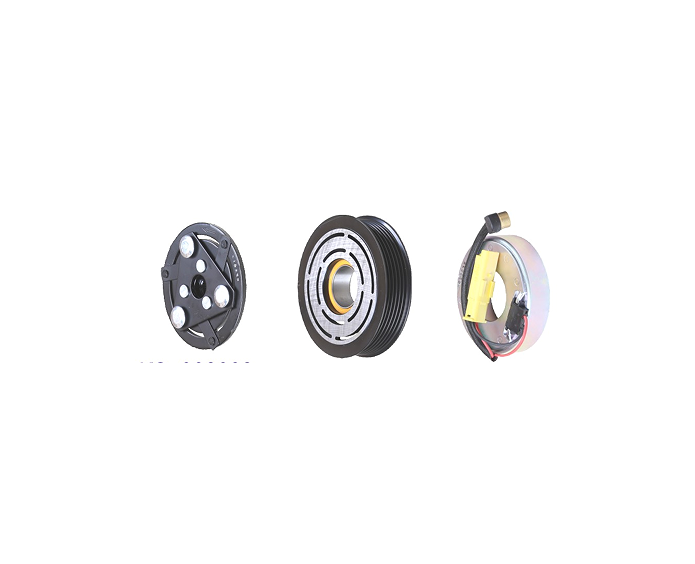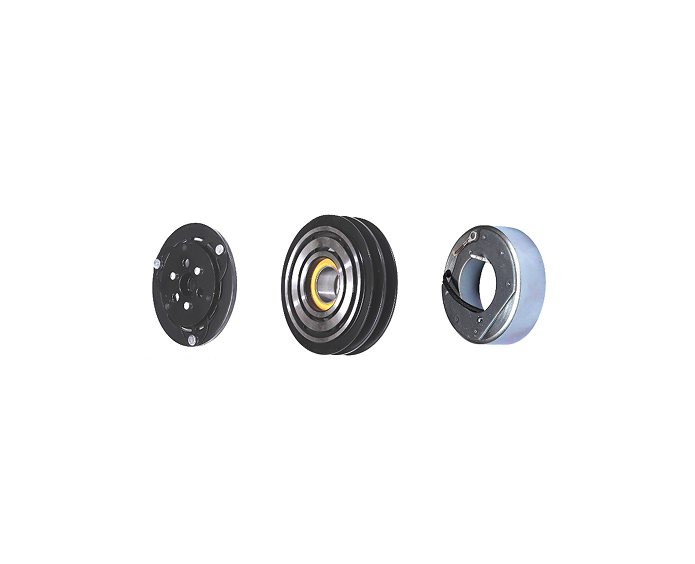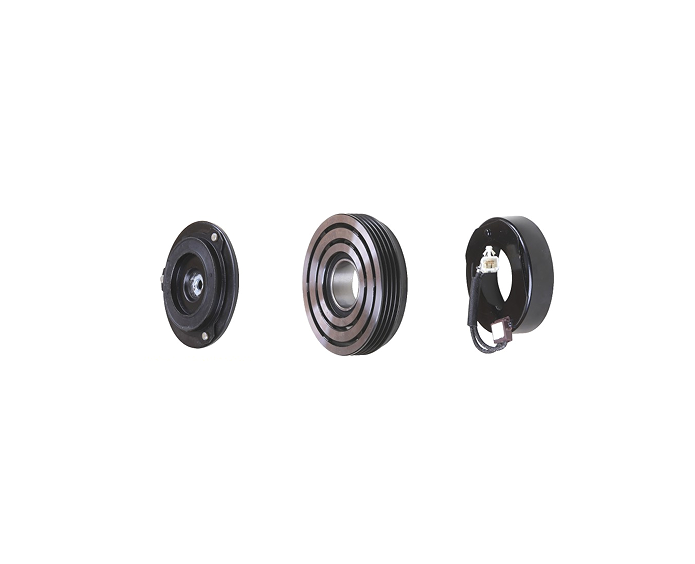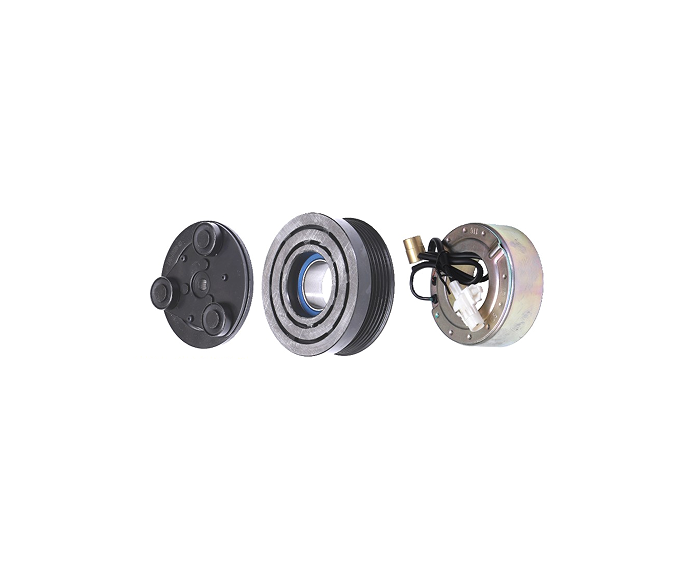

AC Compressor Clutch OEM vs Aftermarket: What Is the Real Difference?
For B2B buyers, AC compressor clutch OEM vs aftermarket is less about choosing between a “good” part and a “cheap” part and more about choosing the right sourcing model.
An importer launching its own automotive AC brand has different requirements from a distributor filling gaps in an existing catalogue. A compressor rebuilder purchasing several standard clutch references also has different priorities from a brand that wants customized packaging, buyer-specific part numbers, and controlled repeat production.
Before comparing the two options, one terminology issue should be clarified.
In automotive parts, OEM is often used in two different ways:
-
A genuine original-equipment part associated with the original vehicle or compressor manufacturer's supply chain.
-
A manufacturing project where a supplier produces a product to an agreed buyer specification, reference, drawing, sample, or private-label requirement.
These meanings should not be treated as interchangeable.
A private-label or customized OEM manufacturing project does not automatically mean the product is a genuine original vehicle-manufacturer part.
If genuine OE status or approval from a specific automotive or compressor brand is important to your business, request documentation supporting that claim.
For B2B sourcing purposes, this guide mainly compares:
Controlled OEM / private-label clutch programs
versus
Standard aftermarket replacement clutch sourcing
Buyers planning a customized program can also review the AC compressor clutch OEM guide.
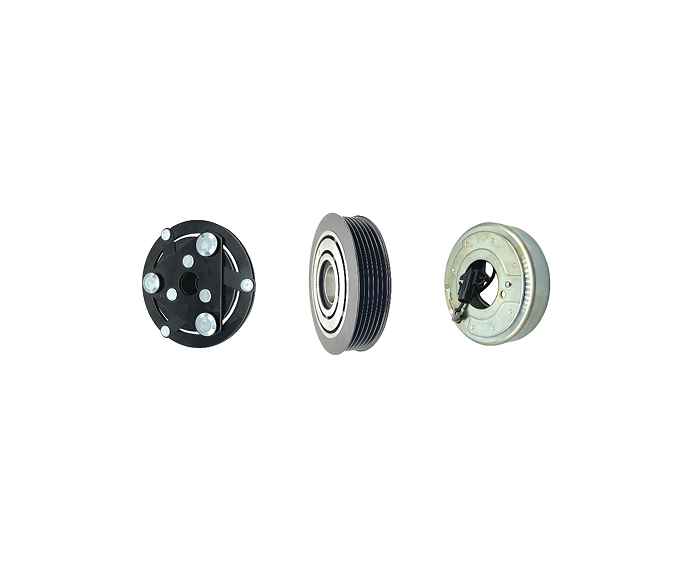
Quick Comparison: OEM vs Aftermarket AC Compressor Clutch
| Buying Factor | OEM / Private-Label Program | Standard Aftermarket Supply |
|---|---|---|
| Product basis | Agreed buyer specification or approved reference | Existing replacement configuration |
| Development work | Usually higher | Usually lower |
| Sample approval | Often more formal | Recommended for new references |
| Branding | Strong control | Standard supplier packaging unless otherwise agreed |
| Buyer SKU | Common | Can still be used internally |
| Packaging customization | Often important | Usually optional |
| Technical modification | Possible subject to project review | Normally limited |
| MOQ pressure | Can be higher depending on customization | Often more flexible for existing references |
| Lead time | Development may add time | Existing products can be faster |
| Initial program cost | Higher development/packaging overhead | Lower setup burden |
| Repeat-order control | Usually formalized | Depends on supplier and buyer process |
| Inventory risk | Higher if customized stock moves slowly | Easier for market testing and long-tail coverage |
| Best fit | Brands and stable repeat programs | Distributors, replacement markets, broad SKU coverage |
Neither model is automatically better.
The right choice depends on what problem the buyer is trying to solve.
When Does an OEM AC Compressor Clutch Program Make More Sense?
An OEM or private-label program becomes valuable when the buyer needs more control than a standard replacement purchase can provide.
You Are Building Your Own Aftermarket Brand
A brand owner may need:
-
Own-brand carton
-
Product label
-
Barcode
-
Buyer SKU
-
Catalogue reference
-
Packaging language
-
Consistent visual identity
-
Controlled repeat production
In this situation, the clutch itself is only one part of the commercial product.
The buyer is building a marketable SKU, not simply purchasing an unbranded component.
That means the product, packaging, identification, and future repeat order all need to stay connected.
For a more detailed branding workflow, see the private label AC compressor clutch guide.
You Have Stable Demand for Specific References
Customization becomes easier to justify when a clutch reference sells repeatedly.
For example, a regional distributor may already know that certain compressor applications have reliable annual demand.
Instead of purchasing those references opportunistically, the buyer may want to establish:
Buyer SKU → approved clutch → branded package → controlled repeat supply
That creates a more predictable long-term program.
You Need a Controlled Specification
Some buyers want tighter control over items such as:
-
Pulley configuration
-
Bearing reference
-
Coil specification
-
Connector
-
Surface treatment
-
Hub configuration
-
Packaging
-
Labeling
Not every project requires technical customization.
But when a controlled specification is commercially important, an OEM-style program makes it easier to define what should remain unchanged.
You Need Technical Modification
Sometimes an existing replacement product does not fully meet the buyer's requirement.
A project may involve reviewing:
-
Dimensions
-
Electrical configuration
-
Connector
-
Component combination
-
Packaging structure
-
Identification method
Technical changes should be separated from private labeling.
Changing the carton is a packaging project.
Changing the clutch configuration is an engineering project.
These should not be treated as the same type of OEM request.
When Is Aftermarket AC Compressor Clutch Sourcing the Better Choice?
Standard aftermarket sourcing can be the better commercial decision when flexibility matters more than customization.
You Need to Test Market Demand
Suppose a distributor wants to add 20 new compressor clutch references.
Demand is still uncertain.
Creating branded packaging, special labels, customized specifications, and dedicated stock for every reference may lock too much capital into an unproven range.
Starting with standard aftermarket replacements allows the buyer to learn:
-
Which applications sell
-
Which SKUs repeat
-
Which references generate returns
-
Which products should become core stock
-
Which products deserve private-label investment later
Aftermarket sourcing can therefore act as a market-validation stage before OEM development.
You Need Broad SKU Coverage
A distributor may serve hundreds of vehicle and compressor applications.
Not all of them have enough volume to justify customized production.
Standard aftermarket supply is particularly useful for:
-
Medium-demand applications
-
Long-tail SKUs
-
Older vehicle platforms
-
Occasional repair references
-
New market testing
The commercial objective is catalogue coverage without excessive development cost.
Speed Matters More Than Customization
If an existing clutch configuration is already available and technically appropriate, a standard replacement program can avoid some of the development steps associated with custom packaging or technical changes.
That can be useful when:
-
Stock is urgently required
-
A fast-moving SKU has sold out
-
A distributor needs to fill a catalogue gap
-
The buyer wants to test a new market
You Do Not Need Brand-Specific Packaging
Not every buyer needs a private-label box.
Compressor rebuilders, repair-network suppliers, wholesalers, and technical distributors may care more about:
fitment + availability + identification + repeatability
than consumer-facing packaging.
For these buyers, paying for unnecessary customization may not create additional value.
OEM Does Not Automatically Mean Better Quality
This is one of the most important points in an AC compressor clutch OEM vs aftermarket comparison.
OEM should not automatically be interpreted as:
high quality
and aftermarket should not automatically be interpreted as:
low quality
Those labels describe market or supply relationships more than they describe the actual condition of every individual part.
A poorly controlled OEM program can still produce problems.
A well-controlled aftermarket replacement can still provide reliable performance for its intended application.
Professional buyers should therefore evaluate the actual product and supply process.
Relevant questions include:
-
Is the compressor application correctly identified?
-
Are important dimensions controlled?
-
Is the coil configuration appropriate?
-
Does the connector match?
-
Is the bearing correct?
-
Is the approved sample documented?
-
Can future batches reproduce the same configuration?
-
Are product changes communicated?
Quality should be evaluated from evidence and process control rather than the word “OEM” printed in a catalogue.
The Same Fitment Rules Apply to OEM and Aftermarket
Choosing an OEM program does not remove the need for correct fitment.
Likewise, buying aftermarket does not mean the buyer should accept approximate compatibility.
For both models, buyers may need to verify:
-
Compressor model
-
OE/OEM reference
-
Vehicle application
-
Pulley diameter
-
Groove number
-
Bearing dimensions
-
Coil voltage
-
Connector
-
Hub or shaft interface
-
Assembly geometry
A more detailed fitment framework is available in the automotive AC compressor clutch selection guide.
The key difference is what happens after fitment is confirmed.
With standard aftermarket supply, the buyer can purchase an existing approved replacement.
With OEM/private-label sourcing, that approved replacement may become the technical basis for a controlled branded or customized program.
Compare Total Program Cost, Not Just Unit Price
OEM and aftermarket quotations should not be compared only at unit-price level.
An OEM program may involve additional costs related to:
-
Samples
-
Packaging development
-
Printing
-
Labels
-
Artwork
-
Tooling if required
-
Technical modification
-
Additional approval
-
Dedicated inventory
-
Minimum order requirements
Standard aftermarket sourcing usually reduces some of this setup burden.
However, that does not automatically make aftermarket cheaper over the entire life of the program.
For a high-volume branded SKU, a controlled OEM program may provide commercial value through:
-
Stable brand presentation
-
Consistent product identity
-
Better catalogue control
-
Easier repeat purchasing
-
Reduced supplier switching
-
Stronger product differentiation
The right calculation is therefore:
Total program cost = unit price + development cost + packaging cost + inventory cost + quality risk + return cost + administrative cost
How MOQ Changes the OEM vs Aftermarket Decision
MOQ is often discussed too early.
There is no universal MOQ that applies to every clutch, supplier, packaging method, or customization project.
The more useful question is:
What is creating the MOQ?
It could come from:
-
Product manufacturing
-
Packaging printing
-
Labels
-
Custom materials
-
Tooling
-
Component purchasing
-
Production efficiency
Standard products may offer more purchasing flexibility because the underlying configuration already exists.
OEM programs can require larger commitments when customization creates dedicated inventory or setup work.
Before rejecting an OEM quotation because of MOQ, separate:
product MOQ
from
packaging MOQ
from
customization MOQ
They may not be the same number.
Lead Time: Why OEM Usually Needs More Planning
An existing aftermarket clutch reference can often move more quickly through the sourcing process because less product development is required.
An OEM project may need additional stages:
Requirement definition
↓
Technical review
↓
Sample
↓
Revision if required
↓
Packaging/artwork approval
↓
Production
↓
Inspection
↓
Shipment
The extra time is not necessarily a disadvantage.
It is the cost of additional control.
The important question for the buyer is whether that additional control is necessary for the SKU being developed.
Inventory Risk Is Often the Deciding Factor
A customized product becomes commercially valuable only if it sells.
This makes inventory risk a major difference between OEM and standard aftermarket purchasing.
OEM Inventory Risk
If a private-label clutch has:
-
Custom box
-
Buyer-specific label
-
Dedicated SKU
-
Customized product requirement
it may be difficult to redirect that stock if market demand changes.
Aftermarket Inventory Flexibility
Standard replacement stock may offer greater flexibility because it is not tied as tightly to one buyer-specific program.
This can make aftermarket sourcing more suitable for uncertain or long-tail applications.
Practical Buyer Strategy
Instead of asking:
Should our whole clutch range be OEM or aftermarket?
ask:
Which individual SKUs deserve OEM investment?
That leads to a more efficient product strategy.
A Hybrid Sourcing Strategy Often Makes More Sense
For many distributors and aftermarket brands, OEM and aftermarket do not need to be competing strategies.
They can serve different parts of the same product portfolio.
Core High-Volume SKUs
Consider OEM/private label when:
-
Demand is proven
-
Repeat orders are stable
-
Branding matters
-
Packaging control adds value
-
Product specification should remain controlled
Medium-Volume SKUs
Use either model depending on market stability, supplier capability, and commercial terms.
Long-Tail SKUs
Standard aftermarket supply may be more efficient because flexibility is more valuable than customization.
New SKUs
Start with a standard replacement to validate fitment and demand.
If the product becomes a repeat seller, it can later be evaluated for an OEM or private-label program.
This creates a natural progression:
Standard aftermarket → market validation → stable demand → OEM/private label
rather than committing every new reference to customization immediately.
OEM vs Aftermarket by Buyer Type
| Buyer Type | Usually Prioritizes | Likely Best Starting Point |
|---|---|---|
| Automotive AC importer | SKU coverage, price, repeat supply | Mixed strategy |
| Regional distributor | Inventory efficiency, fitment | Aftermarket first |
| Private-label brand | Brand control, packaging, repeatability | OEM/private label |
| Compressor rebuilder | Technical fitment, component access | Aftermarket |
| Workshop network supplier | Availability, correct application | Aftermarket |
| Large wholesale brand | Scale, SKU control, packaging | OEM for core references |
| New market entrant | Demand testing, lower commitment | Aftermarket |
| Established repeat buyer | Stable product specification | OEM may add value |
This is a commercial framework rather than a rigid rule.
The actual choice should be made SKU by SKU.
When Should You Convert an Aftermarket SKU Into an OEM Program?
A useful decision point occurs when an aftermarket reference stops behaving like an experimental SKU and becomes a predictable product.
Consider OEM/private-label development when several conditions are present:
Demand Is Repeatable
You are no longer guessing whether the item will sell.
The Application Is Stable
Fitment has already been confirmed through actual purchasing and market use.
Returns Are Understood
You know whether customer issues come from fitment, installation, product quality, or catalogue errors.
Branding Adds Commercial Value
Customers recognize your brand and branded packaging supports your sales channel.
The SKU Is Important Enough to Control
A fast-moving reference deserves stronger product documentation and repeat-order management than an occasional long-tail item.
At this stage, an OEM program can become an operational improvement rather than merely a marketing exercise.
When Should You Stay With Aftermarket Supply?
Do not move to OEM just because customization is available.
Stay with standard aftermarket sourcing when:
-
Demand is uncertain
-
Order quantities remain small
-
The SKU is long-tail
-
Branding creates little additional value
-
The application is still being validated
-
Product requirements change frequently
-
You need purchasing flexibility
-
You are still comparing markets
Customization should solve a business problem.
It should not be added simply because “OEM” sounds more professional.
What About Genuine OE Compressor Clutches?
Genuine OE sourcing is a separate decision from a private-label OEM manufacturing project.
Some markets require or prefer genuine original-equipment parts because of:
-
Vehicle warranty policies
-
Dealer repair requirements
-
Customer preference
-
Brand-specific service standards
-
Contract requirements
If a buyer requires a genuine original-equipment clutch, verify the actual source and supporting documentation.
Do not assume that:
OEM-style manufacturing = genuine OE product
or that:
aftermarket = counterfeit or inferior product
These are different concepts.
Clear product descriptions protect the importer, distributor, workshop, and final customer.
How Should Buyers Evaluate Aftermarket Replacement Quality?
For an aftermarket program, start with the specific reference rather than the supplier's overall marketing language.
Evaluate:
Product Identity
Can you clearly connect the clutch to a compressor reference?
Fitment Information
Are important application details available?
Sample Consistency
Does the approved sample match the required configuration?
Batch Identification
Can the product be traced to the correct supplier SKU or order reference?
Repeat Supply
Can the same approved configuration be reordered?
Packaging Accuracy
Is the correct product placed under the correct part number?
Buyers planning a broader replacement program can also review the aftermarket AC compressor clutch supplier guide.
How Should Buyers Evaluate an OEM Clutch Project?
OEM evaluation adds another layer.
In addition to the product itself, check:
-
Buyer specification
-
Approved revision
-
Buyer SKU
-
Supplier SKU
-
Packaging artwork
-
Label
-
Barcode
-
Component changes
-
Sample status
-
Technical modifications
-
Change notification
-
Repeat-order reference
This is where documentation becomes especially important.
A verbal understanding may work for the first order.
It becomes less reliable after multiple employees, revisions, and repeat orders become involved.
Decision Checklist: OEM or Aftermarket?
Choose OEM/private label when most of these are true:
-
The SKU has stable demand.
-
You need your own brand.
-
Packaging consistency matters.
-
You need a buyer-specific SKU system.
-
You want controlled repeat production.
-
Technical customization adds real value.
-
You can support the required order commitment.
-
You are prepared to approve samples and revisions.
Choose standard aftermarket when most of these are true:
-
Demand is still being tested.
-
You need broad application coverage.
-
The SKU is low or medium volume.
-
Speed matters.
-
Standard packaging is acceptable.
-
You do not need product modification.
-
Inventory flexibility matters.
-
You want lower development overhead.
If the answers are mixed, use a hybrid portfolio strategy.
Common OEM vs Aftermarket Purchasing Mistakes
Mistake 1: Assuming OEM Automatically Means Genuine OE
Verify what the supplier actually means by OEM.
Mistake 2: Assuming Aftermarket Means Low Quality
Evaluate the product and process, not the category label.
Mistake 3: Customizing Before Demand Is Proven
Private-label inventory can become expensive dead stock.
Mistake 4: Comparing Unit Price Only
Include packaging, development, inventory, returns, and administration.
Mistake 5: Creating OEM Packaging Before Fitment Is Stable
Branding the wrong clutch only makes the sourcing error more expensive.
Mistake 6: Using OEM for Every SKU
Some long-tail applications are better managed as standard replacement stock.
Mistake 7: Ignoring Revision Control
A successful first OEM order does not guarantee every future order remains identical.
Frequently Asked Questions
Is an OEM AC compressor clutch always better than aftermarket?
No. OEM/private-label and aftermarket are different sourcing models. Product quality depends on fitment, specification, manufacturing control, inspection, and repeat consistency rather than the label alone.
What is the main difference between OEM and aftermarket compressor clutch sourcing?
OEM/private-label sourcing usually provides more control over specification, branding, packaging, and repeat production. Standard aftermarket sourcing normally offers greater flexibility and lower development burden.
Is a private-label compressor clutch an original OE part?
Not automatically. A private-label or customized OEM manufacturing project should not be described as a genuine vehicle-manufacturer OE product unless supporting documentation confirms that status.
When should a distributor use OEM compressor clutches?
OEM programs are most useful for proven, repeat-volume SKUs where branding, packaging, specification control, and long-term supply consistency create commercial value.
When is aftermarket clutch sourcing better?
Aftermarket sourcing is often better for new applications, market testing, long-tail SKUs, broad catalogue coverage, or cases where custom branding is unnecessary.
Is OEM always more expensive?
Not necessarily. OEM programs can have higher initial development and packaging costs, while unit economics may become more competitive with repeat volume. Compare total program cost rather than unit price alone.
Does OEM sourcing require a higher MOQ?
It can, especially when custom packaging, components, tooling, or dedicated production are involved. MOQ should be confirmed for the specific product and project.
Can I start with aftermarket and later switch to private label?
Yes. This can be an effective strategy: validate fitment and demand first, then develop proven high-volume references into controlled private-label products.
What information is needed for either sourcing model?
Start with the compressor model, OE/reference number, vehicle application, pulley details, bearing, coil voltage, connector, hub/interface, photos, and quantity where applicable.
Where can I discuss an OEM or aftermarket clutch project?
Review the current automotive AC products, read the AC compressor clutch OEM guide, or contact KASEN with your compressor references, target market, quantities, and packaging requirements.
Conclusion
AC compressor clutch OEM vs aftermarket should be decided by SKU demand, branding needs, specification control, and inventory flexibility. OEM/private-label programs are better suited to proven repeat-volume products, while standard aftermarket sourcing is often more practical for market testing and long-tail applications.
If you are evaluating which sourcing model fits your product range, review KASEN's automotive AC products or contact KASEN with your compressor references, quantities, and packaging requirements.