
Which Replacement AC Compressor Clutch Parts Should You Buy?
Buying replacement AC compressor clutch parts starts with identifying which part has actually failed and which compressor-clutch configuration is installed. For distributors and compressor rebuilders, this matters because the front clutch assembly contains several interacting components. Replacing the wrong component can create fitment problems even when the new part looks almost identical to the original.
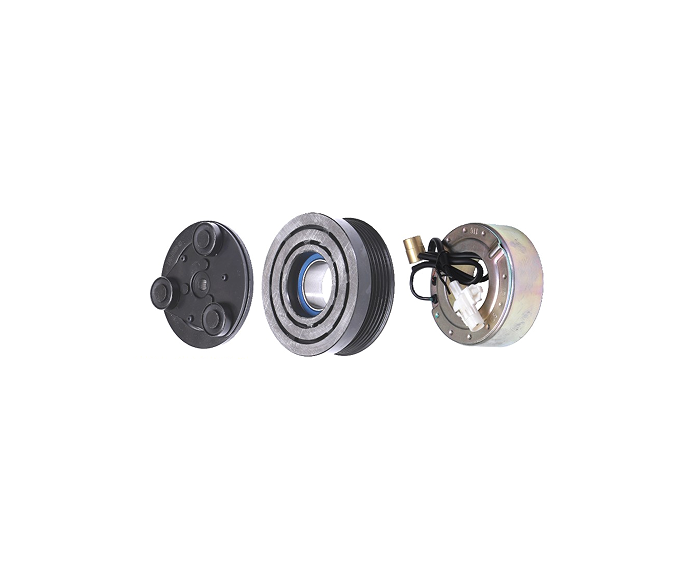
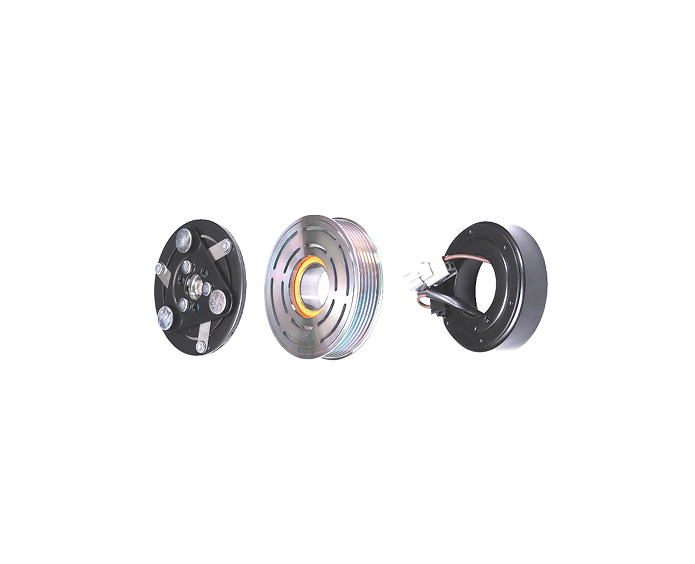
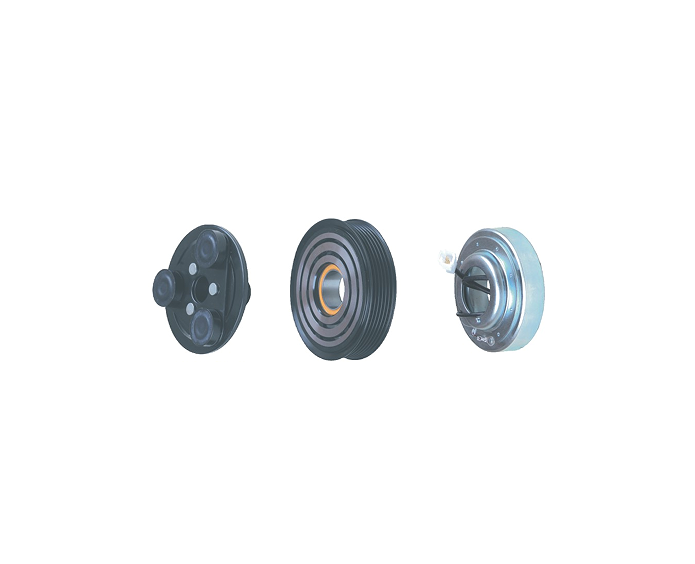
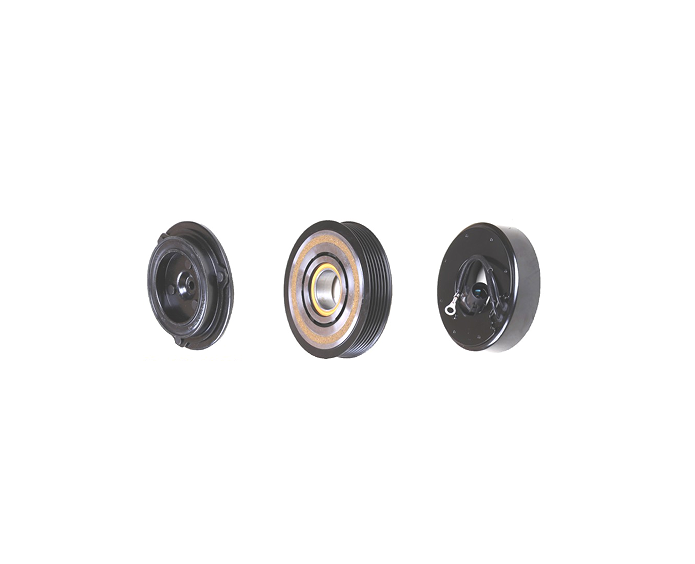
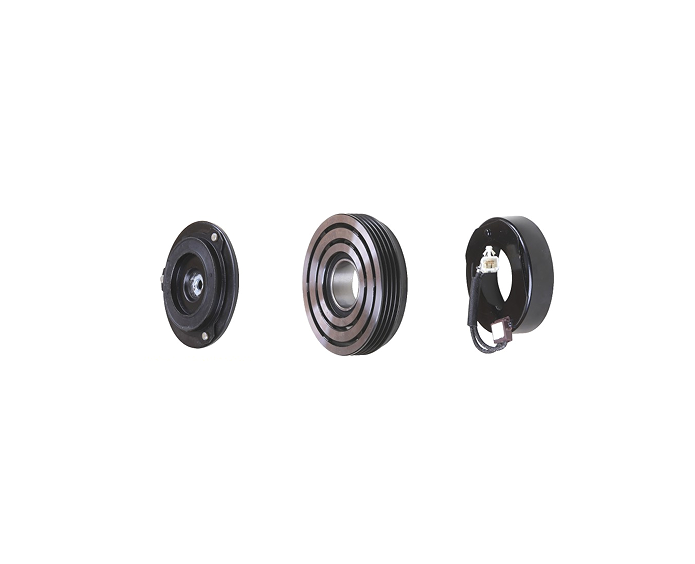
Depending on the compressor design, the serviceable clutch area may involve the electromagnetic coil, pulley, pulley bearing, hub, armature or clutch plate, retaining hardware, or a complete clutch assembly. Each part solves a different repair problem, so a professional purchasing programme should not treat all clutch-related failures as the same replacement job.
KASEN supplies automotive air-conditioning clutch products and related components. Buyers can begin with the AC compressor clutch product range and then determine whether the repair requires an individual component or a complete matched assembly.
The practical purchasing rule is simple: identify the compressor first, identify the failed clutch component second, and approve the replacement specification before ordering in volume.
Who Needs Component-Level Clutch Replacement Parts?
Component-level sourcing is most useful for compressor rebuilders, automotive AC specialists, aftermarket distributors, workshop supply networks and importers that regularly repair known compressor families. These buyers often have the technical ability to determine whether one clutch component can be replaced independently.
A repair distributor may keep fast-moving coils and bearings as individual SKUs while stocking complete assemblies for more complex repairs. A compressor rebuilder may need pulleys, hubs or plates for known compressor references. A private-label parts company may combine individual components with complete clutch assemblies to create a broader aftermarket programme.
Component-level repair is less suitable when the compressor application is uncertain or several clutch components show damage. In those situations, the buyer should compare individual parts against a complete AC compressor clutch assembly before making the purchasing decision.
Understand the Main AC Compressor Clutch Replacement Parts
Electromagnetic Clutch Coil
The coil creates the magnetic field that attracts the driven clutch plate when the air-conditioning system commands compressor engagement. A replacement coil should therefore be checked for electrical as well as mechanical compatibility.
Important purchasing information can include rated voltage, resistance under defined conditions, inner and outer dimensions, overall height, connector or lead-wire design, mounting structure and compressor application.
KASEN maintains a dedicated car air-conditioning clutch coil range for buyers sourcing coil-related products.
A visually similar coil should not be approved only because it uses the same nominal voltage. Dimensions, connector arrangement and compressor fitment may still differ.
Compressor Clutch Pulley
The pulley runs with the accessory belt and works with the bearing, coil and driven clutch components. Pulley replacement requires more than matching outside diameter.
Buyers should confirm groove specification, diameter, bearing configuration, relevant offset and compressor application. KASEN's compressor clutch pulley sourcing guide provides additional purchasing considerations for pulley-focused projects.
Two 6PK pulleys, for example, should not be considered interchangeable simply because the groove count matches.
Pulley Bearing
The pulley bearing supports rotation of the pulley assembly. It can therefore remain in operation while the electromagnetic clutch itself is disengaged, depending on the compressor configuration.
For replacement sourcing, confirm the full bearing identification and the pulley or clutch assembly it belongs to. Avoid approving a substitute only because the nominal dimensions appear similar.
Buyers can review the compressor clutch bearing guide when creating bearing-specific purchasing records.
Clutch Hub
The hub provides the mechanical connection between the driven clutch structure and the compressor shaft. Shaft interface and mounting geometry are therefore critical.
A replacement hub may require confirmation of bore or spline configuration, hub height, locating features and its relationship with the driven plate. The AC compressor clutch hub supplier guide explains why hub sourcing should begin with compressor and shaft information rather than appearance alone.
Clutch Plate or Armature Plate
The clutch plate is attracted toward the pulley when the coil is energized. Depending on supplier terminology and design, it may also be described as an armature plate or supplied together with the hub.
Buyers should confirm supply scope, center interface, relevant dimensions and engagement-surface condition. The AC compressor clutch plate manufacturer guide covers plate-level sourcing and fitment considerations in more detail.
Complete Clutch Assembly
A complete clutch assembly may be the more practical option when several components need replacement or when the buyer wants a matched pulley, bearing, coil, hub and driven component configuration.
KASEN's AC compressor clutch assembly supplier guide explains how complete-assembly sourcing differs from component-level replacement.
Use a Component Diagnosis Before Building the Purchase Order
A common sourcing mistake is selecting a part from the reported symptom rather than confirming the failed component. “Clutch does not engage,” “pulley makes noise,” or “AC compressor problem” are useful repair clues, but they are not complete purchasing specifications.
A non-engaging clutch can involve the coil, power supply, connector, control system, air gap, hub or compressor-related issue. Pulley noise may be associated with the bearing, belt system or another rotating component. A worn engagement surface can involve the plate and mating pulley condition.
For B2B purchasing, diagnosis and sourcing should therefore remain separate processes. The technician identifies the repair requirement; the purchasing team converts that confirmed requirement into a controlled product specification.
Build a Replacement Parts Specification Before Comparing Prices
The following table provides a practical framework for sourcing replacement AC compressor clutch parts. It is a purchasing template rather than a universal specification for every compressor.
| Control Item | What the Buyer Should Confirm | Why It Matters |
|---|---|---|
| Compressor identity | Manufacturer/model/reference | Establishes application |
| Existing clutch reference | Supplier, OE or aftermarket number | Supports cross-reference |
| Component required | Coil, pulley, bearing, hub, plate or assembly | Defines supply scope |
| Supplier reference | Exact replacement product code | Supports future reorder |
| Buyer SKU | Distributor's internal code | Links sales and warehouse |
| Critical dimensions | Component-specific measurements | Controls mechanical fit |
| Electrical data | Voltage/resistance/connector where applicable | Controls coil compatibility |
| Interface | Shaft, pulley or mounting interface | Prevents assembly mismatch |
| Sample status | Proposed, approved or rejected | Controls bulk release |
| Packaging | Product code and quantity | Reduces picking errors |
| Revision | Current approved specification | Protects repeat orders |
A quotation becomes useful only when the supplier and buyer are discussing the same component and the same approved configuration.
Match the Replacement Part to the Complete Clutch System
Individual replacement parts still operate inside a system. The pulley depends on the bearing and engagement geometry. The coil needs to fit the surrounding clutch structure. The hub and plate must suit the compressor shaft and pulley relationship.
This means buyers should avoid creating “universal” replacement combinations from components that share only one specification.
For example, matching pulley diameter does not prove bearing compatibility. Matching coil voltage does not prove coil dimensions. Matching plate diameter does not prove shaft-interface fitment.
A strong replacement-parts catalogue connects every component SKU to the compressor or clutch reference against which it was approved.
Use Existing KASEN References as Application Starting Points
Complete clutch references can help buyers identify an assembly family before requesting component-level replacement parts. They should not be used to invent dimensions for parts that are not separately specified.
| KASEN Reference | Published Application | Groove | Pulley Diameter | Bearing Code | Replacement-Part Use |
|---|---|---|---|---|---|
| KS-801009 | Yaris | 4PK | 125 mm | 355212 | Starting reference for component enquiry |
| KS-801011 | Camry | 6PK | 130 mm | Confirm required individual component | |
| KS-802003 | 2008 CR-V 2.4 | 7PK | 110 mm | Request model-specific part data |
These complete-clutch fields can help identify the assembly context, but they do not automatically provide the coil resistance, hub dimensions, plate geometry or all bearing construction details required for individual-component approval.
That distinction is important for both procurement and catalogue accuracy: use complete-assembly references to begin identification, then obtain part-specific information for the actual replacement component.
Decide Between Individual Parts and a Complete Clutch Assembly
A component-level repair can be commercially attractive when the failed part is clearly identified and the remaining clutch components remain suitable. A complete assembly can reduce component-matching work when several parts require replacement.
| Purchasing Situation | Individual Replacement Part | Complete Clutch Assembly |
|---|---|---|
| One confirmed failed component | Often suitable | May be unnecessary |
| Several worn clutch components | Requires more matching work | Often simpler to manage |
| Compressor rebuilder with technical capability | Useful for controlled repairs | Useful for standardized rebuild programmes |
| Workshop with uncertain clutch condition | Higher identification risk | May simplify component matching |
| Distributor building component catalogue | Important product line | Useful complementary line |
| Private-label programme | Needs individual SKU control | Can simplify branded kit management |
This is not a universal repair decision. The actual condition of the compressor and clutch should determine the required supply scope.
Approve Samples Before Adding New Components to Inventory
For a new component reference, sample approval should create a documented baseline.
For a Coil Sample
Record voltage, agreed electrical requirements, dimensions, connector and compressor application.
For a Pulley or Bearing Sample
Record pulley dimensions, groove configuration, bearing specification and relevant mounting information.
For a Hub or Plate Sample
Record shaft interface, center geometry, key dimensions and supplied configuration.
The approval record should also state what has not been verified. A dimensional review alone should not be described as full compressor fitment testing.
When a sample changes, issue a new revision instead of leaving several physical versions under one buyer SKU.
Evaluate Production QC According to the Component
Different AC compressor clutch replacement parts require different quality checks. One generic “strict QC” statement is not enough for a professional purchasing programme.
Coil QC
Depending on the approved specification, checks may involve identification, dimensions, connector condition, continuity or electrical measurements.
Pulley and Bearing QC
Checks may involve product identification, pulley geometry, bearing specification, surface condition and relevant rotating or assembly characteristics.
Hub and Plate QC
Checks may involve dimensions, center interface, engagement surface and assembly features.
Routine production inspection should remain separate from endurance, thermal, vibration, corrosion or other specialized validation. If a validation report matters to the purchase decision, confirm which product was tested and under what conditions.
Ask How Component Changes Are Controlled
Repeat-order consistency matters even more for individual parts because distributors often sell them under stable internal SKUs for long periods.
Relevant changes may include:
- bearing substitution,
- connector change,
- coil construction change,
- pulley geometry revision,
- hub interface modification,
- surface process change,
- material change, or
- packaging revision.
When a change affects a controlled specification, determine whether documentation review, a new sample or further evaluation is required before the revised part enters regular supply.
KASEN's automotive compressor clutch factory guide provides a broader framework for specification control, sample approval and repeat production.
Plan Replacement Parts Inventory Around Real Repair Demand
Component-level inventories can grow quickly. A distributor may carry several coils, pulley bearings, hubs and plates for each major compressor family, so demand planning matters.
A practical structure is:
Core Replacement Parts
Regularly requested parts supported by sales history or workshop demand.
Trial References
Technically confirmed products with limited commercial history.
Special-Order Parts
Low-frequency or unusual applications sourced when a specific customer requirement exists.
Do not stock every available component simply because it can be supplied. A technically valid product can still be poor inventory if there is little market demand.
Consider Packaging and SKU Identification for Small Components
Small clutch components are particularly easy to mix in the warehouse. Two coils, bearings or hubs may look nearly identical while being technically different.
Packaging should therefore prioritize identification. Depending on your system, record:
- supplier reference,
- buyer SKU,
- related clutch/compressor reference,
- quantity,
- order or batch identification where required.
If barcodes are used, confirm the printed code against the buyer's actual inventory system before bulk packaging.
Private-label packaging should remain separate from technical approval. A branded box cannot compensate for an uncertain product specification.
Compare Replacement Parts Cost Beyond the Unit Price
Individual components can appear inexpensive, making unit price tempting as the primary comparison. But incorrect components can create disproportionate downstream costs.
Consider:
- sample approval,
- inspection,
- freight,
- warehouse handling,
- technician time,
- customer returns,
- repacking, and
- slow-moving inventory.
A lower-priced bearing or coil is not a commercial saving if it repeatedly creates wrong-fitment returns.
For replacement parts, total sourcing value depends heavily on correct identification and repeatability.
Separate Standard Replacement, Private Label and OEM Parts
Buyers should distinguish three project types.
Standard Replacement Parts
Existing confirmed products supplied without technical modification.
Private Label Replacement Parts
Existing products combined with buyer SKUs, labels, barcodes or packaging.
OEM or Custom Components
Technical modifications based on drawings, samples, compressor requirements or other agreed specifications.
KASEN states that it supports custom-production discussions based on drawings or OEM numbers through its About Us page. Actual component feasibility, samples, MOQ, tooling and production conditions should be confirmed for each project rather than assumed across the entire product range.
Prepare a Replacement AC Compressor Clutch Parts RFQ
A useful enquiry should state which component is needed rather than simply asking for “AC clutch parts.”
Provide:
- compressor model/reference,
- existing clutch or component number,
- clear old-part photographs,
- component type,
- available dimensions,
- electrical information where applicable,
- quantity,
- destination market, and
- packaging requirements.
For several references, use one line per SKU and clearly separate confirmed repeat orders from products that still require technical matching.
Buyers can start with the KASEN product center, review the AC compressor clutch range, and submit the component list through the KASEN enquiry page.
Frequently Asked Questions About Replacement AC Compressor Clutch Parts
1. What are the main replacement AC compressor clutch parts?
Common clutch-related replacement components can include the electromagnetic coil, pulley, pulley bearing, hub, armature or clutch plate and related assembly hardware, depending on compressor design.
2. Is it better to replace one clutch part or the complete assembly?
It depends on the confirmed fault and condition of the other components. A single known failed component may support component-level replacement, while several worn components can make complete-assembly replacement easier to manage.
3. Can I identify clutch parts by vehicle model alone?
Vehicle information is useful, but compressor and clutch references should also be confirmed. Different compressors can appear within similar vehicle applications.
4. Can I replace a clutch coil using voltage alone?
No. Voltage is only one field. Dimensions, resistance requirements, connector, mounting structure and compressor compatibility can also differ.
5. Can pulley diameter identify the correct replacement pulley?
No. Groove configuration, bearing, offset and compressor application may differ even when outside diameter matches.
6. Should distributors approve replacement-part samples?
For new or uncertain references, yes. A controlled sample helps establish dimensions, electrical information, interfaces and product identity before the part enters regular stock.
7. What quality checks should I request?
Use checks relevant to the component and approved specification. These can include identification, dimensions, electrical characteristics, bearing information, center interfaces and surface condition. Specialized validation should be defined separately.
8. How can I prevent similar replacement parts from being mixed?
Use stable supplier references, buyer SKUs, clear labels and model-specific records. Warehouse identification should not depend on visual memory alone.
9. Can KASEN discuss custom replacement clutch components?
KASEN states that it welcomes custom-production discussions based on drawings or OEM numbers. Provide the existing sample or technical information so the specific component requirement can be evaluated.
10. How do I request replacement clutch parts from KASEN?
Prepare the compressor reference, component type, old-part photos, available technical information and required quantity, then submit the enquiry through KASEN Contact Us.
Conclusion
Sourcing replacement AC compressor clutch parts successfully depends on identifying the actual failed component and connecting that part to the correct compressor-clutch configuration. Distributors, rebuilders and aftermarket buyers should distinguish between coils, pulleys, bearings, hubs, plates and complete assemblies, approve new components against controlled specifications, and keep repeat orders tied to stable SKUs and change records. Rather than selecting components by appearance, voltage or one dimension alone, use compressor-level identification and part-specific verification to reduce wrong-fitment inventory. Review the KASEN AC compressor clutch range and send your compressor references, replacement-part requirements, photographs and quantities through KASEN Contact Us for a model-specific sourcing discussion.