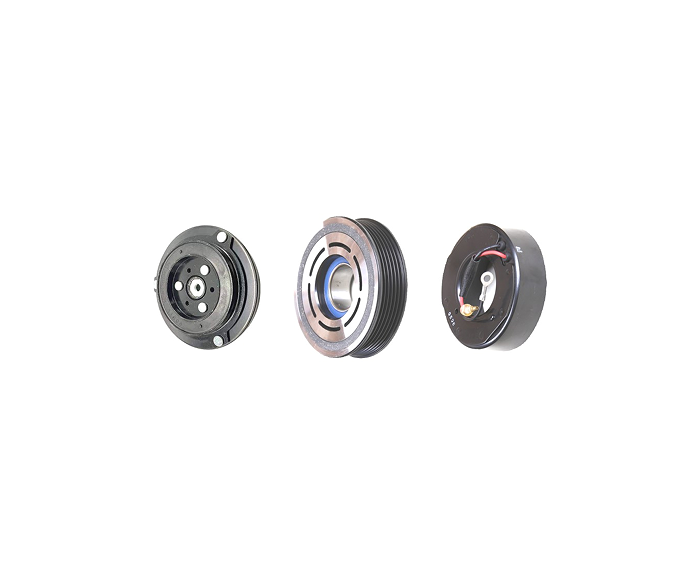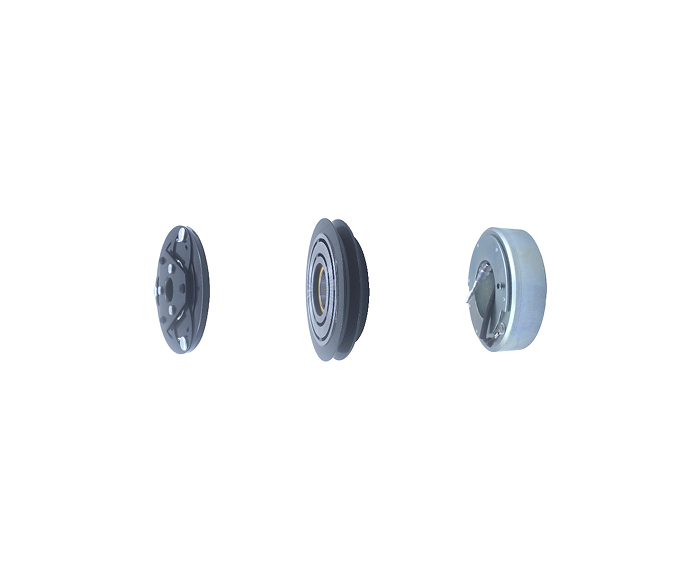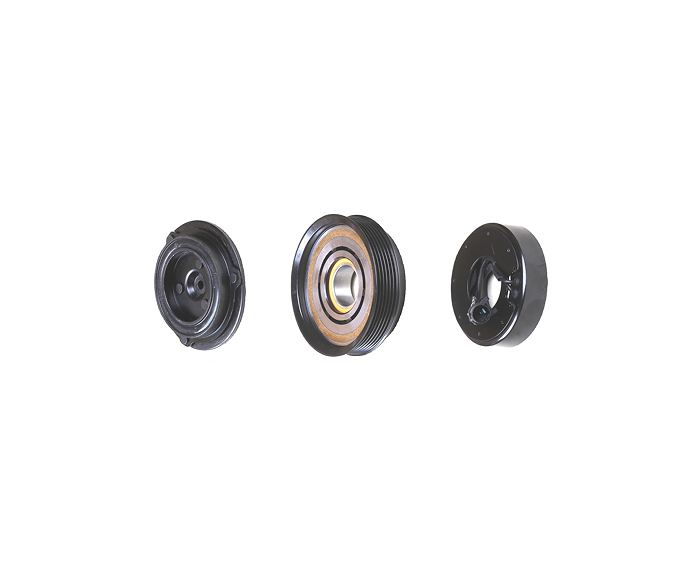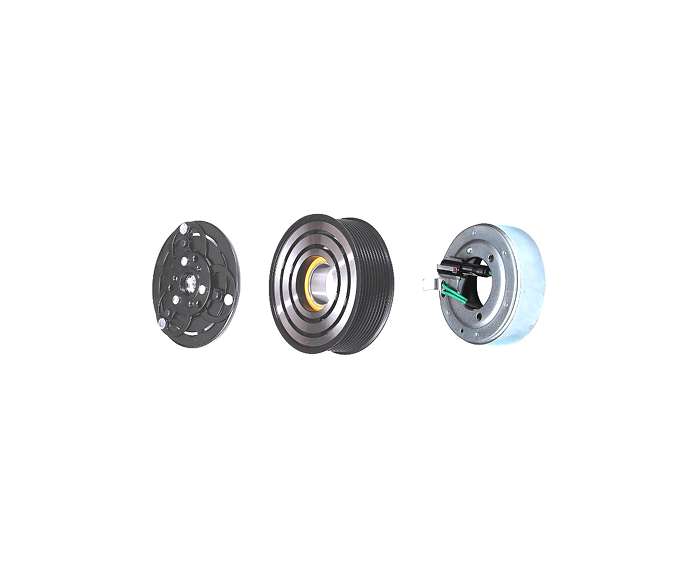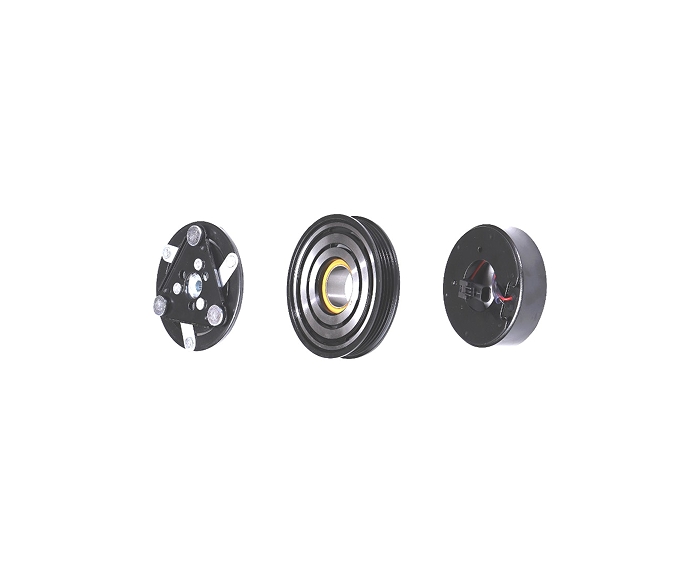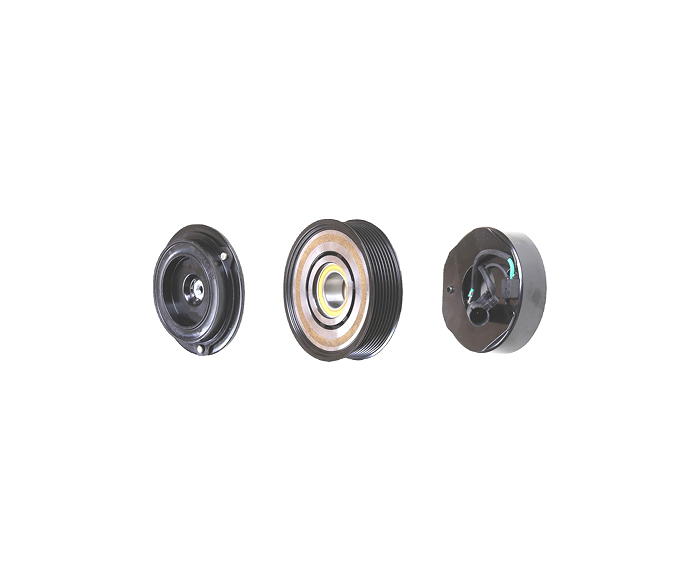

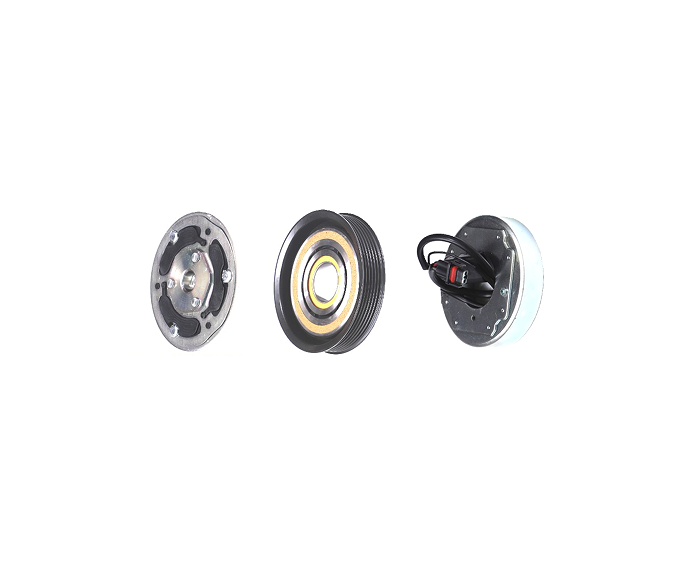
Smart Sensor Integration in Automotive Air Conditioner Clutch Assemblies
From Passive Component to Intelligent Node
Traditionally, the automotive air conditioner clutch functioned as a purely electromechanical device—activated by voltage, disengaged by signal interruption.
No feedback loop.
No operational transparency.
No health monitoring.
Modern vehicle architectures are changing that expectation.
With increasing electrification, digital control modules, and predictive maintenance strategies, clutch assemblies are evolving from passive actuators into intelligent subsystems.
Temperature Sensing for Thermal Load Protection
Excessive coil temperature is one of the most common failure precursors.
Integrated temperature sensors—often NTC thermistors or embedded thermal probes—enable:
- Real-time coil temperature monitoring
- Overheat prevention algorithms
- Load adjustment under extreme conditions
- Early degradation detection
In a sensor-enabled automotive air conditioner clutch, the ECU can reduce activation frequency or trigger diagnostic alerts before insulation damage occurs.
Thermal transparency extends lifespan.
Current Monitoring and Magnetic Efficiency Feedback
Electromagnetic engagement depends on stable current flow.
Integrated current sensors allow:
- Monitoring of coil resistance drift
- Detection of short-circuit conditions
- Identification of voltage instability
- Analysis of magnetic pull efficiency
If the automotive air conditioner clutch requires higher-than-normal current to engage, this may indicate:
- Air gap increase
- Surface corrosion
- Partial magnetic degradation
Current data becomes a predictive indicator rather than a reactive signal.
Electrical intelligence improves reliability modeling.
Rotational Speed Detection for Engagement Accuracy
Speed sensors integrated near pulley assemblies enable precise measurement of:
- Rotor speed
- Engagement timing
- Slip detection
- Rotational imbalance
By comparing engine RPM and clutch pulley RPM, the system can identify:
- Delayed engagement
- Slippage under load
- Partial contact conditions
An intelligent automotive air conditioner clutch with speed monitoring reduces:
- Mechanical wear
- NVH issues
- Energy inefficiency
Data improves mechanical precision.
Predictive Maintenance Integration
Sensor integration transforms maintenance strategy.
Instead of waiting for complete failure, predictive systems analyze:
- Engagement frequency trends
- Temperature accumulation patterns
- Electrical resistance changes
- Slip occurrence intervals
Algorithms can estimate remaining service life.
In fleet vehicles or commercial platforms, a smart-enabled automotive air conditioner clutch supports maintenance scheduling before downtime occurs.
Predictability reduces operational disruption.
CAN Bus Communication and Vehicle System Coordination
Modern vehicles rely heavily on CAN bus communication networks.
Sensor-integrated clutch assemblies can transmit:
- Engagement status
- Temperature alerts
- Diagnostic codes
- Operational cycle data
This enables coordination with:
- Engine management systems
- Hybrid battery management modules
- HVAC load controllers
A digitally connected automotive air conditioner clutch aligns with intelligent platform strategies rather than operating independently.
Integration improves systemic efficiency.
Design Challenges in Sensor Integration
Smart integration introduces complexity.
Key engineering considerations include:
- Sensor miniaturization within limited housing space
- Electromagnetic interference shielding
- Thermal stability of electronic components
- Waterproof sealing integrity
- Vibration resistance
Electronic additions must not compromise mechanical durability.
An optimized automotive air conditioner clutch assembly integrates sensors without increasing failure risk.
Engineering balance is critical.
Energy Optimization and Hybrid Compatibility
Hybrid platforms require energy-conscious components.
Sensor-driven adaptive engagement can:
- Reduce unnecessary activation
- Minimize magnetic overdrive
- Optimize compressor load distribution
In smart-controlled systems, the automotive air conditioner clutch engages only when load thresholds justify activation.
Energy savings accumulate over time.
Efficiency becomes data-driven.
Future Outlook: Toward Semi-Active Clutch Systems
Emerging developments include:
- Self-calibrating engagement force
- Adaptive magnetic modulation
- AI-driven wear prediction models
- Integrated vibration analytics
The evolution path suggests that future automotive air conditioner clutch systems may operate as semi-active control modules rather than simple on/off devices.
Mechanical hardware is becoming digitally informed.
Engineering Collaboration for Smart-Enabled Solutions
As HVAC systems integrate deeper into vehicle digital architecture, component intelligence becomes a competitive differentiator.
If you are exploring sensor-integrated automotive air conditioner clutch solutions or predictive maintenance-enabled assemblies, review our technical capabilities at
👉 https://www.gzkasen.com/
For development collaboration and system integration discussions, connect with our engineering team at
👉 https://www.gzkasen.com/contact-us
Intelligence is the next performance layer.