
What Should a Car AC Compressor Pulley Supplier Help Buyers Confirm?
A professional car AC compressor pulley supplier should help buyers confirm more than an outside diameter. For distributors, compressor rebuilders and automotive AC parts importers, the purchasing task is to connect the correct pulley or pulley-and-clutch configuration to a known compressor application and then preserve that configuration across future orders.
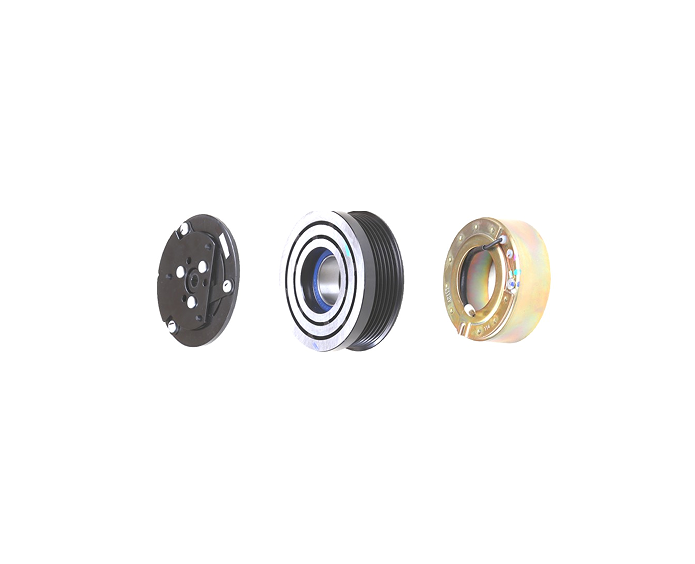
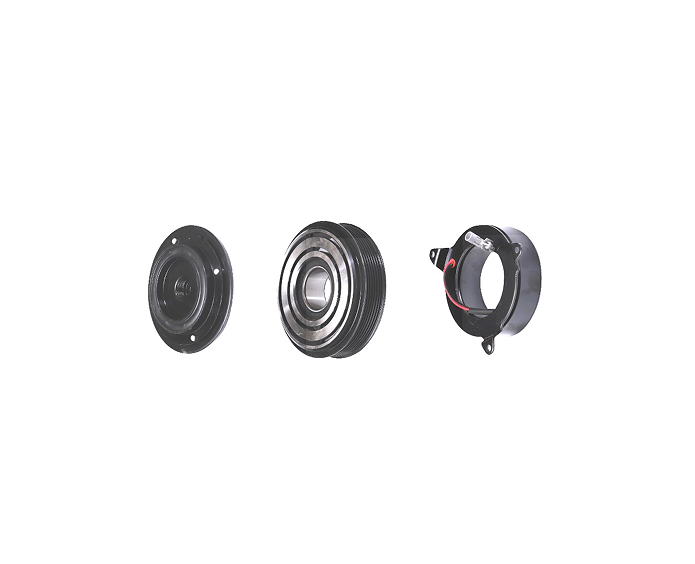
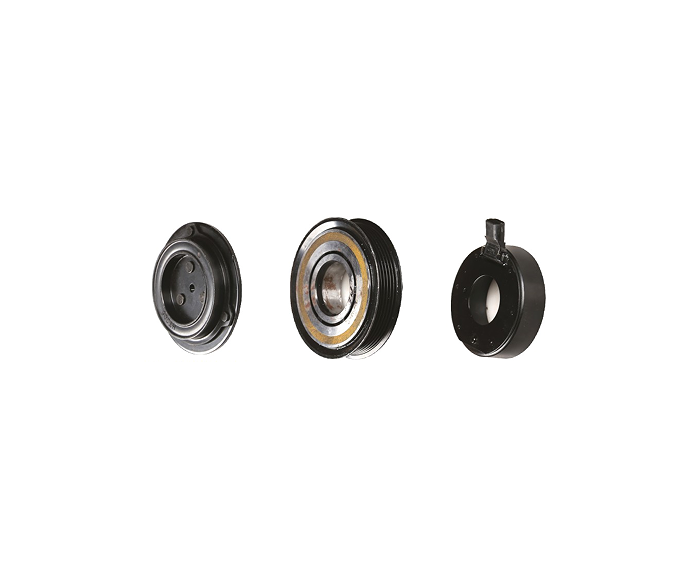
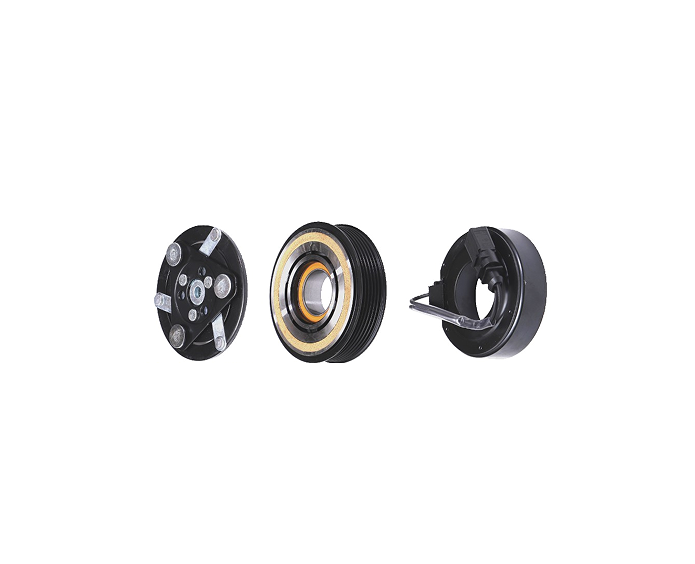
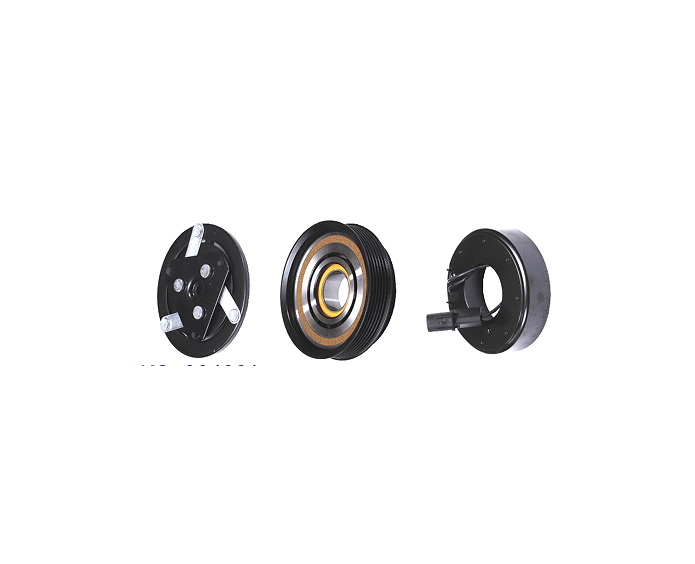
In many conventional belt-driven automotive air-conditioning systems, the compressor pulley rotates with the engine accessory belt even when the electromagnetic clutch is disengaged. The pulley bearing supports that rotation, while clutch engagement connects the rotating pulley to the compressor shaft when cooling is requested. KASEN's compressor clutch bearing guide and AC compressor pulley guide both explain this relationship between pulley, bearing and clutch operation.
For B2B purchasing, this leads to a practical rule: pulley diameter, groove count, bearing and compressor fitment need to be considered together. A pulley that appears correct in a photograph can still be wrong because its offset, groove profile, bearing, shaft relationship or associated clutch configuration differs.
Who Should Buy an AC Compressor Pulley Separately?
Separate pulley sourcing is particularly relevant to compressor rebuilders, automotive AC specialists, repair-parts distributors and wholesalers that service known compressor families. These buyers may retain usable compressor components while replacing a pulley, pulley bearing or related clutch part.
However, a separate pulley is not automatically the correct repair for every front-end compressor problem. Abnormal noise may involve the pulley bearing, belt alignment or another rotating component. A clutch that will not engage may involve the coil, hub, wiring or control circuit rather than the pulley itself. If multiple clutch components are damaged, sourcing a complete AC compressor clutch may be more practical than rebuilding from separate parts.
This makes fault identification important before wholesale purchasing. A distributor should not create a new pulley SKU simply because workshops commonly use the phrase "compressor pulley" for several different front-clutch problems.
Start With the Compressor Reference, Not the Vehicle Brand
Vehicle information is useful, but it should not be the only information submitted to a car AC compressor pulley supplier. The same vehicle family can use different compressors or clutch configurations depending on year, engine, market and production version.
For a new sourcing request, provide the compressor manufacturer or model where available, OE or existing reference, vehicle information, old-part photographs and measurable pulley details. A compressor label photograph is often more useful than a broad description such as "pulley for Mercedes" or "pulley for Volkswagen."
Where information is uncertain, record it as to be confirmed. Do not copy a bearing code, diameter or groove specification from another product merely because the pulley looks similar.
KASEN's aftermarket AC compressor clutch supplier guide follows the same fitment principle: product identification should combine compressor reference, pulley geometry, bearing, voltage and other relevant fields instead of relying on appearance.
Build a Pulley Specification Before Asking for the Lowest Price
A useful RFQ gives each supplier the same technical definition. Otherwise, two quotations may appear to describe the same pulley while actually covering different bearing specifications or pulley geometry.
| Specification Item | What the Buyer Should Confirm | Why It Matters |
|---|---|---|
| Supplier reference | Exact product code | Supports repeat ordering |
| Buyer SKU | Distributor's internal code | Connects purchasing, warehouse and sales |
| Compressor identity | Compressor manufacturer/model/reference | Establishes fitment context |
| Vehicle application | Make/model/year/engine where confirmed | Supports catalogue accuracy |
| Pulley outside diameter | Actual approved dimension | Controls basic mechanical fit |
| Groove configuration | PK profile and groove count | Must correspond with the drive belt |
| Pulley offset | Relative pulley position where applicable | Affects belt alignment |
| Bearing | Full approved bearing reference/specification | Controls rotating support |
| Bore/interface | Relevant mounting and center geometry | Affects assembly |
| Surface requirement | Finish or treatment where specified | Defines approved product condition |
| Sample revision | Approved product/sample version | Prevents version confusion |
| Packaging | Supplier code, buyer SKU and carton data | Prevents warehouse mix-ups |
This table is a procurement framework, not a universal specification for all KASEN pulley products. The required fields can vary with compressor and clutch design.
Pulley Diameter Is Important—but It Is Not Enough
Outside diameter is one of the first values buyers compare, but it should never become the entire fitment decision.
Two pulleys can share the same outside diameter while using different groove counts, bearings or offsets. Conversely, two 6PK pulleys may have different diameters and bearing specifications. These differences can affect belt alignment, mounting and the relationship between the pulley and the remaining clutch components.
For a replacement programme, record diameter together with the belt profile and groove count. Where offset or locating dimensions affect installation, include those measurements as well.
A car AC compressor pulley supplier should therefore be able to move the discussion beyond "What diameter do you need?" toward a complete pulley and compressor match.
Groove Count and Belt Profile Need Separate Confirmation
A description such as 5PK or 6PK is useful, but it still does not define the whole pulley. The groove specification identifies the number and type of belt ribs the pulley is intended to work with, while pulley diameter, width and alignment remain separate characteristics.
Do not assume that every 6PK pulley can replace another 6PK pulley. KASEN's published clutch data already shows examples of products with the same groove count but different pulley diameters and bearing codes. The AC compressor clutch wholesale guide specifically uses these differences to show why one shared specification does not establish interchangeability.
For a distributor, belt-groove information should therefore be a searchable field inside the SKU record, but not the sole application identifier.
The Pulley Bearing Is Part of the Purchasing Decision
On many belt-driven clutch assemblies, the bearing is installed inside the pulley or rotor. Because the accessory belt may keep the pulley turning whenever the engine runs, the bearing can operate even while the clutch is disengaged.
This relationship makes the bearing important to pulley sourcing. Ask whether the quotation covers:
- pulley only,
- pulley with installed bearing,
- bearing supplied separately, or
- complete clutch assembly.
If a bearing is included, confirm its complete approved reference or specification. Do not replace one bearing with another solely because the nominal dimensions appear similar.
Buyers needing more detailed bearing selection information can use KASEN's compressor clutch bearing buying guide before finalizing the pulley specification.
Check Pulley Alignment and Offset Before Bulk Approval
A pulley can have the correct outside diameter and groove count but still create a belt-alignment problem if its installed position differs from the original component.
Where relevant to the compressor design, compare the axial position of the pulley grooves with the reference part. A rebuild operation should also verify that the bearing seats and locating features allow the pulley to sit in the intended position.
For an old sample, measure from consistent reference surfaces rather than comparing two loose pulleys visually. If the buyer does not have reliable measurement capability, provide the original sample to the supplier for technical comparison and then approve the proposed replacement before bulk ordering.
This is particularly important for aftermarket cross-references because catalogue descriptions sometimes simplify a complex physical interface into one vehicle name and one pulley diameter.
Use Real KASEN Product Data to See Why Model-Level Confirmation Matters
Current KASEN product pages provide useful examples of why buyers should compare several pulley-related fields simultaneously.
KASEN currently publishes KS-815002 with 12V, 5PK, a 110 mm pulley and bearing code 355020. KS-812038 is published as 12V, 6PK, 112 mm and bearing code 355522. For KS-807033, the current product page identifies the model and application reference but leaves the voltage, groove, pulley diameter and bearing fields blank.
This comparison demonstrates two useful sourcing rules. First, even two published 12V products can have different pulley geometry and bearings. Second, a missing field should remain missing until confirmed; buyers should not complete an incomplete specification using data from another KASEN model.
Treat Published Product Pages as Starting References, Not Complete Fitment Guarantees
A product page can help identify the supplier code and published application, but a professional importer should still confirm the exact compressor application before creating a market-wide cross-reference.
For example, a page labelled for a Mercedes-Benz ML application does not automatically prove fitment across every ML generation, engine or compressor option. The buyer should connect that reference to the compressor information used during approval.
Similarly, marketing descriptions such as "compatible with many brands" should not replace product-level application data.
This is one of the most important differences between a retail-style product listing and a distributor-grade technical catalogue. A distributor needs to know exactly what information has been verified and where application limits remain.
Evaluate Materials and Workmanship Through Controlled Requirements
A pulley supplier may describe products as precision-machined, corrosion-resistant or durable. Those phrases are useful only when they are connected to a defined product requirement.
Ask what material and surface process apply to the selected reference if those characteristics matter to your purchasing specification. For machining, identify which pulley dimensions and interfaces are controlled. For an assembled pulley, ask how bearing installation and relevant rotational checks are handled.
KASEN's compressor clutch manufacturing process describes material preparation, machining, assembly and inspection as stages in clutch production. Buyers can use those stages to structure a factory discussion, but model-specific requirements and acceptance criteria should still be confirmed for the actual pulley being purchased.
The useful question is not merely, "Do you use precision machining?" It is, "Which dimensions on this approved pulley are controlled, and how are they verified?"
Approve a Representative Sample Before Creating a Regular Pulley SKU
A sample should establish a technical baseline before a new pulley enters regular stock.
Record the supplier reference, buyer SKU, compressor application, pulley diameter, groove specification, bearing, relevant offset or mounting dimensions, photographs and approval date. If the sample is installed during evaluation, record which compressor or clutch assembly was used.
Do not use an informal note such as "sample OK" as the entire approval record. A future purchasing team may not know which characteristics were checked.
If the supplier revises the bearing, pulley geometry or another controlled requirement after the first sample, issue a new sample or specification revision rather than keeping both configurations under the same approval.
Separate Production QC From Engineering Validation
Routine production inspection and product validation are not the same activity.
Production QC asks whether the pulley being manufactured matches the approved product definition. Depending on the model and purchasing specification, relevant checks may include diameter, groove configuration, bearing identity, surface condition, runout or other defined characteristics.
Validation addresses a specific technical performance question under a defined method. If buyers require endurance, vibration, corrosion or another specialized test, request the actual model tested, conditions and acceptance criteria.
A general claim such as "rigorously tested" does not tell a B2B buyer which tests apply to a specific SKU. The inspection plan should therefore be established against the actual purchasing requirement.
Check Manufacturing Change Control Before Repeat Orders
The first accepted order does not guarantee that the third order will have the same configuration. Long-term supply depends on how product changes are controlled.
Agree which changes require notification before production. Depending on the SKU, these may include:
- bearing substitution,
- pulley material change,
- surface-treatment change,
- dimensional revision,
- groove change,
- component-source change, or
- packaging identification change.
If a proposed change affects an approved requirement, determine whether a new sample or additional verification is necessary.
For distributors, this is especially important because customers continue to purchase using the same buyer SKU even when upstream production changes. The SKU should represent a controlled product, not just a convenient name.
Plan Wholesale Quantity Around Confirmed Demand
Buying directly from a car AC compressor pulley supplier does not mean every available model should become permanent warehouse stock.
Divide prospective references into core, trial and special-order groups. Core stock should be supported by actual sales or recurring workshop enquiries. Trial references can be technically confirmed but commercially unproven. Low-demand applications may be better handled by special order until the market justifies inventory.
This approach reduces working-capital risk while allowing the distributor to expand range systematically.
For mixed orders, ask for current MOQ by SKU, any total-order requirement and separate conditions for customized packaging. Do not let a factory MOQ become your entire stock-planning strategy.
Ask for Lead Time Against the Actual Pulley Mix
A headline lead time is less useful than an order-specific schedule.
For new references, distinguish technical confirmation, sampling, approval, material preparation, production, inspection, packaging and dispatch. Clarify which event starts the quoted production period.
For mixed-SKU orders, ask whether one delayed model will hold the entire shipment. A distributor may prefer to receive high-demand stock first and slower references later, while another buyer may choose one consolidated shipment for freight efficiency.
The right arrangement depends on the buyer's stock position and logistics strategy.
Compare Total Cost Instead of Pulley Unit Price Alone
A lower pulley price can be attractive, but wrong-fitment inventory is expensive.
A mismatched product can create return freight, technician time, warehouse handling, repacking and lost confidence in the distributor's application catalogue. Even technically correct stock can become costly if too much capital is tied up in low-demand references.
Compare quotations using the same technical scope. Include whether the bearing is supplied, packaging differences, inspection requirements and freight terms.
For new references, do not invent a generic return percentage. Use controlled trial orders first and build your cost model from actual sales and quality data.
Separate Standard Replacement, Private Label and OEM Pulley Projects
A standard replacement order uses an existing pulley configuration. A private-label order may keep the same technical product while changing labels, barcodes or packaging. An OEM or custom project changes a technical requirement and therefore needs separate evaluation.
If the buyer wants to alter diameter, groove configuration, bearing, offset or mounting geometry, describe that change explicitly rather than placing it under the generic phrase "OEM pulley."
KASEN states that it welcomes custom-production discussions using drawings or OEM numbers on its About Us page. Actual feasibility, tooling, sample requirements, MOQ and timing should still be confirmed for each requested pulley.
Prepare an RFQ a Car AC Compressor Pulley Supplier Can Answer
A useful RFQ should include one line for every required pulley reference. Provide the compressor or existing product number, vehicle information where confirmed, old-part photographs, pulley diameter, groove configuration, bearing information, quantity and destination.
If some dimensions remain unknown, identify them clearly rather than guessing.
For recurring imports, also provide your buyer SKU and explain whether the requirement is:
- an equivalent replacement,
- a new aftermarket reference,
- a private-label product, or
- a technically modified pulley.
Buyers can review the KASEN product center and submit their model list through the KASEN enquiry page. KASEN's website states that the company has focused on automotive AC parts since 2007 and supplies compressors, clutches, electric compressors, valves and bearings to aftermarket and OEM customers.
Frequently Asked Questions About Car AC Compressor Pulley Suppliers
1. What information should I send to identify an AC compressor pulley?
Provide the compressor or existing pulley/clutch reference, vehicle information where known, old-part photographs, pulley diameter, groove specification and bearing information. If offset or mounting geometry is important to the application, include those dimensions as well.
2. Can I identify a compressor pulley by diameter alone?
No. Pulleys with similar or identical outside diameters can still differ in groove count, bearing, offset or compressor application. Use diameter as one part of the specification rather than the complete fitment decision.
3. What does 5PK or 6PK mean in a pulley specification?
It identifies the belt-rib or groove configuration used by the pulley. However, two 6PK pulleys are not automatically interchangeable because diameter, bearing and mounting geometry can still differ.
4. Is the pulley bearing normally supplied with the pulley?
That depends on the supplier and product configuration. Confirm whether the quotation covers a bare pulley, pulley with installed bearing or complete clutch assembly. Record the bearing specification when it is included.
5. How important is pulley offset?
Where pulley position controls accessory-belt alignment, offset can be critical. Compare the proposed pulley with the original component or approved drawing rather than relying only on diameter and groove count.
6. Should distributors approve a pulley sample before buying in bulk?
For a new or uncertain reference, yes. A sample provides a baseline for dimensions, bearing, groove configuration, mounting and fitment. Connect the approved sample to the supplier reference and buyer SKU.
7. What QC should I request from a pulley supplier?
Start from the agreed product specification. Depending on the pulley design, the inspection plan may include identification, dimensions, groove configuration, bearing confirmation, surface condition and relevant rotational checks. Ask which items are checked and what acceptance criteria apply.
8. Can several pulley references be combined into one wholesale order?
Potentially. Ask the supplier about current MOQ per SKU, combined-order conditions, carton identification and production timing. Do not assume every reference has the same minimum quantity or readiness date.
9. Can KASEN support custom AC compressor pulley requirements?
KASEN states that it welcomes custom-production discussions based on drawings or OEM numbers. Buyers should send the existing pulley/compressor information and describe the required technical change so feasibility, sampling and commercial conditions can be evaluated.
10. How do I request a pulley quotation from KASEN?
Prepare your compressor or pulley references, photographs, relevant dimensions, groove information, bearing specification, quantities and destination. Review KASEN's automotive AC products and submit the project through Contact KASEN.
Conclusion
Choosing a car AC compressor pulley supplier should begin with compressor-level identification and a controlled pulley specification, not a photograph or unit price. Automotive AC distributors and rebuilders should confirm pulley diameter, groove configuration, bearing and relevant mounting geometry, approve new references through samples, distinguish production QC from validation and require change control for repeat orders. KASEN currently publishes pulley-related references such as KS-815002 and KS-812038, while some other product pages still require additional model-specific fields to be confirmed before professional purchasing. Review the KASEN product range and send your compressor references, dimensions, quantities and target market through KASEN Contact Us to discuss a model-specific pulley sourcing programme.