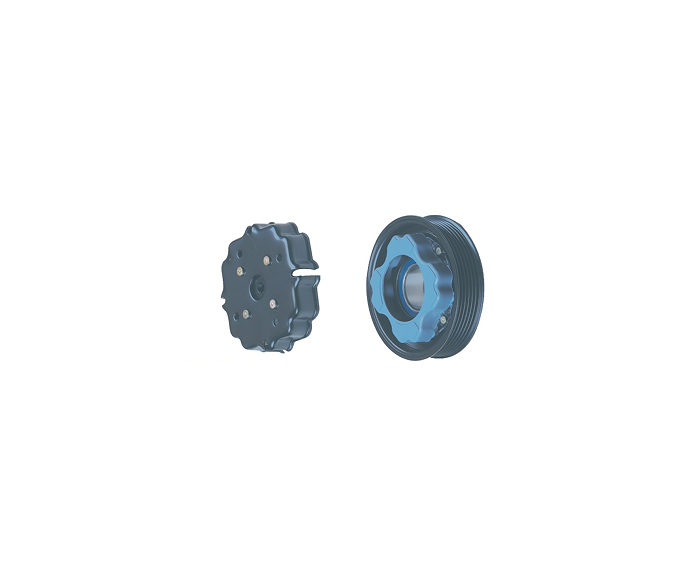

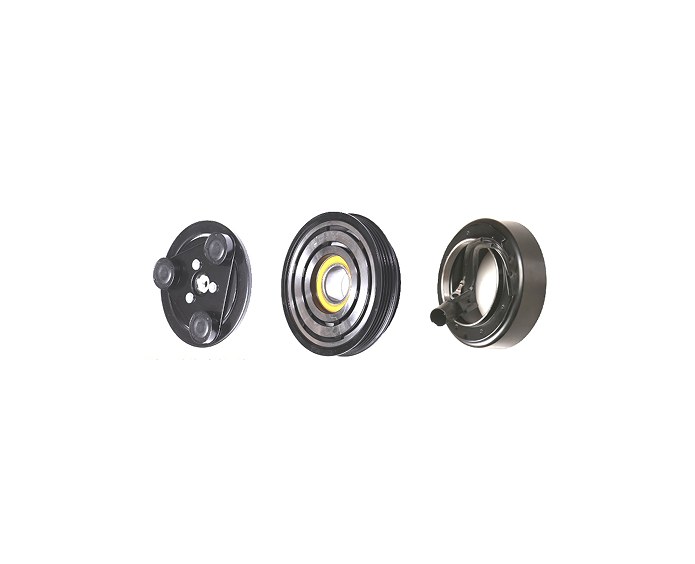
When Noise Becomes the First Warning Signal
A properly functioning automotive air conditioner clutch should operate with minimal audible disturbance. A faint click during engagement is normal. Grinding, squealing, rattling, or continuous whining is not.
Noise is rarely random. It is mechanical feedback.
Understanding the sound pattern is the first step toward accurate diagnosis.
Common Noise Types and What They Indicate
1️⃣ Grinding or Rough Rotation Sound
Most commonly caused by bearing degradation.
Possible triggers:
- Insufficient lubrication
- Excessive belt tension
- Contaminant ingress
- Bearing fatigue per ISO 281 dynamic load criteria
Because the pulley rotates continuously—even when the automotive air conditioner clutch is disengaged—bearing wear is a frequent early failure point.
Unchecked bearing noise can escalate into pulley seizure.
2️⃣ Squealing During Engagement
A sharp squeal at clutch activation may indicate:
- Friction plate glazing
- Uneven contact surface
- Insufficient magnetic pull
- Air gap misalignment
When the clutch surface slips instead of locking immediately, friction heat rises quickly.
This compromises the long-term durability of the automotive air conditioner clutch.
3️⃣ Clicking or Repeated Tapping
Repeated clicking often signals excessive cycling.
Possible causes:
- Low refrigerant pressure
- Electrical instability
- Weak electromagnetic coil
- Control module signal fluctuation
Frequent engagement cycles increase wear and thermal stress.
Magnetic coil stability, governed by ISO 6722 insulation standards, becomes critical under repeated load transitions.
4️⃣ Rattling at Idle
Rattling noise may indicate:
- Loose mounting hardware
- Pulley misalignment
- Excessive air gap
- Worn armature plate springs
Air gap deviation reduces magnetic efficiency and increases vibration amplitude.
Precision machining reduces this risk in high-quality automotive air conditioner clutch assemblies.
Root Cause Engineering Analysis
Noise symptoms usually trace back to one of four root categories:
- Bearing Wear
- Magnetic Inefficiency
- Friction Surface Degradation
- Structural Misalignment
Each failure type impacts system performance differently.
For example:
- Bearing failure increases rotational drag
- Coil weakness reduces torque transfer
- Friction plate wear causes slippage
- Misalignment amplifies vibration
Noise is rarely the core problem. It is the surface symptom.
Environmental and Operational Stress Factors
Certain conditions accelerate noise development:
- High ambient temperatures
- Heavy-duty commercial vehicle operation
- Dust and moisture exposure
- Frequent stop-and-go driving
- Over-tightened belts
Commercial vehicles place greater demand on the automotive air conditioner clutch due to prolonged AC operation and higher accessory loads.
Preventive inspection becomes essential in fleet management.
Diagnostic Strategy
Step 1: Visual Inspection
Check pulley alignment and mounting stability.
Step 2: Manual Rotation Test
Spin the pulley by hand (engine off). Roughness indicates bearing issues.
Step 3: Engagement Observation
Monitor engagement timing and sound pattern.
Step 4: Electrical Testing
Measure coil resistance and voltage stability.
Systematic diagnosis prevents unnecessary full compressor replacement.
Often, replacing the automotive air conditioner clutch assembly resolves the issue without replacing the compressor.
Repair vs Replacement Decision
Repair May Be Suitable If:
- Bearing only is worn
- Coil resistance remains stable
- Friction surface remains uniform
Replacement Recommended If:
- Overheating occurred
- Multiple components degraded
- Pulley misalignment persists
- Noise continues after partial repair
Replacing the full automotive air conditioner clutch ensures restored structural integrity and air gap precision.
Preventive Measures to Reduce Noise Risk
- Maintain correct belt tension
- Conduct periodic bearing inspection
- Avoid prolonged compressor cycling
- Use high-quality clutch assemblies
- Ensure proper installation torque
Noise prevention begins with component quality and installation discipline.
Frequently Asked Questions
Q1: Is a slight click normal when AC turns on?
Yes. A brief engagement click is normal. Persistent grinding or squealing is not.
Q2: Can clutch noise damage the compressor?
Yes. Misalignment and overheating can stress the compressor shaft and internal components.
Q3: How long should a high-quality clutch remain quiet?
A well-engineered automotive air conditioner clutch should operate quietly for 80,000–120,000 km under normal conditions.
Conclusion: Noise Is an Early Engineering Signal
An automotive air conditioner clutch rarely fails silently. Sound changes reflect mechanical imbalance, magnetic inefficiency, or structural wear.
Addressing noise early prevents:
- Compressor damage
- Increased fuel consumption
- System instability
- Expensive downtime
For OEM manufacturers and distributors seeking durable, precision-tested automotive air conditioner clutch assemblies designed for stable and quiet operation, explore:
https://www.gzkasen.com/
For technical consultation or quotation inquiries:
https://www.gzkasen.com/contact-us/