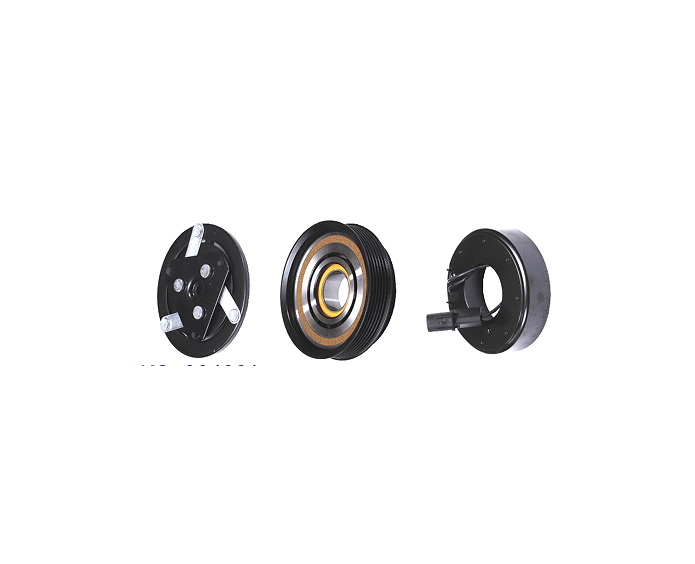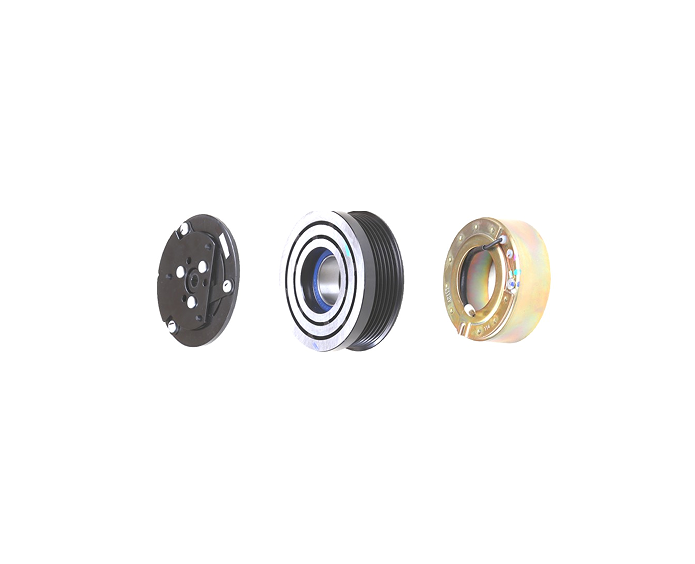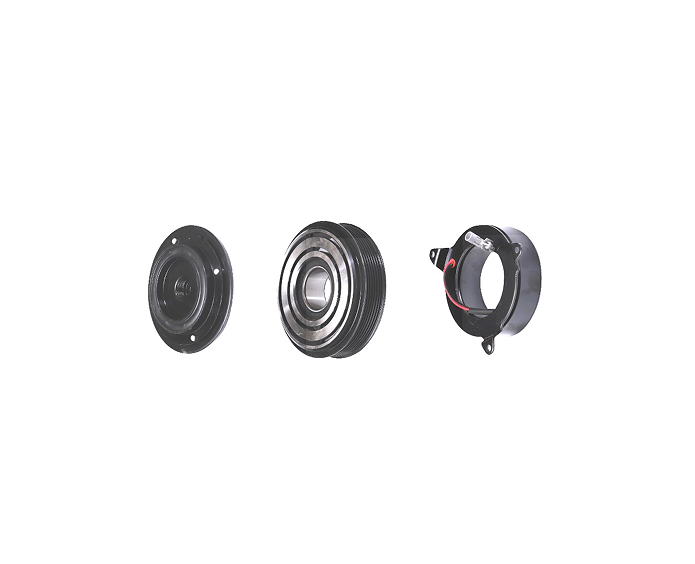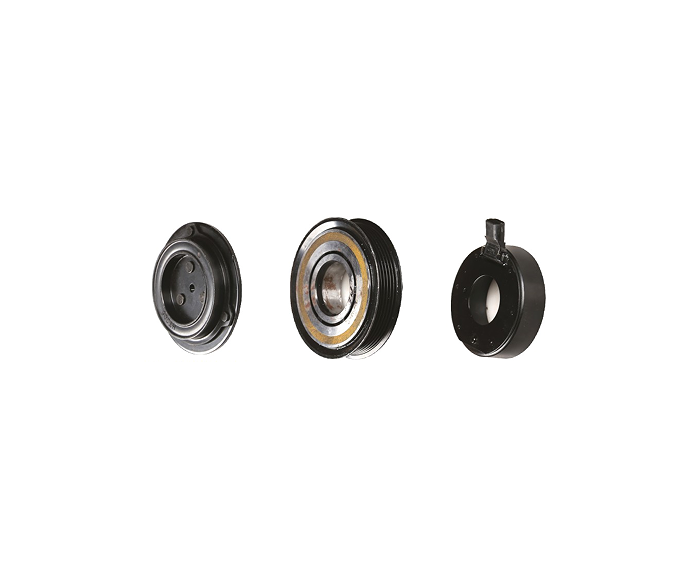

What Should an AC Compressor Clutch Pulley Manufacturer Provide?
An AC compressor clutch pulley manufacturer should provide more than a replacement pulley that looks similar to the original part. For automotive AC distributors, compressor rebuilders and aftermarket suppliers, the important question is whether the pulley can be correctly matched with the compressor clutch system and reproduced consistently for future orders.
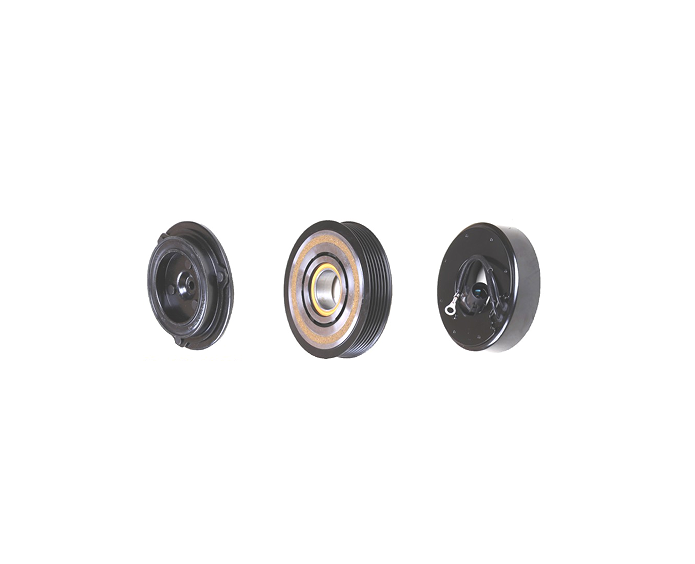
The pulley is a key rotating component in a traditional belt-driven automotive air-conditioning compressor clutch. It transfers engine belt rotation through the clutch system while the bearing supports pulley rotation. When the clutch engages, the compressor shaft can receive driving force. Because the pulley works together with the bearing, coil, hub and compressor interface, selecting a pulley only by appearance or outside diameter can create fitment problems.
KASEN provides automotive air-conditioning components including compressor clutches, bearings, pulleys and related parts. Buyers can review the KASEN AC compressor clutch product range to understand the available product scope before discussing specific pulley requirements.
For professional purchasing, the goal is not simply to find a pulley. The goal is to establish a controlled replacement reference that can be identified, approved and reordered consistently.
Who Needs an Automotive AC Compressor Clutch Pulley Manufacturer?
An automotive AC compressor clutch pulley manufacturer is usually relevant for businesses that manage recurring replacement demand, including:
- Automotive AC parts distributors
- Compressor rebuilding companies
- Wholesale aftermarket suppliers
- Repair-network suppliers
- Private-label automotive parts brands
- Importers managing multiple replacement SKUs
These buyers often require more than a single replacement item. They need reliable product identification, stable specifications, packaging consistency and repeat-order support.
For example, a compressor rebuilder may need pulley-only supply because other clutch components remain reusable. A distributor may need several pulley references to support different compressor applications. A private-label brand may need the pulley linked with its own SKU system and packaging requirements.
However, pulley replacement is not suitable for every compressor problem. Noise, belt issues or clutch failure may involve the bearing, coil, hub, wiring or complete clutch assembly. Buyers should confirm the actual failed component before converting a product into regular inventory.
For broader replacement requirements, buyers can also review the KASEN automotive AC compressor clutch solutions.
Start Pulley Sourcing With Compressor Identification
A common purchasing mistake is starting with only a vehicle name or pulley appearance. Automotive AC systems may use different compressor configurations depending on vehicle year, engine, market and production version.
Before requesting a quotation from an AC compressor clutch pulley manufacturer, prepare:
- Compressor model or reference number
- Existing pulley or clutch reference
- Vehicle information where available
- Pulley photographs from multiple angles
- Pulley outside diameter
- Groove specification
- Bearing information
- Mounting and offset information where applicable
If one field is unknown, record it as pending confirmation. Avoid copying specifications from another pulley that looks similar.
A professional supplier should help identify missing information rather than automatically matching a product based on a single characteristic.
Build a Pulley Specification Before Comparing Suppliers
Price comparison is only meaningful when suppliers quote the same product definition. A pulley specification should connect the physical component with the buyer's internal SKU and future ordering process.
| Specification Item | Information to Confirm | Purchasing Value |
|---|---|---|
| Supplier reference | Exact pulley model/code | Supports repeat orders |
| Buyer SKU | Internal distributor code | Connects sales and warehouse |
| Compressor application | Compressor model/reference | Defines technical scope |
| Vehicle information | Confirmed application data | Improves catalogue accuracy |
| Pulley diameter | Outside diameter measurement | Controls basic fitment |
| Groove specification | Belt profile and groove count | Controls belt compatibility |
| Width | Pulley width where applicable | Supports mechanical matching |
| Offset | Pulley position relationship | Helps maintain belt alignment |
| Bearing | Bearing reference/specification | Controls rotating support |
| Mounting structure | Interface and locating features | Prevents assembly mismatch |
| Surface condition | Required finish/treatment | Defines approved appearance |
| Sample revision | Approved version | Prevents product confusion |
This specification should become the reference for quotation, sample approval, production and future replenishment.
Why Pulley Diameter Alone Cannot Confirm Compatibility
Pulley diameter is one of the first values buyers check, but it does not define the complete product.
Two pulleys may have the same outside diameter while having different:
- Belt groove configurations
- Bearings
- Offsets
- Mounting structures
- Compressor applications
Likewise, two pulleys with the same groove count may still require different dimensions or bearings.
KASEN's published clutch-related product information demonstrates why buyers should compare several technical fields instead of relying on one value. A pulley with the same diameter or belt groove should still be verified against the complete clutch and compressor application.
This is particularly important for aftermarket catalogues. A product title such as "AC compressor pulley for Toyota" may be useful for browsing, but the technical record should contain the actual confirmed application limits.
Groove Count and Belt Profile Must Be Verified
Automotive pulley descriptions commonly include terms such as 4PK, 5PK or 6PK. These indicate the belt-rib configuration, but they are not complete replacement specifications.
A supplier and buyer should confirm:
- Groove count
- Belt profile
- Pulley diameter
- Alignment position
- Bearing configuration
For example, two 6PK pulleys may not be interchangeable if their diameter, bearing or mounting relationship differs.
When creating replacement SKUs, groove information should be included as a searchable product field, but it should remain one part of the complete fitment record.
The Bearing Is a Critical Part of Pulley Selection
The pulley and bearing work together in the clutch assembly. A bearing supports pulley rotation, meaning bearing selection can directly influence the rotating condition of the assembly.
When sourcing pulleys, buyers should confirm whether the quotation includes:
- Pulley only
- Pulley with installed bearing
- Separate bearing supply
- Complete clutch assembly
Do not assume two bearings are interchangeable because the dimensions appear similar. Confirm the approved bearing reference and the intended compressor application.
Buyers can also review the KASEN compressor clutch bearing information when evaluating pulley and bearing relationships.
Evaluate Manufacturing Capability Through the Actual Pulley
A factory review becomes more valuable when it follows a specific pulley model instead of only reviewing general equipment.
A buyer evaluating an AC compressor clutch pulley manufacturer should understand:
- Which pulley dimensions are controlled
- How machining accuracy is checked
- How bearing installation is controlled
- How similar pulley models are separated
- How production changes are managed
- How finished products are identified
KASEN's compressor clutch manufacturing process describes machining, assembly and inspection stages related to clutch production.
For buyers, the important question is not only whether the factory has machining equipment. The important question is whether the selected pulley reference is manufactured according to a controlled specification.
Approve Samples Before Bulk Pulley Orders
Sample approval is especially important for new pulley references or uncertain applications.
A useful sample record should include:
- Supplier reference
- Buyer SKU
- Compressor application
- Pulley diameter
- Groove specification
- Bearing information
- Photographs
- Approval date
- Outstanding issues
If a sample is modified, create a new revision instead of continuing to use the same approval record.
This prevents purchasing teams, engineers and suppliers from referring to different physical samples under the same product code.
Separate Production Inspection From Validation
Production inspection and product validation answer different questions.
Production inspection asks:
Does this batch match the approved pulley specification?
Validation asks:
Has this pulley configuration been evaluated under defined operating conditions?
A normal production check may include:
- Product identification
- Dimensional verification
- Groove inspection
- Bearing confirmation
- Surface condition
- Assembly-related checks
Specialized testing, such as endurance or environmental testing, should have clearly defined methods and acceptance criteria.
A buyer should request evidence related to the specific pulley model rather than relying on general statements such as "high quality" or "strict testing."
Compare Real Pulley References Before Building Inventory
Published KASEN references show why pulley purchasing should remain model-specific.
The comparison shows why a single field cannot define compatibility.
KS-815002 and KS-812038 both publish 12V applications, but their groove and pulley information differs. KS-807033 currently requires additional confirmation for several technical fields.
For distributors, incomplete information should remain visible until confirmed. It is better to have a pending specification than an incorrect catalogue entry.
Plan Wholesale Quantities Based on Demand
Working with an AC compressor clutch pulley manufacturer does not mean every available model should become permanent stock.
A practical inventory structure can include:
Core stock
References supported by regular customer demand.
Trial stock
Newly introduced references with confirmed fitment but limited sales history.
Special-order products
Low-frequency applications that do not yet justify warehouse inventory.
This approach helps distributors avoid investing too much capital in slow-moving references.
MOQ should also be evaluated by SKU rather than only by total order quantity. Confirm:
- Minimum quantity per pulley model
- Mixed-order conditions
- Packaging requirements
- Production timing
Control Repeat Orders With Change Management
A successful first order does not guarantee long-term consistency.
Before repeat purchasing, define which changes require notification:
- Bearing changes
- Pulley dimension changes
- Groove changes
- Surface-treatment changes
- Material changes
- Packaging changes
If a change affects the approved product, determine whether a new sample or additional verification is required.
For distributors, this protects catalogue accuracy. Customers expect the same SKU to represent the same product.
OEM and Private Label Pulley Projects
Some buyers need standard replacement pulleys, while others require private-label packaging or technical customization.
Separate these requirements:
Standard replacement
- Existing pulley configuration
- Standard supplier reference
Private label
- Buyer SKU
- Packaging
- Labels
- Branding
OEM/custom project
- Technical modification
- New specification
- Engineering review
KASEN states that it supports custom-production discussions based on drawings or OEM numbers through its company information page.
Actual customization scope, MOQ, samples and production conditions should be confirmed according to the specific pulley requirement.
Prepare an RFQ for an AC Compressor Clutch Pulley Manufacturer
A strong quotation request should include:
- Pulley reference
- Compressor information
- Existing sample/photos
- Diameter
- Groove specification
- Bearing information
- Quantity
- Destination market
- Packaging requirements
For multiple models, create one line per SKU.
Review the KASEN product center and submit your requirements through the KASEN inquiry page.
A complete RFQ helps both sides confirm technical requirements before quotation and production.
Frequently Asked Questions About AC Compressor Clutch Pulley Manufacturers
1. What information should I provide to a pulley manufacturer?
Provide compressor information, pulley reference, photographs, diameter, groove specification, bearing details and quantity. More complete information allows more accurate fitment evaluation.
2. Can pulley diameter confirm replacement compatibility?
No. Diameter is only one specification. Groove, bearing, offset, mounting structure and compressor application should also be confirmed.
3. Does 6PK mean all pulleys are interchangeable?
No. Two 6PK pulleys can still differ in diameter, bearing and mounting position.
4. Should I buy pulley only or complete clutch assembly?
It depends on the repair requirement. If other clutch components remain usable, pulley replacement may be suitable. If several components are damaged, a complete clutch may be more practical.
5. How do I evaluate pulley quality?
Review the approved specification, dimensional controls, bearing information, inspection process and change management rather than relying only on appearance.
6. Can KASEN provide pulley customization?
KASEN supports custom-production discussions based on drawings or OEM numbers. Specific pulley customization requirements should be evaluated individually.
7. How should distributors manage pulley inventory?
Separate core, trial and special-order references based on demand history and confirmed applications.
8. What QC information should I request?
Request checks relevant to the approved pulley specification, such as dimensions, groove configuration, bearing confirmation and identification records.
9. How can I avoid wrong pulley shipments?
Use stable SKUs, approved samples, product photos, technical records and clear packaging identification.
10. How do I request a pulley quotation from KASEN?
Prepare your pulley reference, compressor information, quantity and technical requirements, then submit details through the KASEN Contact Us page.
Conclusion
Choosing an AC compressor clutch pulley manufacturer requires more than finding a supplier with replacement parts. Automotive AC distributors and rebuilders should verify pulley diameter, groove configuration, bearing, mounting relationship and compressor application before bulk purchasing. A reliable sourcing process connects approved samples, production inspection, SKU management and repeat-order control. KASEN provides automotive AC clutch-related products and supports buyers with product information, replacement references and project discussions. Review the KASEN AC compressor clutch range and contact KASEN with your pulley references, quantities and application requirements to discuss a suitable sourcing solution.