
Cooling Performance Optimization: How A/C Compressor Clutch Efficiency Impacts System Cooling and Energy Use
Understanding the Role of the Clutch in Cooling Efficiency
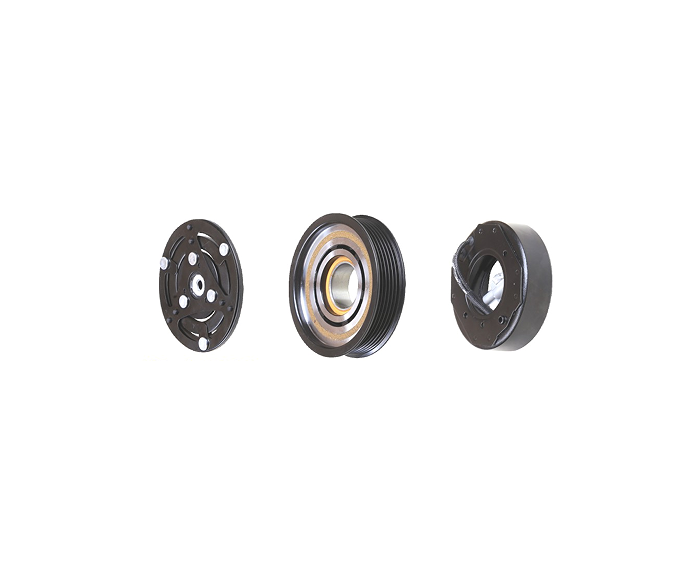
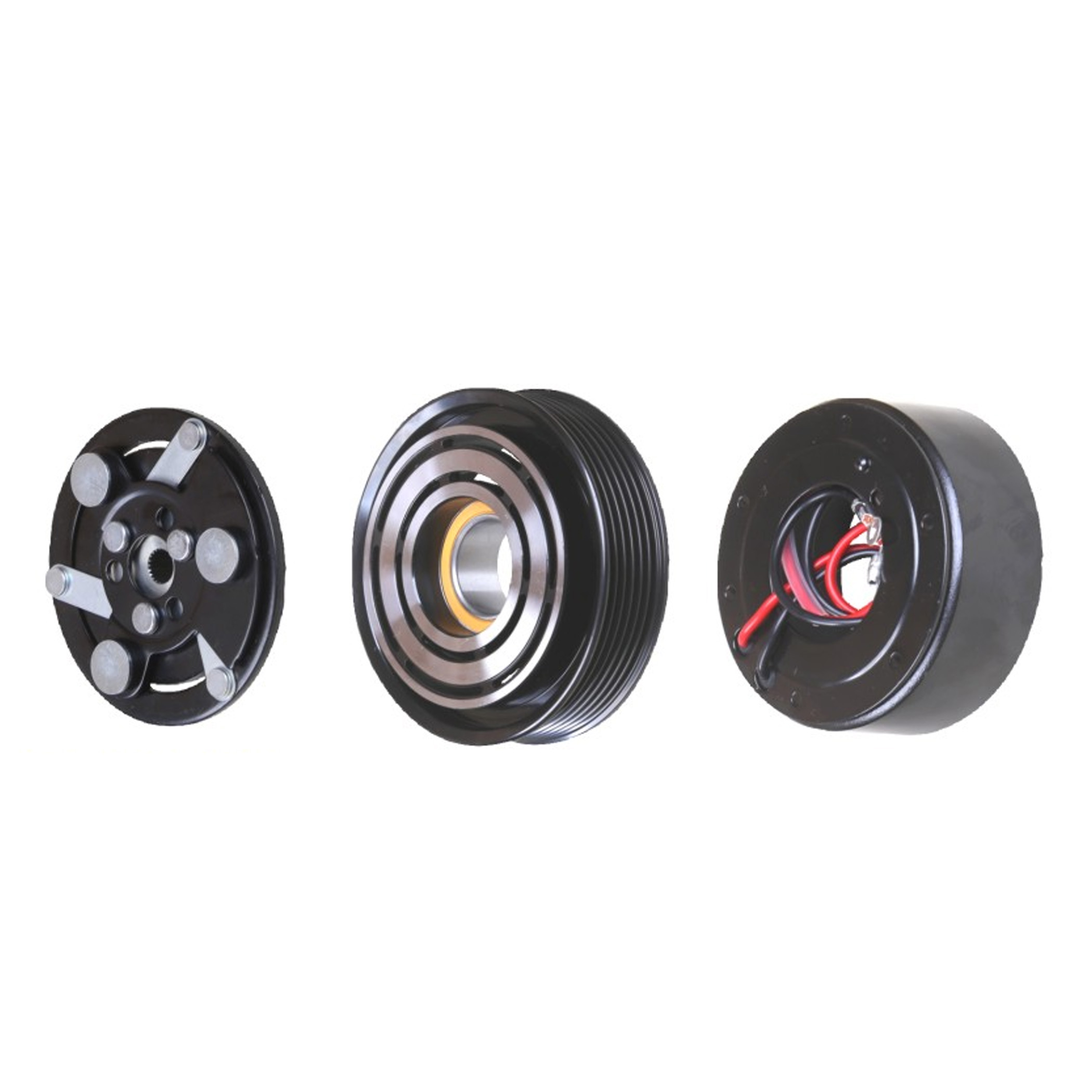
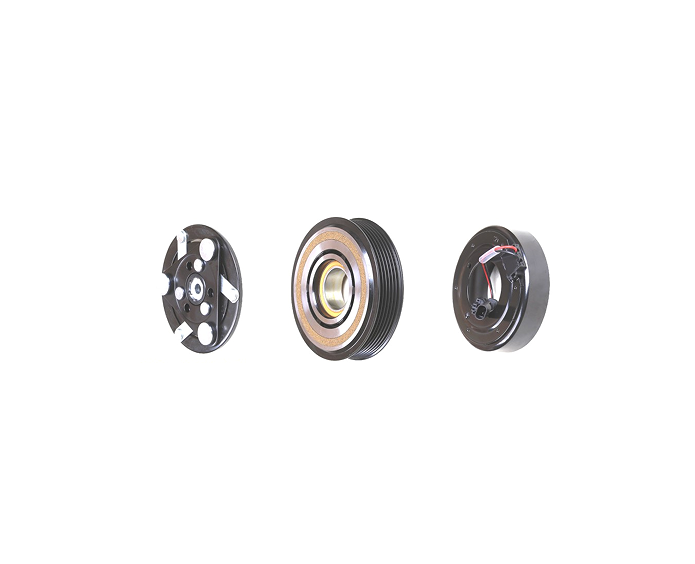
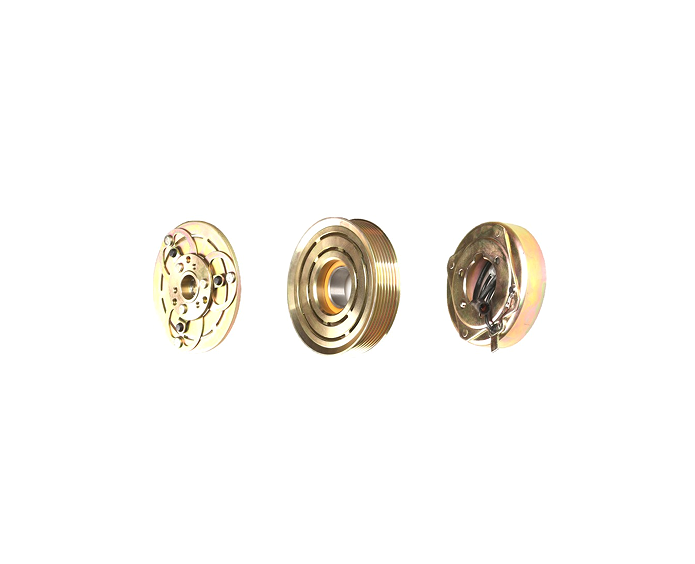
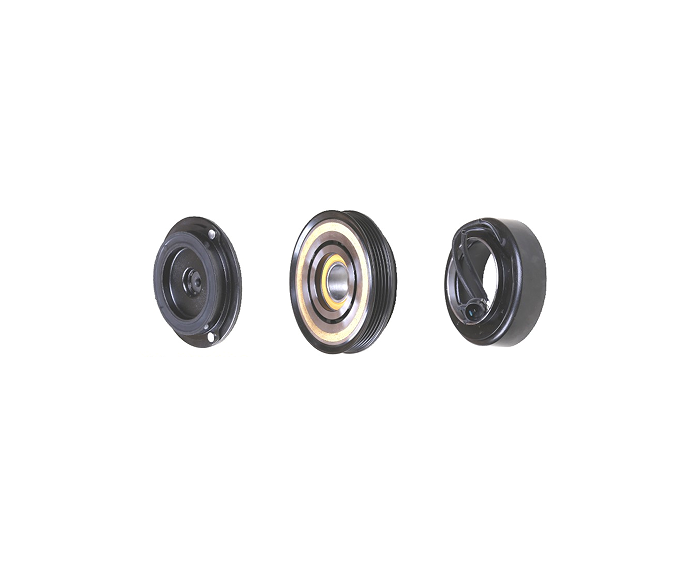
The A/C compressor clutch acts as the intelligent bridge between the engine’s mechanical power and the air-conditioning system’s thermal cycle.
Each engagement and disengagement determines how effectively refrigerant compression occurs, how much power is consumed, and how fast the system reaches cooling equilibrium.
In short, clutch performance directly dictates how quickly a cabin cools and how much fuel is consumed.
KASEN’s engineering research focuses on optimizing this balance—maximizing cooling efficiency while minimizing parasitic power losses.
1. The Physics of Magnetic Response and Energy Transfer
An efficient clutch must engage instantly and with minimal electrical waste.
KASEN employs high-density copper winding and low-resistance coil design to achieve faster magnetic field generation with less current draw.
| Parameter | Traditional Design | KASEN Optimized Coil | Performance Gain |
|---|---|---|---|
| Magnetic Response Time | 0.08 s | 0.04 s | +50% faster engagement |
| Coil Resistance | 4.6 Ω | 3.9 Ω | −15% electrical loss |
| Current Efficiency | 83% | 96% | Reduced heat generation |
| Power Draw (12V) | 3.9A | 3.4A | −12% average consumption |
This refined magnetic efficiency means the compressor can activate cooling cycles more rapidly, maintaining cabin comfort with less energy demand—particularly important in hybrid and EV platforms.
2. Thermal Management and Heat Dissipation
During clutch operation, friction and magnetic activation generate localized heat that can degrade coil insulation and reduce torque stability.
KASEN integrates thermal management engineering into clutch design to maintain consistent cooling performance under prolonged cycles.
Key Thermal Optimization Features:
-
Heat-conductive alloy hub: Rapidly transfers heat from friction surface to pulley mass.
-
Vented pulley structure: Promotes continuous airflow during rotation.
-
Epoxy encapsulation with thermal fillers: Improves heat conductivity by 18%.
-
Temperature-stable friction lining: Withstands 180°C continuous operation.
Thermal imaging tests confirm a 15–20°C lower surface temperature after continuous engagement compared to conventional designs, directly improving magnetic retention and coil lifespan.
3. Torque Efficiency and Belt Load Management
A/C compressors rely on belt-driven torque transmission, meaning clutch efficiency affects both cooling power and engine load.
KASEN’s FEA (Finite Element Analysis) modeling ensures torque is distributed uniformly across the friction interface, minimizing slippage and belt stress.
Optimization Highlights:
-
Precision-ground friction plates for uniform contact.
-
Dynamic balancing to minimize vibrational torque ripple.
-
Anti-slip coating to stabilize torque under moisture or oil exposure.
These refinements achieve up to 5% reduction in parasitic engine load, resulting in smoother acceleration, better fuel economy, and faster cooling cycles.
4. Air Gap Stability and Cooling Cycle Consistency
A stable air gap (typically 0.4–0.6 mm) is essential for predictable clutch engagement.
When the gap increases due to wear or thermal expansion, the clutch engages slower—delaying cooling activation.
KASEN counters this with precision-machined hubs and shim-compensated alignment systems that maintain air gap stability within ±0.02 mm over 300,000 cycles.
This micro-level control keeps cooling response times constant even after years of operation, improving passenger comfort and compressor longevity.
5. Integration with Modern HVAC and ECU Systems
As vehicles evolve toward electronic HVAC management, clutch efficiency must align with ECU logic for energy optimization.
KASEN clutches are designed with smart coil response curves compatible with PWM (Pulse Width Modulation) control systems.
Benefits:
-
Adaptive power modulation for variable cooling demand.
-
Reduced voltage spikes during clutch cycling.
-
Improved synchronization with electric fans and sensors.
By working harmoniously with electronic A/C modules, Kasen clutches enhance both system reliability and thermal efficiency, particularly in hybrid and idle-stop applications.
6. Testing Cooling Output and System Compatibility
KASEN validates each clutch design within a complete A/C system simulation using real refrigerant circuits and thermal load mapping.
Test Conditions:
-
Ambient temperature: 35°C
-
Compressor speed: 1,500–6,000 RPM
-
Refrigerant: R134a and R1234yf
-
Measured outputs: discharge pressure, cooling rate, current draw
| Metric | Baseline Clutch | KASEN Clutch | Improvement |
|---|---|---|---|
| Cooling Response Time | 35 s | 27 s | 23% faster cabin cooling |
| Compressor Power Draw | 1.8 kW | 1.6 kW | 11% energy saving |
| Coil Surface Temperature | 165°C | 143°C | 13% lower heat buildup |
| Engagement Noise | 62 dB | 55 dB | 7 dB quieter operation |
These controlled tests confirm that Kasen’s optimized clutch architecture directly enhances cooling efficiency while reducing energy use.
7. Material Innovations for Thermal and Mechanical Stability
KASEN’s R&D team continuously explores advanced materials that improve clutch thermal stability and torque consistency:
-
Graphite-ceramic friction linings for higher friction coefficients.
-
Powder-coated pulley alloys for corrosion and heat resistance.
-
Epoxy-coated coils to withstand prolonged voltage cycling.
-
Self-lubricating bushings for reduced wear under high RPM.
Such materials ensure long-term system stability and minimize maintenance across diverse vehicle environments—from tropical heat to sub-zero climates.
8. The Efficiency–Durability Balance
High efficiency must never compromise durability.
KASEN’s clutch systems undergo dual validation—energy optimization and mechanical endurance—to ensure sustained performance across real-world driving conditions.
Every Kasen clutch must demonstrate:
-
95% torque retention after endurance testing
-
<3% power fluctuation over 300k cycles
-
100% magnetic engagement consistency under 11V–14V supply range
This engineering balance keeps vehicles cool without increasing energy or maintenance costs—a crucial advantage for both OEM and aftermarket users.
KASEN’s Vision for Next-Generation Cooling Systems
KASEN continues to collaborate with global compressor and HVAC manufacturers to develop next-generation magnetic clutch systems for hybrid and EV platforms.
Future designs integrate intelligent feedback sensors and active temperature control, aligning cooling demand with real-time power management.
For collaboration, technical documentation, or component integration support, visit the KASEN homepage or contact our technical department via the contact page.
FAQ: Cooling Performance and Clutch Optimization
Q1. How does clutch efficiency influence overall fuel economy?
Higher engagement efficiency reduces engine load, saving up to 5–8% in A/C-related fuel consumption.
Q2. Can Kasen clutches be tuned for hybrid or electric systems?
Yes, Kasen designs coils and engagement curves compatible with variable-voltage and PWM-controlled systems.
Q3. What’s the most critical factor for consistent cooling performance?
Thermal management and precise air gap control—both ensure stable magnetic response and torque transfer.
Q4. Does Kasen provide data validation for OEM customers?
Yes, full performance test reports and compatibility data are available upon request for OEM integration projects.