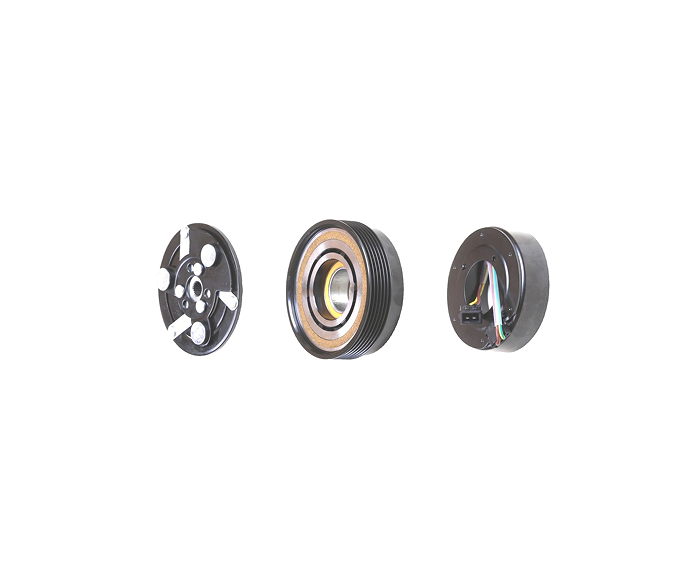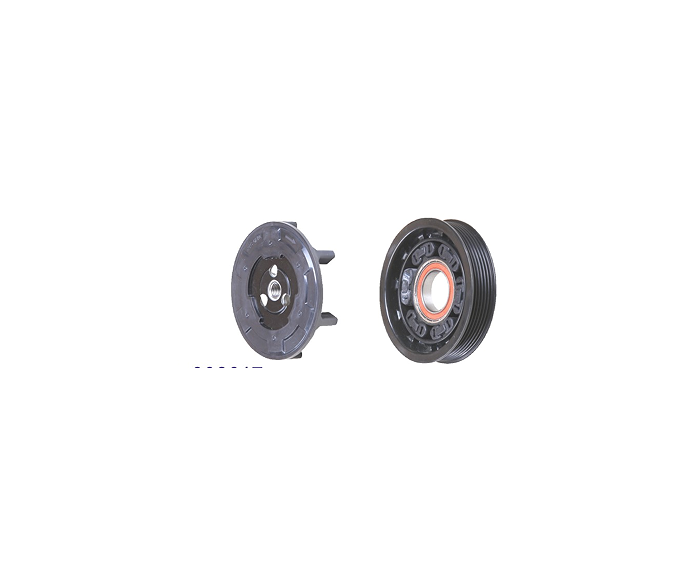

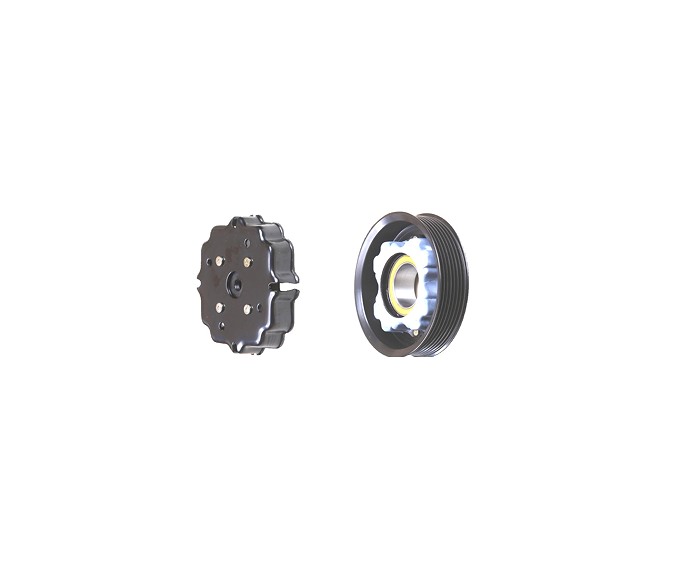
Failure Analysis and Preventive Engineering for A/C Compressor Clutch: How KASEN Eliminates Root Causes Before They Occur
Why Preventive Engineering Matters
In automotive air-conditioning systems, the A/C compressor clutch endures mechanical shock, thermal expansion, magnetic cycling, and environmental corrosion—all while engaging thousands of times per driving season.
When failure occurs, it is rarely random; it results from cumulative stress that was not addressed during design or manufacturing.
KASEN’s engineering philosophy focuses on root cause elimination rather than symptom repair, using data-driven failure analysis to design out weak points before mass production.
Common Failure Modes in Compressor Clutches
KASEN’s field studies across multiple climates and vehicle types reveal five dominant clutch failure patterns:
| Failure Type | Root Cause | Observable Symptom | Preventive Measure |
|---|---|---|---|
| Coil Burnout | Overcurrent, poor insulation, or voltage surge | No engagement / burnt odor | High-temp epoxy encapsulation, Class H wire |
| Bearing Seizure | Contaminated grease, axial misalignment | Grinding noise, belt drag | Sealed bearings, CNC-controlled press-fit |
| Friction Plate Glazing | Excessive slip or oil contamination | Reduced torque / delayed engagement | Graphite-ceramic coating, controlled air gap |
| Pulley Corrosion | Salt spray or humidity | Belt squeal, surface rust | Triple-layer E-coat + epoxy finish |
| Magnetic Misalignment | Deformed hub or improper air gap | Vibration, intermittent pull-in | Precision dynamic balancing & FEA validation |
By understanding these failure patterns, Kasen designs each clutch assembly to resist the mechanical, thermal, and electrical stresses that typically lead to early failure.
Root Cause Analysis (RCA) in Action
KASEN applies RCA methodology to every warranty claim and A/C compressor clutch failure field failure sample.
Each case follows a structured process:
-
Failure Identification – Visual and mechanical inspection for wear, heat marks, or deformation.
-
Data Measurement – Coil resistance, runout, and torque revalidation.
-
Microscopic Examination – Cross-section of materials for crack propagation or corrosion initiation.
-
Environmental Reconstruction – Simulation of operating temperature, humidity, and voltage spikes.
-
Corrective Feedback Loop – Design or process adjustment integrated into next production batch.
This approach converts field feedback into actionable design improvements, ensuring that every production cycle learns from real-world conditions.
Preventive Design Measures in Kasen Clutches
KASEN implements multiple preventive design strategies to address the major stress factors that cause A/C clutch degradation:
1. Thermal Stress Prevention
-
High-conductivity coil epoxy for rapid heat dispersion.
-
CNC-machined pulley grooves to promote airflow.
-
Coil resistance calibration to reduce overcurrent heating.
2. Mechanical Fatigue Control
-
Finite Element Analysis (FEA) for hub deformation prediction.
-
6,000 RPM dynamic balancing with tolerance ≤ 0.02 mm.
-
Double-sealed bearings pre-lubricated with high-temp grease.
3. Corrosion Resistance
-
Triple-layer surface treatment: phosphate, EDC, and epoxy coating.
-
500-hour salt spray test validation for humid environments.
4. Magnetic Optimization
-
Closed-loop magnetic circuit minimizing flux leakage.
-
Laminated steel cores reducing eddy current loss by 20%.
Each measure directly targets a known failure mechanism, converting potential weak points into long-term strengths.
Thermal Imaging and Predictive Testing
KASEN integrates infrared thermography into its prototype validation process.
By recording real-time surface temperatures during clutch engagement, engineers can identify heat concentration zones on the coil or pulley.
Findings and Applications:
-
Hot spots above 170°C predict coil aging risk.
-
Uneven heat distribution indicates imbalance or friction misalignment.
-
Data feeds back into cooling design improvements.
This predictive testing eliminates issues before they reach the customer, ensuring temperature-controlled durability across all models.
Lifecycle and Fatigue Validation
Every preventive design concept is verified through accelerated lifecycle testing:
-
Torque endurance: 300,000+ continuous cycles under load.
-
Thermal cycling: −30°C to +180°C for 500 transitions.
-
Vibration fatigue: Simulated engine vibration at 20–200 Hz.
-
Dynamic torque decay: <3% loss after full test cycle.
By pushing each clutch beyond normal service limits, Kasen ensures no latent failure emerges within the product’s real-world lifespan.
Material and Coating Improvements Based on RCA
KASEN continually refines materials based on failure data:
-
Shift from traditional carbon steel to chromium-molybdenum alloys for better fatigue resistance.
-
Adoption of graphite-ceramic friction coatings to prevent glazing under repeated thermal cycling.
-
Implementation of epoxy with UV stabilizers to protect against photodegradation in exposed engine bays.
These iterative updates transform laboratory insight into tangible, long-term field performance.
Closed-Loop Engineering Between Production and Field Feedback
KASEN maintains a two-way communication channel between factory engineers and global distributors.
-
Field failures are digitally logged with torque and resistance data.
-
Manufacturing feedback integrates into design adjustments within 45 days.
-
RCA reports are stored in ERP systems for traceability and ISO audit compliance.
This continuous improvement loop ensures evolving reliability—each new clutch generation is measurably stronger than the last.
KASEN’s Preventive Engineering Philosophy
At KASEN, failure prevention begins at the design stage.
Every component—from coil insulation to hub geometry—is engineered for real-world conditions, not just laboratory specifications.
Through predictive modeling, rigorous testing, and feedback integration, KASEN builds A/C compressor clutches that resist failure by design—ensuring reliable cooling performance for vehicles worldwide.
For detailed engineering insights, partnership inquiries, or technical consultation, visit the KASEN homepage or contact our technical team via the contact page.
FAQ: A/C Compressor Clutch Failure and Prevention
Q1. What is the most common cause of clutch failure in the field?
Overheating and coil insulation breakdown due to sustained voltage imbalance or airflow restriction.
Q2. How does Kasen prevent bearing seizure?
By using double-sealed high-temperature bearings with precision preload and long-life synthetic lubrication.
Q3. Can Kasen customize clutches for extreme climates?
Yes, Kasen offers tropical and low-temperature variants with tailored coatings and lubrication.
Q4. What’s Kasen’s preventive design advantage over standard aftermarket parts?
Each Kasen clutch is validated through RCA-based design updates, ensuring long-term stability rather than reactive fixes.