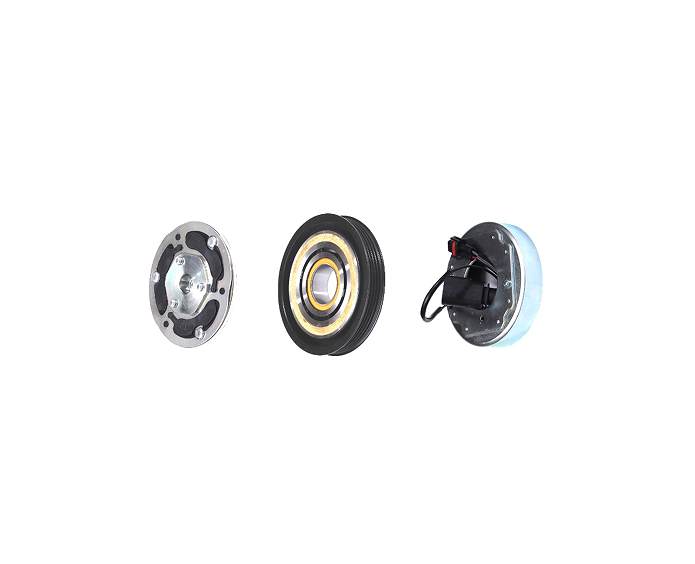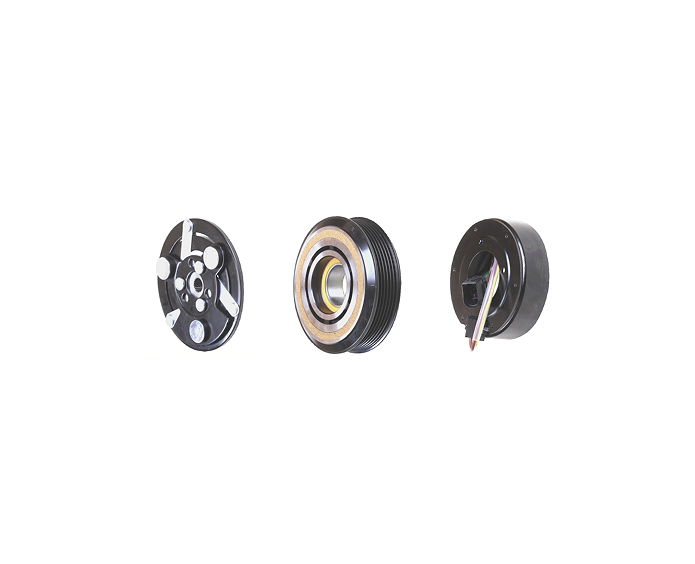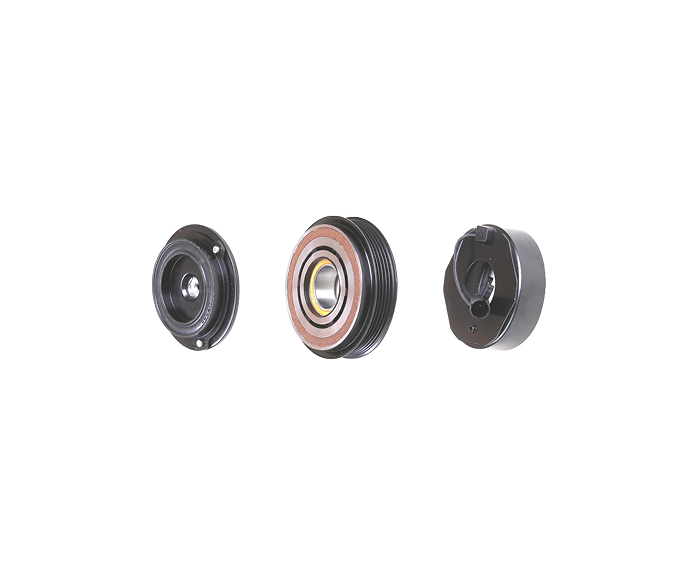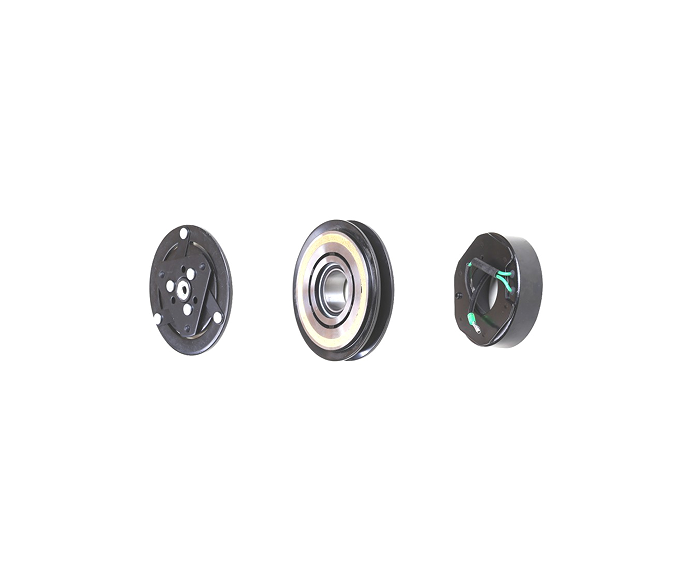

Material Science and Durability Engineering Behind Every KASEN A/C Compressor Clutch
Material Engineering: The Foundation of Longevity
The reliability of an A/C compressor clutch begins with its materials.
Every component—from the friction disc to the magnetic coil and pulley bearing—is exposed to mechanical shock, high temperature, and continuous rotational stress.
To meet these extreme demands, KASEN integrates advanced material science into every production stage—balancing magnetic efficiency, wear resistance, and heat stability.
1. High-Strength Steel Alloys for Structural Integrity
The clutch’s hub and drive plate are manufactured from chromium-molybdenum steel (Cr-Mo alloy), known for its exceptional fatigue strength and dimensional stability.
| Property | Standard Carbon Steel | KASEN Cr-Mo Alloy | Improvement |
|---|---|---|---|
| Yield Strength | 380 MPa | 680 MPa | +79% |
| Fatigue Life (10⁶ cycles) | 0.9 | 2.4 | +167% |
| Thermal Expansion (100°C) | 1.20×10⁻⁵ | 1.06×10⁻⁵ | −12% deformation |
This alloy composition resists micro-cracking under cyclical load and ensures that clutch geometry remains stable after long-term exposure to engine heat and vibration.
2. Heat-Resistant Friction Linings for Consistent Torque
At the heart of torque transmission lies the friction material—the interface where mechanical energy is converted into controlled engagement.
KASEN employs graphite-ceramic composite linings, a proprietary blend of high-carbon graphite, ceramic fibers, and resin binders.
Key Benefits:
-
Maintains stable friction coefficient (0.35–0.42) across −30°C to 200°C
-
Self-lubricating property minimizes “stick-slip” during start-stop cycles
-
Resistant to glazing or burn under continuous clutch cycling
-
Achieves >300,000 cycles in endurance testing without torque decay
This material selection guarantees smooth engagement and consistent torque transfer even under high humidity or thermal shock.
3. Magnetic Coil Materials and Thermal Endurance
The electromagnetic coil defines clutch responsiveness and energy efficiency.
KASEN utilizes Class H insulated copper wire with high thermal conductivity and dielectric integrity.
Technical Parameters:
-
Insulation temperature rating: 180°C continuous / 220°C peak
-
Coil resistance variation: ≤ 2% after 300 hours at 150°C
-
Magnetic efficiency: 96% with low hysteresis loss
Additionally, the coil is epoxy encapsulated using a thermally conductive compound that enhances heat dissipation while preventing moisture ingress—an essential feature for long-term operation in humid or coastal environments.
4. Anti-Corrosion Coating and Environmental Protection
A/C compressor clutches are exposed to road salt, moisture, and temperature cycling that can lead to corrosion or pitting.
KASEN employs a triple-layer surface coating on metallic components:
-
Phosphate Pre-treatment – Improves adhesion and base corrosion resistance.
-
Electrodeposition (E-coat) – Forms uniform, durable anti-rust barrier.
-
Epoxy Topcoat – Provides UV and salt-spray resistance up to 500 hours (ASTM B117).
This coating system ensures corrosion resistance that exceeds OEM specifications, preventing oxidation of the pulley and maintaining belt grip integrity over years of use.
5. Bearing Design and Lubrication for Longevity
Bearing performance determines how quietly and efficiently the clutch operates under load.
KASEN integrates sealed-for-life double-row ball bearings lubricated with high-temperature synthetic grease (rated to 200°C).
Performance Results:
-
Friction torque stability: ±0.05 N·m after 500 hours continuous operation
-
Noise level: ≤ 30 phon
-
Radial runout: ≤ 0.02 mm
These bearings maintain alignment and prevent vibration transfer to the compressor housing, ensuring smooth and silent operation through the clutch’s entire service life.
6. Thermal Cycling and Fatigue Validation
KASEN’s durability testing simulates real-world automotive conditions—heat, vibration, humidity, and voltage fluctuation.
| Test Category | Condition | Result |
|---|---|---|
| Thermal Cycle | −30°C to +180°C, 500 cycles | No magnetic decay, no cracking |
| Humidity Resistance | 95% RH, 240 hours | No corrosion, insulation intact |
| Mechanical Endurance | 300,000 engagement cycles | Torque retention >95% |
| Salt Spray Test | 500 hours, 5% NaCl | No visible rust |
Through these validation procedures, each Kasen clutch demonstrates not only durability but predictable long-term performance across climate zones.
7. Advanced Adhesion and Assembly Process
Material integrity is not only about composition—it’s about how components bond together.
KASEN uses precision robotic assembly to ensure consistent tolerances and adhesive control.
The bonding between friction plate and hub employs high-temperature resin with shear strength > 25 MPa, preventing delamination even under thermal shock.
Assembly lines are monitored with laser torque sensors, ensuring uniform clamping force across production batches.
8. Data-Driven Durability Certification
Each clutch batch is traceable through KASEN’s ERP-integrated quality database.
-
Every unit is assigned a laser-engraved serial number.
-
Testing data (torque, resistance, NVH, temperature) is automatically logged.
-
Certificates of conformity are provided for OEM clients.
This transparent traceability system ensures full material accountability and lifetime validation support for distributors and end users.
9. Real-World Reliability Across Climates
From the high-humidity coasts of Southeast Asia to the sub-zero winters of Northern Europe, Kasen clutches have proven stability in diverse environmental conditions.
-
Tropical test fleets: 40°C average temperature, 90% humidity – no degradation after 12 months.
-
Cold-weather validation: −25°C continuous exposure – full magnetic performance retained.
-
High-altitude testing: 3,000 m elevation – no loss of engagement torque.
This global validation ensures Kasen clutches deliver consistent performance regardless of regional climate or vehicle type.
KASEN’s Philosophy: Materials Define Engineering Integrity
KASEN believes that durability begins with material selection, not repair.
By combining metallurgical science, coating technology, and data-driven endurance testing, every A/C compressor clutch represents measurable engineering reliability—not theoretical design claims.
For technical documentation, OEM collaboration, or material specifications, please visit the KASEN homepage or contact our engineering team via the contact page.
FAQ: Material and Durability of A/C Compressor Clutch
Q1. What material gives Kasen clutches better wear resistance?
The friction linings use a graphite-ceramic composite that maintains torque and resists glazing under high temperature.
Q2. How does Kasen ensure corrosion resistance?
Through triple-layer E-coating and epoxy protection verified by 500-hour salt spray testing.
Q3. Can Kasen clutches operate in cold or tropical conditions?
Yes, they are tested from −30°C to +180°C with full performance retention.
Q4. Do Kasen clutches meet OEM durability standards?
All models undergo 300,000-cycle endurance and environmental validation to exceed OEM benchmarks.