
What Should an AC Clutch Coil Supplier Help a Distributor Solve?
A professional AC clutch coil supplier should help distributors solve three connected problems: identify the correct coil for the intended compressor clutch, keep technically different coils clearly separated in inventory, and reproduce the approved configuration when the buyer places another order. This is more important than simply presenting a long list of vehicle names because clutch coils can look very similar while differing in voltage, resistance, dimensions, connector arrangement or mounting structure.
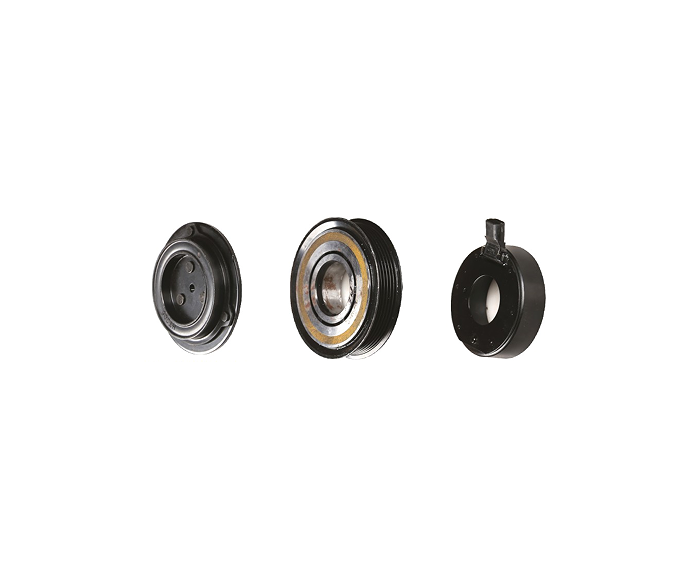
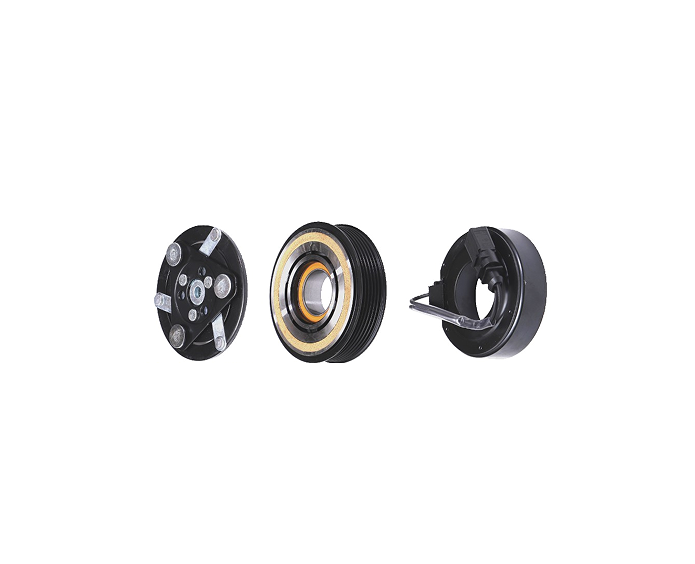
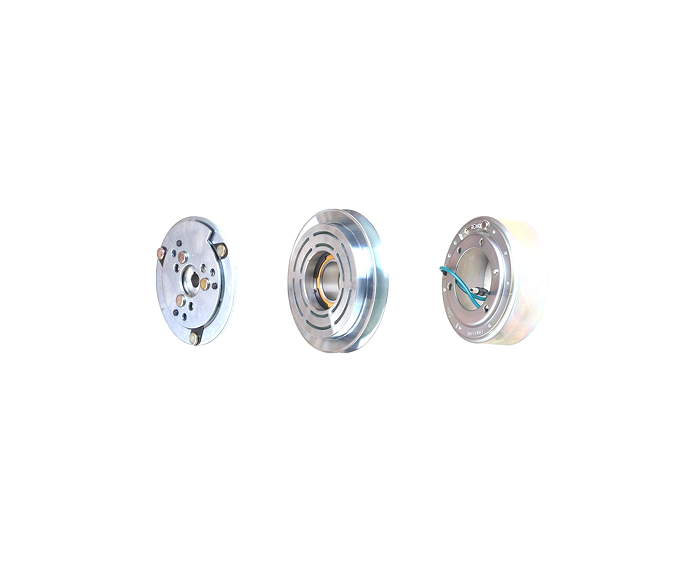
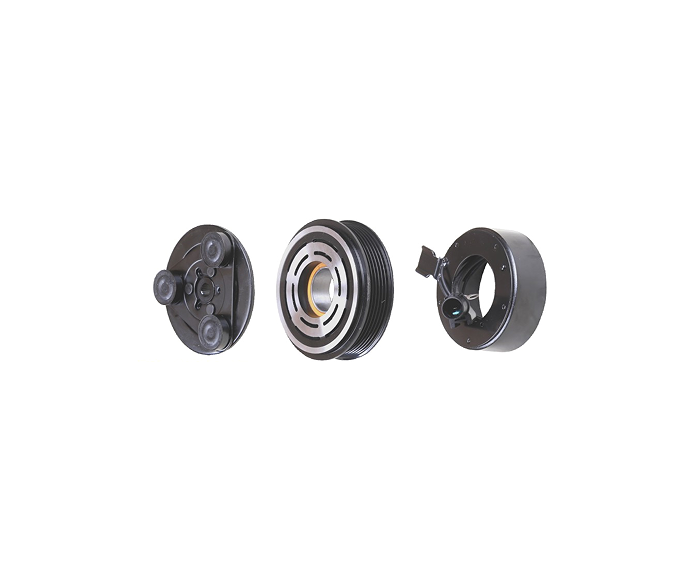
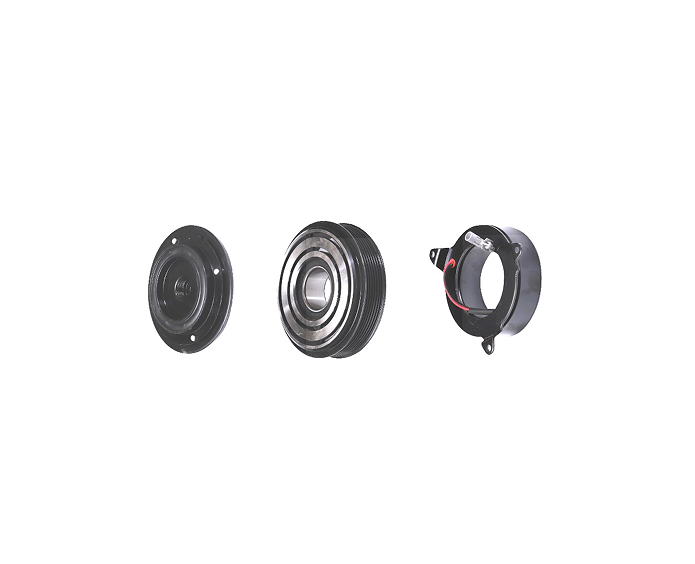
In a conventional electromagnetic compressor clutch, the coil generates the magnetic field needed to engage the clutch plate with the rotating pulley. That means the coil must work as part of the complete clutch and compressor arrangement rather than as an isolated electrical part. Buyers who need a wider understanding of the assembly can review KASEN's automotive AC compressor clutch selection guide, while buyers already sourcing coils can browse the dedicated car air-conditioning clutch coil range. KASEN currently lists multiple KS-Q coil references in this category.
Who Should Buy a Coil Separately—and Who May Need a Complete Clutch?
Individual clutch coils are especially relevant to automotive AC specialists, compressor rebuilders, component distributors and repair-parts wholesalers that can correctly identify and replace individual clutch components. For these buyers, purchasing the coil separately can support a component-level repair strategy and allow the business to maintain targeted replacement stock rather than replacing a complete assembly for every clutch-related issue.
However, a coil should not be selected simply because a compressor clutch does not engage. The fault may involve the electrical supply, connector, pulley, bearing, hub, clutch plate or another part of the compressor system. Where several clutch components are damaged or their condition is uncertain, sourcing a complete AC compressor clutch may be more appropriate. If internal compressor damage is involved, the purchasing requirement can extend beyond the clutch altogether. For B2B buyers, the first decision is therefore not “Which coil is cheapest?” but “Have we confirmed that the coil is actually the component we need?”
Start Coil Identification With the Compressor, Not Appearance
One of the biggest sourcing risks is matching a coil from a front-facing photograph. Many electromagnetic coils share a similar circular shape, dark encapsulated body and lead-wire arrangement, but those visual similarities do not prove compatibility. An AC clutch coil supplier should therefore be given compressor-level and component-level information whenever possible.
Useful starting information includes the compressor model or identification label, existing coil or clutch number, OE or aftermarket cross-reference, vehicle information where known, photographs from several angles, measured inner and outer dimensions, overall height, rated voltage and connector or lead configuration. If one field is unknown, it should remain marked to be confirmed rather than being copied from a similar reference. This approach is consistent with the broader fitment discipline KASEN applies to compressor clutch sourcing, where multiple mechanical and electrical fields are considered together instead of relying on a single visual match.
Build a Technical RFQ Before Asking for the Lowest Price
A complete RFQ makes supplier quotations easier to compare because every supplier is discussing the same product requirement. The table below is a recommended B2B purchasing framework. It is not a universal specification for every KASEN coil, and the exact information required will depend on the compressor family and coil design.
| Specification Item | Buyer Should Confirm | Reason for Confirmation |
|---|---|---|
| Supplier reference | Exact KASEN or supplier code | Supports repeat ordering |
| Buyer SKU | Distributor's own stock code | Connects purchasing, sales and warehouse records |
| Compressor identity | Compressor family/model/reference | Establishes application context |
| Existing part reference | OE, aftermarket or old coil number | Helps cross-reference the replacement |
| Rated voltage | Confirmed electrical system requirement | Prevents voltage mismatch |
| Resistance | Approved value/range and measurement condition | Supports electrical consistency |
| Inner diameter | Confirmed dimension | Influences installation fit |
| Outer diameter | Confirmed dimension | Influences housing clearance |
| Height | Overall axial dimension | Prevents mechanical interference |
| Mounting structure | Tabs, holes or locating features | Controls physical installation |
| Connector/lead wire | Connector, wire position and length where relevant | Supports vehicle-side connection |
| Protection device | Diode or other device if applicable | Must match the electrical configuration |
| Sample revision | Approved product version | Prevents version confusion |
| Packaging code | Supplier code and buyer identification | Supports warehouse accuracy |
The purpose of this record is to make the product reorderable. A distributor should not need to restart the identification process from photographs each time stock becomes low.
Voltage Alone Does Not Define an AC Clutch Coil
“12V AC clutch coil” is a useful search term, but it is not a complete purchasing specification. Rated voltage indicates the intended electrical system, yet coils designed for the same nominal voltage can still differ in winding construction, resistance, physical dimensions, connector design and compressor application.
Resistance deserves particular attention because electrical resistance varies with conductor temperature. If resistance becomes part of an acceptance specification, the supplier and buyer should define the measurement conditions rather than comparing readings taken under unknown temperatures. Similarly, if the purchasing specification includes current, insulation or another electrical characteristic, the applicable test conditions should be stated.
An experienced AC clutch coil supplier should therefore be able to move the conversation from “12V or 24V?” toward a complete electrical specification for the selected reference. KASEN's existing technical content on car air conditioner clutch coils discusses the importance of winding and electrical performance, but model-specific values should still be confirmed rather than transferred automatically from one coil to another.
Mechanical Fitment Is Equally Important
An electrically correct coil can still be unusable if it does not fit the intended compressor clutch. Inner diameter, outer diameter, axial height, mounting tabs, retaining features, lead-wire exit position and surrounding clearances can all affect installation depending on the design.
This is particularly important for compressor rebuilders. A rebuilder may already have the pulley, bearing and hub but need only the electromagnetic coil. The replacement therefore needs to integrate with components that are already fixed. Even a small dimensional difference can create an installation problem or prevent the clutch components from sitting in their intended positions.
For this reason, request a dimensional drawing or measured sample information where available. When using an old coil as the reference, combine photographs with actual measurements. Image perspective is useful for identification but should not replace dimension data.
Check the Connector, Lead Wires and Protection Configuration
Connector compatibility can be overlooked when buyers focus on coil diameter and voltage. The connector style, lead-wire position and orientation may affect how the product installs in the compressor and connects to the vehicle wiring.
Some coil designs may also incorporate electrical protection components, while others may use different circuit arrangements. Buyers should therefore avoid assuming that every visually similar coil uses the same diode or protection configuration. If polarity or protection is relevant to the intended application, include it in the approved product record.
For a wholesale programme, photograph the approved connector and wire-exit position. That provides warehouse and QC teams with an additional identification reference and helps prevent technically different products from being placed under one SKU.
Use Current KASEN Coil Codes as Enquiry References, Not Assumed Specifications
KASEN's current clutch coil product category lists multiple KS-Q references. The public category page currently shows model numbers but does not publish a complete electrical and dimensional data set for every reference. That means buyers should use the codes as starting identifiers and request the missing technical data instead of filling it by assumption.
| KASEN Reference | Currently Listed in Coil Category | What the Public Category Page Confirms | What the Buyer Should Request |
|---|---|---|---|
| KS-Q0339 | Yes | Model reference | Voltage, resistance, dimensions, connector and compressor application |
| KS-Q0382 | Yes | Model reference | Voltage, resistance, dimensions, connector and compressor application |
| KS-Q0044 | Yes | Model reference | Voltage, resistance, dimensions, connector and compressor application |
| KS-Q0091 | Yes | Model reference | Voltage, resistance, dimensions, connector and compressor application |
| KS-Q0489 | Yes | Model reference | Voltage, resistance, dimensions, connector and compressor application |
| KS-Q0158 | Yes | Model reference | Voltage, resistance, dimensions, connector and compressor application |
| KS-Q0271 | Yes | Model reference | Voltage, resistance, dimensions, connector and compressor application |
This is deliberately not a “which model is better” ranking. Without the corresponding compressor application and full specification, there is no responsible basis for describing one reference as more durable, more efficient or more suitable than another. For a B2B purchaser, an honest incomplete field is more useful than a fabricated specification.
Approve the Sample Before Turning a Coil Into a Regular SKU
When a distributor introduces a new coil reference, the physical sample should be connected to an approval record. Record the supplier code, buyer SKU, compressor reference, voltage, agreed resistance information, dimensions, connector, photographs and the approval date. If the coil is installed and evaluated on a compressor, record which compressor was used and what was actually checked.
If the supplier sends a revised sample after a dimensional, connector or electrical change, issue a new sample revision. Avoid keeping multiple different parts under one generic description such as “approved 12V coil.”
This is where supplier quality becomes closely connected to inventory quality. A distributor cannot maintain a reliable catalogue if the commercial SKU is not tied to a stable technical definition.
Ask What Quality Checks Apply to the Actual Coil You Buy
A claim such as “strict QC” is too broad for supplier evaluation. Buyers should ask which characteristics are checked, when they are checked and how acceptance limits are determined.
For a clutch coil programme, production controls may include relevant material or component verification, winding or assembly checks, resistance measurement, electrical continuity, dimensional verification, connector inspection and finished-product identification. The exact plan should be confirmed for the chosen reference rather than treated as a universal checklist.
KASEN states that it has focused on automotive air-conditioning products since 2007 and supplies compressor clutches and other automotive AC components to aftermarket and OEM customers. Buyers evaluating KASEN can use its About Us page for company background, then request product-specific evidence for the coil references they intend to purchase.
Specialized validation should also be separated from normal production inspection. A resistance check on a finished coil is not the same as a long-duration thermal or endurance evaluation. If such testing influences your supplier decision, request the model tested, conditions, test method and acceptance criteria.
Evaluate Supplier Service Beyond the Coil Itself
A strong AC clutch coil supplier should also help buyers manage incomplete or complicated requirements. This does not mean the supplier should guess the application. It means the supplier can tell the buyer which additional information is required before a confident match is possible.
For example, a buyer may initially send a vehicle model and an old coil photograph. The useful supplier response is to request the compressor label, measurements or connector details if those are necessary for identification. That approach is more valuable than immediately quoting an uncertain product.
This is especially relevant for aftermarket distributors managing many compressor families. KASEN's broader aftermarket AC compressor clutch supplier guide discusses the importance of fitment data, sample approval, inventory selection and repeat-order control.The same supply-chain principles apply when the purchased item is the coil rather than the complete clutch.
Plan Mixed-SKU Coil Inventory Around Verified Demand
Clutch coils are compact components, which can make it tempting to stock large numbers of references. The problem is not physical warehouse space alone; it is whether the distributor can identify and sell every SKU accurately.
Divide prospective products into core stock, trial stock and special-order references. Core stock should be supported by repeat customer enquiries or sales records. Trial stock can be technically verified but commercially unproven. Special-order products may not justify permanent inventory until demand becomes clearer.
This prevents a distributor from turning a supplier's catalogue size into its own inventory strategy. A manufacturer may offer many models, but that does not mean every model deserves the same purchase quantity.
For mixed orders, request the current MOQ for each coil code and ask whether several references can be consolidated into one shipment. KASEN's bulk AC compressor clutch guide applies a similar principle to clutch purchasing: MOQ is a commercial condition and should not determine the buyer's ideal inventory by itself.
Control Packaging Because Similar Coils Can Be Easy to Mix
Warehouse accuracy matters particularly for circular electrical components that appear similar at a glance. The packaging should make the supplier reference and buyer SKU easy to identify without opening multiple boxes.
For private-label buyers, connect the barcode, buyer code and application description to the approved technical record. Do not place a broad “fits multiple vehicles” claim on packaging unless those applications have been verified.
If several coil models are packed in the same shipment, define whether outer cartons contain a single SKU or mixed references and how mixed cartons are identified. Receiving staff should be able to compare labels with the purchase order without relying only on visual recognition of the part.
Require Change Control for Repeat Supply
A successful first shipment does not guarantee a successful third or fifth shipment. Repeat-order consistency depends on how the supplier handles change.
Define which changes require notification before production. Depending on the approved product, relevant changes may include the conductor or winding specification, connector, lead wire, encapsulation material, mounting housing or another controlled component.
If a change is proposed, request the affected SKU, reason for change and first proposed production batch. Determine whether documentation review, dimensional verification or a new sample is necessary.
For distributors, this is one of the most important differences between buying a commodity and managing a technical SKU. The product should not change silently while its catalogue number stays the same.
Compare Total Sourcing Cost Instead of Coil Price Alone
Because a coil is a relatively small component, unit price can dominate the negotiation. Yet a lower unit price does not necessarily produce a lower sourcing cost.
A wrong-fitment shipment can create freight costs, technician time, customer returns, repacking and unsellable inventory. A technically correct coil that is poorly labelled can still create warehouse picking errors. A large quantity of a low-demand reference can tie up working capital even if the per-unit cost is attractive.
Compare quotations using the same specification and supply scope. Include sample costs, packaging, inspection requirements, logistics and your own inventory risk. Do not invent an assumed failure percentage simply to make one supplier look cheaper. Use real purchasing and return data once your programme has enough history.
The commercial objective is not to buy the cheapest electromagnetic coil. It is to acquire the correct coil in a configuration your business can identify, sell and reorder consistently.
Separate OEM Coil Development From Private Label Supply
Some buyers only need their own label and packaging. Others need a modified connector, dimension, electrical configuration or other technical change. These are different projects.
A private-label project can potentially use an existing approved coil with buyer-specific identification and packaging. An OEM development request changes the product itself and therefore requires a technical feasibility review, sample approval and potentially additional validation.
KASEN states that it welcomes custom-production discussions using customer drawings or OEM numbers. Buyers considering a custom project should first provide the existing sample or technical information and clearly describe what needs to change. Learn more about KASEN before preparing the project brief.
Do not assume that every coil in the catalogue can be modified in every way or at every quantity. Actual feasibility, MOQ and timing should be confirmed for the selected reference.
Send an RFQ an AC Clutch Coil Supplier Can Answer
A strong request for quotation should contain enough information for technical review as well as pricing. Provide the current coil or compressor reference, old-part photographs, available dimensions, voltage, connector information, quantities, target market and packaging requirements. If you need an equivalent replacement for an existing supplier's product, explain which characteristics cannot change.
For a multi-SKU request, use one line for each coil rather than combining everything into “need 1,000 AC coils.” Mark which references are established repeat purchases and which require new samples or fitment confirmation.
Review the current KASEN clutch coil range and send the proposed references through the KASEN enquiry page. The final quotation should distinguish confirmed specifications from unresolved technical questions before a bulk order is approved.
Frequently Asked Questions About AC Clutch Coil Suppliers
1. What does an AC clutch coil supplier provide?
A supplier can provide replacement electromagnetic coils for compatible compressor-clutch applications and may also support product identification, samples, bulk supply, packaging or OEM discussions depending on the project. The exact supply scope should be confirmed for each reference.
2. What information should I send to identify a clutch coil?
Provide the compressor or old coil reference, photographs, rated voltage, relevant dimensions and connector information. Vehicle make and model can support identification, but compressor-level information is usually more useful for professional purchasing.
3. Can I select a coil using only 12V or 24V?
No. Voltage is only one characteristic. Dimensions, resistance requirements, connector style, mounting features and compressor compatibility can still differ between products with the same nominal voltage.
4. Why does resistance matter when purchasing a coil?
Resistance is one electrical characteristic that can help define the approved coil configuration. If it is used for inspection, specify the acceptable range and measurement conditions because conductor temperature influences the measured value.
5. Should I order a complete clutch instead of only the coil?
That depends on the fault and condition of the remaining clutch components. When only the coil requires replacement and the other components are serviceable, a component-level repair may be appropriate. Multiple damaged clutch components may justify sourcing the complete assembly instead.
6. Should a distributor approve samples before bulk purchasing?
For a new reference, uncertain fitment or custom configuration, sample approval provides a useful technical baseline. Connect the approved sample to the supplier reference, buyer SKU and relevant specifications before releasing regular stock orders.
7. How can I compare different AC clutch coil suppliers?
Compare identification support, technical information, sample handling, product consistency, applicable QC, MOQ, mixed-SKU capability, packaging and repeat-order change control. Make sure quotations cover the same coil specification before comparing price.
8. Can several coil models be combined into one order?
Potentially, but the current MOQ and consolidation conditions should be confirmed with the supplier for the selected references. Define carton identification clearly so different coil models remain separated throughout receiving and warehousing.
9. Can KASEN discuss OEM or private-label clutch coils?
KASEN states that it welcomes custom-production discussions based on drawings or OEM numbers. Actual coil modification, packaging, samples, quantity and technical feasibility should be reviewed for the individual project rather than assumed from a general customization statement.
10. How do I request an AC clutch coil quotation from KASEN?
Prepare the compressor or coil reference, photographs, voltage, dimensions, connector details, required quantity and packaging information. Browse the KASEN coil category and submit your requirements through Contact KASEN.
Conclusion
Choosing an AC clutch coil supplier should be a technical identification and repeat-supply decision rather than a price comparison between visually similar parts. Automotive AC distributors, compressor rebuilders and aftermarket brands should confirm electrical requirements, dimensions, connector configuration and compressor fitment, approve new references through documented samples and keep every coil connected to a stable buyer SKU. The current KASEN coil category lists multiple KS-Q references, while complete model-specific electrical and dimensional information should be confirmed before purchasing rather than inferred from another coil. Review the KASEN car air-conditioning clutch coil range and send your compressor references, old-part photographs, quantities and packaging requirements through KASEN Contact Us to discuss a model-specific sourcing programme.