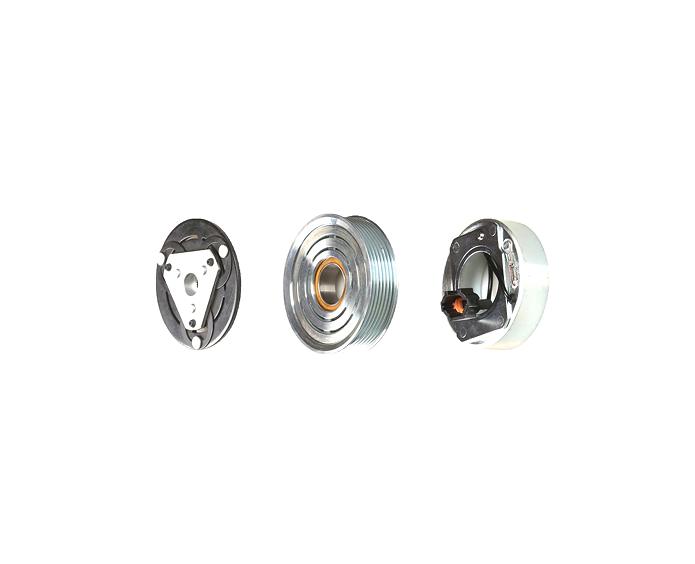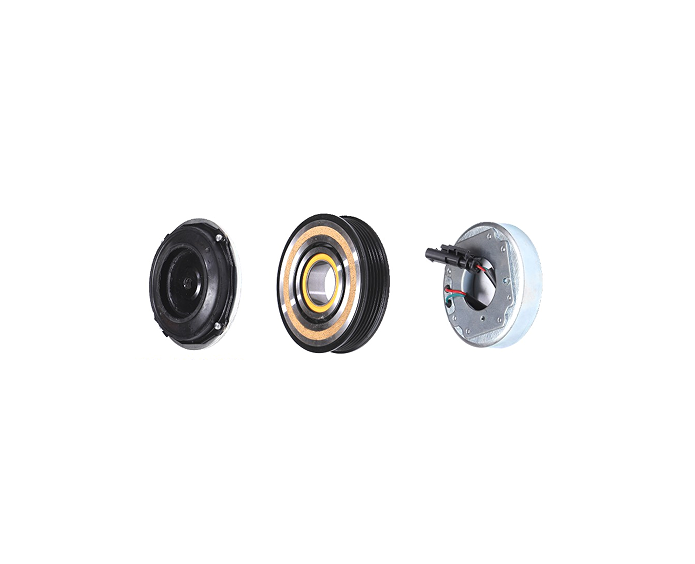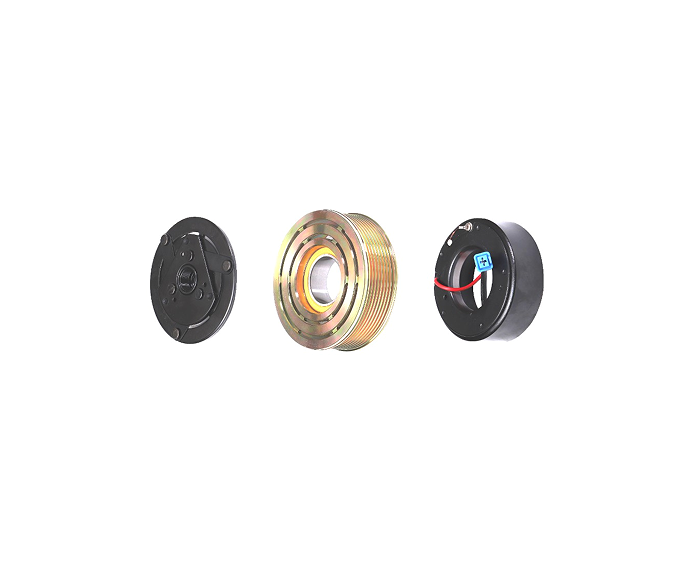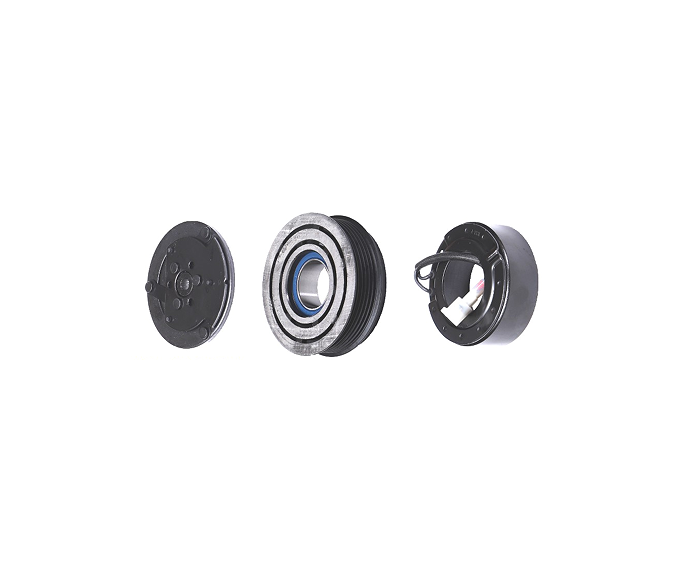

Which Reference Should Lead an AC Clutch Fitment Check?
OE Number vs Compressor Model for AC Clutch Fitment is not a choice between one correct identifier and one useless identifier. An OE number is usually stronger for tracing the intended vehicle application and service history, while the compressor model is usually stronger for identifying the mechanical family that the clutch must fit. When both are available and agree, the match starts with a solid identity base. When they conflict, neither should be forced to win automatically; the buyer should verify the installed compressor, clutch geometry, electrical configuration, and physical evidence before approving a replacement.
For distributors, importers, compressor rebuilders, repair networks, and aftermarket brands, the practical question is not simply which number produces a search result faster. The important question is which reference describes the part currently installed on the vehicle and whether the proposed clutch matches that compressor's pulley, bearing, coil, connector, hub, and shaft interface. A vehicle may have received a replacement compressor during its service life, an OE number may have been superseded, or a compressor family may use several clutch configurations. The safest workflow uses each reference for the decision it can support and records where additional proof is still needed.
Guangzhou Kasen Auto Airconditioner CO:LTD presents itself as an automotive air-conditioning parts manufacturer and exporter based in Guangzhou, China. Its public range covers compressor clutches, compressors, electric compressors, valves, bearings, coils, hubs, and related automotive AC components. Buyers can review the Kasen company profile and the AC compressor clutch range before submitting a fitment request. Product feasibility, material, tolerance, MOQ, lead time, inspection evidence, and warranty must still be confirmed for the selected reference rather than inferred from a general product family.
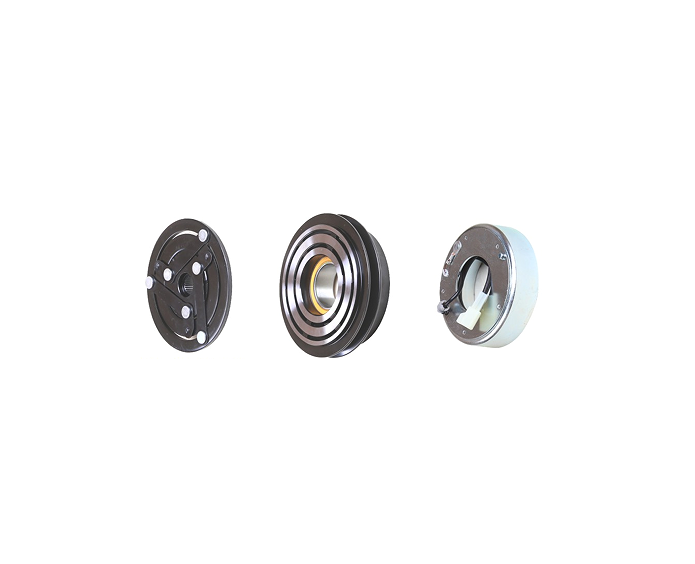
OE Number and Compressor Model Answer Different Questions
An OE number commonly answers, "Which original or service part was specified for this application?" A compressor model commonly answers, "Which compressor architecture and interface are physically present?" These questions overlap, but they are not identical. A reliable fitment record keeps both fields separate instead of treating one as an alias for the other.
| Reference | Strongest use | Main limitation | Best supporting evidence |
|---|---|---|---|
| OE number | Tracing original application, service replacement, catalogue history, and supersession | May not expose every clutch dimension or the compressor currently installed | Vehicle data, source document, compressor label, old-part photos |
| Compressor model | Identifying compressor family, shaft interface, mounting structure, and likely clutch architecture | A model family may contain revisions or more than one clutch configuration | Nameplate photo, pulley and hub measurements, coil and connector details |
| Vehicle information | Providing make, model, year, engine, and regional context | One vehicle description may cover several compressor suppliers or versions | VIN-level parts data where available and installed-compressor inspection |
| Physical clutch or compressor | Showing what is actually installed and measurable | The installed unit may be modified, worn, remanufactured, or previously replaced | Origin record, photographs, drawing, measurements, functional diagnosis |
Neither identifier proves material grade, bearing construction, coil resistance, test result, or service life by itself. Those are specification or evidence questions. Keeping identity evidence separate from product-performance evidence prevents a catalogue relationship from being presented as a tested technical claim.
When the OE Number Should Lead
The OE number should usually lead when the original vehicle configuration is known, the number comes from a reliable manufacturer or service source, and the buyer needs to trace a direct replacement or supersession. It is especially useful when a purchasing team manages applications by vehicle platform, when a distributor receives customer orders in OE-number format, or when an old part carries a clear original label.
Original vehicle and service-catalogue work
When the vehicle still has its original compressor and the reference is taken from a dependable service catalogue, the OE number can establish a strong link between the vehicle and the intended assembly. Record the exact number, including prefixes, suffixes, spaces, and revision marks. Also record where it came from. A number read from an original component, dealer catalogue, customer invoice, remanufacturer label, or online marketplace does not carry the same evidential weight.
Supersession and legacy-number searches
An OE number is valuable for tracing older references that have been replaced by a later service number. Preserve the old and new numbers as separate fields with a documented relationship. Do not delete the older number, because repair shops may continue to order from historical catalogues. The cross-reference should state whether the newer number is a confirmed service supersession, a supplier equivalent, or merely a search lead.
Multi-vehicle catalogue management
Distributors often need to connect one approved SKU to several vehicle applications and historical references. The OE number helps organize those aliases, but the approved SKU should still be tied to the compressor model and clutch specification. Otherwise, several visually similar applications can collapse into one overbroad listing.
Use the existing AC compressor clutch OE-number guide when the main task is developing a complete cross-reference. The present comparison is narrower: it determines when that OE reference should control the investigation and when the installed compressor deserves more weight.
When the Compressor Model Should Lead
The compressor model should usually lead when the vehicle may have received a replacement compressor, when the same vehicle family used multiple compressor suppliers, or when the clutch is being sourced as a component for a known compressor. The clutch physically interfaces with the compressor, so a confirmed nameplate and shaft architecture can be more decisive than a vehicle-level number that describes the original build.
A replacement compressor is already installed
A vehicle may no longer contain the compressor specified at production. A previous repair may have installed a superseded compressor, an aftermarket replacement, or a remanufactured unit. In that situation, the original vehicle OE number can point to the wrong clutch for the hardware now present. Photograph the compressor label and mounting area, then verify whether the proposed clutch belongs to that actual compressor model.
One vehicle application has several compressor families
Production year, engine, assembly plant, market, or air-conditioning package may change the compressor supplier. A broad vehicle listing can therefore return more than one clutch. The compressor model separates those families before the buyer compares pulley diameter, grooves, bearing, coil, connector, and hub.
Component-level repair and rebuilding
Compressor rebuilders usually work from the unit on the bench. The compressor family and shaft interface are central because the repair is not selecting an entire vehicle system; it is selecting a clutch, pulley, coil, bearing, or hub for one physical compressor. Even here, the model number is a starting point rather than a complete specification. Revisions, replacement pulleys, and remanufacturing history can still create differences.
OE Number vs Compressor Model for AC Clutch Fitment: A Decision Matrix
The following matrix helps purchasing and technical teams decide which reference deserves priority. Priority does not mean exclusive use. It means which identity should lead the next verification step.
| Situation | Lead reference | Required confirmation | Order status |
|---|---|---|---|
| Original compressor, reliable OE source, both references agree | OE number and compressor model together | Clutch specification and current supplier SKU | Candidate for sample or standard-reference approval |
| Vehicle has an unknown repair history | Installed compressor model | Nameplate, clutch photos, dimensions, vehicle context | Hold bulk order until physical identity is confirmed |
| OE number is superseded | OE history plus installed compressor | Documented supersession and current clutch configuration | Use current approved SKU while retaining old alias |
| Same vehicle uses multiple compressor suppliers | Installed compressor model | Manufacturer, family, pulley, connector, hub | Separate SKUs or fitment records as necessary |
| Compressor label is missing or unreadable | OE number plus physical evidence | Mounting, pulley, bearing, coil, hub, sample comparison | Technical candidate only until checked |
| Clutch was previously modified or replaced | Compressor interface and approved drawing | Determine whether the old clutch is a valid reference | Do not copy the old part without review |
| Distributor is building a catalogue | OE aliases linked to one controlled SKU | Compressor and application boundaries for every alias | Publish only confirmed application claims |
If both references disagree, stop treating the request as a normal catalogue match. Record the conflict, photograph both labels, and move to physical comparison. A supplier quotation should identify the proposed reference as confirmed, conditional, or requiring a sample. That status is more useful than a confident-looking part number with no verification basis.
Resolve Conflicts in a Fixed Evidence Order
A fixed evidence order prevents sales urgency or catalogue convenience from deciding fitment. The order can be adapted to the application, but it should remain visible and repeatable.
1. Confirm the source of each identifier
Record where the OE number and compressor model came from. A clear compressor nameplate on the installed unit is stronger evidence of current hardware than a vehicle description from an unverified marketplace listing. A manufacturer service record can be stronger evidence of an OE supersession than a handwritten box label.
2. Confirm the installed compressor
Photograph the nameplate, housing, mounting ears, pulley side, port orientation, and connector area. Check whether the unit appears original, aftermarket, or remanufactured. A fresh label on an old housing or evidence of changed components should trigger further review rather than automatic rejection or acceptance.
3. Define the requested supply scope
State whether the buyer needs a complete clutch assembly, pulley with bearing, coil, hub or armature plate, bearing only, or a complete compressor. A compressor OE number may identify a complete unit while the quotation covers only one component. Mixing those scopes is a frequent cause of incorrect price and fitment comparisons.
4. Compare the physical interface
Measure the pulley outside diameter, width, groove number and profile, offset, bearing seat, hub bore or spline, shaft engagement, coil mounting, connector, and applicable air-gap arrangement. Use defined datums and record the method. A photograph or outside diameter alone cannot establish the complete interface.
5. Approve a sample or documented specification
Link the selected supplier SKU to the evidence used for approval. If a sample is installed, record the compressor model, vehicle or test fixture, measured results, functional findings, and approval date. If installation is not possible, state exactly what dimensional and electrical checks were completed and what remains unverified.
Compare the Mechanical and Electrical Fields
Once identity is narrowed, fitment depends on the clutch configuration. The comparison should be detailed enough to prevent a similar-looking assembly from passing as an equivalent.
| Field | What to record | Why it can defeat an apparent number match |
|---|---|---|
| Pulley | Outside diameter, width, groove count/profile, offset, alignment | Same application family can use a different belt drive |
| Bearing | Code where legible, bore, outside diameter, width, sealing | Nominally similar pulleys can use different support dimensions |
| Coil | Rated voltage, connector, lead exit, approved electrical check | Physical fit does not prove electrical compatibility |
| Hub or armature | Bore, spline/key, thickness, locating and retention features | The clutch may not seat or transfer torque correctly |
| Air gap | Model-specific requirement and measurement method | No universal gap should be copied across compressor families |
| Supply scope | Complete assembly or named individual components | Two quotations may describe different products under a similar title |
Where a material, tolerance, resistance, or test limit is unknown, mark it as pending. Do not insert a generic industry value to make the record look complete. A controlled unknown directs the next technical action; an invented value creates false confidence.
Three Realistic Conflict Scenarios
The vehicle OE number points to one clutch, but the installed compressor label points to another
This often indicates a prior compressor replacement or a vehicle application with multiple suppliers. Give priority to the physical compressor for the component fit, but keep the vehicle OE number in the record. Verify that the replacement compressor is correctly installed in the vehicle, then select the clutch for that compressor rather than forcing the original clutch reference onto it.
The compressor model matches, but the old pulley has a different groove count
Possible explanations include a compressor-family revision, a pulley changed during an earlier repair, a regional belt configuration, or a misidentified model suffix. Measure pulley diameter, width, offset, bearing, and hub; check the belt system and model suffix; then ask whether the proposed supplier SKU is approved for that exact configuration. Do not assume the old pulley is original merely because it has operated on the vehicle.
The OE number is clear, but the compressor label is missing
Use the OE number to generate a candidate, then confirm the housing, mounting, pulley, connector, bearing, hub, and shaft interface from the physical unit. A sample may be necessary. If the evidence cannot close the match, quote conditionally and avoid publishing a universal fitment claim.
How Distributors Should Store Both References
A distributor should not choose one identifier and discard the other. Build a master SKU record in which OE numbers are searchable aliases and the compressor model is a controlled technical field. Include the buyer SKU, supplier SKU, confirmed application boundary, clutch specification, approved sample revision, packaging revision, and evidence status.
Use separate fields for confirmed, conditional, and unverified relationships. This prevents sales teams from converting a possible cross-reference into a catalogue promise. It also makes it easier to investigate returns: the quality team can see whether the wrong vehicle application, wrong compressor family, changed pulley, or warehouse picking error caused the problem.
For repeat orders, purchase orders should identify the approved SKU and revision rather than sending only an OE number. Labels and cartons should use the same product identity as the inspection record. Any change to the bearing, pulley, coil, connector, hub, surface treatment, or packaging identity should follow the agreed notification and reapproval process.
Sample Approval and Inspection Are Different Gates
Sample approval determines whether a proposed configuration is acceptable for the defined application. Batch inspection determines whether production continues to match that approved configuration. Neither one automatically proves universal vehicle compatibility or long-term field life.
A sample record can include the OE number, compressor model, buyer and supplier SKUs, photographs, dimensions, coil and connector details, fitment result, packaging status, open issues, revision, and approval date. If a sample changes, issue a new revision rather than replacing the evidence silently.
A batch inspection plan can cover product identity, dimensions, component references, coil electrical checks, assembly, runout or alignment where applicable, appearance, packaging, quantity, and lot traceability. The AC compressor clutch inspection guide explains why each characteristic needs an acceptance basis. Where endurance, thermal, vibration, corrosion, noise, or other validation matters, define the specific method, conditions, sample quantity, product revision, and acceptance criteria before treating a test statement as evidence.
Do Not Let Commercial Pressure Rewrite the Fitment Status
A buyer may need a fast quotation, but speed should not erase uncertainty. The supplier can quote a technical candidate while listing the missing evidence. Price, MOQ, lead time, and sample availability can be discussed without declaring an unverified fitment as confirmed.
MOQ and lead time should be requested for the actual SKU and project stage. A standard existing clutch, a mixed-model wholesale order, private-label packaging, and a technically modified clutch can have different commercial conditions. KASEN's public pages do not establish one universal MOQ or lead time for every clutch reference, so these values should be confirmed in the quotation.
The same rule applies to materials, certification, and tests. Ask for the document that supports the selected product and claim. A company certificate, product specification, dimensional report, and validation report prove different things. Do not transfer evidence from one reference to another without technical justification.
Prepare a Fitment RFQ That Preserves the Comparison
A useful RFQ makes the OE-number and compressor-model evidence visible instead of reducing the request to "please quote this clutch." Send one line per proposed SKU and attach clear photographs.
- OE/OEM number, source, superseded reference, and confidence status.
- Compressor manufacturer, complete model and suffix, nameplate photo, and repair history if known.
- Vehicle make, model, year, engine, market, and belt configuration where available.
- Required scope: complete clutch, pulley, bearing, coil, hub, or another component.
- Pulley diameter, width, groove count/profile, offset, and alignment evidence.
- Bearing code or measured bore, outside diameter, and width.
- Coil voltage, connector, lead position, and available electrical information.
- Hub, shaft interface, mounting, air-gap method, photographs, drawing, or sample.
- Required quantity, expected repeat demand, destination market, buyer SKU, and packaging.
- Requested sample, inspection, fitment, traceability, and change-control evidence.
Review the compressor clutch fitment workflow when building the technical record. To request matching, samples, or a quotation, submit the OE number and compressor evidence through the KASEN message page or Contact Us page. Ask the reply to state whether the proposed reference is confirmed, conditional, or awaiting a physical sample.
Frequently Asked Questions
Which is more reliable: an OE number or a compressor model?
Neither is universally more reliable. The OE number is stronger for original application and supersession history; the compressor model is stronger for identifying the physical family currently installed. Use both and verify conflicts against the actual clutch and compressor.
Why can a correct OE number still lead to the wrong AC clutch?
The vehicle may have a replacement compressor, the number may be superseded or mis-sourced, the application may have regional or production variants, or the number may identify a complete compressor rather than the exact clutch configuration.
Can one compressor model use more than one clutch?
It can, depending on model suffix, production revision, belt system, market, voltage, connector, or service history. Confirm pulley, bearing, coil, hub, and application rather than assuming the family name defines every component.
What should I do when the OE number and compressor model disagree?
Record the conflict, confirm both sources, inspect the compressor currently installed, define the required component scope, compare physical and electrical fields, and approve a sample or controlled specification before a bulk order.
Is a vehicle model enough to select an AC compressor clutch?
No. A vehicle model can include different years, engines, markets, and compressor suppliers. Add the compressor model, OE reference, physical specifications, and photographs.
Does a matching pulley diameter confirm fitment?
No. Groove profile, width, offset, bearing, coil, connector, hub, shaft interface, mounting, and air gap can still differ.
What if the compressor label is unreadable?
Use the OE number and vehicle information to find a candidate, then verify housing features, mounting, pulley geometry, bearing, connector, hub, shaft interface, and a physical sample where necessary.
How should a distributor record OE and compressor references?
Store OE numbers as searchable aliases, the compressor model as a controlled technical field, and connect both to one approved SKU, specification or sample revision, evidence status, packaging revision, and change history.
Does sample approval prove every listed vehicle application?
No. It proves only the scope actually checked. Record the compressor, vehicle or fixture, measurements, electrical checks, installation result, and unresolved application claims.
How can I request help with OE Number vs Compressor Model for AC Clutch Fitment?
Send the OE number and source, compressor label, vehicle details, clutch photographs, pulley and bearing measurements, coil and connector information, quantity, market, and packaging requirement through the KASEN Contact Us page. Include a sample or drawing when the identifiers conflict or the interface cannot be verified remotely.
Conclusion
OE Number vs Compressor Model for AC Clutch Fitment is best resolved by assigning each reference the job it performs well. Use the OE number to trace original application, service history, aliases, and supersessions. Use the compressor model to identify the mechanical family and the hardware currently installed. When they agree, continue with clutch specification and sample approval. When they conflict, let physical evidence, measured interfaces, and a documented approval process decide the match.
Do not reduce the decision to a vehicle name, pulley diameter, photograph, or unqualified catalogue cross-reference. Connect both identities to the pulley, bearing, coil, connector, hub, shaft interface, approved SKU, inspection plan, packaging, and change-control record. Buyers can review the KASEN compressor clutch range and send the complete evidence through the KASEN message page for quotation, sample evaluation, or technical consultation. A useful response should explain which reference leads, what is confirmed, and what must still be measured before production or repeat supply.