
What a Hyundai AC Compressor Clutch Supplier Must Prove
A Hyundai AC compressor clutch supplier must prove the exact compressor and clutch match before a buyer approves a sample or bulk order. The Hyundai vehicle name alone is not enough. A controlled match should connect the vehicle and production context to the compressor reference, supplier SKU, pulley diameter, belt-groove configuration, bearing specification, coil voltage, connector, hub interface, supplied components, and approved sample. If any critical field remains unknown, the reference should remain under technical review rather than being presented as confirmed.
This is a Commercial Investigation and RFQ Intent query for importers, automotive AC distributors, compressor rebuilders, workshop networks, fleet-parts buyers, and private-label brands. The buyer is not simply asking how a compressor clutch works. The buyer is deciding whether a supplier can separate similar Hyundai references, provide evidence for the proposed replacement, reproduce the approved configuration, package each SKU correctly, and answer when a later shipment differs.
Guangzhou Kasen Auto Airconditioner CO:LTD presents itself as a manufacturer and exporter based in Guangzhou, China. Its public company page states that it has focused on automotive air-conditioning products since 2007 and supplies compressors, clutches, electric compressors, valves, bearings, and related parts to global aftermarket customers and domestic OEMs. The site also states that buyers can discuss custom production using drawings or OEM numbers. These statements establish the company entity and product scope, but the final Hyundai fitment, MOQ, lead time, materials, tests, and packaging still require SKU-specific confirmation.
Review Kasen's company profile for the public manufacturer information. For the relevant product family, start with the Hyundai clutch category and the broader auto AC compressor clutch category.
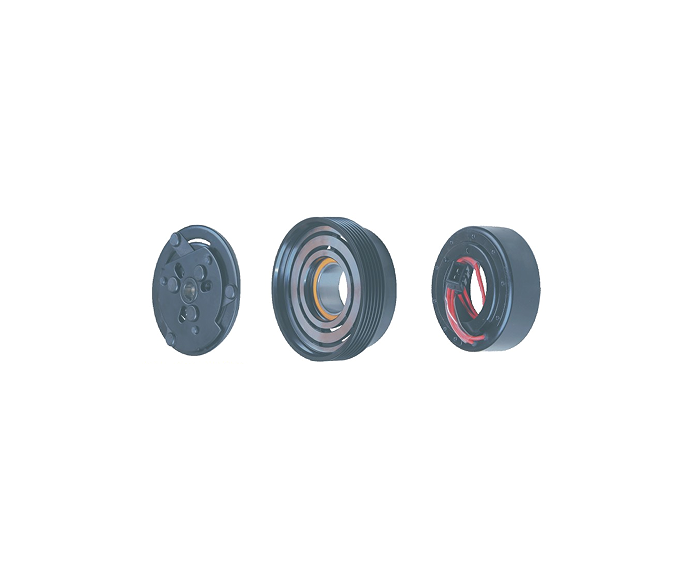
Why Hyundai Clutch Sourcing Needs a Dedicated Fitment Page
The unique purchasing problem is variation inside the Hyundai application range. Buyers often begin with a vehicle name such as Santa Fe, Terracan, Accent, or i30. That is useful market information, but it does not tell the supplier which compressor or clutch configuration is installed. Engine, model year, market, compressor source, service history, and previous compressor replacement can change the required front-end assembly.
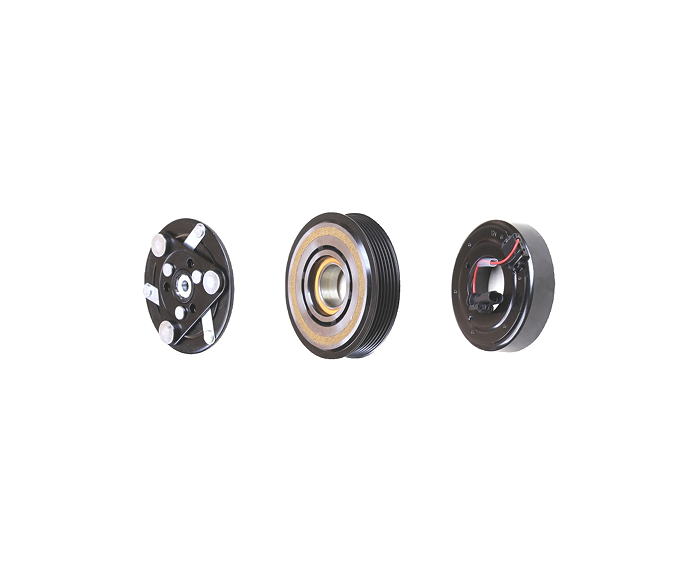
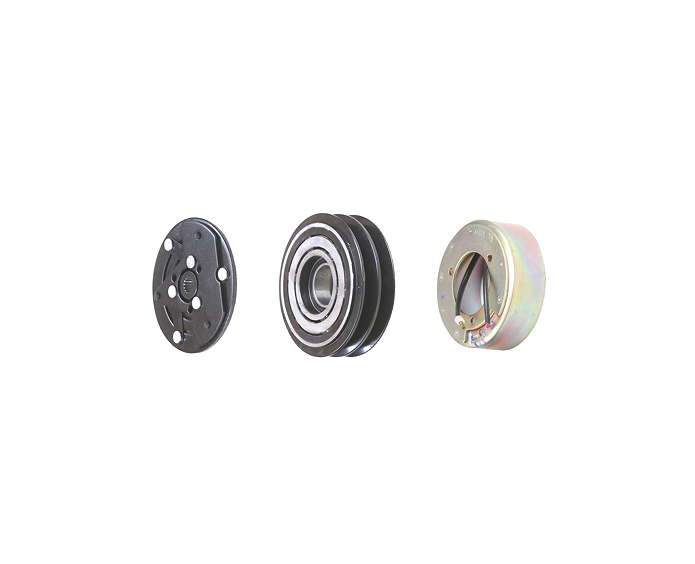
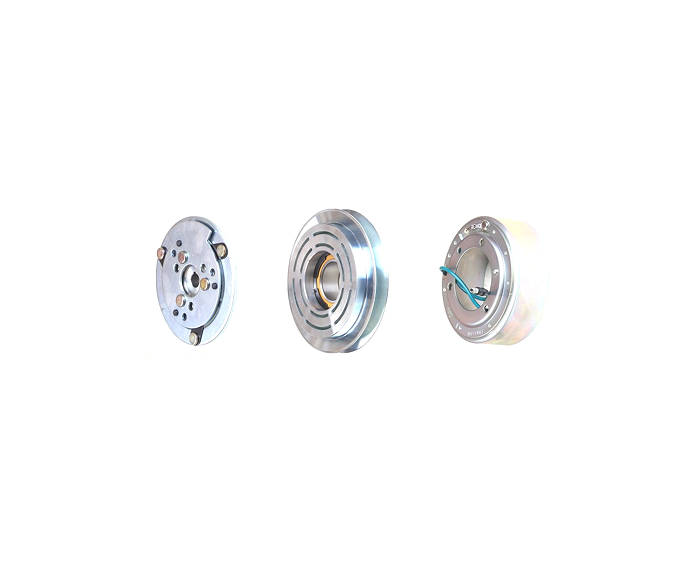
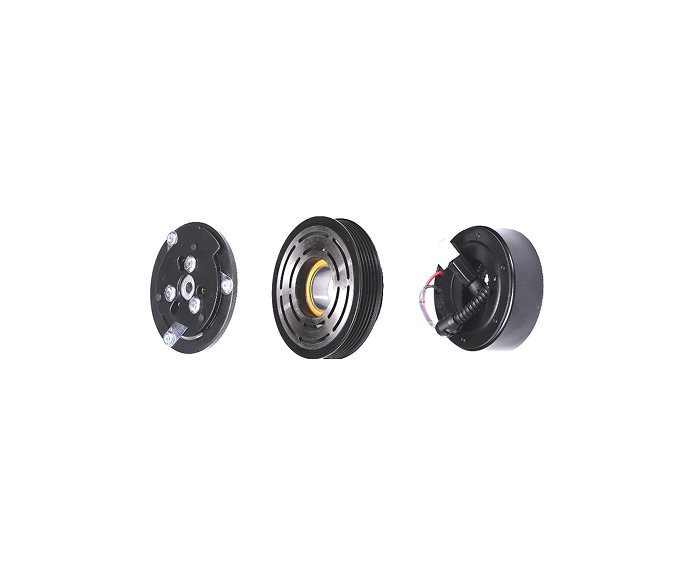
Kasen's public Hyundai clutch category provides a practical example. It currently shows multiple KS-8040-series references rather than one universal Hyundai clutch. Public fields for three visible products show different pulley diameters, groove counts, and bearing specifications. Two Santa Fe-related entries both use a stated 12V and 6PK configuration, yet their pulley diameters differ. The Terracan HCC example uses another diameter, groove count, and bearing. This evidence demonstrates why a Hyundai AC compressor clutch supplier must return a reference-specific answer.
| Kasen public reference | Published application | Voltage | Grooves | Pulley diameter | Bearing |
|---|---|---|---|---|---|
| KS-804023 | Santa Fe diesel version | 12V | 6PK | 123 mm | 305222 |
| KS-804024 | Santa Fe 2.7 | 12V | 6PK | 135 mm | 305222 |
| KS-804025 | Terracan HCC | 12V | 4PK | 138 mm | 305523 |
The table reproduces fields visible on the current product pages; it is not a universal Hyundai fitment chart. For example, a shared bearing code does not make KS-804023 and KS-804024 interchangeable because the published pulley diameters differ by 12 mm. Likewise, a shared 12V value does not resolve pulley, hub, connector, offset, compressor, or vehicle differences. The buyer must confirm the actual old unit and compressor before ordering.
Clarify What “Hyundai Supplier” Means
A search for a Hyundai AC compressor clutch supplier can describe several commercial relationships. A supplier may sell an original Hyundai or original compressor-brand part through a documented channel, manufacture an independent aftermarket replacement, distribute products from another factory, or match a replacement using an old sample, OE number, drawing, and photographs. These relationships should not be described as equivalent.
Original part versus Hyundai-compatible replacement
If the requirement is an original part, request the original part number, packaging identity, source documentation, and any authorization required for the target market. If the requirement is an aftermarket replacement, write “aftermarket compressor clutch compatible with the specified Hyundai application and compressor reference.” The second description identifies compatibility without implying Hyundai authorization or original-brand status.
Manufacturer versus trading source
Ask who manufactures the proposed clutch, who owns the supplier drawing or product record, where inspection occurs, and who controls changes. A trading company may provide useful consolidation, but the technical evidence still needs an owner. A manufacturer should be able to explain how the approved pulley, coil, bearing, hub, connector, and packaging record reaches production.
Clutch assembly versus complete compressor
Kasen has separate Hyundai categories for clutch-related products and complete compressors. The Hyundai complete-compressor category lists examples associated with Hyundai Accent, a 977014L000 reference, and Hyundai i30. Those are complete-compressor sourcing paths, not proof of clutch interchangeability. The RFQ must state whether the buyer needs a complete clutch assembly, pulley and bearing, coil, hub, repair set, or complete compressor.
Build a Hyundai Reference File Before Requesting Price
A supplier catalogue is organized around products the supplier wants to display. A buyer's reference file is organized around parts the market actually needs. Start with one row per requested Hyundai clutch and make every supplier answer the same fields. This prevents the quotation from combining confirmed applications, possible alternatives, and visually similar products.
| Reference field | Why it matters | Preferred buyer evidence |
|---|---|---|
| Vehicle and production data | Separates engine, year, market, and platform variations | Make, model, year, engine, VIN-related service data where appropriate |
| Compressor identity | Provides the primary mechanical context for the clutch | Compressor label, manufacturer, model, and clear photographs |
| OE or cross-reference number | Connects the request to an existing service or catalogue reference | Old part label, invoice, service record, or approved catalogue data |
| Pulley geometry | Controls belt fit, ratio, alignment, and clearance | Diameter, width, groove count, profile, offset, and side photograph |
| Bearing and hub interface | Controls rotation, shaft connection, and assembly compatibility | Bearing mark or dimensions, center bore, hub and rear-side photographs |
| Coil and connector | Controls electrical engagement and harness compatibility | Voltage source, connector face, lead direction, and coil photograph |
| Required supply scope | Prevents a full clutch from being confused with a subassembly | Marked photograph and written list of included components |
| Quantity and destination | Controls MOQ, mixed-SKU rules, packaging, documents, and lead time | Opening order, forecast, market, delivery point, and carton brief |
Ask the Hyundai AC compressor clutch supplier to return its proposed SKU, matching basis, application boundary, open questions, available evidence, sample plan, and commercial assumptions. Use separate statuses for exact match, equivalent replacement, and pending confirmation. A supplier that asks for a missing label or measurement is showing better control than one that promises fitment from the vehicle badge alone.
The compressor clutch fitment workflow provides a related internal process for converting OE data, compressor information, photographs, and samples into an approved SKU. For Hyundai sourcing, apply that workflow separately to every configuration rather than creating one broad Hyundai cross-reference.
Measure the Complete Clutch Interface
The compressor clutch is a connected system. Pulley, bearing, coil, hub, armature, connector, retaining hardware, and air gap must work with the same compressor. A correct pulley diameter does not rescue a wrong hub or connector, and a matching voltage does not establish the correct offset or bearing seat.
Pulley diameter, grooves, width, and offset
Record outside diameter, belt-groove count and profile, pulley width, and offset relative to the compressor mounting plane. The published KS-804023 and KS-804024 examples show why diameter matters even when both are listed as 12V, 6PK Santa Fe-related references. Ask for a dimensioned drawing or an annotated measurement photograph when the old clutch and proposed sample are not already compared directly.
Bearing specification and rotating fit
Confirm the bearing code or internal and external dimensions, width, seat, retention method, and relationship to the pulley. KS-804023 and KS-804024 publish bearing 305222, while KS-804025 publishes 305523. The bearing field is one identifier, not the entire match. Receiving inspection should also check smooth rotation, visible damage, seating, and assembly identity against the approved sample.
Coil voltage and connector layout
Confirm rated voltage, connector housing, terminal arrangement, lead direction, mounting geometry, and the electrical test that applies to the proposed coil. The visible Hyundai product examples above publish 12V, but the buyer should not generalize that value to every Hyundai compressor clutch or use the vehicle name as an electrical specification. The exact product record must carry the confirmed voltage and connector.
Hub, armature, and shaft interface
Record the hub depth, shaft or spline interface, armature face, center fastener, spacers, retaining parts, and any installation-specific hardware. Similar front photographs can hide different rear interfaces. Ask for front, rear, side, connector, and center-interface photographs of the old part and sample.
Air gap and supplied assembly condition
Clarify whether the supplier delivers a complete pre-matched clutch, separate components, or a pulley-related subassembly. Ask which air-gap requirement applies to the exact compressor and whether adjustment parts are included. Do not copy a typical air-gap value from another product family. The workshop should follow the approved product and vehicle service procedure.
Use Kasen's Hyundai Product Evidence Correctly
Kasen's Hyundai clutch category is useful original website evidence because it contains named SKUs and product-level fields. The category currently exposes several KS-8040-series products, including the KS-804023, KS-804024, and KS-804025 references used in this guide. This supports the statement that Kasen has a visible Hyundai clutch product family and can receive Hyundai-related enquiries.
The KS-804023 product page publishes a Santa Fe diesel application, 12V, 6PK, a 123 mm pulley diameter, and bearing 305222. The page also describes a visible grooved pulley, central hub or bearing area, and rear electrical feature. It explicitly says that exact material grade is not specified and that product matching should rely on compressor model, mounting pattern, and reference number.
The KS-804024 product page publishes Santa Fe 2.7, 12V, 6PK, a 135 mm pulley diameter, and bearing 305222. Its written description is careful about the visible structure and says exact compatibility cannot be confirmed from the image alone. This page is particularly useful because it shows that a product photo and one shared bearing field are insufficient to establish interchangeability.
The KS-804025 product page publishes Terracan HCC, 12V, 4PK, a 138 mm pulley diameter, and bearing 305523. It describes coated steel, machined surfaces, an integrated bearing, and an electrical lead as visible or likely construction evidence while noting that exact material grades and tolerances require supplier documentation.
These pages do not prove current stock, a universal Hyundai fitment chart, fixed MOQ, fixed lead time, a material grade for every component, or a test result for all products. Those items must be confirmed for the actual quotation. Page-level statements should remain attached to the specific page and should not be expanded into an unconditional claim about the whole catalogue.
Request Factory Evidence by Component and Process
“High quality” is not an inspection field. Ask the supplier to connect each important component to a material description, process, acceptance point, and record. Where a proprietary material grade cannot be shared, request a controlled material family and the criteria that protect fitment and function.
| Evidence area | Useful factory evidence | What it should not be used to claim |
|---|---|---|
| Pulley and hub | Drawing, material description, machining fields, runout or balance method | A photo does not prove material grade or dynamic performance |
| Bearing | Approved bearing reference, dimensions, supplier identity, incoming check | A shared bearing code does not prove full-clutch interchangeability |
| Coil and connector | Voltage, wire and insulation description, resistance or continuity method, connector record | A 12V label does not prove connector or magnetic compatibility |
| Hub and armature | Interface drawing, heat or surface treatment description, dimensional inspection | Similar appearance does not prove shaft compatibility |
| Assembly | Approved sample, component list, air-gap method, rotation and engagement checks | A generic process list does not prove the target SKU was tested |
| Packaging | Protection method, label, quantity, batch code, carton and pallet record | A branded carton does not establish technical fitment |
Ask for actual Hyundai reference photographs where possible: product views, machining or coil work, assembly, inspection, label, and packaging. An anonymized inspection report or blank form is useful when customer documents are confidential. Record the part number, revision, sample or lot, method, acceptance range, date, and responsible department wherever the factory can provide them.
Do not infer ISO scope, Hyundai authorization, test life, torque capacity, temperature range, defect rate, or return rate from a general certificate image or marketing paragraph. If the supplier provides a certificate, record the certificate number, issuing body, validity, legal entity, site, and scope before using it in commercial content.
Approve a Hyundai Clutch Sample in Four Stages
Sample approval converts a product listing into a controlled purchasing reference. It is especially important when a Hyundai application has several compressor options, when the proposed item is an equivalent replacement, when the buyer is launching private-label packaging, or when international returns are expensive.
Stage 1: identity and scope
Confirm buyer SKU, supplier SKU, Hyundai application, compressor reference, OE or cross-reference number, and all included components. Photograph the received sample and label from the same angles used in the enquiry.
Stage 2: dimensional and electrical comparison
Compare pulley diameter, width, grooves, profile, offset, bearing, hub, rear interface, voltage, connector, and lead direction with the old part or approved drawing. Mark each field passed, failed, or pending rather than approving the sample from appearance.
Stage 3: workshop or bench validation
Define which rotation, continuity, resistance, engagement, air-gap, noise, runout, balance, or installation checks are required for the exact reference. The factory and buyer should agree who performs each check and what record closes the approval. Do not invent a universal test value.
Stage 4: commercial release
Freeze the sample identity, drawing or marked photographs, component scope, inspection fields, label, carton, MOQ, lead-time assumptions, and change-notification rule. A later change to the pulley, bearing, coil, hub, connector, finish, carton, or label should be communicated when it can affect fitment or warehouse control.
The AC compressor clutch inspection guide can support the inspection structure. The Hyundai approval file should still contain the actual SKU fields and evidence rather than a generic checklist alone.
Plan MOQ, Lead Time, Mixed SKUs, and Packaging Together
Hyundai aftermarket demand is rarely distributed evenly across every reference. A distributor may need higher quantities of established applications and smaller trial quantities for long-tail models. Ask the supplier to quote MOQ by SKU and explain whether multiple clutch references can be combined in one order.
Lead time should be divided into sample preparation, drawing or label approval, material and component readiness, production, inspection, packaging, and shipping handoff. A single number is not useful if the start date depends on sample approval or artwork. Ask which references are existing production items, which need sample confirmation, and which require development.
| Commercial field | Buyer input | Supplier response |
|---|---|---|
| SKU mix | References, quantity per SKU, priority, and forecast | MOQ per SKU and mixed-model rule |
| Sample | Sample quantity, required evidence, and approval date | Availability, cost, dispatch timing, and correction process |
| Production | Required delivery window and destination | Production, inspection, packing, and handoff stages |
| Private label | Artwork, buyer SKU, barcode, language, and carton rules | Artwork approval, cost assumption, and minimum quantity |
| Traceability | Required lot, label, and claim information | Batch code, record retention, and change-notification route |
| Export documents | Invoice, packing list, origin, inspection, and destination needs | Available documents and quotation conditions |
Packaging must protect the pulley face, bearing area, connector, coil lead, hub interface, and finished surfaces. The carton label should identify the buyer SKU, supplier reference, Hyundai application boundary, quantity, and batch or lot. Review the custom clutch packaging guide for the wider packaging workflow, then approve the actual Hyundai carton and label against the sample.
Compare Hyundai Clutch Suppliers by Responsibility
A manufacturer may provide direct access to the product record, machining, coil, assembly, inspection, and change control. A trading company may consolidate products from multiple factories but should identify the source of the evidence. A marketplace listing may support a fast price check while source, configuration, and batch remain unclear. A local distributor may shorten delivery but still needs a stable product identity.
The best Hyundai AC compressor clutch supplier is not automatically the supplier with the largest vehicle list. It is the supplier that can distinguish references such as KS-804023, KS-804024, and KS-804025, explain the matching basis, approve a sample, preserve the product identity, and investigate a later field issue against a traceable batch.
Prepare an RFQ That Produces a Hyundai-Specific Answer
A message containing only “Hyundai clutch price” encourages a broad catalogue response. A structured RFQ gives the supplier enough information to identify the compressor and return an auditable answer.
- List the Hyundai model, year, engine, market, and available OE or cross-reference numbers.
- Provide the compressor manufacturer, model, label, and photographs from all sides.
- Attach old-clutch photographs and measurements for pulley, grooves, width, offset, bearing, hub, connector, and rear interface.
- State whether the request covers a complete clutch, pulley and bearing, coil, hub, repair set, or complete compressor.
- Provide sample quantity, opening quantity, annual forecast, destination, and required delivery window.
- State neutral or private-label packaging, buyer SKU, barcode, carton, pallet, and document requirements.
- Ask the supplier to return the proposed SKU, match status, open questions, evidence, sample plan, MOQ, lead-time stages, packaging, and change-control method.
Use the Kasen message form to send the reference file and photographs. The Kasen contact page lists the Guangzhou address, telephone number, WhatsApp route, and company email addresses for keeping the technical and commercial discussion connected to a responsible contact.
Frequently Asked Questions About Hyundai AC Compressor Clutch Suppliers
Can a Hyundai clutch be selected by vehicle model alone?
No. The vehicle model is useful context, but a professional order should also confirm the compressor reference, OE or cross-reference number, pulley diameter and offset, groove count, bearing, coil voltage, connector, hub, and assembly scope. The public Santa Fe examples show different pulley diameters even when both are listed as 12V and 6PK.
Are KS-804023 and KS-804024 interchangeable because both use 12V, 6PK, and bearing 305222?
That cannot be concluded. Their public pages list different Santa Fe applications and different pulley diameters: 123 mm for KS-804023 and 135 mm for KS-804024. Other fields such as offset, hub, connector, and compressor reference also require confirmation.
What does the KS-804025 public page establish?
It publishes the KS-804025 reference, Terracan HCC application, 12V, 4PK, 138 mm pulley diameter, and bearing 305523. It also provides visible construction observations. It does not establish universal Terracan compatibility, current stock, fixed MOQ, or exact material grades for every component.
What should a first sample package contain?
It should contain the exact sample, supplier and buyer SKU, application record, drawing or marked dimensions, component scope, product photographs, available inspection evidence, label, packaging, and a list of open questions. Keep the approved package as the master reference for production and repeat orders.
Which factory records should a distributor request?
Request records connected to the target SKU: dimensional inspection, pulley runout or balance method where applicable, bearing identification, coil electrical check, connector inspection, assembly or air-gap check, rotation or engagement record, label, batch, and packaging inspection. The exact list depends on the clutch and buyer requirement.
Should a supplier publish one MOQ for every Hyundai clutch?
No. MOQ may change with SKU, production status, component availability, sample requirement, mixed-model basket, private-label packaging, and development work. Ask for MOQ per reference and the rule for combining Hyundai models in one order.
How should lead time be confirmed?
Separate sample, technical approval, artwork, material readiness, production, inspection, packing, and shipping handoff. Record the event that starts each stage. This is more reliable than accepting one number without assumptions.
Does “Hyundai supplier” mean an authorized Hyundai source?
Not automatically. Ask whether the product is original, authorized, independently manufactured as an aftermarket replacement, or distributed from another factory. Use Hyundai-compatible aftermarket language unless the supplier provides the documentation required for an original or authorized claim.
When should the buyer source a complete compressor instead of a clutch?
A clutch replacement may be appropriate when the compressor internals remain serviceable and the failure is limited to the front drive assembly. Internal seizure, leakage, contamination, or other compressor damage may require a complete compressor and related system service. The workshop should diagnose the failure and follow the vehicle service procedure.
How can a buyer reduce errors on repeat orders?
Order against the approved buyer SKU, supplier SKU, compressor reference, drawing or measured sample, product photographs, component scope, label, carton, and batch requirements. Require notification before a relevant component or packaging change and compare receiving inspection with the same master record.
Conclusion
Choosing a Hyundai AC compressor clutch supplier is a model-specific fitment and repeat-supply decision. A vehicle name, 12V value, bearing code, or similar product photo cannot independently prove interchangeability. The supplier should connect the Hyundai application to the compressor, pulley, bearing, coil, connector, hub, sample, factory evidence, batch identity, packaging, MOQ, and lead-time assumptions.
The public KS-804023, KS-804024, and KS-804025 pages provide useful first-party examples of why Hyundai references must remain separate. Their published applications, groove counts, pulley diameters, and bearings are not identical. Use those records to ask better questions, then approve the actual sample and quotation rather than generalizing one product page to an entire vehicle range.
Review the current Kasen Hyundai clutch category and the broader auto AC compressor clutch range. To request a reference-specific quotation, send the compressor label, old-clutch photographs, measurements, quantities, destination, and packaging requirements through the Kasen message form so fitment, samples, evidence, MOQ, delivery, and repeat-order controls can be evaluated together.