
How Do You Choose the Right AC Compressor Clutch Supplier?
The right AC compressor clutch supplier should be able to prove three things before you place a bulk order:
-
The clutch is correctly matched to the intended compressor and vehicle application.
-
The approved clutch configuration can be produced consistently.
-
The same product can be identified and supplied again on future orders.
For professional buyers, these points matter more than a long catalogue or a low initial quotation.
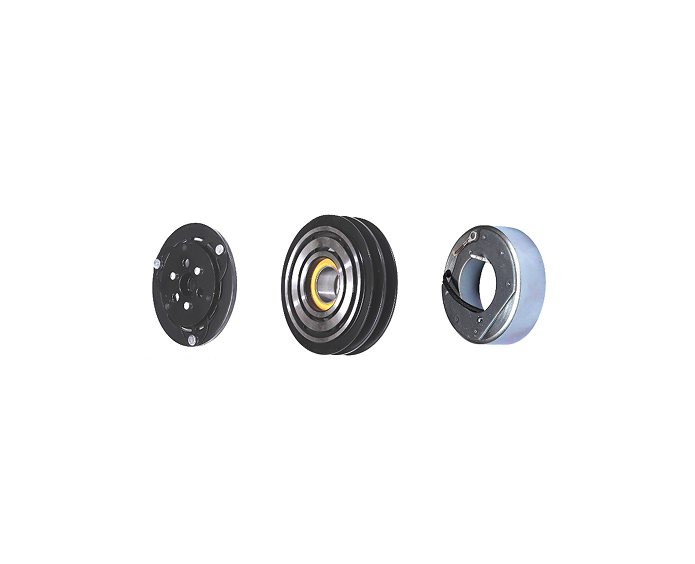
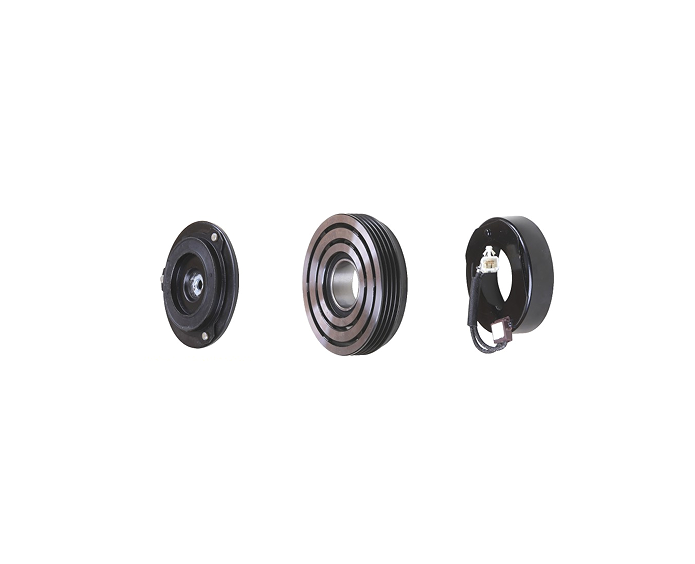
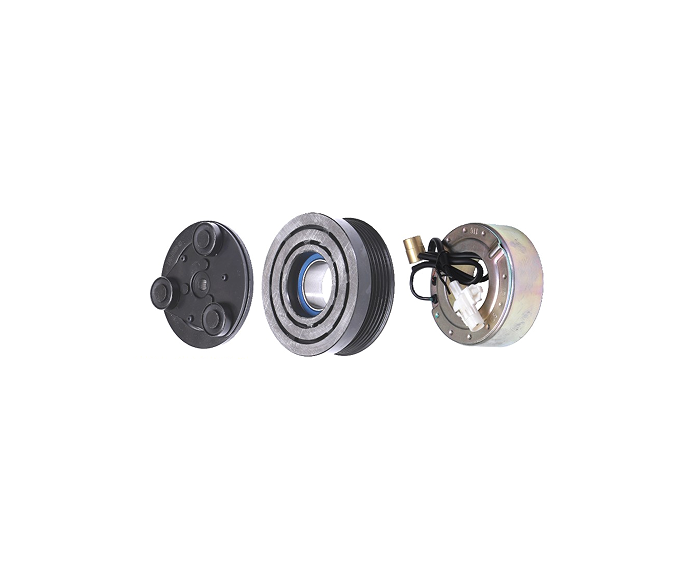
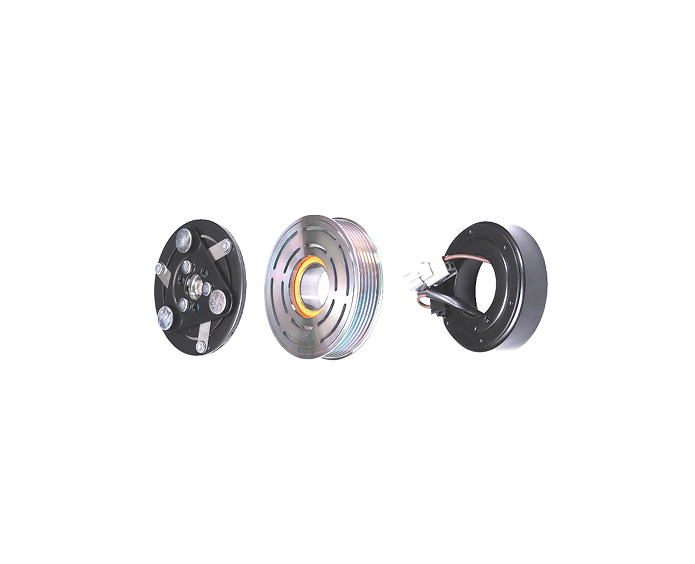
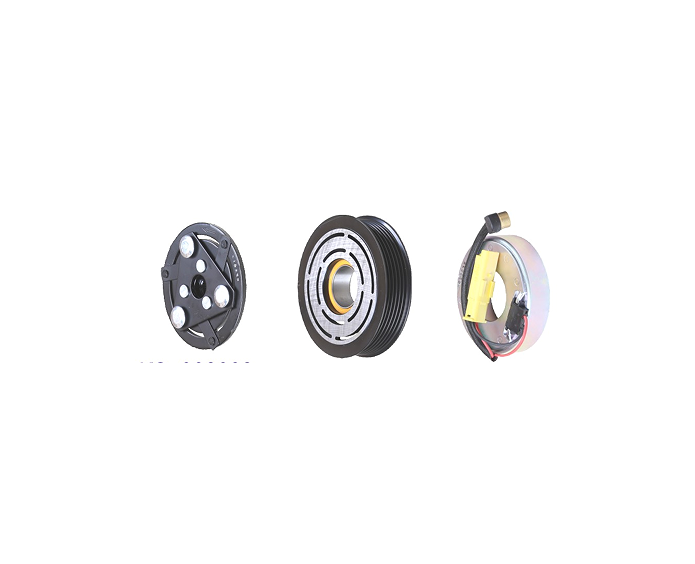
An AC compressor clutch is not a generic replacement part. A typical assembly may include a pulley, electromagnetic coil, bearing, hub or armature plate, friction surfaces, and related mounting components. Products that look almost identical can still differ in pulley diameter, groove configuration, bearing dimensions, coil voltage, connector, hub geometry, offset, or compressor interface.
That creates a simple purchasing rule:
Choose the supplier based on its ability to control product identity and fitment—not on appearance or price alone.
Before evaluating suppliers, buyers can review KASEN's automotive AC product range and its automotive AC compressor clutch selection guide to understand the technical variables involved in clutch matching.
1. Start With Your Application, Not the Supplier Catalogue
One of the most common sourcing mistakes is asking several suppliers for:
“AC compressor clutch for Toyota.”
That is not a sufficiently controlled product definition for a wholesale order.
The same vehicle brand may use different:
-
Compressor manufacturers
-
Compressor models
-
Engines
-
Production years
-
Pulley sizes
-
Groove configurations
-
Coil connectors
-
Bearing dimensions
-
Hub interfaces
A strong supplier should therefore ask for more information when the application is uncertain.
Prepare These Details First
Whenever available, provide:
-
OE/OEM reference
-
Compressor manufacturer
-
Compressor model/reference
-
Vehicle make
-
Vehicle model
-
Production year
-
Engine
-
Existing clutch reference
-
Pulley diameter
-
Groove number
-
Bearing reference or dimensions
-
Coil voltage
-
Connector photo
-
Hub or shaft interface
-
Product photos
-
Physical sample if necessary
This gives each supplier the same technical starting point.
Without a controlled RFQ, you may receive several quotations that appear to describe the same clutch but actually cover different configurations.
2. Check Whether the Supplier Can Identify Fitment Correctly
A professional supplier should not approve a clutch based on one shared dimension.
For example, the pulley diameter may match while:
-
The groove count differs
-
The bearing is different
-
The connector is different
-
The hub geometry is incompatible
-
The coil voltage is wrong
-
The pulley offset changes belt alignment
This is why supplier evaluation should begin with fitment methodology.
Ask:
-
What information do you require before confirming a clutch?
-
Can you match by compressor model?
-
Can you cross-reference OE numbers?
-
What dimensions do you verify?
-
Can you work from an existing sample?
-
How do you distinguish visually similar models?
A supplier that immediately replies “yes, compatible” without requesting missing information may be faster, but speed is not the same as accuracy.
Clutch Fitment Checklist
| Item | What to Confirm | Risk If Wrong |
|---|---|---|
| Compressor reference | Exact compressor family/model | Wrong clutch family |
| OE/OEM reference | Original application | Incorrect cross-reference |
| Pulley diameter | Approved dimension | Belt geometry problem |
| Groove configuration | 4PK, 5PK, 6PK, etc. | Belt incompatibility |
| Bearing | Reference/dimensions | Noise or installation issue |
| Coil voltage | Application requirement | Electrical failure |
| Connector | Shape/leads/position | Cannot connect correctly |
| Hub/interface | Shaft connection | Mechanical incompatibility |
| Offset/position | Assembly geometry | Belt misalignment |
| Vehicle information | Make/model/year/engine | Application error |
The objective is not to collect unnecessary data.
It is to identify the minimum information needed to confidently separate one clutch from another.
3. Evaluate Product-Level Information, Not Generic Factory Claims
Many supplier websites contain similar statements:
-
High quality
-
Competitive price
-
Professional factory
-
Strict QC
-
Fast delivery
-
OEM service
These statements may be useful introductions, but they are not enough for supplier qualification.
A better question is:
What information can the supplier provide for the specific clutch models you intend to buy?
Useful product-level evidence may include:
-
Supplier product code
-
OE cross-reference
-
Compressor application
-
Pulley specification
-
Bearing reference
-
Coil information
-
Connector configuration
-
Clear product photos
-
Packaging identification
-
Approved sample record
The more clearly each SKU is defined, the easier it becomes to control:
purchasing → warehouse receipt → sales → customer support → repeat ordering
This is especially important for importers managing dozens or hundreds of similar compressor-clutch references.
4. Check Whether the Supplier Understands the Complete Clutch Assembly
An AC compressor clutch should not be evaluated as several unrelated pieces.
Its components have to work together.
Pulley
The pulley receives belt drive from the engine.
Important considerations may include:
-
Diameter
-
Groove profile
-
Groove number
-
Offset
-
Bearing seat
-
Balance
-
Compressor application
Electromagnetic Coil
The coil generates the magnetic force required for clutch engagement.
Important variables may include:
-
Rated voltage
-
Dimensions
-
Connector
-
Lead configuration
-
Mounting structure
-
Electrical characteristics agreed for the application
Buyers sourcing coils separately can also review KASEN's related clutch component information through the KASEN product center.
Bearing
A clutch bearing must match the pulley and compressor arrangement.
A bearing that looks similar is not necessarily interchangeable.
Hub or Armature
The hub and armature area transfers torque to the compressor shaft after clutch engagement.
The shaft interface and locating geometry must therefore match the compressor.
Complete Assembly
The final clutch is a system.
Correct individual components do not automatically guarantee a correct complete assembly if:
-
The air gap is incorrect
-
The pulley is misaligned
-
The hub does not locate correctly
-
The coil position is wrong
-
The bearing specification differs
A supplier should therefore understand both component specification and assembly compatibility.
5. Use Sample Approval Before Scaling the Order
For a new SKU, bulk production should not be the first time you verify the product.
A sample provides an opportunity to confirm:
-
Fitment
-
Dimensions
-
Application
-
Appearance
-
Connector
-
Component configuration
-
Packaging identification
The important point is not simply receiving a sample.
It is documenting what was approved.
A Useful Sample Approval Record
Include:
Buyer SKU
Your own internal product code.
Supplier SKU
The supplier's corresponding model.
OE Reference
The cross-reference used for identification.
Compressor Reference
The compressor model or family.
Approved Specifications
Relevant clutch details.
Approved Photos
Useful for future visual verification.
Approval Status
Approved / rejected / revision required.
Revision
Helps distinguish future changes.
A sample without documentation can become difficult to reference six months later.
A documented sample becomes part of the repeat-order control system.
6. Separate Product Validation From Routine QC
This distinction is important when comparing suppliers.
Validation asks:
Is this clutch design/configuration appropriate for the intended application?
Production QC asks:
Does the batch being produced conform to the already approved configuration?
They are related but different.
A supplier may inspect every production batch and still repeatedly manufacture the wrong configuration if the original product definition was incorrect.
For this reason, the sequence should be:
Application confirmation → specification → sample approval → production → QC
not:
Production → inspection → hope it fits
Ask Supplier-Specific QC Questions
Instead of asking:
“Do you have strict quality control?”
ask:
-
Which clutch characteristics are checked during production?
-
Which dimensions are treated as important?
-
How is the coil checked?
-
How are similar SKUs separated?
-
How is the approved sample connected to production?
-
How are rejected components controlled?
-
How is the finished product identified before packing?
These questions reveal more about the supplier's actual control system.
7. Test Repeat-Order Control Before Building a Long-Term Program
For distributors, the first order is only the beginning.
A supplier relationship becomes valuable when the buyer can reorder the same approved clutch without repeating the entire technical discussion.
Consider what may change between orders:
-
Raw material source
-
Coil supplier
-
Bearing source
-
Surface finish
-
Connector
-
Packaging
-
Product label
-
Internal component
-
Supplier SKU
-
Product revision
Not every change affects fitment or performance.
However, significant changes should not become a surprise after arrival.
Build a Repeat-Order Product Record
A practical format is:
Buyer SKU → Supplier SKU → OE Reference → Compressor Application → Approved Configuration → Approved Sample → Packaging → Revision
That record connects purchasing, supplier communication, inventory, and customer service.
It also reduces dependence on individual employees remembering previous orders.
KASEN's aftermarket AC compressor clutch supplier guide provides additional guidance on fitment, inventory, and repeat-order management for distributors.
8. Evaluate OEM and Private-Label Capability Separately
A supplier that can manufacture a standard replacement clutch does not automatically have the right process for a private-label program.
Private-label buyers may need:
-
Buyer SKU
-
Brand label
-
Barcode
-
Custom carton
-
Product sticker
-
Packaging quantities
-
Language requirements
-
Market-specific information
-
Approved artwork
-
Revision management
The technical product and the packaging system should remain connected.
Otherwise, a correct clutch can be placed in the wrong box, creating a different type of product failure.
Ask These OEM Questions
-
Can my SKU be printed on the product or packaging?
-
How is artwork approved?
-
How are packaging revisions controlled?
-
Can multiple clutch models use one brand system without being mixed?
-
Can the supplier manufacture from an agreed reference, drawing, sample, or OEM number where the project requires it?
For more detail on this workflow, buyers can review the KASEN AC compressor clutch OEM guide.
Specific MOQ, tooling, packaging, and customization requirements should always be confirmed for the individual project.
9. Assess Whether the Supplier Can Handle a Multi-SKU Order
Wholesale clutch purchasing rarely involves only one product.
An importer may order:
-
5 models
-
20 models
-
50 models
-
More than 100 references over time
This creates operational risks that do not appear in a one-SKU sample order.
For example:
-
Similar models can be mixed
-
Labels can be applied incorrectly
-
Different quantities can be packed into the wrong cartons
-
One reference may be revised while another remains unchanged
-
Warehouse teams may struggle to identify products
The supplier therefore needs good SKU discipline.
For Every SKU, Ask Four Questions
-
What compressor does it fit?
-
What exact configuration was approved?
-
How will it be identified in the shipment?
-
How will the same product be reordered?
If those four answers are unclear, increasing the number of SKUs usually increases sourcing risk.
10. Compare Commercial Terms Only After Technical Scope Is Aligned
Price matters.
MOQ matters.
Lead time matters.
Payment terms matter.
Freight matters.
But comparing these items too early can create a false comparison.
Imagine two suppliers:
Supplier A
Quotes a complete clutch with the approved pulley, coil, bearing, hub, and packaging.
Supplier B
Quotes a visually similar clutch but with a different component scope or uncertain bearing specification.
Supplier B may appear cheaper.
The quotations are not necessarily comparable.
Before negotiating price, confirm:
-
Product scope
-
Application
-
Specifications
-
Sample status
-
Packaging
-
Quantity
-
Buyer SKU
-
Custom requirements
Then compare commercial terms.
Use Total Sourcing Cost, Not Unit Price Alone
The cheapest unit can become expensive if it creates:
-
Customer returns
-
Warranty claims
-
Wrong-fitment inventory
-
Replacement freight
-
Warehouse rework
-
Technical support time
-
Lost customer confidence
A more useful formula is:
Total sourcing cost = purchase cost + quality cost + fitment risk + inventory risk + administrative cost
This does not mean buyers should ignore price.
It means price should be compared after the product and risk are understood.
10-Step AC Compressor Clutch Supplier Qualification Checklist
| Step | Supplier Check | What a Good Response Should Demonstrate |
|---|---|---|
| 1 | Application identification | Uses compressor/OE/application data |
| 2 | Technical matching | Checks relevant clutch specifications |
| 3 | Product documentation | Each SKU can be clearly identified |
| 4 | Component knowledge | Understands pulley, coil, bearing, hub |
| 5 | Sample approval | Can establish an approved reference |
| 6 | Production QC | Controls agreed production characteristics |
| 7 | Repeat orders | Can reproduce the approved configuration |
| 8 | Change control | Relevant changes can be identified |
| 9 | OEM/private label | Packaging and SKU requirements are controlled |
| 10 | Commercial terms | Price/MOQ/lead time match the agreed scope |
A supplier does not need to answer every question with a large document.
The purpose of the checklist is to determine whether a repeatable sourcing process exists.
A Simple Supplier Scoring Method
For buyers comparing several suppliers, a scorecard can reduce subjective decisions.
One practical model is:
| Evaluation Area | Suggested Weight |
|---|---|
| Fitment capability | 20% |
| Product/specification control | 15% |
| Sample approval | 10% |
| Production/QC capability | 15% |
| Repeat-order consistency | 15% |
| OEM/private-label support | 10% |
| Communication | 5% |
| Commercial terms | 10% |
This weighting is only a buyer-side framework, not an industry standard.
You can adjust it according to your business.
For example, a private-label brand may increase the weight of packaging and revision control. A compressor rebuilder may place more emphasis on technical matching and component availability. A price-sensitive wholesale market may increase the commercial weight—but fitment should still remain a minimum qualification threshold.
Red Flags When Choosing an AC Compressor Clutch Supplier
“It Fits Many Vehicles” Without Compressor References
Broad vehicle descriptions should be treated carefully when more precise compressor identification is available.
Matching Only by Appearance
Product photographs help, but similar clutch assemblies may contain meaningful technical differences.
No Clear Supplier SKU
If the supplier cannot consistently identify the exact product you approved, repeat ordering becomes difficult.
No Sample Reference
A supplier should be able to distinguish the approved product from a later revision.
Generic Answers to Technical Questions
Responses such as “same,” “universal,” or “no problem” should be followed by technical confirmation.
Price Changes With Unclear Specification Changes
If pricing changes because components have changed, the technical scope should also be reviewed.
Packaging Is Not Connected to the Product SKU
This increases the risk of correct products being sold under incorrect references.
What Should You Send in Your First Supplier Enquiry?
A clear first enquiry can save several rounds of communication.
A useful format is:
Product required:
AC compressor clutch / complete clutch assembly / specific component
OE reference:
If available
Compressor reference:
Manufacturer/model/label
Vehicle application:
Make, model, year, engine
Technical details:
Pulley diameter, grooves, bearing, voltage, connector, hub/interface where known
Photos:
Front, rear, side, label, connector
Sample:
Available / not available
Estimated quantity:
Per SKU
Number of SKUs:
Initial program size
Target market:
Country/region
Packaging:
Standard / private label
Other requirements:
Buyer SKU, barcode, carton, artwork, etc.
You can submit this information through the KASEN contact page or online message page.
Who Should Use a Structured Supplier-Selection Process?
Automotive AC Parts Importers
The priority is reducing incorrect imports and controlling a broad product range.
Regional Distributors
The priority is making each clutch easy to identify, stock, sell, and reorder.
Compressor Rebuilders
The priority is accurate matching between the compressor and individual clutch components.
Aftermarket Brands
The priority combines product consistency with packaging, SKU, and private-label control.
Repair-Network Suppliers
The priority is reliable availability and reduced wrong-fitment deliveries to workshops.
Fleet and Commercial Vehicle Parts Suppliers
The priority is repeat availability and reduced downtime for working vehicles.
Each buyer type may rank supplier criteria differently, but all benefit from better product identification.
Frequently Asked Questions
How do I choose an AC compressor clutch supplier?
Evaluate how the supplier verifies compressor application, clutch specifications, sample approval, production quality, SKU identification, repeat orders, OEM requirements, and technical communication. Compare price only after the product scope is aligned.
Is a large product catalogue a sign of a good supplier?
Not by itself. A broad range is useful only when individual references can be identified accurately and reproduced consistently.
Can I choose a compressor clutch supplier by vehicle model?
Vehicle information is useful, but professional bulk orders should also use compressor references, OE numbers, dimensions, electrical details, or samples when required.
What specifications are most important when buying AC compressor clutches?
Depending on the application, important items can include compressor model, OE reference, pulley diameter, groove configuration, bearing, coil voltage, connector, hub/interface, and assembly geometry.
Should I request samples before a bulk order?
For new or uncertain SKUs, sample approval is strongly recommended because it creates a product reference before the order is scaled.
What is more important: supplier price or quality?
The better comparison is total sourcing cost. A low unit price can lose its advantage if incorrect fitment, returns, inventory problems, or inconsistent repeat orders create additional costs.
How do I evaluate an OEM AC compressor clutch supplier?
In addition to product fitment and production consistency, check buyer SKU management, packaging, labels, artwork approval, customization scope, sample control, and future revision management.
How can I reduce wrong-fitment returns?
Use a controlled product record combining the compressor reference, OE number, vehicle information, clutch specifications, approved photos, buyer SKU, supplier SKU, and sample approval.
Should I buy a clutch or replace the complete compressor?
That depends on the condition of the compressor and the cause of the AC system failure. A clutch replacement may be appropriate when the compressor itself remains serviceable, while internal compressor damage may require complete compressor replacement.
Where can I discuss AC compressor clutch sourcing with KASEN?
Review the KASEN product range and send your compressor references, photos, quantities, target market, and packaging requirements through the contact page.
Conclusion
Choosing an AC compressor clutch supplier should focus on three priorities: accurate fitment, controlled product specifications, and consistent repeat supply. Verify compressor references, critical clutch details, samples, QC, and SKU control before comparing bulk prices.
For a new sourcing project, prepare your application data and required quantities first, then contact KASEN to discuss product matching and purchasing requirements.