
Understanding Auto Air Conditioning Parts Wholesale for B2B Buyers
The automotive aftermarket continues to create strong demand for replacement air conditioning components as vehicles remain in service longer and customers expect reliable climate control performance in different driving environments.
For distributors, importers, wholesalers, repair networks, and private-label automotive brands, building a successful auto air conditioning parts wholesale business requires much more than purchasing a large product catalogue.
The challenge is not simply finding products.
The challenge is building a product system that can:
- Match different vehicle applications accurately
- Reduce incorrect part deliveries
- Maintain reasonable inventory investment
- Support repeat purchasing
- Improve customer confidence
- Create long-term supplier relationships
Automotive AC components are highly application-sensitive products. A compressor, clutch assembly, bearing, valve, sensor, or electrical component may appear similar while having important differences in:
- OE reference
- Compressor model
- Vehicle platform
- Production year
- Engine configuration
- Pulley dimensions
- Belt groove number
- Bearing size
- Coil voltage
- Electrical connector
- Refrigerant compatibility
- Control system
For this reason, professional auto air conditioning parts wholesale purchasing should be treated as a combination of technical matching, inventory strategy, and commercial planning.
The best wholesale suppliers are not only product providers. They help buyers organize applications, reduce sourcing risks, and maintain consistent product availability.
KASEN provides automotive air conditioning components including compressors, compressor clutches, electric compressors, bearings, valves, and related products. Buyers can review the KASEN automotive AC products when developing a wholesale sourcing plan.
Why Automotive AC Parts Wholesale Requires a Different Buying Strategy
Many new buyers approach automotive AC parts the same way they approach general mechanical components.
They search for:
- Product name
- Vehicle brand
- Price
- Quantity
However, automotive AC components require deeper identification.
A product can fail commercially even when the physical appearance seems correct.
For example, a compressor clutch may look identical but have:
- Different pulley diameter
- Different belt grooves
- Different bearing specifications
- Different coil voltage
- Different connector
- Different hub interface
A compressor may fit inside the same vehicle family but require different:
- Mounting points
- Refrigerant ports
- Control valves
- Electrical connections
- Displacement systems
This creates a major difference between ordinary wholesale purchasing and automotive HVAC sourcing.
The buyer is not only purchasing a component.
The buyer is purchasing confidence that the component belongs to a specific application.
Define Your Target Market Before Selecting Products
A profitable auto air conditioning parts wholesale program starts with customer analysis.
Different customer groups require different product structures.
Automotive Parts Importers
Importers usually focus on:
- Broad market coverage
- Competitive purchasing costs
- Reliable export packaging
- Stable supplier communication
- Repeat availability
They often need many SKUs because they serve multiple distributors or repair networks.
Their biggest risks include:
- Incorrect applications
- Slow-moving inventory
- Inconsistent supplier references
- Difficult product identification
Regional Automotive Distributors
Distributors usually require a balance between:
- Product coverage
- Stock turnover
- Local vehicle demand
- Delivery speed
They do not necessarily need every available reference.
They need the right references for their market.
Automotive Repair Networks
Repair-focused buyers usually prioritize:
- Correct matching
- Fast replacement
- Easy identification
- Reliable availability
A supplier that provides accurate technical information can reduce repair delays.
Compressor Rebuilders
Rebuilders may purchase individual components instead of complete systems.
Typical requirements include:
- Compressor clutches
- Coil assemblies
- Bearings
- Pulley components
- Control valves
- Sealing components
Their buying logic is different from standard replacement suppliers.
Private Label Automotive Brands
Private-label companies usually focus on:
- Product consistency
- Packaging control
- Brand presentation
- Buyer SKU management
- Repeat-order stability
They may begin with standard replacement products before developing customized programs.
Understanding your customer channel helps determine which categories deserve deeper inventory investment.
Build an Organized Automotive AC Product Portfolio
A strong wholesale range should not simply copy a supplier catalogue.
It should be organized around product categories and customer demand.
The major automotive AC categories include:
- Auto AC compressors
- Electric compressors
- Compressor clutches
- Clutch coils
- Pulley bearings
- Control valves
- Expansion valves
- Sensors and switches
- Seals and O-rings
- AC service equipment
Each category requires different purchasing criteria.
Auto AC Compressor Wholesale
Complete compressors are usually one of the most important product categories in automotive HVAC distribution.
However, they also carry significant fitment risk.
A professional buyer should confirm:
- OE/OEM number
- Compressor model
- Vehicle application
- Production year
- Engine information
- Mounting structure
- Refrigerant
- Lubricant requirement
- Control type
Vehicle brand alone is not enough.
For example, one vehicle platform may use different compressor versions depending on:
- Engine option
- Production year
- Market region
- Original supplier
- HVAC configuration
Buyers can review the auto AC compressor product category for replacement compressor applications.
Compressor Clutch Wholesale
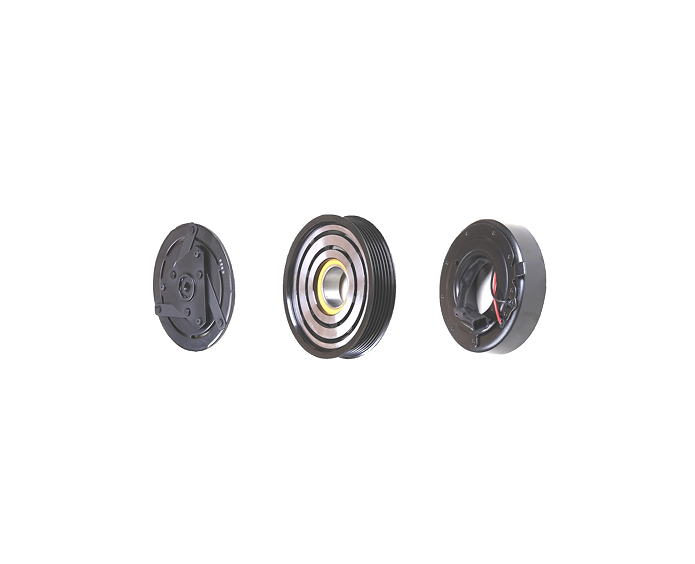
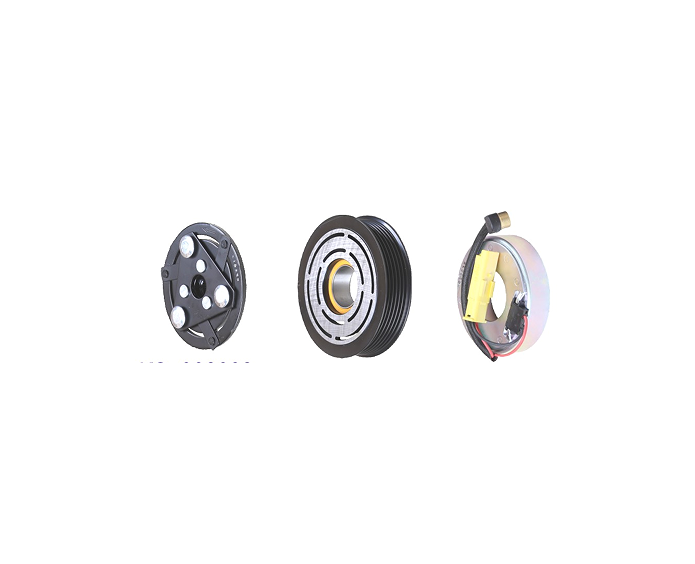
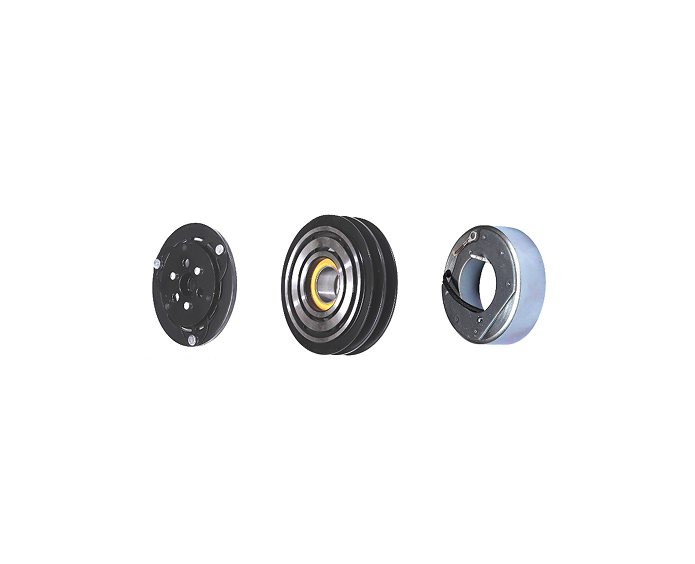
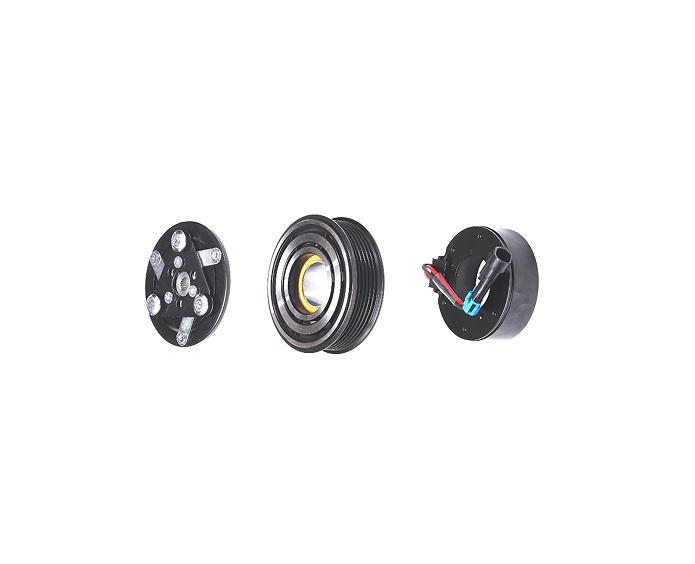
Compressor clutches are one of the most important categories in aftermarket AC repair.
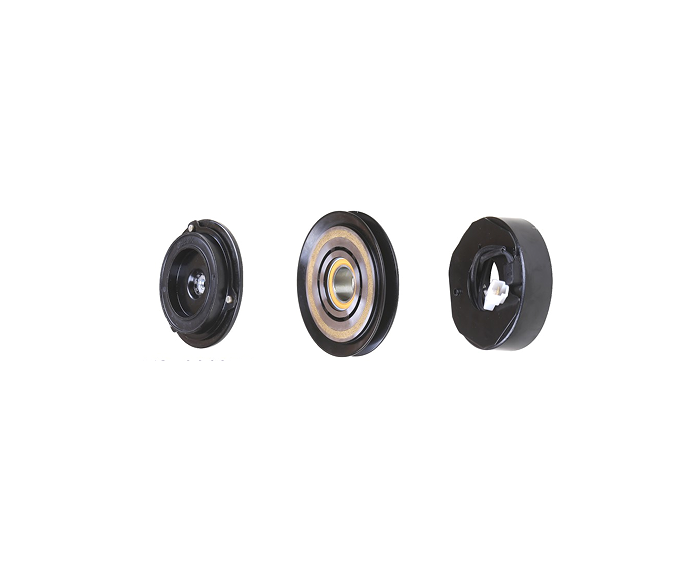
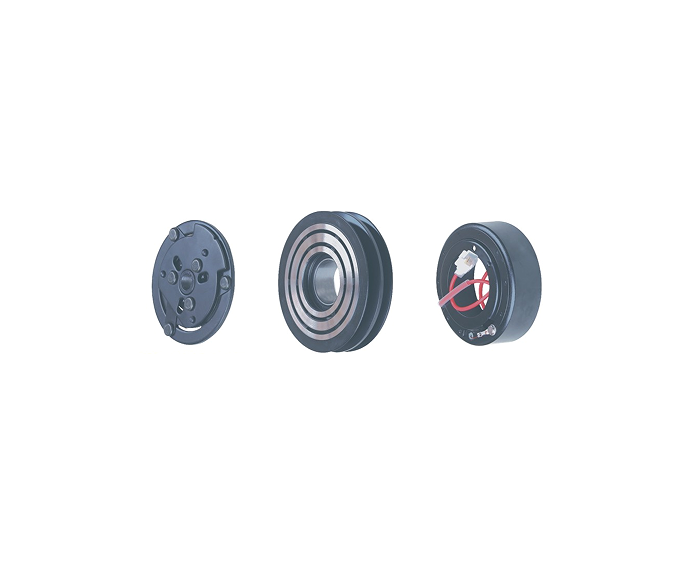
A clutch assembly may include:
- Pulley
- Bearing
- Electromagnetic coil
- Hub
- Armature plate
- Mounting components
The main challenge in compressor clutch wholesale is accurate identification.
Important specifications include:
| Specification | Importance |
|---|---|
| OE reference | Confirms application |
| Compressor model | Matches compressor family |
| Pulley diameter | Ensures belt alignment |
| Groove number | Matches belt system |
| Bearing size | Ensures mechanical fit |
| Coil voltage | Ensures electrical compatibility |
| Connector | Matches vehicle wiring |
| Hub interface | Ensures shaft connection |
A professional supplier should help buyers confirm these details before shipment.
For related clutch products, buyers can review the KASEN automotive AC clutch products.
Electric AC Compressor Wholesale
Electric compressors are becoming an increasingly important category within the automotive HVAC market as hybrid and electric vehicles continue to expand globally.
However, electric compressors should not simply be added to a traditional compressor catalogue.
They represent a different technical category with different purchasing requirements.
Unlike conventional belt-driven compressors, electric compressors operate through an integrated electric motor system.
Important sourcing information includes:
- Vehicle platform
- OE reference
- Operating voltage
- Electrical connector
- Control communication
- Refrigerant type
- Lubricant specification
- Mounting structure
- Thermal-management application
For wholesalers entering EV and hybrid markets, the biggest mistake is treating electric compressors as direct replacements for conventional compressors.
The product identification logic is different.
A traditional compressor database may focus heavily on:
- Pulley
- Belt groove
- Clutch
- Bearing
- Engine application
An electric compressor database needs additional fields:
- Voltage
- Controller type
- Connector
- Vehicle electronic architecture
- Battery thermal-management requirements
Buyers can review the electric compressor and new energy AC compressor range when developing EV-related product categories.
Control Valves and Expansion Valves in Wholesale Programs
Many automotive AC parts wholesalers underestimate the importance of valves.
Although smaller than compressors or clutch assemblies, valves can directly affect system performance.
The two categories should be separated.
Compressor Control Valve
Control valves are often associated with variable displacement compressors.
Important matching information may include:
- Compressor family
- Valve design
- Electrical connection
- Vehicle application
- Control system
A visually similar valve may not work correctly if it does not match the compressor design.
Expansion Valve
Expansion valves control refrigerant flow into the evaporator.
Selection factors may include:
- Vehicle application
- Refrigerant system
- Port configuration
- OE reference
- HVAC design
For wholesalers, valves should not be managed as generic products.
They require application-specific information.
Bearings, Coils, and Component-Level Wholesale Opportunities
Complete assemblies are not the only opportunity in automotive AC parts wholesale.
Many markets have strong demand for individual components.
This is especially true where repair specialists rebuild compressors or repair clutch systems.
Compressor Clutch Bearings
Bearings require accurate dimensional control.
Important information includes:
- Inner diameter
- Outer diameter
- Width
- Bearing reference
- Compressor or pulley application
A bearing that appears similar may still create:
- Noise
- Excessive play
- Pulley instability
- Premature failure
Clutch Coils
Coils require attention to:
- Voltage
- Resistance
- Dimensions
- Connector
- Mounting structure
- Compressor application
Incorrect coil selection can create electrical problems even when the mechanical assembly appears correct.
Seals and O-Rings
Sealing products may appear simple, but material compatibility matters.
Important considerations include:
- Refrigerant type
- Lubricant compatibility
- Temperature environment
- Application requirements
A complete wholesale program should decide whether these components are:
- Independent sales products
- Service accessories
- Supporting items for compressor repair customers
How to Build an Inventory Strategy for Auto Air Conditioning Parts Wholesale
One of the biggest challenges in automotive AC parts wholesale is inventory control.
The market contains thousands of possible references, but not every SKU deserves the same investment.
A professional inventory strategy divides products according to demand and commercial value.
Tier 1: High-Volume Core Products
These products generate regular sales and should receive stronger inventory support.
Typical characteristics:
- Stable demand
- Frequent customer requests
- Clear application data
- Predictable reorder cycles
For these products, wholesalers should maintain:
- Higher stock availability
- Better product documentation
- Faster replenishment
- Strong sales support
Examples may include popular compressor references, common clutch assemblies, and frequently replaced components.
Tier 2: Medium-Demand Products
These products sell regularly but do not justify the same inventory depth.
The strategy should focus on:
- Accurate catalogue information
- Controlled stock levels
- Scheduled replenishment
- Supplier responsiveness
Tier 3: Long-Tail Applications
Long-tail products help distributors serve difficult customer requests.
However, they create inventory risks.
For these products, buyers may consider:
- Lower stock quantities
- Supplier replenishment
- Mixed-SKU ordering
- Customer pre-orders
The goal is market coverage without excessive capital investment.
Tier 4: New Technology Products
Electric compressors and newer EV-related components often belong in a separate development category.
Before building large inventory, analyze:
- Regional EV adoption
- Customer demand
- Repair capability
- Supplier support
- Return risk
A controlled expansion is usually better than immediately purchasing large quantities.
Why Product Data Management Determines Wholesale Success
In automotive AC parts wholesale, product information is not only a technical document.
It directly affects sales performance.
A strong product database allows companies to:
- Answer customer questions faster
- Reduce incorrect quotations
- Train sales teams
- Improve online listings
- Manage warehouse operations
- Support repeat orders
Each product should have a clear information structure.
A recommended record includes:
| Data Field | Purpose |
|---|---|
| Buyer SKU | Internal identification |
| Supplier SKU | Supplier communication |
| OE number | Cross-reference |
| Product category | Classification |
| Vehicle application | Fitment |
| Compressor model | Technical matching |
| Main specifications | Product confirmation |
| Photos | Visual reference |
| Packaging information | Warehouse control |
| Revision record | Repeat-order management |
Without this information, companies often depend on individual employees remembering previous purchases.
That creates unnecessary risk when teams change.
Avoid Managing Products Only by Vehicle Brand
A common mistake in automotive AC parts wholesale is using vehicle brands as the main product structure.
For example:
“Toyota AC parts”
“Ford compressor”
“BMW clutch”
These descriptions are useful for marketing, but they are not enough for technical purchasing.
The same brand can include:
- Different models
- Different years
- Different engines
- Different compressor suppliers
- Different AC systems
A stronger structure combines:
Vehicle information + OE reference + component specification + supplier model
This makes the product easier to identify across sales, purchasing, and customer service departments.
The Importance of Mixed-SKU Orders
Many wholesale buyers do not purchase one product repeatedly.
They purchase a combination of:
- Compressors
- Clutches
- Bearings
- Valves
- Sensors
- Service parts
This creates challenges in:
- Quotation
- Production planning
- Packaging
- Shipping
- Warehouse receiving
A professional mixed-SKU order should clearly define:
- Product code
- Quantity
- Application
- Packaging
- Label requirements
- Delivery schedule
This reduces errors during large shipments.
How to Evaluate an Automotive AC Parts Supplier
A supplier evaluation should go beyond price.
A reliable automotive AC parts supplier should demonstrate capability in several areas.
Product Range Capability
A supplier should understand multiple categories, including:
- Compressors
- Electric compressors
- Compressor clutches
- Bearings
- Valves
- Related AC components
A broader product understanding can simplify sourcing for buyers managing multiple categories.
Technical Matching Ability
Ask:
- Can the supplier match OE references?
- Can they identify compressor models?
- Can they confirm missing information?
- Can they support sample verification?
A supplier that asks technical questions is often reducing future risk.
Quality Management
Instead of asking only:
“Do you have quality control?”
Ask:
- Which product characteristics are checked?
- How are similar SKUs separated?
- How are samples recorded?
- How are repeat orders controlled?
- How are quality issues traced?
The goal is not just inspection.
The goal is consistency.
OEM and Private Label Support
Some wholesalers eventually develop their own brands.
A supplier supporting this model should understand:
- Buyer SKU
- Packaging requirements
- Label information
- Product identification
- Sample approval
- Revision management
Private label is not only about printing a logo.
It requires a controlled product system.
Buyers interested in customized programs can review the KASEN OEM AC parts information.
How to Prepare a Better RFQ for Auto Air Conditioning Parts Wholesale
A well-prepared RFQ can significantly improve the efficiency of an auto air conditioning parts wholesale project.
Many purchasing delays happen because suppliers receive incomplete information.
For example:
“Please quote compressor and clutch parts.”
This does not provide enough information to confirm the correct products.
A professional RFQ should help suppliers understand:
- What products are required
- Which applications they serve
- What quantity is expected
- Whether customization is needed
- What market requirements apply
A complete RFQ normally includes several sections.
Company and Market Information
Provide:
- Company type
- Target country or region
- Customer channel
- Main vehicle brands
- Sales model
- Estimated purchasing frequency
This helps suppliers recommend a more suitable product mix.
A distributor serving repair shops may need different products compared with an e-commerce seller.
A fleet supplier may prioritize commercial vehicles.
A private-label brand may prioritize packaging and product consistency.
Product Information
For each product line, provide:
- Product category
- OE/reference number
- Vehicle application
- Compressor model
- Required quantity
- Existing supplier information if available
- Photos or drawings
- Technical requirements
For example:
Compressor RFQ
Include:
- Compressor model
- OE number
- Vehicle model
- Engine
- Refrigerant
- Mounting information
Compressor Clutch RFQ
Include:
- Compressor reference
- Pulley diameter
- Groove number
- Bearing information
- Coil voltage
- Connector photo
Electric Compressor RFQ
Include:
- Vehicle platform
- Voltage
- Connector
- Control information
- Refrigerant
- Lubricant requirement
The more complete the information, the lower the chance of receiving an incorrect quotation.
Packaging and Branding Requirements
If the project involves private label or branded products, include:
- Brand name
- Packaging style
- Label requirements
- Barcode
- Buyer SKU
- Carton requirements
- Language requirements
- Artwork availability
Packaging should always be connected to the correct product reference.
A common wholesale problem is not product quality, but incorrect identification after shipment.
Delivery and Commercial Requirements
Include:
- Target order date
- Required delivery schedule
- Destination
- Shipping preference
- Order quantity
- Payment expectations
- Inspection requirements
This allows suppliers to provide a more realistic quotation.
Why Sample Approval Matters in Wholesale Automotive AC Parts
For new products, sample approval should happen before large-scale purchasing.
A sample allows buyers to confirm:
- Product identity
- Application
- Dimensions
- Appearance
- Packaging
- Technical specifications
However, the value of a sample depends on documentation.
A sample that is approved but not recorded creates future confusion.
A proper sample record should include:
| Item | Information |
|---|---|
| Buyer SKU | Internal customer code |
| Supplier SKU | Supplier reference |
| OE reference | Application reference |
| Product photos | Visual confirmation |
| Technical data | Approved specifications |
| Packaging | Approved presentation |
| Revision | Change tracking |
This helps future purchasing teams identify exactly what was approved.
Common Mistakes in Auto Air Conditioning Parts Wholesale
Building a wholesale automotive AC business involves many decisions.
Several mistakes appear repeatedly.
Mistake 1: Buying Based Only on Price
Price is important, but it should not be the only factor.
A lower purchase price may create additional costs through:
- Wrong-fitment returns
- Customer complaints
- Replacement freight
- Warehouse handling
- Lost sales opportunities
The better measurement is total sourcing cost.
Mistake 2: Selecting Products Without Market Analysis
A large catalogue does not guarantee sales.
A distributor should analyze:
- Local vehicle population
- Customer demand
- Repair trends
- Seasonal demand
- Existing competitors
The right 500 SKUs may be more valuable than an uncontrolled 5,000-SKU catalogue.
Mistake 3: Using Vehicle Model as the Only Matching Method
Vehicle information helps, but it is not enough.
Always combine:
- Vehicle data
- OE reference
- Component specification
- Compressor information
Mistake 4: Ignoring Long-Tail Inventory Risk
Long-tail products help serve customers, but too much stock can reduce cash flow.
Use:
- Sales data
- Customer enquiries
- Supplier availability
- Regional demand
to decide inventory depth.
Mistake 5: Mixing Electric and Traditional Compressor Data
Electric compressors require different information.
Do not use the same database structure for:
- Belt-driven compressors
- Electric compressors
Electric products need:
- Voltage
- Connector
- Control information
- Vehicle platform
Mistake 6: Creating Private Label Too Early
Private label can improve brand value, but it also creates additional responsibility.
Before customization, confirm:
- Product demand
- Repeat orders
- Sales forecast
- Inventory turnover
Mistake 7: Not Recording Product Changes
A supplier may improve a product or update packaging.
Without revision control, buyers may not know:
- What changed
- When it changed
- Whether it affects compatibility
Mistake 8: Treating All AC Components the Same
Compressors, clutches, bearings, valves, sensors, and tools have different technical requirements.
Each category needs different product data.
How to Create a Profitable Auto Air Conditioning Parts Wholesale Portfolio
A successful portfolio normally combines three strategies.
Strategy 1: Cover High-Demand Replacement Products
These products create regular sales.
Examples:
- Popular compressor models
- Common clutch assemblies
- Frequently replaced components
Focus on:
- Availability
- Accurate information
- Fast replenishment
Strategy 2: Add Technical Depth
Technical products create differentiation.
Examples:
- Compressor components
- Electric compressors
- Control valves
- Hybrid vehicle parts
These products require stronger technical support but can create higher-value customer relationships.
Strategy 3: Build Customer-Specific Solutions
Different buyers need different solutions.
A repair chain may need:
- Fast-moving replacement parts
A rebuilder may need:
- Individual components
A private-label company may need:
- Customized packaging
A fleet supplier may need:
- Commercial vehicle coverage
The strongest wholesalers do not simply sell products.
They solve customer sourcing problems.
How Automotive AC Parts Wholesale Is Changing With EV Growth
The automotive HVAC market is gradually changing.
Electric and hybrid vehicles are increasing demand for:
- Electric compressors
- New thermal-management components
- High-voltage compatible systems
- Vehicle-specific HVAC solutions
However, conventional vehicles remain important in many markets.
A practical wholesale strategy should support both.
The future market is not:
“Traditional compressors disappear.”
It is:
“Automotive AC suppliers need broader technical capability.”
Distributors should prepare by:
- Separating product categories
- Training sales teams
- Updating databases
- Adding EV-related product information
- Understanding different sourcing requirements
Supplier Questions Before Starting a Wholesale Program
Before selecting a supplier, ask:
Product Questions
- What categories can you supply?
- How are products identified?
- Can you support OE matching?
- Do you provide application data?
Quality Questions
- How are products inspected?
- How are similar SKUs separated?
- How are samples approved?
- How are changes managed?
Commercial Questions
- What are standard MOQ requirements?
- Can mixed-SKU orders be supported?
- What packaging options are available?
- How are repeat orders handled?
Technical Questions
- Can you support compressor matching?
- Can you support clutch component matching?
- Can you provide electric compressor specifications?
- Can you review drawings or samples?
A supplier that can answer these questions clearly is more likely to support long-term cooperation.
Why KASEN Can Support Global Automotive AC Parts Buyers
KASEN focuses on automotive air conditioning components, including:
- Auto AC compressors
- Compressor clutches
- Electric compressors
- Bearings
- Control valves
- Related AC parts
The company provides products for aftermarket and OEM-related applications and supports buyers looking for automotive HVAC components.
For buyers developing an auto air conditioning parts wholesale program, the important starting information includes:
- Target market
- Product categories
- Vehicle applications
- OE references
- Expected quantities
- Packaging requirements
You can review the KASEN automotive AC product categories or learn more about the company through the KASEN About Us page.
Auto Air Conditioning Parts Wholesale Checklist
Before placing a wholesale order, confirm:
| Area | Questions |
|---|---|
| Market | Who are the target customers? |
| Products | Which categories are required? |
| Applications | Which vehicles are covered? |
| Fitment | Are OE and technical references confirmed? |
| Inventory | Which SKUs need deep stock? |
| Quality | How are products verified? |
| Samples | Are key products approved? |
| Packaging | Are labels and cartons correct? |
| Repeat orders | Can the same product be reordered? |
| Supplier | Can technical questions be answered? |
A strong checklist helps buyers move from simple purchasing to professional category management.
Frequently Asked Questions
What products are included in auto air conditioning parts wholesale?
Auto air conditioning parts wholesale can include compressors, electric compressors, compressor clutches, clutch coils, bearings, valves, sensors, switches, seals, O-rings, and related service products. The exact product mix depends on the target market and customer requirements.
How should I choose products for an automotive AC wholesale business?
Start with customer demand, vehicle population, repair trends, and local market conditions. Build a core range first, then expand into long-tail and emerging categories based on sales data.
Why is fitment information important in automotive AC parts wholesale?
Because many AC components have similar appearances but different technical specifications. Accurate OE references, compressor models, dimensions, and electrical information help prevent wrong-fitment problems.
Should I stock every available AC part?
No. A profitable wholesale range should balance market coverage with inventory efficiency. Use demand analysis and product tiers to decide which items deserve deeper stock.
Can I buy different AC parts in one wholesale order?
Yes. Mixed-SKU orders are common, especially for distributors. However, each product should have clear identification, quantity, packaging, and application information.
How can I reduce returns when selling automotive AC parts?
Use accurate product data, train sales teams, confirm applications before shipment, maintain approved samples, and record return reasons to improve future purchasing decisions.
Is private label suitable for all automotive AC products?
No. Private label is most suitable for stable, high-volume products where branding and repeat orders create additional value. Long-tail products may be better managed with standard packaging.
What information is needed for electric compressor wholesale?
Electric compressor sourcing requires vehicle platform, OE reference, voltage, connector, control information, refrigerant, lubricant requirements, and mounting details.
How do I evaluate an automotive AC parts supplier?
Evaluate product range, technical matching ability, quality control, sample process, repeat-order management, communication ability, and support for your target market.
How can I request an auto air conditioning parts wholesale quotation?
Prepare your product list, OE references, vehicle applications, quantities, target market, and packaging requirements. Then submit your requirements through the KASEN contact page.
Conclusion
A successful auto air conditioning parts wholesale program depends on accurate product selection, reliable fitment data, controlled inventory, and consistent supplier cooperation. The goal is not simply to purchase more SKUs, but to build a manageable product system that reduces risk and supports repeat sales.
Review KASEN’s automotive AC product range or contact KASEN with your product requirements, OE references, and wholesale plans to discuss suitable sourcing solutions.