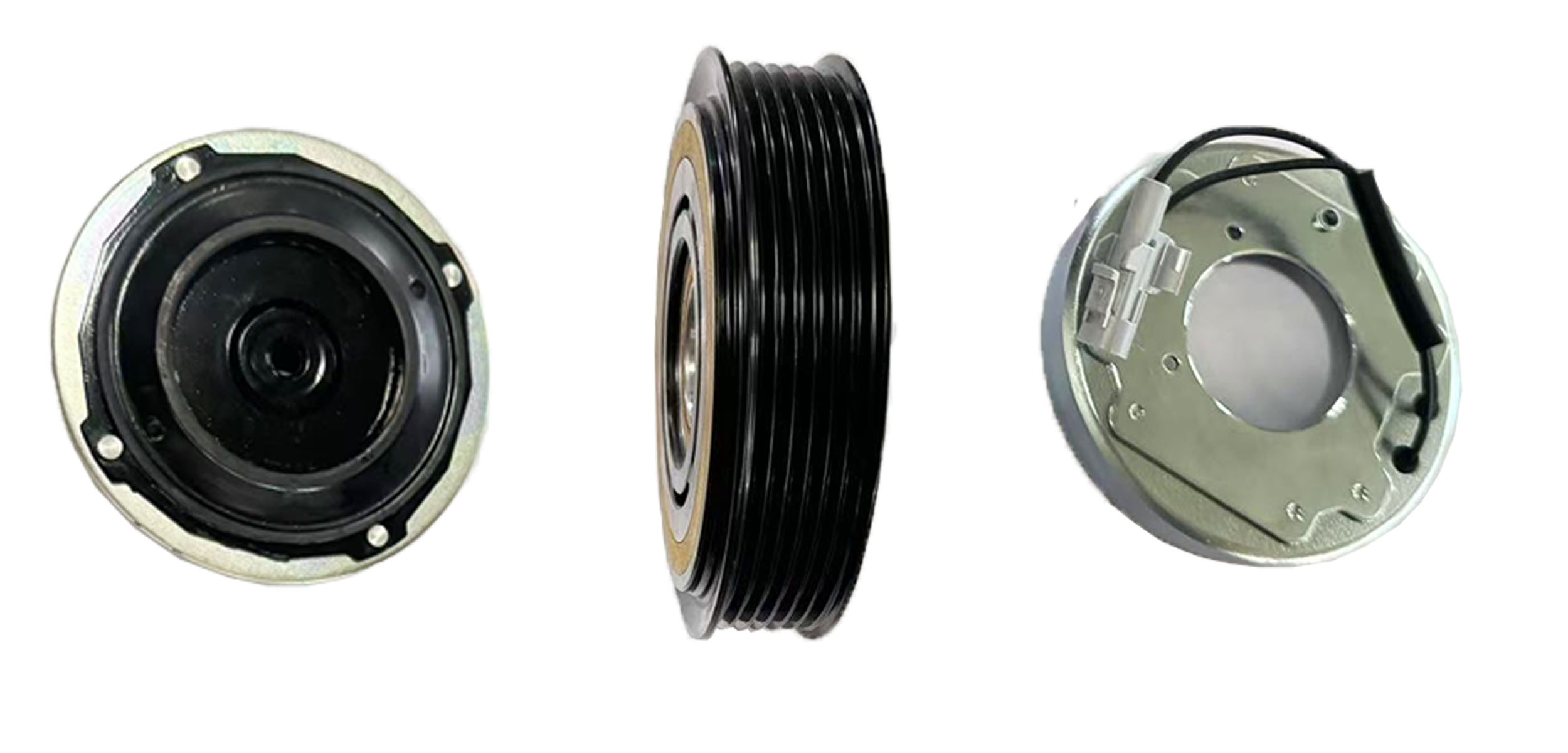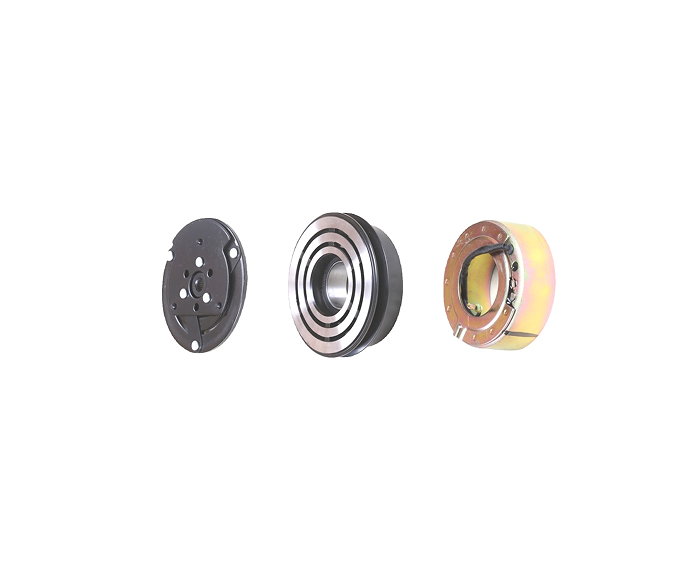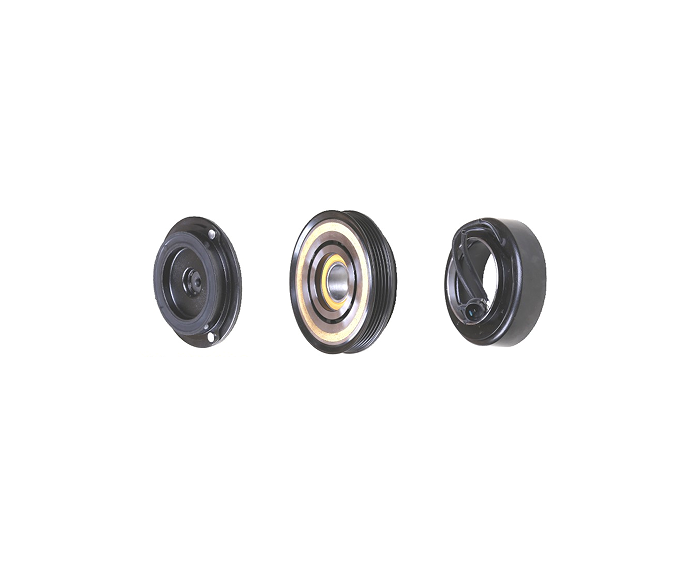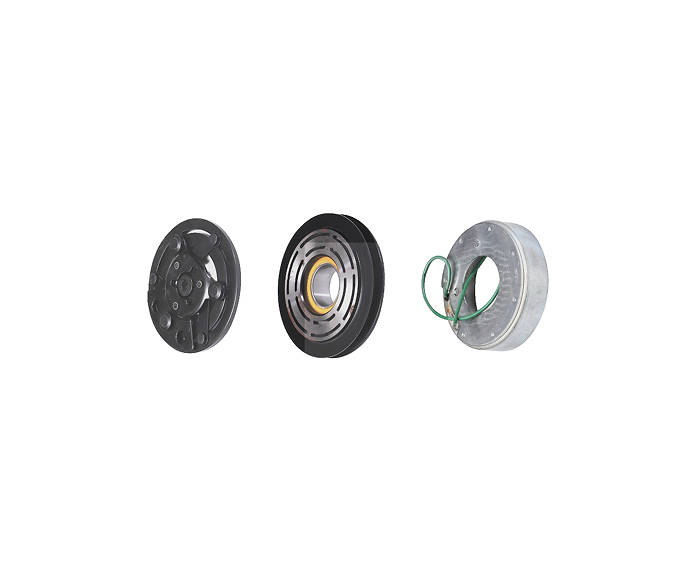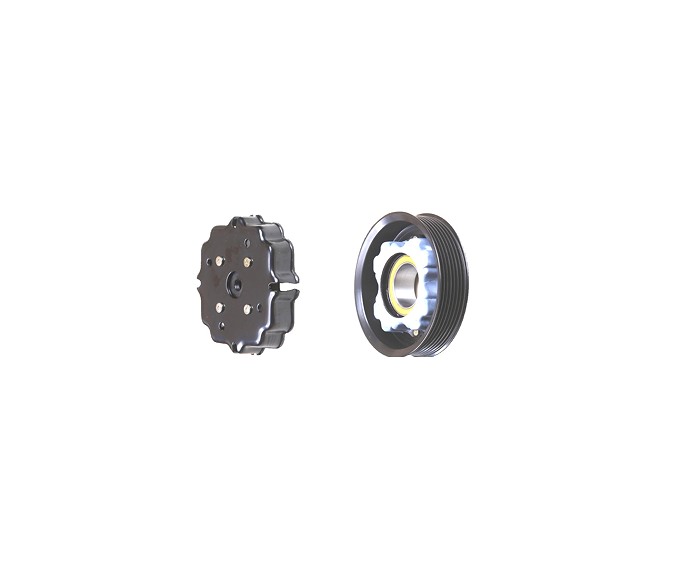

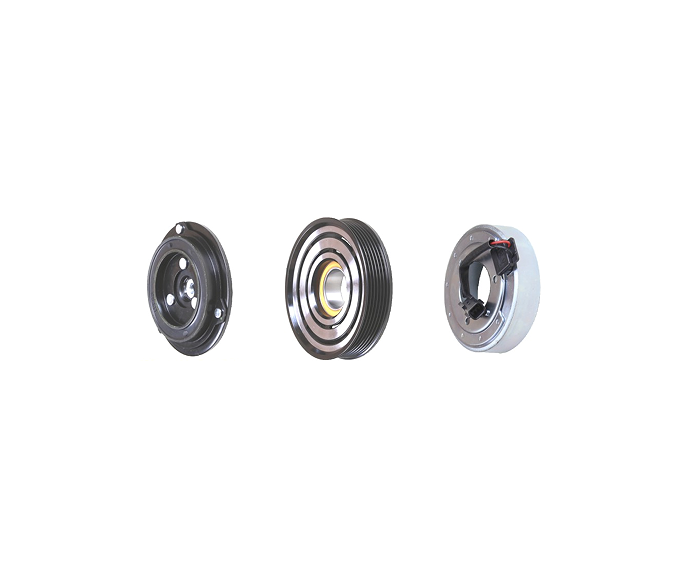
Noise, Vibration, and Harshness (NVH) Control: How KASEN A/C Compressor Clutch Ensures Silent and Smooth Cooling Performance
Quiet Operation Defines Perceived Quality
In the automotive HVAC system, the A/C compressor clutch directly influences how a vehicle “feels” to the driver.
Even when cooling performance is excellent, excessive clicking, vibration, or belt resonance can degrade comfort and perceived quality.
KASEN addresses NVH not as an afterthought, but as a core design objective—integrating precision balancing, friction acoustics, and vibration damping from the earliest stages of clutch development.
1. The Science Behind NVH in A/C Clutches
NVH originates from three interconnected factors:
-
Impulse Noise: Sudden magnetic engagement or release.
-
Mechanical Vibration: Rotational imbalance or bearing misalignment.
-
Acoustic Transmission: Sound propagation through the compressor body or vehicle chassis.
KASEN’s engineering model treats these as a single system—reducing not only source noise but also transmission and resonance.
2. Magnetic Engagement Smoothing
A traditional clutch creates an audible “click” when the coil energizes and pulls the friction plate.
KASEN’s design employs progressive magnetic engagement—a controlled current ramp that builds magnetic force gradually over milliseconds.
Measured Benefits:
-
Engagement sound reduced from 62 dB → 54 dB
-
Reduced torque shock by 28%
-
Increased coil lifespan by reducing current surge fatigue
This controlled magnetization, paired with advanced insulation damping, achieves both quiet operation and longer coil durability.
3. Dynamic Balancing and Rotational Stability
Rotational imbalance is one of the leading causes of vibration and belt noise.
KASEN employs 6,000 RPM dynamic balancing for every pulley assembly, ensuring a residual imbalance of ≤ 1.0 g·mm.
| Component | Standard Deviation Before Balance | KASEN Balanced Tolerance |
|---|---|---|
| Pulley Assembly | 4.8 g·mm | 0.9 g·mm |
| Hub and Plate | 3.2 g·mm | 0.7 g·mm |
| Bearing Housing | 2.1 g·mm | 0.5 g·mm |
This precision balancing minimizes torsional vibration, extending both belt and compressor bearing life—particularly critical in compact engine bays where vibration tends to amplify.
4. Friction Material and Contact Acoustics
Clutch engagement sound often originates at the friction interface.
KASEN uses graphite-ceramic composite linings that combine high torque capacity with smooth acoustic damping.
Advantages:
-
Stable friction coefficient from 80°C–180°C
-
Reduced “stick-slip” during start/stop cycles
-
No metallic chatter under variable humidity
-
Consistent engagement feel over extended cycles
Paired with surface micro-finishing, this ensures a controlled grip and release profile that minimizes audible resonance.
5. Vibration Path Isolation and Bearing Selection
Vibration transfer can occur through the clutch hub and into the compressor casing.
KASEN combats this by introducing vibration-isolated bearing mounts and elastomeric coupling buffers, which decouple micro-vibrations from the drive belt path.
Technical Highlights:
-
Dual-row angular contact bearings with high axial stiffness
-
Noise level ≤ 30 phon (ISO 7779 acoustic class)
-
Controlled preload to eliminate radial play without friction loss
This ensures that even at 6,000 RPM, the compressor clutch operates with minimal vibration transmission into the vehicle cabin.
6. Resonance and Frequency Tuning
Every rotating system exhibits natural frequency points where vibration peaks.
KASEN employs finite element modal analysis (FEMA) to identify and tune these resonance frequencies above the operational range.
-
Primary resonance shifted from 1,200 Hz → 2,000 Hz
-
Vibration amplitude reduced by 38%
-
Peak transmission damped through reinforced pulley ribs
By tuning structural geometry, KASEN prevents harmonic amplification, especially during high-speed A/C cycling or idle-stop conditions.
7. NVH Testing and Validation Protocol
KASEN validates every clutch model through a series of laboratory NVH tests simulating real-world conditions:
| Test Type | Equipment / Method | Acceptance Criteria |
|---|---|---|
| Acoustic Chamber Test | Microphone array @ 1m distance | < 58 dB(A) |
| Vibration Spectrum Analysis | Accelerometer + FFT analyzer | < 0.5 mm/s RMS |
| Thermal-Vibration Test | −30°C to +150°C chamber | No resonance drift |
| Endurance NVH Test | 300,000 engagement cycles | No increase in noise level |
Results confirm that Kasen clutches maintain stable acoustic signatures throughout their lifecycle, unlike generic aftermarket components which often degrade within 50,000 cycles.
8. Real-World Applications and Customer Feedback
KASEN’s NVH-optimized clutches are now integrated into multiple OEM and Tier-1 A/C compressor systems, serving compact sedans, SUVs, and hybrid vehicles.
Field data from distributors shows:
-
Reduced customer complaints by 42% regarding A/C noise
-
Extended belt lifespan by 25%
-
Improved compressor efficiency due to smoother torque transfer
This real-world validation reinforces Kasen’s leadership in precision, comfort, and noise-free system operation.
9. The Link Between NVH and Brand Perception
Quiet, seamless operation directly shapes how drivers perceive vehicle refinement.
OEMs increasingly specify NVH thresholds for supplier qualification, meaning clutch manufacturers must integrate acoustic intelligence into their design process.
KASEN’s NVH engineering not only enhances cooling comfort but also elevates brand quality perception—a critical differentiator in modern automotive markets.
KASEN’s Commitment to Acoustic Engineering Excellence
Through precision balancing, material acoustics, and system-level vibration control, KASEN transforms the A/C compressor clutch into a silent mechanical performer.
Every rotation, engagement, and release is engineered for harmony between performance and comfort.
To learn more about our testing facilities, NVH development services, or OEM partnerships, visit the KASEN homepage or reach out through the contact page.
FAQ: NVH and A/C Compressor Clutch Performance
Q1. What causes most clutch-related noise in automotive A/C systems?
Common causes include excessive air gap, unbalanced pulley rotation, or low-quality friction materials.
Q2. How does Kasen achieve quieter engagement?
Through progressive magnetic engagement and surface-treated friction linings that absorb impact energy.
Q3. Does NVH testing differ for hybrid and electric vehicles?
Yes. EV systems demand tighter NVH control since engine masking noise is absent, requiring enhanced acoustic damping.
Q4. Can Kasen customize NVH levels for specific OEM standards?
Absolutely. Kasen offers parameter tuning for coil response, damping geometry, and material stiffness to meet regional noise regulations.