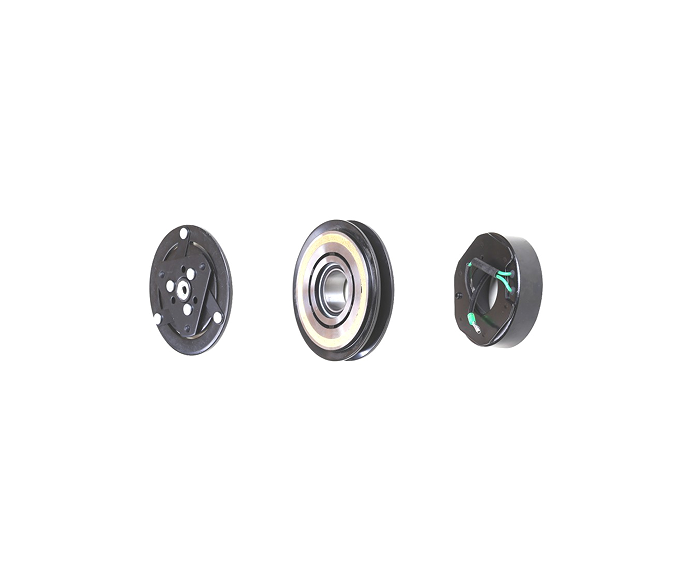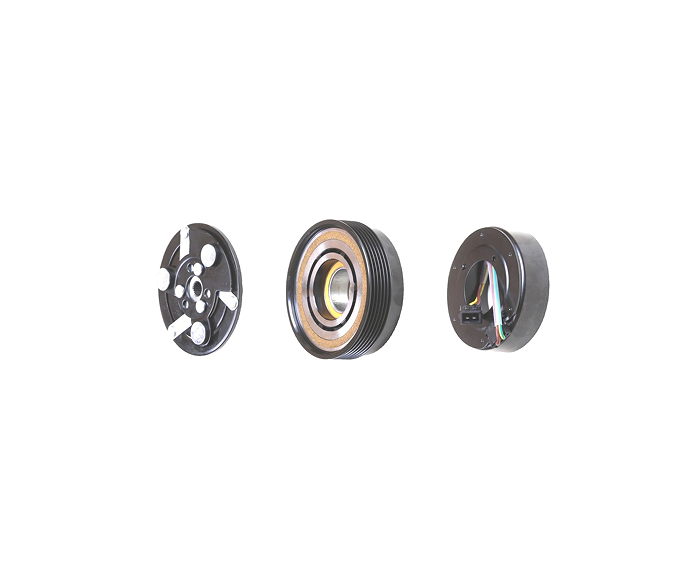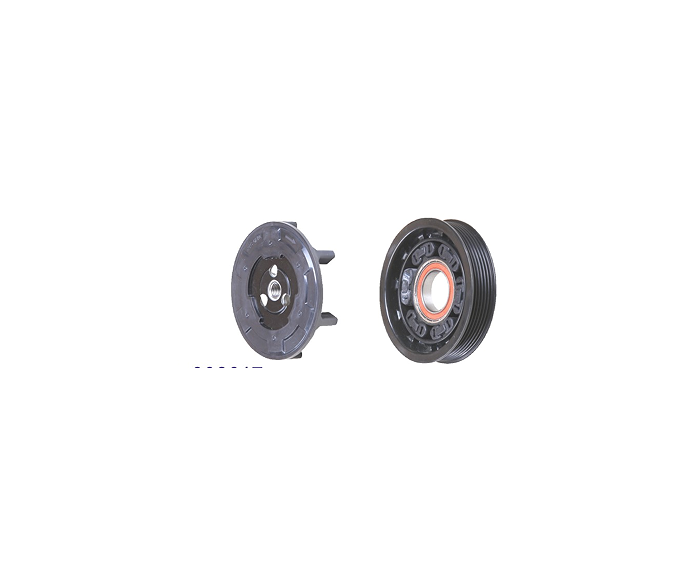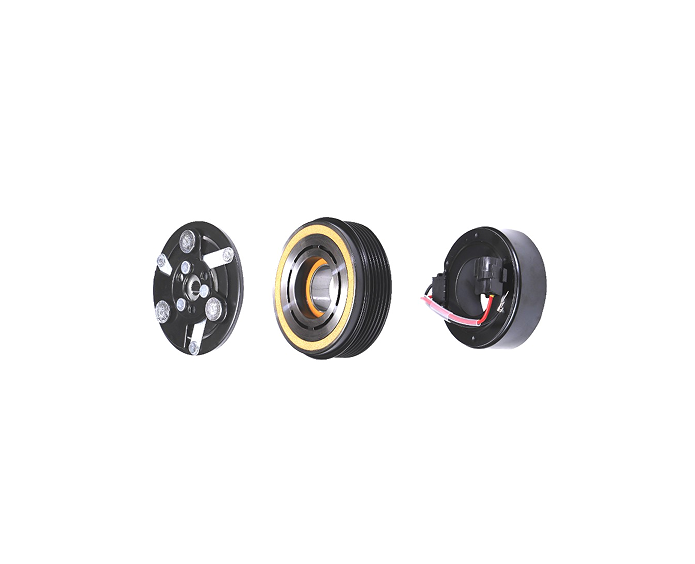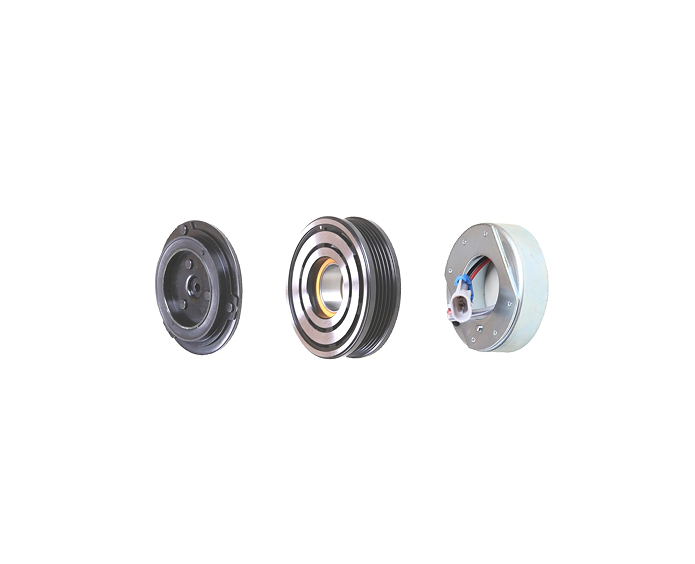

Modern vehicle AC systems demand precision. When the automotive air conditioner clutch fails to engage smoothly or slips under load, cooling efficiency drops and compressor wear accelerates.
The core challenge is balancing:
- Magnetic force generation
- Friction interface stability
- Thermal management
- Rotational alignment
Design science determines whether a clutch lasts 30,000 km or exceeds 100,000 km.
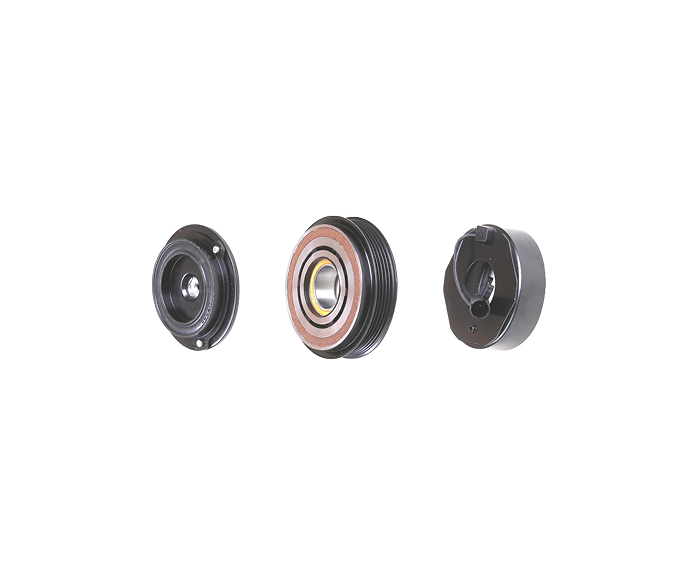
Electromagnetic Force and Torque Transfer Physics
At the heart of an automotive air conditioner clutch is an electromagnetic mechanism.
When voltage flows through the coil:
- Magnetic flux forms
- The armature plate is pulled inward
- Torque transfers to the compressor shaft
The force must exceed opposing mechanical resistance while avoiding excessive drag.
Too weak → slip
Too strong → unnecessary friction and heat
Precise coil resistance and air gap calibration define magnetic efficiency.
Friction Interface Mechanics
Torque transfer depends on friction material properties:
- Coefficient stability
- Surface hardness
- Thermal fade resistance
Under high load, glazing reduces contact effectiveness. Semi-metallic or reinforced composite compounds maintain performance better than standard organic materials.
The friction interface is a defining element in automotive air conditioner clutch durability.
Thermal Expansion and Heat Dissipation Modeling
Repeated engagement generates heat from:
- Friction contact
- Coil resistance
- Bearing load
Material expansion under heat alters air gap geometry.
If not properly engineered, thermal distortion weakens magnetic pull and accelerates wear.
Heat-resistant alloys and high-temperature insulation (Class F/H) significantly improve reliability.
Learn more about our manufacturing approach here:
https://www.gzkasen.com/about-us
Structural Alignment and Dynamic Balance
Rotational stability is not optional.
The pulley must maintain concentric alignment under:
- Belt tension
- Engine vibration
- High RPM operation
Imbalance increases noise and uneven friction pressure.
Precision machining ensures consistent automotive air conditioner clutch engagement.
Standard vs Scientifically Optimized Design
| Aspect | Basic Design | Optimized Design |
|---|---|---|
| Coil Insulation | Standard temp | High-temp Class F/H |
| Friction Compound | Organic | Reinforced composite |
| Bearing Spec | Standard | High-load sealed bearing |
| Air Gap Calibration | Manual | Laser measured |
Optimized engineering increases engagement stability and lifespan.
Explore our full product range here:
https://www.gzkasen.com/products
Application Contexts Where Design Matters Most
Advanced clutch design is critical in:
- Heavy trucks
- High ambient temperature regions
- Fleet vehicles with continuous AC demand
- Urban delivery vehicles
In these scenarios, the automotive air conditioner clutch experiences amplified stress.
Selection Considerations for Buyers
When evaluating suppliers, prioritize:
- Magnetic pull validation
- Heat endurance testing
- Engagement cycle durability
- Dimensional tolerance control
Scientific design reduces long-term warranty risk.
For frequently asked technical details, visit:
https://www.gzkasen.com/faqs
Frequently Asked Questions
Q1: What determines clutch torque capacity?
Magnetic strength and friction coefficient.
Q2: How does heat affect performance?
Thermal expansion can reduce magnetic efficiency and increase slip.
Q3: Is precision machining critical?
Yes. Air gap tolerance directly influences engagement stability.
Conclusion: Design Science Defines Reliability
The automotive air conditioner clutch is not a simple coupling device. It is a carefully engineered balance of magnetic physics, material science, and mechanical precision.
Scientific optimization ensures:
- Stable torque transmission
- Reduced thermal stress
- Long lifecycle durability
- Predictable performance
To explore precision-engineered automotive air conditioner clutch solutions built on disciplined design science, visit:
https://www.gzkasen.com/
For OEM cooperation and technical inquiries:
https://www.gzkasen.com/contact-us/