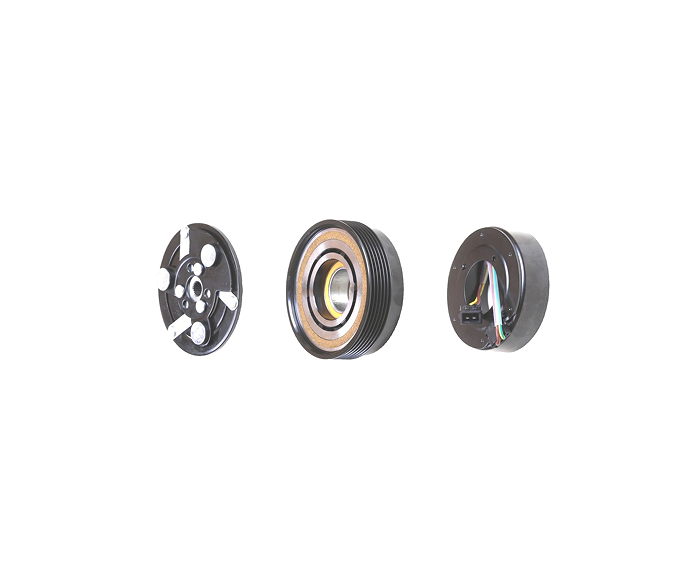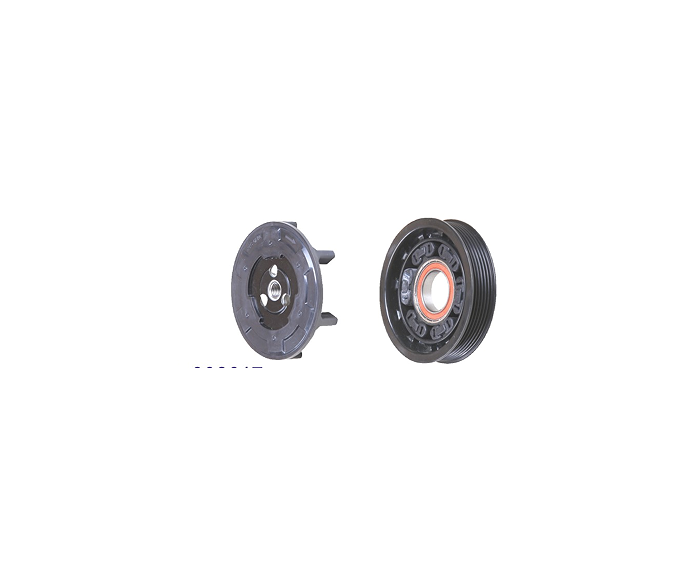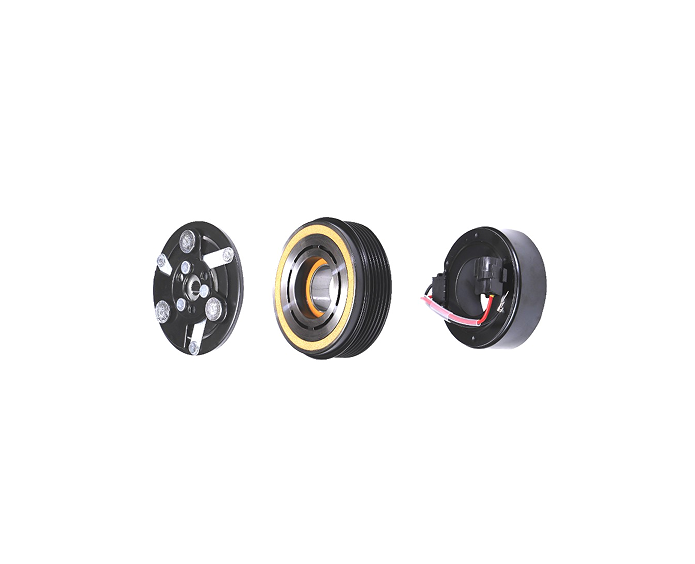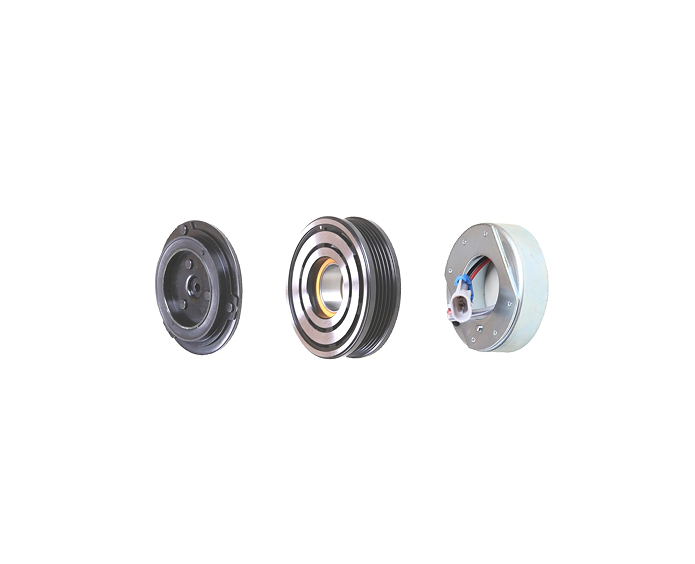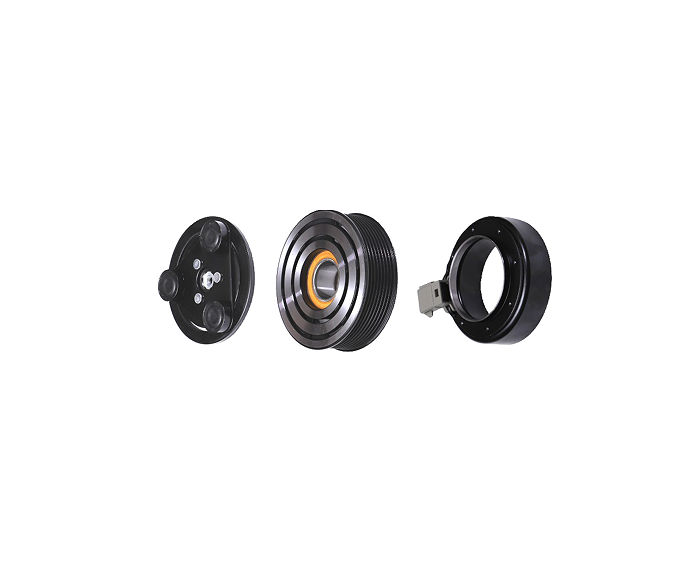

Under normal operation, the automotive air conditioner clutch engages thousands of times over its lifecycle. Each engagement generates friction heat. Each disengagement leaves residual thermal stress.
In high-temperature environments or heavy-duty applications, heat accumulation becomes the dominant failure driver.
When heat resistance is insufficient:
- Friction surfaces glaze
- Magnetic efficiency weakens
- Bearings lose lubrication stability
- Coil insulation degrades
The result is premature slip, unstable engagement, or complete failure.
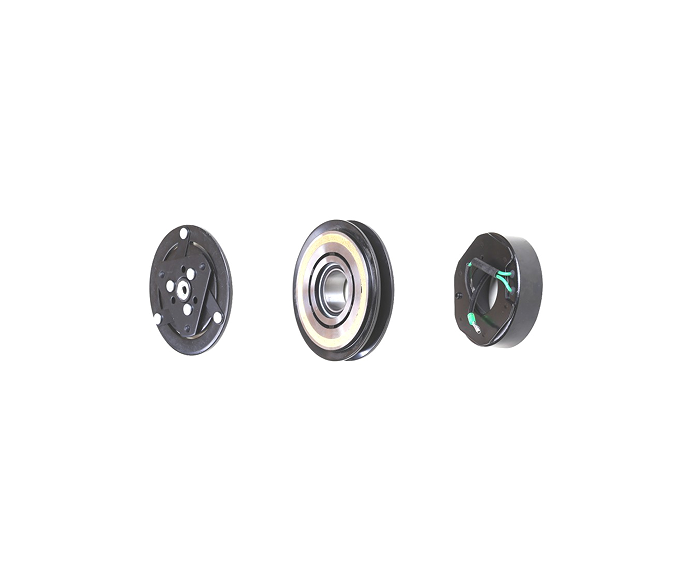
How Heat Builds Within the Clutch Assembly
Heat originates from three sources:
- Friction contact between pulley and armature
- Electromagnetic coil resistance
- Bearing rotational load
A high-performance automotive air conditioner clutch must manage all three simultaneously.
Thermal energy that cannot dissipate effectively will shorten lifecycle expectancy.
Friction Materials: First Line of Thermal Defense
Friction interfaces directly influence temperature rise.
Key material characteristics:
- High thermal conductivity
- Stable coefficient of friction
- Resistance to glazing
- Surface hardness stability
Organic compounds perform adequately in light-duty vehicles. Semi-metallic or reinforced composites perform better under high load.
Improved friction engineering directly enhances automotive air conditioner clutch heat resistance.
Coil Insulation and Thermal Endurance
The electromagnetic coil operates near engine heat zones.
Material considerations include:
- Class F or H insulation (155–180°C rating)
- Copper winding density stability
- Thermal cycling tolerance
When insulation fails, magnetic pull weakens, reducing torque transfer efficiency.
Electrical durability is inseparable from thermal durability.
Bearing Grease Stability Under Heat Stress
Heat impacts lubrication integrity.
High-temperature grease formulations must:
- Resist viscosity breakdown
- Maintain film thickness
- Prevent metal-to-metal contact
A heat-resistant automotive air conditioner clutch assembly integrates reinforced bearing design to reduce friction-induced temperature rise.
Standard vs Heat-Optimized Designs
| Feature | Standard Design | Heat-Optimized Design |
|---|---|---|
| Friction Compound | Organic | Reinforced composite |
| Coil Insulation | Class B/F | Class F/H |
| Bearing Grease | Standard temp | High-temp synthetic |
| Surface Coating | Basic | Corrosion-resistant |
Heat-optimized clutch assemblies demonstrate significantly improved durability under sustained load.
Practical Application Scenarios
Heat-resistant automotive air conditioner clutch assemblies are particularly important for:
- Heavy trucks
- Fleet vehicles
- High ambient temperature regions
- Urban stop-and-go traffic
- Commercial logistics operations
Under these conditions, thermal accumulation accelerates wear.
Selection Recommendations for Buyers
When selecting a clutch assembly, evaluate:
- Insulation temperature rating
- Friction material composition
- Lifecycle heat testing validation
- Bearing temperature tolerance
Choosing a low-cost unit without thermal validation often leads to higher long-term cost.
You can explore our manufacturing and validation standards here:
https://www.gzkasen.com/about-us
Browse our product range here:
https://www.gzkasen.com/products
For technical questions, visit:
https://www.gzkasen.com/faqs
Advantages of Heat-Resistant Automotive Air Conditioner Clutch Design
Enhanced heat resistance delivers:
- Reduced slip under load
- Longer friction surface lifespan
- Stable magnetic engagement
- Lower maintenance frequency
- Improved operational reliability
Heat management is not just about survival — it is about performance stability.
Frequently Asked Questions
Q1: How much heat can a clutch typically withstand?
High-quality assemblies operate reliably up to 155–180°C depending on insulation class.
Q2: Does heat resistance improve fuel efficiency?
Indirectly. Reduced slip lowers parasitic load and energy waste.
Q3: Is thermal testing necessary for aftermarket applications?
Yes. Especially in commercial or high-temperature environments.
Conclusion: Thermal Stability Defines Long-Term Reliability
Heat resistance is one of the most critical performance factors in an automotive air conditioner clutch.
Through optimized friction materials, reinforced insulation, and temperature-stable bearings, thermal durability ensures:
- Stable engagement
- Reduced failure risk
- Extended lifecycle
- Predictable performance
To explore precision-engineered automotive air conditioner clutch solutions designed for high-heat environments, visit:
https://www.gzkasen.com/
For OEM inquiries and technical consultation:
https://www.gzkasen.com/contact-us/