
Why Automotive Compressor Bearing Sourcing Is More Than a Size-Matching Task
An automotive compressor bearing may be small and relatively inexpensive, but for distributors and aftermarket buyers, an incorrect bearing can create costs far beyond its unit price.
The most common sourcing mistake is simple: a buyer provides an inner diameter, outer diameter, and width, receives a bearing with apparently matching dimensions, and assumes the application is confirmed.
In automotive air-conditioning systems, that may not be enough.
The bearing must work correctly with the compressor pulley, clutch structure, mounting fit, rotational speed, operating temperature, belt load, and actual vehicle application.
For a B2B buyer, the real purchasing objective is therefore not:
“Find a bearing with the same dimensions.”
It is:
“Build a repeatable bearing reference that fits the intended compressor, performs consistently, can be identified in inventory, and can be reordered without creating warranty or return problems.”
KASEN supplies bearings alongside compressor clutches, complete compressors, electric compressors, valves, and related automotive AC components. Buyers can start with the KASEN bearing range or browse the complete automotive AC product catalog.
What Does Automotive Compressor Bearing Mean?
In automotive AC aftermarket sourcing, the term automotive compressor bearing commonly refers to the bearing installed in the pulley or clutch pulley assembly of a conventional belt-driven air-conditioning compressor.
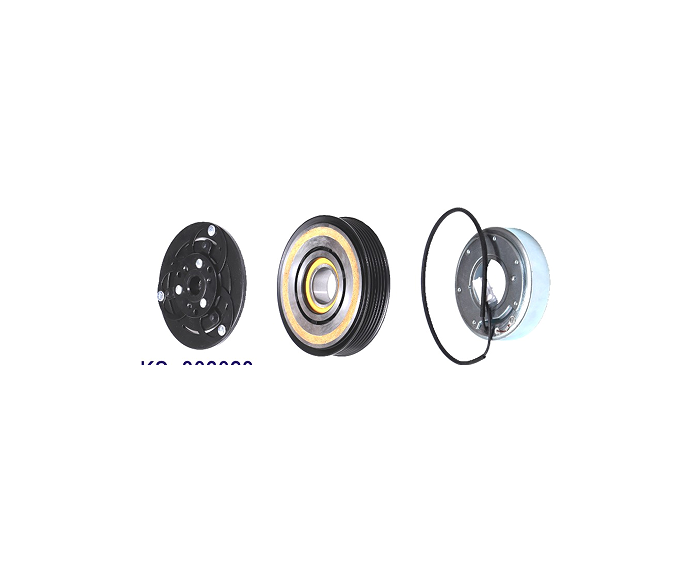
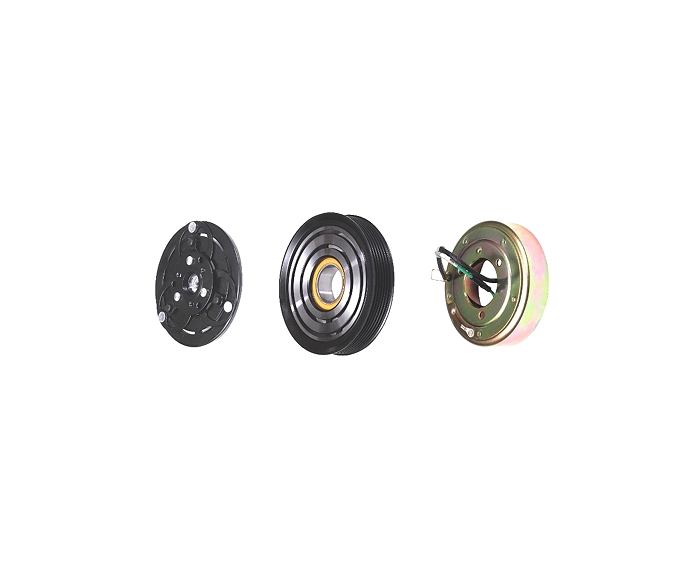
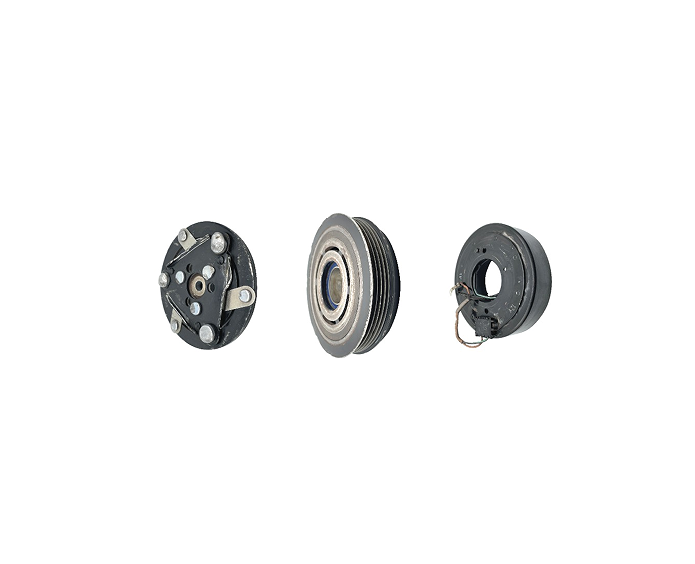
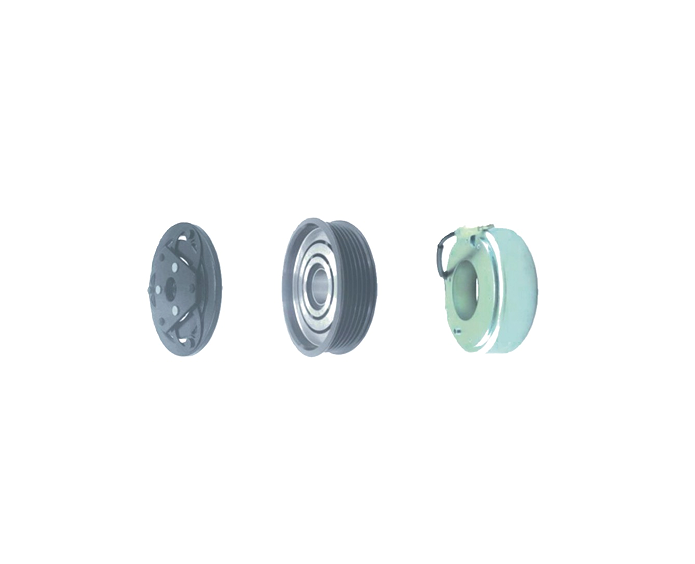
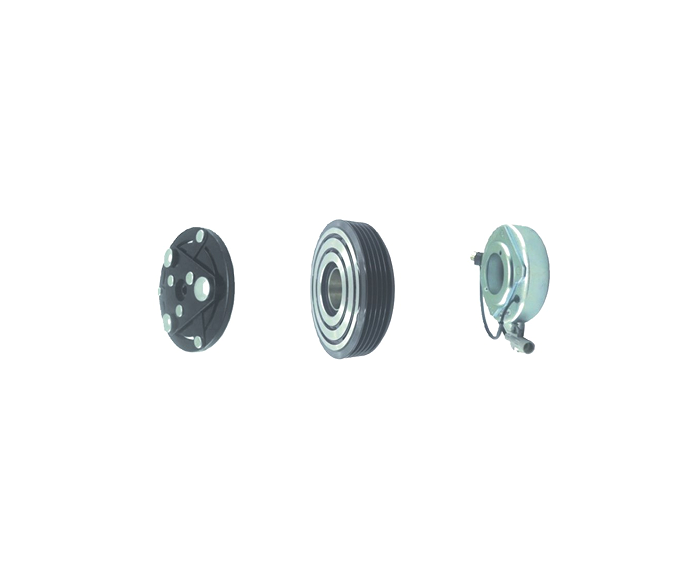
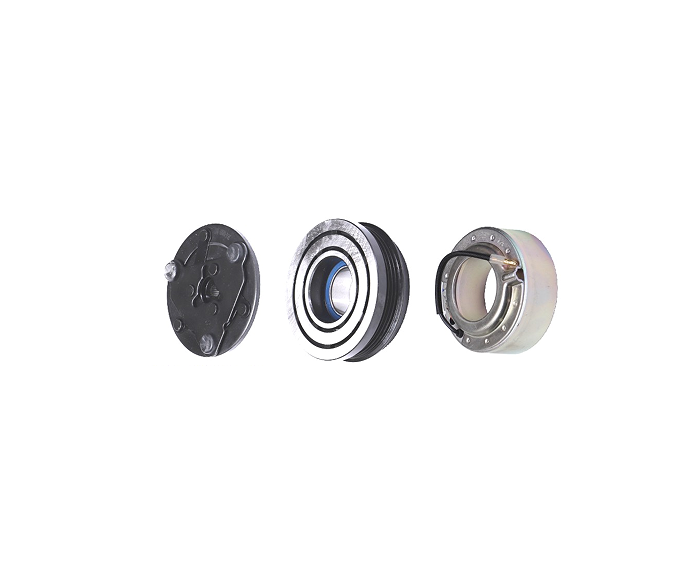
A typical clutch-driven compressor front assembly may include:
- Pulley
- Pulley bearing
- Electromagnetic clutch coil
- Hub or armature plate
- Compressor shaft
- Retaining components
The bearing allows the pulley to rotate smoothly around the compressor front housing or nose structure.
Important Application Boundary
This article focuses mainly on pulley and clutch bearing applications for belt-driven automotive AC compressors.
It should not be assumed that every internal bearing inside every compressor design is independently replaceable or interchangeable.
Electric compressors used in EV and hybrid applications also have a different drive architecture because they are electrically driven rather than powered through a conventional engine belt and electromagnetic clutch.
Buyers sourcing new-energy applications can review the KASEN electric compressor range.
Who Is This Buying Guide For?
This guide is primarily designed for professional automotive aftermarket buyers.
Automotive Parts Distributors
They normally need:
- Multiple bearing references
- Stable product codes
- Low return rates
- Clear cross-reference information
- Reliable repeat supply
Their biggest risk is often not a single defective part, but confusion between similar SKUs.
Importers and Wholesalers
These buyers usually evaluate:
- Bulk price
- Packaging
- Shipping efficiency
- Product identification
- Supplier consistency
- Repeat-order availability
A wrong bearing reference across a large order can turn low-cost inventory into dead stock.
Repair Network Suppliers
Repair-oriented buyers prioritize:
- Correct fit
- Smooth rotation
- Low noise
- Installation efficiency
- Reliable field performance
Aftermarket Brands
Private-label customers may additionally require:
- Custom boxes
- Barcode labels
- Buyer SKU numbers
- Cross-reference labels
- Consistent packaging
- Repeatable specifications
Fleet and Maintenance Suppliers
Fleet customers usually prefer a controlled list of bearing references associated with known compressor applications rather than maintaining an unnecessarily broad catalog.
What Specifications Should Buyers Confirm?
A professional automotive compressor bearing inquiry should include more information than a product photo.
Core Bearing Specification Table
| Specification | Why Buyers Need It |
|---|---|
| Inner Diameter | Determines fit on the mating structure |
| Outer Diameter | Determines fit inside the pulley |
| Width | Controls axial compatibility |
| Bearing Marking | Helps identify existing reference |
| Compressor Model | Connects bearing to compressor family |
| Pulley Application | Confirms clutch/pulley use |
| Seal Type | Helps identify bearing configuration |
| OE Reference | Supports aftermarket cross-reference |
| Vehicle Application | Provides additional confirmation |
| Product Photo | Helps compare physical details |
| Physical Sample | Useful when references are unclear |
Do Not Stop at ID × OD × Width
Dimensions are essential,but two bearings with similar dimensions may still differ in characteristics such as:
- Internal construction
- Sealing configuration
- Internal clearance
- Precision
- Load capability
- Speed capability
The safest sourcing process combines bearing data + compressor application + physical confirmation.
Why Compressor Identification Matters
For many buyers, compressor identification is more useful than simply saying which vehicle uses the bearing.
A request such as:
“bearing for Honda compressor”
can still be too broad.
A stronger request would include:
- Compressor label
- Compressor model
- OE number
- Bearing marking
- Pulley photo
- Bearing dimensions
- Vehicle model and year
Vehicle Fitment Alone Can Be Misleading
One vehicle model can sometimes use more than one compressor configuration depending on:
- Engine
- Production year
- Market
- Supplier
- Vehicle specification
For this reason, professional buyers should use vehicle application as one matching layer rather than the only reference.
Build a Multi-Point Matching Process
For bulk orders, a good matching process should verify several identifiers.
Level 1: Existing Bearing
Record:
- Marking
- ID
- OD
- Width
Level 2: Compressor
Record:
- Compressor model
- Label
- OE reference
Level 3: Pulley
Confirm:
- Pulley structure
- Bearing position
- Physical dimensions
Level 4: Vehicle
Record:
- Make
- Model
- Year
- Engine
Level 5: Sample
For uncertain references, confirm the physical sample before mass purchasing.
This process takes more time before ordering, but dramatically reduces the chance of managing incorrect inventory later.
Automotive Compressor Bearing Fitment Checklist
| Buyer Data | Recommended Priority |
|---|---|
| Bearing dimensions | Essential |
| Bearing marking | Essential when available |
| Compressor model | Essential |
| Clear bearing photos | High |
| Compressor label photo | High |
| OE reference | High |
| Pulley dimensions | High |
| Vehicle application | Supporting |
| Physical sample | Recommended for uncertain items |
| Target quantity | Required for quotation |
| Packaging requirements | Required for private label |
For high-value repeat programs, the approved combination should be stored in the buyer's internal product database.
Why SKU Management Matters for Distributors
Bearing catalogs often contain visually similar products.
That makes warehouse identification particularly important.
Imagine three bearings with similar outer appearance but slightly different:
- Width
- Inner diameter
- Sealing
- Application
If packaging does not clearly separate them, warehouse staff may pick the wrong item even if the supplier originally shipped the correct products.
A Better SKU Structure
A distributor can connect:
Buyer SKU → Supplier Reference → Bearing Size → Compressor Model → OE Reference
For example:
| Buyer Record | Example Information |
|---|---|
| Internal SKU | AC-BRG-001 |
| Bearing Size | Confirmed dimensions |
| Compressor | Confirmed model |
| OE Cross Reference | Application reference |
| Supplier Code | Stable reorder code |
| Packaging Label | Same buyer SKU |
The exact naming system is less important than consistency.
Bearing Only vs Pulley vs Clutch Assembly
Not every repair should automatically use a bearing-only solution.
The replacement scope should depend on the actual condition of the surrounding parts.
| Replacement Choice | Suitable Situation | Main B2B Advantage | Main Risk |
|---|---|---|---|
| Bearing Only | Bearing failure isolated | Lowest part cost | Requires accurate installation |
| Pulley + Bearing | Pulley also worn | Broader repair coverage | Higher part cost |
| Complete Clutch | Multiple clutch parts affected | Simplifies replacement | More expensive |
| Complete Compressor | Internal compressor damage | Full replacement solution | Highest cost |
Bearing-Only Replacement
It is most suitable when:
- Pulley remains usable
- Compressor remains functional
- Clutch components are serviceable
- Bearing failure is clearly isolated
- Workshop has suitable removal and installation capability
Pulley or Clutch Replacement
A broader assembly may be a better choice when there is:
- Pulley wear
- Pulley deformation
- Coil failure
- Hub damage
- Multiple clutch-related faults
For these requirements, buyers can compare the KASEN auto AC compressor clutch range.
Complete Compressor Replacement
If diagnosis identifies major internal compressor damage, replacing an external bearing alone will not solve the problem.
KASEN also provides auto AC compressors for complete replacement requirements.
What Causes Returns in Bulk Automotive Bearing Orders?
High-conversion purchasing content should address the commercial risk buyers actually face.
For compressor bearings, return problems usually fall into several groups.
Wrong Application
The product may be dimensionally close but not intended for the exact compressor.
Incorrect Dimensions
Even a small dimensional difference can prevent installation or create improper fit.
Bearing Noise
Noise complaints may result from:
- Bearing condition
- Improper mounting
- Contamination
- Adjacent pulley problems
- Incorrect fit
- Belt or compressor-related conditions
A warranty claim should therefore identify whether the bearing itself or the surrounding assembly caused the complaint.
Product Mixing
Similar SKUs can be confused during:
- Packing
- Warehouse picking
- Distribution
- Workshop installation
Inconsistent Repeat Orders
The first order may perform correctly, but later batches can become problematic if supplier references or specifications are not controlled.
This is why repeatability matters as much as sample quality.
What Should Buyers Check During Sample Approval?
Before approving a large automotive compressor bearing order, buyers should establish a sample approval process.
Dimensional Verification
Measure:
- ID
- OD
- Width
Compare these values with the original component.
Compressor and Pulley Confirmation
Confirm the sample against the actual:
- Compressor
- Pulley
- Original bearing reference
Rotation Inspection
Check for:
- Smooth rotation
- Abnormal resistance
- Roughness
- Unusual sound
Installation Fit
Where practical, the sample should be confirmed in its real pulley application rather than evaluated only on a desk.
Product Marking
Verify that markings and labels allow the product to be identified later.
Packaging
Before mass production or bulk supply, confirm:
- Part number
- Buyer SKU
- Quantity per box
- Barcode
- Private-label requirements
What QC Questions Should Importers Ask a Bearing Supplier?
Instead of asking only:
“Is your quality good?”
ask questions that generate measurable answers.
Dimensional Control
Ask how critical dimensions are checked and how batch consistency is maintained.
Product Identification
Ask how similar bearing references are separated during:
- Storage
- Inspection
- Packing
Rotation and Noise Screening
For automotive pulley applications, buyers should confirm how obvious abnormal rotation or noise is detected.
Incoming and Final Inspection
Depending on the supply model, ask which inspections apply to:
- Incoming products/components
- Finished product
- Packing
- Shipment
Traceability
For repeat business, ask whether the supplier can identify the product reference associated with a customer complaint.
Documentation
Do not assume every bearing carries the same certification or documentation.
For any required material declaration, test record, certification, or market-specific document, confirm availability for the exact product and order before purchasing.
This is more reliable than publishing unverified certification claims.
How Should Buyers Compare Automotive Compressor Bearing Suppliers?
Unit price should be only one comparison point.
Supplier Comparison Table
| Evaluation Factor | Supplier A | Supplier B | What Buyer Should Verify |
|---|---|---|---|
| Application Matching | ? | ? | Compressor + bearing cross-reference |
| Size Verification | ? | ? | ID / OD / width |
| Sample Support | ? | ? | Pre-order confirmation |
| Product Identification | ? | ? | Stable SKU |
| QC Process | ? | ? | Inspection controls |
| Packaging | ? | ? | Wholesale/private-label support |
| Repeat Supply | ? | ? | Same reference on reorder |
| Related AC Parts | ? | ? | Clutch/compressor options |
| Technical Response | ? | ? | Ability to clarify uncertain fitment |
The best supplier is not automatically the one with the lowest quoted unit cost.
A slightly lower bearing price can be erased by:
- One container of incorrect stock
- Repacking labor
- Customer returns
- Replacement freight
- Warranty handling
- Lost distributor confidence
Calculate Total Sourcing Cost, Not Only Bearing Price
For B2B buyers, total cost can be considered as:
Bearing Cost + Freight + Inspection + Packaging + Return Risk + Warranty Cost + Inventory Risk
This changes supplier evaluation.
Example
Supplier A offers the lowest price but has:
- Weak cross-reference support
- Generic packaging
- Unclear repeat-order codes
Supplier B is slightly more expensive but provides:
- Stable application matching
- Confirmed sample reference
- Clear SKU labeling
- Consistent reorder information
For an established distributor, Supplier B may create a lower total procurement cost.
What Should an RFQ for Automotive Compressor Bearings Include?
One of the easiest ways to improve quotation accuracy is to improve the inquiry itself.
Recommended RFQ Information
Send:
- Bearing marking
- Inner diameter
- Outer diameter
- Width
- Compressor model
- Compressor label photo
- OE number if available
- Pulley photo
- Original bearing photo
- Vehicle application
- Required quantity
- Target market
- Packaging requirement
- Private-label requirement
- Sample requirement
If You Do Not Know the Part Number
Do not guess.
Send:
- Clear photos of the bearing
- Bearing dimensions
- Compressor label
- Pulley photo
- Vehicle details
This gives the supplier enough information to investigate the application before quoting.
For direct matching support, buyers can send these details through the KASEN contact page.
OEM and Private-Label Bearing Programs
For aftermarket brands, purchasing should move beyond one-off product matching.
Establish Approved References
Once a bearing has been confirmed, record the specification and supplier code.
Standardize Labels
Private-label packaging may include:
- Customer brand
- Buyer SKU
- Bearing reference
- Barcode
- Application information
Control Repeat Orders
Repeat orders should reference the previously approved SKU rather than starting with a new verbal description.
Track Market Feedback
Useful return categories include:
- Wrong size
- Wrong compressor application
- Noise complaint
- Installation damage
- Pulley damage
- Product identification error
This feedback helps buyers decide whether the issue comes from product quality, catalog data, packaging, or installation.
Why Automotive AC Specialization Matters
A generic bearing supplier may understand bearing dimensions extremely well.
An automotive AC parts supplier can add another layer: compressor application context.
This matters because a buyer may initially request only a bearing but later discover that the actual replacement requires:
- Pulley
- Clutch
- Compressor
A supplier working across these categories can help the buyer evaluate a broader replacement solution.
KASEN's automotive AC product range includes bearings, compressor clutches, compressors, electric compressors, valves, and related parts.
Why Consider KASEN for Automotive Compressor Bearing Sourcing?
For distributors and aftermarket buyers, KASEN's relevance comes from its focus on automotive air-conditioning components rather than treating the bearing as an isolated industrial item.
Buyers can combine bearing sourcing with related categories such as:
This is particularly useful when a repair or aftermarket program includes multiple replacement levels.
For company background and product scope, buyers can review About KASEN.
For specific MOQ, lead time, packaging, documentation, sample availability, or customization requirements, these should be confirmed against the actual product rather than assumed. Send the target reference and quantity to KASEN for evaluation.
A Practical Pre-Order Checklist for Distributors
Before confirming a bulk order, check the following:
- Bearing marking confirmed
- ID confirmed
- OD confirmed
- Width confirmed
- Compressor model confirmed
- Pulley application confirmed
- OE/cross-reference checked where available
- Original photos archived
- Sample approved
- Buyer SKU created
- Packaging approved
- Quantity confirmed
- Supplier reference recorded
- Repeat-order procedure established
If several of these items are missing,the order may not yet be ready for mass purchasing.
Frequently Asked Questions About Automotive Compressor Bearings
What is an automotive compressor bearing?
In many belt-driven automotive AC applications, it refers to the bearing used inside the compressor clutch pulley, allowing the pulley to rotate smoothly around the compressor front structure.
Is an automotive compressor bearing the same as an AC compressor bearing?
The terms are often used interchangeably in the aftermarket when referring to compressor pulley or clutch bearings. Buyers should confirm the exact bearing location and compressor application rather than relying only on terminology.
What dimensions are needed to order a compressor bearing?
Inner diameter, outer diameter, and width are the basic dimensions. For more reliable matching, also provide bearing markings, compressor model, pulley details, OE references, and photos.
Can I identify the correct bearing only from the vehicle model?
Not always. Vehicle models can use different compressor configurations depending on year, engine, market, or supplier. Compressor identification provides an additional and often important matching layer.
Can I replace only the compressor pulley bearing?
In some applications, yes, if the bearing is the isolated failure and the pulley, clutch, and compressor remain serviceable. The repair should be evaluated by a qualified technician.
When should I buy a complete clutch instead of a bearing?
A complete clutch may be more appropriate when the pulley, coil, hub, or multiple clutch components are also damaged.
What should an importer check before buying compressor bearings in bulk?
Verify dimensions, compressor application, sample fitment, product identification, QC procedures, packaging, supplier reference, and repeat-order consistency.
How can distributors reduce wrong-bearing returns?
Use multi-point identification rather than dimensions alone. Connect the bearing size with compressor model, OE reference, buyer SKU, photos, and an approved sample.
Can KASEN support private-label automotive compressor bearings?
KASEN can evaluate OEM-related and private-label requirements according to the specific product, quantity, packaging, and target application. Buyers should submit the exact requirements for confirmation.
What information should I send KASEN for a quotation?
Send bearing dimensions, markings, compressor model, compressor and bearing photos, OE reference if available, quantity, target market, and packaging requirements through the KASEN contact page.
Conclusion
Buying an automotive compressor bearing for the aftermarket is not simply a matter of finding the lowest-priced bearing with similar dimensions.
For distributors, importers, repair networks, and private-label brands, a reliable sourcing process should connect:
bearing specification → compressor application → sample approval → SKU identification → QC → repeat supply
That process helps reduce three of the most expensive B2B risks:
- Wrong fitment
- Customer returns
- Dead inventory
Professional buyers should also evaluate whether a bearing-only repair is appropriate or whether the pulley, complete clutch, or compressor should be replaced.
KASEN supplies automotive AC bearings together with compressor clutches, compressors, electric compressors, valves, and related components, allowing buyers to evaluate multiple replacement levels through one automotive AC product portfolio.
Browse the KASEN bearing range or contact KASEN with your bearing dimensions, compressor model, OE reference, photos, target quantity, sample request, and packaging requirements to receive a more accurate product-matching and quotation response.