
Troubleshooting and Diagnostic Guide for Automotive Air Conditioner Clutch Systems
Accurate Diagnostics Begin With Understanding Function
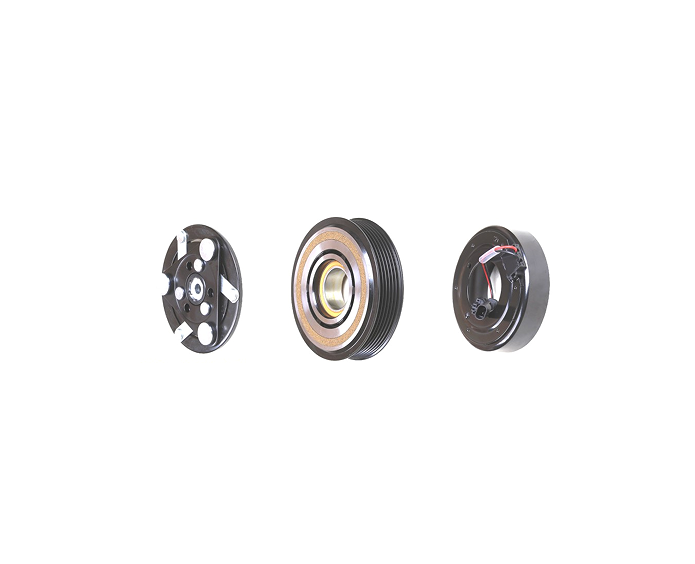
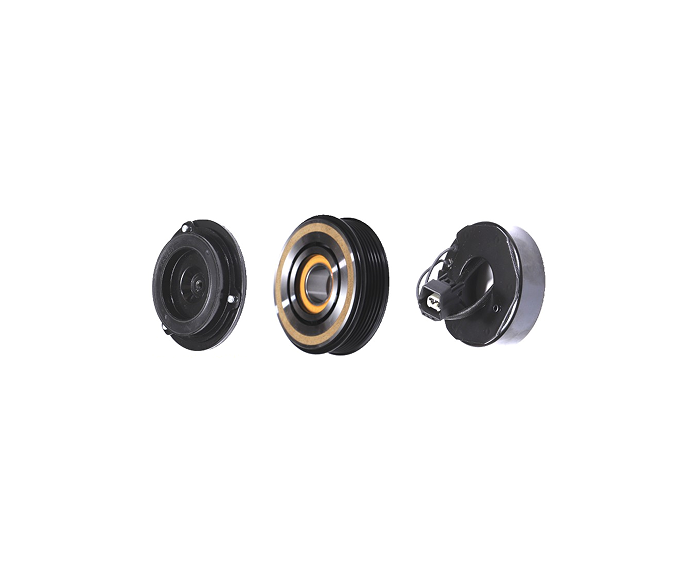
The automotive air conditioner clutch bridges mechanical drive and thermal control.
When the system fails, the problem could lie in electrical activation, magnetic response, mechanical wear, or belt misalignment.
A structured diagnostic process prevents random part replacement, shortens repair time, and ensures long-term system stability.
KASEN engineers define troubleshooting as pattern recognition backed by measurement—turning symptoms into quantifiable parameters.
1. Preliminary Inspection: Look, Listen, Measure
A good technician begins without a wrench.
Before disassembly, three quick checks can reveal 60% of faults:
| Inspection Point | Tool | Observation | Possible Fault |
|---|---|---|---|
| Visual | Flashlight, mirror | Burn marks, corrosion, loose connector | Electrical overload or poor contact |
| Acoustic | Stethoscope | Squeal, click, or grinding noise | Bearing wear or belt slip |
| Thermal | Infrared thermometer | Uneven temperature rise | Coil overheating or slip loss |
Abnormal sounds or heat concentration near the clutch pulley are the first signs of internal imbalance or engagement failure.
2. Electrical Testing: Measuring the Magnetic Circuit
The electromagnetic coil drives clutch engagement.
Testing it requires verifying both resistance and voltage behavior.
Step-by-Step Procedure:
-
Disconnect the clutch connector.
-
Measure resistance between coil terminals using a digital multimeter.
-
Normal range: 3.6–4.0 Ω at 20°C
-
Infinite reading → open circuit.
-
-
Apply 12V to coil manually. Listen for a distinct “click.”
-
No click → failed coil or insufficient pull force.
-
-
Check for voltage drop under load (minimum 10.5V).
-
Test ground continuity—a common cause of intermittent engagement.
⚙️ KASEN Standard:
Each automotive air conditioner clutch coil must maintain pull force ≥ 450 N and insulation resistance ≥ 10 MΩ after 500-hour endurance.
3. Air Gap and Alignment Verification
Incorrect air gap or pulley misalignment causes intermittent clutch engagement.
| Parameter | Standard Value | Tolerance | Consequence of Deviation |
|---|---|---|---|
| Air Gap | 0.35–0.45 mm | ±0.05 mm | Late engagement or coil overheating |
| Pulley Alignment | ≤0.1 mm offset | — | Vibration, belt wear |
| Belt Tension | OEM-specified | — | Bearing overload or slippage |
Test Method:
-
Use a feeler gauge to measure air gap at three positions.
-
Rotate pulley manually; resistance or scraping means misalignment.
-
Adjust with precision shims to restore proper clearance.
4. Mechanical and Friction Surface Analysis
Mechanical faults are often misdiagnosed as electrical issues.
If the clutch engages but cooling remains weak or intermittent, inspect:
a. Armature plate condition
-
Blue discoloration = overheating.
-
Glazing = friction loss → replace or resurface.
b. Bearing inspection
-
Rotate pulley by hand. A gritty feel or rumbling noise indicates internal pitting.
-
Replace the bearing immediately—running it further may seize the compressor shaft.
c. Pulley runout
-
Measured with a dial gauge.
-
Acceptable limit: ≤0.05 mm.
Excessive runout leads to cyclic torque variation and early belt fatigue.
5. NVH (Noise, Vibration, Harshness) Diagnosis
Noise is data—it tells you what’s happening inside.
KASEN classifies NVH faults into three acoustic signatures:
| Sound Type | Likely Cause | Diagnostic Tip |
|---|---|---|
| Sharp click at engagement | Normal magnetic operation | Baseline |
| Continuous metallic whine | Bearing degradation | Replace bearing |
| Periodic thump or knock | Pulley imbalance | Check balance weight |
| Chirping at idle | Belt tension issue | Adjust to spec |
Using a vibration analyzer, technicians can isolate noise frequency bands to confirm imbalance (typically 250–500 Hz) or friction chatter (>1 kHz).
6. Preventive Maintenance Recommendations
Preventive care extends clutch service life and reduces downtime:
-
Inspect clutch every 40,000 km or at A/C system service intervals.
-
Clean connectors and check insulation regularly.
-
Maintain belt tension within OEM range.
-
Avoid pressure washing near the clutch hub.
-
For fleets, log engagement cycles via diagnostic tools—replace clutches exceeding 250,000 cycles.
Every automotive air conditioner clutch from KASEN includes maintenance intervals and torque data in its technical manual for professional use.
KASEN: Data-Driven Diagnostics for Real-World Reliability
KASEN’s diagnostic standards are derived from laboratory validation and field experience across global markets.
By combining electrical, mechanical, and acoustic analysis, workshops can achieve OEM-level accuracy in fault identification and repair.
KASEN provides diagnostic kits, voltage testers, and specification charts tailored for distributors and service partners.
For detailed manuals, OEM cooperation, or spare part inquiries, visit the KASEN homepage or contact our service engineers via the contact page.
FAQ: Troubleshooting Automotive Air Conditioner Clutch Issues
Q1. How can I tell if the clutch coil is failing?
Check for abnormal resistance (>4.5 Ω) or irregular engagement noise when energized.
Q2. Why does the clutch engage but A/C still doesn’t cool?
Possible compressor failure, low refrigerant pressure, or slipping friction plate.
Q3. Can the clutch be repaired instead of replaced?
Minor surface wear can be resurfaced; however, burnt coils or distorted pulleys require full replacement.
Q4. What’s the most accurate test for alignment?
Use a laser pulley alignment gauge to confirm offset ≤0.1 mm.