
Why Understanding the Clutch Assembly Matters
In belt-driven automotive cooling systems, the automotive air conditioner clutch is the mechanical gateway that determines when the compressor engages.
Many buyers focus only on the compressor itself. However, the clutch assembly defines:
- Engagement precision
- Torque transmission efficiency
- Noise levels
- Thermal durability
- Lifecycle stability
Understanding the internal components helps OEM buyers, distributors, and engineers make informed decisions.
What Is an Automotive Air Conditioner Clutch Assembly?
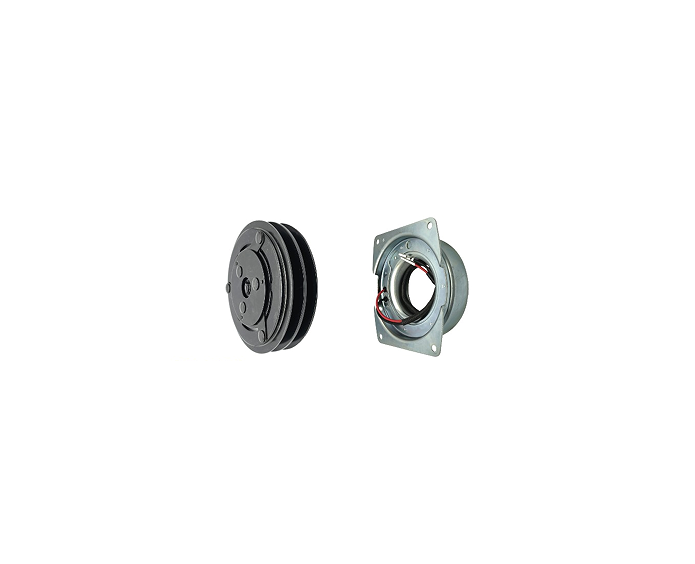
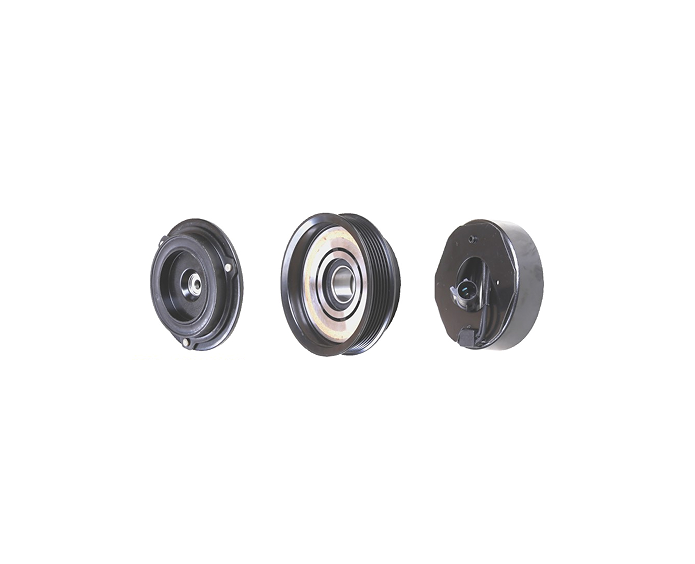
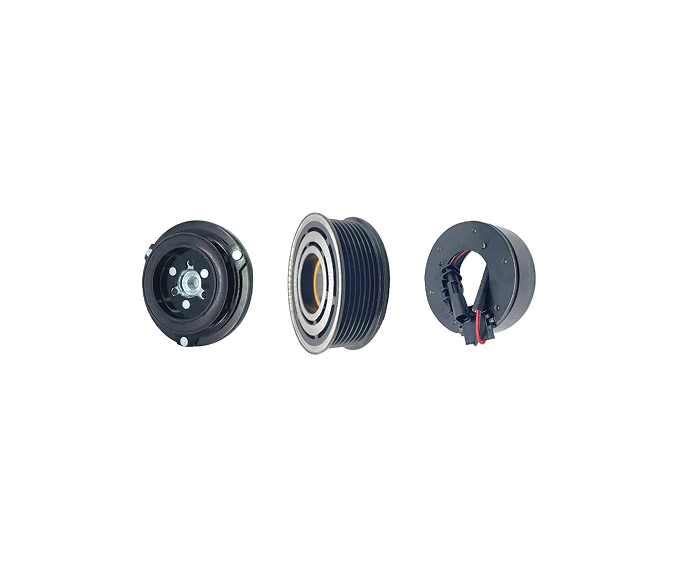
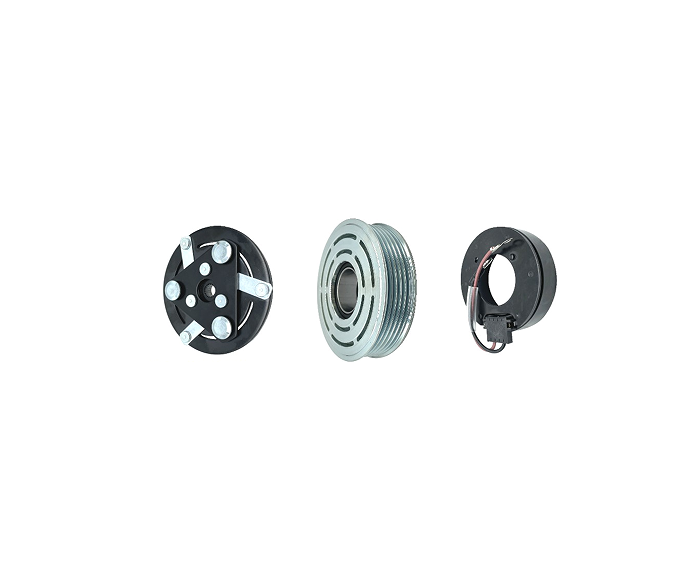
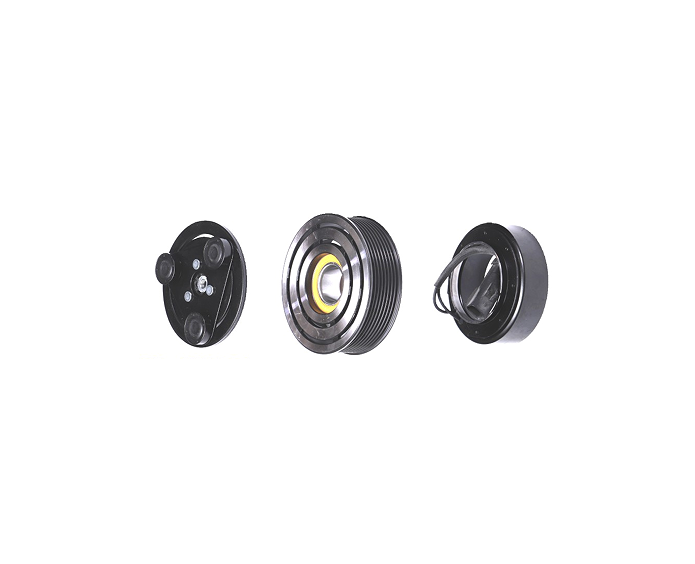
An automotive air conditioner clutch assembly is a complete engagement system installed at the front of the compressor.
It typically includes:
- Pulley assembly
- Electromagnetic coil
- Armature plate (drive plate)
- Bearing
- Friction surface
Each component plays a specific mechanical and electrical role.
When voltage is applied, magnetic force pulls the armature plate into contact with the rotating pulley, transmitting torque to the compressor shaft.
This simple motion is supported by complex engineering tolerances.
Core Components and Their Functions
1. Pulley Assembly
The pulley is belt-driven by the engine crankshaft.
Functions:
- Transfers rotational energy
- Houses the bearing
- Maintains concentric alignment
The pulley rotates continuously even when the automotive air conditioner clutch is disengaged.
Precision machining reduces vibration and improves engagement smoothness.
2. Electromagnetic Coil
The coil generates magnetic force when energized.
Key performance factors:
- Copper winding density
- Insulation class (Class F or H recommended)
- Thermal resistance
According to ISO 6722 (Road Vehicles – Electrical Wiring), insulation materials must withstand high-temperature engine environments.
Stable magnetic flux ensures consistent engagement.
3. Armature Plate (Drive Plate)
The armature plate is pulled toward the pulley when the coil is activated.
Functions:
- Engages friction surface
- Transfers torque to compressor shaft
- Withstands high contact pressure
Surface flatness and material hardness determine durability.
Uneven wear leads to slippage and heat buildup.
4. Bearing
The bearing supports continuous pulley rotation.
Requirements:
- Compliance with ISO 281 dynamic load rating
- High-temperature grease stability
- Low radial runout
Bearing failure often causes secondary damage to the automotive air conditioner clutch assembly.
5. Friction Surface
The friction interface must maintain a stable coefficient of friction.
Material properties affect:
- Engagement torque
- Thermal fade resistance
- Wear rate
Low-quality materials degrade quickly under repeated cycling.
Premium friction formulations extend clutch lifecycle.
How the Assembly Works Together
The engagement sequence:
- AC system sends electrical signal
- Coil energizes
- Magnetic field forms
- Armature plate contacts pulley
- Torque transfers to compressor
When power is cut:
- Magnetic field collapses
- Armature separates
- Compressor disengages
This engagement can occur tens of thousands of times over a vehicle’s lifetime.
SAE technical guidance on automotive electromagnetic clutches emphasizes the importance of air gap precision and magnetic efficiency to reduce shock loading.
Durability Factors in Real-World Conditions
High-quality automotive air conditioner clutch assemblies must withstand:
- Engine bay temperatures up to 150°C
- Continuous vibration
- Repeated thermal cycling
- Moisture and corrosion exposure
Testing typically includes:
- ≥50,000 engagement cycle simulation
- Thermal endurance testing
- Salt spray corrosion resistance
- Dynamic balance verification
Without these validations, lifecycle reliability is uncertain.
OEM vs Aftermarket Considerations
For OEM Manufacturers
Focus on:
- Lifecycle durability
- Compliance with ISO and SAE standards
- Precision tolerance control
- Long-term warranty reduction
For Aftermarket Distributors
Focus on:
- Compatibility range
- Noise suppression
- Cost-performance balance
- Reduced return rate
In both cases, selecting a high-quality automotive air conditioner clutch assembly ensures system stability.
Common Failure Symptoms
Recognizing failure signs helps prevent compressor damage:
- Grinding or whining noise
- Slipping engagement
- Burning smell
- AC not cooling properly
- Visible pulley wobble
Often, bearing or friction degradation is the root cause.
Early replacement prevents full compressor replacement.
Frequently Asked Questions
Q1: Can individual components be replaced?
Yes, bearings or armature plates can sometimes be replaced separately, but full assembly replacement ensures alignment precision.
Q2: What is the typical service life?
Under normal operating conditions, a high-quality automotive air conditioner clutch assembly lasts 80,000–120,000 km.
Q3: Why is air gap tolerance important?
Incorrect air gap reduces magnetic efficiency and increases engagement wear.
Conclusion: A System Within a System
The automotive air conditioner clutch assembly is not just a simple part — it is a precision-engineered subsystem.
Its components must work in perfect coordination:
- Magnetic activation
- Mechanical stability
- Friction durability
- Thermal resistance
For OEM manufacturers and distributors seeking durable, precision-tested clutch assemblies, explore:
https://www.gzkasen.com/
For technical consultation or OEM collaboration:
https://www.gzkasen.com/contact-us/