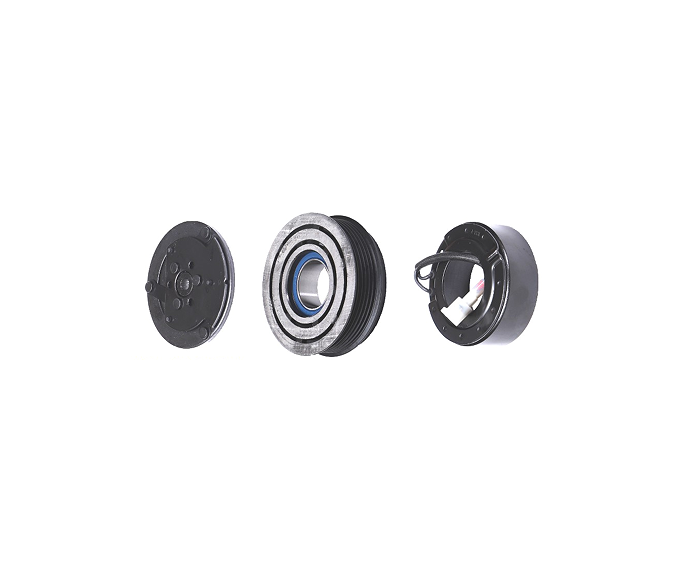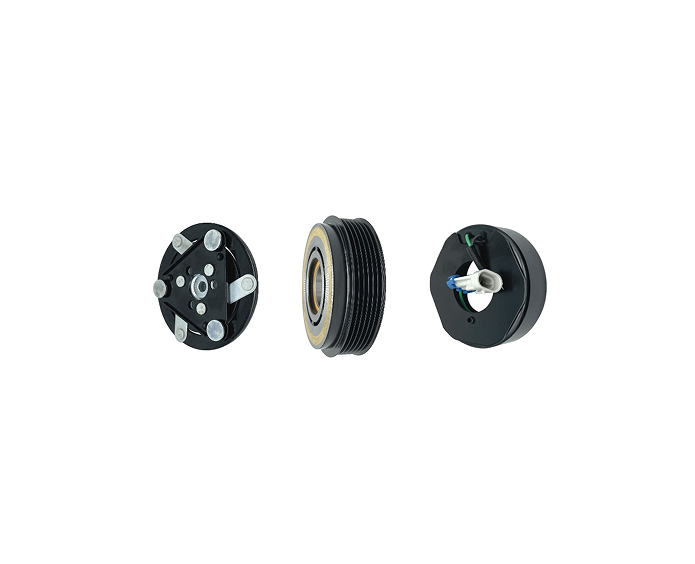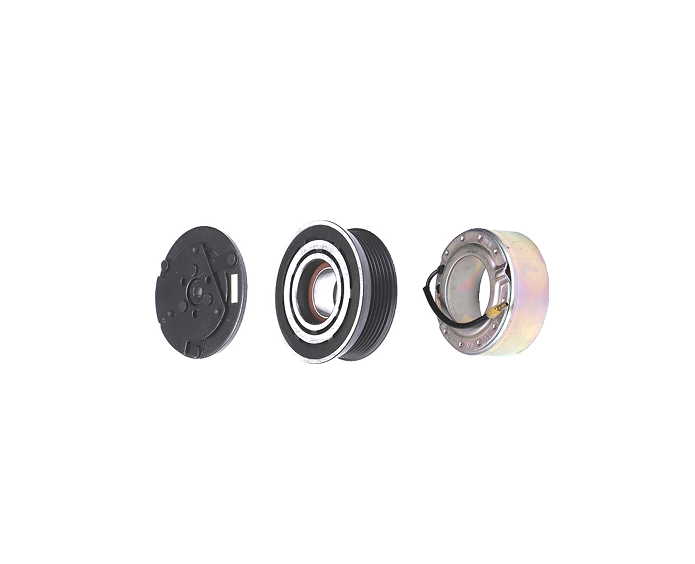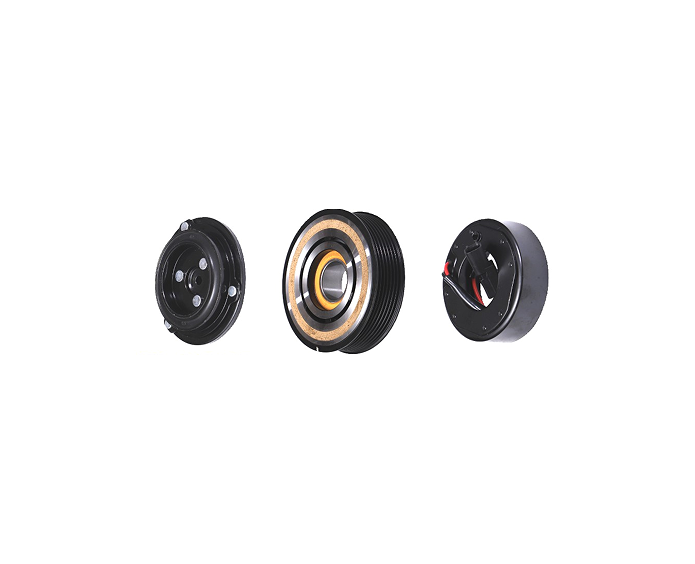

A variable displacement compressor control valve must match the compressor's displacement mechanism, control signal, sealing interface, and operating calibration. A valve can have the right connector and still regulate the wrong pressure range; it can fit the bore and still have the wrong insertion depth, spring response, or internal metering element. For a repair shop, distributor, or compressor rebuilder, the reliable purchasing decision is therefore based on the exact compressor reference, measured interface, system symptom, test conditions, and approved sample rather than on a similar photograph.
Variable-displacement compressors are used to vary cooling output without relying only on repeated clutch cycling. The control valve is one part of that system. It works with compressor geometry, refrigerant pressure, lubricant, sensors, vehicle control logic, and the mechanical condition of the compressor. When a replacement valve is sourced, those relationships need to be recorded so that the part is not treated as a universal fit for every compressor carrying the same vehicle name.
Guangzhou Kasen Auto Airconditioner CO:LTD presents automotive AC control valves and related compressor components in its public product range. Its automotive AC product catalogue and public control-valve references can help identify candidate product families. Exact fitment, materials, control data, inspection method, MOQ, lead time, packaging, and warranty still need confirmation for the requested compressor and market.
How a Variable-Displacement Compressor Control Valve Works
A variable-displacement compressor changes the amount of refrigerant it compresses by changing the effective stroke or displacement of its internal mechanism. Depending on the compressor architecture, the control valve influences crankcase pressure, swash-plate angle, piston stroke, or another internal pressure balance. The valve does not create cooling by itself; it responds to a pressure or electrical command and allows the compressor to deliver an output appropriate to the requested load.
In a mechanically driven automotive compressor, the pulley and shaft may continue to turn while the control system changes displacement. At low cabin load, the compressor can be requested to reduce output. At high cabin load, the control system can request more output. The exact pressure-response direction and signal behavior vary by compressor family. That is why a buyer should not infer valve compatibility from body colour, connector shape, or a vehicle model alone.
| Control-system element | Role in displacement control | Matching evidence needed |
|---|---|---|
| Compressor control valve | Modulates the internal pressure or actuator condition that changes displacement. | Compressor model, valve geometry, control method, calibration, seals, and test basis. |
| Compressor mechanism | Converts pressure balance into swash-plate, piston, or other displacement movement. | Compressor architecture, internal condition, seat geometry, and application. |
| Vehicle control module | Requests compressor output from temperature, pressure, load, and operating inputs. | Control signal, wiring, sensor data, and vehicle-specific service procedure. |
| Refrigerant circuit | Provides the pressure and heat-transfer conditions in which the compressor operates. | Refrigerant, oil, charge, restrictions, condenser airflow, and evaporator load. |
A control valve quote should therefore state whether the item is an exact replacement, a qualified equivalent, or a development sample. These are not interchangeable descriptions. An exact replacement still needs compressor-reference confirmation; an equivalent needs application evidence; and a development sample needs a drawing, acceptance plan, and named approval owner.
Why Compressor Identity Comes Before Valve Selection
One vehicle platform may use more than one compressor supplier, engine, refrigerant, or production-year configuration. The same compressor family can also be sold under different OE numbers in different markets. Start the matching record with the compressor label, model, OE/OEM number, vehicle, engine, model year, refrigerant, and the position of the valve on the compressor.
If the label is damaged or missing, photograph the compressor from the front, rear, top, and side. Include the pulley or clutch, mounting ears, ports, electrical connector, valve cavity, retaining clip, and any markings on the old valve. A close photograph with a scale is useful, but it should be supported by measurements and the service data available for the vehicle.
Reference fields that should be frozen
| Reference group | Fields to record | Reason for freezing the field |
|---|---|---|
| Compressor identity | Brand, model, OE/OEM number, vehicle, engine, year, market, and refrigerant. | Prevents a broad vehicle claim from replacing a compressor-specific match. |
| Valve identity | Markings, body style, connector, seal, retainer, orientation, and old-part condition. | Creates a direct comparison between the removed valve and proposed replacement. |
| System condition | Charge history, oil, pressure readings, condenser airflow, sensor data, and compressor noise. | Separates valve symptoms from faults elsewhere in the AC system. |
| Commercial scope | Loose valve, valve-and-seal kit, repair kit, sample quantity, MOQ, packaging, and destination. | Prevents price comparison between different supply scopes. |
Kasen's public examples, including KS-64, KS-70, and KS-01, should be used as product references, not as proof that one valve fits every variable-displacement compressor. The buyer should ask for the proposed compressor match and the open fields for the exact order.
Control-Valve Architecture and Calibration
Variable-displacement compressor control valves are not defined only by their external body. Internal calibration determines how the valve responds to pressure or an electrical command. The same body diameter can contain a different spring, plunger, or metering element. A valve that opens at the wrong pressure may leave the compressor at excessive displacement, reduce cooling at idle, or create unstable vent temperature.
Pressure-controlled valves
Some compressor valves respond to pressure conditions generated inside the compressor. Their performance depends on the compressor's internal passages, crankcase pressure, refrigerant pressure, and spring or metering characteristics. When a pressure-controlled replacement is proposed, ask which compressor architecture and pressure range the valve was designed for. Do not transfer a pressure value from a similar-looking reference without a documented basis.
Electrically controlled valves
Other valves receive an electrical signal from the vehicle control system. The signal may be variable, pulse-based, current-controlled, or defined by another manufacturer-specific strategy. Confirm the connector keying, pin count, polarity, resistance or current information where documented, and the functional test method. A connector that plugs in is only one part of the electrical match.
Calibration versus interchangeability
Calibration is the reason that an equivalent valve should not be approved from appearance alone. The response curve, leakage, hysteresis, and stable operating point can affect the compressor's pressure balance. If a supplier proposes an equivalent, request the comparison basis and define an application test. If the supplier cannot disclose proprietary curves, it should still identify the tested compressor reference, test boundary, acceptance statement, and sample traceability.
Diagnose the System Before Blaming the Valve
A faulty control valve can produce weak cooling, unstable pressure, high compressor load, or a control fault, but each symptom has other possible causes. Refrigerant undercharge, overcharge, air or moisture, condenser airflow, a restricted filter, a damaged compressor, a failed pressure sensor, clutch slip, belt problems, wiring damage, or an obstructed hose can create similar results.
| Observed condition | Valve-related possibility | Other checks before replacement |
|---|---|---|
| Cooling is weak at idle and changes with engine speed. | Displacement may not respond to the requested control condition. | Refrigerant charge, condenser airflow, belt or clutch operation, compressor wear, and sensor input. |
| Vent temperature cycles unexpectedly. | Valve response may be sticking or unstable. | Evaporator sensor, expansion device, blower control, icing, and refrigerant balance. |
| Compressor load or discharge pressure is unusually high. | Valve may hold the compressor near an incorrect displacement. | Overcharge, condenser restriction, airflow, oil condition, and internal damage. |
| Scan tool reports pressure-control or actuator fault. | Signal, connector, valve circuit, or response may be outside the expected range. | Harness, ground, sensor, module, reference voltage, and software diagnosis. |
| New valve leaks after installation. | Wrong seal, insertion depth, valve seat, or incompatible body. | Debris, burrs, compressor-seat damage, installation force, and circuit contamination. |
Record the operating conditions before removing the old valve: ambient temperature, vent temperature, engine speed, pressure readings, compressor temperature, control signal, fault codes, and whether the symptom appears at idle, cruise, or both. The same measurements should be repeated after installation. Without a baseline, a buyer cannot distinguish a successful valve repair from a temporary change caused by refrigerant service or weather.
Mechanical Matching for a Variable-Displacement Valve
Mechanical matching begins with the compressor seat and ends with the installed orientation. Measure the body diameter, overall length, shoulder position, insertion depth, O-ring groove, tip geometry, retaining feature, connector position, and any screen or filter. Use the same datum points as the supplier drawing. “Same size” is not a sufficient inspection result.
Body and insertion depth
The shoulder and insertion depth determine where the regulating element sits in the compressor passage. A valve that sits too high may not open the intended passage; a valve that sits too deep can contact an internal component or alter travel. Ask for a dimensioned drawing or approve a measured sample before production.
Seals and retaining features
Check the O-ring groove, seal cross-section, seal material, lubrication instruction, retaining clip, screw, press fit, or threaded feature. The seal should be supplied in a protected package and identified in the bill of materials. An equivalent seal requires approval because refrigerant, oil, temperature, and installation force all affect sealing performance.
Connector orientation and access
Connector orientation matters when the valve lead is near the belt, exhaust, bracket, or a sharp edge. Compare the mating harness, locking feature, cable exit, and service access. A body that fits the compressor bore may still fail in the vehicle if the connector cannot be locked or the lead bends beyond its permitted radius.
Electrical Signal and Response Checks
Electrical testing must be tied to the compressor reference. Depending on the design, the vehicle may command the valve with a variable signal, a current-controlled circuit, or another control strategy. Record the pin map and test condition from the service information or supplier specification. Do not infer pin function from wire colour, and do not publish a universal resistance value when the compressor family has not been identified.
| Electrical check | What to document | Release question |
|---|---|---|
| Connector fit | Keying, pin count, terminal retention, seal, lock, and mating harness. | Does the connector lock without field modification? |
| Continuity or resistance | Test instrument, temperature, pins, range, and reference revision. | Is the result valid for the requested valve and compressor? |
| Command response | Signal type, duty or current condition, fixture, response, and acceptance range. | Does the valve respond as the compressor control system expects? |
| Polarity and wiring | Pin assignment, ground, supply, and control path. | Are the connections confirmed rather than assumed? |
| Lot traceability | Part number, test record, date, operator or station, and carton or lot. | Can an electrical complaint be isolated to the affected batch? |
Bench movement is not the same as system response. A valve may move when energized but still have the wrong calibration for the compressor. Where possible, use a compressor fixture or vehicle application test that reflects the intended control range. Keep bench results and vehicle results as separate evidence types.
View a Control Valve Reference
Pressure, Flow, Leakage, and Cleanliness Evidence
A supplier's test report should identify the test boundary, medium, temperature, pressure, electrical command, sample size, acceptance range, and part-number revision. For a valve tested alone, the result describes the valve fixture. For a valve installed in a compressor, the result includes the compressor and its condition. Those two results should not be presented as equivalent.
Leakage testing should state whether the valve was checked at the seal, body, connector interface, or installed compressor seat. Flow or pressure-response testing should identify the fixture and the expected response. If the supplier uses an internal screening method, request the method name and pass/fail basis even when the full fixture design is proprietary.
| Evidence type | Buyer question | Safe use of the result |
|---|---|---|
| Dimensional record | Which drawing revision and critical dimensions were checked? | Confirms the approved mechanical interface for that SKU. |
| Electrical record | Which pins, signal, temperature, and range were used? | Supports the documented control interface, not every compressor. |
| Leakage record | Was the valve tested alone, in a fixture, or in the compressor? | Limits the claim to the tested boundary. |
| Flow or pressure record | What pressure, temperature, command, and acceptance curve applied? | Supports a reference-specific functional comparison. |
| Cleanliness record | How were ports capped, particles controlled, and parts packed? | Protects the valve and compressor circuit during storage and installation. |
Clean handling is especially important when a failed compressor contains metal debris or contaminated oil. Photograph the returned part before washing or disassembly. Keep ports capped, use clean trays, and record the cleaning or inspection process required by the approved reference. Do not describe a valve as universally contamination-proof without a defined process and evidence.
Materials, Seals, and Temperature Compatibility
Material and seal choices affect corrosion, friction, temperature capability, pressure response, and compatibility with the refrigerant and lubricant. The exact construction can differ between valve references. Request the controlled material or construction description for the body, spring, plunger, actuator, coating, and seals where those fields affect fit or performance.
Seal compatibility should be reviewed separately from dimensional fit. A seal can match the groove and still be unsuitable for the refrigerant, oil, temperature, or installation method. The quotation should identify seal quantity, material status, lubrication instruction, and packaging. If a different seal is proposed to address cost or availability, require a documented change review and new sample approval when the application risk warrants it.
Material claims should remain reference-specific. A product page may show a visible metal body or coated surface, but visible appearance does not prove grade, hardness, treatment, or tolerance. Publish only the material evidence the supplier can support with a drawing, specification, inspection record, or approved sample.
Supplier Qualification for Variable-Displacement Valves
A capable supplier should be able to explain how it matches the valve, controls the drawing, inspects the critical interface, protects the part during shipment, and handles a component change. The buyer does not need every proprietary process, but should know who owns the reference, who releases the sample, and who responds when a batch does not perform as expected.
| Capability | Evidence to request | Risk if missing |
|---|---|---|
| Compressor matching | Compressor model, OE/OEM basis, valve drawing, old-part comparison, and open-question log. | A broad vehicle claim is used to sell the wrong valve. |
| Calibration control | Reference revision, control method, spring or metering specification, and approval record. | A visually similar valve behaves differently in the compressor. |
| Inspection | Dimensional, seal, electrical, leakage, cleanliness, and functional methods where applicable. | Visual inspection is mistaken for displacement-control performance. |
| Traceability | Lot, label, sample, test record, carton, and component-source linkage. | A field complaint cannot be isolated or investigated. |
| Change control | Notification method, re-sample rule, revision history, and stock segregation. | A new seal, body, connector, or process arrives without approval. |
| After-sales response | Required failure evidence, response contact, replacement decision, and claim timing. | Technical and commercial responsibility becomes unclear after shipment. |
Kasen's company profile provides the public supplier identity and manufacturing context. For a live quotation, request the exact valve reference, compressor match, test basis, MOQ, lead-time trigger, packaging, and warranty terms. A supplier's ability to answer these fields in writing is more useful than a broad statement that a valve is “OEM quality.”
Sample Approval and Batch Release
Sample approval should prove both fit and control behavior. Freeze the compressor identity, valve scope, drawing revision, seal, connector, packaging, and test plan before the sample is shipped. Photograph the carton and label, then compare the sample with the old valve and the approved drawing.
- Confirm the sample's part number, condition, lot, and included seals or accessories.
- Measure body, shoulder, insertion depth, groove, retainer, tip, and connector position.
- Compare the connector key, pin count, lead exit, seal, and orientation.
- Inspect cleanliness, caps, protective packaging, markings, and surface condition.
- Perform the agreed electrical, leakage, movement, flow, pressure, or compressor-fixture test.
- Record the compressor, refrigerant, oil, signal, temperature, pressure, and fixture conditions.
- Classify the sample as approved, conditionally approved, or rejected, with open actions and owners.
Conditional approval is appropriate when the physical match is acceptable but a vehicle test, control confirmation, label, report, or seal document remains open. The purchase order should reference the approved sample and any conditions. Do not permit a later batch to use a changed spring, seal, connector, or body without notification and re-approval.
Supply Scope, Packaging, MOQ, and Repeat Orders
Price comparisons are meaningful only when the supply scope is identical. State whether the order contains a loose control valve, a valve-and-seal set, a repair kit, or a valve installed in a compressor-related assembly. List the included seal, screen, clip, connector, protective cap, instruction, and carton quantity. If an item is excluded, write it as excluded.
Confirm MOQ per reference, mixed-order rules, sample cost, lead-time trigger, payment stage, destination, and packaging revision. For private-label or distributor programs, freeze the buyer SKU, barcode, carton artwork, lot label, and language before production. A correct valve in the wrong carton can create a warehouse and warranty problem just as a wrong valve can.
Agree how the supplier will notify changes to the valve body, spring, metering element, seal, connector, coating, cleaning process, label, or carton. Decide which changes require a new sample and how stock made before the change is identified. Keep the first approved sample and its inspection record available to the receiving team.
Build a Reference-Specific RFQ
A clear RFQ lets the supplier distinguish an exact match from an equivalent or development proposal. Include the compressor label, old valve photographs, measured dimensions, connector and seal details, vehicle and engine, refrigerant and oil, symptom history, control data, quantity, destination, packaging, and required evidence.
| RFQ section | Buyer provides | Supplier returns |
|---|---|---|
| Compressor and vehicle | Model, OE/OEM number, vehicle, engine, year, market, and refrigerant. | Proposed valve reference and fitment basis. |
| Old-part evidence | Photos, dimensions, markings, seal, connector, retainer, and failure notes. | Drawing or sample comparison and open questions. |
| Control data | Available signal, pin map, resistance, pressure readings, and scan data. | Confirmed values, test method, or TBC fields. |
| Test request | Dimensional, electrical, leakage, flow, pressure, cleanliness, or application checks. | Test method, condition, sample size, acceptance basis, and report format. |
| Commercial terms | Sample and bulk quantity, MOQ need, destination, label, packaging, and launch date. | Price basis, MOQ, lead-time trigger, warranty, packaging, and claims route. |
Send the file through the Kasen message page or the Kasen Contact Us page. Include the old valve even when an OE number is available. A physical comparison often reveals a different seal, retainer, connector, or insertion depth that a number-only search does not show.
Common Sourcing Errors
Choosing by connector alone
A connector identifies only one interface. Body geometry, seal, calibration, pressure response, and compressor architecture must also match.
Using a vehicle name as the complete reference
Different engines, years, markets, and compressor suppliers can exist within one vehicle family. Freeze the compressor model and OE/OEM number.
Replacing the valve before checking system charge
Undercharge, overcharge, restrictions, airflow, sensor faults, and compressor damage can imitate valve failure. Record the baseline first.
Assuming a bench movement test proves calibration
Movement does not prove the pressure-response curve or the compressor's displacement behavior. Use reference-specific functional evidence.
Reusing an old seal
A cut, contaminated, wrong, or hardened seal can leak after a correct valve is installed. Treat the seal as part of the approved scope.
Ignoring process changes
A new spring, seal, coating, connector, cleaning method, or packaging process can affect the approved reference. Require notification and re-approval when risk changes.
FAQ: Variable Displacement Compressor Control Valve
What does a variable displacement compressor control valve do?
It regulates the pressure or control condition that changes the effective displacement of a compatible variable-displacement compressor. Its response depends on the compressor architecture, calibration, refrigerant circuit, and vehicle control signal.
Can one control valve fit every variable-displacement compressor?
No. Valves can differ in body, insertion depth, seal, retainer, connector, spring, metering element, electrical behavior, and pressure response. Match the compressor reference and approve a sample.
Is a compressor control valve the same as an expansion valve?
No. The compressor control valve regulates compressor displacement or pressure response. The expansion valve meters refrigerant into the evaporator. Their location, interface, and test methods are different.
What information is needed to source a replacement valve?
Provide the compressor brand and model, OE/OEM number, vehicle and engine, year and market, valve photographs, dimensions, connector, seal, retainer, refrigerant, oil, symptoms, pressure or control data, quantity, and required tests.
What should a supplier test on a variable displacement compressor control valve?
The test plan should match the reference. It may include dimensions, connector and electrical checks, leakage, movement, cleanliness, flow or pressure response, and a compressor or vehicle application test. Request the conditions and acceptance basis.
Does the correct connector prove correct operation?
No. Connector fit does not prove internal calibration, pressure response, seal compatibility, insertion depth, or compressor matching.
Should the valve be supplied with a seal?
When the valve is serviced separately, a defined seal set is often useful, but the quotation must state whether the seal is included, its material status, quantity, lubrication instruction, and packaging. Approve any substitute before production.
How should an equivalent valve be approved?
Freeze the original compressor reference, compare the mechanical and electrical interfaces, request the supplier's comparison basis, test a sample under documented conditions, and classify the result as approved or conditional. Do not extend an equivalent approval to untested compressors.
What does a reliable control-valve supplier provide after the sample?
The supplier should maintain the approved part number, drawing or specification revision, bill of materials, inspection method, lot traceability, packaging, change-notification process, MOQ, lead time, warranty, and claims route for repeat orders.
Conclusion
A variable displacement compressor control valve should be sourced as a calibrated part of a specific compressor system. The buyer should identify the compressor first, record the valve's mechanical and electrical interfaces, rule out refrigerant and system faults, request reference-specific pressure or functional evidence, approve the seal and sample, and control later changes to the valve, materials, packaging, and test method.
Kasen's public control-valve references provide a starting point for a technical discussion. For final matching, send the compressor label, OE/OEM number, old-valve photographs, measurements, vehicle application, control information, quantity, and evidence requirements through the message page. For company contact details and technical follow-up, use the Contact Us page.