

A/C Compressor Control Valve Product Reference
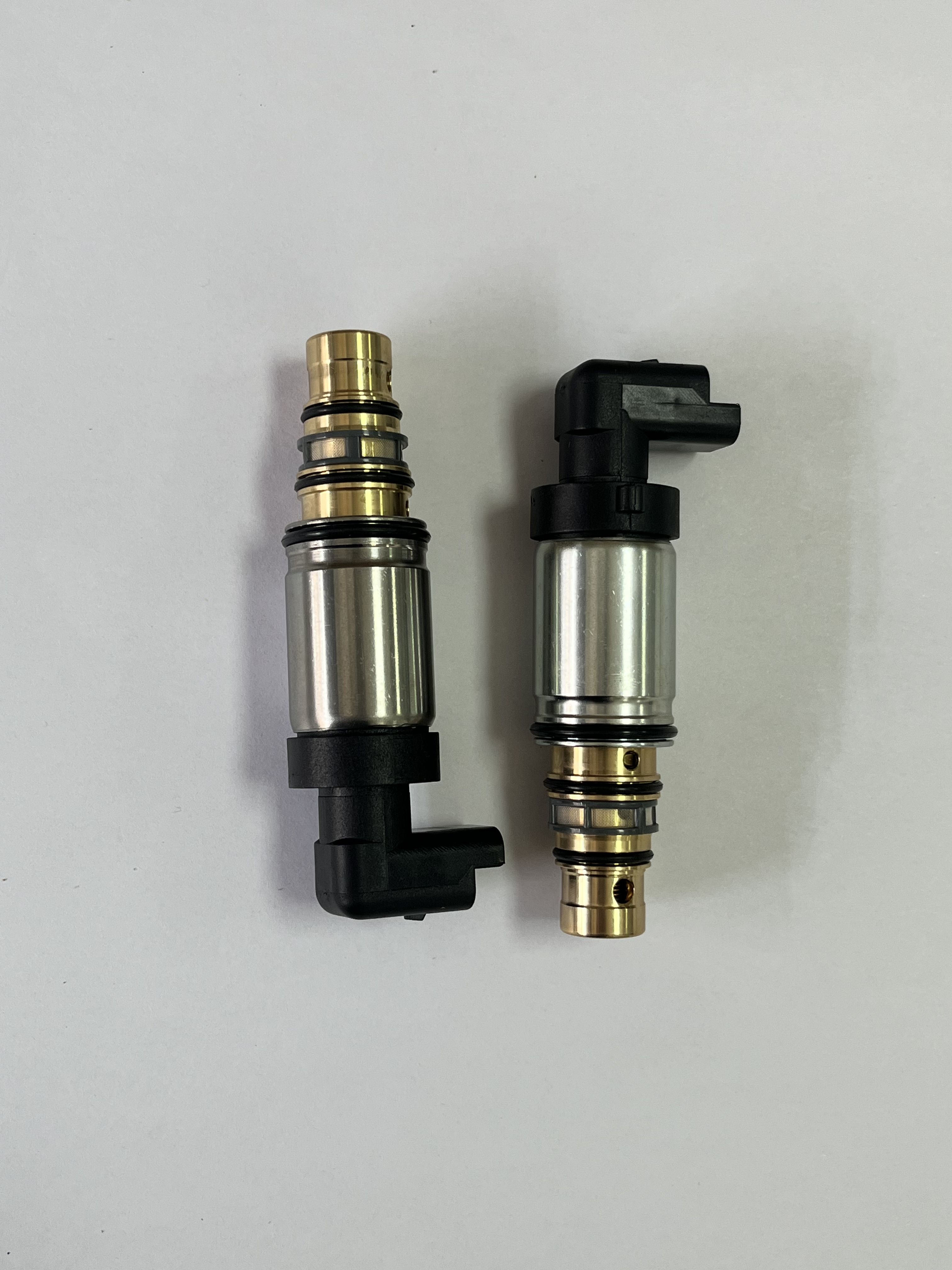
An A/C Compressor Control Valve is normally selected to regulate compressor displacement and maintain the required refrigerant flow in a vehicle air-conditioning system. The visible components supplied for review, however, appear to be compact cylindrical valve cartridges rather than a clearly identifiable automotive compressor control valve. This distinction matters to buyers because installing an unverified cartridge in an air-conditioning compressor can result in incorrect fitment, poor sealing, or system malfunction. The assemblies may be useful as reference components or as custom fluid-control parts, but their automotive A/C application must be confirmed against drawings, part numbers, and installation data.
Product Overview
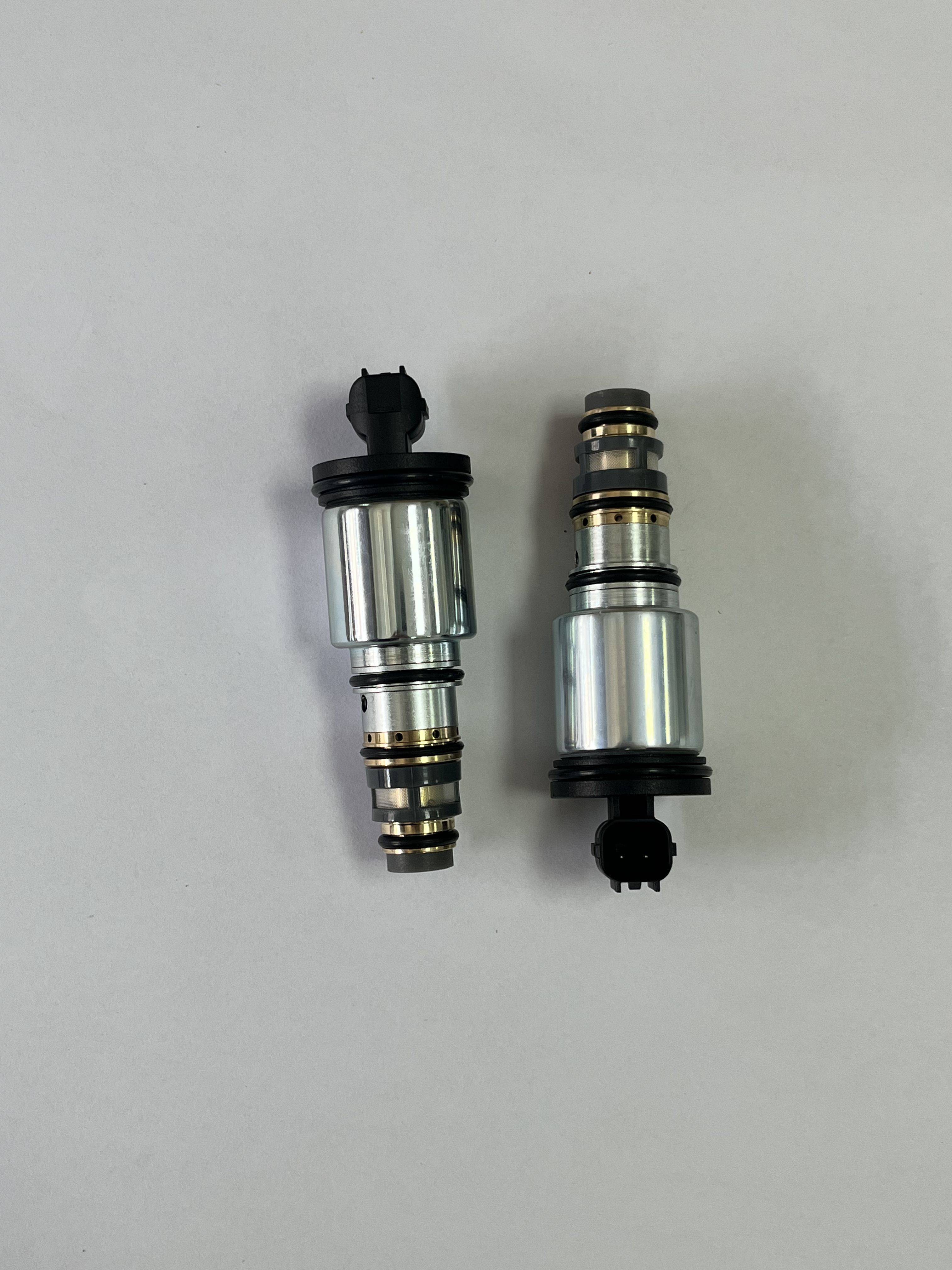
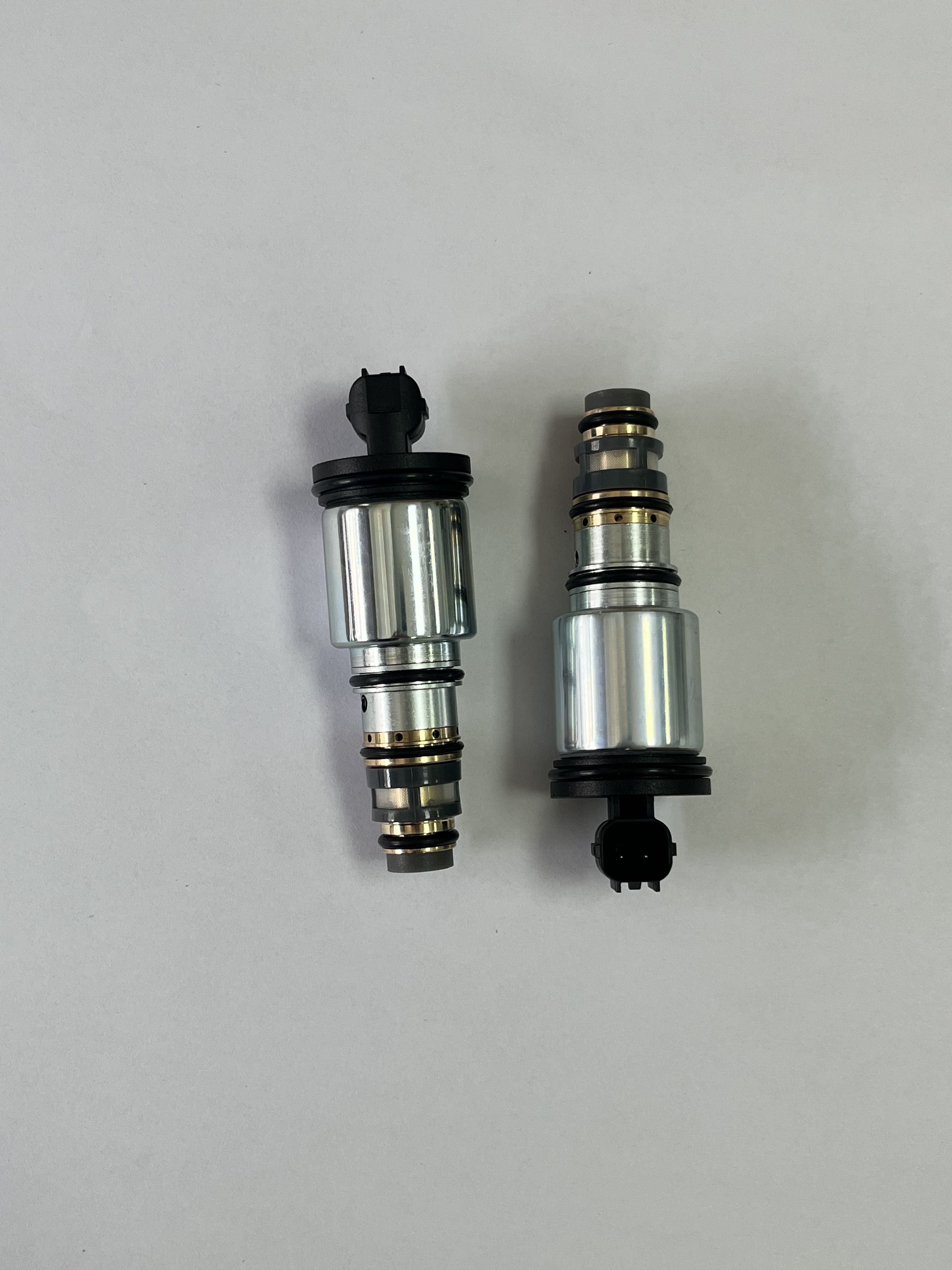
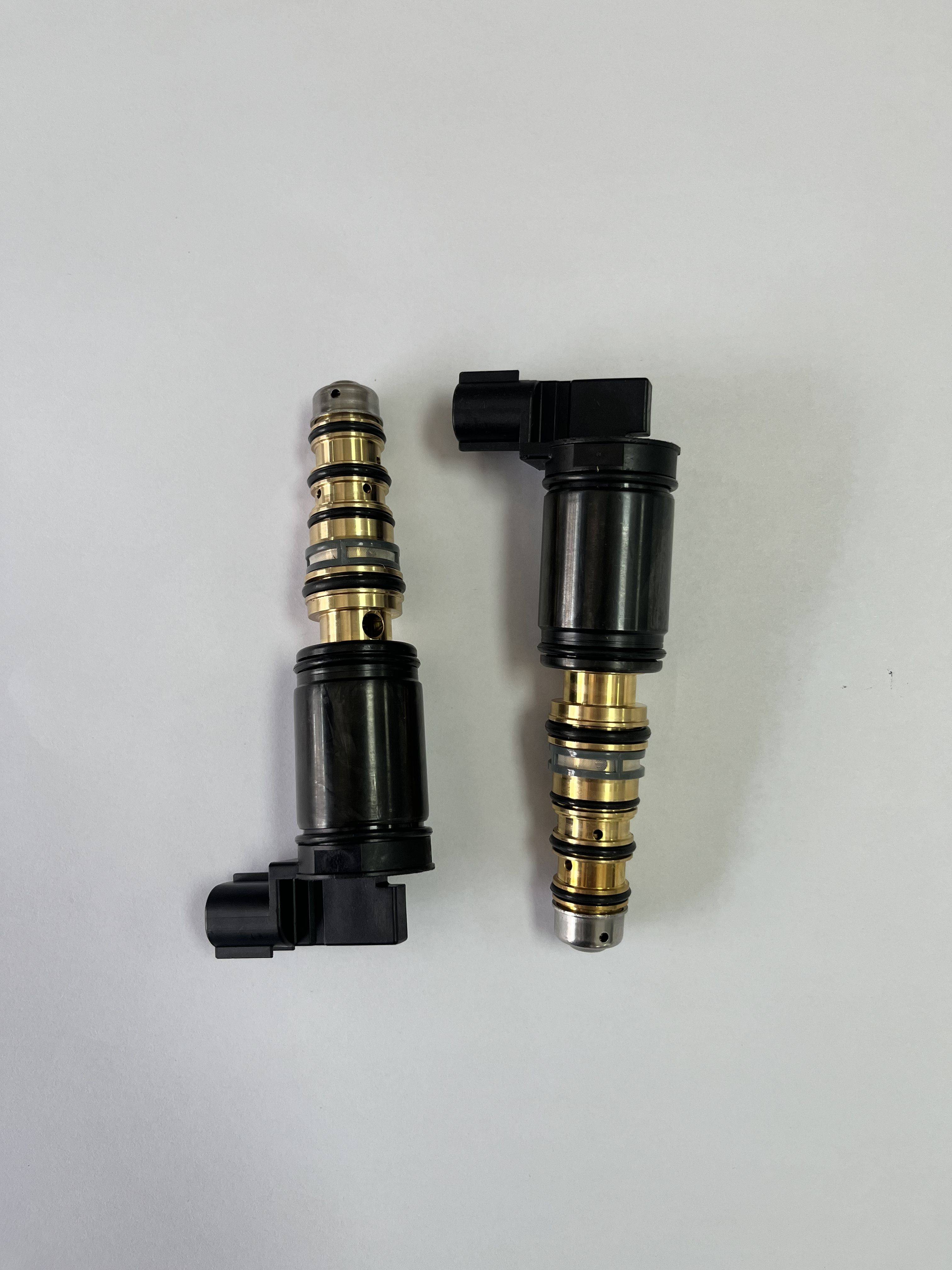
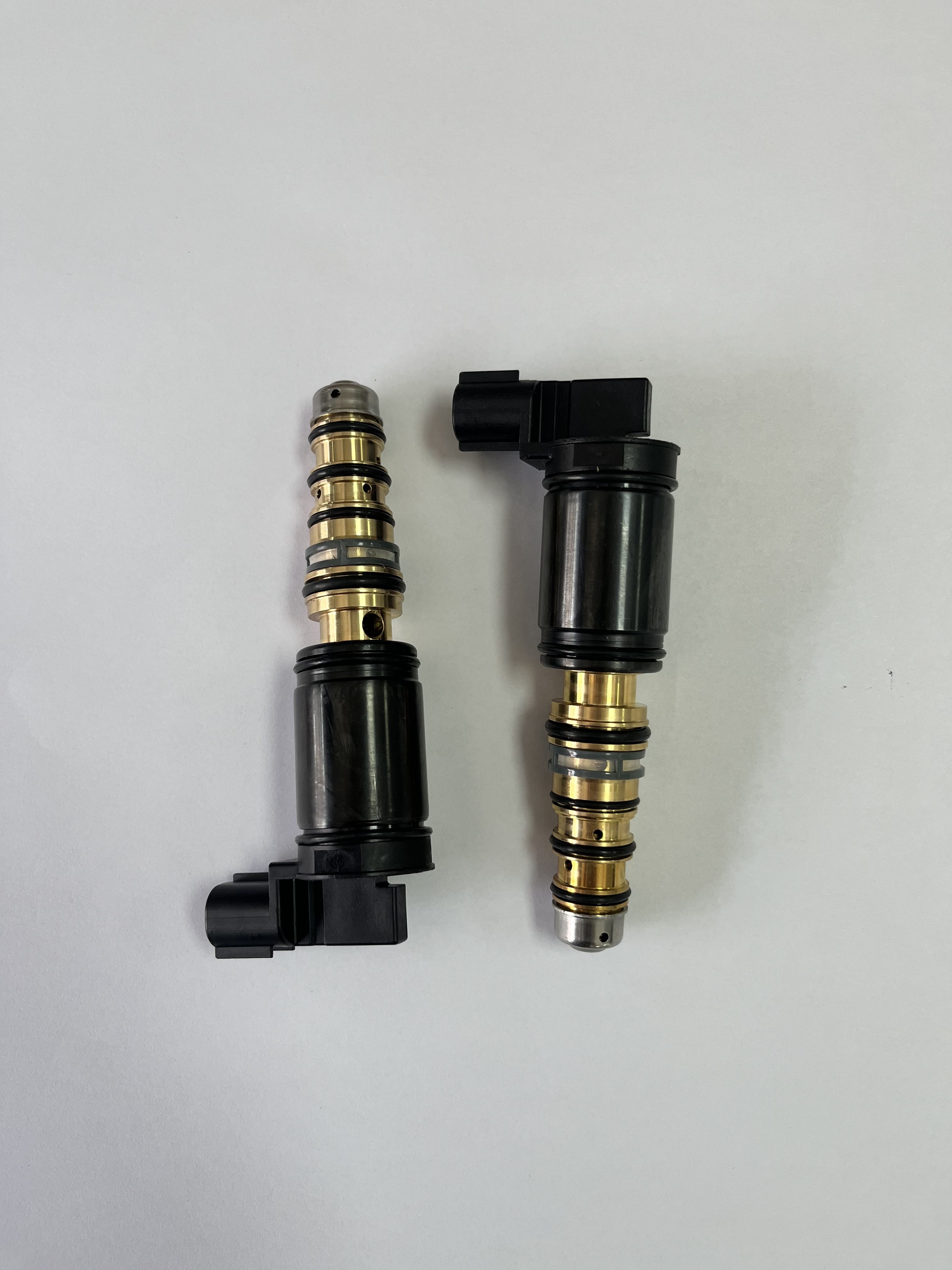
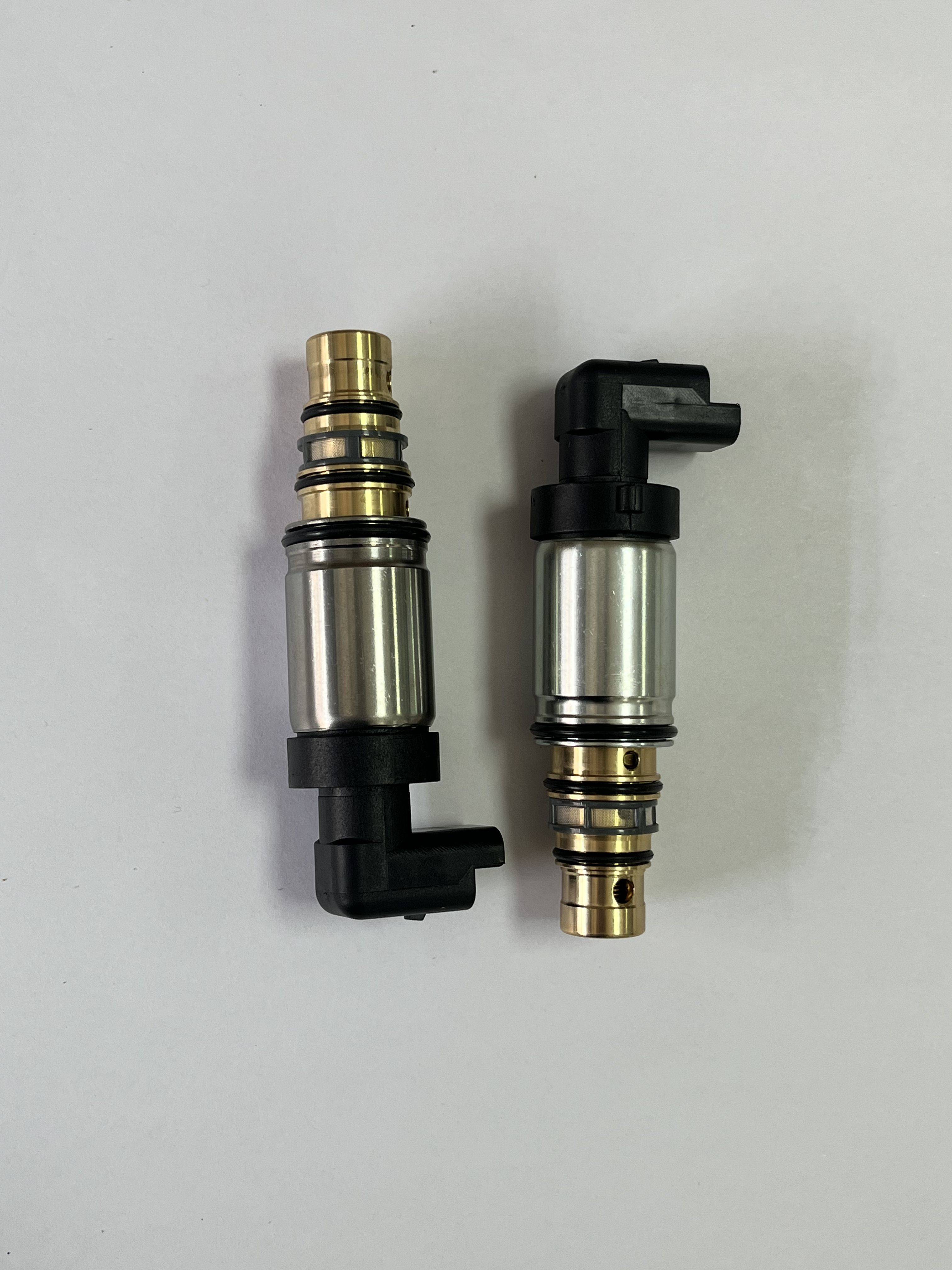
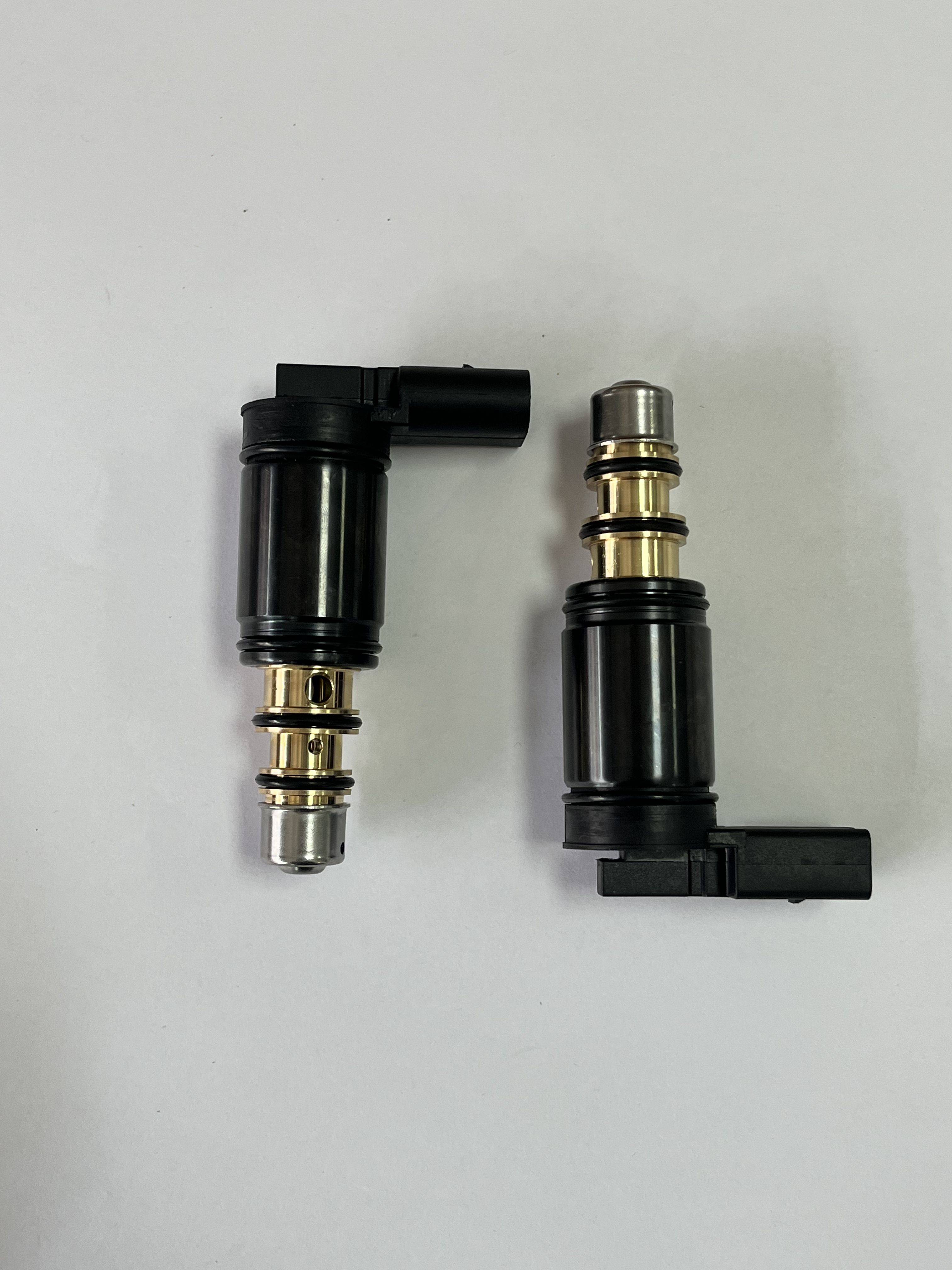
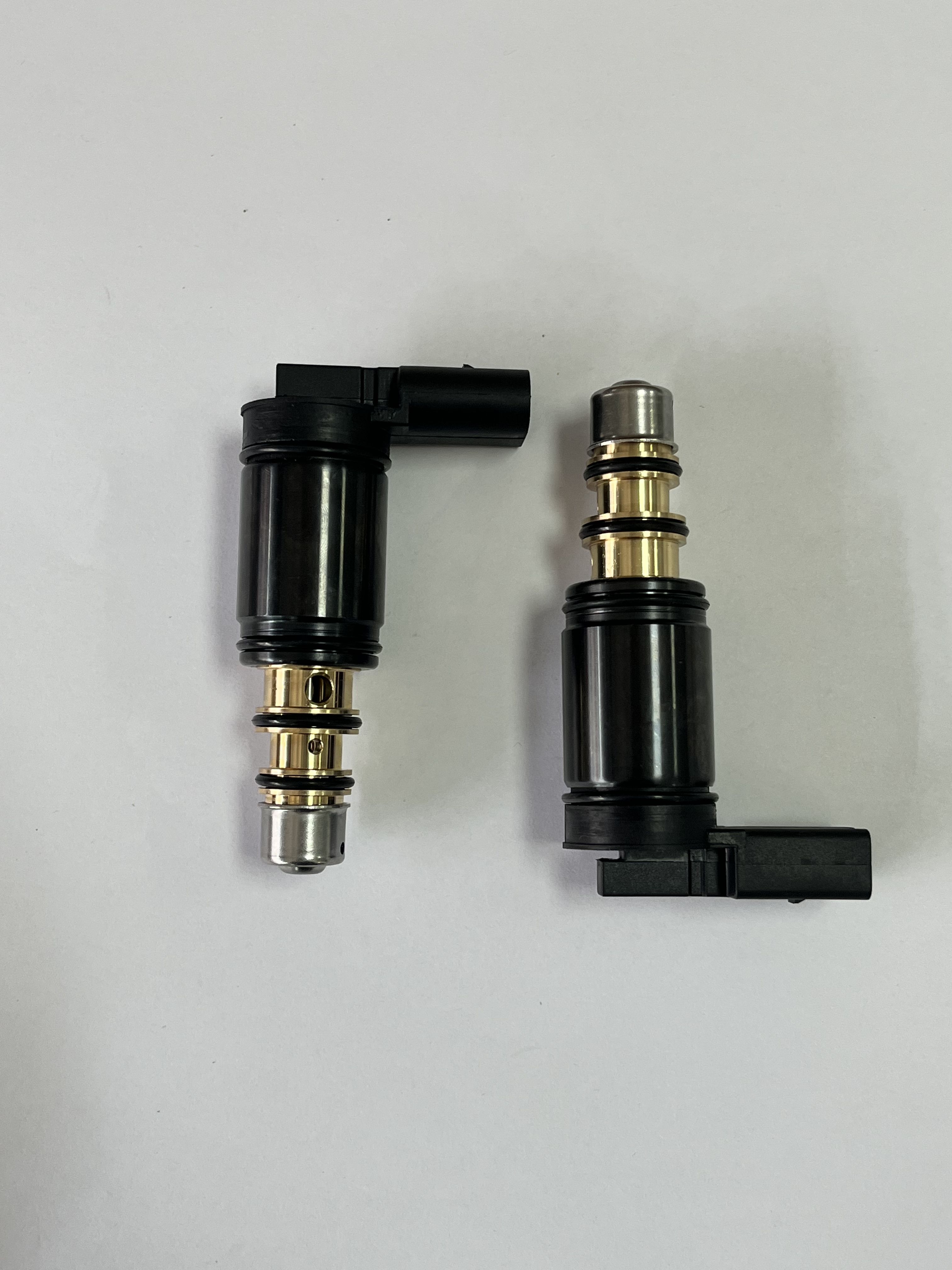
The image shows two stepped, rotationally symmetrical assemblies with several body diameters, shoulders, grooves, and black elastomeric O-rings. Their form suggests insertion into a matching bore or valve housing. One assembly appears longer and more exposed, while the other includes a shorter metallic insert connected to a black right-angle actuator or housing. Small circular holes or recessed features are visible in the brass-colored sections, although their purpose cannot be confirmed from the image alone. They could relate to retention, flow passage, tooling, or assembly.
No external threads, electrical wiring, connector, model marking, or control label is clearly visible. Consequently, the image does not establish whether these parts are an Auto AC Compressor Valve, a plumbing cartridge, a hydraulic insert, or another compact fluid-control component. Buyers should treat the product category as provisional until the supplier confirms the application.
Visible Specifications and Capabilities
- Stepped cylindrical cartridge geometry for location within a compatible housing.
- Multiple circumferential grooves and shoulders for component positioning and seal retention.
- Several visible O-ring sealing locations providing radial sealing between the cartridge and mating bore.
- Machined or formed holes and recesses in the metallic sections.
- A compact actuator or housing section made from a black molded or machined polymer component.
- Potential suitability for replacement cartridges, OEM subassemblies, or custom fluid-control development.
Dimensions, tolerances, pressure rating, temperature range, flow rate, cycle life, leakage values, and refrigerant compatibility were not supplied. These values should not be inferred from appearance.
Materials and Finish Options
The gold-colored bodies appear metallic and may be brass or a brass-based alloy, but the exact grade is unconfirmed. Silver-colored sleeves or sections have a smooth reflective appearance and may be stainless steel or plated metal. The black sections appear to be polymer housings or actuators. Black O-rings are visible between the cartridge sections; their elastomer compound is not identified.
For a confirmed automotive application, material selection should be matched to refrigerant exposure, compressor oil, temperature cycling, corrosion conditions, and sealing requirements. Possible engineering discussions may include brass alloy selection, stainless steel or plated sleeve construction, polymer compatibility, and O-ring compound selection. These are design options rather than confirmed specifications for the pictured parts.
Manufacturing Process
The visible geometry is consistent with CNC turning or other precision machining of cylindrical metal components. Typical operations could include turning multiple diameters, machining O-ring grooves, drilling or forming small holes, deburring, cleaning, and dimensional inspection. The black actuator or housing may be injection molded or machined, depending on its final design. Assembly would normally involve installing the O-rings, checking their seating, and inserting the cartridge into a compatible body without cutting or twisting the seals.
Potential Application Scenarios
If the supplied assemblies are not intended for vehicle air conditioning, their compact form could suit mixer taps, shower valves, thermostatic cartridges, hydraulic control equipment, or other fluid-control products. They may also serve as replacement internals for maintenance inventories or as starting points for a custom cartridge design.
For an automotive program, a Vehicle AC Control Valve must be verified through compressor model, refrigerant circuit, electrical interface, control strategy, mounting method, and calibration requirements. A Car Air Conditioner Control Valve generally requires more than similar-looking cylindrical geometry; the valve must match the compressor housing, coil or actuator arrangement, and system operating conditions. The image does not show enough evidence to confirm those features.
Quality Control and Verification
A suitable inspection plan may include incoming material verification, critical diameter measurement, groove-width and groove-depth inspection, visual checks for burrs, O-ring presence and damage, actuator fit, and final assembly inspection. For a confirmed compressor application, additional validation may include seal compatibility, leakage testing, flow or displacement response, electrical performance where applicable, and temperature or pressure testing. No test results, certifications, regulatory approvals, or production control records were provided for these assemblies.
Customization Guidance
Buyers requesting a custom Variable Displacement Compressor Valve or another cartridge should provide a dimensioned drawing, sample housing, mating bore data, installation orientation, media information, operating temperature and pressure, required flow behavior, actuation method, and target seal material. A compressor part number and clear photographs of connectors, ports, and markings are also important. If the component is intended for plumbing or hydraulic equipment instead, specify the fluid, connection geometry, sealing diameters, and service environment.
Buyer Decision Factors
Before placing an order, confirm the exact product function, mating equipment, critical dimensions, material grades, O-ring compound, surface treatment, and inspection requirements. Request a technical drawing and sample approval when interchangeability is important. Buyers should also determine whether the supplier is offering a finished replacement part, a subassembly, or a machined component requiring customer-side integration.
Request Technical Confirmation
Contact the supplier with the target equipment model, application description, drawings, sample components, and required operating data. The supplier can then determine whether the pictured assemblies are suitable for an Automotive AC Compressor Valve program or should instead be developed as another type of compact fluid-control cartridge. Confirmation of fit, materials, sealing, and performance should be completed before production use.