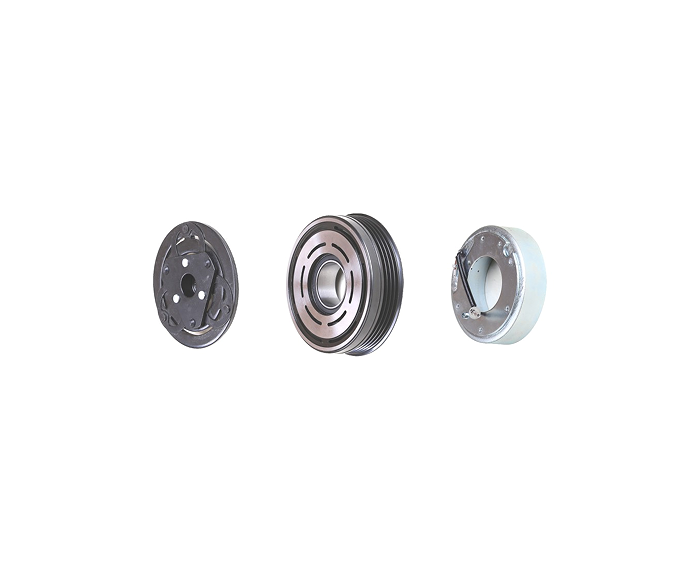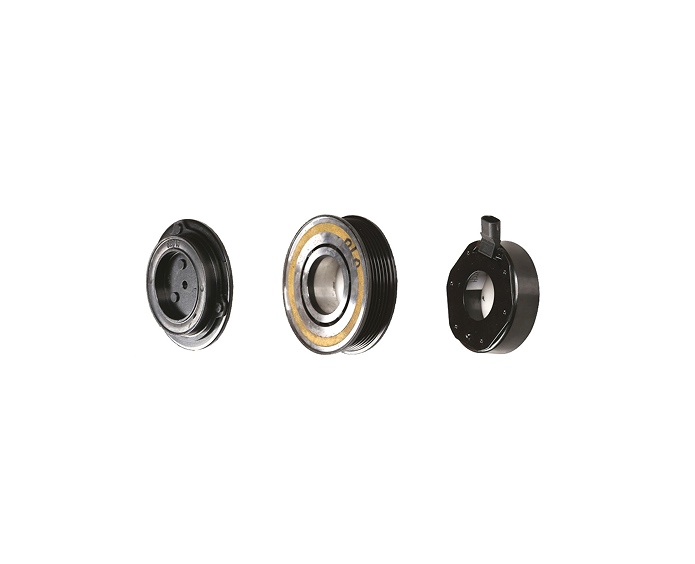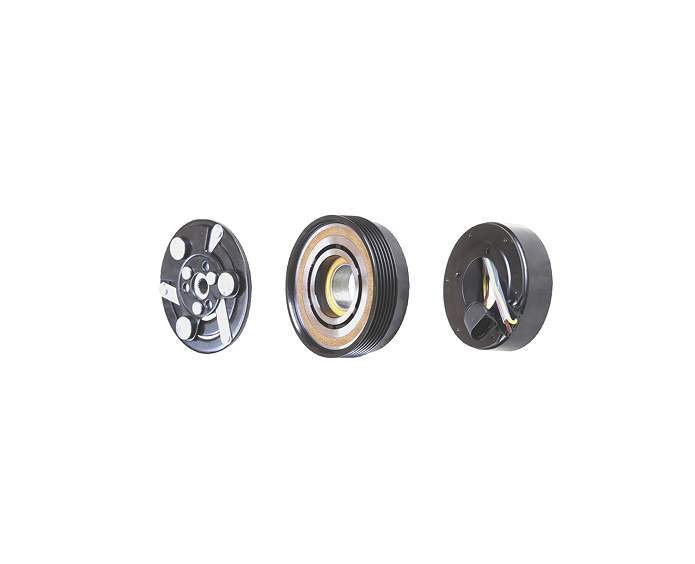

An automotive air conditioner clutch often gets blamed when cooling performance drops. However, replacing the entire compressor without testing the clutch mechanism can lead to unnecessary cost and misdiagnosis.
Testing helps determine whether the issue lies in:
- The clutch coil
- The pulley bearing
- Air gap misalignment
- Electrical supply instability
- Or the compressor itself
Accurate diagnosis protects both vehicle performance and maintenance budgets.
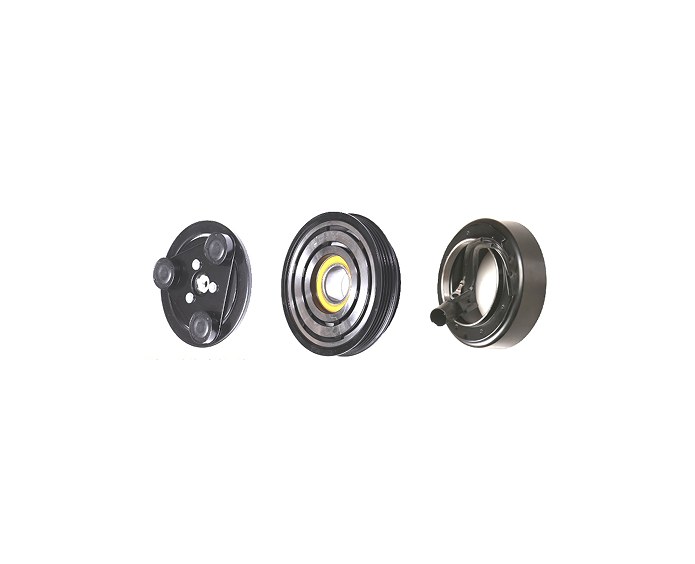
Step 1: Visual Inspection Before Electrical Testing
Start with a basic mechanical check.
Look for:
- Burn marks or discoloration on the clutch face
- Loose mounting bolts
- Excessive pulley wobble
- Friction surface glazing
A damaged surface often signals slippage, overheating, or misalignment in the automotive air conditioner clutch assembly.
Step 2: Manual Pulley Rotation Test
With the engine off:
- Rotate the pulley by hand
- Check for grinding or rough movement
- Listen for bearing noise
The pulley should rotate smoothly when the clutch is disengaged. Any roughness suggests bearing failure.
Remember: the pulley spins continuously even when the automotive air conditioner clutch is not engaged.
Step 3: Electrical Resistance Check
Use a multimeter to measure coil resistance.
Typical 12V system values:
- 3–5 Ohms range
If resistance reads:
- Zero → short circuit
- Infinite → open circuit
- Significantly above spec → internal degradation
ISO 6722 standards emphasize insulation integrity for automotive electrical components.
An abnormal reading indicates a failing clutch coil.
Step 4: Voltage Supply Verification
With engine running and AC switched on:
- Measure voltage at the clutch connector
- Confirm 12V or system-rated voltage
If no voltage is present:
- Check AC relay
- Inspect fuse
- Verify ECU signal
The issue may not be the automotive air conditioner clutch itself, but upstream control electronics.
Step 5: Engagement Observation
When AC is activated:
- Listen for a distinct click
- Observe compressor shaft rotation
- Monitor engagement timing
Delayed or inconsistent engagement suggests magnetic inefficiency or air gap issues.
Clean engagement ensures proper torque transfer.
Step 6: Air Gap Measurement
Air gap plays a critical role in engagement strength.
Standard gap range:
- 0.3–0.6 mm (vehicle dependent)
Too wide:
- Weak magnetic pull
- Slippage
Too narrow:
- Dragging even when disengaged
Proper calibration restores clutch efficiency.
Step 7: Performance Under Load
Test the system during operation:
- Monitor cooling output
- Check for abnormal noise
- Observe clutch cycling frequency
Excessive cycling stresses the automotive air conditioner clutch and reduces lifespan.
Stable cycling indicates healthy system control.
Common Test Outcomes and Actions
| Test Result | Likely Cause | Recommended Action |
|---|---|---|
| No click, no engagement | Coil failure | Replace clutch coil or assembly |
| Grinding sound | Bearing wear | Replace pulley/bearing |
| Slipping under load | Worn friction material | Replace clutch plate |
| No voltage | Electrical control issue | Inspect relay/fuse |
| Excessive cycling | Low refrigerant | Service AC system |
Testing before replacement prevents unnecessary compressor swaps.
When to Replace Instead of Repair
Replacement of the full automotive air conditioner clutch is recommended if:
- Multiple components show wear
- Coil overheating occurred
- Bearing damage caused misalignment
- Friction material is severely degraded
A high-quality clutch assembly restores system balance and long-term reliability.
Preventive Testing Interval
Recommended inspection:
- Every 50,000 km
- During major AC service
- When unusual noise appears
Routine testing extends the life of the automotive air conditioner clutch and reduces downtime.
Frequently Asked Questions
Q1: Can I test the clutch without removing the compressor?
Yes. Most electrical and mechanical checks can be done in-vehicle.
Q2: How long should a properly functioning clutch last?
80,000–120,000 km under normal operating conditions.
Q3: Is full compressor replacement necessary if clutch fails?
Not always. If the compressor internals are intact, replacing the clutch assembly is sufficient.
Conclusion: Testing First, Replacing Smartly
Proper testing of an automotive air conditioner clutch prevents unnecessary repairs, protects compressor integrity, and ensures stable cooling performance.
Systematic inspection — visual, electrical, mechanical — reveals the real fault before costly decisions are made.
For durable, precision-tested automotive air conditioner clutch solutions designed for reliable engagement and long service life, explore:
https://www.gzkasen.com/
For technical consultation or quotation support:
https://www.gzkasen.com/contact-us/